Feeds:
Posts
Comments

Archive for the ‘Recipes’ Category

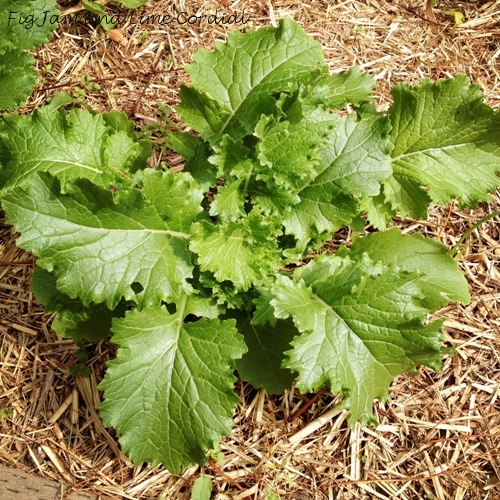
As I mentioned last week, broccoli rabé is growing vigorously in our garden.

Also known as rapini, broccoli raab, and broccoletti, these bitter leaves and flowers are widely used in Mediterranean cooking.  We’ve never grown them before, but were enticed to do so by promises that the entire plant was edible, with a broccoli-like flavour.

We harvested some leaves for the first time a couple of days ago, and brought in a head of broccoli, cos lettuce and a handful of peas as well, in case the rabé didn’t pass muster with the boys…

I was somewhat put off by the small stinging spikes on the tips of the leaves.  Interestingly, these seemed to disappear a short while after harvesting…
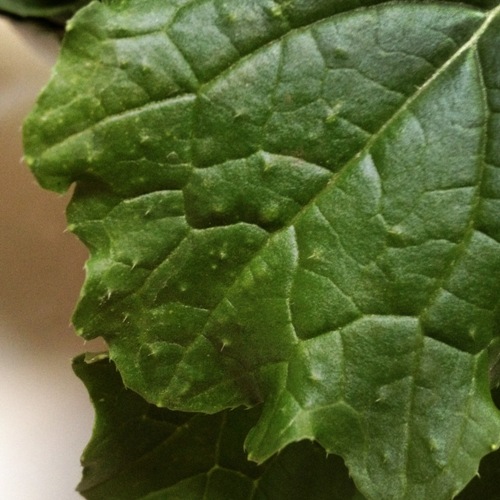
The prickles reminded me of Joanna and Carl’s nettle and potato gnocchi, which I’d been wanting to try for ages.  It seemed like a great first use of our rabé!

I followed the recipe closely, substituting the following ingredients:

  • 100 grams of broccoli rabé leaves – I removed and discarded the stalks, chopped the remaining leaves up coarsely, poured boiling water over them, and let them sit for a few minutes.  After draining, these were allowed to cool and then the water was squeezed out of them.
  • 600g (2 large) white sebago potatoes, peeled, chopped and microwaved until soft, then mashed through a ricer
  • 1 large egg, lightly beaten
  • 1 teaspoon of fine sea salt
  • Ground black pepper, a generous few twists
  • 150 grams (1 cup) plain (AP) flour

The drained, blanched leaves should be chopped as finely as possible – mine were a little coarse, which gave the gnocchi untidy edges.  The finished pasta should probably also have been smaller, but I had trouble rolling the dough any thinner…
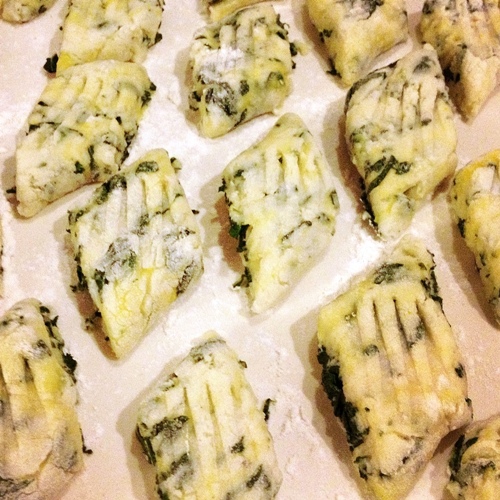
Despite their rustic appearance, these were absolutely delicious! We served them simply with Pepe Saya butter, extra virgin olive oil, salt, pepper and  Nerone Grana Padano cheese.  We also made broccoli pasta – a firm favourite with our sons – but struggled to convince them to eat it instead of the gnocchi…

We’ll definitely be making this again! Thanks Joanna and Carl for such a great (and adaptable) recipe.  Best of all, we’ve figured out that the broccoli rabé which grows so easily and well in our garden is not only edible – it’s delicious!
Read Full Post »

Something unusual happened last week.

Pete was getting some meat out of the freezer, and he mentioned that there were just two sourdough rosetta rolls left in there.  That’s probably the lowest our bread supplies have been in years – no doubt a product of my recent photo-snapping hypomania. It was time for some serious weekend baking.

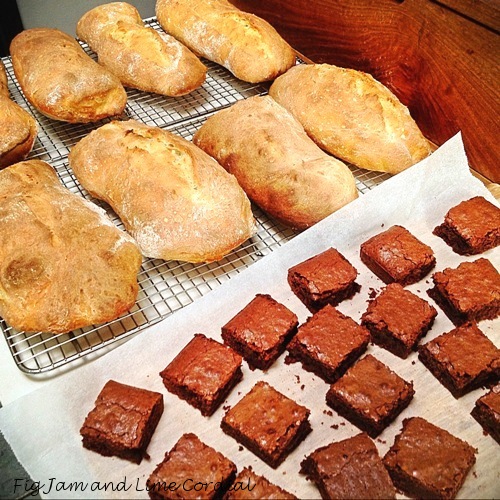
I baked eight wonky sourdough ciabatta loaves and a batch of supernatural brownies on Friday. Only four of the loaves made it to the freezer – the rest were eaten or given away.

These were followed by a batch of Dan Lepard’s potato stotties, which were gone before they had a chance to cool…

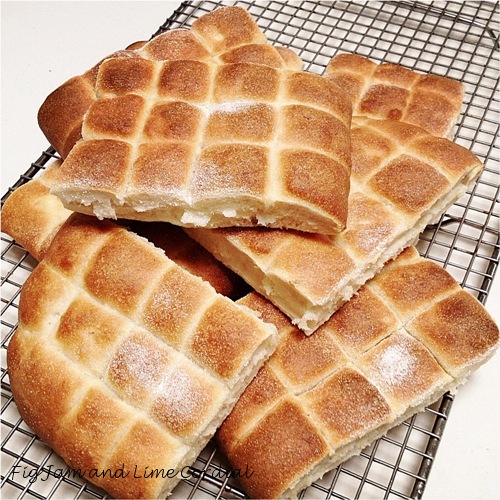
Inspired by lovely Joanna’s recent post, I baked another batch of semolina bbq buns. I’d forgotten how much I adore these!  And it was fun to bake a couple of quick yeast breads for weekend eating – it made a nice change from sourdough.

As usual, I over-scored these, so some of them broke apart into teeny tiny mini buns.  We had visitors on Sunday, and their small children were absolutely delighted…

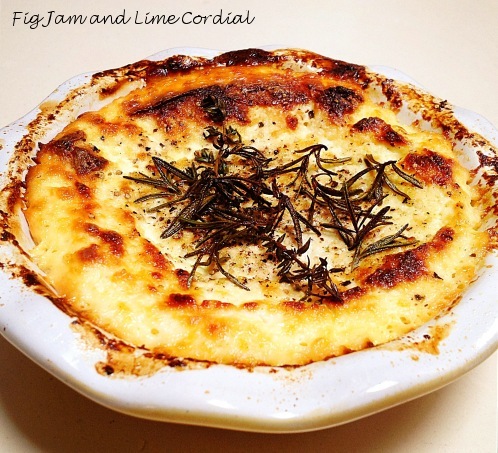
I uncovered an old tub of ricotta in the fridge nearing its expiry date, so I drained it and tipped it into a small pie dish.  The top was drizzled with a little extra virgin olive oil and topped with a scattering of citrus salt, rosemary and thyme, then baked in a hot oven until firm and golden. It made a great accompaniment to the buns and stotties…

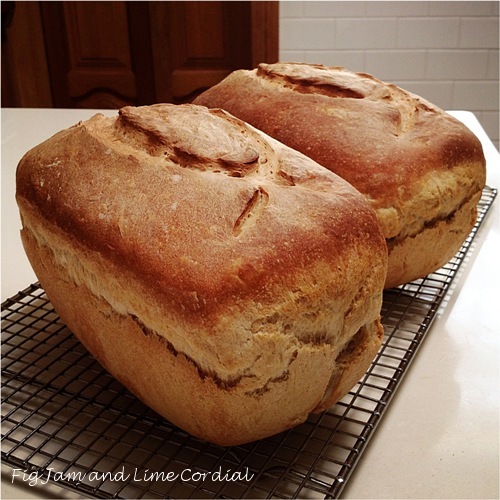
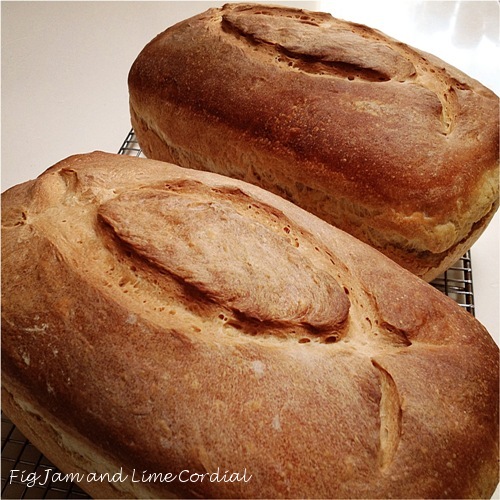
And finally, I baked four large (1.3kg) white sourdough loaves in my Römertopf clay loaf pans.  These have become a house standard – the boys enjoy having “toast” bread, and I love not having to preheat the oven.  I now cut the loaves in half before freezing them, as the wolves have been known to defrost and eat a whole one at a single sitting!

I baked two regular loaves, and two with the Billington’s Molasses Sugar that I bought last week.  The small change resulted in a deeper coloured crumb and crust…

I slashed the tops with two sweeping arcs that crossed at either end, which produced a nice, even oven spring. Pete made a comment about loaves and fishes…

So…the bread drawer in the freezer is fully restocked. But given that school holidays are imminent, I’ll probably be baking again next weekend!

Read Full Post »

We’ve been really busy these past few weeks!

That doesn’t mean I’ve stopped baking – in fact, spending a little time in the kitchen is both therapeutic and time efficient. When things are really frantic, I can always pull out a loaf of sourdough from the freezer and serve it with really good extra virgin olive oil and cheese, and nobody complains…

What it does mean, though, is that I haven’t really tried anything new for a couple of weeks now. So here are photos of some old favourites that have been been gracing our kitchen benches this past week.

I made a large batch of sourdough bagels – the enormous joy these bring to our ex-New York neighbours Jane and Bernie always makes the effort worthwhile…

I couldn’t find any poppy seeds in the fridge, so these were topped with a mix of sesame seeds and black salt.  I wrote a yeasted bagel tutorial here, and added the sourdough version a few months later…

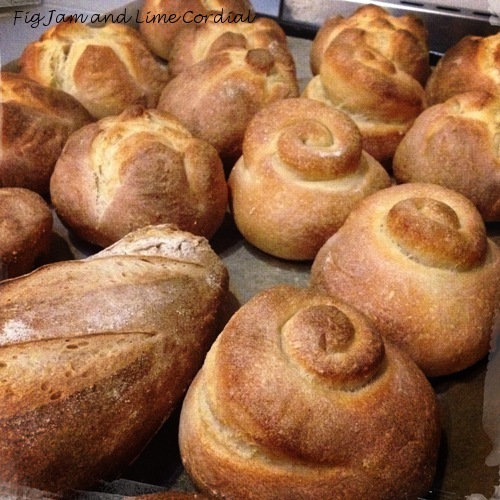
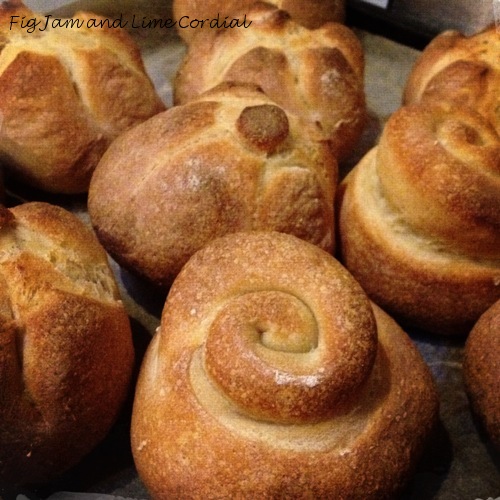
When I’m really busy, the breadbaking goes large scale – I made a 3.75kg  batch of dough using my basic shaping dough, and turned it into eighteen rosetta rolls and three fat baguettes…

The good thing about rolls is that the teenage wolves take one or two out of the freezer at a time, rather than defrosting (and then eating) a whole loaf…

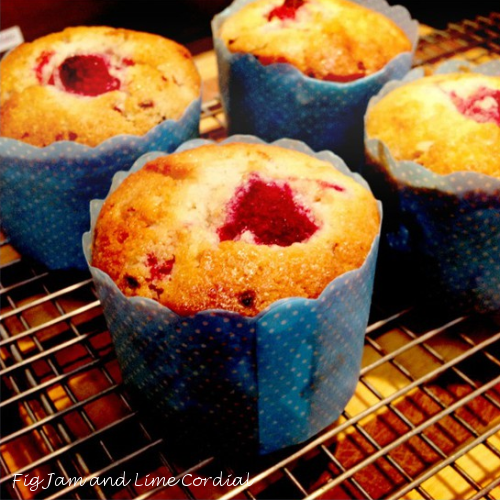
There are always eggs from the chooks, raspberries in the freezer and chocolate in the pantry, and therefore there are always friands in the kitchen…

Finally, Pete and I were out of Wednesday night, so I baked a quick slab pizza for the boys – half with olives and anchovies for Small Man, and the other half with Spanish onion and prosciutto for Big Boy. They’re both very fussy about their pizza toppings!

How are you all traveling? I hope things are calmer at your end.

I sometimes wonder whether it’s the time of year, or whether being in our late 40s with teenage sons means that this is simply a busy time of life.  Either way, tomorrow is Saturday, and I’m looking forward to a little downtime.

Wishing you all a brilliant and hopefully restful weekend!

Read Full Post »

I have treasure in my kitchen.

Amedei Chuao is a dark 70% single origin chocolate from Venezuela. It is the stuff that legends are made of.  As I wrote in a previous post:

. . . . .

Amedei came about after brother and sister Alessio and Cecilia Tessieri, Italian sellers of baking ingredients, approached Valrhona seeking to distribute their products.   Story has it that Valrhona rejected their request, telling them that Italy wasn’t “capable of appreciating fine French chocolate”.

Furiously insulted, the Tessieris formed Amedei, which almost immediately started producing amazing chocolate.  Their true moment of triumph though, came when Alessio managed to secure exclusive access to the renowned Chuao cacao plantations, locking Valrhona out of their premium source of beans.  It’s a fabulous story – you can read more about it here and here.

. . . . .

Amedei Chuao is regarded by many as the finest chocolate in the world, but until a few days ago, I’d never tried it. Part of the problem was availability, but there was also the issue of cost – at a recommended retail price of $18.50 for a 50g block, it was way out of my price range.

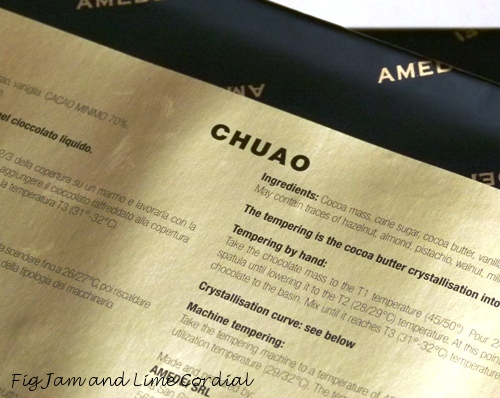
So…when I discovered that my friend Tania worked for Lario International, the Australian importer of Amedei, and that she could source some Chuao for me at wholesale prices, I leapt at the opportunity.  The chocolate comes in elegant one kilogram blocks, wrapped in black and gold…

I chopped up a large quantity for tempering…

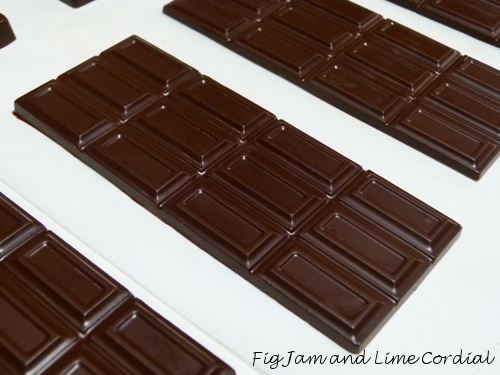
…and ended up with nine glossy bars and a dozen or so small fleur de lys chocolates. It was a delight to work with, tempering to a crisp snap and shiny finish…

The chocolate is extremely fine and has a distinct flavour – slightly smoky with delicious plummy notes and a smooth, almost buttery, finish. As Monkey Girl pointed out, the pleasant hint of bitterness fades in the mouth and is replaced with sweetness and well balanced acid. (I love that Big Boy’s girlfriend has such a fine palate!)

The teenagers were hovering as I unmoulded the chocolate, and I tried to explain to them how rare the product was, and how much it cost, and the wonderful story behind it.  Unfortunately that didn’t stop them eating it as fast as they could – in the end I had to chase them out of the kitchen!

It is such a treat to have this chocolate to savour and experiment with, especially after reading so much about it.  Tania, I can’t thank you enough!

Read Full Post »

Did you know that it’s International Scone Week?

It’s not surprising if you didn’t, given that Joanna, Heidi and I made it up a couple of years ago.  We found ourselves in a flurry of serendipitous scone baking, and had so much fun that we thought it would be lovely to repeat it annually.

So the second week of August became Scone Week, declared to be International since we were all baking and blogging from different continents.

I decided to make yet another attempt at a traditional recipe this year. I haven’t had much luck in the past, and usually end up with clunky hockey pucks (unlike the ever reliable lemonade scone recipe, which never seems to fail).

However, undeterred, I watched a clip from River Cottage and tried again.

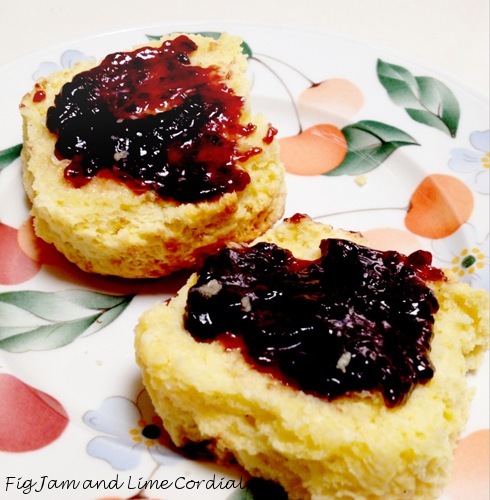
They were a great success!  Pete declared that they were the best scones I’d ever made – “better than the lemonade ones” – and promptly ate four of them with Pepe Saya butter and his homemade mixed berry jam…

The secret, it seems, is to handle the dough as little as possible once the liquid is added, and to cut them without twisting.  The original recipe is on the River Cottage website (unfortunately, the link is now broken) – here’s my amended version…

  • 300g (2 cups) plain (AP) flour
  • 2 generous teaspoons baking powder
  • pinch of fine sea salt
  • 75g (5 US tablespoons) unsalted butter
  • 50g (¼ cup) caster (superfine) sugar (I used vanilla sugar)
  • 125g (½ cup) milk (original recipe used cream)
  • 1 large free range egg
  • a little milk for brushing the tops before baking

1. Preheat oven to 200C (400F) or 180C (360F) with fan. Line a small baking tray with a sheet of parchment paper.

2. In a medium bowl, whisk together the flour, baking powder and salt.  Sieve the dry ingredients into a large mixing bowl.

3. Cut the butter into small cubes and then rub it into the flour with your fingertips. Stir in the sugar.

4. Whisk together the milk and egg, then pour it onto the dry ingredients. Mix together gently with your fingers, then turn the dough onto a lightly floured surface and bring it together gently. Don’t overwork it – as my friend Shawna pointed out, it’s better to have a little dough stuck on the counter than flat scones.

5. Lightly roll the dough to a thickness of about 2½ cm (1″). Using a well-floured round cutter, cut the dough into circles, taking care not to twist as you push down (which apparently retards the rise). Lay the scones on the parchment-lined tray and brush the tops with a little milk. Bake for 20 – 25 minutes, or until (hopefully) well-risen and golden brown.

I read somewhere that cooling the hot scones on a wire rack will result in a crisp exterior, whereas wrapping them in a tea towel with soften them.

As I mentioned in the previous post, I’ll be spending a bit of time with our visiting friends this week, but I wanted to get this post up at the beginning of International Scone Week.  Misky and Heidi have already started baking!

If you’d like to bake and blog about scones, please feel free to leave a comment here linking back to your post, so that everyone can read it.  On Saturday I’ll do a round-up post of everyone’s scones.  Happy baking!

Read Full Post »

« Newer Posts - Older Posts »