Feeds:
Posts
Comments

Archive for the ‘Recipes’ Category

Tarte Tatin

Everyone has their own recipe for Tarte Tatin – this one is ours.

For the longest time, I avoided making this dish because I didn’t have a cast iron Tarte Tatin dish which could go straight from the hob into the oven.  It wasn’t until I read Patricia Wells’ Bistro Cooking that I realised I was being daft.  We now do as she suggests and cook the apples (her recipe is for pears) in a large non-stick frypan until golden, and then tip them into a pyrex pie plate, which lets us check on the apples as they bake.

It’s worth mentioning that the first stage of this recipe, which involves caramelising the apples, requires a measure of patience.  I have none, and I’m a bit of a nervous Nelly about things burning, so I never manage to get the fruit really golden and brown before baking.  Pete, on the other hand, is both brave and patient, so he always handles this part of the process.

A traditional Tarte Tatin uses a Pâte Brisée or flaky pastry, but we like it best with June’s sweet shortcrust pastry.  Partly because there’s always some in the freezer!

Tarte Tatin
(an original Fig Jam and Lime Cordial recipe)

1.   Preheat oven to 220C (425F) of 200C (400F) with fan.

2. In a large and heavy, preferably non-stick pan, heat the butter over medium heat until melted.  Stir in the sugar.  Now add the apple chunks, and stir occasionally to stop them from sticking.  Continue to cook, stirring gently and moving the pieces around often to ensure they don’t burn.  The fruit will get very brown and quite soft – this can take half an hour or more.

3. Tip the well caramelised apple pieces and any remaining syrup into a pyrex pie dish or other suitable container.  The pyrex doesn’t need to be greased first, although I’m not sure about other dishes.

4. Between two sheets of parchment, roll out the pastry dough until it is slightly larger than the top of the pie dish.  Peel off the top sheet, and invert the dough onto the top of the apples, then remove the bottom parchment.  Now carefully tuck the edges of the pastry in around the apples.

5. Bake the tart until the apples are bubbling and the pastry is a dark golden brown, between 30 – 40 minutes.  The actual baking time takes a bit of judgment – I was sure the tart was burnt, but Pete was insistent that it was ok – and it was!

6. When the tart is ready, remove it from the oven and immediately (and carefully) invert it onto a heatproof serving plate.  Any stuck apple pieces should fall slowly onto the tart – a gentle tap on the outside of the dish can help.
Click here for a printable version of this recipe

Read Full Post »

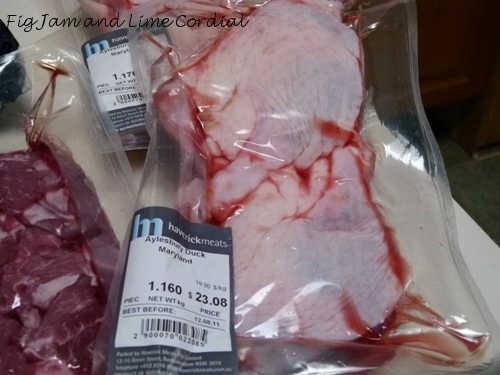
Since discovering that we could buy fresh Aylesbury marylands (drumstick and thigh portion) at Haverick Meats, duck has become a staple food in our house.  It’s surprisingly good value – the meat is so rich that just a couple of pieces are enough to feed my entire family!

Edit: Good news! I’ve just been told by the handsome Pave at Haverick’s that the duck marylands are coming from Thirlmere Poultry (whose ducks are all free-range).

I confitted ten marylands using this recipe by Maggie Beer…

  • 10 duck marylands
  • 200g fine sea salt
  • 3 tablespoons each fresh rosemary and thyme leaves
  • 5 bay leaves
  • enough rendered duck fat to cover – about a litre (or olive oil)

1. In a small food processor or blender, blitz the salt, herbs and bay leaves together. Rub this all over the duck pieces and refrigerate for 4 – 6 hours – the original recipe suggests overnight, but I find that makes the duck too salty for our liking.  I prepped my duck at lunchtime, and then put them into the oven after dinner.

2. Rinse the duck pieces well and dry them with a paper towel.   Preheat oven to 90C (not fan forced).  Pack the duck pieces as closely together as possible in a baking dish or casserole – Maggie says you can layer them up to two deep.

3. Heat the duck fat very gently in a saucepan until just melted, and pour over the duck pieces until they’re completely covered. If you like, tuck a couple more bay leaves and sprigs of rosemary into the oil.  I used a ceramic roasting pan, but next time I’ll use my large casserole pot, as it was impossible to get the roaster out of the oven without sloshing duck fat everywhere!

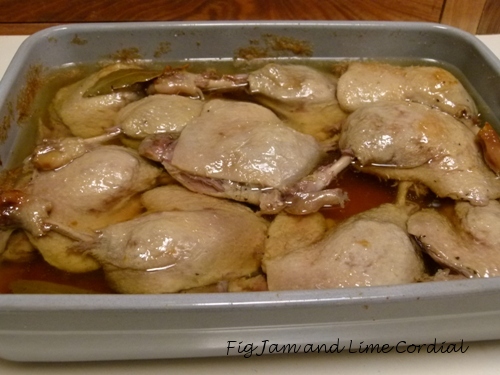
4. Cover the dish – I used foil – and bake for 10 hours (overnight), after which time the meat will be extremely tender and falling off the bone.  If you wanted to serve the pieces whole, you might wish to reduce the cooking time substantially (Raymond Blanc suggests 3 hours).

5. Carefully ladle out the clear duck fat, taking care to avoid any coloured stock settled at the bottom of the pan. To store the marylands, scatter a little salt at the bottom of a large casserole dish (to stop the juices going rancid), then pack the pieces in as tightly as possible.  Completely cover with the clear duck fat and store in the fridge.  As an aside, I asked my food chemist friend Lee about storing confit duck – here is his reply.

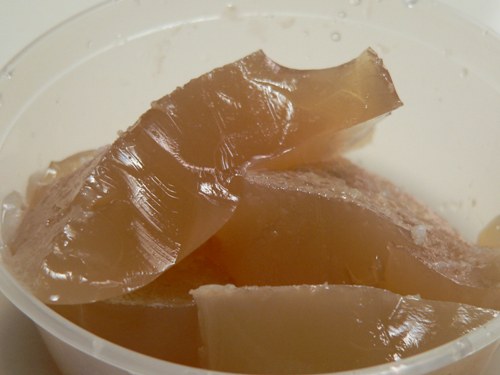
6. Carefully pour the remaining fat and juices into a bowl and pop it into the fridge.  After a few hours, the fat will set at the top and can be scooped off and stored, and a jellied stock will be left at the bottom of the bowl. This is gold. Unlike regular stocks which are made with water, these are the concentrated juices of the cooked duck.  I store mine in small containers in the freezer (you’ll only need a little bit to flavour a whole dish) .

Duck Rillettes

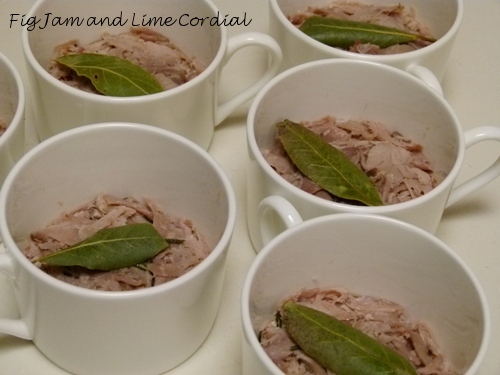
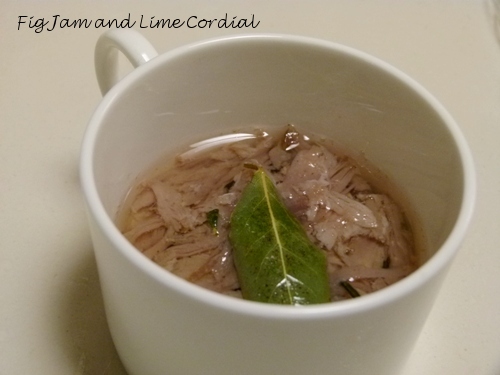
I stored six of the marylands whole and used the remaining four to make Maggie’s Duck Rilletes.  The skin and bones were discarded, and the meat finely shredded. An extra tablespoon of chopped rosemary fried in a little duck fat was stirred through the meat, which was then packed tightly into tea cups and topped with a bay leaf.

A thin layer of melted duck fat was poured over the top of each serve to seal it.  The Rillettes were stored in the fridge, and the fat scraped off before serving.  They were delicious served with a crusty sourdough and bread and butter pickles.

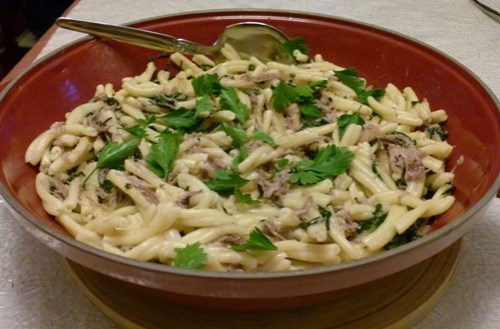
My friend and neighbour Maude created an amazing pasta dish using the Rillette that I gave her – she fried chopped Tuscan Kale and garlic in olive oil, then combined it with the shredded duck meat and stirred it through hot pasta.

I made a variation of this for dinner last night using chopped spinach from the garden and a couple of skinned and shredded marylands, as we’d eaten all the Rillettes. I also added a spoonful of the jellied duck stock, which intensified all the flavours.  As we already had confit duck in the fridge, we were able to turn out a delicious meal in the time it took the pasta to boil!

Read Full Post »

Our neighbour Mark used to live in an inner-city apartment.

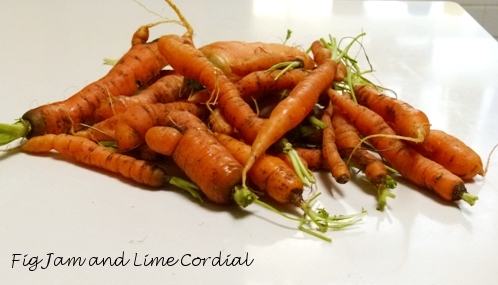
When he moved into Mrs M’s house next door, he was ecstatic to find a well-established veggie patch and masses of lawn to mow.  One of the first thing he did was plant carrots – he opened a packet of seed and emptied it into the garden bed.

As Mrs M’s soil was so fertile, he ended up with squillions of gnarly, skinny carrots.  He’s brought over kilos for us – here are just a few of them…

They’re beautifully sweet, and quite pretty after washing and peeling…

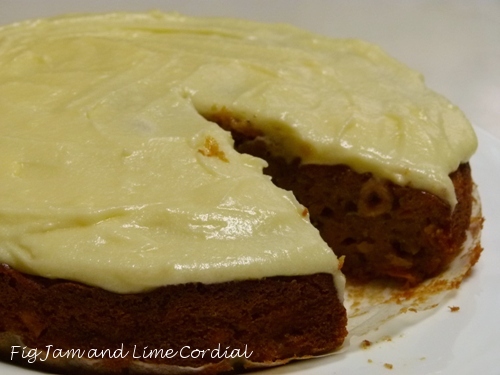
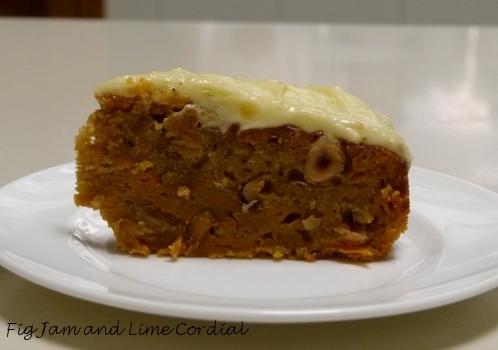
At Pete’s request, I made this carrot cake, adapted from a recipe by Stephanie Alexander.  I ended up altering the ingredients quite a bit – I substituted roasted peeled hazelnuts for the walnuts, and used grapeseed oil instead of olive oil.   Both of these were deliberate changes – we’re not big walnut fans, and I always feel olive oil can overpower other flavours in a cake.

I baked the cake in a springform 20cm (8 inch) pan instead of the 18cm one specified, which meant the finished cake was a little flatter than expected.  I also coarsely grated the carrots – the original recipe called for them to be finely grated, but I didn’t have the patience – and added a little lemon juice to the icing to balance out the butter and cream cheese.

The end result was a homely, comforting cake which everyone loved.

  • 125g (4½ oz) self-raising flour
  • 150g (¾ cup) brown sugar
  • ½ teaspoon ground cinnamon
  • ½ teaspoon ground nutmeg
  • 140g (²/3 cup) vegetable oil (I used grapeseed)
  • 2 large free range eggs
  • 250g (2 cups) coarsely grated carrot
  • 75g (½ cup) roasted peeled hazelnuts, chopped (original recipe specified walnuts)

1. Preheat oven to 180C (360F) or 160C (320F) with fan.  Grease and line either an 18cm (7″) or a 20cm (8″) round cake tin.

2. In a large mixing bowl, whisk together the flour, sugar, cinnamon and nutmeg.  In a separate bowl or measuring jug, whisk together the oil and eggs.  Add this to the flour, and beat with an electric mixer for a minute or so until combined.

3. Stir in the carrot and hazelnuts, then pour the mixture into the prepared baking tin.  If you’re using an 18cm cake tin, bake for about an hour; if using a 20cm tin, reduce this time to about 50 minutes.  The cake is cooked when a toothpick inserted into the middle comes out clean.

4. Allow to cool in the tin before removing and icing.

Lemon Icing

  • 60g (¼ cup) softened unsalted butter
  • 125g (4½oz) softened cream cheese
  • 115g (4oz) icing sugar mixture (confectioner’s sugar), sifted
  • lemon juice

In a small mixing bowl, beat the butter and cream cheese together, then beat in the sifted icing sugar.  Add enough lemon juice to form a spreadable icing.

Click here for a printable version of this recipe

Read Full Post »

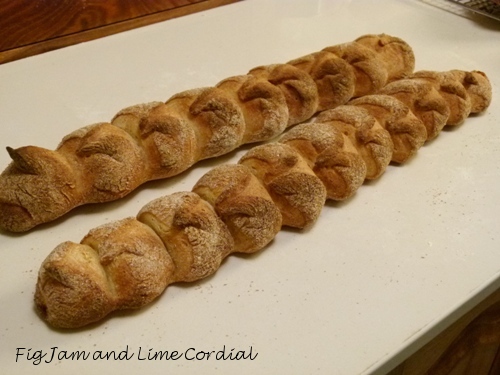
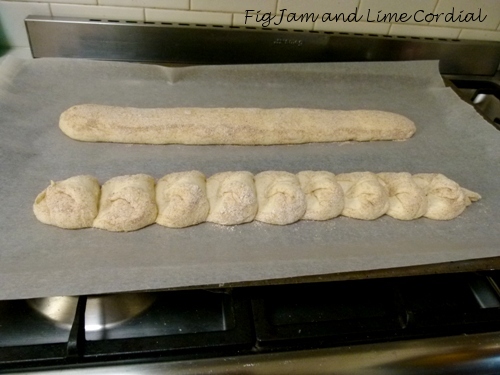
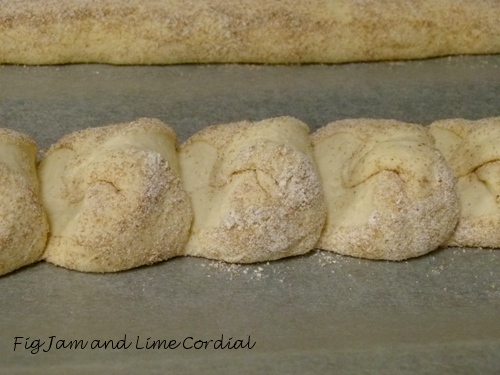
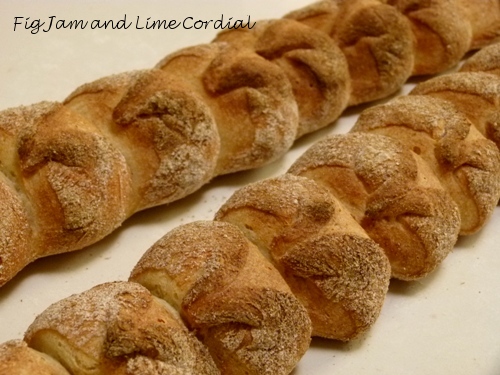
Dragon tail baguettes!  How cool are these!

This new shape comes from Susan at Wild Yeast, who very kindly posted these video instructions…

. . . . .

. . . . .

I began with my shaped dough formula:

  • 300g active sourdough starter (fed at a ratio of one cup water to one cup flour)
  • 580g cold water
  • 500g bakers/bread flour
  • 500g Semola Rimacinata di Grano Duro (remilled durum wheat semolina flour)
  • 18g fine sea salt

Note: don’t be tempted to use fine or coarse semolina instead of remilled semolina (durum wheat) flour – the former is too coarse and won’t absorb enough water, and you’ll end up with a soggy mess.  If you can’t find the rimacinata, you might want to substitute more bread flour in its place.

The proven dough was shaped into baguettes and allowed to prove a second time.  Just before baking, they were snipped with kitchen scissors and folded over as shown in Susan’s video clip above…

The finished loaves are crunchy and perfect for sharing.  This epi variation makes a wonderful dinner party bread and a great conversation starter!

Read Full Post »

Pete’s Muesli Enhancer

My three men eat a lot of cereal.

They all breakfast on large bowls of Weetbix – Small Man has brown sugar on his, while Pete and Big Boy add muesli to theirs.

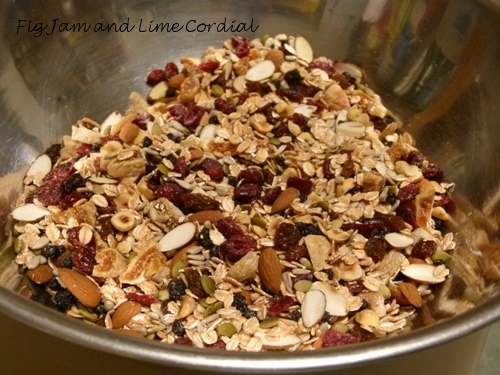
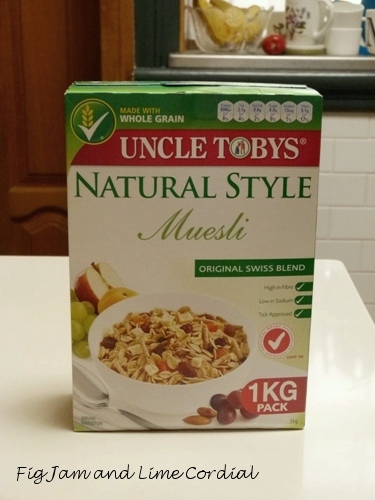
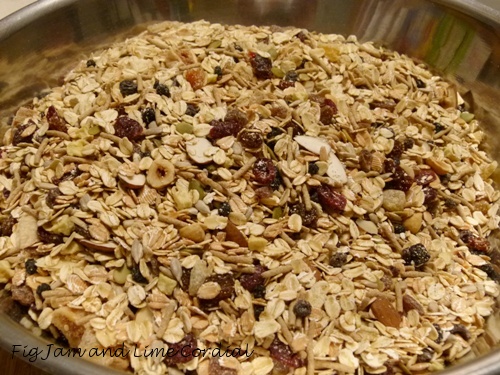
Pete doesn’t make his own muesli from scratch, but he does “enhance” it with a whole swag of add-ins.  He uses Uncle Toby’s Natural Style Muesli as his base – he’s very happy with this brand, as the oats are soft, there’s a little bran included, and it’s actually cheaper than buying straight rolled oats.

To every one kilo packet, he adds:

  • 200g rolled spelt
  • 100g whole almonds, halved lengthwise
  • 50g roasted peeled hazelnuts, halved
  • 50g pepitas
  • 100g sunflower kernels
  • 50g dried blueberries
  • 100g dried figs, cut into small pieces
  • 100g dried cranberries
  • 50g sultanas

It makes for a very luxurious breakfast indeed.  Do you make your own muesli mix?  We’d love to know what you put in yours!

Read Full Post »

« Newer Posts - Older Posts »