Feeds:
Posts
Comments

Happy August everyone!

A couple of things…

Firstly, a reminder that the 4th International Scone Week begins on the 11th August! Here’s our post from 2013 – hopefully we can have as much fun this year!

Secondly, if you do an IMK post, please let me know. You can leave a comment on my blog, or send me a tweet or email, but please don’t assume I’ll see your post and add it to the list otherwise. I’d hate to leave anyone off the list, but there are so many contributors now that I can’t keep track of you all without your help. Thanks!

. . . . .

In my kitchen…

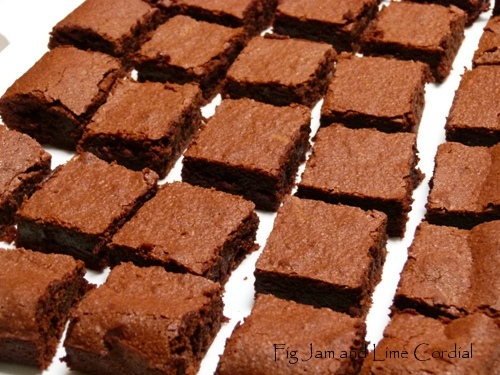
…are brownies for my young friend Red Roars, who is in the middle of exams. I used this recipe

In my kitchen…

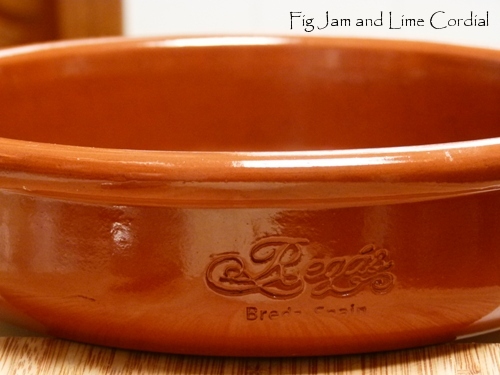
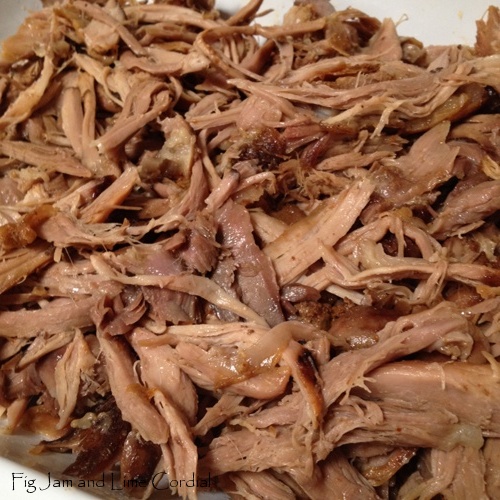
…is a new attempt at pulled pork. I skinned cheap pork hocks, seasoned them with a brown sugar spice rub, then baked them in presoaked Römertopfs for four hours at 135C. Unlike my usual recipe, I didn’t add any water, but I did turn the meat over and basted it in its juices a couple of times during the cooking process. The result wasn’t quite as tender as the other method (which could have been because of the cut I used), but the meat was incredibly flavoursome…
imk0814j

In my kitchen…

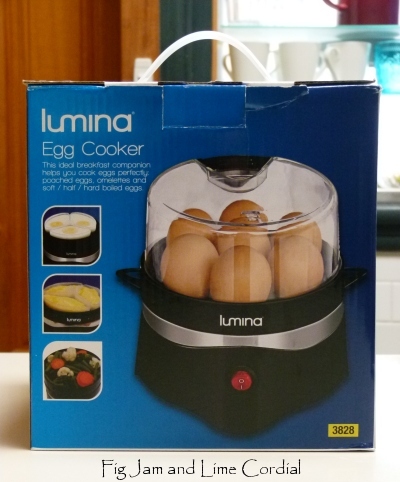
…is an automatic egg cooker, picked up from Aldi for under $20. My friend Carol swears by hers, and I’m hoping it will help us deal with our current egg glut…
And speaking of Carol, in my kitchen…

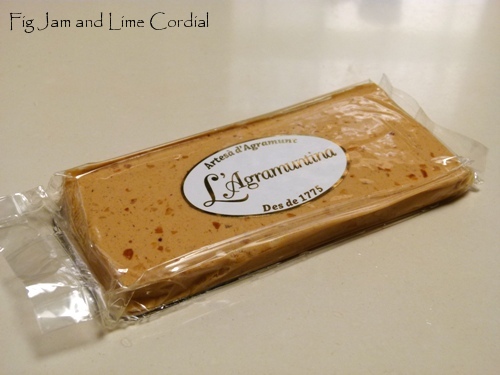
…is the last bar of nougat that she brought us back from Spain. The other two were absolutely delicious…
In my kitchen…

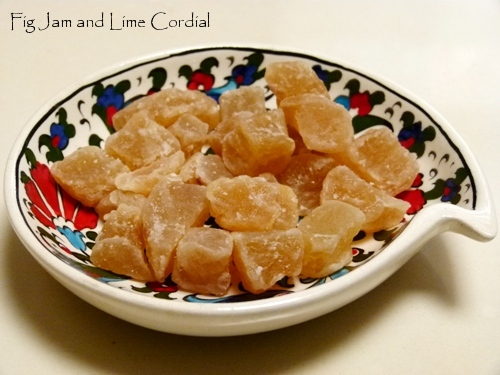
…is a one kilo box of Buderim Naked Ginger, which we found at Costco. We eat a lot of ginger at our house…

The naked ginger is still candied, but without the heavy sugary coating. I’m not sure how it can be low GI, as it’s still very sweet…
In my kitchen…

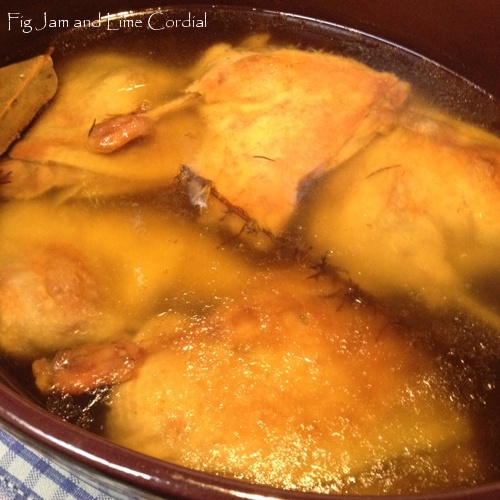
…is lots and lots of confit. A dedicated post is on its way…
In my kitchen…

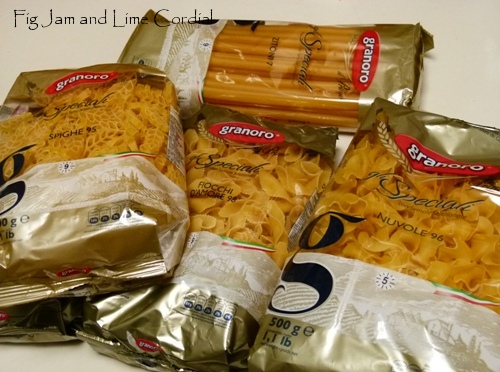
…is fancy Italian pasta, picked up for $1 a packet on sale at our local Italian supermarket…
In my kitchen…

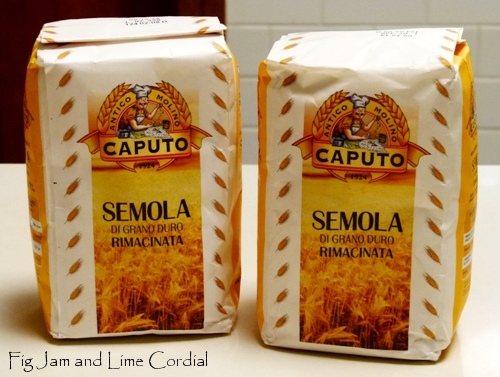
…are bags of Antico Molino Caputo Semola di Grano Duro Rimacinata. Along with regular bakers flour, this fine remilled semolina flour forms the backbone of most of my sourdough baking. The Caputo brand is of a particularly high quality…
In my kitchen…

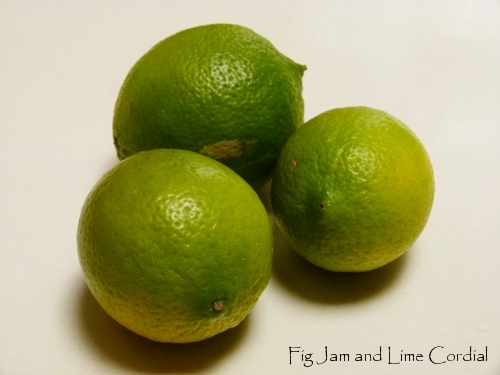
…are our first limes ever off our dwarf tree…
In my kitchen…

…is a Spanish stew, made with chick peas, pork belly, potatoes and chorizo. The recipe comes from David Tanis’ One Good Dish

In my kitchen…

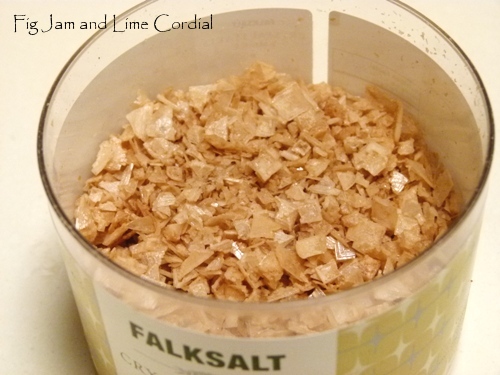
…is smoked salt! It’s widely available here now. Tanya, this photo is for you…
. . . . .

Tell me, what’s happening in your kitchen this month?

If you’d like to do an In My Kitchen post on your own blog, please feel free  to do so. We’d love to see what’s happening in your kitchen this month!  Please link back to this blog, and let us know when your post is up, and we’ll add it to our monthly listing. Please upload your post by the 10th of each month.

. . . . .

Here are this month’s posts…

Bernice @ Dish ‘n’ the Kitchen (Calgary, Canada)

Emily @ Cooking for Kishore (New Jersey, USA)

Moya @ Food & Tools (Bahrain)

Shaheen @ Allotment2Kitchen (Wales)

Christine @ Food Wine Travel (Brisbane, QLD)

JJ @ 84th & 3rd (Sydney, NSW)

Clare @ The Life of Clare (Geelong, VIC)

Serena @ Anything But Toast (Canberra, ACT)

Siobhan @ Garden Correspondent (Ulupinar, Turkey)

Mel @ The Cook’s Notebook (Brisbane, QLD)

Lorraine @ Not Quite Nigella (Sydney, NSW)

Claire @ Claire K Creations (Brisbane, QLD)

Vicki @ Boiled Eggs & Soldiers (first IMK post! Sydney, NSW)

Danielle @ The nOATbook (Melbourne, VIC)

Anne @ Anne Lawson (Melbourne VIC)

Laila @ Table of Colors (Finland)

Indira @ I’ll Cook, You Wash (first IMK post! Georgetown, Guyana)

Tania @ The Cook’s Pyjamas (Perth, Western Australia)

Liz @ Mother Hubbard’s Cupboard (Gold Coast, QLD)

Gretchen @ Feeding My 3 Sons (first IMK post! South Carolina, USA)

Emma @ SurreyKitchen (Surrey, UK)

Ngan @ Ngan Made It (San Francisco, USA)

Diane @ Photographs and Recipes (Massachusetts, USA)

Nicole @ Miss Food Fairy (Melbourne, VIC)

Becca @ The InTolerant Chef (Canberra, ACT)

Fiona @ TIFFIN – Bite Sized Food Adventures (Brisbane, QLD)

Mandy @ The Complete Cookbook (Sundays River, South Africa)

Jennifer @ Milk and Honey (Gippsland, VIC)

Jason @ Don’t Boil The Sauce (Melbourne, VIC)

Johanna @ Green Gourmet Giraffe (Melbourne, VIC)

Ella @ Mulberry and Pomegranate (Sydney, NSW)

Jane @ The Shady Baker (Broken Hill, NSW)

Sherry @ Sherry’s Pickings (Brisbane, QLD)

Lisa @ I’ll Be There With A Fork (Brisbane, QLD)

Fran @ Life in the Food Lane (from Maine, USA this month!)

Taryn @ The Wooden Spoons (Canberra, ACT)

Kim @ A Little Lunch (Oklahoma, USA)

Kari @ Bite-Sized Thoughts (London, UK)

Maree @ Around The Mulberry Tree (Gippsland, VIC)

Greg and Katherine @ Rufus’ Food and Spirits Guide (Little Rock, Arkansas, USA)

Glenda @ Healthy Stories (Melbourne, VIC)

Emma @ Gustoso (Brisbane, QLD)

Nancy @ Jamjnr (Shanghai, China)

Misky @ The Chalk Hills Kitchen (West Sussex, UK)

Anne @ Life in Mud Spattered Boots (Essex, UK)

Sandra @ Please Pass the Recipe (Melbourne, VIC)

Joanne @ What’s on the List? (Adelaide, South Australia)

Ardys @ Ardysez (Alice Springs, Northern Territory)

Charlie Louie @ Hotly Spiced (Sydney, NSW)

Tania @ My Kitchen Stories (Sydney, NSW)

Debi @ My Kitchen Witch (Sheffield, UK)

Tandy @ Lavender and Lime (Gordons Bay, South Africa)

Sally @ Bewitching Kitchen (Kansas, USA)

Francesca @ Almost Italian (Melbourne, VIC)

Glenda @ Passion Fruit Garden (Perth, Western Australia)

Liz @ Bizzy Lizzy’s Good Things (Canberra ACT)
Wasting food drives me crazy. That doesn’t mean I never throw anything out, but every time I have to, it annoys me so much that I want to beat my head against a wall.

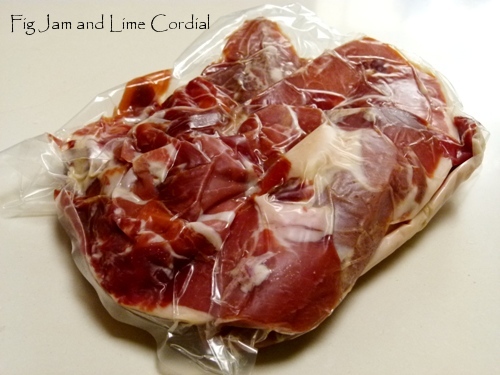
My friend Johnny feels the same way, which is why the offcuts from his gourmet food company are carefully packaged up and sold at heavily discounted prices through his retail shop. When I saw him last week, he handed me several bags and, generous soul that he is, refused to take any money for them. He said, “Celia, I have heaps and not everyone is as enthusiastic about them as you are”.

For the life of me, I can’t figure out why not! I was squealing with excitement over this bag filled with end pieces and wonky slices of Spanish jamon

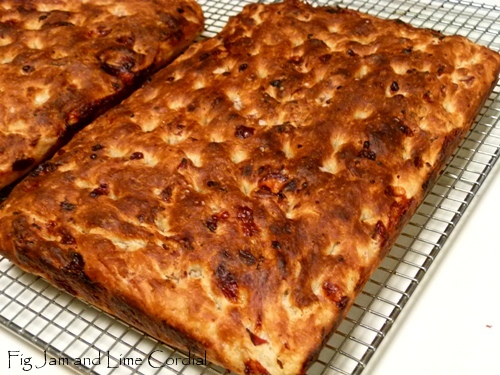
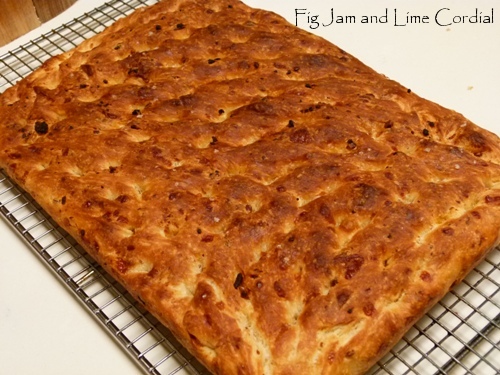
On Saturday morning, I added a handful of chopped jamon to our yeasted dough, along with Ford Farm Coastal cheddar and dollops of Pete’s quince paste. The risen dough was then shaped into two focaccias…

I delivered one slab to Johnny’s shop as a thank you, and fed the other to Will and Bethany who’d popped over for lunch (the focaccia we ate had some air-dried ham in it as well)…

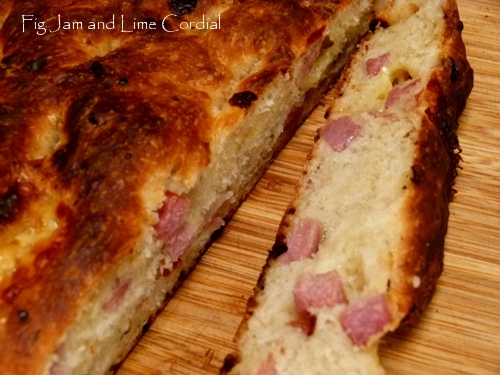
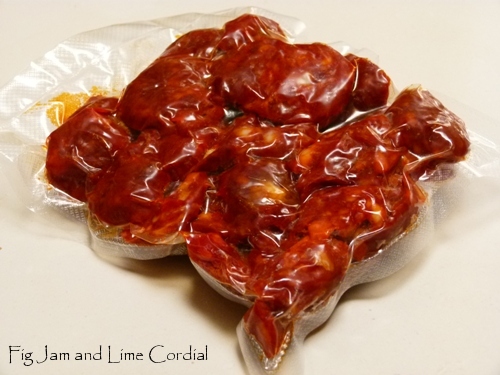
The following day, I thought I’d experiment with the chorizo we’d been given…

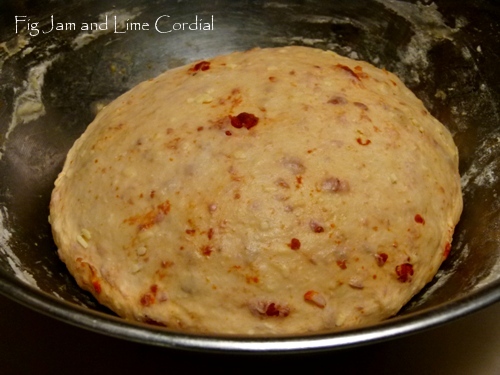
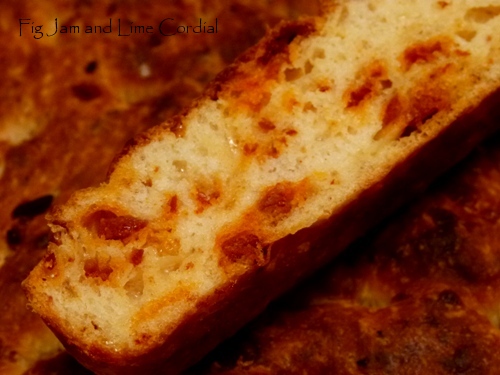
I chopped it up finely and added it to my dough with cheese. No quince paste this time – I wasn’t sure the flavours would work well together…

Here’s my yeasted focaccia recipe

  • 500g bakers/bread flour
  • 10g instant/dried yeast
  • 7g fine sea salt
  • 320g water
  • 50g olive oil
  • 200 – 250g (approx) of mixed deli meats and cheeses – for the chorizo focaccia, I used 120g meat and 80g Coastal cheddar.

1. In a large mixing bowl, whisk together the flour, salt and yeast.  Add the water and oil, then add the filling, cut up into small pieces.  With a clean hand, squelch everything together to form a sticky dough.  Scrape off your hand, and cover the bowl with clingfilm.  Allow to rest for about half an hour.

2. Leaving the dough in the bowl, give it a brief knead (doing this in the bowl saves on cleaning up the bench later, and also contains all the inclusions, which tend to fly around otherwise when kneaded).  It should only take about 30 seconds for the dough to turn quite smooth.  Cover again and leave to rise until doubled – this could take a bit longer than usual with all the added bits and pieces.

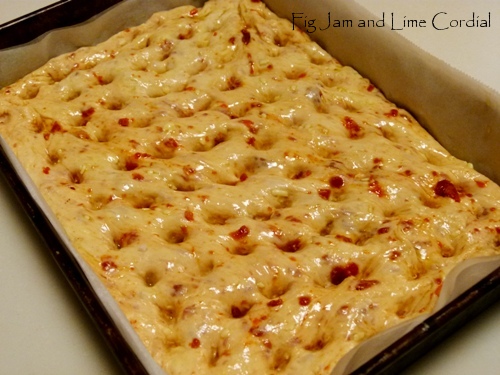
3. Line a pan with parchment paper and scrape the risen dough into it. I used a 23cm x 33cm (9″ x 13″) rectangular tin. Gently pat and stretch the dough out to fit evenly into the pan.  Cover and let it rest until it puffs up a little – about 20 minutes.  Preheat the oven to maximum.

4. Uncover the dough and drizzle with oil, then scatter a little salt over the top (not too much, as the fillings are already quite salty).  Push clean fingers through to the bottom of the dough.

5. Put the pan into the hot oven, lowering the temperature to 220C (430F) and bake for 20-25 minutes, rotating the bread once during the baking time. Watch it carefully, as it can brown up very quickly.

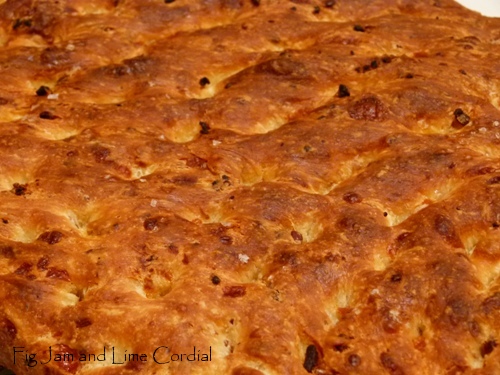
The absence of the quince paste resulted in a deliciously salty loaf. The chorizo flavour was very pronounced and paprika oil from the meat added colour to the crumb. Pete and Small Man loved it…

It’s amazing how far offcuts can stretch! Our three focaccias fed ten people this weekend, and we’ve barely dipped into the bags. The jamon has been divided up and vacuum-sealed – I’ve popped a couple of smaller portions into the freezer for future meals.

The next time you see offcuts for sale at your local deli, grab them! They’re wonderful to have on hand – we use them in potato ragout, soups, pastas, breads and more. My mum even adds them to her fried rice!

A post for Tandy and Mandy and Brett!
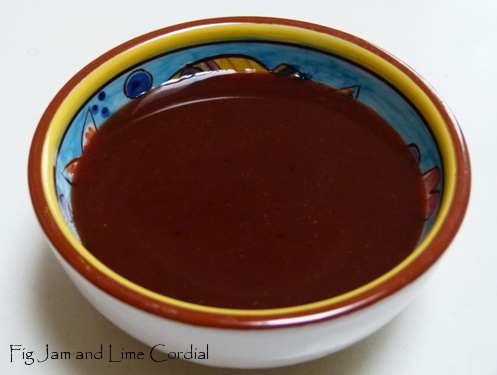
And don’t panic, no monkeys were injured in the making of this sauce!

. . . . .

Every month, Workman Publishing put a few of their e-cookbooks on sale. You might recall (or have purchased) The New Spanish Table when it was on special for $2.95 in April  – it’s now back up to $14. It’s worth checking the Workman website each month to see what’s on offer.

This month I picked up Stephen Raichlen’s Barbecue! Bible Sauces, Rubs and Marinades for $3 (less than the cost of a takeaway coffee – I love that!)…

I was flipping through the pages (virtually) and came across a recipe for the fabulously named Monkey Gland Sauce – a traditional South African barbecue condiment. Naturally, I couldn’t resist!

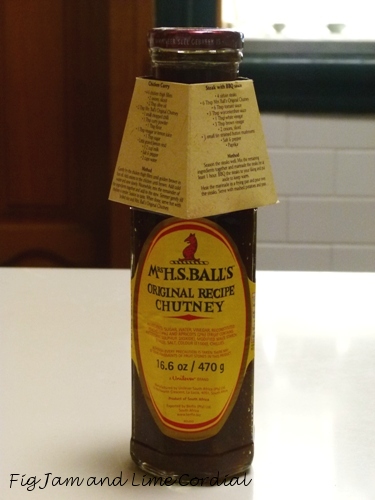
The sauce is based around a fruit chutney, so I used the last of the Mrs Ball’s that our neighbour Brett gave us last year…

  • 1 cup fruit chutney
  • 3 tablespoons red wine
  • 3 tablespoons port
  • 2 tablespoons salted butter
  • 1 teaspoon Tabasco sauce
  • several twists freshly ground black pepper
  • generous sprinkle (to taste) of smoked salt (or regular Maldon salt)

Note: I didn’t have the liquid smoke specified, so I substituted smoked salt in place of the regular salt.

Combine all the ingredients in a saucepan over a medium heat and bring to a boil. Reduce the heat and cook until the chutney breaks down. Stir often and continue to simmer until slightly thickened. Check seasoning, adding more salt and pepper if required. I blitzed it smooth with a stick blender, but you could leave it chunky if you prefer. According to Raichlen, the sauce will keep in the fridge (presumably stored in a sterile container) for several weeks.

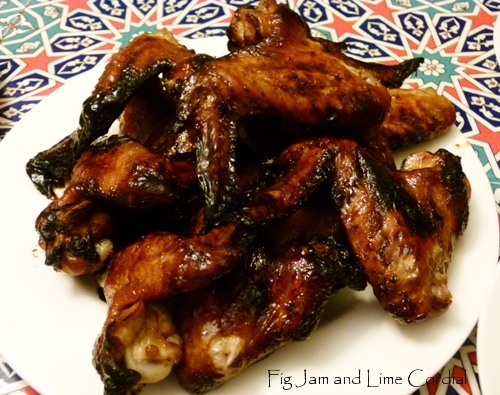
Monkey Gland sauce is traditionally served hot as an accompaniment to grilled red meats, but I used mine to coat chicken wings which were baked in the oven for dinner that evening. The boys smashed them…

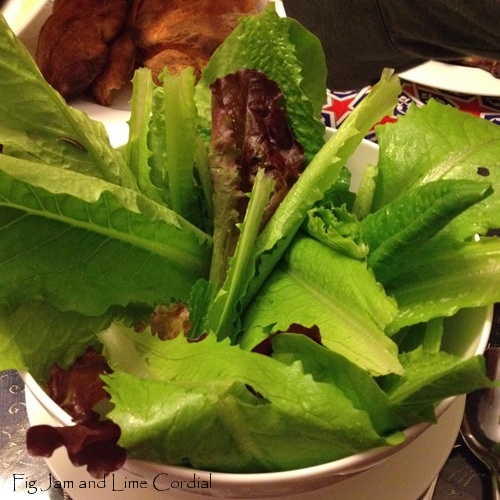
The wings were served with our twisty bread and a bowl of garden lettuces – our first for the season…

Monkey Gland Sauce – it’s a winner! Not only does it taste delicious, but imagine how much fun you’ll have serving it up at the next barbecue!

I stood on the little wooden pond bridge and took some photos of our green winter garden for you.

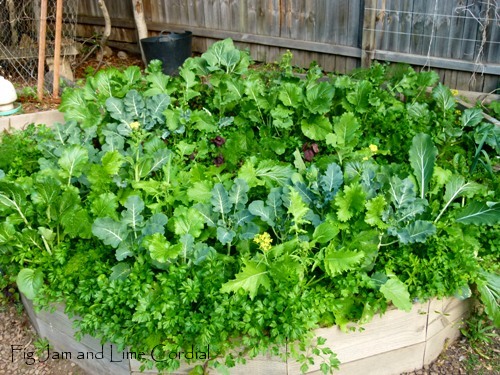
At the moment, four of the six beds are in use, one has the hens working on it, and the other is just about ready for the next chook dome rotation. The bed below is the one we lazy planted in February – somewhat surprisingly, it’s still producing well..

The bed planted out in mid-May is a glorious mix of different shades of green. Everything in it was either self-sown or grown directly from seed – we didn’t transplant a single seedling…

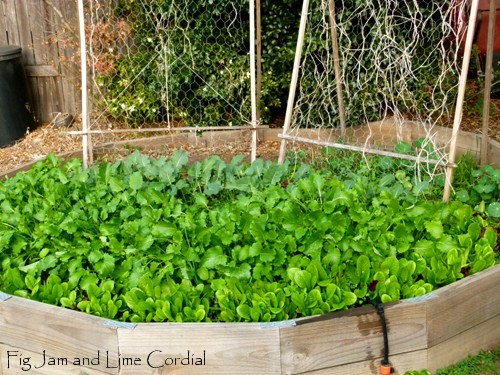
The back bed was sown mid-June – in the middle are Green Dragon broccoli, followed by a band of broccoli raab, with lettuces in the front. At the rear are pea seedlings – very few have come up this year…

Our newest bed is underway – we’ve (trans)planted perennial leeks and yellow cherry tomato seeds thus far…

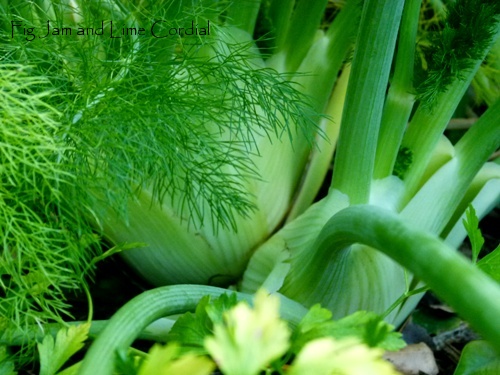
Our fennel bulbs are getting fat – we ate two of them finely sliced on pizza last night…

Little Gem lettuces are back in our garden – they’ve been sorely missed. Chickweed is growing in amongst them and we’ll harvest both for the salad bowl…

Francesca’s red leaf lettuces are adding colour to an otherwise all green bed…

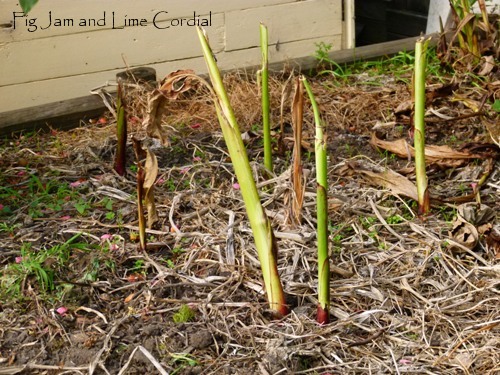
We’re planting an arrowroot forest in the old trombie patch. The huge leaves make the best mulch ever…

These fat perennial leeks are about to explode with babies…

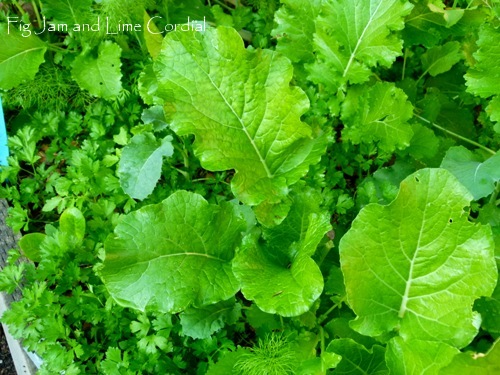
Raab, raab and more raab…

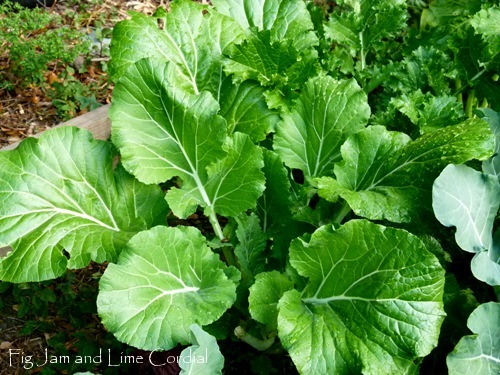
Our bok choys appear to have mutated. We think they’re crossing with the raab – is that even possible?

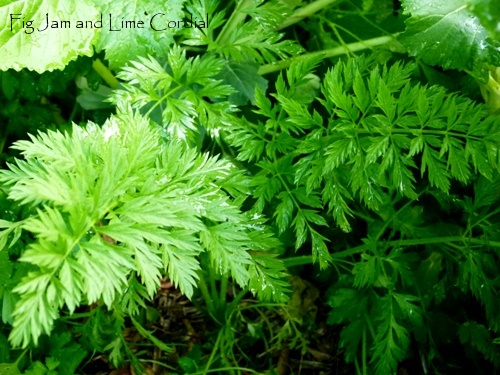
I don’t remember planting carrot seed, but there seem to be a few coming up…

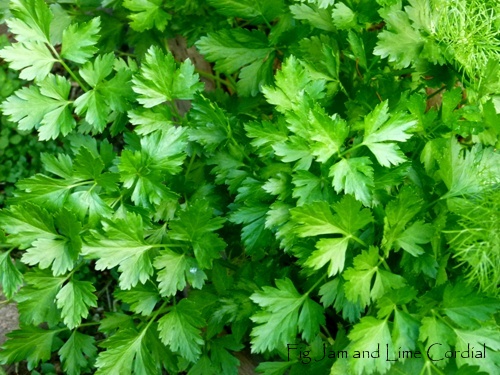
Continental parsley continues to grow in abundance…

The Green Dragon broccoli in the second bed is just starting to form heads…

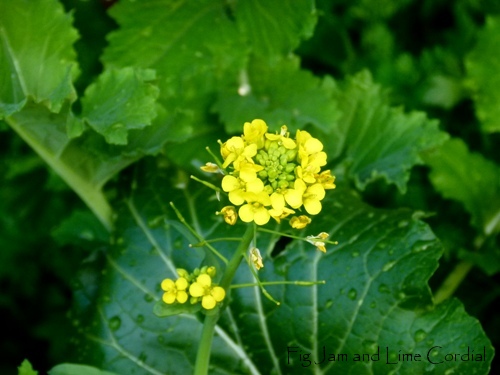
These gorgeous yellow broccoli raab flowers are quite delicious…

We are so blessed in Sydney – winter is often the most productive time of year in our gardens. How are things growing in your part of the world?

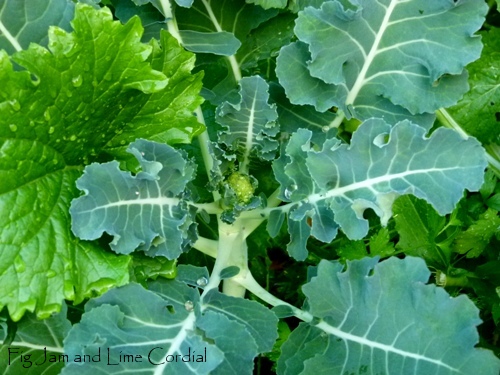
At the moment, our backyard broccoli raab (also known as broccoli rabé, rapini or cime de rapa) is growing in abundance.

Luckily we absolutely adore it. Twice a week, we’ll harvest an entire sinkful of leaves for dinner, which barely makes a dent on the plants. Raab is an incredibly healthy leafy green, but it’s taken a bit of trial and error to figure out how to prepare it.

The leaves are too bitter and spiky for salads, and we think they’re at their best when twice cooked – we boil them first, then refry them. The bitterness is mellowed in the process, leaving delicious and interesting green leaves which absorb and complement other salty flavours.

Once a week, we make cime de rapa pasta, and last night we discovered that the dark green flavours also work brilliantly with chorizo…

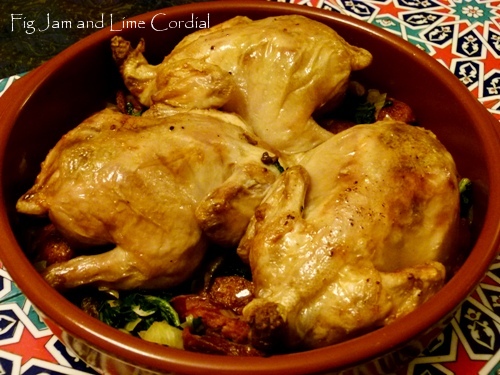
Inspired by an episode of Rick Stein’s Spain, I fried sliced chorizos and used the residual paprika-flavoured oil to brown spatchcocks prior to roasting. I then created a version of Tanya’s tapas dish, adding onions, broccoli raab and Fino sherry, popping the roasted birds on top for the final presentation.

Pete said I was just looking for an excuse to use my fabulous 12″ (30cm) cazuela dish, and he’s probably right…

Here’s our recipe in a bit more detail, but like all dishes of this ilk, the quantities are loose and can easily be adjusted to suit…

  • 3 spatchcocks, washed (if you wish) and paper towel dried
  • 4 Spanish chorizos (see note)
  • 1 large or 2 small onion(s), finely chopped
  • one sinkful of broccoli raab leaves (freshly picked if possible)
  • good splash of Spanish Fino (dry) sherry

Note: we buy our chorizos from Black Forest Smokehouse. They release a lot of oil and paprika when fried – if the ones you have don’t, you might want to add a little olive oil and/or paprika to the dish.

1. Preheat the oven to 200C with fan. Rub a little oil onto a baking tray (to roast the spatchcocks in). Bring a large pot of salted water to boil. Prepare the raab by stripping the leaves off the stems if necessary (if the stems are very tender, they can be left in). Roll all the leaves together and chop them coarsely.

2. Rinse the cazuela in hot water to moisten it. Slice the chorizos into thick chunks, then add them to the cazuela and heat the pan up slowly over a gas burner. This would, of course, work perfectly well in a more robust form of cookware – the terracotta cazuela needs a gentle touch and seems better suited to a gas flame than an electric hotplate.

3. Cook slowly, gradually increasing the heat as required and fry the chorizos until most of the oil has been released. This takes a bit of time. Remove the chorizos with a slotted spoon and set aside.

4. Add the spatchcocks to the hot oil, cooking for a few minutes and turning them over to brown them on all sides. Move them to the prepared baking tray, breast side down, and pop them into the oven for about half an hour.

5. Add the broccoli raab to the boiling water and simmer for a few minutes until softened. To the hot oil remaining in the cazuela, add the onions and fry until soft. Drain the raab and add the leaves to the onions. Stir well, breaking up any clumps. Add a good splash or two of the sherry (or substitute a decent white wine) and allow the vegetables to cook down. Finally, return the chorizos to the pan, and cook for a few minutes more to allow all the flavours to mingle.

6. When the spatchcocks are done, remove them from the oven, and sit them on top of the chorizos and vegetables.

My sons ate a bird each (!) and Pete and I shared the other one. They were tender and delicious, despite being seasoned only with the oil from the chorizos. The star of the night though was the broccoli raab – the leaves took on the spiced oil and sherry flavours, and I found myself scooping out the leftover greens to eat on sourdough.

PS. I bought my Spanish cazuela at (of course) Chefs’ Warehouse. They have an assortment of sizes available at very reasonable prices.