Feeds:
Posts
Comments

We’ve been experimenting in the kitchen!

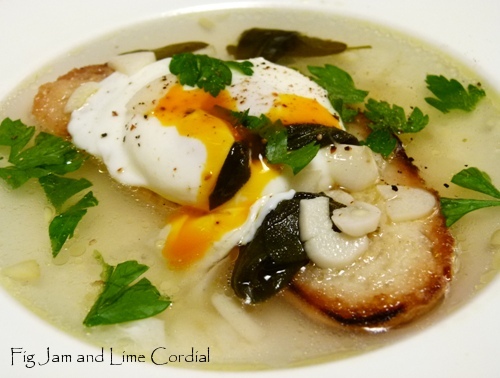
When I read out the recipe for garlic soup in David Tanis’ One Good Dish, Pete was instantly intrigued – so much so that he hotfooted it down the road for some Aussie garlic and sage leaves.  It’s a really interesting dish – a stock is made from simmering two whole heads’ worth of garlic cloves with sage and a little salt for just fifteen minutes. Then an egg is poached in the liquid and it’s served with a submerged slice of sourdough toast.

The end result was surprisingly mild in garlic flavour, but tasty nonetheless – the boys were happy to drink the straight stock with their dinner. I’m sure it was very good for them…
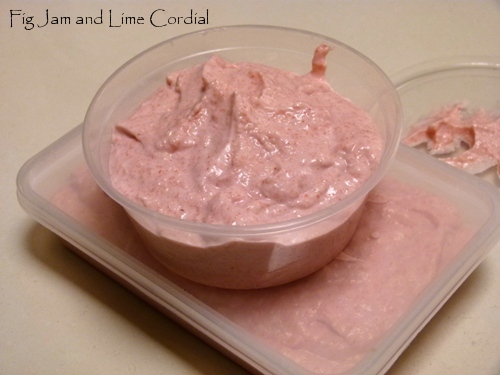
I tried Tessa Kiros’ traditional Greek taramasolata recipe from Falling Cloudberries. I’m sure I’d love her books more, but the print in the two that I own is so faint that I have trouble reading them without a bright light.

This tarama recipe is very nice but quite salty (which might have just been the roe I was using). It’s also quite interesting in that it uses the juice of half an onion rather than the pulp. I made it with leftover sourdough bread…
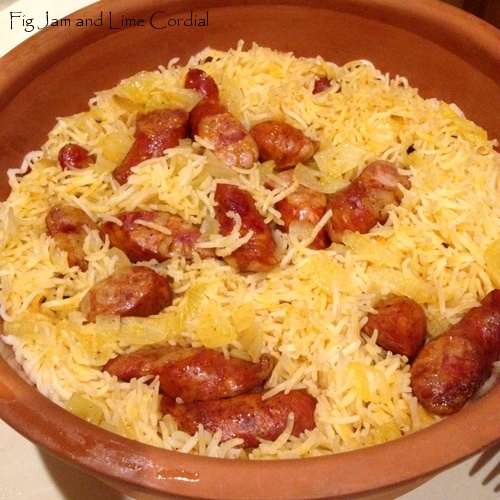
After chatting to Cate at Black Forest Smokehouse, I thought I’d try making chorizo rice.

The sliced chorizos were fried until they gave off their fat and colour, then lifted out of the pan. Chopped onions were cooked in the oil until translucent, and finally raw rice was added and tossed briefly to coat. Everything then went into our baby Romy (unsoaked) with added water, and the dish was finished in the microwave…
ke4

Beth from Burrawong Gaian posted a photo of her roast chook on Twitter, which inspired me to try her method at home. The bird roasted to perfection in the big Romy (presoaked this time), but our backyard lemons are huge, and I couldn’t manage to get a whole one into the cavity. My friend Anne told me I’d made a half-arsed attempt…hehe…
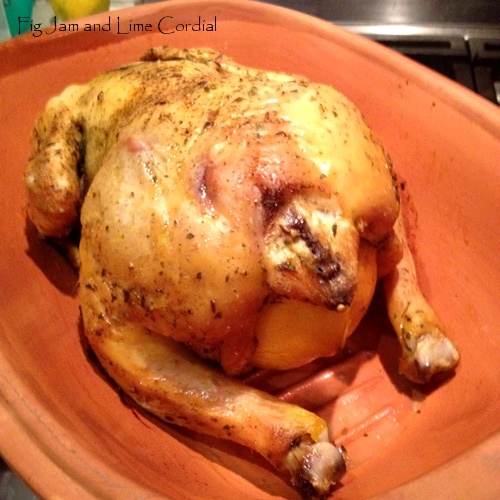
As we’d served the chook with the chorizo rice, there was a portion of the breast meat leftover. A couple of days later, I made chicken rice congee for breakfast…

Finally, I tried my twisty bread again, this time using the Portuguese lard and pimenton. This batch was even more popular than the duck fat version!

I hope you’ve all been having fun in your kitchens too!

My sister and her girls arrive for a visit tomorrow, so I’m taking a week off the blog to spend time with them. Take care and talk soon! ♥
I popped into Southern Cross Supplies in Marrickville recently.

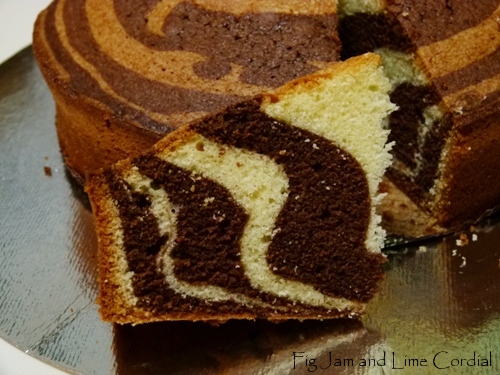
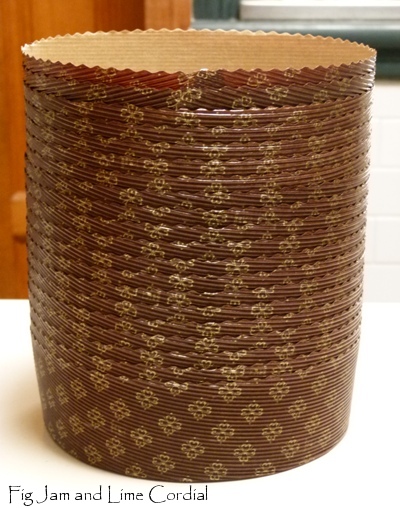
After an end of financial year stocktake, they were offering a few items for sale – on a palate outside the entrance sat deeply discounted masonite cake boards ($4 each for huge ones, and no, I didn’t buy any) and these paper baking pans. I’d never used them before, but at 50c each (20 for $10), I thought they might be worth a punt (and useful for gift giving, if nothing else).

The pans are made from sturdy corrugated paper with a thin cardboard base and I think they’re the King Arthur brand. They’re a convenient 8″ diameter in size and the internet tells me that I need to treat them as I would a regular metal baking pan – greasing as per usual and baking at the same specified temps.

I tried our tiger cake recipe in two of them (there was far too much batter for just one) and was really pleased with the results…

I think I might need to tweak the heat or baking time just a little, as the crust was a bit thicker than usual. The cake was tender and tasty nonetheless…

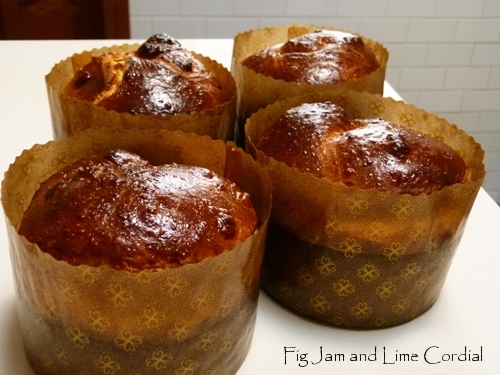
After baking the cakes, I remembered that I still hadn’t used the panettone cases that lovely Joanna sent me ages ago. Happily, a large batch of our sweet dough recipe fills up four of these beautifully…

I rolled the dough into logs and curled them up like snails, then popped them into the greased paper moulds. Baby M came over and took two of these home with her…

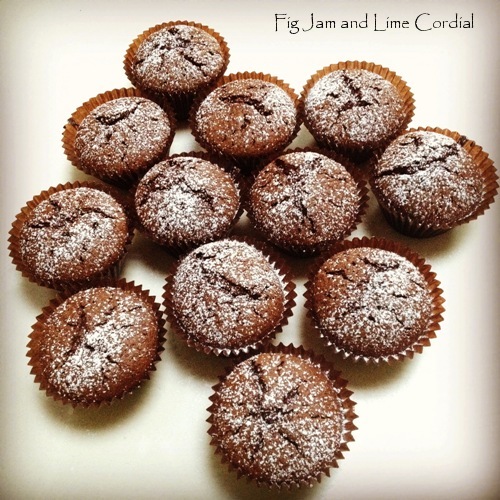
Finally, a treat for Red Roars who’s studying for his HSC trials – little gluten-free chocolate cakes. They’re baked in paper-lined muffin tins and topped with icing sugar…

Are you baking anything this weekend?

The devil, or so the expression goes, is in the details.

And that’s why the older I get, the less inclined I am to eat at restaurants. I want to know the details about what I’m eating – where the ingredients came from, what temperature the oven was set to, how the flavour combinations work.

The easiest way to achieve this is by cooking at home. I rarely find it tiresome – I’m more than happy to spend time fussing over something on the stove, or experimenting with a cake until it turns out just right. I want to be involved in as much of the cooking process as possible – it makes eating the final dish infinitely more rewarding. For me, it’s not just about pleasing my palate or ingesting nourishment – I want to seek out interesting ingredients and feel them in my hands, I want to observe the transformation from raw to cooked, I want to taste, season, and taste again.

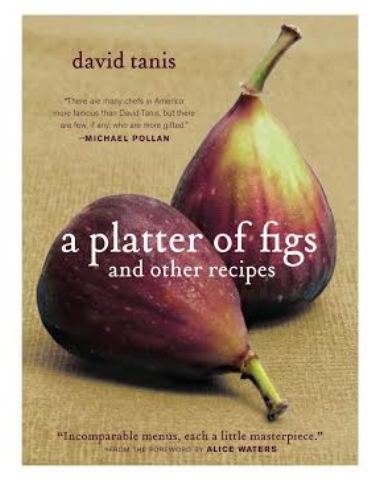
For that reason, amongst others, I adore A Platter of Figs by David Tanis. It seems to be written specifically for folks who cherish the opportunity to spend time in their kitchens, cooking for and with friends and loved ones.

It’s not a book for everyone – all the dishes are scaled to feed eight to ten – and it’s laid out in menu form, so you can’t just turn to “poultry” and see all the recipes collected in the one chapter. But I find it gloriously engaging – the recipes, the anecdotes, the writing style and the photos – I love everything about it.

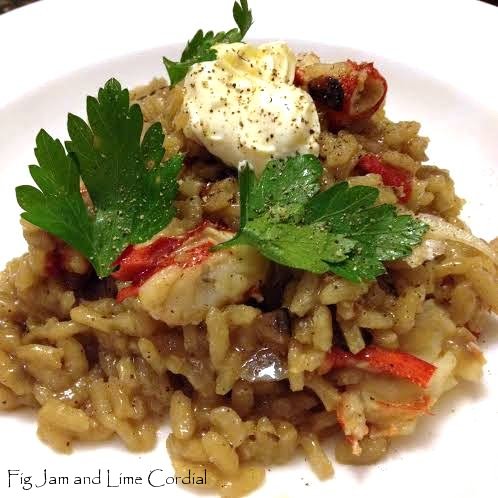
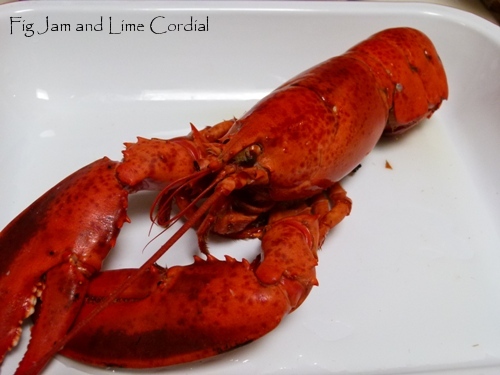
Last night I defrosted our remaining Costco lobster and used it to make a bastardized version of David’s risotto…

I didn’t have the four or five raw lobsters the recipe asked for, but that didn’t seem to matter. I cracked open the one I did have, picked all the meat, then put the shells on to boil. Further rummaging in the freezer produced a tub of fish stock, which was added to the pot.

The onions were sweated in butter, then Carnoroli rice, garlic, saffron, bay, olive oil and salt were added, followed incrementally by the stock. Once the rice was al dente, it was topped with lemon zest and the picked meat, and finished with parsley. The finishing touch – a dollop of homemade mayo – proved to be the perfect accompaniment. It was sublime and so rich in flavour that Big Boy and I could only manage a bowl each (Pete and Small Man aren’t fans of crustaceans).

This dish was a delight – every grain was loaded with flavour – but I doubt I’d have enjoyed it nearly as much if I’d had it in a restaurant. Then I wouldn’t have known how excited Lorraine and I were to discover the lobsters in the freezer at Costco, or that the rice used was Carnaroli rather than Arborio, or that the parsley and lemon were picked from our garden that afternoon. I wouldn’t have watched the grains of rice transform from hard white to translucent brown, or snacked on the roe from the lobster, or noticed the pungent aroma of the single crushed bay leaf before it was added to the pot.

The great joy of the dish, it turns out, was in the details.

I love how blogging begets blogging.

Since Ella Dee gave me the headsup on buying Burrawong Gaian products in Sydney, I’ve been dropping in to see George and Yiota at Dulwich Hill Gourmet Meats and picking up a bird on a monthly basis.

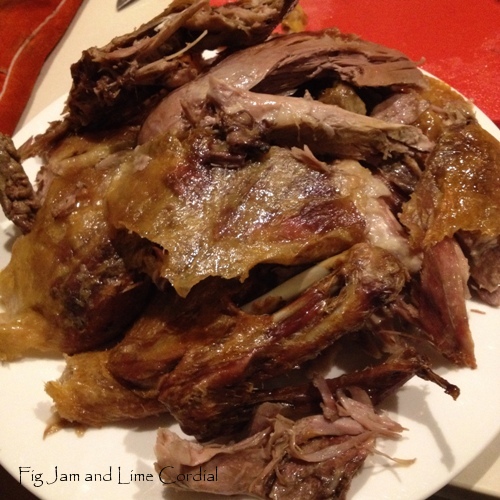
Last Friday, we slow roasted one of Beth’s ducks for three hours in the Römertopf – after rubbing with a little salt, the duck was placed into the presoaked pot, covered, and given 40 minutes at 200C with fan, followed by a couple of hours at 150C with fan. This was followed by a brief bake with the lid off at a slightly higher temp to crisp up the skin.

A couple of times during the roasting process, I took the Romy out of the oven and poured off the oil. The end result was so tender that it practically fell apart as I lifted it out of the pot. My sons attacked it like cavemen…

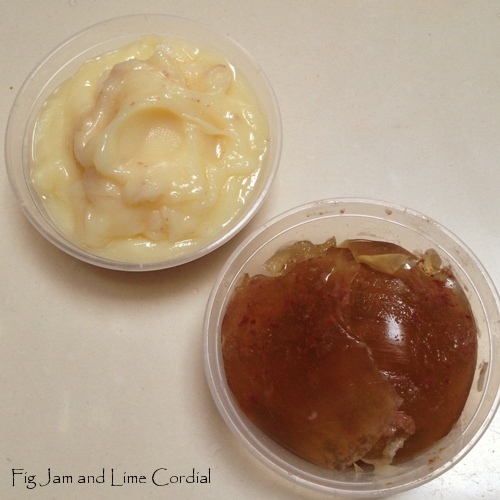
As I mentioned to Beth on Twitter the next day, the duck was sublime, but the leftover fat and gelatinised stock were gold

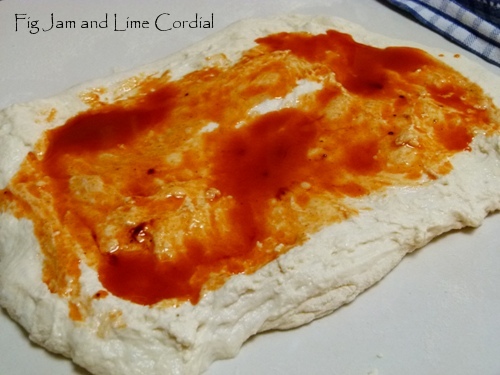
The ever fabulous Chica Tanya mentioned recently that in Spain, lard is often mixed with a little pimenton and served on grilled toast for breakfast. Inspired, I combined 50g of the duck fat with half a teaspoon of pimenton (paprika), and smeared the paste onto half a kilo of risen high hydration sourdough that I just happened to have on the bench…

The dough was rolled up into a thick log – it was a seriously messy process – then cut into slices. Further inspired by Lorraine’s bacon ring, I stretched each slice out and twisted it up. At this point, the dough was looking like torqued intestines, complete with blood (but I was having fun)…

After a brief rise while the oven preheated, the sticks were baked at 220C with fan for twenty minutes. They were divine. Big Boy and Small Man ate them hand over fist…

duck4

See what I mean? Blogging begets blogging! We had a lovely dinner, with thanks to Ella Dee and Burrawong Gaian Beth, and scrumptious, unique, whacky bread inspired by Tanya and Lorraine! ♥

Those of you who have been reading our blog for a while will know that I tend to get a little enthusiastic when things work well.

A sensible person might think, “ooh that recipe was great, I’ll make it again next year”. I, on the other hand, wonder how many variations I can concoct before the boys jack up and refuse to eat any more.

Such was the case (as you probably noticed) with my recent tea cake recipe. For a solid month, I pulled out different flavour combinations until everyone – Pete, the boys, the neighbours – had eaten their fill.  Eventually, I was left with a large slab of passionfruit and glacé ginger cake…

I didn’t want to waste it, so I was chuffed to find a crumble recipe in Jacques Pépin’s Essential Desserts which used cake crumbs as topping. The Kindle version of this book is very reasonably priced (about $4), but please note it only works on certain devices (and it’s not 700 pages long – it’s just an excerpt from one of his larger cookbooks)…

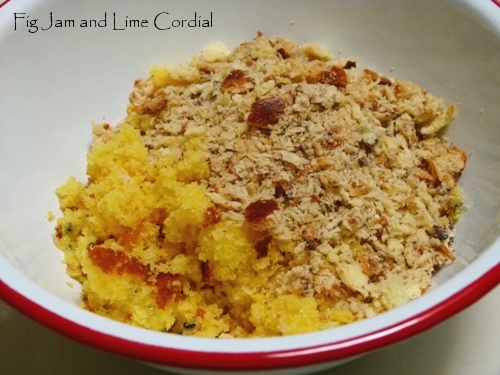
The recipe calls for a cup and a half of crumbled “pound cake, sponge cake or leftover croissants”. I used a mix of tea cake (icing removed) and stale faux brioche crumbs…

  • 2 cups fresh or frozen berries (I used a mix of raspberries and blueberries)
  • ¼ cup apricot jam (we used Pete’s homemade version)
  • 2 tablespoons apple juice
  • 1½ cups crumbled topping

Preheat oven to 160C with fan.

Warm the jam briefly to soften, then mix in the apple juice. Stir together with the berries, then tip the mixture into an ovenproof dish and top with the crumbs, covering the berries completely.

Bake for 20-30 minutes (check it to see that the topping doesn’t get burnt), then allow to rest and cool a little before serving.

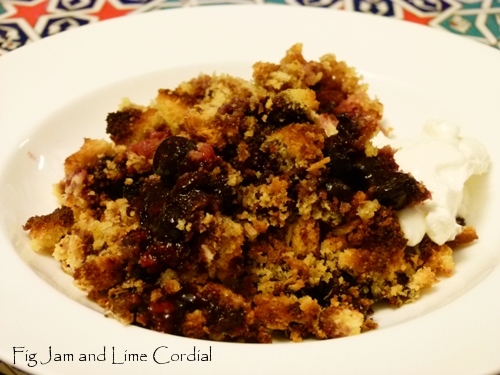
This was hands down the best crumble we’ve ever made! The cake and brioche crumbs crisped up beautifully and the berries were sweetened just enough by the jam and juice. Small Man declared it to be his new favourite dessert, and the dish was scraped clean within minutes.

It made me wonder – was this how crumbles originated, as a way of using up leftover pastries and cakes? In the past, I’ve always made the topping from scratch, using various combinations of flour, butter, nuts and oats, but this was so much better that I doubt I’ll ever bother making it any other way again. What I will do though, is stash all my leftover cake in the freezer from now on!