Feeds:
Posts
Comments

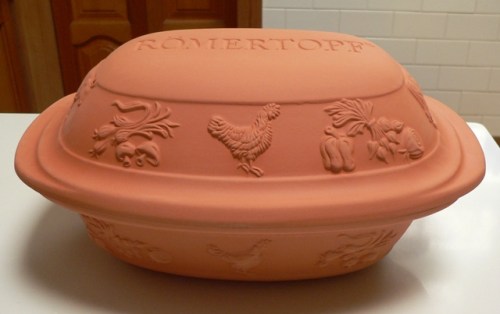
It’s been a while since I’ve waxed lyrical about my Römertopf bakers, but I’m still completely besotted with them.

Last week, I defrosted a small piece of free range belly pork and half a Burrawong Gaian duck, with great plans for an elaborate dinner. But as the day went on, I ran out of steam. So I dragged out my Römertopf bakers, knowing that they’d provide us with an easy meal, and more importantly, that when dinner was over, they’d go straight into the dishwasher. Both the large and small pots were left to soak in water while I prepped the meat.

The duck with washed, lightly oiled and salted; the pork fat was scored and rubbed with salt and pepper. Each went into a separate baker, then both were placed into a cold oven and the heat turned up to 200C with fan.

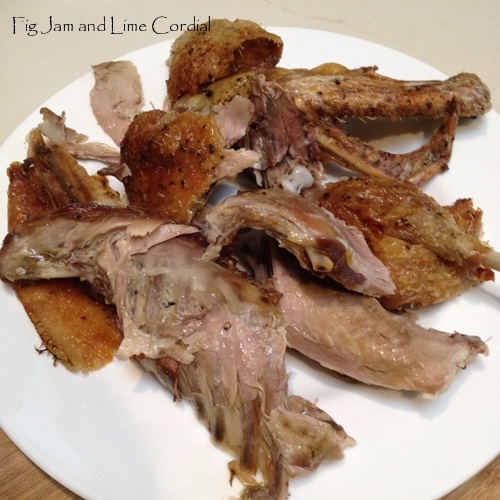
I then went out and forgot all about them for two and a half hours. I was sure both meats would be dried out and overcooked, but that wasn’t the case – the pork was moist and shredded easily, and the duck was so tender that it broke into pieces in my hands…

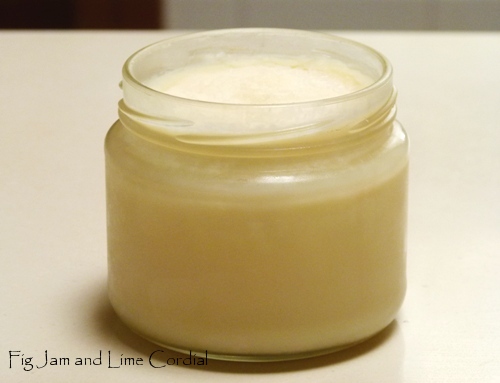
After dinner, I poured both the duck and pork drippings through a muslin-lined sieve into a jar. It set overnight in the fridge…

The following morning, I made bread sticks, using 130g of the combined fats and wild garlic salt. The original recipe is here, and they were very moreish…

There’s still half a jar of roasted fat drippings in the fridge. Jamie Oliver’s new book suggests that it will be fine there a couple of months, but I’ll be trying to use it up sooner than that. It was nice not having to waste it!

No matter who we are, we all have to find a way to live within our means. It doesn’t matter whether our finances allow for annual overseas holidays or require us to keep a careful eye on our grocery bill – almost no-one has unlimited funds to spend.

Over the years, our family income has varied quite a lot – from our reasonably flush late twenties, when we were childless and both working professional jobs; to our mid-thirties, when it all came crashing down with retrenchment and cancer. It took us a long time to figure out how to live within our means, but as we approach our fifties, it feels like we’ve finally got it sorted.

Here are a few life lessons we’ve learnt along the way…

Be prepared for an emergency, because one will come up

When we were young and bulletproof, we thought statements like this were melodramatic and alarmist. But as we now know only too well, life can literally pull the rug out from under our feet in a heartbeat. It’s almost impossible to anticipate the unexpected, but we can be just a little prepared for it, at least financially.

The conventional wisdom espoused by financial planners is to stash away three to six month’s worth of living expenses as a contingency fund. That’s a great goal to aim for, but much harder to achieve in practice – if a family is barely meeting their monthly expenses, how do they find three times that amount to tuck away? The answer is: slowly and incrementally. I have friends who prepare for emergencies by ensuring they have adequate credit on their mortgages – it works well for them. Either way, having some access to funds when a crisis hits can avert potential disaster, or at least soften its blow.

. . . . .

 Save whatever you can on recurring expenses

Saving on a one-off expense (new car, holiday) is great, but finding ways to save money on the stuff we buy every day/week is the true secret (in my opinion) to living affordably. And if it’s done creatively, it can be both painless and empowering.

My friend Smidge wrote an excellent blogpost comparing her two local supermarkets. There was a cost difference of 16% between them, and that was for the same products from both stores – she wasn’t comparing brand names to generic labels.  She found she could make a saving of $56 in just a few weeks’ worth of purchases – over a year, that’s a saving of over $800 (and that’s after-tax money).

By contrast, John Birmingham of the Sydney Morning Herald wrote about his $4000 a year takeaway coffee habit. I know that sounds crazy, but in Sydney prices, that’s equivalent to just two or three coffees a day.

Saving money like this takes a little thought and planning, mainly because we need to undo all our unconscious spending habits. For example, until we started making our own, it had never occurred to us that buying yoghurt was an expense we could save on. These days we make two litres a week for just $1/L, a saving of $10 each week, or $520 a year. And that’s just on yoghurt. By baking our own bread, we save about $1,000 a year (and we’ve been doing that now for over seven years).

Taking a good hard look at where the money goes isn’t always a pleasant process, but it can be very enlightening. There are a multitude of ways to trim dollars from our regular expenses, but sometimes it just doesn’t occur to us that it’s possible. It takes a little bit of lateral thinking, but it’s surprising how quickly the savings can add up. For example, $4 for a cappuccino might seem like nothing (it’s just two small coins), but one a day will amount to nearly $1,500 a year. I’m certainly not saying a daily coffee is a bad thing, but it’s important to be aware of the cumulative cost of all these seemingly little things.

. . . . .

DIY – Make it, Bake it, Grow it

I know our individual life circumstances are all different, and not everyone has the time, space, or inclination to make things from scratch. The last thing I ever want to do on this blog is to make anyone feel bad – the way we choose to live our lives works for us, but it might not be right for you.

Having said that, our key to living within our means has been to make as much as we can from scratch.  Doing so has allowed us to provide ethically-sourced, premium quality food for our sons, while keeping to a workable budget. Again, we’ve had to be resourceful to do this – we’ve tracked down wholesale suppliers of grassfed and free range meat, learnt to grow edible crops, and experimented with recipes. It all takes time, but it’s worth it.

More importantly, every little bit of it is worth it.  That’s one of the main reasons I write this blog – I don’t expect anyone to try all the different things we attempt, but I know that even just one thing – be it baking your own bread or growing herbs – can be incredibly empowering.

. . . . .

Make your own gifts

Even though this probably belongs in the point above, Pete thought it was important enough to warrant its own heading. First world gift-giving can get crazy – I have a friend whose Christmas shopping for her family alone costs her thousands of dollars every year.

These days, we buy very few gifts. Most are now homemade, and in the past couple of years, they’ve almost always been chocolate (even as a 50th birthday present).

Over the past twenty years, we’ve made polarfleece beanies, beeswax candles, crystal jewellery, fruit cakes, cookies, Christmas decorations and jams as gifts. None of these items used “cheap” ingredients, but they were all reasonably economical to make, particularly compared to buying the finished item. In addition, they were unique, made with care, and greatly appreciated by the recipients.

Mastering one skill well – be it sewing or baking or basketweaving (or just about anything else) – will enable you to create unique gifts for your friends and family that will make them feel loved. You’ll also save some serious dollars in the process!

. . . . .

Explore free and discounted services

Libraries. Parks. Art galleries. Our cities are filled with  thrilling and exciting things which cost absolutely nothing. I’m not a particularly good library user (as I prefer all my books in electronic format), but thanks to my friend Roz, I’ve become a keen art gallery visitor. With the Sydney Biennale just around the corner, it’s going to be an exciting year in my city. What’s happening in yours?

. . . . .

Patience and perseverance

Achieving an affordable lifestyle isn’t a result of luck. And it certainly isn’t an automatic byproduct of a large income – some of the highest salaried folks I know struggle with their cashflow.

Rather, it’s about patience and perseverance. Patience to save up and wait for things rather than having them immediately, and the perseverance to keep plugging away at it; saving a few dollars here, figuring out a smarter way to do something, and tucking a little bit away for a rainy day. And if there’s one thing I’ve learnt over my thirty years of adulthood, it’s this: it all adds up. The little changes, the frugal mindset, being consistent in watching the dollars – it doesn’t amount to much in a few weeks or months, but over the course of years, it can make a huge difference.

Achieving financial equilibrium – finding that sweet spot where our expenses don’t exceed our income – can lead to a less anxious, more contented lifestyle. It’s definitely something worth working towards!
A few bits and pieces from January…

We spent last weekend at Nelson Bay celebrating Uncle Greg’s 70th birthday. The views were stunning…

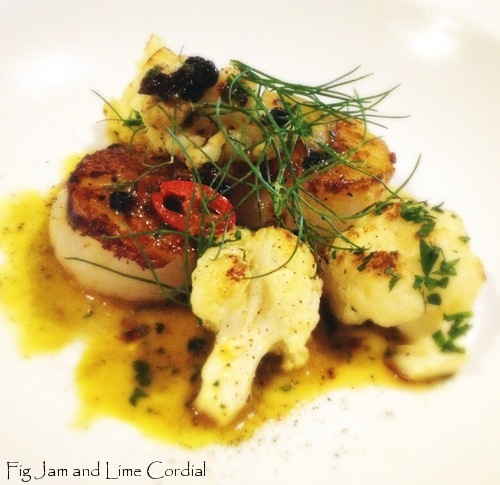
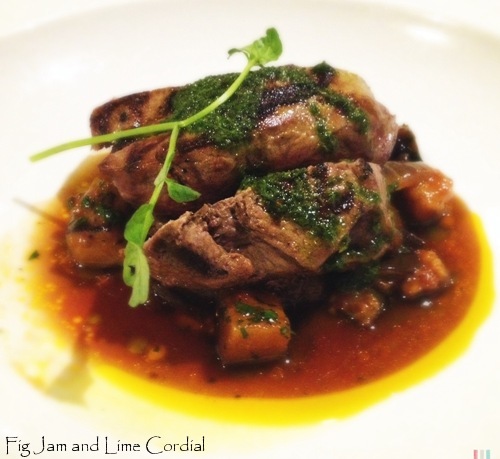
The following night, we dined at Watercress in Nelson Bay. Formerly the restaurant Zest (winner of several Chefs’ Hat awards), it’s a bit more affordable in its new bistro incarnation.

Big Boy and I had scallops for entree…

…and I had the lamb and eggplant main…

. . . . .

From our oven…

…I baked a batch of yeasted bagels for the first time in ages (usually I make sourdough ones). They were hoovered up in no time at all…

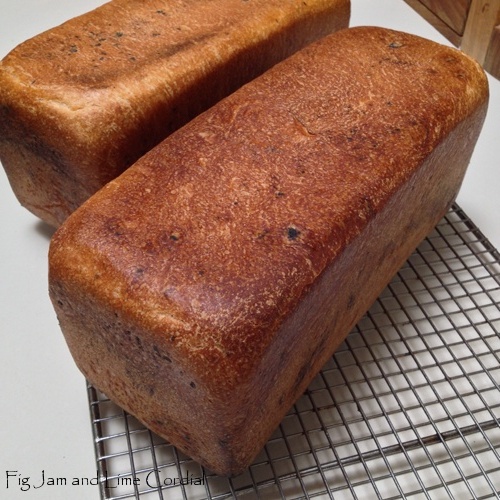
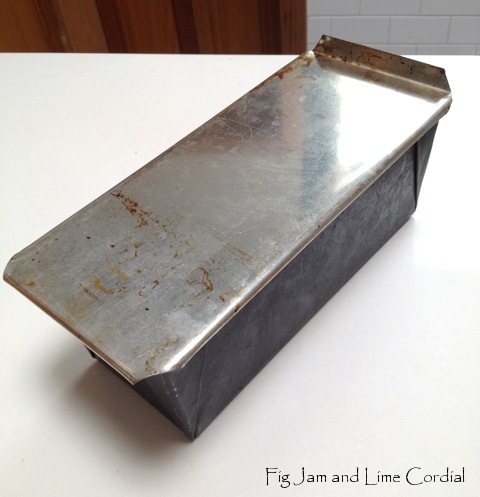
I also baked black salt sourdough loaves

..using my old lidded tins which kept the oven spring in check…

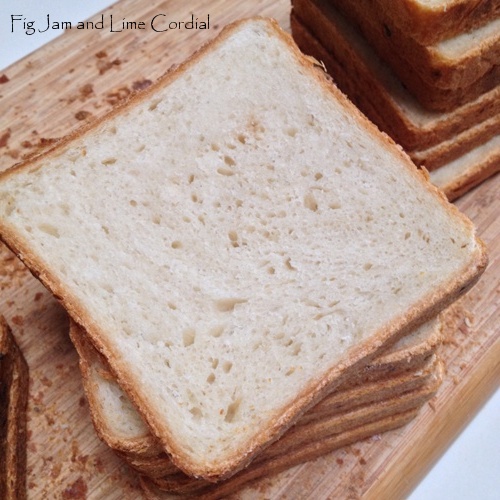
…resulting in perfectly square slices of bread…

. . . . .

Inspired by my faux laksa success, I made this simple soup for lunch using freezer leftovers from Christmas (prawns, prawn stock, poached chicken), basil and purslane from the garden…

…a spoonful of Tom Yum paste…

…and a handful of vermicelli noodles…

. . . . .

Chinese New Year is coming!

Here’s the lantern I’ve made for the occasion…

. . . . .

It doesn’t happen often, but at the moment, life is calm and mellow.

Hope all is well in your world! ♥

In our summer garden…

…a well camouflaged bee…

…a silent, still cicada…

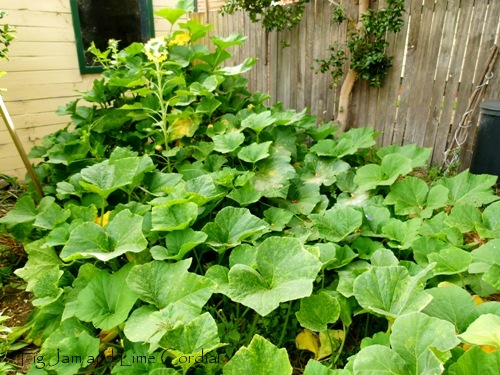
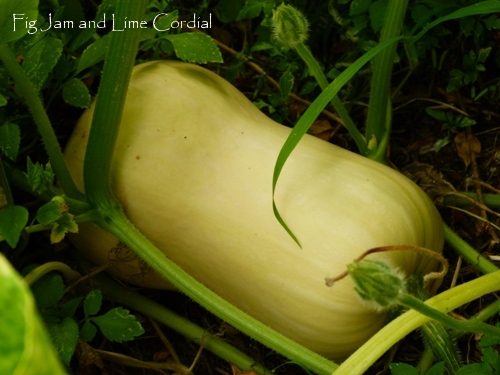
…rampant butternut tromboncino squash….

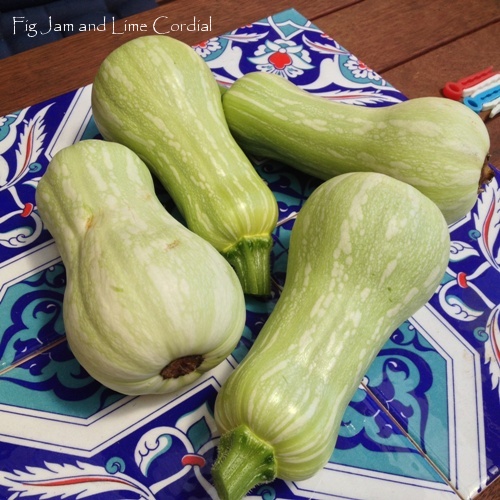
…we’re picking the fruit while it’s still green…

…here’s one we missed – its butternut ancestry is quite evident…

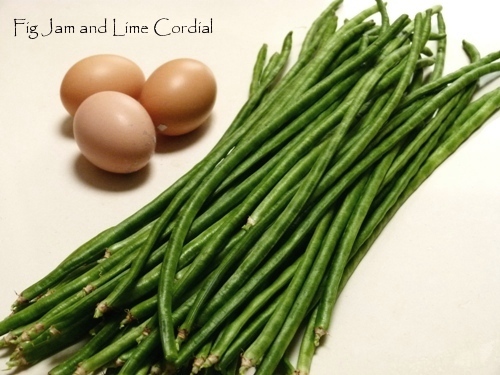
…the self-sown snake beans are cropping like mad…

…we’re picking this many every day…

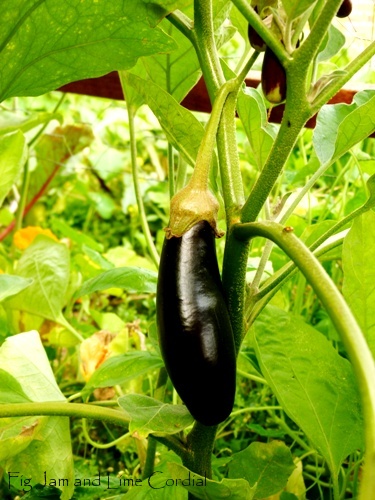
…our mystery (also self-sown) eggplant turns out to be a skinny one…

…red amaranth is going to seed…

…a Bishop’s Crown chilli plant has appeared from nowhere…

…our rosemary is doing well, as is the oregano (but not the thyme)…

…and finally, purslane is growing e-ver-ywhere…
(I’ve been using it in salad – recipe to follow)

How are things going in your garden?

These days, I buy almost all my books on the Kindle.

Unlike some people who are attached to the physical aspects of a book (my friend Michelle adores the way they smell), I’m incredibly happy not to have to store any more in my house. The Kindle is easy on my hands, and I love the fact that e-books are a planet (and tree!) friendly option.

The exception to date has been cookbooks. Kindles are designed to facilitate reading from start to finish – they automatically open to the last page read – and the basic model I have is best suited to photo-free text.

All this changed recently when I discovered that it’s possible to read Kindle books on my PC and iPad via the Amazon Cloud Reader and Kindle App. Suddenly, I could flick back and forth through the book, and view all the photos in glorious high-res colour. My darling husband is delighted – finding storage for my cookbooks has been an ongoing issue for years.

One of the first Kindle cookbooks I bought was Alice Medrich’s Sinfully Easy Delicious Desserts. Apart from saving over 60% on the price of a paper copy, I also didn’t have to pay for shipping…

Ms Medrich’s recipes are detailed and very reliable – I don’t think I’ve had one fail yet. She writes in a precise, clear tone, and provides a swag of options for customising a recipe to the reader’s own tastes.

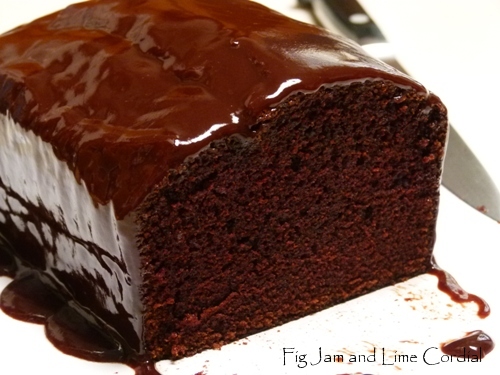
Those of you who’ve been reading along for a while now will know about my chocolate cake quest. I’m perpetually on the look out for the perfect cake, and over the years, I’ve come across quite a few that I’ve been delighted with (which I’ll list below in case anyone is interested). This latest one is easy and economical, yet tender and delicious. It’s definitely a keeper!

The batter is made in a single bowl, using a whisk. It was supposed to be baked in a 20cm (8″) round pan, but I poured it into a lined loaf tin instead and it worked very well. I’ve topped it with a half batch of my ever reliable Jamie Oliver icing. Get the scales out for this one, and make sure you use natural (not Dutch processed) cocoa – Ms Medrich says so!

  • 128g (4.5oz) plain (AP) flour
  • 35g (1.25oz) unsweetened natural cocoa
  • 225g (7.9oz) white sugar
  • ½ teaspoon bicarbonate of soda (baking soda)
  • good pinch of fine sea salt
  • 115g (4oz) unsalted butter, melted and cooled slightly
  • 2 large (59g) free range eggs
  • ½ cup (120ml) hot water
  • ½ teaspoon vanilla extract (I used homemade)

1. Preheat oven to 175C/350F or 160C/320F with fan. Line a loaf tin with paper, or grease and line a 20cm/8″ round tin. I used this Chicago Metallics tin (21.5cm x 11cm or 8½” x 4½”).

2. Sift the flour, cocoa and bicarb soda into a large mixing bowl. Add the salt and sugar, and whisk to combine.

3. Add the eggs and butter and stir to combine, then whisk vigorously – Ms Medrich recommends “30 to 40 strokes”. Make sure you don’t pour boiling hot butter over the eggs, or you’ll cook them! The batter will be very thick and stiff at this point.

4. Using a silicon spatula, stir in the hot water and vanilla. Keep stirring, gently, until the batter is just smooth and silky – don’t whip too much air into it. The batter will now resemble a thick hot chocolate.  Pour into the prepared pan and bake for 35 to 40 minutes (the loaf pan took 40 minutes) until a cake tester inserted into the centre comes out cleanly. The cake is quite soft, so I let it cool mostly in the tin before taking it out and placing on a wire rack. Once cool, top with icing.

Icing:

In a bowl over a saucepan of simmering water, combine 50g (1¾ oz) each of chopped dark chocolate, sifted icing sugar and unsalted butter. Add 1½ tablespoons of milk, and stir constantly until well blended.

I didn’t think a cake flavoured with cocoa (and without melted chocolate in it) could taste this good. But I made it on faith,  because as I said, I’ve never had an Alice Medrich recipe fail. I’m really pleased with how well it turned out!

Tell me, are you a fan of e-books? Or do you prefer hard copies?

. . . . .

Our All-Time Favourite Chocolate Cake Recipes