Feeds:
Posts
Comments

My friend Grace is now 8 years old. I’ve known her since she was born.

When her family would come over for dinner (back when folks still did that), we’d often talk about “craft”. Only we’d pronounce it “cwaft”.

“Why do we say cwaft?” Grace asked the last time she was here.

“Well…” I said, slightly hesitantly..”when you were very little, you couldn’t pronounce ‘craft’ and also you never let anyone throw anything out. You insisted on saving everything for ‘cwaft’”. (The pink wig I bought for her when she was three is a good example. As strands of pink fibre fell off, Grace would carefully save each one and set it aside. For cwaft.)

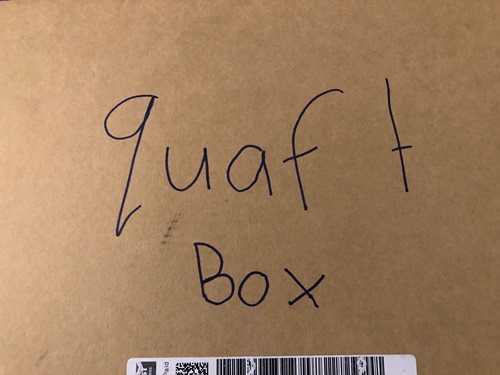
My young friend looked me straight in the eye and said nothing. Then she went home and made this box.

Her mother Bethany sent me a photo and informed me that we’d been spelling it incorrectly all this time.

We can’t decide if Grace genuinely believes that’s how it’s spelt, or if she’s displaying incredibly sophisticated and subtle sarcasm well beyond her years. Knowing her, the latter is a definite possibility.

I adore her and am terrified of her in equal measures. What’s she going to be like at 16? ♥

So…how’s your lockdown upskilling going? Learnt a new language yet? Studied all the classics?

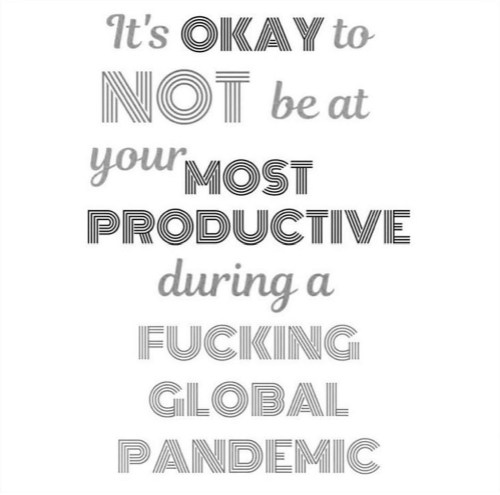
My friend Dan told me recently that if she read one more annoying article about how isolation was the “perfect opportunity” to learn new skills, she might scream. I sent her this in return. I’m not sure who created it, but it’s been doing the sms rounds and is so on point at this time…

. . . . .

Now, having said that…if you did want to learn just one skill during this time, can I suggest darning? It’s a very small commitment in time, resources and emotion, but it might make you as happy as it does me. It also doesn’t require perfection – the messier it is, the more character the repaired item ends up with.

I realise the name alone makes it a hard sell – I suggested a Darning Day to my friends who attended our Sustainability Working Bee, and most of them baulked. “It all sounds a bit Victorian workhouse”, I was told. I’ll think I’ll try again after lockdown and call it a Mending Workshop instead.

But basic darning really is very rewarding, and a useful tool to have in your repertoire. So I wrote this very simple tutorial for you. The videos are a bit dodgy because I had to prop my phone up and use both hands, so the focus flickers in and out a bit, but hopefully they’ll be enough to give you an idea. After a lot of reading and watching YouTube videos, this is the method I use. I don’t believe it’s textbook, but it works for me!

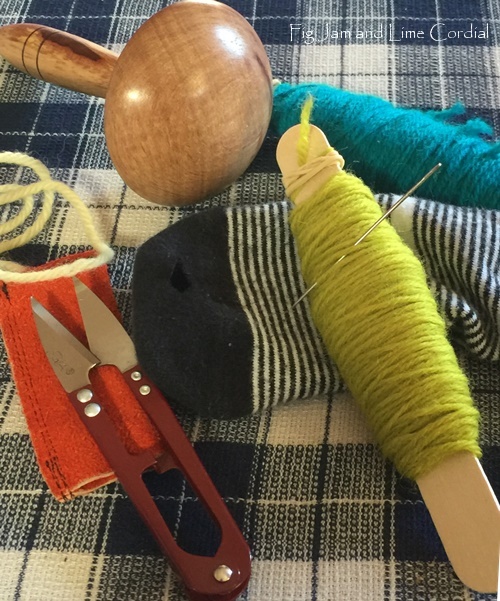
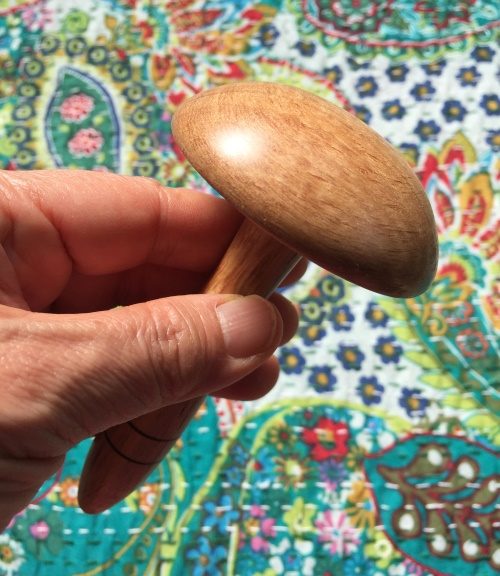
Start with a hole that needs mending and some basic kit – scissors or snips, a darning mushroom, wool and a darning needle. I used rescued tapestry wool for this tutorial simply so that you can clearly see the steps. It’s thicker than the wool I use on Project Penny, and while it’s quick to work up and produces a nice sturdy patch, it’s not ideal – as Diane commented below, it can end up a bit hard and lumpy after a few washes. Do use thinner cotton or sock wool for a better result.

I personally love using the 8ply Bendigo Mills cotton I buy for my crocheted dishcloths but my all-time mending favourite is vintage hosiery floss. However, experiment with whatever you have lying around, especially when you’re still learning!

As I mentioned earlier, my favourite darning mushroom is the one I bought from Roy in West Australia. He has a few more in stock now if you’re still looking for one, but if you miss out (they’re all handmade so they take a bit of time), just put your name down on his waitlist…

If you don’t have a darning mushroom, improvise with any small, curved surface. I’ve read suggestions ranging from ceramic eggs to oranges, and have personally used jar lids, stress balls and small turned wood bowls with some success. I’ve even used a fossilised ammonite!

. . . . .

Ready? Here we go.

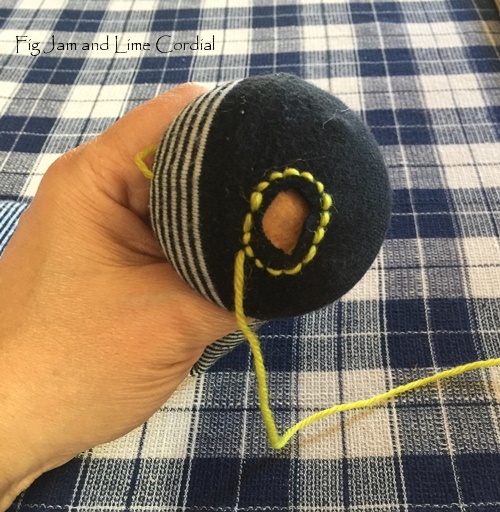
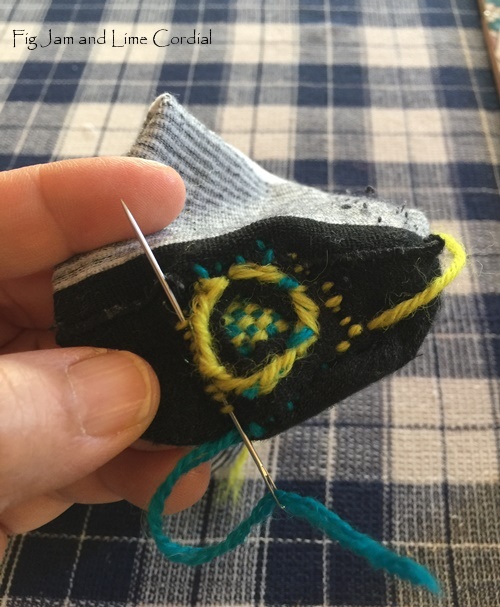
1. Put the sock over a darning mushroom, with the hole on the curved surface, and tie it around the handle with a scrap of yarn. Thread a length of wool (or thick cotton, if you prefer) onto a darning needle.

2. Start with a double backstitch to secure, leaving a long tail to weave in later. Don’t make any knots as they can be uncomfortable when you’re wearing the repaired sock.

3. Stitch a row of backstitcing around the hole to reinforce it. Work a few millimetres away from the edge of the hole.


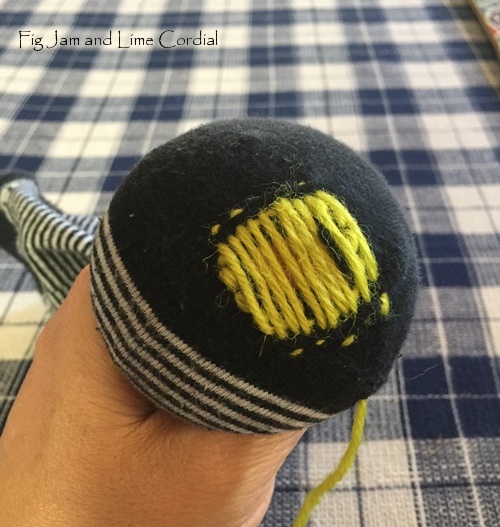
4.  Now bring the needle up next to the bottom of the hole, outside the backstitching.

5. Sew a long strand across the hole, followed by a running stitch. Turn the piece 180°. Make another running stitch, then another long stitch across the hole. Repeat until you’ve covered the hole.

Here’s a dodgy video…


Here’s what it will look like after you’ve finished this step…

6. If you need to change wool at this point, end with a double backstitch and leave a long piece to weave in later. Start a new colour with another double backstitch.

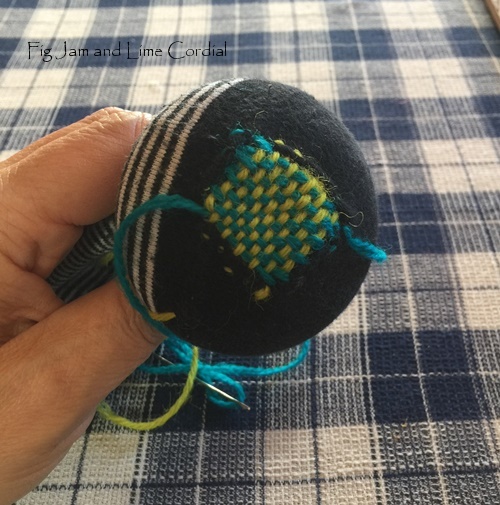
7. Now holding your needle BACKWARDS, weave over and under the long strands. Then sew a running stitch and turn the mushroom 180°.


Weave back over the strands in the opposite way, going over and under in reverse to what you did in the previous row (I’m sure mending experts have more succinct ways of describing this, sorry).The purpose of weaving the yarn with the needle eye first is to reduce the likelihood of splitting the wool. Here’s another blurry video…


Repeat until you’ve covered the hole…

8. Finish with a double backstitch, leaving a bit to weave in later. Remove the mushroom, turn the sock wrong side out and weave in the loose ends. Trim neatly.


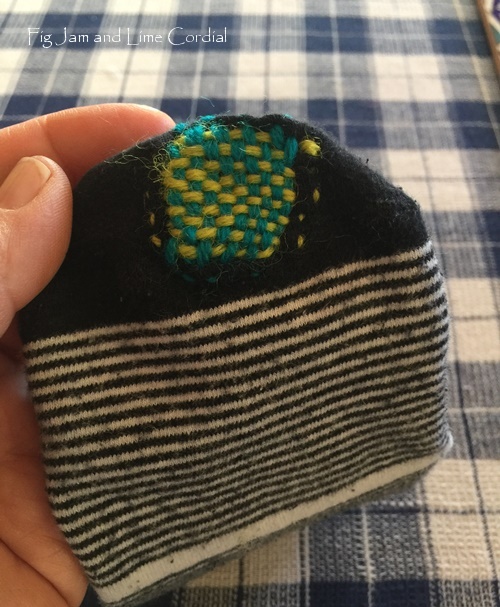
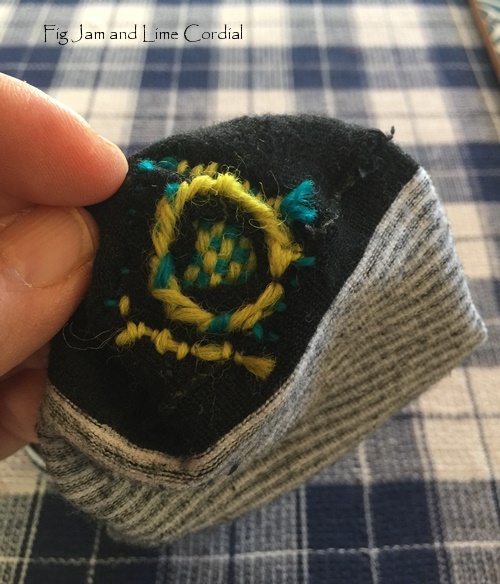
9. Here’s what the finished front and back will look like…

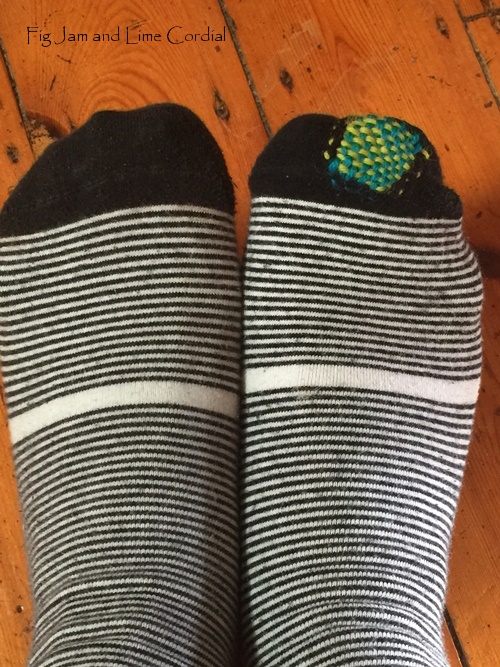
10. Wear your visibly mended sock with pride!

. . . . .

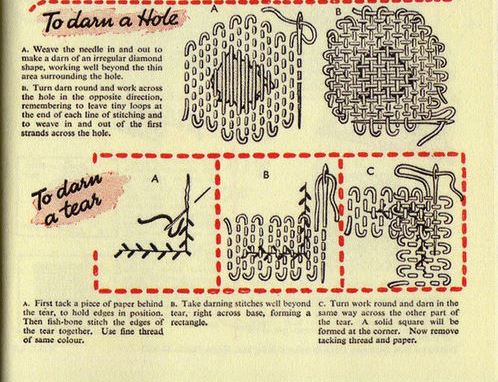
Ha! Not the slickest tutorial I’ve ever written, but I hope you find it useful nonetheless. There are oodles of different ways to darn a hole, but this technique is perhaps the oldest and most basic, and therefore a good place to start. It’s been around for a very long time, as this WWII leaflet shows. The only difference is that we now wear our mended patches with pride rather than trying to hide them!

Are you working on anything new at the moment? I’d love to know about your latest project! ♥

. . . . .

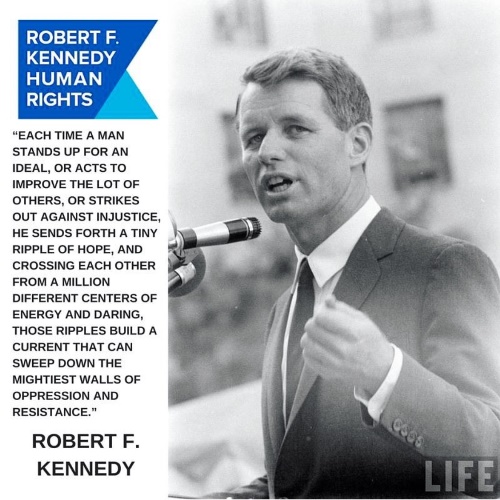
My friend Stephen sent me this earlier in the year, and it gave me great hope that, just maybe, our individual actions could make this world a better place. At the time, Australia was in the midst of terrible bushfires, and I was questioning whether our attempts over the previous two years to live more sustainably had really made any difference at all in the grand scheme of things.

It’s an excerpt from Robert Kennedy’s address to the National Union of South African Students members at the University of Cape Town, given at a time when South Africa was still an Apartheid country and the American Civil Rights Movement was at its peak. Over the years, it’s become known as the “Ripples of Hope Speech”. In 2020, the problems facing our world may have changed, but the message is as powerful as ever. I hope you find it as inspiring as I did. ♥

. . . . .

DAY OF AFFIRMATION ADDRESS, CAPETOWN, SOUTH AFRICA, JUNE 6, 1966 (excerpt)

Robert F. Kennedy

“First is the danger of futility; the belief there is nothing one man or one woman can do against the enormous array of the world’s ills – against misery, against ignorance, or injustice and violence. Yet many of the world’s great movements, of thought and action, have flowed from the work of a single man. A young monk began the Protestant reformation, a young general extended an empire from Macedonia to the borders of the earth, and a young woman reclaimed the territory of France. It was a young Italian explorer who discovered the New World, and 32 year old Thomas Jefferson who proclaimed that all men are created equal. “Give me a place to stand,” said Archimedes, “and I will move the world.” These men moved the world, and so can we all.

Few will have the greatness to bend history; but each of us can work to change a small portion of the events, and in the total of all these acts will be written the history of this generation.

Thousands of Peace Corps volunteers are making a difference in the isolated villages and the city slums of dozens of countries. Thousands of unknown men and women in Europe resisted the occupation of the Nazis and many died, but all added to the ultimate strength and freedom of their countries. It is from numberless diverse acts of courage such as these that the belief that human history is thus shaped.

Each time a man stands up for an ideal, or acts to improve the lot of others, or strikes out against injustice, he sends forth a tiny ripple of hope, and crossing each other from a million different centers of energy and daring those ripples build a current which can sweep down the mightiest walls of oppression and resistance.”

♥ Happy Mother’s Day! ♥

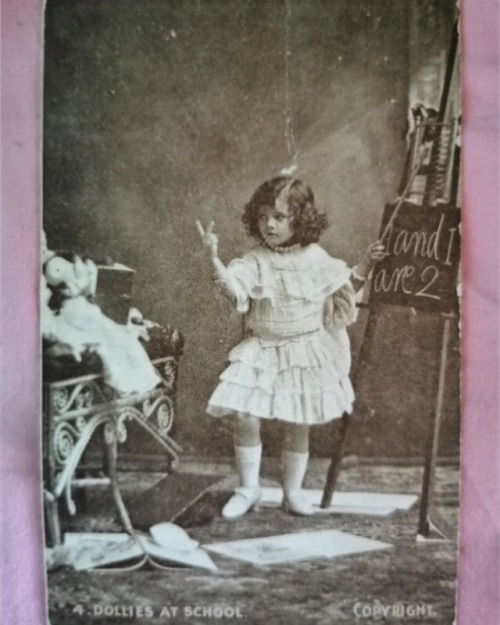
When I blogged about my vintage postcards a few weeks ago, lovely Lorna dug this one up and sent me a photo of it. It was part of her grandmother’s collection and probably dates back to the early 1900s.

When I showed it to my neighbour Ben, he said “That sums up the home schooling experience in many households right now!” Yes, it really does…

To all the incredibly patient, stoic mothers, particularly those with many balls up in the air at the moment – I hope you get to put your feet up and rest today.

♥ Happy Mother’s Day! ♥

Can we address the elephant in the room?

As we guiltily bring home our plastic wrapped items and takeaway coffee cups, the new rules surrounding COVID19 have made life a bit trickier for those of us who were trying to minimise our impact on the environment.

Last week we visited Harris Farm in Leichhardt, usually a stronghold of plastic-free packaging, and were surprised to see that we were the only people in the store still using our mesh bags. In fact, one particularly cautious customer, wearing a paper mask, was using two plastic bags as gloves to put her fruit and veg into a third. She then discarded her glove bags after each item and got new ones. I kept my requisite 1.5 metres away and refrained from comment. People are very frightened, and  I’m certainly not going to judge anyone for doing what they feel they need to in order to stay safe at this time.

Then there are the official instructions to wash our hands for 20 seconds. We have lever taps in the kitchen thankfully, but I’m troubled by all the times a tap has to be left on for 20 seconds while folks are lathering up. Parts of our state continue to be in severe drought and strict water restrictions still apply – I’m not sure how rural folks are coping with these directives.

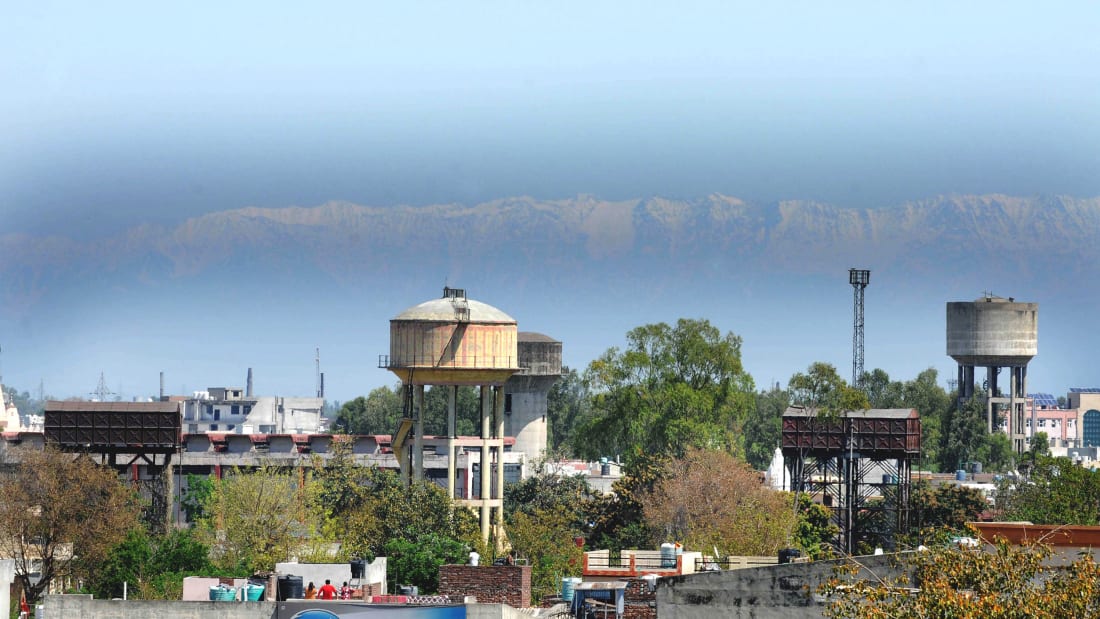
But on the flipside, the environment appears to be thriving with most of humanity in lockdown. For the first time in 30 years, the Himalayas are visible from the northern Indian state of Punjab, due to an unprecedented reduction in air pollution. The photo below is from this CNN article

The Dhauladhar range of mountains is visible from the city due to a drop in pollution levels.

Paradoxically, even though we’re bringing in more plastic packaging than we have in the last couple of years, our weekly rubbish output is actually slightly less than it was before lockdown. Which made me realise that a determining factor in the amount of waste we produce is not just what we buy, but how often we buy it.

We’re only shopping for fruit, vegetables and groceries once every nine days or so. The beeswax wraps are making a huge difference – using them means loose leaves and spring onions go the distance between shopping runs without turning to mush. Even more importantly, our approach to food has shifted slightly – we didn’t throw out much in the past, but now almost nothing gets wasted. As we’re all at home, leftover dinners become lunches the following day, single portions get stashed in the freezer, yesterday’s roast becomes tomorrow’s nachos.
Pete has managed to perfect his soldier fly hatchery – I’m sorry, but you’ll have to Google or YouTube on how to make one, as it’s too complicated for me to describe and I don’t really understand how it works anyway. I had a quick look and found this Gardening Australia fact sheet on them.

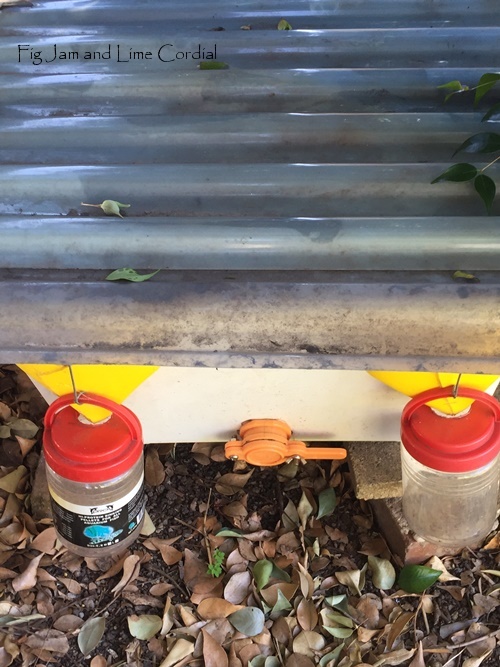
This is Pete’s second attempt, and my only contribution has been to sew seams as directed. It’s made almost entirely from recycled materials (I think he bought a honey tap for it), including the boys’ old toy box, shade cloth from Reverse Garbage, a leftover bit of roofing and two used kimchi containers.
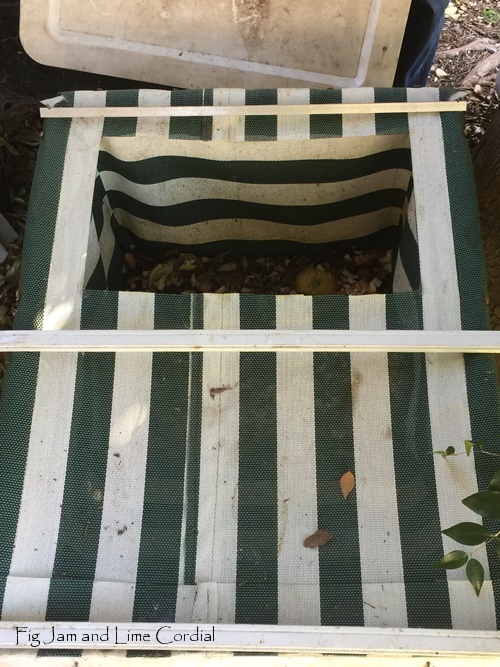
In our backyard, particularly in the warmer months, it works brilliantly. Much better than the Bokashi bucket. The soldier fly larvae voraciously gobble up all sorts of food scraps and leftovers, and then pupate into what can only be described as chicken crack – the hens completely lose their minds for them. We had at least 30 little pupae to feed them yesterday. Coupled with our two worm farms, almost no food scraps other than bones and avocado pips end up in the red bin these days.
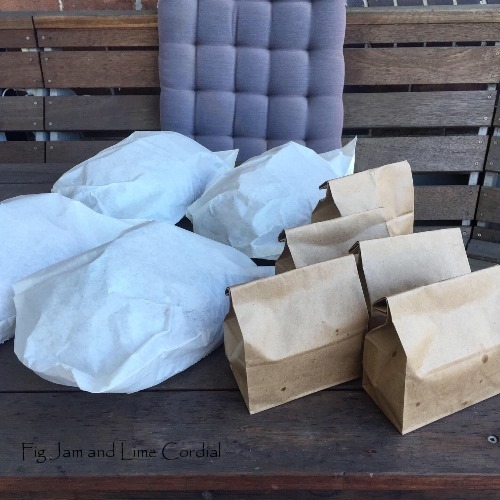
At home, we’re doing our best to toe the sustainability line – we’re still using our cloth napkins, teflon baking sheets and crocheted dishcloths. All the neighbourhood bakes are going out wrapped in paper. I have had to use plastic bags to share bread flour, because exploding paper bags loaded with kilos of wholemeal are never a good thing. Buying in bulk and decanting continues to work well – we end up with one large plastic bag which we try to reuse, rather than ten small ones. And we’re still taking our reusable mesh and cloth bags to the shops when we do go.
Ordering in has been tricker – we had an arrangement with our local Japanese restaurant to provide them with our own platter, but that’s temporarily on hold as all food outlets are obliged to use disposable serving ware at present. That means we’re not able to take our own KeepCups to cafes either – as a result, I’ve only had three takeaway coffees since lockdown began. And even though I’m keen to support our local restaurants, we haven’t ordered many takeaway meals – partly because it’s never quite as good as the food we make at home, and partly because Small Man gets very distressed by all the single use plastic coming into the house.

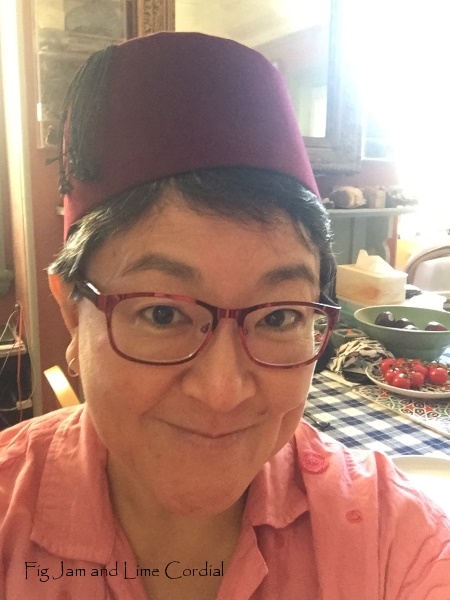
Going out so infrequently means we’re using less than half the petrol we were pre-lockdown. And as we’re not going anywhere, clothes are getting washed less often, shoes aren’t wearing out, and bad hair days have given me the perfect excuse to don increasingly bizarre hats.
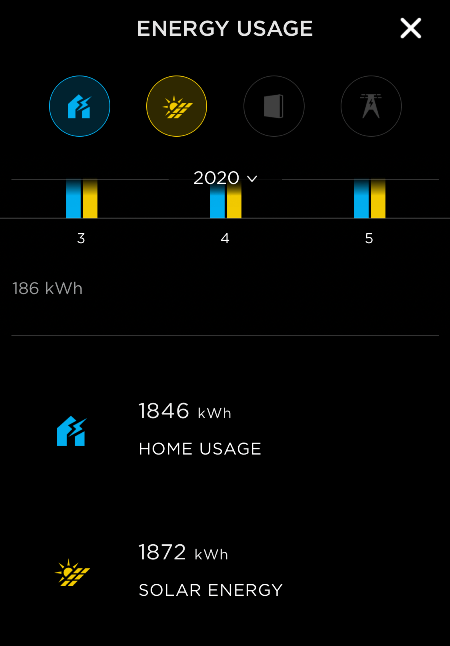
As you might recall, we had solar panels installed at the end of last year, and a Tesla battery at the start of 2020.

So far, it’s been fantastic. It used up the funds we’d been saving for a new car, but it was well worth it – since the battery was installed, we’ve achieved carbon neutrality (just) in electricity terms. We’ll still have a utilities bill to pay, because we’re charged three times more for the power we draw down from the grid than for the kilowatts we send to it, but that’s okay – our motives for making the shift were never purely financial. We won’t be able to perform as well in winter, but it’s encouraging to know that it’s definitely making a difference. Here are our stats at the time of writing…
Hmm. It’s always good to write this stuff down. It’s been simmering in the back of my brain for a while now, but it’s nice to have an opportunity to put my thoughts in order.

So here’s what I think.

During this slightly crazy time, we can only do the best we can in unprecedented circumstances. There’s nothing to be gained from beating ourselves up over things which are outside our control. Instead, let’s continue to nurture our green mindsets and try to make sustainable choices from the options presented to us. We can’t buy loose salad leaves at the moment, but that’s ok. What we can do is make them last longer by storing them carefully and not wasting any of them. We can support our communities and be more waste-conscious at home, particularly if we find ourselves with a bit more free time. And we can take the lessons we’re learning during this crisis – on frugality, kindness and creativity – and use them to live richer and more rewarding lives post-lockdown.

I hope you all have a lovely, gentle day, dearhearts. Thank you for letting me ramble on. ♥