Feeds:
Posts
Comments

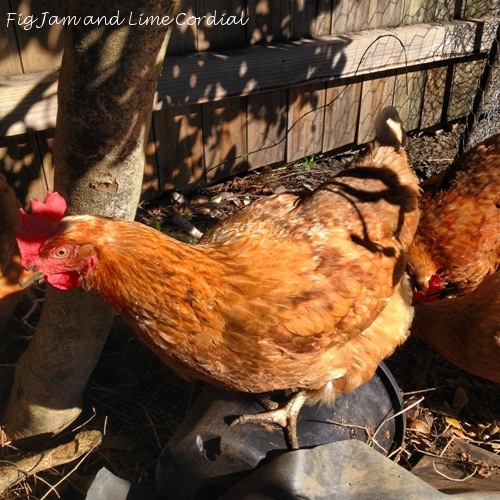
Last Sunday, Pete and I sat in the backyard and communed with the chooks. It was a gorgeous Sydney winter’s day, and the girls had just been let out onto a new patch of the garden. They were scrambling about excitedly, scratching for grubs and slugs.

Here is our beloved Rosemary, who continues to be completely bonkers. She’s the baby of the group…

She stared me down as I tried to take a photo of her laying…

Francesca, our Italian princess (who is actually not the least bit Italian), has always been quite different to the others. She is dark, petite and the most curiously adventurous of the flock…

We made jokes about her being a grassfed chicken, as she chomped away at the weeds we held out to her. She will try to eat almost anything…

Frannie has always been our noisiest chicken, and today I filmed her carrying on.  She’s the only one who does this, and she does it regularly. We’re not really sure why – she isn’t a dominant member of the flock, but she’s certainly opinionated.  I think if she had arms, she’d wave them around…

Bertie, Maggie and Harriet were far too busy to pose for a photo!

All five ladies are doing well, although they’ve now got a little grey in their feathers and their egg production has dropped off substantially. Watching them in action left us in no doubt that they’re all still full of life!

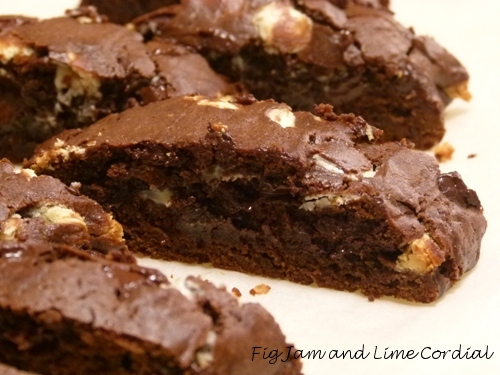
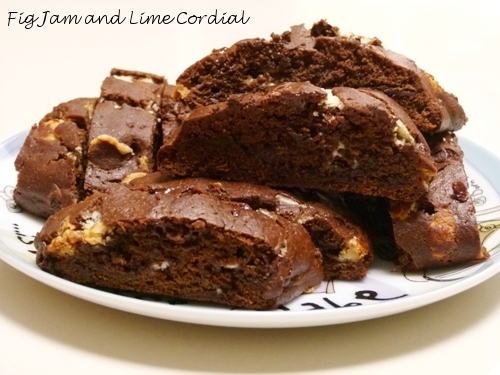
These mocha bars are based on a recipe from Debbi Fields’ Great American Desserts and they’re essentially a once-baked biscotti (I wonder if that makes them a cotti?).

The recipe makes four logs of dough – one to bake for immediate eating and the rest to stash in the freezer for an easy treat at a later date.  The Dutch-processed cocoa powder imparts a dark chocolatey flavour that is particularly appealing…

  • 125g (½ cup) unsalted butter
  • 55g (½ cup) Dutch-processed cocoa powder
  • 3 large (59g) free range eggs
  • 150g (¾ cup) white sugar
  • 100g (½ cup) brown sugar
  • 20ml (4 teaspoons) vanilla extract (I use homemade)
  • 40ml (8 teaspoons) Tia Maria
  • 375g (2½ cups)plain (AP) flour
  • 1½ teaspoons baking powder, sifted
  • good pinch of fine sea salt
  • 180g (6oz) white chocolate chips (I used Callebaut white callets)
  • 180g (6oz) semisweet dark chocolate chips (I used Callebaut Fairtrade 811 54%)
  • 100g (3½ oz) bittersweet dark chocolate chips (I used Callebaut 70%)

1. In a large glass or Pyrex bowl, melt the butter in the microwave. Add the cocoa powder and stir until smooth.

2. In a separate bowl, whisk or sift together the flour, baking powder and salt.

3. In a large bowl and using an electric mixer, beat together the eggs and sugars for several minutes until well combined and light. Add the melted butter and cocoa mix and beat well until smooth, scraping down the bowl as needed. Add the vanilla and Tia Maria and beat in well.

4.  Add the flour and mix gently until just combined, then add the chocolate chips and mix on the lowest speed until the chips are just mixed in.  Cover the bowl and refrigerate for a couple of hours or overnight.

5. Preheat the oven to 160C with fan and line an oven tray with parchment paper.  Divide the cold dough into four pieces and shape each into a 4cm thick (diameter) log.  Wrap any logs that you don’t plan to bake straight away in parchment paper and then foil, and store in the freezer until needed.

6. Place the log(s) to be baked on the tray, leaving room for spreading.  Bake for 25 minutes or until the tops have cracked and a skewer inserted in the centre comes out cleanly.  Allow to rest for 10 minutes on the tray before transferring to a wire rack to cool completely.  With a sharp knife, cut the log into thick slices before serving.

It’s been a while since I last made these, and I’d forgotten how delicious they were – the first baked log was hoovered up within the hour, which meant I had to bake a second one the same day. Pete asked me to wait a week before baking anymore, as he’s finding them hard to resist!

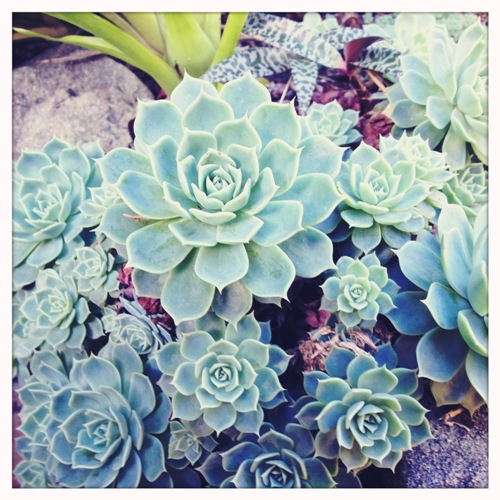
My neighbour Nic grows beautiful succulents.

Photographing them today gave me a great opportunity to learn more about my iPhone 4S and the Hipstamatic Photo App.

iPhone 4S, Hipstamatic , John S Lens, BlacKeys SuperGrain Film

iPhone 4S, Hipstamatic , John S Lens, BlacKeys SuperGrain Film

iPhone 4S, Hipstamatic , John S Lens, BlacKeys B+W Film
(the BlacKeys BW film allows just a hint of colour through)

iPhone 4S, Hipstamatic , Jane Lens, DC Film
(very close to true colour)

iPhone 4S, Hipstamatic , Jane Lens, DC Film
(very close to true colour)

iPhone 4S, Hipstamatic , Helga Viking Lens, Blanko Film
(an oldfashioned, slightly washed out effect)

Fear not, there’s a cookie recipe coming next!

Sigh.  I do get excited by things sometimes. It always makes Pete laugh!

When I was sixteen, I was a passionate amateur photographer, with an Olympus SLR and a kit bag full of interchangeable lenses. Back then, everything and everyone was a potential subject, and I remember the excitement of viewing the world through a photographer’s eye, always on the look out for a great photo.  Sadly, it was a hobby that faded after I started university, as film processing costs became prohibitive.
Last week, I discovered the Hipstamatic App for my iPhone 4S (thanks Lucas).

This digital photography app emulates the old fashioned point and shoot camera, but offers a range of filter options (in the form of “lenses”,” films” and “flashes”) that allow you to creatively manipulate the final image. With most photo apps, the filters are applied to a photo after it’s taken; with Hipstamatic you choose the effect before you click the shutter button.

It’s not without its limitations (which I’ll discuss a bit later on), but at $1.99 for the basic app, price isn’t one of them.  The base model comes with five lenses, four films and three flashes.  Add-on packs start at just 99c each – so far, I’ve bought seven of them, so I’m out of pocket a grand total of $8.92. That’s roughly the price of a loaf of artisan sourdough.

And for that small cost, I’ve been having a ball! Here are some of the pics I’ve taken in the last few days, while I’ve been experimenting with the different effects that can be achieved with the app.

All the photos above, and the one below of cranberry red potatoes, were taken using the Loftus Lens and DC Film.  Both of these were designed in conjunction with food photographer David Loftus to specifically enhance food photos…
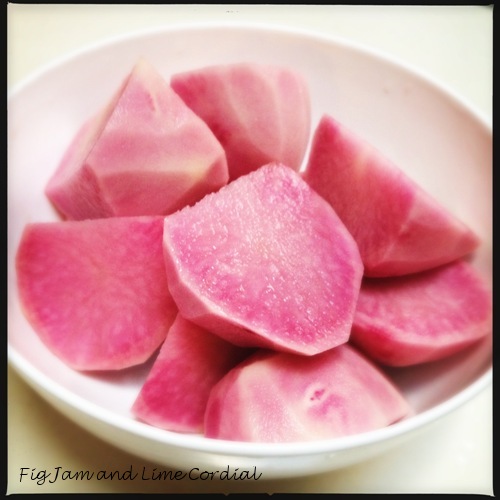
. . . . .

Taking black and white photos makes my heart soar!

The next two photos were shot using the Lucifer VI Lens and Claunch 72 Monochrome Film…
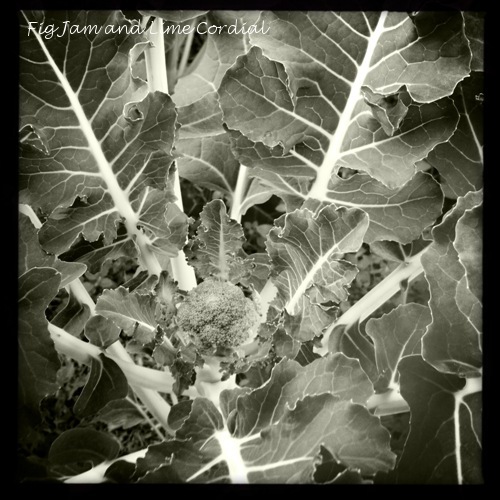
. . . . .

The Americana Lens coupled with Blanko Freedom 13 Film allowed me to capture our Yellow Princes as they darted around the tank…

. . . . .

Pete and I spent an afternoon in the city recently.  I had my iPhone out as soon as I stepped off the bus, and took this photo using the John S Lens and my now favourite Claunch 72 Monochrome Film…
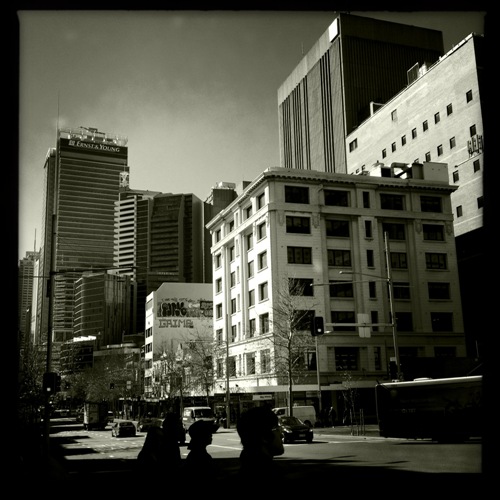
The Americana Lens and Ina’s 1969 Film gave this photo of a building in Surry Hills a 70s feel…

. . . . .

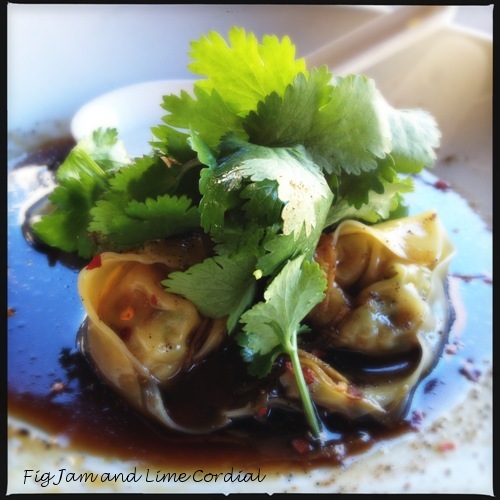
As Pete missed out on lunch with Glenda and Maus, we went back to Bar H in Surry Hills.  We sat by an open window and I took this photo as we waited for our meal.  The following three shots were all taken using the Loftus Lens and DC Film…
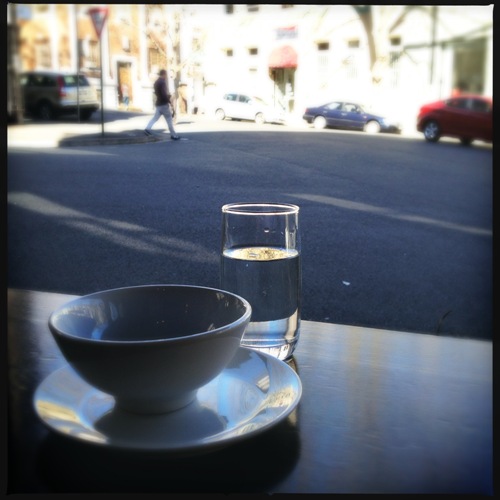
Steamed prawn and fish wontons…
Wild kingfish sashimi salad…

. . . . .

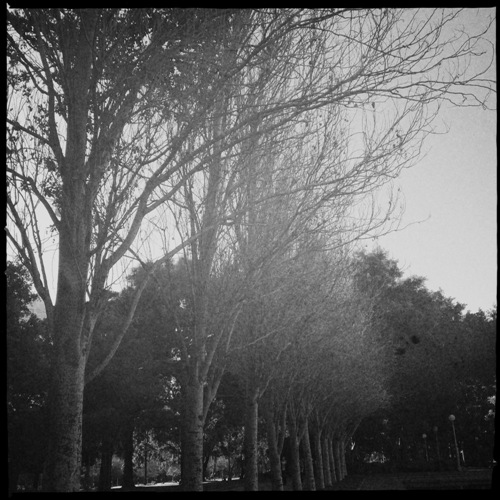
A stroll through Hyde Park, and an experimental shot taken using Buckhorst H1 Lens and US1776 Film…
. . . . .

The new Sydney Westfields has the most amazing food court I’ve ever seen!  We had dessert at the Via Del Corso Pasticceria e Caffé…
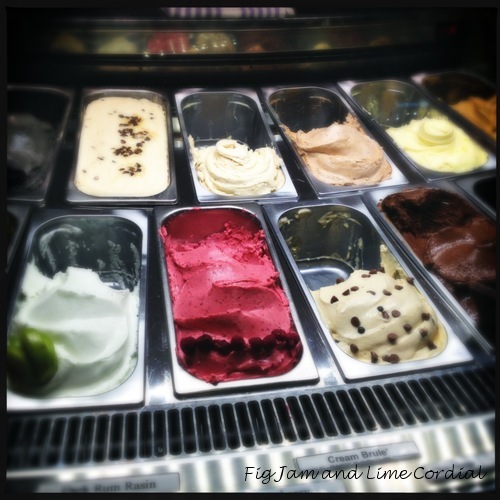
Pete had the lemon lime tart…the Loftus Lens and DC Film seemed to cope well with the indoor fluoro lighting..

I had blood orange and chocolate sorbet…
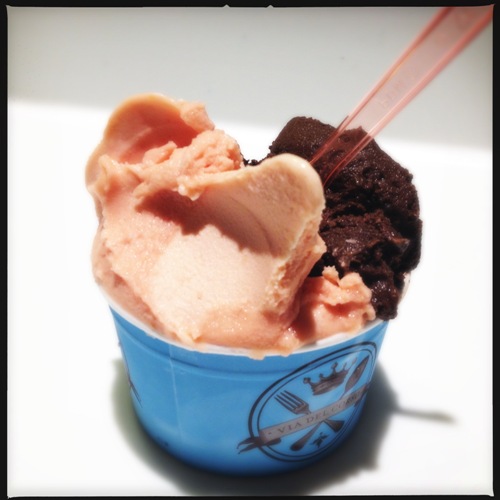
Notice how the Loftus Lens blurs the edges of the photo slightly?

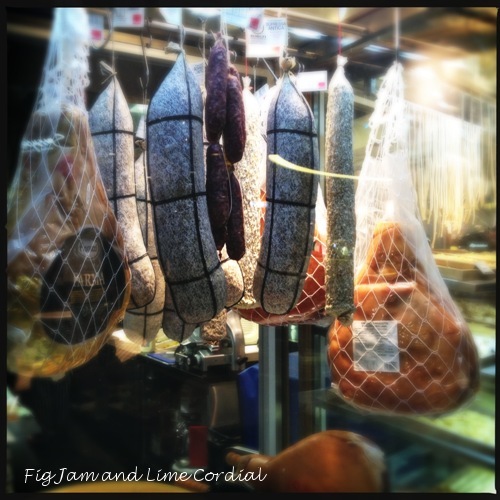
This window display at Ragù astounded me – I don’t think I’ve ever seen a full leg of San Daniele prosciutto hanging in a food court before…
. . . . .

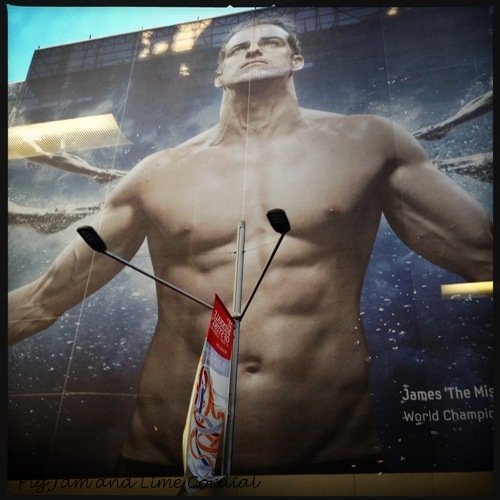
And finally, the Jane Lens and DC Film (my default “regular” photo setting) captured this poster of James Magnussen, Australian Olympic swimmer, which covered the entire Queen Victoria Building.  I took it through the window of a moving bus (Debra, this photo is for you!)…
Hipstamatic is a wonderful app, but as I mentioned above, it does have a few limitations.

Firstly, it can’t zoom.  It really is point and shoot only.

Secondly, it can’t take photos using the front camera on the iPhone, which really isn’t a big loss, as the front lens isn’t as high quality as the rear one anyway.

Thirdly, the photo can’t be edited in Hipstamatic after it’s been taken, although you can save it onto your computer and play with it there.  This means that you have to learn how the different lenses and films work together, so you can pick the right combination before clicking the shutter button.

Fourthly, each photo takes about ten seconds to process, and the software can only process nine pictures at a time. I don’t have a problem with this, but it was sufficiently annoying for Monkey Girl (Big Boy’s ♥) to uninstall the app.  Then again, she’s nineteen.

One major consideration – according to some reviewers, the app has a tendency to crash, particularly if you’re using an older iPhone or operating system (although it’s been mostly fine on my iPhone 4S with iOS 5.1.1).

And finally, the app doesn’t come with a built-in training manual or guide.  It takes a little study to figure out how it works, and then some experimentation to  determine which settings you prefer to use. There are a couple of great instructional websites here and here which I found particularly useful.

If you have an iPad and would like to see more of the fantastic photos taken with this app, download their free magazine.  And check out New York Times photographer Damon Winter’s Hipstamatic photo story on Afghanistan – he won an international award for it!

PS. All the photos in this post are SOOC (straight out of camera) – they haven’t been adjusted or photoshopped in any way!
There are a ludicrous number of photos in this post!
My apologies if it takes a while to load…

. . . . .

Our winter garden is lush, green and relatively bug and weed free.

Despite that, there’s not a whole lot to eat yet.  We planted out this bed in May (photos here) with broccoli, cabbage and celery, and have added cos lettuce, garlic and kale to it since…

Baby broccoli heads are just starting to form…

The sweetheart cabbages are surprisingly pest-free, which may have something to do with all the garlic we’re growing around them…

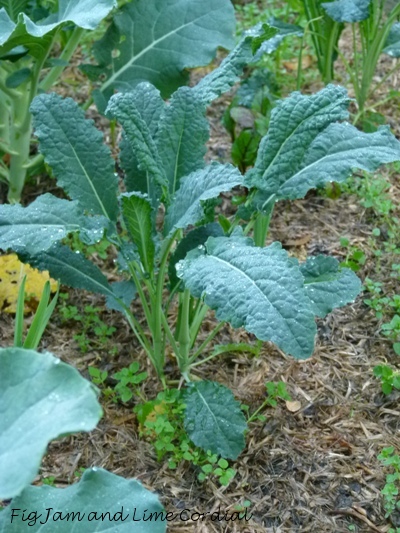
The second wave of Tuscan kale is maturing – I love the gorgeous grey-green leaves..

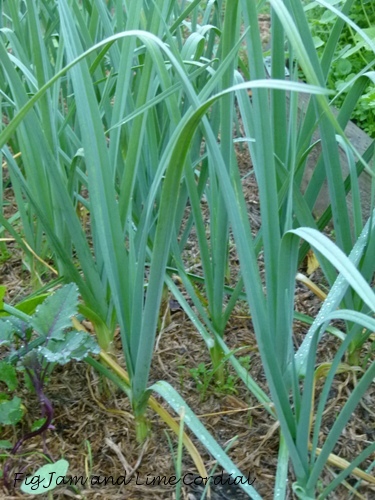
Perennial leeks – where would we be without you?  When there’s really nothing else to eat in the garden, we can always count on leeks and cos lettuces…

. . . . .

The bed closest to the house which we planted out in June is coming along nicely.  The sugar cane mulch is doing a great job of keeping the weeds in check…

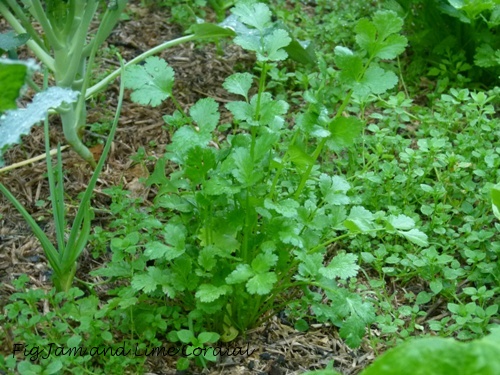
We’re growing coriander successfully for the first time ever – in previous years it’s always bolted straight to seed.  That’s a good thing too, given our recent forays into Mexican cooking…

Pete wanted to plant dill, but I’m can’t remember why.  I think it might be a useful companion plant?

And speaking of companion planting – my friend Diana gave us a bag of shooting garlic cloves and we’ve guerilla planted them all through the garden.  They’re starting to pop up everywhere!  Garlic doesn’t grow brilliantly in Sydney (it’s a bit too wet and warm), but the shoots are delicious and I’ve been snacking on them as I stroll around the backyard. Plus they seem to deter the cabbage moths…

. . . . .

Our most recently planted bed includes our transplanted celeriac – the poor things just keep getting moved around! They seem relatively unscathed by the upheaval though. This bed includes garlic, potatoes, pink sprouting kale, chard and beetroot…

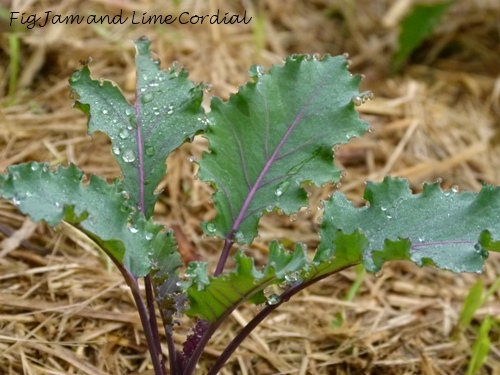
The pink sprouting kale was a find at Eveleigh Markets last week.  Our $5 pot divided into nearly a dozen large seedlings…

The leaves of this variety of kale are delicious raw (so I find myself eating those as well as I wander through the garden)…

Aaah rainbow chard, perhaps if I call you that when I serve you up, no-one will notice that you’re actually silverbeet in disguise…

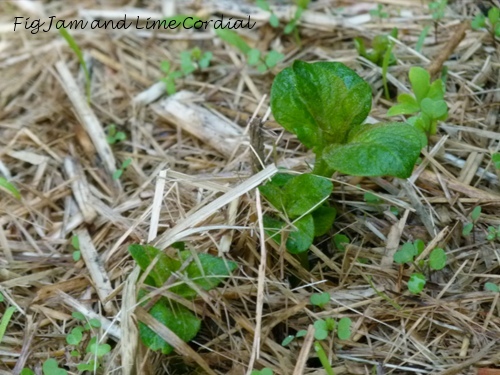
The area near the fence has been planted out with sebago spuds, which are just starting to push through the mulch now…

. . . . .

Our back bed is currently the oldest, and the peas, carrots and celeriac are growing steadily…

After months and months, the celeriac finally appears to be forming a bulbous root. I adore celeriac, but after seeing how much time and space it takes to grow just one bulb, I now understand why they cost up to $5 each at the markets…

You might recall that we planted three varieties of peas in this bed – Somerset, Super Gem and Willow.  I’ve since found out that Somerset and Willow are actually the same variety, and they’re growing much better than the Super Gem.  All the plants are struggling a little with rust.  Having said that, we’re just starting to get our first pods…

The Somerset/Willow plants are promising great things!  I counted eleven baby peas in this juvenile pod…

. . . . .

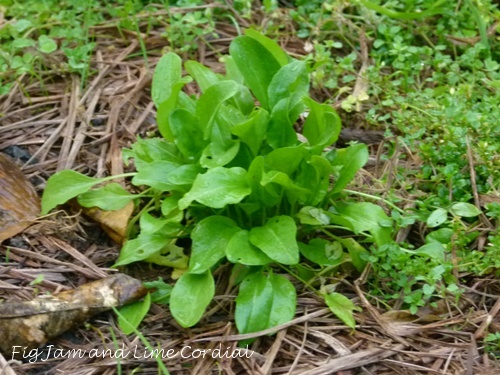
In other parts of the garden,  we’ve planted more French sorrel…

The asparagus is finally dying back, so we’ll be cutting it down soon.  And as you can see from the back of the photo, our lemon tree is starting to produce more fruit…

Thank you for taking the time to read all the way down to the end of this post!  Our garden updates need to be as comprehensive as possible, because we’re always referring back to them in later months to see what we’ve planted and when.

. .  . . .

So tell me, how’s your garden going this month?