Feeds:
Posts
Comments

We’ve been friends with Stephen for thirty years.

The son of an Australian father and an American mother, he was raised in Fiji where his father worked as a Christian minister.  Over the four years that we lived together at college, he shared with us his love of mellow music (Cat Stevens and John Denver can still be heard in my kitchen to this day), his strong sense of social justice, and his wonderful tales of growing up in Fiji.

Stephen always gets particularly excited (and a little wistful) when talking about the food of his childhood. We’ve marveled at his stories about the coloured milk that never went off, the tamarind chutney that’s bringing about social change, and his  school lunches of “curry and roti”, which used to cost just 15c at the tuckshop.

Fijian curries, he insists, are different from those found in other parts of the world. They’re quite spicy, usually drier than their Indian or Malaysian counterparts, and served with a unique style of roti – a very thin, wide flatbread rather than the rich, flakier versions found in other countries.

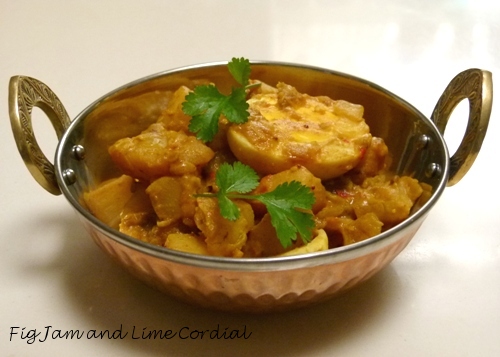
As it was Stephen’s birthday today, I woke up early to make him this egg and potato curry.  It was the only recipe I could find for a vegetarian “Fiji-style” curry, so I thought it was worth a try.  Thankfully, it turned out to be quite delicious…
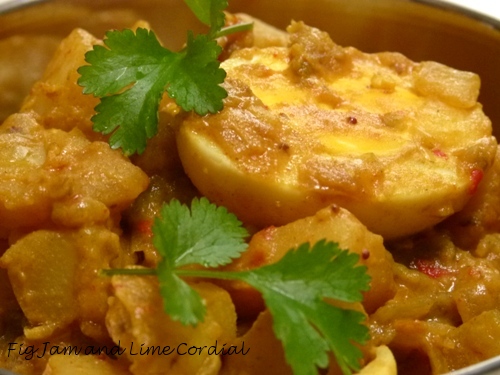
Egg and Potato Curry
(adapted from Dave Dewitt’s A World of Curries)

  • 3 – 4 red chillies, deseeded and chopped coarsely
  • ½ teaspoon mustard seeds
  • 6 cloves garlic, peeled
  • ½ teaspoon cumin seeds
  • ½ teaspoon black peppercorns
  • 1 teaspoon coriander seeds
  • ½ teaspoon ground turmeric
  • ¼ teaspoon ground ginger
  • ¼ teaspoon ground cinnamon
  • 1 tablespoon water
  • 3 tablespoons ghee or vegetable oil
  • 2 medium onions, chopped
  • 2 large boiled potatoes, peeled and diced (they should be cooked, but still firm)
  • 2 cups coconut milk
  • 8 hard-boiled eggs, peeled and halved
  • 1 tablespoon lemon juice
  • coriander to garnish
  • Kashmiri chilli powder, to taste
  • salt to taste

1. In a small food processor or blender, blitz together the chillis, mustard seeds, garlic, cumin, peppercorns, coriander, turmeric, ginger, cinnamon and water to form a thick paste.

2. Heat the ghee or oil in a large sauté pan and fry the onions for about five minutes, or until soft.  Add the spice paste and fry for a few minutes until fragrant.  Add the potatoes and stir over a low heat for two minutes more.

3. Add the coconut milk and bring the curry to a boil, then reduce the heat and simmer uncovered until the potatoes are softened and the sauce has reduced, about 10 minutes.

4. Add the eggs and juice and stir gently to heat through – this should only take a couple of minutes.  Taste the curry and adjust seasonings as desired (I added salt and a little Kashmiri chilli powder, although these weren’t listed on the original recipe). Garnish with the coriander leaves.

PS. Dave Dewitt’s book is now out of print, but he’s reproduced parts of it on his Fiery Foods website. If you’re a curry lover, it’s well worth a look here.
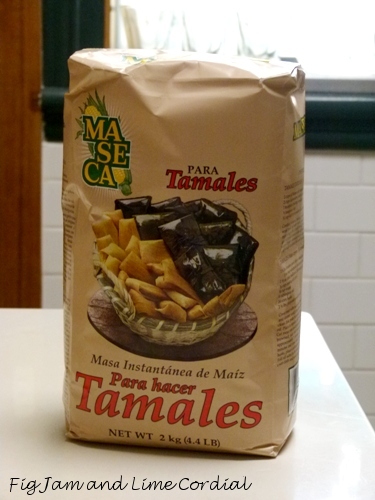
When we were buying ingredients for our corn tortillas at Fiji Market in Newtown, this bag of tamale flour caught my eye.

“Oooh, look, tamale flour! Let’s try making those!”

“Babe, we have never eaten a tamale.  Actually, we’ve never
even seen one.  We’re not even really sure how to pronounce
the word. How are we supposed to make them?”

“Aww, c’mon Petey, how hard can it be?”

Sigh.  My husband and I have a lot of conversations like this.

There is, of course, a great art to making tamales.  And it helps if you have the right ingredients to start with.

We didn’t have any lard.

We didn’t have any corn husks.

We did, however, have a bag of tamale flour, some leftover nachos topping, a couple of Mexican cookbooks and a healthy measure of enthusiasm.  Surely that would be enough?

In place of the lard, I thought I’d try using my frozen duck fat.  Unfortunately, an integral part of the recipe is to beat the lard or vegetable shortening until light and fluffy. And as room temperature duck fat is a liquid, that actually proved impossible to do. I presume the process incorporates air into the batter, as the instructions went on to say that the mixture should be beaten until a small ball of it was light enough to float in a glass of water.

I beat that sucker to within an inch of its life, but it kept sinking like a stone.

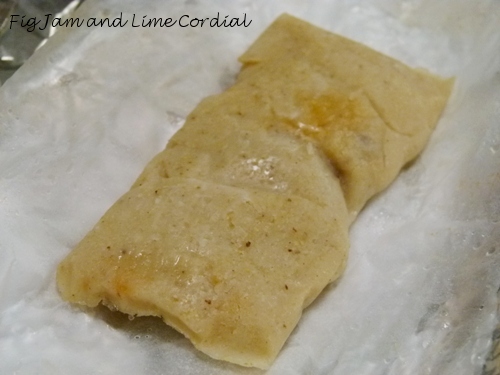
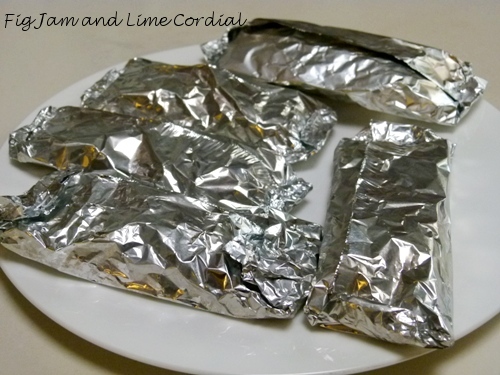
Thomasina Miers’ cookbook suggested that the tamales could be wrapped in parchment paper and foil instead of corn husks.  This bit actually worked well, although I had no idea how much mixture was supposed to go into each one…

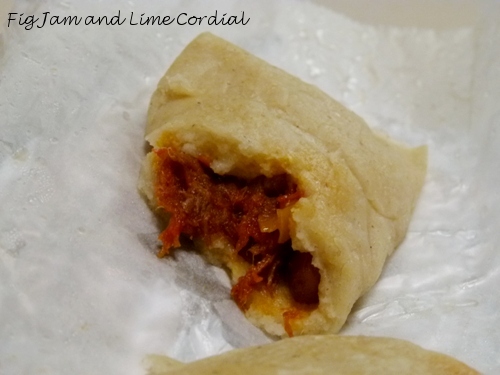
The little parcels were steamed over a vigorously boiling pot for just over an hour. And, despite our complete ignorance, the end results were quite tasty.

So here are our duck fat, parchment wrapped, nachos-topping filled “tamales”…

To tamale purists everywhere, our humble apologies.  Please feel free to quote this post as an example of how not to make tamales! (But we did have fun!)

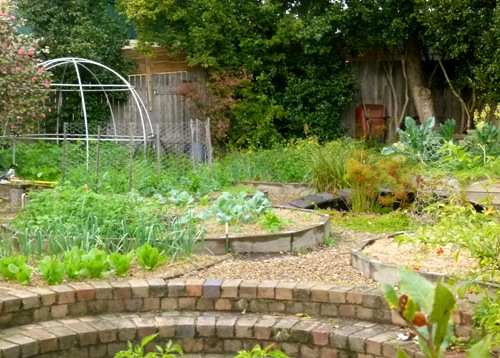
One of the great advantages of writing this blog is that it has allowed us to keep track of how the garden is faring.  Comparing these photos that I took over the weekend with the ones I posted a month ago, it’s astonishing to see how much growth there’s been in the last four weeks, especially as we’re now entering the second week of winter!

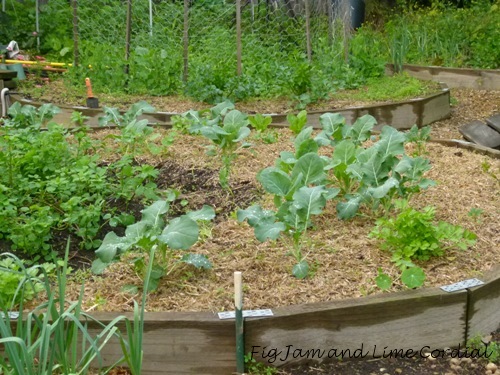
A shot of the garden from the back door – it’s hard to believe that just a few years ago, this was all overgrown buffalo grass that I had to nag the boys to mow…

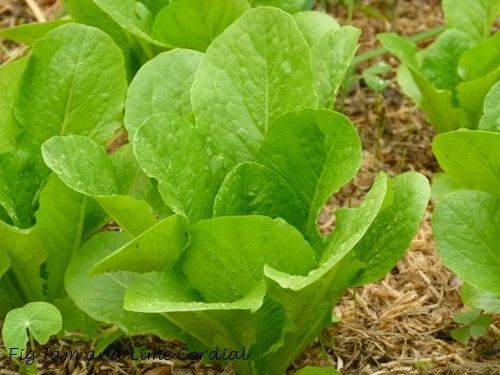
The cos seedlings that we planted in May are thriving, as are the transplanted perennial leeks, which seem to be bulletproof…

The brassicas are making slow but steady progress. The weather has turned very wet and chilly, but hopefully they’ll survive…

The celery seedlings are well established…

…as are my transplanted celeriacs.  Can anyone advise me on when these will be ready to harvest?  Thanks…

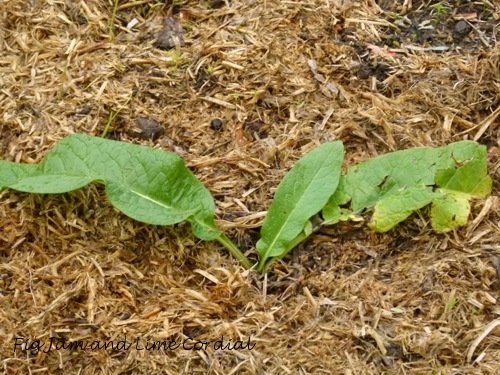
At the back of the paisley shaped bed, we’ve planted comfrey – Pete thinks it will make excellent mulch, and it has medicinal uses as well

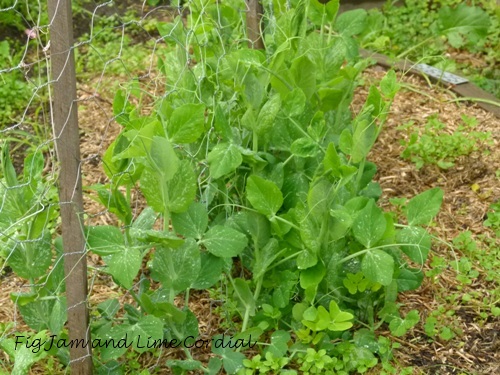
The peas are coming along nicely. Our recent wet weather will test the “mildew-resistant” claims of the three varieties we planted…

We only seem to be able to grow sorrel in one spot in the garden, which is probably a good thing, given that some gardeners find that it spreads like a weed in their backyards…

The asparagus bed continues to fluff up, and we’re still getting the occasional new shoot…

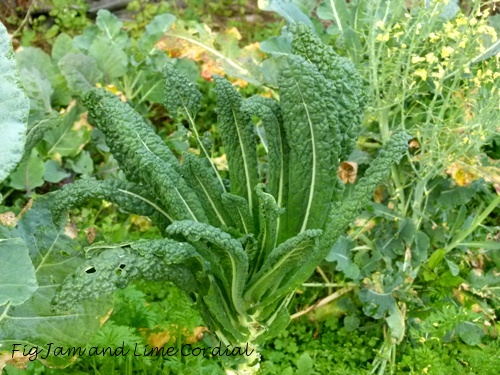
We find Tuscan kale seedlings very hard to raise and establish, but once they’re going, they keep producing for ages.  We’re slowly refining our planting choices – we now plant kale instead of spinach, and cos lettuce instead of non-heading varieties…

The bed most recently vacated by the chooks has been planted and mulched. This time we used sugar cane mulch instead of pea straw, and found it more economical and easier to work with.  In this bed we’ve planted beetroot, broccoli (you can never have enough broccoli in the garden), garlic, peas (around the chicken wire teepee), dill, coriander and cos lettuce…

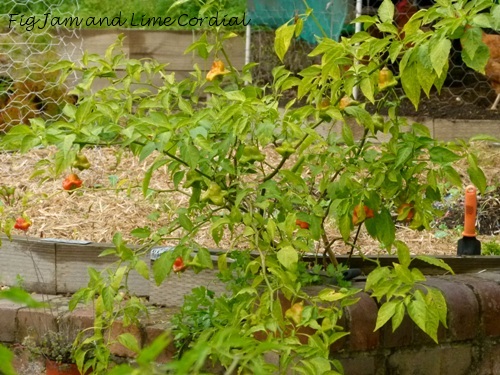
My beautiful bishops’ crown chilli keeps fruiting – it makes me smile every time I look at it.  The seeds were hard to raise – we only managed a 50% strike rate, and of those, only this one grew once it was planted in the garden. But like the kale, once established, it seemed to gain momentum…

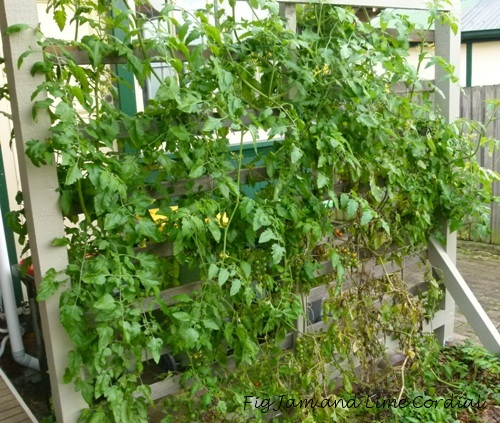
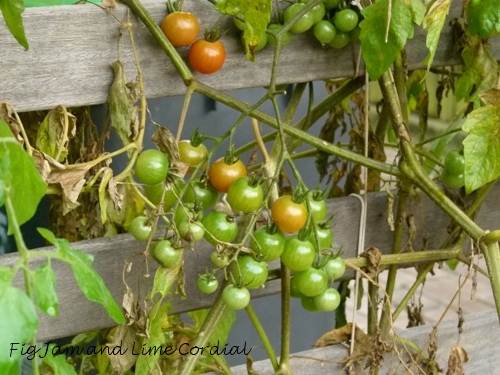
This is what can happen if rogue tomato seedlings are left unchecked!  This is a single self-sown cherry tomato which grew in the small bed near the house once the cucumbers were finished…

I’m not sure how much longer it will last with the cold snap that’s just moved in…

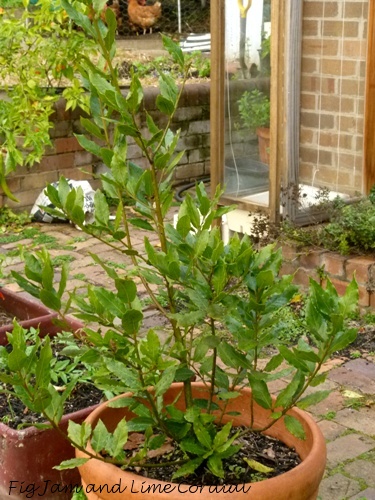
We have a bay tree in a pot that hasn’t grown much over the past few years. It more than provides for our cooking needs though…

Finally, a short clip of our girls.  They’re in our good books at the moment, as they’ve been tidying up all the really messy spots in the garden for us.  This patch near the fence was covered in (no exaggeration) waist-high weeds.  In the space of a few weeks, the chooks have done away with the weeds, turned over and fertilised the soil, and eaten all the grubs.  I’m hoping Pete will let me plant potatoes there, although I’m not sure if the spot will get enough sun…

How’s your garden going this month?

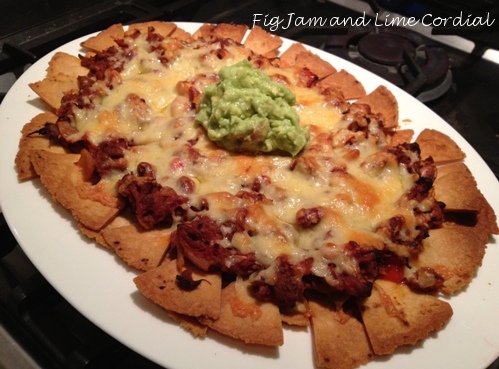
Is this junk food?

The guacamole is a lightly salted mixture of avocado, lime juice and fresh tomato.

The cheese is King Island Surprise Bay Cheddar.

The meat sauce was made with twice-cooked beef brisket, onions, tinned beans, tomato passata and a couple of bishops’ crown chillies from our garden.

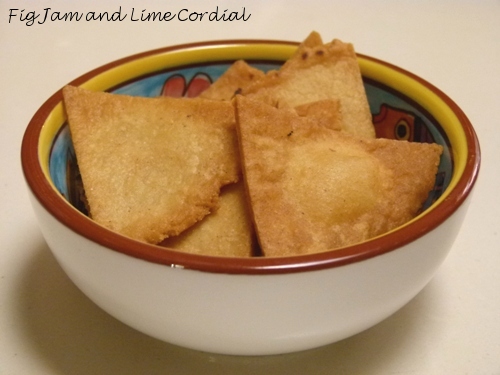
And the corn chips?  They were homemade!

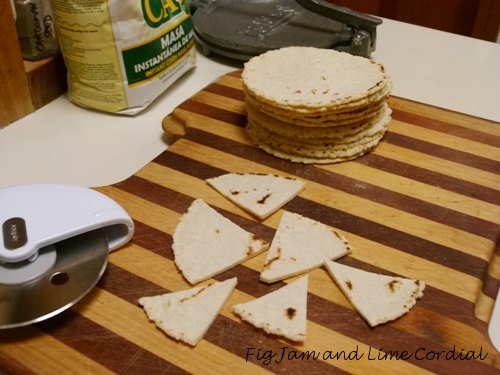
We began by making a batch of corn tortillas the day before. These were sliced into wedges…

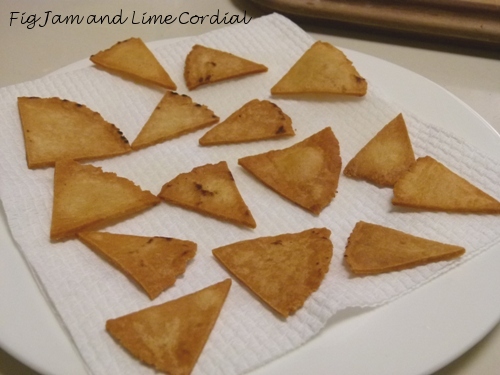
…and deep-fried in hot oil.  We didn’t salt them, but they were delicious nonetheless – it was hard to resist snacking on them as they cooled…

So…perhaps not the healthiest meal we’ve ever prepared, but there weren’t any preservatives or highly processed ingredients involved.  If food processing is a ladder with raw ingredients at the bottom and supermarket cakes at the top, I think we managed to hover around the first rung.

Definitely not junk food!

Ceeelia!  Have you tried my new cheese?

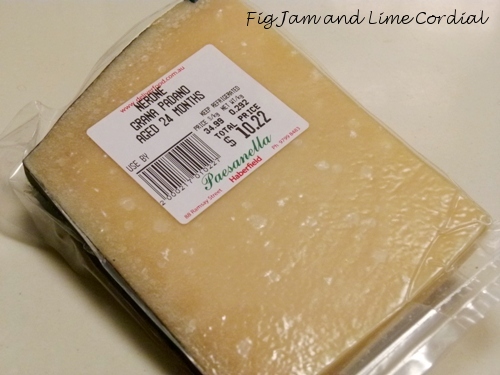
My friend Johnny at the Paesanella Cheese Shop is a very good salesman.

Not in a schmoozy, fast-talking way, but rather through his sheer unbridled enthusiasm for his products.  And he has good reason to be excited this time, because his new cheese is absolutely fabulous.

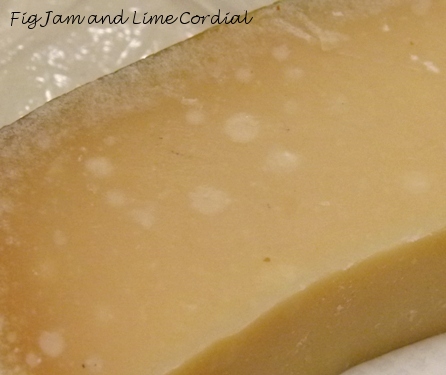
This Grana Padano – it’s basically a Parmesan, but it can’t be called that because of PDO laws – is made with a mix of buffalo and cow’s milk. The long aging process imparts an appealing crumbly texture and a deep, tangy flavour. I particularly love the little bubbles of creaminess dotted over the surface…

We’ve been using it in everything!

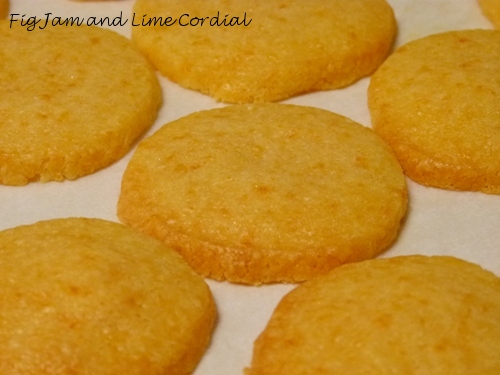
Pete asked for cheese cookies, so I pulsed the following together in the food processor to form a firm dough:

  • 125g (4oz) unsalted butter
  • 125g (4oz) plain (AP) flour
  • 125g (4oz) grated cheese (a mix of the Grana Padano, Pecorino and Red Leicester)

As you can tell, I like baking in round numbers. The dough was shaped into a log and allowed to rest in the fridge for a couple of hours, then sliced and baked in a preheated 175C with fan oven for 12 minutes.  The cookies were fragile, crumbly and very moreish – bake a little longer if you prefer them crunchier…

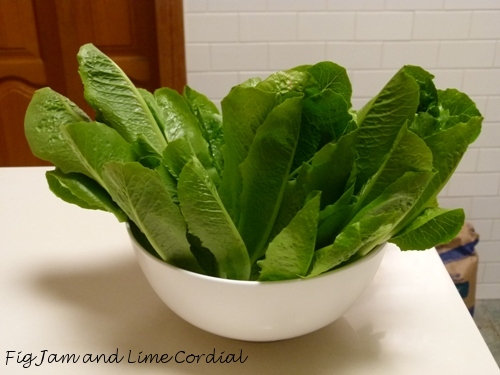
The current batch of cos lettuce in our garden was coming to an end, so I harvested all the young leaves…

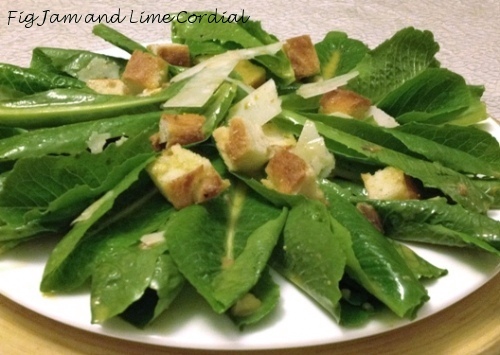
…and turned them into Steve Manfredi’s Caesar Salad.  Because we were using freshly laid eggs, I didn’t bother to coddle them for the recipe.  The salad was topped with homemade sourdough focaccia croutons and shavings of the Grana Padano…

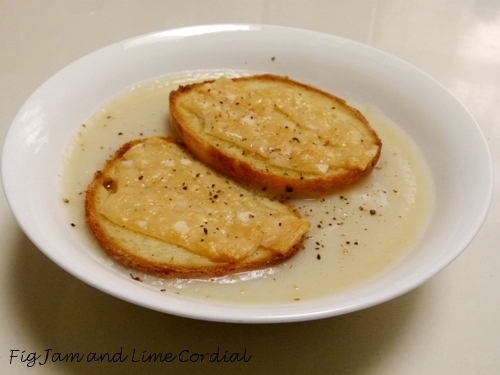
And finally, yet another Manfredi recipe (we’re really getting our money’s worth from the new cookbooks we bought), this one for a very simple cauliflower soup, topped with toasted sourdough and melted Grana Padano…

Johnny, your new cheese has been a hit at our place – we’ve just bought another wedge!

. . . . .

Paesanella Cheese Shop
88 Ramsay Rd
Haberfield NSW 2045
Tel. 02 9799 8483
Website: DeliVer, Gourmet Food Distribution