Feeds:
Posts
Comments

I’ve experimented with Kamut flour a couple of times before, but haven’t had a great deal of success with it.  The discovery of a bag in the deep freeze inspired me to have another go!

Kamut is the registered trade name for khorasan wheat, an ancient grain believed to have been grown in the Fertile CrescentAccording to Wiki, there are many legends surrounding its origin, with some claiming it was found in the tombs of Egyptian pharaohs.

The gluten structure of Kamut is relatively weak, and my previous attempts have resulted in quite heavy loaves with a tight, cakey crumb.

On the advice of Craig, who bakes amazing bread, I made a hybrid bakers flour and whole Kamut loaf.  The results were delicious –  the crumb was still quite fine-grained, but it lacked the cakiness of my previous attempts. The Kamut flour gave the loaf a nutty sweetness which we all found most appealing.
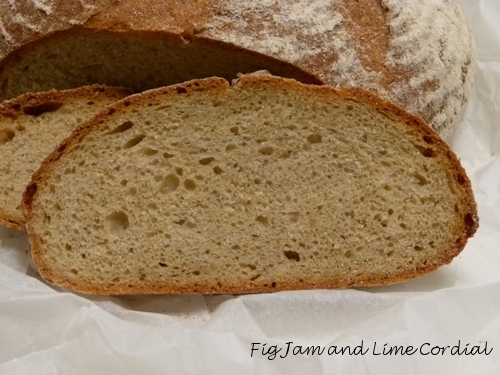
Craig advised that Kamut takes up a lot of water and needs a gentle touch – if it’s overworked it will collapse and the grain will tighten up.  He also recommended a long bake to compensate for the high moisture content.

Here’s the formula I used:

  • 300g active sourdough starter (166% hydration, fed at a ratio of one cup water to one cup bread flour)
  • 600g water
  • 75g olive oil
  • 650g bakers/bread flour
  • 400g whole Kamut
  • 16g fine sea salt

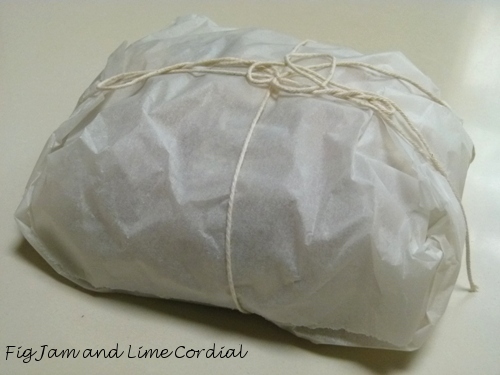
This 74% hydration dough made two 1kg boules which were cooled, then wrapped in paper and left to rest overnight before slicing.
. . . . .

With my leftover flour, I tried Joanna’s Russian Rye technique to see if it would work with Kamut.

The method is intriguing – there is no kneading involved, and the dough is simply mixed, then poured into loaf pans and left to rise until it’s ready to bake.  It’s a two-part process – an overnight sponge, followed by mixing and proving the following day.

Overnight Sponge

  • 100g active sourdough starter (hydration is not overly important here)
  • 400g whole Kamut flour
  • 600g water

Dough

  • All of the overnight sponge
  • 180g lukewarm water
  • 30g molasses (I used date molasses)
  • 20g fine sea salt
  • 460g whole Kamut flour

1. Combine all the sponge ingredients together in a large bowl and mix well.  Cover and leave overnight.

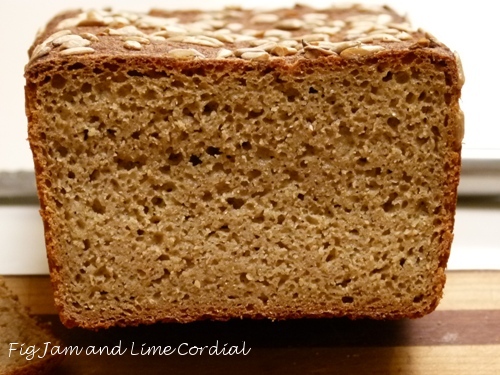
2. The following morning, add all the remaining dough ingredients to the sponge and stir well to combine (I used my Danish dough whisk).  Scoop the dough into two greased loaf tins, sprinkle with sunflower seeds, then cover and allow to rise in a warm spot for several hours.

3. When the dough has risen almost to the top of the loaf tins, preheat the oven to 210C with fan.  The loaves won’t rise any further in the oven, so they need to be fully risen before baking.  Bake for 25 – 30 minutes, then reduce the oven temperature to 175C with fan for a further 30 minutes – as the Kamut holds a lot of water, it needs a long slow bake to ensure it doesn’t end up gummy.

4. Remove the loaves from the tins and allow them to cool, then rest them overnight, wrapped in paper.  Resist the urge to cut them too soon, as they really are better the following day.

We loved these 100% Kamut loaves – they sliced well, kept well and made a perfect foil for our open sandwiches!

If you’re in Australia and want to buy Kamut (khorasan) flour, it’s available online from Santos Trading (although the shipping can be expensive, so it’s worth waiting until you have a few things to order).

For more detailed instructions on how to make these loaves, please see Joanna’s post here!
Some days I feel like I cheated on a test to get into this family.

As it often does, the conversation at dinner last night went something* like this:

. . . . .

Small Man: I was thinking, if there is an atom with two electrons in its outer shell and another atom with three electrons passes near it, will it lose one electron to the first atom?

Big Boy: No, because then it would be unbalanced again, so it wouldn’t work like that. Have you been learning chemistry at school?

Small Man: No, I’ve been reading about it in a book.  We haven’t done chemistry in science yet.

Small Man: Also, about organic chemistry – you know how life forms are carbon-based…do you think it’s possible for there to be life forms that are based on another element?

Pete: The reason carbon is important is because it readily forms compounds with a range of other elements and the possible combinations of carbon, oxygen and hydrogen are practically limitless and the complexity of these molecules makes it possible for them to act as locks and keys and catalysts for complex interactions.

Small Man: do you think it’s possible for there to be silicon based lifeforms?

Pete: Some people have written papers on that – they think because silicon can behave in a similar way to carbon that it might be possible, yes.

Small Man: do you think that’s how they came up with the idea in Star Trek?

. . . . .

Sigh…

Over the past fortnight, they’ve discussed supercluster galaxies, communism and the Cold War, the physics behind Green Lantern’s power ring, the chemical structures of noble gases, the use of gyroscopes in rocket guidance systems, and whether or not Schrödinger had an invisible cat.

I can remember a time when the conversation at dinner centered around why Toby the Tram Engine needed a cowcatcher.

I could contribute to the discussion back then, without sounding like a git.

Now I just smile serenely and listen to the three of them in awe.

* Please don’t leave a comment to tell me that the science is wrong – I did my best to remember what was said, but I was having trouble keeping up.  Oh, and I know Schrödinger didn’t have an invisible cat – I just put that in to annoy Pete.

Australian foodwriter Jill Dupleix creates fabulous recipes.

They’re  comforting to eat, elegant in their simplicity, and just so do-able.

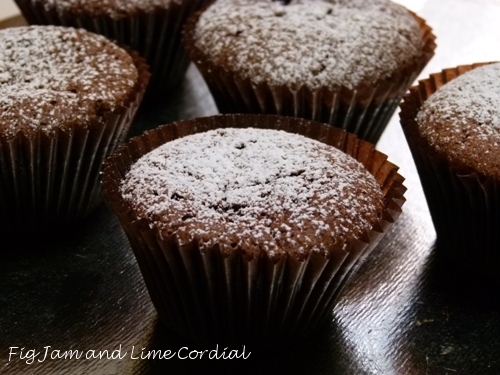
Like our baked beans and potato splats which were both inspired by her, this gluten-free recipe is a tried and tested family favourite.  Make it when you’re weary, and it will bring a little cheer to your day.  If you whisk the egg whites by hand, you won’t even need to lug the electric mixer out.

I’ve modified Ms Dupleix’s original recipe slightly – substituting semisweet chocolate for the bittersweet, and using a microwave instead of a double boiler.  It makes an already simple recipe even easier!

Little Chocolate Cakes
(a recipe by Jill Dupleix)

  • 200g (7 oz) dark chocolate, chopped or in callet form (I used Callebaut 811, 54% cacao)
  • 100g (3½ oz) caster sugar (superfine sugar)
  • 120g (½ cup) unsalted butter, chopped
  • 100g (3½ oz) blanched almond meal (ground almonds)
  • 4 large (59g) eggs, separated
  • icing sugar, for dusting (confectioner’s sugar)

1. Line 12 muffin pan holes with paper liners.  Preheat the oven to 180C/360F or 160C/320F with fan.

2. Place the butter, chocolate and caster sugar in a large pyrex mixing bowl and melt them together in the microwave, using short bursts on high and stirring frequently.  Be careful not to scorch the chocolate.  The mixture should be smooth and glossy.  Allow to cool slightly.

3. Stir the almond meal into the chocolate mixture, then beat the egg yolks in one at a time.

4. In a separate mixing bowl, whisk the egg whites until stiff peaks form.  Stir a large spoonful of the beaten egg whites into the chocolate mixture to loosen it, and then gently fold in the remainder.

5. Divide the mixture evenly between the 12 muffin liners, and bake for 25 – 30 minutes.  The cakes will rise a little as they bake, but flatten as they cool.  Be careful not to overcook them – Jill suggests pulling them out while they’re still a bit soft in the middle for extra fudginess.  Allow the cakes to rest in the muffin pans for 10 minutes before transferring them to a wire rack to cool completely.  Dust with icing sugar before serving.

Click here for a printable version of this recipe

We spent a few hours yesterday morning exploring the Newington Armory at Sydney Olympic Park.

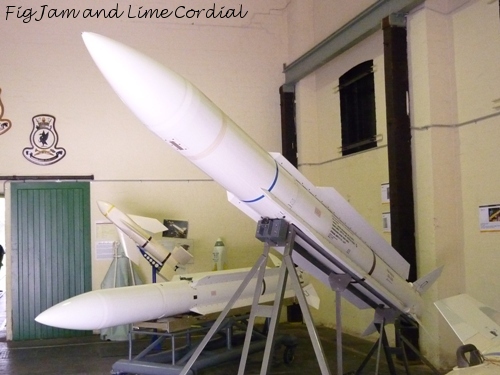
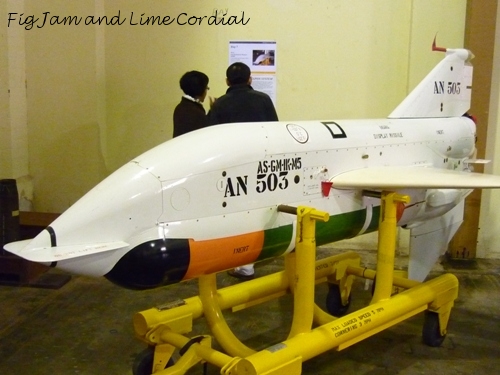
Formerly RANAD (Royal Australian Naval Armament Depot), this 52 hectare site offers wetlands, heritage buildings, and an opportunity to take a close-up look at some very large and intimidating naval weaponry.

Guided train tours are available on Sundays…

Every building on the site was numbered, and each was separated from its neighbour, either by distance or by large earth mounds or concrete walls, for protection in the event of an accidental explosion…

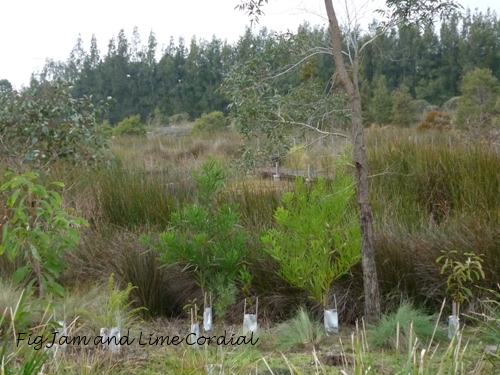
The train passed briefly through the Narawang Wetlands…

…before stopping at the armaments display…

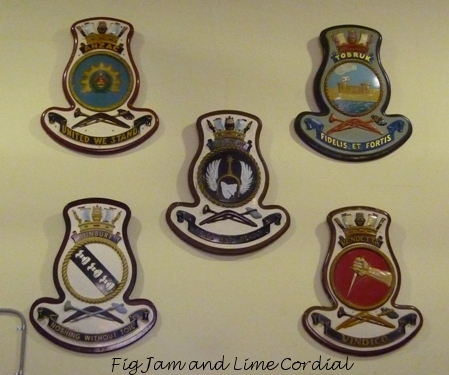
Nameplates from the ships HMAS Anzac, Tobruk, Derwent, Vendetta and Bunbury were on display…

More information is available here:

. . . . .

Segway rides are also available at the Newington Armory, and we went on a thirty minute fun ride after the train tour.

These expensive machines ($9,000 each) can get to speeds of 22km/hr and are very intuitive to ride.  The staff were patient and helpful, and great care was taken to ensure everyone rode safely, even as we were racing around at speed through muddy trenches and over hilly mounds.  The segways really are an all-terrain vehicle…

Segways aren’t legal on roads or footpaths in Australia, so this is really the only want to try them out!

. . . . .

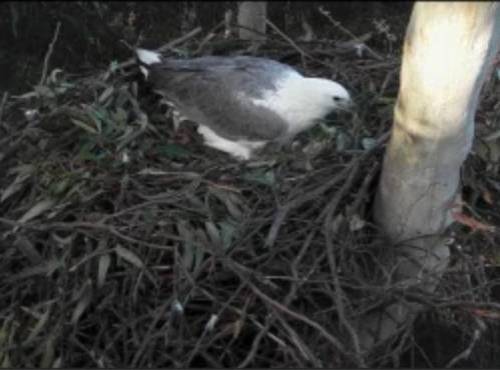
Finally, the Birds Australia Discovery Centre at the Armory is streaming live coverage of a nesting pair of sea eagles.  It’s quite addictive viewing!

. . . . .

There is much more to see and do at the Newington Armory, and Sydney Olympic Park in general.

We’ll definitely be spending another day there, perhaps to join in one of the free birdwatching tours, or to visit the art gallery, or maybe just to explore the wetlands further!

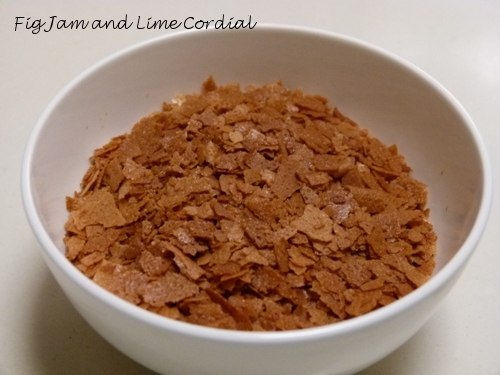
On my last chocolate run to Chefs’ Warehouse, I picked up some Callebaut Pailleté Feuilletine.

These fine shards of wheat wafer give a delicious crunch to chocolate, although they can’t be added to milk or water-based ingredients as they’ll turn to mush.

I tempered up a batch of our milk chocolate blend (47% cacao), using the following formula:

  • 400g Callebaut 823 milk chocolate (33.6%)
  • 100g Callebaut Cocoa Mass (100%)

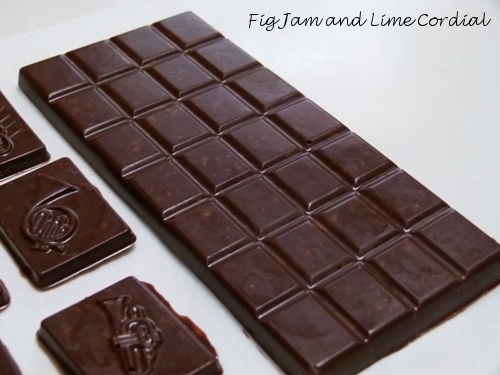
I then added 100g of the feuilletine wafers to the chocolate and very gently stirred it in.  It was a little tricky to get the stiff mixture into moulds…

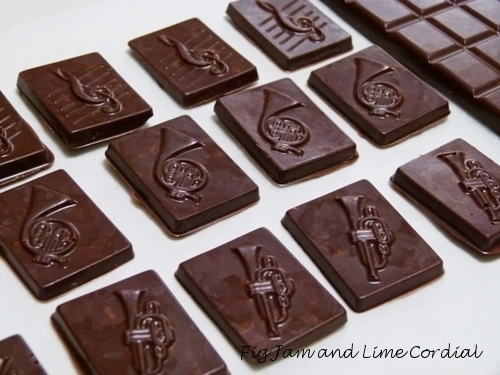
Big Boy describes the finished bars as “a really classy Kit Kat”.

The French horns are his, whereas Small Man gets the trumpets – I still can’t believe I found a mould with the two instruments my sons play!  The chocolate was well tempered, but the added feuilletine gave them a slightly mottled appearance…

. . . . .

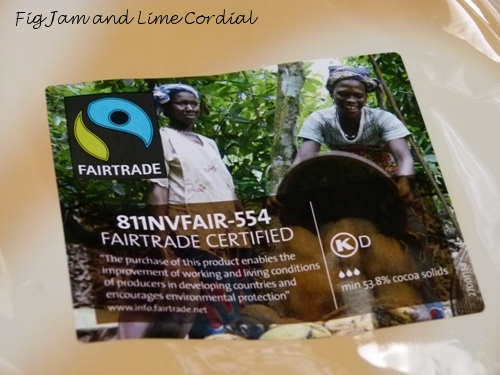
I was also happy to discover that Chefs’ Warehouse can now order in Callebaut Fairtrade chocolate on request.

At the moment the Fairtrade versions of the 811 (54% dark), 823 (33.6% milk) and the 70% dark are only available in 10kg sacks, but hopefully they’ll bring them out in a smaller format soon.

The Fairtrade 811 costs 25% more than the regular version, but I’m happy to pay the premium.  My friend Gillian of Chocolate Here uses Callebaut Fairtrade for her artisan chocolate business – do visit her market stalls if you’re ever in County Clare, Ireland!

. . . . .

Chefs’ Warehouse
111-115 Albion St
Surry Hills NSW 2010
(02) 9211 4555