Feeds:
Posts
Comments

We had Pete’s family here over the weekend, and spent Saturday feasting on seafood.

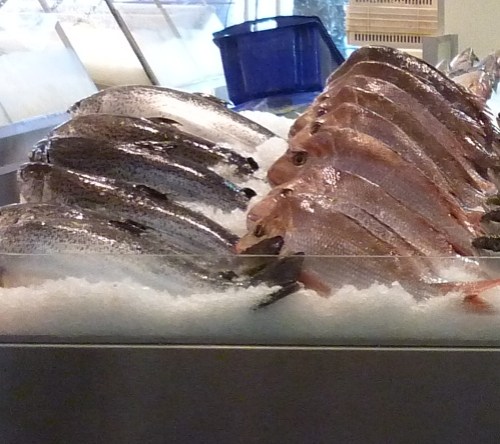
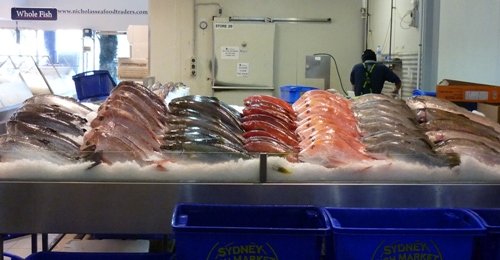
The morning began with an early visit to the Sydney Fish Market.  I was impressed with this gleaming display at Nicholas Seafoods…

I’m not great at fish identification, but I did know a few.  Atlantic salmon and snapper below…

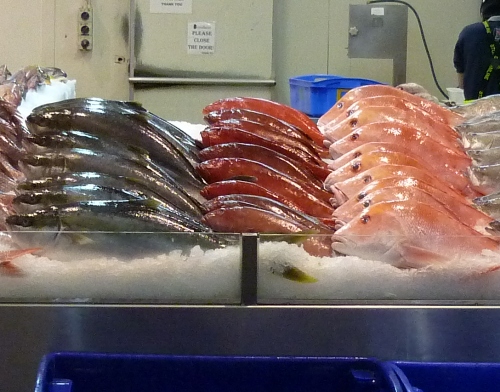
I’m not sure what the next two were (the silver one might be small tuna?), but I’m pretty sure the large orange ones are red snappers…

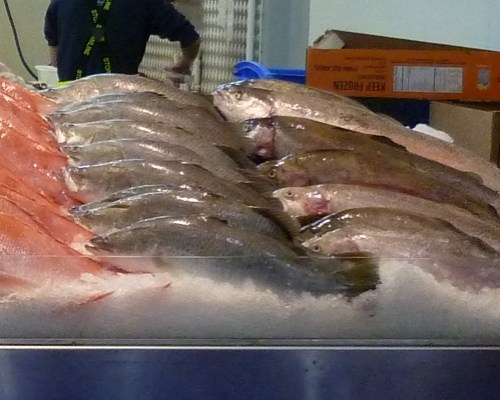
Barramundi on the left below (thanks Christine!), and ocean trout on the right… can anyone help with identifying the other fish in the photo above, please?  Thanks…

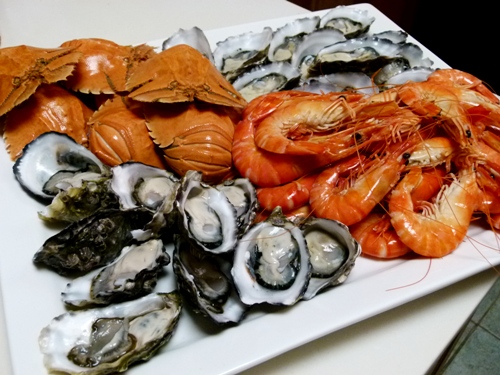
Lunch was a baked ocean trout and a cold platter of Balmain bug, two dozen oysters (half from St Helens in Tasmania, and the rest from Coffin Bay in South Australia) and a kilo of really good local Tiger prawns, served with homemade mayonnaise…

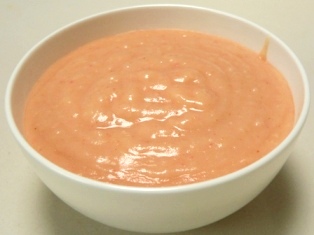
We also had homemade taramosalata

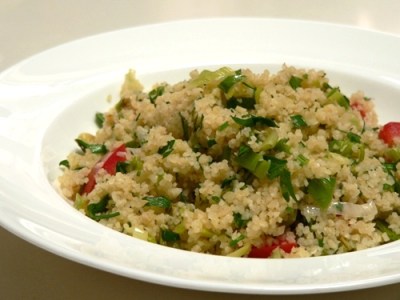
caramelised leek tabbouleh

…and half a dozen loaves of sourdough ciabatta!

Hope you all had as wonderful a weekend as we did!

We’ve been experimenting in the kitchen (testing recipes for Christmas!), and I was keen to see if we could make some praline with our newly discovered skinned roasted hazelnuts.

This is one of those recipes that is both easy and hard at the same time.

There are very few ingredients involved, but like all candymaking it involves judgment and timing, and a gentle, cautious touch.  Overcook the caramel by  a few seconds (literally), and it will scorch.  Stir too vigorously, and you could end up with a bad sugar burn.

Of course, I’ve injured myself more than once in the process, so Pete now makes all the praline in our house.  I play prep chef – I measure ingredients, chop nuts, grease trays…and hop from one foot to another in excitement as the sugar browns.  Here are Pete’s detailed instructions.

Hazelnut Praline
(based on a recipe from Carole Bloom’s Truffles, Candies & Confections)

  • ½ cup white sugar
  • ¼ cup water
  • ½ cup toasted, skinned hazelnuts

1. Using a little vegetable oil, grease a pyrex pie plate, making sure to coat well around the bottom edge (to ensure you can lever the finished praline out, if necessary).  Bloom’s original instructions are to oil a 9″ round cake pan.

2. Chop the hazelnuts up into small chunks and have them on hand, ready to add to the caramel.

3. Put the sugar and water into a saucepan and cook over a high heat. Stir gently until the sugar is dissolved, and then continue to boil without stirring.
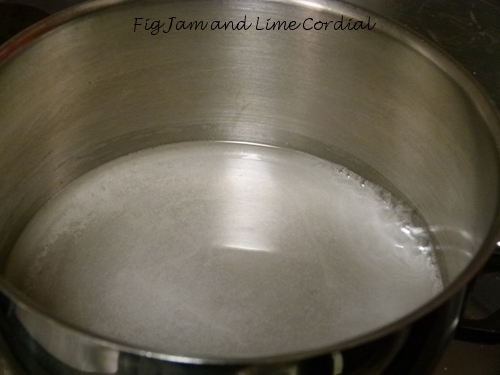
4. Keep cooking, never taking your eyes off the caramel, until it turns a light golden brown. It may start to brown unevenly – if that happens, you might need to give the pan a gentle swirl.  Bloom recommends brushing the sides of the pan down with warm water to prevent sugar crystals forming, but Pete never bothers with that.

This is the point where you need to exercise judgment – Pete was aiming for a slightly darker caramel this time, but it will also work at a lighter colour than shown below.

Pete wanted me to let you know that the caramel can go from just starting to brown to burnt in a few seconds.  You’ll need to act quickly when it’s ready, but also very carefully, as it will be blazing hot and quite dangerous!

5. Turn the heat off and quickly stir in the hazelnuts – the caramel will start to set straight away.  You will have about five seconds to stir in the hazelnuts before the mixture stiffens, and then another few seconds to get it out of the saucepan.
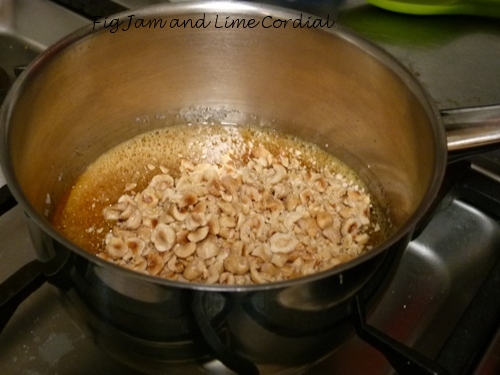
6. Quickly, but carefully, pour the mixture into the greased plate and flatten it out as much as possible with a spatula. Allow to cool completely before lifting it off and breaking into pieces as desired.

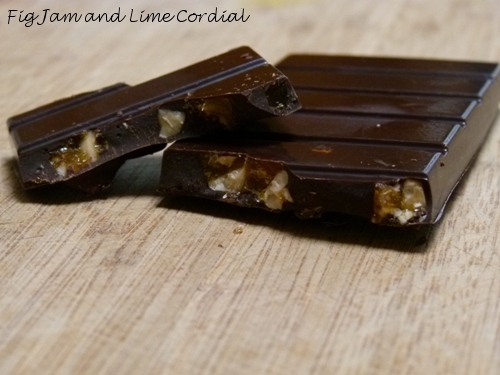
The finished praline is delicious eaten straight, but of course, I had to chop some up and try it in a chocolate bar.  I paired it with Callebaut 811 (54%) – a sweeter dark chocolate than I would normally use, but the perfect complement to the darker caramel flavour!
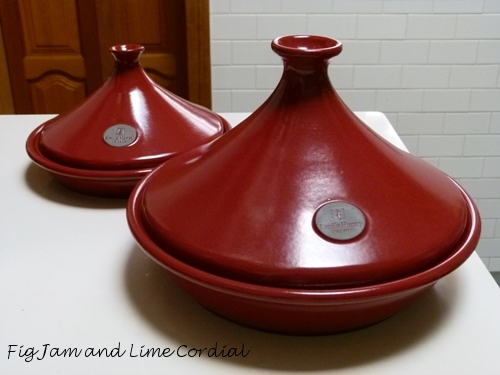
My love affair with Emile Henry Flame Cookware began several years ago when Pete bought me these two tagines as a gift…

We’ve added a few more pieces since then, particularly in the past year as our old bones and sore arms have necessitated a move away from cast iron.

The Flame range ticks every box for us.  Here’s what we particularly love:

  • It can be used on a gas, electric or halogen hob, as well as in the oven and microwave. (Note: we’ve never had a problem with the pots on our gas burners, but my mum had one crack after a couple of years – she has an electric hotplate). Cooking in clay over direct heat is something I derive enormous pleasure from.
  • It washes up brilliantly in the dishwasher – an important consideration for us, as it was becoming logistically difficult to manoeuvre heavy cast iron pots and pans in the sink.  The range isn’t non-stick, but any residual burnt bits have always cleaned away easily with minimal scrubbing.
  • The lead-free Burgundian clay gives the cookware a high thermal mass, resulting in even cooking and improved heat retention.  My curries will often continue boiling for several minutes after the heat is turned off, and still be hot enough to eat more than half an hour later.  Additionally, its extreme thermal shock resistance means the cookware can go from the freezer to the oven without cracking.
  • The stew pots are 30% lighter than comparable cast iron. And as our pots are stored on a high shelf above my head, I’m now at far less risk of a concussion.
  • Finally, the entire range is absolutely gorgeous!  It transitions easily from the stove to the table, and is attractive enough for even the fanciest dinner party.

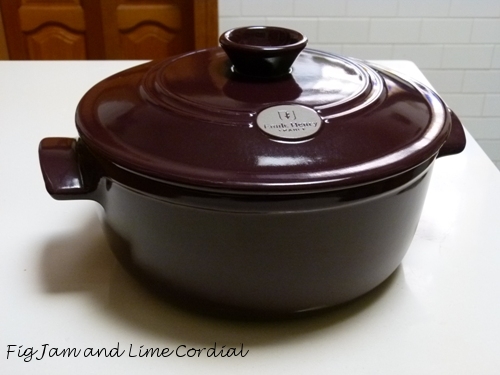
I have a round 24cm general purpose stew pot in fig…

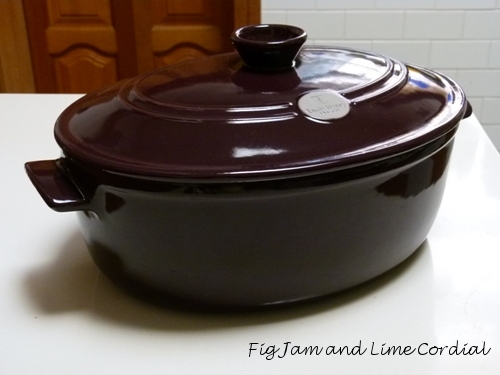
…as well as a 31cm oval pot, also in fig, especially for curries and poaching large cuts of meat…

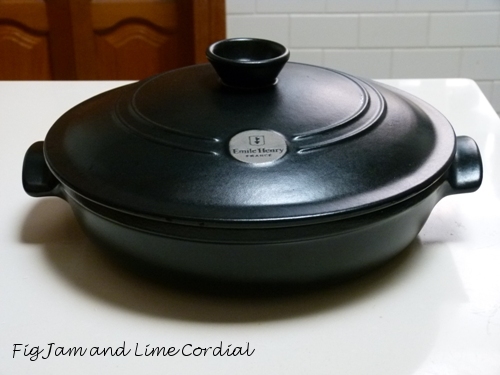
…and a 30cm black brasier, which I use for Indian keema and shallow-frying.

These pieces are very expensive, but we view them as an investment. They’re of superb quality, highly functional, and in use almost every day.

Additionally, all of them have been purchased at massively reduced prices – if you’re in Australia, check out the Peters of Kensington website, which offers a wide range of Emile Henry, discounted by as much as 75%.  Remember that only the Flame range can be used on the stove-top.

Edit 06/14: When I first wrote this post, the Flame range was widely available in Australia, but it’s become much harder to find in recent times. Everten Online still sell some pieces, as do Peters of Kensington, but both have a greatly reduced range (mostly tagines).

One thing to note – the cookware needs to be seasoned before use.  There are detailed instructions with the pots, but it’s an easy process –  pour an inch or so of milk into the bottom of the pot or pan and simmer it for five minutes, then turn it off immediately and allow it to cool, before washing. Alternatively, simmer a litre of water with half a cup of rice for five minutes instead of the milk (I’ve actually found the rice works better, as I tend to scorch the milk).

This isn’t a paid or sponsored piece – if you read our blog regularly, you’ll know that I never do those. I’m simply quite infatuated with this 160 year old company and her products.

Here is a clip of Jacques Henry, the fifth family member to run Emile Henry, describing how the Flame Cookware is made. I was impressed to see them using the clay roaster on a barbeque!

I’m still playing with my new spices!

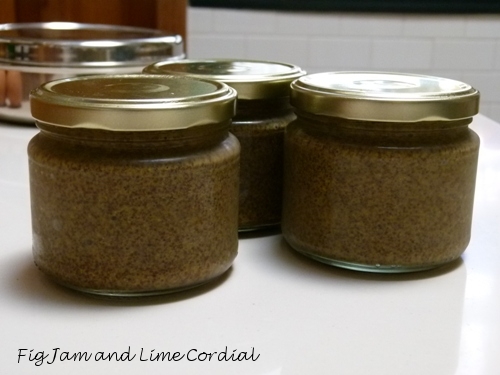
My friend Amanda from Lamb’s Ears and Honey forwarded a link to this Saveur post on making condiments at home.  I made their simple but very delicious Spicy Guinness Mustard.  Here’s the recipe with metric measures included (and it makes enough to fill three 300ml jars)…

  • 350ml (12 oz) Guinness beer
  • 285g (1½ cups) brown mustard seed
  • 250ml (1 cup) red wine vinegar
  • 1 tablespoon Malden salt flakes (or kosher salt)
  • 1 teaspoon freshly ground black pepper
  • ¼ teaspoon ground cinnamon
  • ¼ teaspoon ground cloves
  • ¼ teaspoon ground nutmeg
  • ¼ teaspoon ground allspice (pimento)

Mix all the ingredients together in a large pyrex bowl and stir to combine. Cover the bowl with clingfilm or a shower cap and allow it to mature for 24 hours at room temperature (original recipe says 1 – 2 days) .

The following day, blitz the mixture for about 3 minutes, either in a food processor, or using a stick blender in the bowl (which is what I did).  The mustard will thicken in texture and lighten in colour as the seeds are ground up.

If you taste it at this point, don’t be put off – it was initially quite bitter and inedible, but after a couple of days in the fridge, it mellowed to a hot and delicious grain mustard.

I’m adding this to my list of things to make for Christmas…

. . . . .

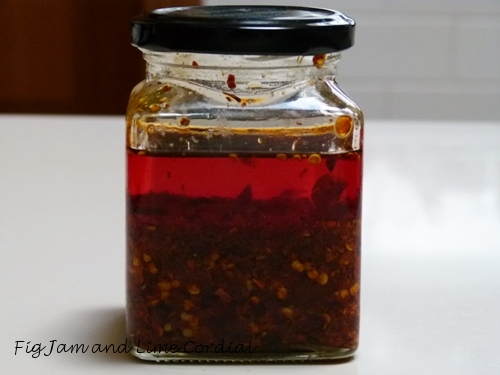
Also, using a tip I picked up from Tony at La Casa, I half filled a clean jar with chilli flakes and topped it up with grapeseed oil.  The oil has taken on a rich red hue and a spicy chilli flavour.  I regularly scoop out a spoonful of the macerated flakes and stir them into a soup or pasta.  So simple and so tasty!

A couple of new chocolate bars we’ve been experimenting with…

This somewhat rustic looking block is the result of scattering chopped chunks of cold, tempered caramelised white chocolate over the mould before filling it with our 74% Tanzanie blend.  It’s a nice flavour combination…

We’ve also been trying to perfect a mint crisp bar…

We began by boiling up mint leaves in a little water before blitzing and straining them to create a very green mint tea.  We added some peppermint oil to intensify the flavour and then boiled the liquid up with sugar to create a crystallised mint-flavoured candy.

When cool, the candy was pulverised in the food processor and incorporated into a batch of tempered chocolate.

The end result was a dark chocolate bar with little nuggets of mint candy throughout – a great after dinner treat!