Feeds:
Posts
Comments

I’ve been baking bread…

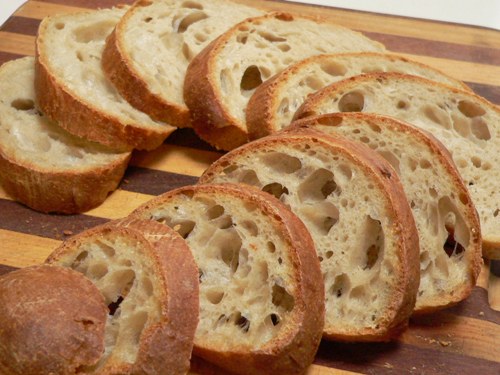
…most recently, five loaves of sourdough spelt. My breadbaking schedule tends to be dictated by my sourdough starter – when it’s frothy and ripe, I’ll  often mix up a batch of dough, even if it wasn’t planned.  I purchased organic Canadian spelt (we didn’t grow any in Australia last year) from Santos Trading, and it was beautifully responsive…

. . . . .

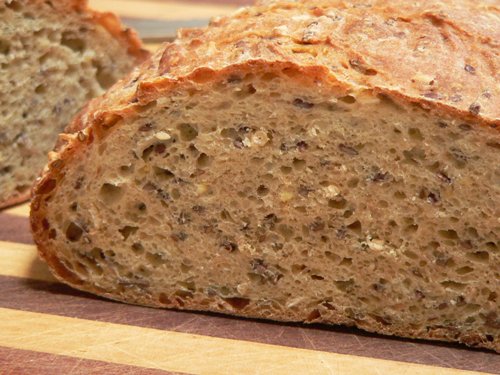
This yeasted multigrain loaf was my contribution to the Mellow Bakers’ August bake-along – it’s based on a recipe from Jeffery Hamelman’s Bread

. . . . .

Finally, I just couldn’t resist this peanut-peanut butter-tahini-cumin-chipotle loaf featured in Dan Lepard’s Guardian column. I substituted an eighth of a teaspoon of chipotle powder for the roasted chillis, as I didn’t have any of the latter on hand.  It was delicious with nasturtium pesto and cheese!

In our winter garden, there really isn’t much growing at the moment.  The broadbeans are struggling, the seed potatoes still aren’t in the ground, and there are just four lonely apples on our young trees.

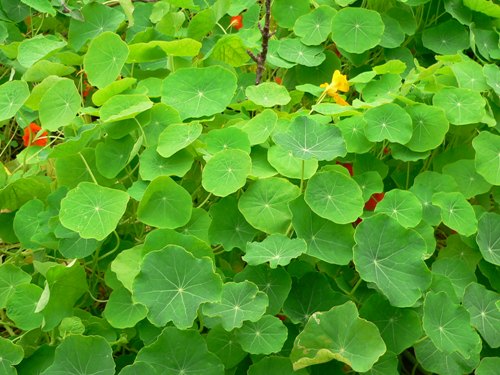
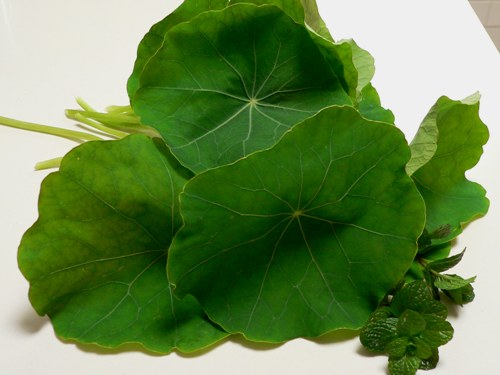
The nasturtiums, however, have really taken off! Planted around the base of the fruit trees as ground cover, they attract bees and brighten our day with a lovely sea of green every time we go outside.  We use their leaves and flowers in salads, they’re good greens for the chickens, and any excess becomes mulch for our fledgling vegetable beds.

Inspired by a recipe in Pam Corbin’s wonderful book Preserves, I gathered some nasturtium leaves and a sprig of mint from the garden…

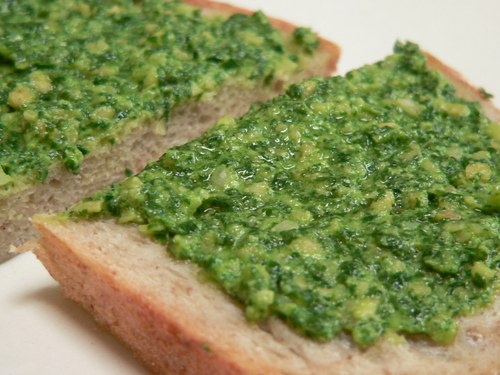
…and blitzed them in the food processor with slivered almonds, a little grated pecorino cheese, half a clove of garlic and a few brined nasturtium pods.  This was all loosened with grapeseed oil and the juice of half a lime, then seasoned with Maldon salt and a little ground black pepper.

The pesto was delicious – tangy and green, with a lovely peppery note from the nasturtiums.  It was perfect on sourdough rye, and even better on Big Boy’s lunch of spinach and ricotta ravioli.  You can imagine how happy I am about this, given that we have a whole bed of nasturtiums growing faster than we or the chickens can eat them!

You know that old adage about Asians being unable to pass up a bargain?

It’s true.

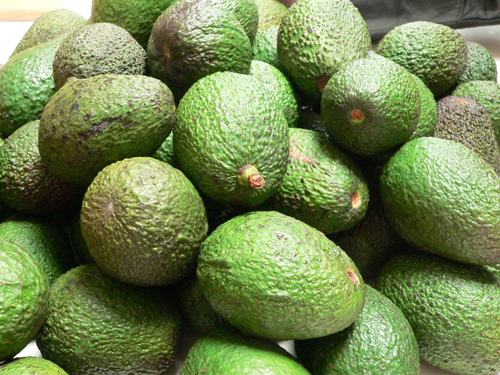
When my gorgeous mother found these avocados at her local fruit market for 9c each, she just couldn’t resist.  The store had a limit of thirty avos per person, so mum dragged my dad to the fruit shop with her, and they bought sixty between them.  For $5.40.

Of course, my parents were never going to be able to eat sixty avocadoes, so yesterday they arrived with bags full, and announced that thirty were for me and twelve were for Maude.  I felt it would have been ungrateful of me to point out that they were all going to ripen at the same time.

Moments like this always remind me how wonderful my family really is.  Apart from being incredibly supportive, they’re also quirky and great fun.  Let me give you an example. Last week at dinner, I inadvertently called my mother a goose.  The sentence, “no, you goose, it’s not like that at all”, came out of my mouth before my frontal lobe had time to censor it.  I smsed my sister to bid her farewell, as I am now dead, and she replied with, “I’ve lit a candle for you..”

Anyway, I digress.  The purpose of this post is to ask for your help!  What do I do with thirty avocados?  They’re not ripe yet, but the first ones will be ready in the next day or so.  They’re not recommended for chickens, and there’s only so many we can eat on toast every morning.  I’d be grateful for any suggestions you might have, particularly on how to preserve them (I really do think  most of them are going to ripen at the same time!).

Aahh…families…where would we be without them?  I hope you’ll share stories about your families too – we’d love to hear them!

Scones are on the radar this week – the fabulous  Heidi blogged about her lavender scones, and Dan’s Guardian recipe was parsley and cheese scones.

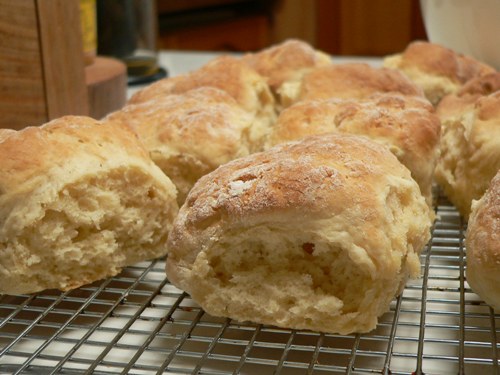
I can’t resist joining in with this easy lemonade version – they only have three ingredients and are so simple that they’re  commonly taught in kids’ cooking classes.  They’re not the prettiest of scones, but they are as light as a feather, and keep quite well.

Some clarification –  “lemonade” in Australia is carbonated fizzy soda drink, like 7-Up or Sprite.  The first time I posted this recipe, I had friends in the US attempt it with what they call lemonade and it was a complete disaster.  The bubbles are very important!

If possible, try to use pure cream (I believe it’s known in the US as heavy whipping cream) – ours was 35% fat with nothing added.  I’ve used thickened cream before quite successfully, but the scones are a bit lighter when made with pure cream.  The fat content is important – these are usually made with butter, so the cream has to fulfill that role in this recipe.

I have no idea where this recipe originates, but it came to me via my friend Joyce.  Her kids make a batch every week!

  • 3 cups (450g) self-raising flour
  • 1 cup (250g) pure cream (35% fat)
  • 1 cup (250g) lemonade (7Up, Sprite etc)

1. Preheat the oven to 200C (400F) or 190C(175F) with fan. In a large mixing bowl, mix the ingredients together.  Stir gently until combined and all the flour is moistened.  This should take less than a minute.

2. Tip the dough out onto a lightly floured surface.  Handle it gently.  Here’s a photo so you can see the consistency. It’s quite sticky at this point.

3.  Dust your hands and the top of the dough with flour,  then gently pat the dough into a thick disk.   With a floured cutter, cut out the scones, and place them side by side on a lined baking tray.  Cut out all you can, and then gently reshape the dough and cut out a few more. My batch made ten and a half scones.

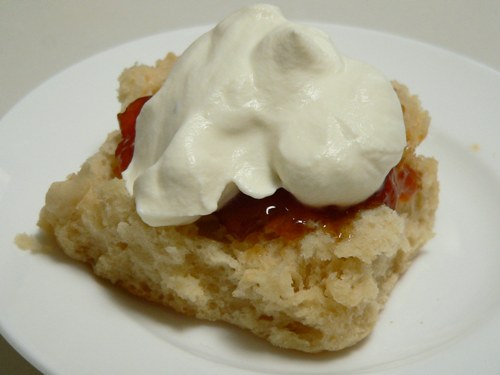
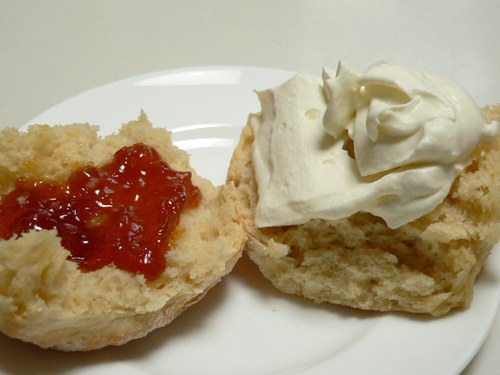
4. Bake the scones in the preheated oven for 20 minutes, or until golden brown.  We served ours with whipped vanilla cream and Pete’s apricot jam.  Perfect for  Saturday afternoon tea!

Click here for a printable version of this recipe

Now that we have our own chickens, it’s suddenly become more important to me that the chickens we buy for meat have had a reasonable quality of life.  They’re such interesting, intelligent birds, and while our girls haven’t quite made a vegetarian out of me yet, I am now looking more closely at the meat we’re buying.

We haven’t bought a non-free range chook for years, but recently I’d read a couple of articles which suggested that the way some free range chickens are kept is cruel, as they aren’t used to being in large flocks and tend to peck at each other mercilessly.  There have also been stories about free range birds being de-beaked and de-spurred in at attempt to stop them killing each other.

To try and understand this all a bit better, I rang FREPA and made some enquiries.  FREPA stands for Free Range Egg and Poultry Australia – a not-for-profit company which accredits free range poultry farmers in Australia.  Do have a look at their standards – they’re an enlightening read.

Here are some of the things I found out:

1. In Australia, FREPA certified meat chickens are not  mutilated in any way – beak trimming, toe trimming and de-beaking are not permitted.  According to the lady I spoke to, this is because it isn’t necessary – our meat birds have been bred to be non-aggressive, although this isn’t the case in all countries.  Roosters and laying hens are more inclined to peck, but this isn’t an issue with the birds raised in Australia specifically for meat.  The standard for meat birds is available here; the comparable one for egg laying chickens is here.

2. FREPA standards do not allow de-beaking of free-range laying hens. De-beaking involves cutting the top beak to be shorter than the bottom one.  However, beak trimming is permitted I’ve been advised that this involves taking less than 1mm off the beak when the chick is a day old, before its pain receptors have developed.  This process is carried out to stop the birds from cannibalising each other.

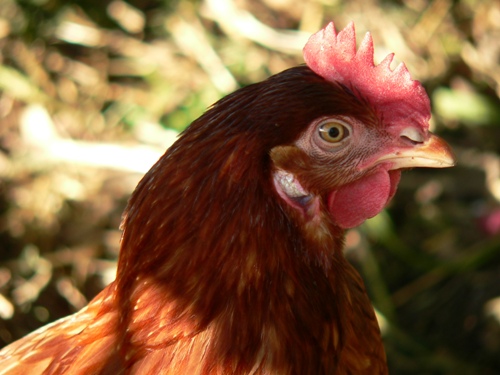
I was most surprised when Meg from FREPA had a look at the photos of our chickens and advised me that our birds had been beak trimmed!  She said the trimming done on our hens was the maximum permitted by FREPA.
3. FREPA have in place a regulation which prevents free range egg producers from artificially lighting enclosures for extended hours to force the birds to lay continuously.  According to the standard, artificial lighting is only allowed where the combination of natural and artificial light doesn’t exceed 15 hours per 24 hour period.

4. Contrary to what most people think, organic does not automatically mean free range.  Organic refers only to the food the birds are fed, free range refers to the way they’re raised.  Of course, the reverse is also true, and free range birds aren’t usually fed organic feed, but they do have the option of foraging for some of their food outdoors.  This is a big issue – with organic birds often retailing for nearly $30 each here in Australia, it makes sense to check that the bird is both organic and free range.  And personally, if I had to make a choice, I would always choose free range over organic – our primary concern being the animal’s welfare.

5. Slowly, slowly, the country is undergoing a revolution – Red Rooster, one of our largest fast food chains, is currently trialling free range birds in Western Australia.  If the move is successful, it will be rolled out across the country.  How cool will it be when our takeaway roast chickens are all free range?

6. Free range birds grow at a slightly slower rate than battery chickens, but in a far less stressful environment.  The difference in flavour may be attributed to this lack of stress.

7. In Australia, we are blessed with space, which means we have plenty of room to allow our free range chickens to roam about.  This is a limiting issue in many countries, particularly in parts of Europe.  We are fortunate to live in a country where lamb and beef are also grazed rather than intensively farmed, although that’s often not the case with pork unless it’s specifically marketed as free range.

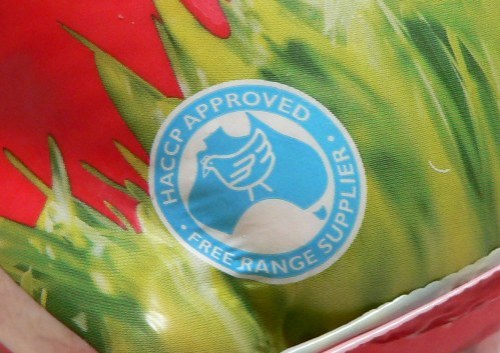
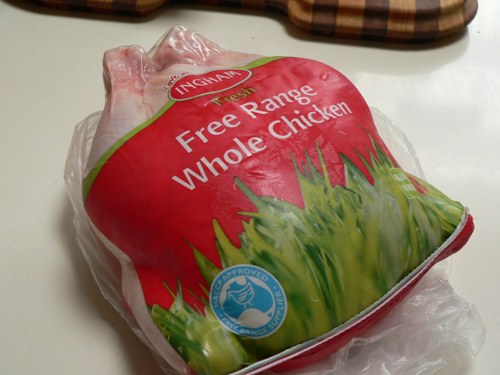
If you’re an Aussie, and you want to choose a chicken (or eggs) from an accredited FREPA farm, look for the FREPA logo.  It’s a line drawing of a chicken on a silhouette of Australia, and is a guarantee that the bird you’re buying has lived a decent free range life!