Feeds:
Posts
Comments

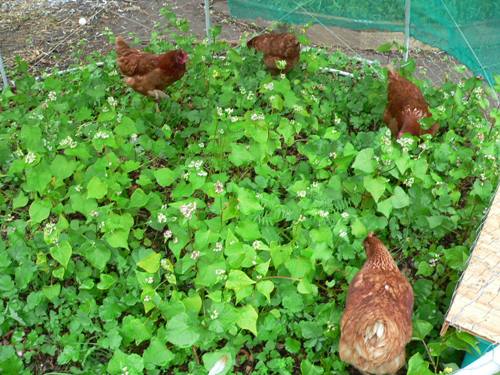
As you know, our chickens are here to garden for us.  The plan is to move them from bed to bed, allowing them to eat everything in sight and then fertilise the soil, ready for planting.

Yesterday, they had their first rotation – into a bed of buckwheat grown just for them.  I thought you might like to see some photos of our happy ladies…

Good news, we had another egg!  A little pullet egg, with a deep golden yolk and a good firm shell.  The hen who laid it was so proud of herself, she came out of the nesting box clucking and carrying on, until one of the more dominant chickens got sick of it and came over and pecked her on the head – as Christina said, that will teach her to show off!

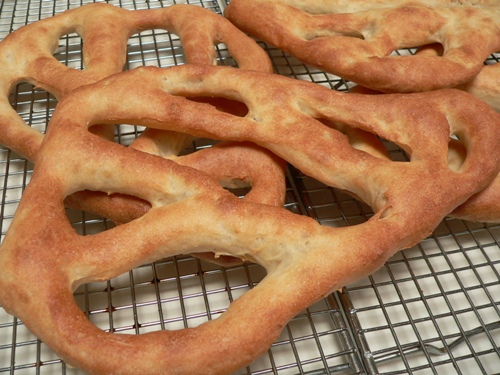
Fougasse was one of my earliest breads – the shape being the first one taught in Richard Bertinet’s Dough.  It’s very quick to make with yeast, as it doesn’t require a second rise, although I’ve only had limited success making it with sourdough.  Like many flatbreads, it seems to rely on the speed of bakers’ yeast to give it a quick spring in the oven.

Continue Reading »

Here are some variations on the fig and walnut paste that we’ve been experimenting with, using the same methodology (original recipe is here):

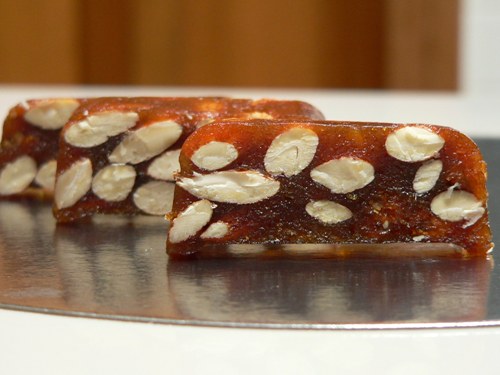
Apricot and almond bar

  • 300g dried apricots
  • 200g whole unblanched almonds
  • 20ml pomegranate molasses
  • 75g brown sugar
  • splash of water at the start to help the sugar dissolve

. . . . .

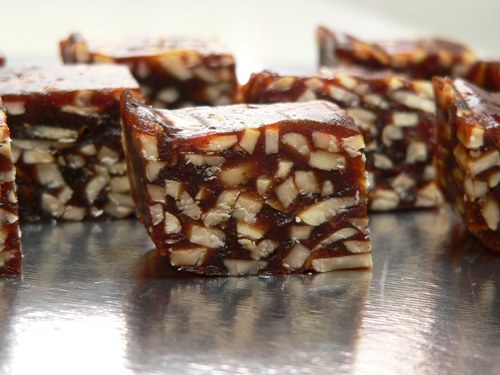
Date and almond bar

  • 300g dried dates, soaked briefly in hot water, then well drained
  • 200g slivered almonds
  • 75g brown sugar
  • 20ml date molasses
  • 20ml lime juice

. . . . .

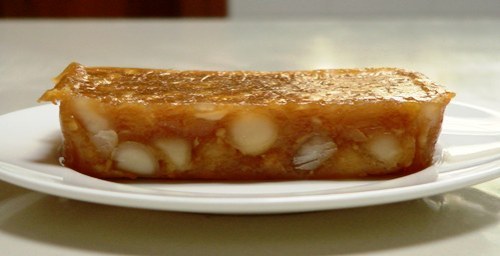
This is such a versatile recipe and we’ve had great fun playing around with it.  Please do let me know if you come up with any clever combinations – my friend Maude is going to try a batch with macadamias and dried mango!

Edit: Maude brought one over for me to photograph this afternoon…


Moo recently gifted us a log of fig and walnut paste, which I became hooked on immediately.  As it’s a big ask to expect him to ship to us regularly from Adelaide, I thought I’d try to find a way to make this at home.

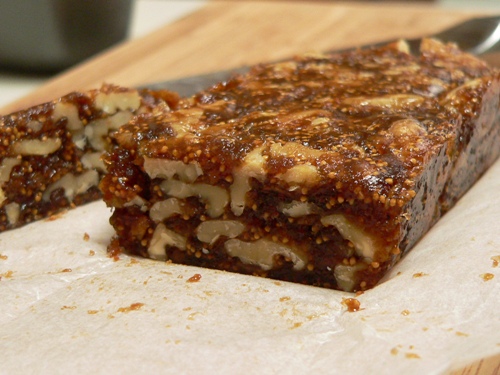
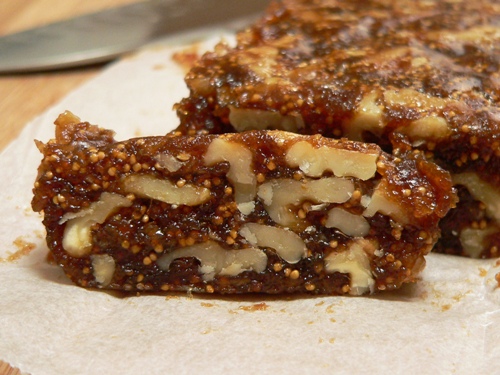
I’ve created my own recipe for this (and am feeling quite chuffed with how well it turned out!), influenced in part by Mark and Bruce’s Fig Cookie filling and in part by our previous attempts at making nougat.  The end result is delicious – slightly softer than the commercial product and in Pete’s opinion, better tasting…

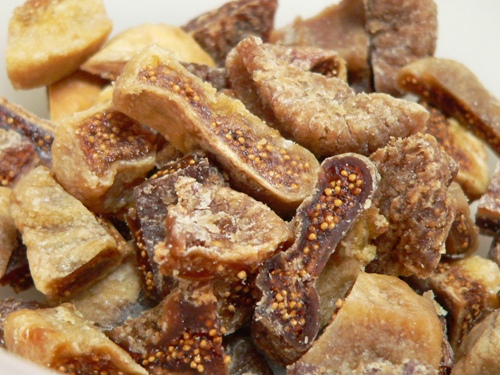
  • 300g (1¾ cups) Turkish figs
  • 200g (2 cups) walnuts pieces
  • 25g (5 teaspoons) lemon juice
  • 75g (1/3 cup) brown sugar
  • 50g (2 US tablespoons or 30ml) honey

1. Chop the figs up coarsely, removing the stems.  Place them into the bowl of a food processor and blitz until they form a sticky paste.

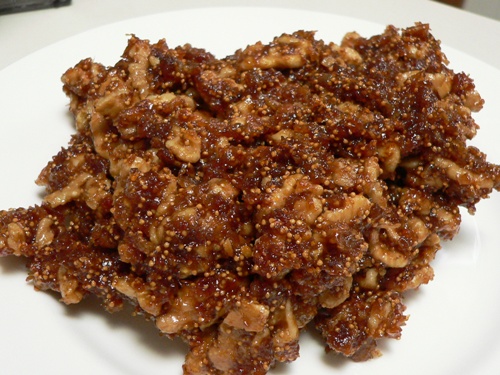
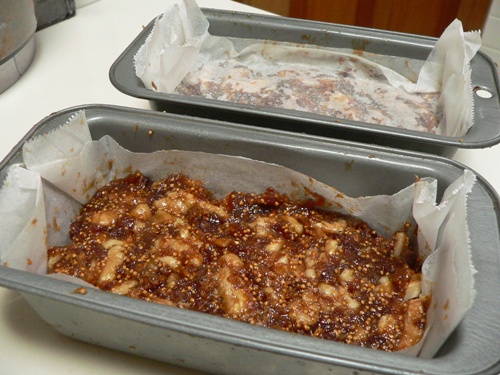
2. Scrape the paste into a heavy-based non-stick frying pan and add the lemon juice, brown sugar and honey.  Stir for a couple of minutes over a low heat until the sugar dissolves.  Add the walnuts and continue stirring over a low heat until all the liquid has evaporated and the walnuts have coloured slightly.  You want to keep stirring and turning the mixture over until it forms a thick, sticky paste – cook it as long as you can without burning, to allow the sugars to caramelise just slightly.  Watch this carefully, we’re only talking about minutes of cooking time, not hours.

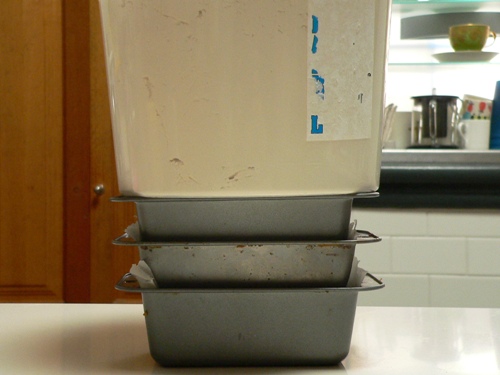
3. Line two small loaf tins with parchment paper (although it probably doesn’t matter what you shape these into).  Scrape the  mix evenly into each tin, flattening out the top with a spatula.  Press a sheet of parchment onto the surface, then place an empty loaf tin on top and a weight on top of that to help flatten out the paste.  In the photo below, I’ve stacked the first tin into the second, then topped them with an empty third, and weighted it all down with my tub of flour.

4. Allow to cool for several hours, until firm. Remove the parchment paper and slice with a sharp knife.  I have my paste wrapped in thick plastic and stored in the pantry, although it would probably keep longer in the fridge.

I adore this fig and walnut paste with a little Picasso sheeps’ cheese and some Italian prosciutto on sourdough bread. Pete has taken to eating chunks of it straight, like a fruit and nut bar.  It is indeed quite healthy – basically figs and nuts held together with a little sugar and honey!

Click here for a printable version of this recipe

. . . . .

Edit: Pete asked me to make an apricot and almond version for him to eat as a bar.  These are the ingredients I used, and he was happy with the result.  Same methodology as above.

  • 300g dried apricots
  • 200g almonds
  • 20ml pomegranate molasses
  • 75 brown sugar
  • splash of water at the start to help the sugar dissolve

It’s now been nearly a fortnight since we brought our chickens home.

In that time, they’ve plumped up a little..
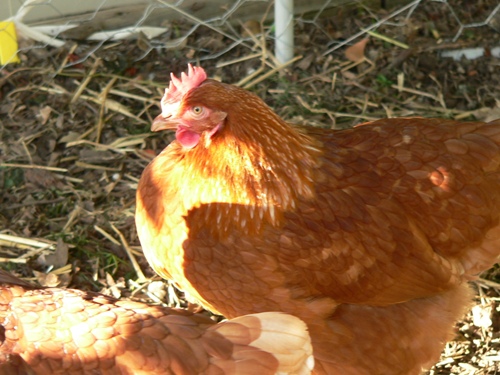
…and today they actually agreed to stand still and have their portrait shots taken.
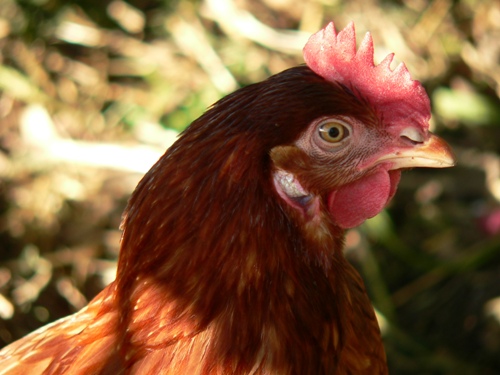
They’re astonishingly intelligent birds.

In the short time they’ve been here, they’ve learnt to fly up to a high roost, eat greenery, and scratch for worms.  They recognise both Pete and I, and come running whenever we approach, clucking and begging for food. They’ve also established a clear pecking order…

I adore their distinct personalities.  One hen is particularly bonkers, and spends much of her time pecking at the laying box.  I’m sure she’s trying to communicate with us in Morse code. Tap-tap. Tap-tap-ti-tap.

Another steadfastly refuses to follow the flock – she feeds in a different area to the others, chases her food more vigorously, and has her own unique method for ascending to the 5′ roost – she takes aim, leaps straight up like a Harrier Jump Jet and flies between the slats of the roosting platform, tucking her wings in at the last minute to fit through the small opening.  One day we will probably have to rescue a wedged chicken from the roost.

After laying four eggs in quick succession, the hens have now completely stopped – a common occurrence after they’ve been transported.  And to be fair, we have substantially changed their lifestyle – they now live outside and eat food scraps, lots of weeds and plants, and worms and snails that they dig up from the garden.  We still supplement their feed with grain mix, but it’s no longer their sole source of food.

To try and encourage them to lay, Pete put two plastic golf balls in the nesting box – the sight of an “egg” is supposed to inspire them to add their own eggs to the clutch.  Our hens simply dragged the balls out and played chook soccer with them.  Sigh…

One of the cutest things they do – and I’d like to think it’s a sign that they’re happy and well fed – is have an afternoon siesta.  After lunch, they all snuggle up together in the middle of the enclosure, make a few contented clucking noises, then settle down for a little kip.  I took this photo today, as they were settling in for rest time – it reminded me of a group of ladies gossiping at the hairdressers…

In the week or so that they’ve been here, they’ve almost completely emptied our garden of weeds.  Not that we have “weeds” anymore – now  all unwanted plants and pests are viewed as chicken feed.  They’re brilliant at getting rid of onionweed  – I’ve watched them meticulously digging out the bulbs one at a time.  And their current favourite food is fresh buckwheat, which they’ll happily allow us to handfeed to them.

As you can tell, we’re really enjoying our chickens!