Feeds:
Posts
Comments

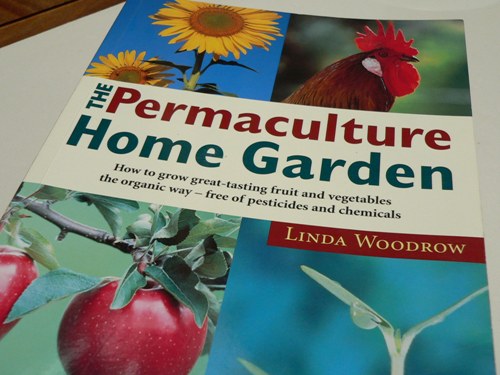
This book has changed our lives.

Written for Australian conditions, Linda Woodrow’s brilliant text for turning a suburban backyard into a self-sufficient organic garden is full of really clever ideas.  I thought I’d share just one of them with you today.

One of the tenets of Linda’s plan is to plant out advanced seedlings – doing so not only ensures that they’re more likely to survive an attack from marauding pests, but it also reduces the amount of time plants have to spend in the ground.  This in turn enables the garden beds to be planted out up to four times a year.

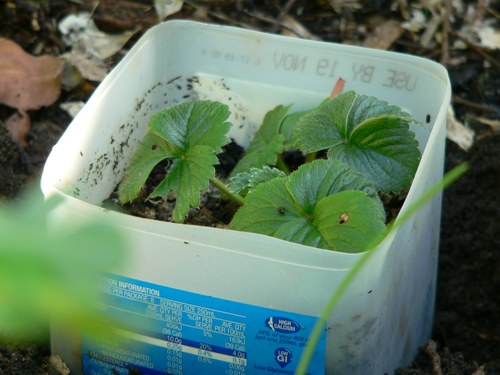
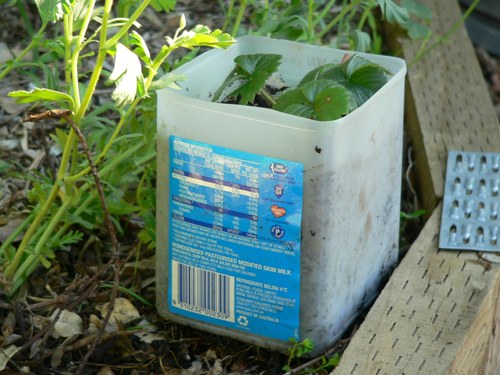
The seedlings are raised in recycled square-bottomed two-litre milk containers.  Smaller cartons could be used, but the two-litre size enables the seedlings to grow larger before planting out.

The tops and bottoms are cut off the washed containers, then they’re placed side by side in polystyrene boxes and packed with growing mix.  Some seedlings need to be germinated in seed raising mix first and then transferred to these larger punnets, but bigger seeds can be  sown directly.  Here are some sunflowers that we started last week…

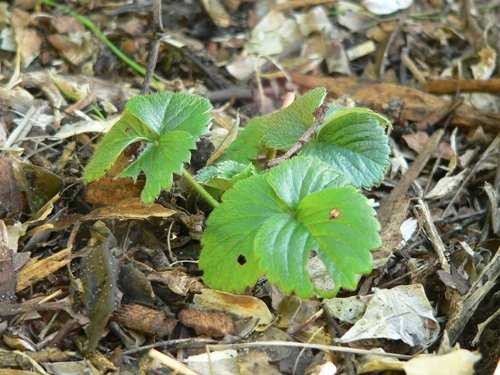
Once the seedlings are large enough, they’re put straight into the ground and the plastic slides right off, with absolutely no transplant shock.  If necessary, the sleeve can be left half-on for a week or two to protect the plant from snails and slugs as it settles in.

I took some photos as we were planting out strawberries last week.  Every time we’re working in the garden, I find myself humming the A-Team theme song.  Linda’s guide is so well thought out, and I really do love it when a plan comes together…
One more quick revisit, in case anyone else is as cold as I am at the moment!

It is freezing in Sydney – coldest June day in 60 years, with more frosty weather to come. Our outdoor thermometer registered 2.8°C overnight – very chilly for our temperate city!

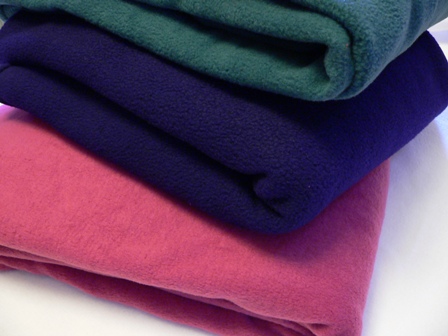
As a result, I’ve been sewing polarfleece sacks, using this pattern that I wrote last year.  If you have even basic sewing skills, they’re very simple to put together.  I’m sitting in one right now as I type…

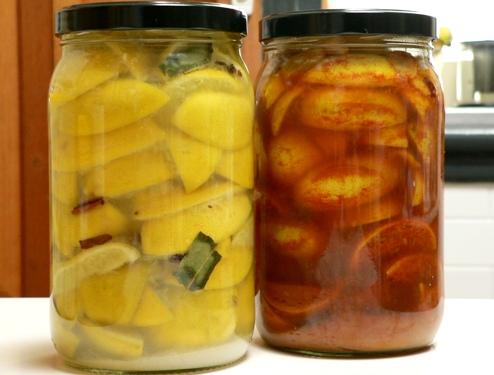
You might recall that a couple of months ago I bottled some limes

Sadly, the sweet lime pickle (right) was an absolute disaster, fizzing and fermenting like crazy after a couple of days.  The fruit never actually went mouldy, but it did develop an off bitter flavour after its specified curing time.  Tragically, not even the worms would eat it.

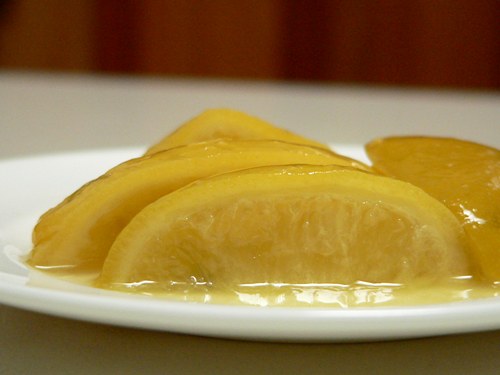
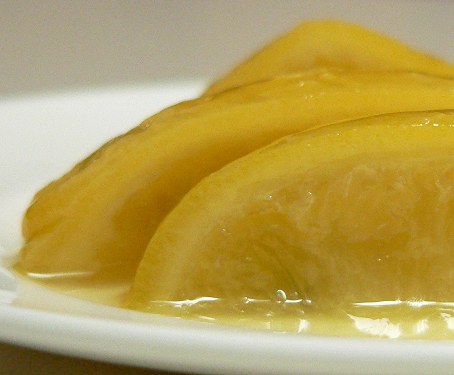
The traditional salt preserved limes though, were a complete success. After eight weeks in the jar, they’re soft, salty and absolutely delicious…

I took this close-up so you could see how the rind and pith have become a little translucent – an indication that the limes are ready to eat.

. . . . .

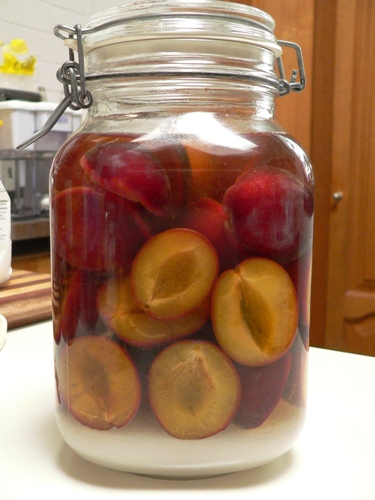
Our other long term project was an experimental batch of plum liqueur, which we assembled at the end of March.  It was made very simply from plums, sugar, vodka and brandy.

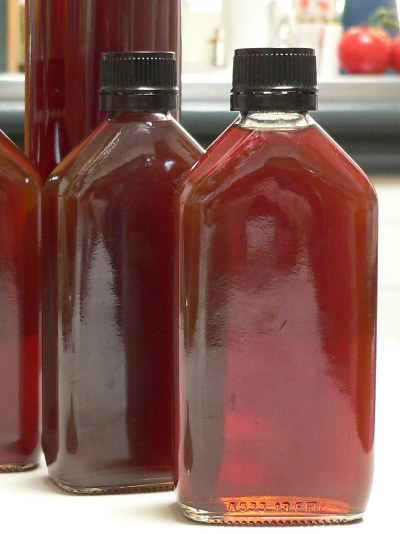
It’s now been three months, and the liqueur was strained and bottled today.  It’s quite sweet, very plummy in flavour, and perhaps a little too easy to drink – perfect for after dinner sipping!

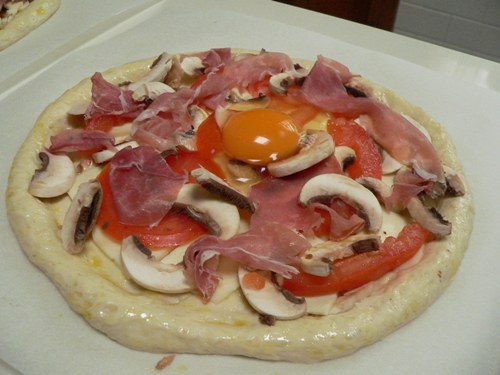
Our very tired, very happy Big Boy arrived home last night after a week away.  As I was up early, I made a batch of yeasted dough, and turned half of it into breakfast pizzas for him, and the other half into man’oushe for Small Man.

  • One batch of yeasted bread dough (makes four pizzas)
  • One egg per pizza
  • Mushrooms
  • Prosciutto or pancetta
  • Tomatoes
  • Mozzarella cheese

1. After the first rise, divide the dough into four pieces and shape each piece into a ball.  Cover and leave to rise for at least another 15 minutes.  Preheat the oven to maximum.  For more instructions and photos, please see this post.

2. On a sheet of parchment, and working with lightly oiled fingers, spread each ball into a circle, leaving a slightly raised edge.  Brush the top of the dough with olive oil.

3. Cut the tomatoes in half, squeeze to remove excess juice, then slice.  Top each pizza with sliced or grated mozzarella first, then with the tomato, sliced mushrooms and prosciutto.  Finally crack an egg into the middle of the pizza, and break the yolk with a fork.

4. Turn the oven down to 230C and gently slide the pizza on its sheet of parchment onto a preheated oven stone (the egg will be very runny), and bake until brown and the egg is set.  I carefully remove the paper after the first few minutes.  Alternatively, shape and bake the pizza directly on a parchment lined tray.

You could, of course, use any ingredients you like – these were just the ones I had on hand at 6am this morning!

The most beautiful organic rhubarb was on sale at Flemington Markets last week for just $2.50/bunch!  We bought two…

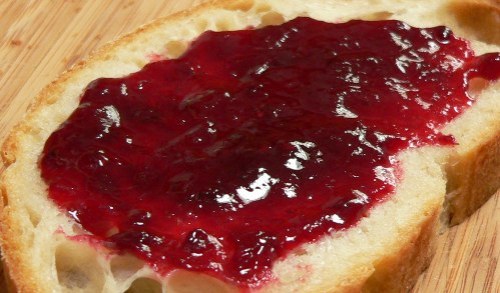
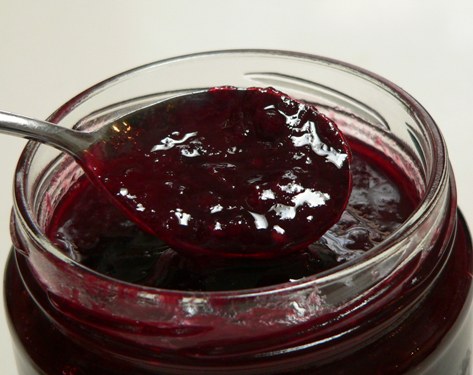
…and Pete combined them with a kilo of frozen blackberries to make seven jars of fabulous jam.  Here are some brief instructions…

  • 1kg rhubarb, cut into pieces
  • 1kg frozen or fresh blackberries
  • 2 x 300ml jars homemade pectin
  • 1kg white sugar
  • 100ml lime juice

1. Place the rhubarb, lime juice and pectin in a large stock pot and bring to a boil, then simmer gently until the fruit is pulpy.

2. Add the blackberries and sugar and bring to a rolling boil until the jam sets and wrinkles when tested on a cold plate.

3. Spoon the hot jam into sterilised jars, seal tightly, then boil the jars for 10 minutes in a hot water bath.

Please see our Jam Making Primer for more tips on making jam.

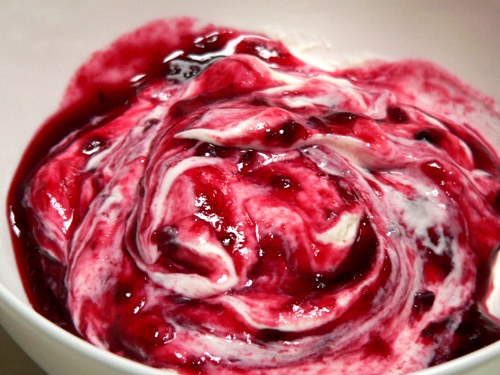
My breakfast this morning…Pete’s homemade Greek yoghurt, swirled through with a couple of spoonfuls of rhubarb and blackberry jam!