Feeds:
Posts
Comments

We couldn’t resist a box of strawberries at the markets last week! A mere $8 bought us twelve 250g punnets of small, sweet fruit – a nice change from the chunky, flavourless varieties which seem so prevalent these days.

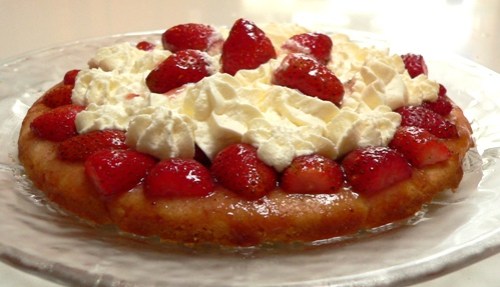
Pete turned most of them into his low sugar strawberry jam (with nearly two punnets in each jar), and I used the leftovers to make this simple strawberry shortcake.  Please excuse the slightly mad piping – I’d had a glass of wine at lunch (never operate heavy machinery or a piping bag under the influence of alcohol).

The recipe comes from one of my oldest cookbooks, The Australian Women’s Weekly Cooking Class Cookbook, and I first made this dish over twenty years ago. Tempus fugit

It’s interesting to note how little butter there is in the shortbread – perhaps a reflection of how recipes have evolved over the past two decades.

Edit: one more thing – this is a fairly solid, shortbready base, not a cakey one.  Don’t expect the base to rise much, and do keep any eye on it to make sure you don’t overcook it.  Once it’s lightly coloured, it’s time to pull it out of the oven!

  • 60g (2oz) unsalted butter
  • 2 tablespoons sugar
  • 2 large (59g) egg yolks
  • 115g (4oz) plain (AP) flour
  • 1 punnet strawberries (about 250g or 8oz)
  • ½ cup strawberry or plum jam
  • 2 teaspoons water
  • whipped cream

1. Wash and hull the strawberries, reserving a few for decoration.  Cut the remainder in half. Preheat oven to 175C/350F with fan. Cream the butter and sugar together, then add the egg yolks, beating well until combined.  Add the flour and mix on low until the flour is fully incorporated, forming a soft dough.

2. Grease a 20cm (8″) sandwich tin and evenly press the dough into the base.  Bake for 15 – 20 mins, or until light golden brown.  Remove from the tin and allow to cool slightly.

3.  Arrange the halved strawberries over the warm shortcake.  Combine the jam and water in a glass bowl, and heat briefly (20 – 30 seconds) in the microwave until hot, then push the mixture through a sieve to form a glaze.  Allow this to cool slightly, then brush it generously over the strawberries and shortcake.  Refrigerate until serving time.

4. Decorate with whipped cream and the reserved strawberries – I whipped the cream with a little homemade vanilla syrup, but you could use a little icing sugar, or leave the cream plain if you prefer.

Click here for a printable version of this recipe
It’s a sunny Autumnal morn in Sydney, and Big Boy suggested that I take some photos of our fledgling garden to share with you.

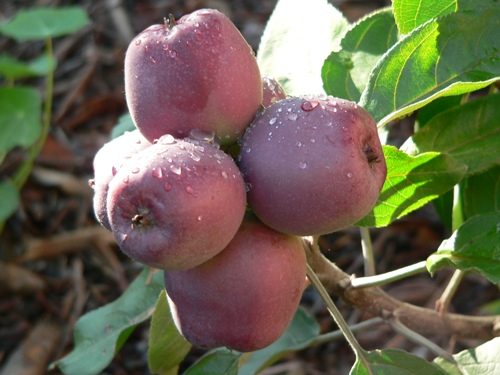
There are just six small crabapples on a young tree that we  planted a couple of months ago.  I don’t think we’ll get any more this season, but it’s been very exciting to watch these grow…

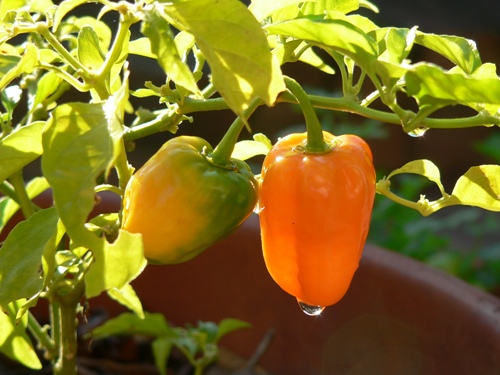
Chillies seem to do particularly well in our garden, and apart from a large tree of birdseyes which seems to have gone completely mad, we also have this tiny bush of blazing hot habaneros, growing in a  terracotta pot.  I’m not sure what to do with them yet!

Our friend Maude will occasionally sneak into our backyard and plant something.  It’s quite lovely – once I went out and found a whole bed of sage growing, and had no idea where it had come from.

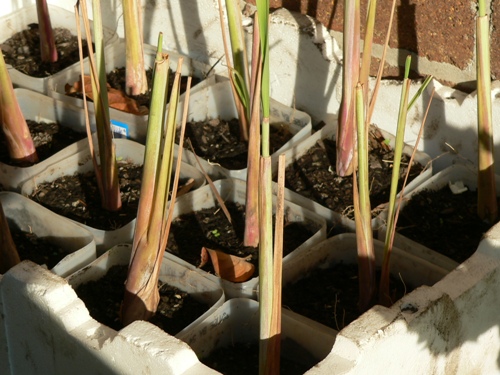
The stick of lemongrass she stuck into an old laundry tub a few years ago had grown into an enormous clump, so we’ve divided it up.  We’ll plant them in amongst the garden beds when they’re ready.

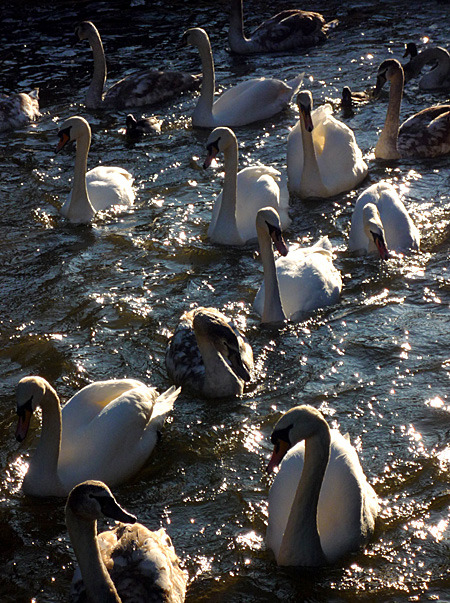
These little angels have been in our garden longer than the little angels in the house (Big Boy and Small Man).   They’ve been watching the Great Garden Project unfold with interest.

Tell me…what’s growing in your garden at the moment?  Anything wonderful?


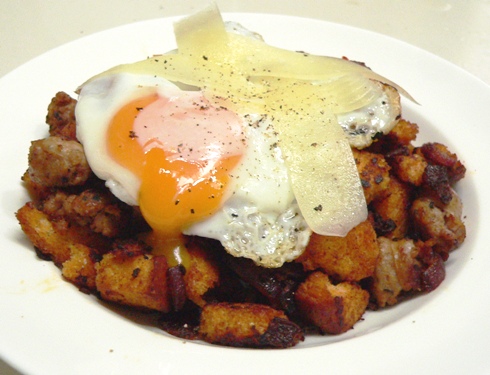
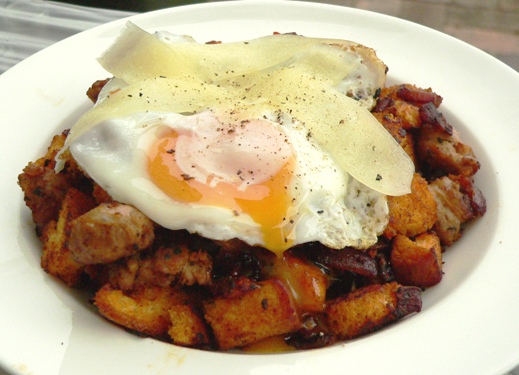
Migas, which translates to crumbs in English, varies widely across Spain, but the fundamental ingredient in all incarnations is fried bread.  The recipe is easily adaptable, and was featured recently on Wild Gourmets in Spain. It’s a great way to use up leftover cottage loaves!

This is the traditional breakfast of the shepherds who tend the Manchega sheep in La Mancha, as it’s made from easily transportable ingredients.  Here’s my take on it…

  • chorizo sausage
  • paprika, preferably smoked
  • stale bread, torn into bite-sized chunks
  • olive oil
  • onion, chopped
  • 1 clove garlic, sliced
  • eggs
  • Manchego, or other hard sheeps milk cheese

Note: the original recipe used Spanish chorizo, a smoked cured meat, similar to salami.  I couldn’t find one that I liked, so I’ve gone for an Italian style chorizo, which is a fresh sausage that needs to be cooked before eating.  Alternatively, you could use salami, bacon or a different fresh sausage.

1. Sprinkle the bread with a little water if it’s dry.  Set aside.

2. In a large frypan, heat a good lug of olive oil and fry the onion and garlic, then add the chopped chorizo.  Fry until the chorizo starts to cook and releases some of its oil.  Add a little paprika – this adds a lovely colour and flavour to the dish and helps to compensate for the lack of paprika in non-Spanish chorizos.

3. Add the bread and fry until well coloured and crisp.  Spoon out onto serving dishes.  Top each plate with a fried egg and a few slices of cheese, then season with freshly ground black pepper.  Very moreish!

Click here for a printable version of this recipe
© BryPix.com

I used to be one of those people who blamed themselves when bad things happened.  If one of the kids got sick, if someone was unhappy, my first thought used to be, “maybe it’s my fault”.

It’s certainly not a pleasant way to live life, but I clung on to the thinking for many years, perhaps out of some misguided sense that I was being humble or responsible in my guilt and angst.

What I didn’t realise though, was that I was actually being egocentric.  That didn’t twig until one day, fed up with my moaning and self-flagellation, Pete finally said, “Yes, this is your fault, because you’re the centre of the universe and everything that happens is because of you!”

After a moment of stunned silence, it suddenly dawned on me.  It wasn’t about me.  Sometimes it is, but most of the time, it really has nothing to do with me at all.  In the grand scheme of things, I’m just not that important.  I was behaving like a martyr out of pride and self-importance, not humility.

Big Boy (Pete’s clone) followed this lesson up for me a few years later.  We’d been at parent-teacher interviews at school, and one of his teachers had given him a hard time about a decision he’d made not to be a school officer.

At the end of that week, I asked him how everything was going with Mrs J.

“What do you mean, Mum?”

“Well, she let you have it on Tuesday night, so I was wondering if things were ok between you two?”

And I’ll never forget what he said.

“Oh that.  Everything’s fine.  It was late and she was tired and it just came out wrong…she didn’t mean anything by it.”

My son had learnt at fourteen a lesson that I’d taken decades to master – it’s not about me.   He’d been able to listen respectfully to his teacher’s comments, hold firm to his decision, but also not take it as a personal attack.  He came out of the incident with his self-esteem intact, and his relationship with his teacher unaffected.

Understanding this has changed my life.  Now, when someone is terse on the phone, or short-tempered with me, I stop and ask myself, “Is this really about me?”  And often the answer is no, it’s not about me at all, something is troubling them and there’s nothing I can do about it.   If Small Man comes home complaining that someone has been mean to him at school, I’ll often say, “Sweetie, it probably has nothing to do with you – maybe they were just having a bad day”.

I’m not for a second suggesting that we should allow ourselves to be bullied or persecuted, nor am I advocating a lack of personal responsibility for our actions.

But what I am saying is this: when the person at the checkout is snarky with you, when your boss comes in to work grumpy and won’t say good morning, or when one of the mums at school doesn’t want to chat – don’t waste your time trying to figure out what you’ve done to offend them.

It probably has nothing to do with you.

If you’ve been reading our blog for a while, you’ll know that we love bagels.

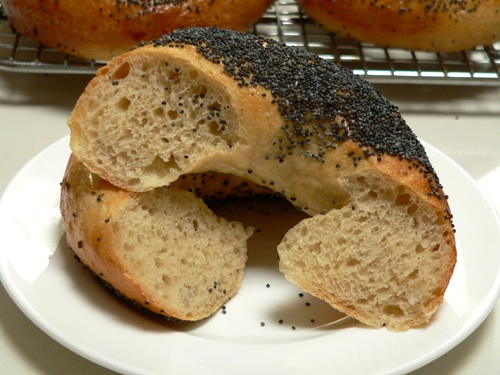
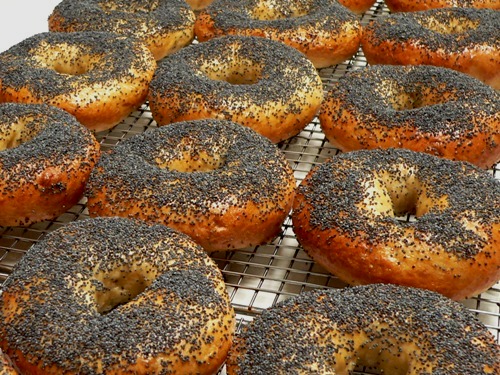
I’ve just taken a batch of sourdough poppy seed bagels out of the oven – all seventeen of them golden brown, with a chewy exterior and a delicious malted centre.   The unique crust can only be achieved by kettling the bagels in boiling water infused with malt extract and salt prior to baking.  The crumb is elastic and chewy – quite different to the “artisan” ones we used to buy here in Sydney, which were always jaw-achingly heavy.

Bagels aren’t difficult to make, but they are a lot of work – our standing joke is that we practice our deep breathing exercises to build up our chi before we start.  They do freeze brilliantly though, and toast up well for a perfect weekend lunch.

Have I convinced you to give these a go yet?  If so, we have two recipes to share – a step by step yeasted bagel tutorial here, and our favourite sourdough recipe here.

Be warned though – they’re very addictive.  And once the neighbours find out about them, you could be baking bagels every week!