Feeds:
Posts
Comments

Hot Cross Bun (just one)
One a penny, one a penny
Hot Cross Bun (just one)

My friend Dot made 288 hot cross buns this Easter.

Maude’s made at least 100.

The Spice Girl told me yesterday that she’s been baking two to three dozen a couple of times a week.  And all my UK baking friends have been at it with gusto.

Penny and Alex have both made them, using my recipe from last year.

It seems the only person who hasn’t been madly baking hot cross buns is moi. And it’s not because I don’t love them, but rather that life has been a little hectic, and this year I simply ran out of oomph.

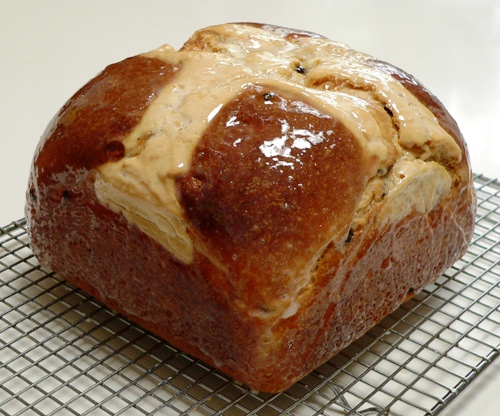
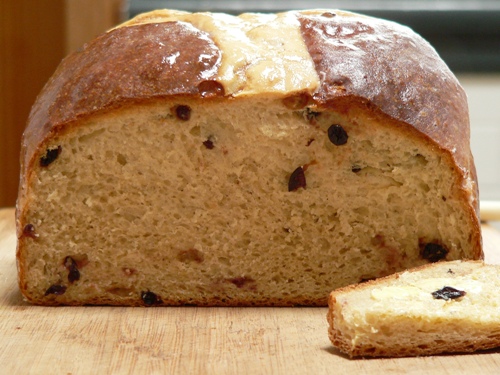
So yesterday, being Easter Sunday, I decided to make one.  Just one. But it was a BIG hot cross bun, baked in an 18cm (7″) square cake tin.

I used my tried and tested bun recipe (the original post is here) and instead of shaping the risen dough into a dozen small rolls, I made one giant ball and let it rise in a parchment lined cake tin.  As it was quite warm in my kitchen yesterday, the dough took only half an hour to double in size, before being piped with a large cross and baked at 200C for 15 minutes, followed by an additional 15 minutes at 175C.

I coated the finished “big bun” with a milk glaze (part of the original recipe) and allowed it to cool before slicing and serving with tea.

Hot Cross Bun (just one)…Hot Cross Bun (just one)…

Wishing you all a happy, blessed,

chocolate-filled Easter!

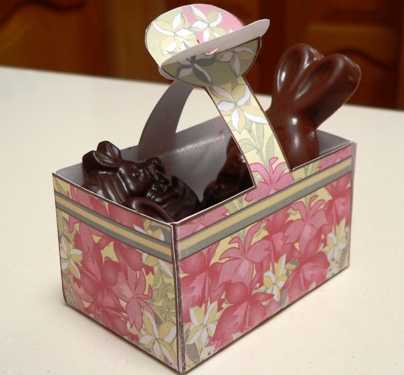
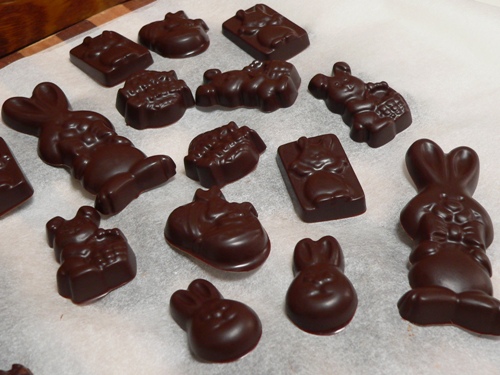
(The Easter bunny went shopping at Colefax Chocolates again this year!)

A quick Easter tip – my friend Marilyn has a free pattern for this very cute Easter basket on her Toymaker website.

I’ve printed them out on light cardboard and lined them with a little parchment paper, before filling with homemade Easter chocolates for the neighbourhood children.

There are lots of other Easter craft ideas at the Toymaker website as well!

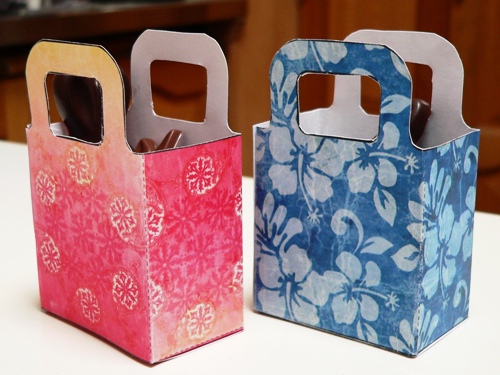
Here are a couple of Marilyn’s flower bags – we’re having a creative morning!

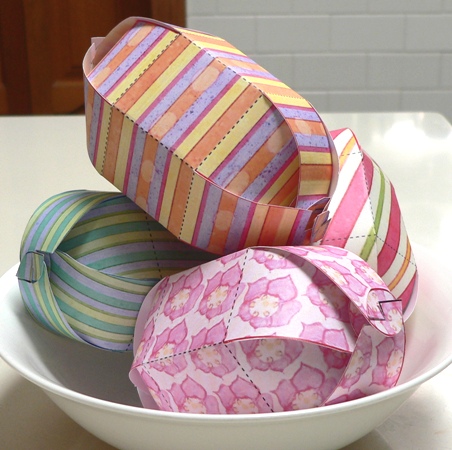
Edit: A brand new pattern – cardboard Easter eggs!  The link is here.

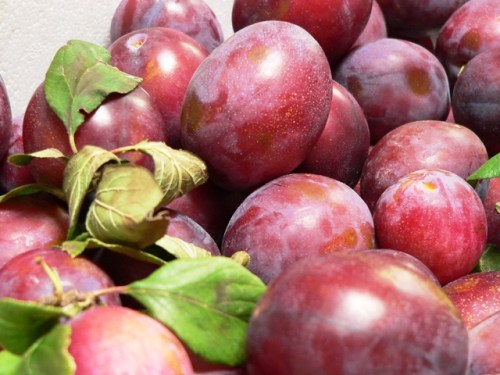
Remember these gorgeous President plums?  We turned them into plum jam and plum sauce recently.

A couple of weeks ago, we took a jar of each to the markets and gave them to the grower – we thought it might be nice for him to see what we were doing with his produce.  Last week, we passed by his stall again, and saw the last of the season’s plums for sale at $10/box.  When we tried to buy a box, he very kindly insisted on giving us two for $10, which meant we suddenly had 12kg of ripe plums to process!

After sharing with the neighbours, we turned the remainder into…

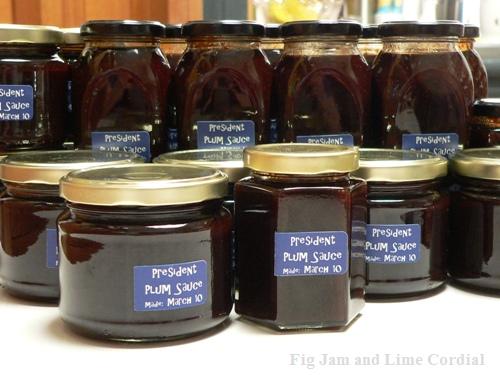
…twenty jars of plum sauce, half with the addition of star anise.  Essential as Big Boy has taken to eating this with a spoon!

. . . . .

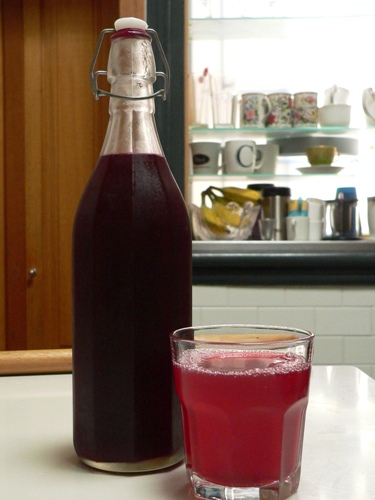
…two litres of “Plumbeena”, using a recipe from Pam Corbin’s wonderful little book, Preserves. It’s a great way to turn any seasonal fruit into cordial:

  • 2kg fruit (I used 1.6kg plums and 400g frozen boysenberries)
  • water
  • granulated (white) sugar

1. Put fruit in a large saucepan.  I cut the plums in half, but left the pips in.  Pam’s rule of thumb is to add:

  • 600ml water to each 1kg hard fruit, blackcurrants or apples
  • 300ml water to each 1kg stone fruit
  • 100ml water to each 1kg soft berries or rhubarb

So for my 1.6kg of plums and 400g of boysenberries, I added 540ml water (yes, I know, I can’t do maths).  Bring the pot to a boil and simmer until the fruit is completely soft and has released all its juices.  Crush the pulp with a potato masher as it boils.

2. Pour boiling water through a clean calico cloth or fine tea towel, then use it to line a sieve and place the whole thing over a large mixing bowl.  Pour the fruit and liquid in and allow it to drip through without pressing.  Leave for several hours or overnight.

3. Measure the strained liquid and pour into a clean pan.  For every litre of juice, add 700g sugar (or to taste).  Heat the mixture gently to dissolve the sugar, then remove from the heat.  Pour into warm, sterilised bottles and seal.  Store in the fridge.   Apparently this will keep for several months, but I’d be surprised if there’s any left by the end of the week!

Click here for a printable version of this recipe

. . . . .

…and finally, a tempting batch of plum liqueur, using this recipe.

This will now sit and brew in my hall cupboard for the next three months.  I’ll let you know how it turns out in June!

Update: Here’s how the plum brandy turned out!

Photo: telegraph.co.uk

Imagine how chuffed I was to see my photo of cottage loaves (duly credited) appear in Lucy Jones’ article in the Telegraph UK!

Poor old Princess Anne – I hope she wasn’t too upset by the comparison of her hairstyle to an old style bread – but I guess if it helps to bring cottage loaves back into the public eye, then that can only be a good thing.

One of the theories behind the origin of the cottage loaf was given to me by UK based Peter May, who believes it originated hundreds of years ago when it was illegal to sell underweight bread in England:

The reason for the top (the same reason as for the ‘bakers dozen’ , which means 13) was the extremely severe penalties suffered by bakers who gave short measure.  Loaves had to be sold by standard weight, thus to ensure the baker didn’t sell underweight he’d add a small dough ball on top.

Incidentally the bread laws which date from 1266 have been law right up to 2009 when the EU overruled them in the name of so called competition. Loaves had to be a full 800g (2lb) or half 400g (1lb)sizes.

I have baker friends who don’t see the sense in this, because the dough weight could be adjusted with water – why waste the extra flour?  But I do think there is some merit in Peter’s argument – the finished weight of a loaf can vary quite a lot depending on baking conditions, and if I was at risk of being flogged for a light loaf, I’d be inclined to add a little to the top as well.

Don’t forget we’re having a cottage loaf bake-off – if or when you’ve baked a loaf, please send me a photo and I’ll upload it here!