Feeds:
Posts
Comments

bread-making-3-023

Focaccia is a great bread for entertaining.  We often serve it in small slices, accompanied by a good extra virgin olive oil and white balsamic vinegar for dipping.

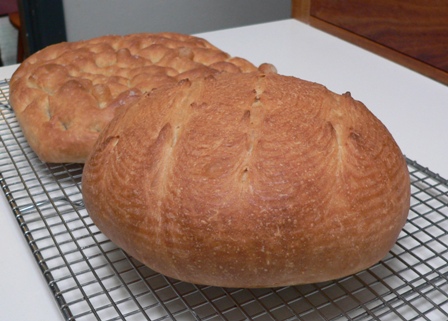
A simple way to make focaccia is with the basic bread dough.  Allow the dough to complete its first rise, then flatten it out and fit it into a parchment lined tray.  The photos here show a focaccia made with a half batch of dough which produced a 20cm (8″) square of bread.

bread-making-3-011

Allow the dough to rise for about half an hour, covered with greased clingfilm.  In the meantime, preheat the oven to 250C (480F).  When the dough has risen enough, drizzle a thin coating of olive oil over the top and sprinkle it with some good sea salt (we used Maldon flakes). It’s hard to tell from the photo below, but the dough had risen quite a bit – it was  thicker and puffier than it was in the top photo.

bread-making-3-019

Spread the oil and salt out a little, then push your fingertips into the dough, right to the bottom of the pan.  This is what gives the bread its distinctive dimpled appearance.

Put the bread into the hot oven, lowering the temperature to 220C (430F) and bake for 20 – 25mins, rotating the bread once during the baking time.  Viola!  Smile graciously when people tell you how clever you are!

nutella-rolls-015

bread-making-3-025

Baking your own bread is one of the most rewarding things you can do.  If you’ve never tried before, or you’re daunted by the prospect of it, please let me assure you that it’s a relatively simple process.  You can have a decent loaf of bread from start to finish in two to three hours (depending on the ambient temperature) and for most of that time the bread is simply rising or baking on its own while you get on with other things.  We’ve been making all our own bread for years now, and this is where we started (although we’ve since moved to sourdough rather than yeast).

The most important thing to know is this – the quality of your bread and how much it rises is almost completely contingent upon the flour you use.  If you can’t get a decent high-protein bread flour, then wait until you can, because if you make bread with plain flour, you’ll be disillusioned and won’t try again.  The gluten protein in the flour must be high enough for the yeast to make the bread rise.  Fortunately, bread flour, also known as bakers flour, is now readily available in most supermarkets.  Here, with lots of photos and videos, is how I make basic yeasted bread.  The recipe is based on Richard Bertinet’s olive dough and it’s very versatile – you can shape it into rolls, loaves, epi, stuff it with interesting fillings, or spread it out flat and make pizza (it actually works brilliantly as pizza dough).

  • 500g bread or bakers flour
  • 10g dried yeast (or one sachet)
  • 8g fine sea salt
  • 320g water (weigh it if you can, as you’ll get a more accurate result. If not, use 320ml)
  • 50g olive oil (I use extra virgin)

Bread #101 – A Basic Tutorial continues here…

080409-003

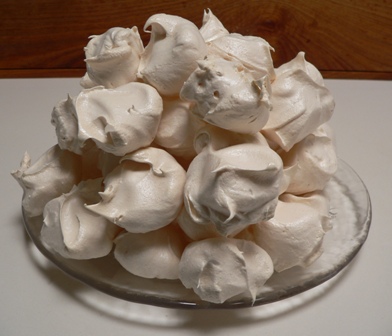
Can you believe this mountain of meringues was made from just four egg whites?  They were leftover from Pete’s pasticcio and I was loathe to waste them.  I’ve frozen half of these meringues and left the remainder in the cookie jar for emergency sugar hits.

Meringues are the easiest thing ever – for each egg white, you’ll need 60 grams  (2oz) of caster (superfine) sugar and a tiny bit of vanilla.  My batch of four whites used 240g caster sugar and ½ teaspoon of vanilla.

Preheat the oven to 150C (300F).  Beat the egg whites with an electric mixer until stiff, then gradually (a spoonful at a time) beat in the sugar.  Add the vanilla and continue beating, until your mixture is thick and glossy.

Drop dessertspoon dollops of the mixture onto baking trays lined with parchment paper.  You should have enough to make a ludicrous number of meringues.  Put the trays into the oven, and immediately drop the oven temperature to 110C (230F) or 100C (210F) with fan.  Allow the trays to bake until the meringues are light and crisp, about 65 – 75 minutes.  This makes a dry, crunchy meringue that will keep well – if you want a more marshmallow centre, you’ll need to bake them for less time on a slightly higher heat.  It’s worth playing around with small batches until you’re happy with them (after all, it’s only a couple of egg whites and some sugar).

Once the meringues are cooked, allow them to cool in the oven with the door slightly ajar.  This will give them a chance to dry out properly, without getting too sticky on the outside.  For some reason it’s quite hard to make meringues on a humid day – the end result is often a bit gummy and soft.  Enjoy!

. . . . .

Edit: You can also make swirly meringues – a very girly party favourite!

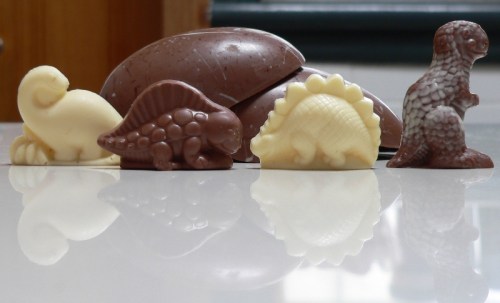
Look what the Easter Bunny brought today…

120409-005

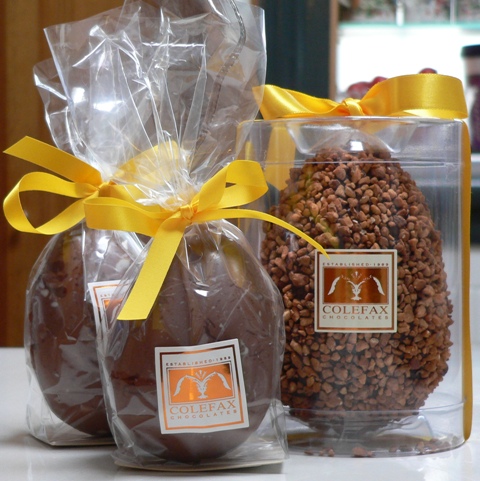
dino-egg2Aren’t these dinosaur eggs the cutest thing ever?  The baby dinos were inside the speckled egg shells.  (I love the reflections in this photo!)

Happy Easter to you all!

080409-017

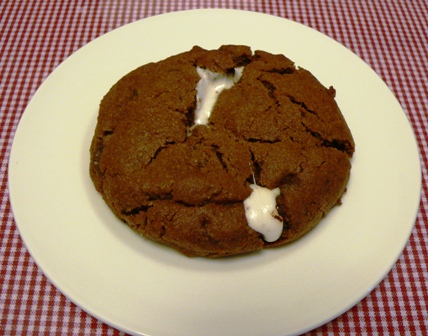
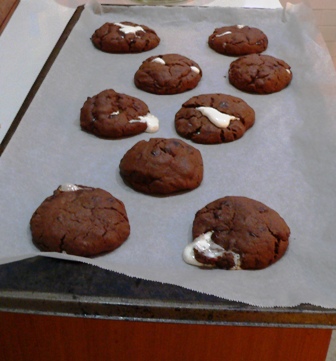
Please forgive me for being cocky, but these cookies are a work of art.  They are the most wickedly delicious sweet treat ever.  Basically they’re a classy Wagon Wheel or S’more – with a marshmallow centre encased in chocolate cookie dough. These are huge, weighing in at about three times the size of a normal cookie. (By the way, that’s a side plate in the photo above, not a dinner plate.)

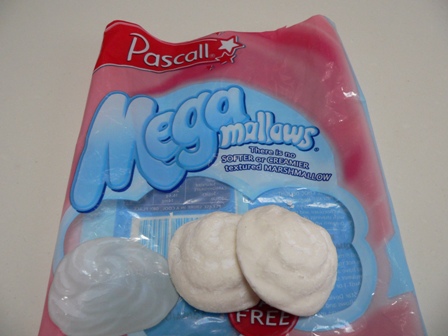
The original Mrs Field’s recipe involved wrapping the dough around mini marshmallows, but I found that far too annoying, so I now use a frozen mega marshmallow instead.  It does mean that instead of the recommended 42 cookies, I’m lucky to get 18 out of the same batch of dough.  There’s a lot of finesse to the baking of these cookies – right near the end you have to watch them like a hawk, as an extra minute can turn them from elegance to mush.  As you can probably see from my photos, I was about 30 seconds too late – you really want to pull them out just as the first one starts to ooze melted marshmallow.  Having said that, it doesn’t make much difference – they’ll be gooey and sticky no matter what you do – and that’s a large part of their charm.

  • 450g (3 cups) plain (all-purpose) flour
  • 75g (2/3 cup) unsweetened cocoa
  • ½ tsp bicarbonate of soda (baking soda)
  • 220g (1 cup) white sugar
  • 215g  (1 cup, packed) brown sugar
  • 250g (1 cup) unsalted butter, softened
  • 2 large (59g) eggs
  • 2 teaspoons vanilla extract
  • 1 pkt (about 18) Pascalls Mega Marshmallows, frozen
  • 350g (12oz) dark chocolate chips (we used Callebaut callets)

1. Preheat the oven to 175C (350F) with fan.  Leave the marshmallows in the freezer until after you’ve made the dough.
090409-002

2. In a medium bowl, whisk together the flour, sifted cocoa (if you don’t sift, you’ll get bitter lumps in the finished cookie) and sifted bicarb soda.

3. In a large mixing bowl, cream together the butter and sugars with an electric mixer.  Scrape down the sides of the bowl.  Add the eggs and vanilla, and beat at medium speed until combined.

4. Add the flour mixture and choc chips and mix at low speed until combined.  The batter will be stiff – do not overmix – just run the machine until there’s no more dry flour visible.

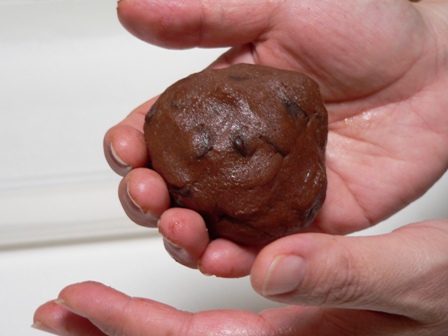
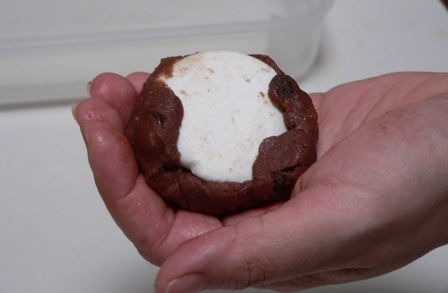
5. Wrap the mix around a frozen marshmallow as shown – you want to pat them a bit flatter than the photo below, so that they form a thick disc rather than a small cricket ball.  I realise it’s a ridiculous amount of cookie mix; I think that every time I make these.  Put all the finished cookies (I always get between 16 – 18 cookies) onto a tray and pop them into the freezer for about 30 minutes.  This refreezes the marshmallows and increases your chances of getting intact finished cookies.
080409-005

080409-006

6. Place the cookies on baking trays lined with parchment paper.  Leave lots of room between them, as they’ll spread quite a lot.  Bake for 10 – 13 minutes, depending on how frozen your dough was.  Don’t leave the kitchen, sit there and watch them for the last half of the baking time, as you want to pull them out the second the first one looks like it’s going to ooze its marshmallow guts.  You might want to reverse the trays halfway through the specified time, to ensure even baking.

7. Take the cookies out and let them cool for 5 minutes on the tray, before transferring them to a cool flat service.  I usually drag the whole sheet of Bake onto the stone bench rather than bothering with a rack, as they’re so sticky that the racks get covered in melted marshmallow.  Handle them with care – they’ll sink a bit as they cool and become easier to manage.  The marshmallow cools to a sticky glue, so feel free to push any deformed cookies back together while they’re still warm (don’t burn yourself!).
080409-012

Big Boy took these to school for Easter, individually wrapped in greaseproof paper. They really are a special occasion cookie – you just couldn’t eat these every day!

Click here for a printable version of this recipe