Feeds:
Posts
Comments

cake-002

This is based on a recipe I tore out of a cooking magazine ages ago.  The ingredients are great, but the original methodology was daft – it involved throwing everything into the food processor and whizzing, which didn’t cream the butter and sugar at all.  I reworked it using more traditional techniques and it’s become a recipe that I make all the time – simple to put together and easy to eat, without being heavy or cloying. It’s a good keeper too – the buttermilk helps it to stay moist for several days.

Buttermilk freezes very well, which is handy as I rarely get through an entire carton before it expires.  I portion it out into ziplock bags and freeze it, usually in one cup serves.

I bake this recipe in a cast aluminium bundt pan and dress it with a simple dusting of icing sugar.

  • 1 and 1/3 cups (200g) self raising flour
  • 150g almond meal
  • 200g caster (superfine) sugar
  • 175g unsalted butter, softened
  • 150ml buttermilk
  • 3 large free-range eggs
  • 1 tsp vanilla extract
  • finely grated zest of 1 lemon (optional)
  • jam/lemon curd

1. Cream together butter, sugar and zest, then mix in eggs and vanilla, beat well. Scrape down sides of bowl.

2. Stir together flour and almond meal in a separate bowl.

3. Into the butter/sugar/egg, mix in half the flour/almond, then the buttermilk, then the rest of the flour/almonds, mixing well after each addition.

4. Spoon half the mix into a well-oiled bundt pan, add some jam or lemon curd, then top with remaining mix, and bake in a preheated oven at 175C  for 40 – 45mins.

5. Allow to cool in pan for 10 minutes, then turn onto wire rack to cool completely.  Dust with icing sugar before serving.

If you’re using a cast aluminium bundt, you’ll need to drop the oven temperature to about 160C.  Also, the jam is optional and it may occasionally fall through to the bottom of the pan.  The cake should work well unfilled – we just have so much jam that we’re always looking for ways to use it!
040409-020

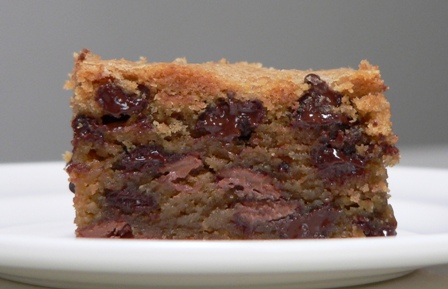
This recipe is a family standby.  It is almost universally loved and yet so very easy to throw together.  I make it as a lunch treat, send it in with Big Boy for “Feed the Friends Friday”, and every year bake enough to feed the school orchestra before their major performances.

As Small Man is allergic to walnuts and pecans, we’ve excluded the nuts specified in the original Mrs Field’s recipe and substituted more chocolate instead.  I have to admit that I do get a little obsessive about the chocolate in my butterscotch bars.  I like to have at least three different sorts in the mix, and have occasionally had as many as five.  It has to be the best chocolate you can manage – that’s what elicits the oohs and ahhs on tasting.  These days we always use Callebaut chocolate, but I’ve also used chopped up bars of Lindt with great success.  One year I had a large supply of Lindt Christmas balls, which went in whole, producing round orbs of milk chocolate within the finished bar.  I always use a mix of dark and milk chocolates, but never white (I’ve tried it, but the end result is too sweet for our tastes).  Often I’ll use three different sorts of dark chocolate – broken up baking sticks (which don’t melt in the oven), 54% callets (which do melt) and 70% callets (which give the bars an extra depth of flavour).  It does get a little over the top at times…

040409-015

  • 2 cups (300g) plain (AP) flour
  • ½ tsp bicarbonate of soda (baking soda) – sifted
  • 1 cup (215g) dark brown sugar, firmly packed
  • 1 cup (250g) unsalted butter, softened
  • 1 large (59g) egg
  • 2 tsp pure vanilla extract
  • 2½ cups (360g) mixed chocolate chips (I use Callebaut dark and milk)

1. Preheat oven to 150 C (300F) with fan. Grease or line an 8″ (20cm) square pan with Bake.

2. Combine flour and soda in a medium bowl, stirring well with a wire whisk.  Add the chocolate chips, and stir to combine.

3. In a large mixing bowl, blend the butter and sugar together using an electric mixer, then add the egg and vanilla.  Beat until light and smooth.  Scrape down the bowl, then add the flour and chocolate chips.  Blend at low speed until just combined – do not overmix.

4. Spoon the finished mix into the baking pan and level the top off.  Bake for 35 – 45 minutes or until a thin sharp knife inserted into the centre comes out clean of cake mixture (ignore the melted chocolate).  Do not overbake.

040409-016

5. Leave the bars in their pan and cool the whole thing on a wire rack.  When cool, cut into bars and serve.  These freeze very well and defrost perfectly by lunch time, making them an ideal school treat.

Click here for a printable version of this recipe

040409-017

visitorThe Visitor
© Julie Scully 2009
. . . . .
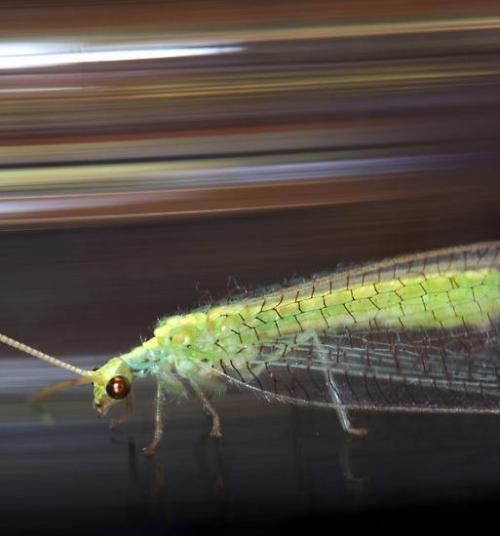
My friend Julie Scully is an amazing macro photographer.

I’ve bought a matted print of this photo and I adore every part of it.  Jules has just started selling her artwork at Red Bubble – if you’re interested, you can view some of her other photos here.

I’m astonished at how perfectly formed this delicate creature is – from the ridges on his antennae to the intricate lacework of the wings with their downy covering of hair.  I absolutely adore the reflection of his feet on the glass and the way he appears motionless while the rest of the world whizzes past.  And I love the detailing in his exoskeleton – the hard luminescent framework latticed protectively over the soft yellow body.

Julie spent the better part of a day capturing the essence of a tiny creature, barely millimetres in length, that the rest of us would probably have squashed without a second thought.  If she hadn’t taken the photo, I would never have known how truly beautiful this little insect is.  How many billions of wondrous things am I taking for granted every day?

The Visitor will have pride of place in our hallway – a daily reminder to observe the world with greater reverence and awareness.

. . . . .

There are only two ways to live your life.  One is as though nothing is a miracle.  The other is as though everything is a miracle.

Albert Einstein

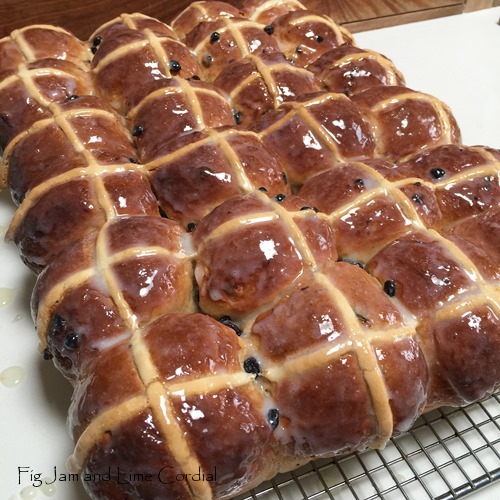
Hot cross buns…one a penny, two a penny…hot cross buns…

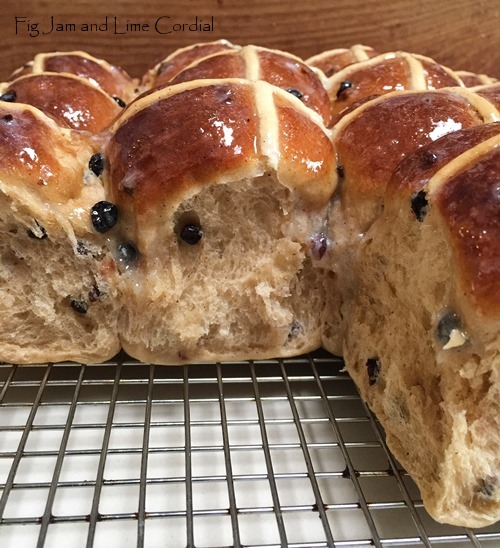
I’ve baked 48 hot cross buns in the last 48 hours and now have two recipes that I’m happy with. The first recipe is a sourdough one and it’s Pete’s favourite, but it takes a lot more time and a bit more effort.

The second recipe is far easier (and Small Man’s bun of choice) and uses commercial yeast, so it’s much quicker to make.  It’s loosely based on Richard Bertinet’s sweet dough recipe, which we’ve changed up quite a bit over time. I wrote a detailed tutorial on our version here.

Dough

  • 500g bread flour
  • 10g instant yeast
  • 8g fine sea salt
  • 40g brown sugar
  • 60g unsalted butter
  • 2 large eggs
  • 2 tsp mixed spice
  • 75g currants
  • 250g full cream milk, heated gently and then cooled to blood temperature, or UHT milk, unrefrigerated

Cross

  • 3 Tbsp self raising flour
  • 2 Tbsp cold water

Glaze

  • 2 Tbsp milk
  • 2 Tbsp caster (superfine) sugar

(Update 11th April 2017) I’ve simplified the instructions for making the dough – after quite a lot of testing, we’ve found that the extended kneading process really isn’t necessary.

The dough can also be made in a stand mixer using a dough hook. In that case, melt the butter first and add it with the wet ingredients. Mix to form the dough, then turn off the machine and let the dough rest for half an hour or so, covered with a tea towel (I just leave the splash guard on). Then turn the machine on again and knead for a few minutes more. Scrape the hook clean, then proceed from step 4 onwards.

1. In a large mixing bowl, whisk together the bread flour, yeast, mixed spice and sea salt. Rub in the butter. Stir in the brown sugar and currants, then add the eggs and milk.(Note: I use UHT full cream milk, unrefrigerated and straight out of the carton)

2. Mix well with a spatula or a clean hand until it forms a shaggy dough. Allow the dough to sit in the mixing bowl, covered with a clean tea towel or clingfilm, for about 20 minutes.

3. Uncover the bowl and give the dough a brief knead. I usually fold the dough onto itself a few times using a scraper.

4. Cover the bowl with clingfilm and allow to rise on the bench until doubled in size (about 1 – 1½ hours, depending on ambient temperature – don’t rush it).

5. Turn the risen dough onto a floured bench and give it a couple of gentle folds, then divide into 12 equal pieces (about 86-90g each). Shape each piece into a small ball, trying to keep the currants inside the ball as much as possible (currants on the outside tend to burn). Place them side by side in a lamington tin which has been lined with a sheet of parchment paper (four rows of three, not quite touching – they’ll rise into each other). Allow to rise, loosely covered with a tea towel, until doubled in size (mine took about an hour, don’t rush this bit either, let them get good and puffy). Preheat oven to 220C with fan.

6. Mix the SR flour and water together to make a paste and spoon that into a plastic freezer bag or small piping bag. Clip off the very end of one corner. Pipe crosses over the top of the buns, doing all the lines in one direction first, then the other. Spritz the tops with water.

7. Turn the oven down to 200C with fan and put the buns in. After 10 minutes, turn the buns around and bake for a further 8 – 10 minutes, or until golden brown.

8. When you’ve rotated the buns, start making the glaze. Heat the milk and caster sugar together in a small saucepan until thick and syrupy. Stir constantly and keep an eye on it to make sure it doesn’t boil over. When the buns are finished, pull them out of the oven and glaze the hot buns with two coats of glaze. Allow to cool on a wire rack before scoffing.

Enjoy!

If you’d like to try a sourdough version of these, the recipe is here.

“I beg your pardon?”

“I said…I’m going to Christina’s to pick up a bag of apple cores and peels…”

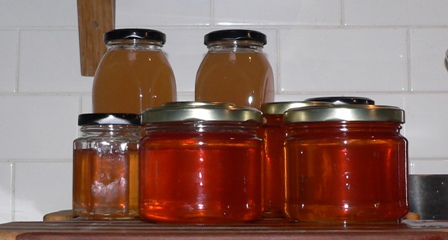
It’s lucky that my husband knows me well enough to take these sorts of comments in his stride.  Christina was making apple pie and I’d asked her to keep the leftover bits and pieces for me.  I know it sounds ridiculously frugal, but apple cores and peel make fantastic pectin and I religiously save  and freeze the cores from Small Man’s morning and afternoon teas.  I’d been at it for a couple of weeks and was accumulating a tidy collection, when Chris mentioned her pie.  I arrived with a plate of vanilla kifli and offered to trade for her bag of “compost bits”.  No wonder people think I’m strange.

In total, I had a dozen frozen Fuji cores, a full bag of green apple peel and cores from Christina, and the peel and cores from another six Fujis that needed to be eaten (I cooked the pulp into pie filling and stashed it in the freezer).  It made the most gorgeous pectin (instructions here), as well as some delicious apple jelly.

apple-jelly-and-slab-pizza-001

Apple jelly is pretty easy to make – it’s what you end up with if you add sugar to your homemade pectin.  After I’d let the liquid drain through the calico (without pressing – that’s very important, or you’ll get cloudy jelly), I measured out a litre of the drained apple stock.  This was poured into a large saucepan and brought to a boil, then the juice of a lemon and four cups of sugar were added (the ratio is one cup of sugar to each cup of apple stock – sometimes you can get away with a little less, but if there isn’t enough sugar, the jelly might not set).

The pot was brought to a rolling boil until it reached 220F (104.5C) on a candy thermometer.  It really doesn’t set until it gets to that temperature, but if you don’t have a thermometer, you can always check if it’s ready by putting a small blob of jelly onto a cold plate to see if it wrinkles.  There is always some froth on the top of the liquid as it boils – that’s a good sign that the pectin is setting – just skim it off carefully and discard.

Once it was ready, we poured the hot jelly into sterilised jars and sealed.  We boiled the finished jars in a hot water bath for 10 minutes, just to make doubly sure they won’t go mouldy.

We ended up with three large jars of pectin and four jars of apple jelly.  I took two jars of jelly to Christina’s house – one for her and one for her dad (after all, it was his green apples).  Her brother opened the door and looked at me quizzically as I handed him the jars and said…

“This is for Christina – it’s Compost Jelly”.

apple-jelly-and-slab-pizza-006

. . . . .

Edit: I’ve just had an email from a lady who had trouble getting the apple jelly to set.  This was the original YouTube video we learnt to make the apple jelly from – I thought it might be useful to link it here: