Feeds:
Posts
Comments

Archive for July, 2009

jam 024a

We’ve made nearly 300 jars of jam in the last year, and it’s been a really fun learning curve.  Pete does most of the actual jam making; my job is to prepare the pectin, sterilise jars and most importantly, to sit on the kitchen bench and cheer him on.

We’ve learnt a few things through experience over the last 12 months, and I thought I’d pass these on, in case they’re of use to anyone.  Making jam at home is not complicated, but it is desperately rewarding and will provide you with an endless supply of much appreciated, highly anticipated gifts.  Here are our top tips.

1. Make your own pectin. Homemade apple pectin is so much easier to use than commercial pectin – the latter can only be boiled briefly, whereas the homemade version can be added to the fruit right from the beginning.  Apart from tasting better (our personal opinion), it’s also easier to control how the jam sets with your own pectin, because you can start with less and add more to adjust as you go.  We always make our pectin in large batches and  can it (see point 11 below), but there’s no reason why you couldn’t make a small amount for the batch of jam you’re planning and use it straight away.

2. Source really good glass jars. If you’re in Australia, try either Cospak or, our favourite, Plasdene.  The ladies at Plasdene in Milperra are particularly helpful, albeit occasionally bemused by us (“Celia, what on earth are you going to do with all these jars?”).  They have a wonderful showroom which can inspire lots of new ideas, and watch out for the specials by the door as you walk in.  Both places have minimum orders, so it’s worth ringing first before you order or visit.  Also, the glass jars are easy to recycle, but you really can’t reuse the lids, so if you can afford it, try to buy some extra lids for the refills while you’re there.

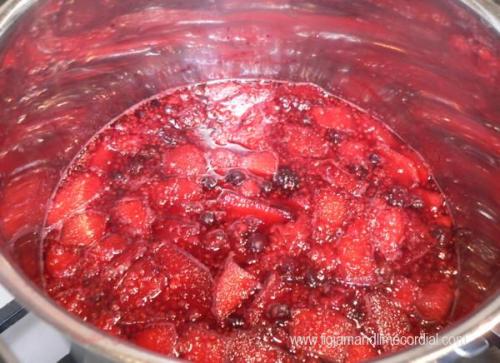
3. Use a big stock pot. Jams and jellies need wide fat pots, not narrow tall ones.   They also need to be BIG, because the mixture needs to boil up in the pot before it will set.  Pete’s recommendation for jelly making is that the jelly should only fill about 1/8 of the pot when you start, although jam can be a little fuller.
jam 011a

4. Try to use fruit at its peak. Apart from being the whole purpose of jam making – that is, to preserve the fruit at its very best – it’s also really the only time it’s worth doing, for both quality and economic reasons.  Having said that, make full use of your freezer if you have one – fruit frozen in season works perfectly well for jam.  In many cases, it doesn’t even need to be defrosted first.

5.  There are four key elements of jam making – fruit, sugar, pectin and acid. If any one of these is absent, the jam usually won’t set, and if the balance is out, the jam won’t set well.  Lemon juice is in every jam we make, as it helps to activate the pectin. Sometimes, particularly with jellies, the mix won’t set unless there is enough sugar. Every recipe is a guide, because the fruit varies from batch to batch, so you need to constantly taste and adjust as you go.

6. Don’t add the sugar too soon. Begin the jam making process by placing the prepared fruit, pectin and acid in a large stock pot and bringing it to the boil.  Once the fruit has softened to your liking, then add the sugar.  When the sugar is added, the skins of the fruit won’t soften any further, and fruits like strawberries won’t break down much more.  But for fruits like raspberries, which fall apart very easily, the sugar can be added straight away.

7. Try to minimise the amount of added sugar. Start with a lesser amount than you think you need, then add more if required to set the jam. Sugar is often used in commercial jams to cover up poor quality fruit, but conversely, if you have really great fruit, too much sugar will mask that as well.  Lately, Pete has been experimenting with using more pectin and less sugar, and the jams have all been setting quite well (albeit a little firmer than normal).  Again, it’s all about the balance between the four key ingredients.

It’s worth mentioning at this point that jellies need a  minimum amount of sugar to set (usually one cup of sugar to one cup of liquid) – jams are more forgiving on this front.

8. Boil gently at first, then at full-bore. This is an often disputed point in  jam making.  Pete’s approach is this: bring the fruit, pectin and lemon juice to a gentle (but proper) boil, and keep it at that level until the fruit softens to a consistency you’re happy with.  Add the sugar, then bring it back up to a gentle boil until the sugar dissolves.  Skim well at this point – you won’t be able to skim once the pot is boiling vigorously. Once the sugar is dissolved and the jam has been clarified, then raise the heat and bring the pot to a full rolling boil (one that rises up in the pot) until the jam is set.

Jellies in particular will never set until they are brought to a feverish boil which causes them to rise up in the pot (which is why you need to use a big, wide pot!).  If you’ve brought them to a rising boil and the jelly still won’t set, you will probably need to add something – either more pectin, sugar or acid.

9. Always skim off as much foam as you can. This is particularly important with jelly – as it boils, the foam rising to the surface carries with it the impurities (for want of a better word) in the jelly, and the more you can remove at this time, the clearer and more jewel-like the finished product will be.  By the way, foam and surface scum are really good signs – they mean the pectin is doing its job and setting the preserve.

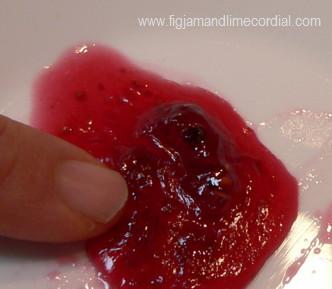
10. Test for set. Before you start, put a small saucer in the fridge to cool.  Alternatively, you could use an ice-pack and put the saucer on that to chill.  Test the jam or jelly by putting a small blob on the cold saucer.  Wait a minute or two, then give the jam a poke with your finger.  If it wrinkles, then it’s ready. Make sure you turn off the heat while you’re testing, or you might end up scorching your jam.
jam 017a

11.  Hot water processing. Another hotly debated issue and there are many people who don’t believe this step is necessary.  We always ladle our jams and jellies into sterilised jars, then seal them and boil them in a hot water bath for ten minutes.  It’s an easy process, providing you remember to put the hot jars in hot water (pouring cold water on the hot jars can crack them – I learnt that the hard way).  We either use a pasta pot, or we place a silicone mat in the base of our big stock pot, and stand the jars on that.  Make sure the boiling water covers the top of the jars by at least 2.5cm (1″).   Please note that if you’re making preserves other than sweet jams and jellies, then hot water processing may not be adequate, and you might need to invest in a pressure canner to ensure food safety.

jam 020a

© copyright 2009 by Fig Jam and Lime Cordial. All rights reserved.

. . . . .

Do you have any jam making tips?  We’d love to hear them! And for more information, including recipes, please have a look at our JAMS page.
Read Full Post »

gooey-cake

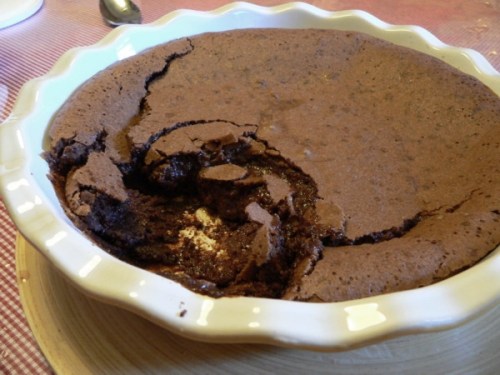
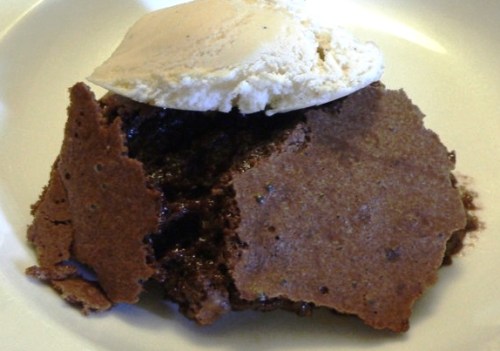
This dead easy recipe from Trish Deseine’s book Chocolate has become a household staple.  It’s exactly as the name describes it – gooey, puddingish and rich – and has the added advantage of being gluten-free.  It’s best served with homemade vanilla icecream (recipe to follow) or whipped cream (or, in Big Boy’s case, both).

Here is my version, sized down to fit my 26cm (10″)  pie dish (comfortably serves 4 – 5).

  • 150g (5.5 oz)  dark chocolate (I use Callebaut 54% callets)
  • 150g (5.5 oz) unsalted butter
  • 4 large eggs (59g), separated
  • 150g (5.5 oz) sugar

1. Preheat the oven to 180C (350F) or 160C with fan.

2. Place the butter and chocolate in a large pyrex bowl.  Melt them together in the microwave in short 20 – 30 second bursts on high (or use a double boiler on the stove).  Allow the mixture to cool slightly (so that you don’t scramble the eggs in the next step).

3. Beat the egg yolks and sugar together in a large mixing bowl until the mixture is pale.  Combine this with the butter-chocolate mix.

4. In a separate bowl, whisk the egg whites until they form stiff peaks.  Stir a generous scoop  into the chocolate mixture to lighten it, then gently fold the remaining egg whites into the batter.

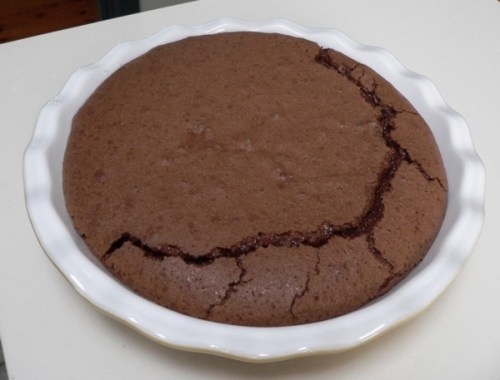
5. Pour the mixture into a 26cm (10″) pie dish and bake for about 25 minutes, or until the cake is well risen and just past the really wibbly stage.  The cake will collapse as it cools, leaving a slightly raised crust around the edges.  You can serve this warm or cold, simply scooped out with a large spoon.

Here is the gooey cake just out of the oven, all puffed up….

gooey-cake-2

…and after it has sunk slightly on cooling.

gooey-cake-3

Read Full Post »

040709 006

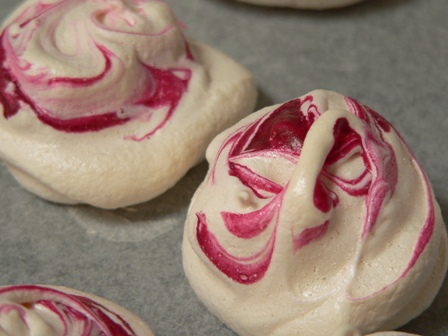
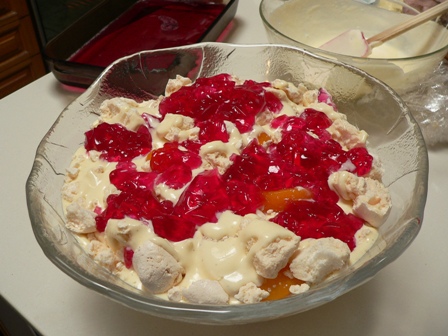
We’ve had a wonderful day at Lynda’s place – catching up with old friends, laughing and eating ludicrous amounts of food.  My contributions were these swirly meringues, a chocolate slab cake, a large tray of party pizza, and a sherry trifle.

The meringues were based on my old recipe, using up the four egg whites left over from the trifle. After the batter was prepared, I dipped a wooden skewer into a tiny bit of red food colouring and swirled it through the uncooked meringues just prior to baking.  The little girls found these irresistible!

. . . . .

040709 018

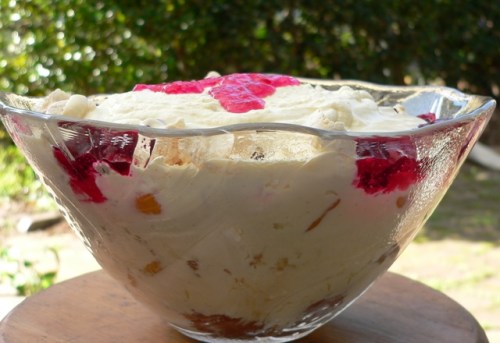
Sherry Trifle was an Aussie party staple in the 60s and 70s.  Judging by the response we had today, I think it’s well overdue for a comeback!  Pete commented that everyone ate this until they were sick, which (and I admit this is a little pathetic) made me deliriously happy.  Trifle is the Australian equivalent of an Eton Mess, although arguably healthier given the fruit and egg components.

It was a perfect vehicle for our new microwave custard recipe, as well as a way to use up the mini pound cakes I’d stashed in the freezer after Dan’s birthday.  Here are some loose instructions – it’s a recipe which can be easily adapted to your ingredients at hand. The quality of the custard is important and the microwave version is so easy that there’s really no need to resort to custard powder!

  • Leftover pound cake (I think you could probably use Saviordi biscuits if you preferred)
  • Sherry
  • 1 batch of microwave custard
  • ½ vanilla bean (optional)
  • 1 cup heavy cream (35%), whipped
  • Canned sliced peaches, drained
  • 2 packets of red jelly crystals
  • Meringues, roughly crushed
  • 1 cup heavy cream (35%), extra
  • Vanilla syrup (optional)

Preparation:

1.  Make up the jelly and set it in a wide flat container in the fridge.  Cut the chilled jelly into cubes.

2. Make the microwave custard, adding the scraped seeds from the half vanilla bean into the milk and cream before heating.  When the custard is ready, allow it to cool in the fridge, with a sheet of clingfilm pressed to the surface, to stop a skin forming.

3.  When the custard is cold, fold in the whipped cream.

4.  Whip the extra cream with a little vanilla syrup (optional) and set it aside for decorating the finished trifle.

Assembly:

1. Break the pound cake into pieces.  In a large glass bowl, place a layer of cake pieces and sprinkle with a little sherry.  Add a handful of crushed meringue.

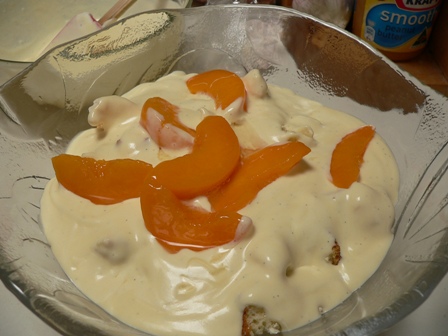
2. Top with a layer of custard cream, then a layer of peaches.

3. Top with another layer of cake pieces, sprinkled with sherry, and a handful of crushed meringue. Follow this with a layer of custard and then a further scattering of peaches.

040709 012

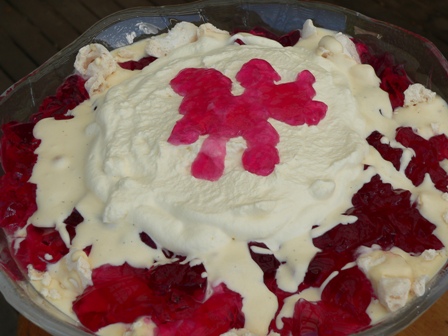
4. Continue layering until the bowl is nearly full, ending with a layer of custard.  Tumble the jelly cubes over the top, and finish with the reserved whipped cream.  Cover with clingfilm and store in the fridge until ready to serve.

040709 014

040709 025

Lynda’s gorgeous husband Chris was a big fan of this trifle.  Chris, if you’re reading this, the leftovers are in your fridge waiting for you – hopefully you’ll find them before the kids do!

Read Full Post »

prov jam 022a

This is the very best jam Pete makes, bar none.  If any of our friends are reading and wondering why they’ve never tried this – it’s because it never leaves the house.  Pete and I wolf it down as fast as he can make it.

It is a jam with complex layers of flavours, best served thickly spread as it has less sugar than most preserves, thereby letting the fruit flavours shine through.   Whilst it’s really only worth making when the fruit is at its very best, this year we vacuum-sealed and froze nectarines and apricots when they were at their peak, which has allowed us to make a mid-year batch to see us through winter.

Here is Pete’s original recipe, and yes, I know it says one-sixteenth of a teaspoon of Herbie’s Mixed Spice.  I’ve raised this point with him, but he is adamant that any more than that will be too much, but leaving it out altogether would be detrimental to the finished jam.  I leave it to your discretion whether or not you deem it worth the effort!

  • 1kg apricots
  • 1kg nectarines (big, soft yellow ones, not hard crunchy white ones)
  • 1 cup water (more if required)
  • 200ml lemon juice
  • 1.25kg white sugar
  • 75g glace ginger
  • 2 Tbsp (40ml) Kirsch
  • 1/16 tsp Herbie’s Mixed Spice
  • 500ml homemade pectin

1.  Peel and halve the nectarines and remove the seeds.  In a small saucepan, boil the nectarine skins and seeds with 150ml of the lemon juice and 1 cup of water (more if required).  Dice the nectarine flesh into 1cm cubes.

2.  In a separate bowl, add the remaining lemon juice to the diced nectarines (to prevent oxidation).

3.  When coloured and thick, pour the nectarine skins and seed with their cooking liquid through a sieve into a large stew pot.  Press the pulp to extract all the liquid from it, then discard the seeds and remaining skin.  Add diced nectarines and pectin to the pot, simmer gently while you prepare the other ingredients.

4.  Finely dice the glace ginger and add to the simmering nectarines.

5.  Remove the seeds from the apricots and cut them into eighths (don’t peel). Discard the seeds.

6.  Add the apricots and the sugar and bring the mixture to the boil.

7.  Add the Kirsch and mixed spice. Skim the pot regularly to remove any foam – this improves the appearance of the final jam.

8.  Boil until the jam sets softly (about 30 minutes).  Test by putting a small blob on a cold plate – if the jam is set properly, it will wrinkle when given a small poke with your finger.

9.  Ladle the jam into sterile jars and seal tightly, then process the jars in a boiling water bath for 10 minutes, ensuring that the water covers the lids by at least 2.5cm.  Note: make sure you put the hot jars into hot water – if you use cold water, the glass jars may crack.

See our Jam Making Primer for more tips on making jam.

© copyright 2009 by Fig Jam and Lime Cordial. All rights reserved.

Read Full Post »

custard 003

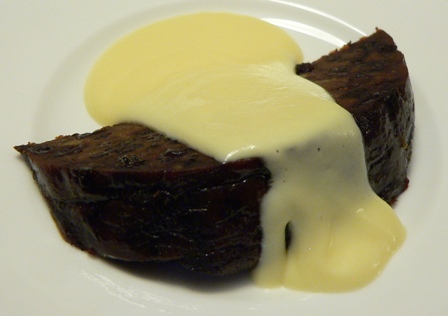
The last time I made microwave lemon curd, it occurred to me that it might be possible to make pouring custard in a similar way.  I tried this last night and it was a hit – Pete and Big Boy ate a bowl of custard each (neat, with a spoon), whereas I had mine on a warm slice of fruit pudding.  Pete’s been walking around with a big grin on his face, saying “the whole world of English desserts has just opened up to us”.  The custard was  ludicrously easy to make and took less than five minutes from start to finish.  Watch this space – I’m sure we’ll find creative things to do with this!

Microwave Vanilla Custard

using the ingredients from a taste.com.au recipe

  • 1 cup milk
  • 1 cup cream (heavy whipping cream – 35% fat)
  • 1 tsp homemade vanilla extract
  • 4 egg yolks (from 59g eggs)
  • 1 Tbsp (4 tsps) cornflour (cornstarch)
  • 1/3 cup caster (superfine) sugar

1. In a large pyrex mixing bowl, whisk together the milk, cream, extract, cornflour and caster sugar until smooth.  Microwave on high for 2 minutes  until hot (my microwave is 1100 watts).

2. In a separate bowl, whisk the egg yolks until smooth.  Pour the egg yolks through a sieve into the bowl of heated milk and cream, whisking constantly as it ribbons into the hot mixture to ensure it doesn’t curdle.

3. Heat the eggy milk in the microwave on high for 30 seconds, then whisk.  Heat for another 30 seconds, then whisk again.  Continue heating in 30 seconds bursts, whisking well after each, until the custard has thickened to your liking. Use immediately, or refrigerate until needed, with a piece of clingfilm pressed to the surface to stop it skinning.

Pete plans to use this custard as a base for icecream, and I’m hoping to find a way to adapt this technique for Portuguese tart filling.  More to come!

. . . . .

Use this custard to make:

© copyright 2009 by Fig Jam and Lime Cordial. All rights reserved.

Read Full Post »

« Newer Posts