Feeds:
Posts
Comments

Archive for August, 2009

chev 018

Yesterday, I had coffee with the gorgeous Spice Girl of Spice and More.

She and I haunt each others’ blogs and after a few email exchanges, we decided it was imperative that we meet, before we bankrupted each other with our shopping suggestions.  We had a great time, marveling at how similar our lives are – we went to the same university, shop at the same places, and we’re even the same age (although she looks ten years younger).  By the end of a couple of hours, I felt like I’d known her for years.

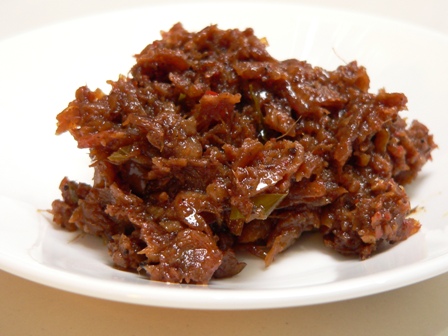
True foodie that she is, Spice Girl brought me a container of her prawn balchao to try.  This delicious paste of ground dried prawns, chillies and spices has an aroma similar to Malaysian belachan, but with a completely different taste.  I’m always very excited by new flavours, so I had to try this one immediately (and started eating it in the coffee shop – probably not the best idea after chocolate truffles).

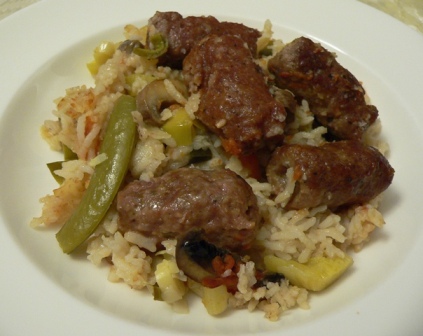
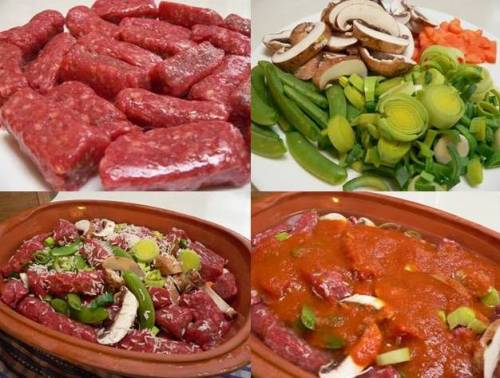
Because I was having so much fun chatting, I didn’t give too much thought to dinner, so the tribe ended up with another Römertopf meal.   This time I really did throw it together.  I mixed together a cup and a half of Basmati rice, whatever vegetables I could find in the fridge, two trays of chevapi and popped it all into the presoaked clay pot. I then added two cups of water and a cup of tomato passata, covered it with the lid, and put the Römertopf into the oven to bake for an hour and a half.

The finished dish could have used a little salt (the chevapis don’t flavour the rice as much as sausages do), but it couldn’t be beaten for ease of cooking.

chev 040

Here’s a montage of the meal under construction.  Incidentally, it was Spice Girl who taught me how to put my photos into this format. I’ll try and post a more detailed recipe at a later date – Pete does a wonderful sausage version of this dish.

Hmmm. I wonder if we could make biryani in the Römertopf?  Might have to ask the Spice Girl..

Presentation2

Read Full Post »

pot 045

Big Boy came into the kitchen a couple of hours ago and asked me what was for lunch.

“We’re having a gourmet potato tasting.  Hmmm. It’s not a normal life we lead, is it?”

“No…”, he replied, “it’s much better.”

. . . . .

Tasting #1 : Mashed
pot 048

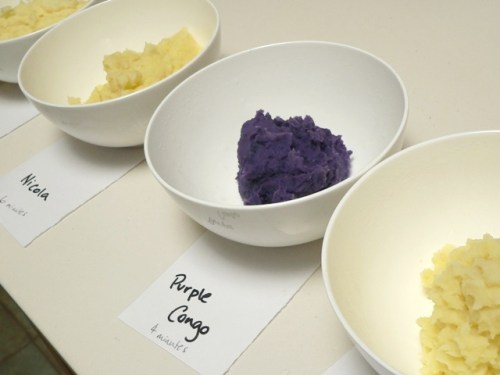
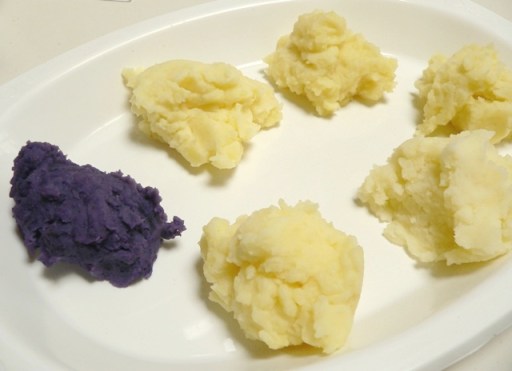
Clockwise from the Purple Congo are Bintje, Nicola, Dutch Cream, King Edward and Kipfler.

I washed, peeled and chopped up one or two of each of the gourmet potato varieties we’d bought at the markets, then cooked them in the microwave.  These were then mashed with a little milk, butter and a pinch of salt (not too much, as I didn’t want to mask the flavour of the potato), and lined up for Pete, Big Boy and I to taste.  Here are our notes in order of tasting:

Bintje: Big Boy and I loved this potato, Pete less so.  It cooked very quickly in the microwave – much faster than the waxier Nicolas or Kipflers.  This spud has a light yellow flesh and an interesting savoury note which we found appealing – it reminded me of potatoes I’d eaten as a child.  The Bintje mash tasted like the inside of hot chips, which is probably why we liked it so much. These potatoes are neither waxy nor floury, and will definitely be a variety we’ll buy again.

Nicola: Such a contrast to the Bintje!  These waxy potatoes were slow to cook, really yellow on the inside and quite sweet to taste.  They weren’t really suited to mashing, but would make an excellent salad potato.

Purple Congo: These were interesting,  but I probably won’t buy them again.  Firstly, by the time you’ve peeled away the rough exterior, there’s not all that much potato left.  Secondly, they turned everything purple – the sink, the cooking liquid and my hands.  Having said that, these were completely different to the other potatoes, and really quite tasty.  The  mash was Teletubby purple and the flavour closer to a sweet potato than a normal white or yellow one.  These would be great for a showcase dish, but they’re unlikely to become one of our regular purchases (though they probably should, as Pete was sure that they would be high in anti-oxidants).

Dutch Cream: These have a similar taste, albeit less sweet, to the Nicola, but are much better suited to mashing (which surprises me, as they’re quite waxy).  They’re aptly named, because they tasted creamier than the other potatoes,  despite having had the same amount of milk and butter added.  Definitely one we’d buy again.

King Edward: These white fleshed spuds are the quintessential mashing potato, although they’re a bit too floury for my liking. Pete felt that we could have added even more milk and butter, and the potato would have absorbed it all.

Kipfler: Big Boy’s other favourite, these waxy, yellow-fleshed spuds  have a beautiful flavour and an interesting shape. Definitely one we’ll be buying regularly.

. . . . .

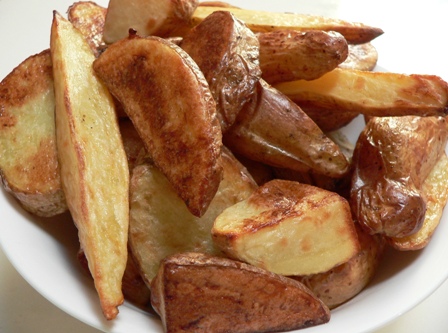
Tasting #2 : Baked
pot2 014

I cut up four varieties, tossed them in olive oil and salt and roasted them in a hot oven until well baked.  I only used four types because I couldn’t think of any more ways to cut them up – the Bintjes were cut into cubes, the Dutch Creams were sliced, the last King Edward was cut into wedges and the Kipflers were easily distinguished by their long cigar shape.

We all loved the King Edward baked – it had a crisp exterior and a white fluffy centre, and would have been perfect with sour cream or butter. The Dutch Creams were a little too sweet for me, and Pete thought they were too waxy for baking.  The Kipflers were delicious, and a little firmer in texture than the other varieties.  Big Boy loved the Bintjes – he thought they tasted like a classic chip should.

. . . . .

This was great fun and highly educational – I’d never realised that potatoes could vary so much. The best part, though, is that we now know which variety to choose for a particular dish; King Edward, Bintje or Kipfler for baking, Nicola for salad, and Bintje or Dutch Cream for mash.  That kind of knowledge is empowering!


Read Full Post »
fm 026

Last Friday, I sweet-talked Glen, the owner of our favourite potato and onion stall at Flemington Markets, into selling me a selection of gourmet potatoes.  He was being very kind – these are usually sold by the kilo, but he let me buy just a few of each to try.  They had about a dozen varieties on offer!

. . . . .

These are Nicola potatoes, recommended for salads, but also supposedly good for roasting and mashing.  They originated in Germany, but are now grown all over the world.

nicola

. . . . .

Next up are Dutch Creams, which have a waxy yellow flesh.  Great for mashing, in soups or as a roasted potato.

dutch cream

. . . . .

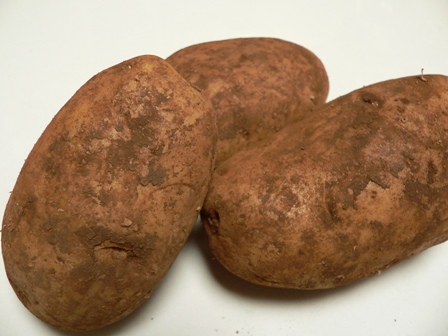
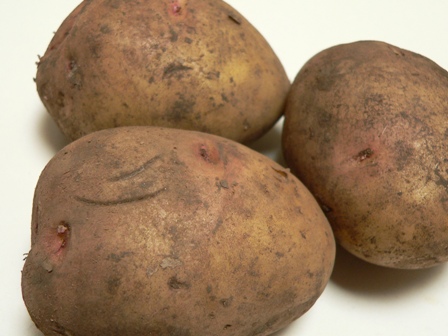
These King Edward potatoes are white fleshed, with interesting pinkish eyes. They aren’t recommended for salads, but are great for mashing or baking, as they’re quite a floury spud.

king edward

. . . . .

One of my favourites – Royal Blue potatoes – they’re the large purplish ones at the back of the photo.  These are a delicious all-rounder, and we use them for mashing, roasting and in soups.  They have a yellow flesh and are similar in flavour and texture to a Desiree.

The ones at the front which look like petrified lumps of dinosaur poop are a variety known as Purple Congo. The flesh is a bright purple colour and very dry.   They need to be boiled and mashed, as a lot of liquid is required to make them palatable.

fm 017

. . . . .

These Bintje potatoes originated in Holland – they’re a versatile all-rounder, and the internet tells me that they’re now the most widely grown yellow-fleshed potato in the world.

bintje

. . . . .

And finally, an old favourite – Kipfler potatoes – originally from Austria and now widely available, and one of the better known gourmet varieties.  These are good for just about everything except chips.

fm 022

. . . . .

Time to go play in the kitchen!   I think I might start by mashing each type separately, and comparing how they taste.  I’ll report back tomorrow…

Continued here: Gourmet Potatoes #2

Read Full Post »

027

My friend Joe Cassaniti makes the best pasta in town.

That’s no hyperbole – Joe won so many prizes for his pasta at the  Sydney Easter Show  that they finally made him a judge, just so someone else could have a shot at winning. His products are so good that Pete and I have resigned ourselves to not making pasta at home.  We’ve tried on numerous occasions, but it never ever turns out as silky or as smooth as Joe’s.  That’s a big thing for us – anyone who reads this blog regularly will know how obsessed we are with making whatever we can from scratch!

The Cassinitis are a bread baking dynasty, having supplied Sydney’s restaurants with traditional Italian loaves for decades.  Before we started baking our own, most of our bread was bought on a weekly basis from their renowned Haberfield Bakery.  The queues to get into this little suburban bread shop go out the door and up the street on a Saturday morning!

Without fail, Mrs Cassiniti gives a free bread roll to every child who walks into her shop.  She’s been doing it for as long as I can remember, and when Big Boy was little, he saw it as a small recompense for being dragged out shopping. Then one day, when he was about fourteen, he came out of the bakery with a funny little smile on his face.  When I queried him, he sighed, “I don’t get a bread roll anymore”.  I pointed out that Mrs Cassaniti doesn’t give you a bread roll once you’ve started shaving

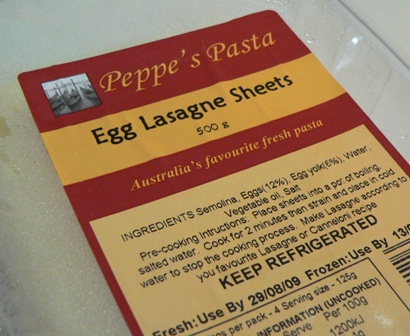
Anyway, onto my story. We walked into Joe’s shop yesterday to buy some lasagne sheets for a Römersagne.

“Yooouu!”, he bellowed, waving an accusational finger at me. “It’s all your fault!  Come and look at what I’m doing! I’ve been reading your blog…”

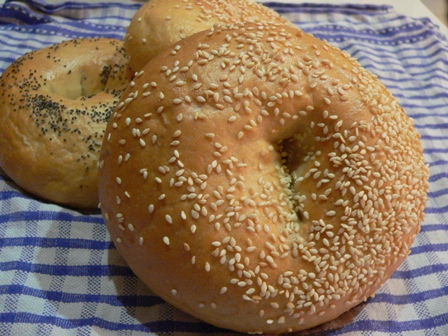
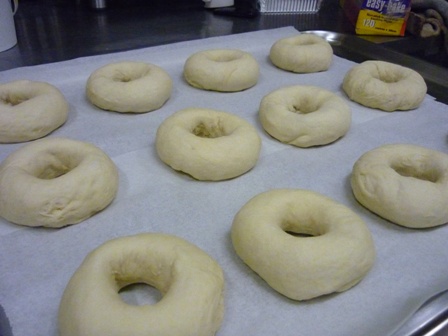
He led us into the back of his shop where…he was making bagels. He’d gone next door to Mamma Cassiniti’s for some fresh yeast, malt extract and high protein bread flour, and mixed up a double batch of the dough.  It was perfect too – smoother and shinier than anything I’ve ever been able to make at home.  He let me shape a couple of giant bagels (200g each!)….

lpdq 025

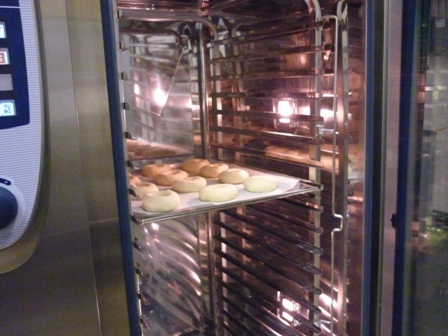
…then popped the tray into his “combi” oven – a magnificent, huge  machine which first proved the dough, then steamed it, ready for baking.   (Christina, you need one of these!)

lpdq 026

The steamed rolls were topped with poppy and sesame seeds and returned to the combi to bake.  Bagels are usually boiled, but I was surprised at how well the steaming process worked. The texture was chewy like a good bagel should be, and the flavour malted and delicious  – a perfect match with our freshly made butter.  Joe kindly gave us three ginormous bagels, which the boys devoured with dinner.  Of course, now they’re nagging me to make a batch on the weekend. If you want to try making  your own bagels at home, our tutorial is here.

Peppe’s Pasta – the best place ever to buy fresh pasta – has a retail shop  in Sydney’s inner-west, at 151 Ramsay Road, Haberfield.  Take a freezer bag with you, as a lot of the gourmet filled pastas are snap frozen. Joe is there most afternoons – if you go in, ask him for a bagel..

034

Read Full Post »

icec 019

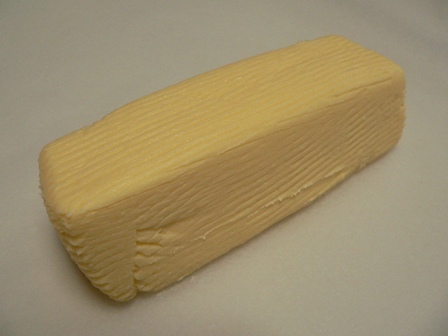
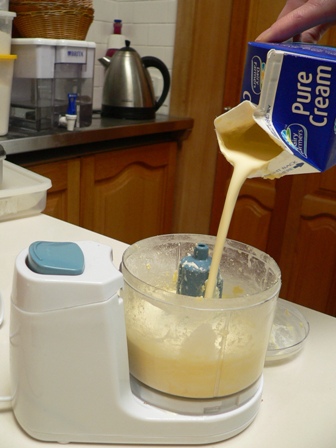
I know I’ve blagged on about making your own butter before, but it really is so easy to do.  We almost never throw away expired cream any more.  I had a carton of pure cream (aka heavy whipping cream, 35% fat) which had reached its use by date, so I spent a few minutes this morning turning it into butter.  There was about 400ml of cream which made 170g freshly churned, lightly salted butter.  Life is good…

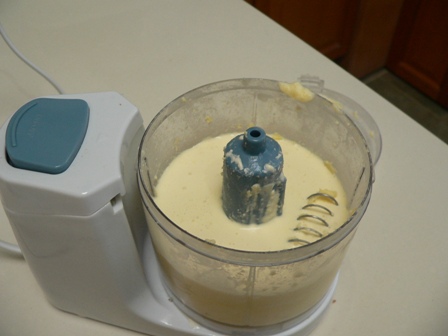
The cream went into my mini food processor in two batches (photos taken of the second batch, which is why the processor bowl is dirty).  My machine has a little whisk attachment that fits over the blade.  You could just as easily use a mixer with a whisk attachment, which is what we do whenever we have a larger quantity of cream.  If we do use the mixer, we switch from the whisk to the paddle attachment about half way through.

icec 002

Add a pinch of salt, if you like.  We find this helps the butter keep a little bit better.

icec 004

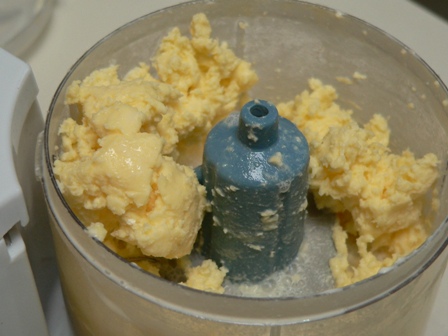
After a few minutes of pulsing, the cream will split, leaving fresh butter and buttermilk (whey).  The cream will whip up, then collapse, then split.

icec 006

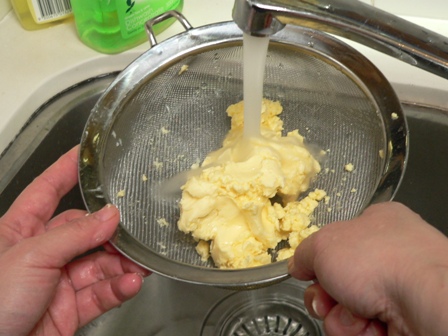
Give the butter a quick rinse to wash off the sour whey.  Note that the leftover liquid is actually buttermilk, albeit a much thinner version of the stuff you can buy commercially.  When we make a large batch of butter, I save the buttermilk and use it for baking.

icec 009

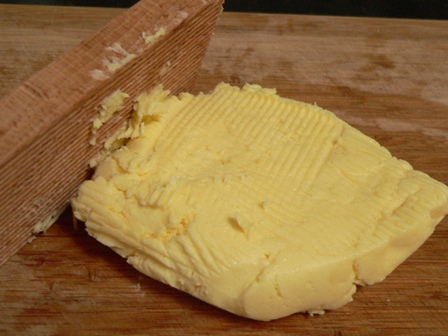
Then smack it around a bit on a chopping board to get any residual liquid out.  We use gnocchi paddles and a wooden board placed at a slight angle over the sink, to allow the liquid to drain off.  The butter sticks less to wood than it does to plastic.

icec 013

Here’s the final butter, shaped and ready to be wrapped in parchment paper and stored in the fridge.  Our homemade butter doesn’t keep as long as the commercial version, but we use it for everything from spreading on steaks to baking cookies.  And there is almost nothing like super fresh butter in mashed potatoes!

I made two-thirds of a cup of butter this morning – from cream that was due to be thrown away.  Even just typing that makes me smile..

icec 019

Read Full Post »

« Newer Posts - Older Posts »