Feeds:
Posts
Comments

Archive for the ‘Recipes’ Category

How Pete Cooks

I am a fairly conventional cook.

I usually start with a recipe, and either make it as written, or customise it to suit my own tastes.  I suspect most homecooks probably work on a similar basis.

That’s not the way my husband cooks.

Pete doesn’t take a turn in the kitchen very often, but when he does, the result is almost always sublime.  He rarely uses a recipe, but instead creates dishes in an organic, instinctive way – adding a pinch of this, a dash of that – until he gets exactly the result he’s after.  I’m always in awe of the way he layers flavours in a dish – something that I’ve never been particularly adept at doing.

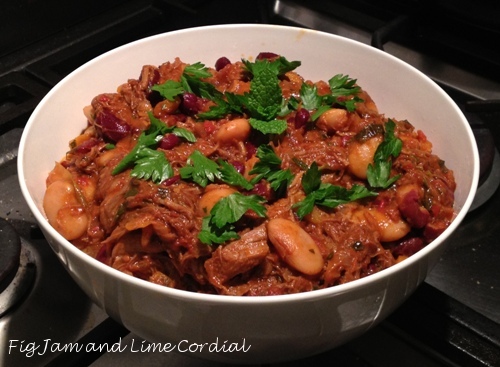
Tonight’s dinner was a good example.  I’d taken a container each of shredded (cooked) beef brisket and beef stock from the freezer earlier in the evening. From the garden, we brought in a fat carrot and a perennial leek.

I watched as Pete gently sauteed the ingredients, added the spices, ran outside to harvest mint and parsley, and tasted – constantly.  He must have sampled the dish over a dozen times as it cooked, adjusting the seasoning, adding more lime juice to balance out the flavours, reducing the sauce until it was just right. Interestingly, he didn’t add garlic – which I do almost automatically with savoury dishes – as he didn’t feel it was right for this recipe.

As he continued on his merry way, I scribbled the ingredients out on the white board.  I’m listing them here, or we’ll  never get to be able to replicate this delicious meal. Quantities are estimates only, as everything (literally) was added to taste!

  • one skinny leek
  • one medium onion
  • one fat carrot
  • one seeded serano chilli
  • a little red wine
  • a tablespoon of olive oil
  • 100g unsalted butter
  • salt
  • pepper
  • a takeaway container of cooked beef brisket
  • one tin of kidney beans, drained
  • one tin of butter beans, drained
  • one tin of chopped Italian tomatoes (we like the Mutti brand)
  • a small takeaway container of homemade beef stock
  • two dessertspoons of homemade plum sauce
  • two teaspoons of Herbie’s Mexican Spice mix
  • two teaspoons of sweet paprika
  • juice of approximately 1½ Tahitian limes, plus the rind of half a lime
  • continental parsley
  • spearmint

I wish I could cook like this, but whenever I try, things usually end up tasting quite strange. It seems to be an inherent ability – my friends the Spice Girl and Choclette both seem to have it as well – as, I suspect, do most great chefs.

What about you? Do you tend to follow a recipe, or are you an intuitive cook like my Pete?

Read Full Post »

I’m still having a blast with  my new food processor!

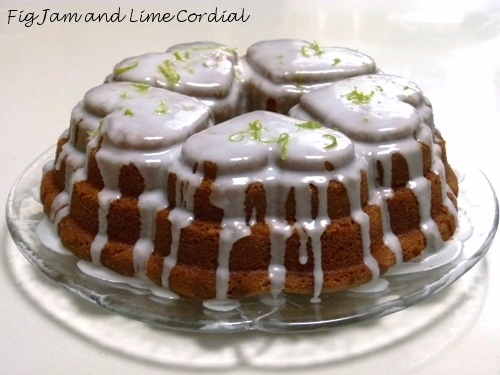
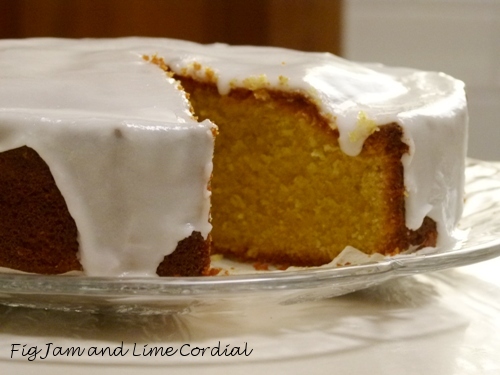
Here’s our lime and almond cake, which Pete has now declared to be the best non-chocolate cake I’ve ever made, baked in a Wilton Queen of Hearts bundt pan.  The icing was decorated with lime zest…

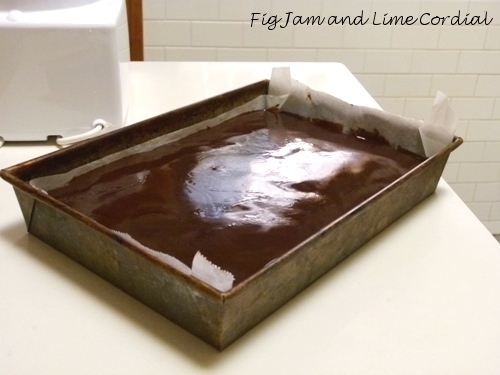
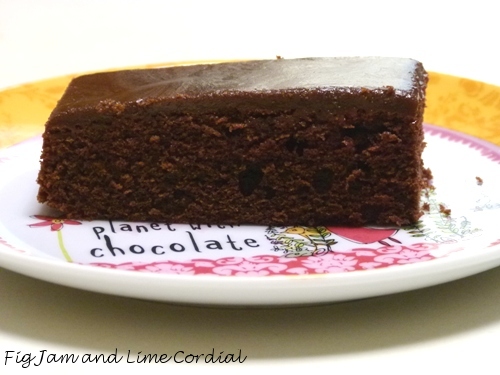
We were off to the markets and needed something quick and easy to feed the stall holders, so I tried baking a very basic chocolate pound cake in a roasting tray to see if we could turn it into a slab cake.  It worked a treat!  We took some to the markets and our sons demolished the rest while we were out…

This simple and unpretentious chocolate cake is made special by its icing. I love that the pound cake recipe is so easy that I can make them from memory – even when I mess about with the ingredients!  The instructions are here

  • 250g (8oz) unsalted butter
  • 185g (6oz) self-raising flour
  • 65g (2oz) sifted Dutch-processed cocoa powder
  • 250g (8oz) castor (superfine) sugar
  • 4 large (59g) free range eggs

The batter was baked in a 23cm x 33cm (9″ x 13″) parchment lined pan in a preheated 160C (320F) fan-forced oven for 30 minutes, then topped with icing while still warm and popped into the fridge to set.  Allow the cake to come back to room temperature before serving.  To make the icing, stir and melt the following ingredients together in a double boiler..

  • 100g (33/4oz) dark chocolate callets, or finely chopped chocolate
  • 100g (33/4oz) unsalted butter
  • 100g (33/4oz) icing sugar, sifted (it’s important to sift, or you’ll get lumpy icing)
  • 60ml (¼ cup) milk

♥ ♥ ♥ ♥ ♥

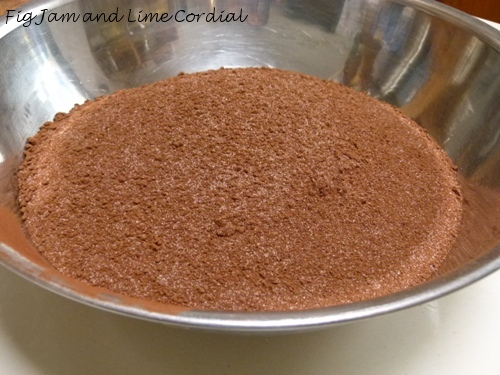
Making hot chocolate mix in the old food processor used to be hard work, but our new Magimix blitzed it up in record time.  I made two kilos (a double batch) using our favourite recipe

♥ ♥ ♥ ♥ ♥

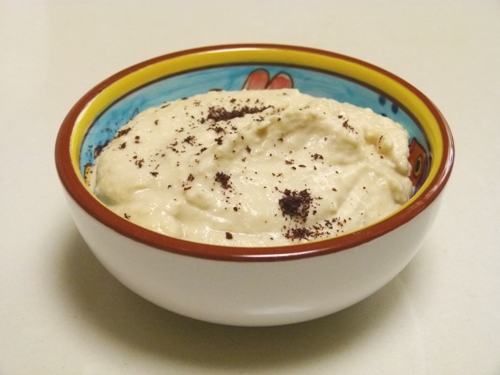
A dollar’s worth of dried chick peas was turned into a large vat of Syrian hommus.  We ate a little of it for lunch, with pita bread and grilled eggplant…

♥ ♥ ♥ ♥ ♥

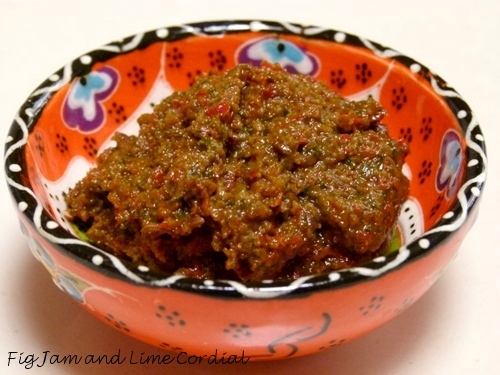
And finally, using the small bowl and blade of the Magimix, I turned the last of our cayenne chillies…

…and a few of the bishops’ crown chillies…

…plus a handful of spearmint…

…into a small jar of harissa. I’ve been smearing it on toast for breakfast!

Read Full Post »

“I’ve got an idea”, said Pete, “let’s go buy junk food!”

I know it’s a strange thing to say, but we were headed to Leichhardt Market Town and we thought it might be fun. Something different – an “end of school holidays” treat, as it were.

But…we just couldn’t do it. We really tried. We just couldn’t bring ourselves to buy anything from the takeaway food court, or lollies or biscuits from the supermarket. I did manage to pick up a packet of Kettle Chips, but only because I have a shocking weakness for crisps.

On the way back to the car, we passed the Wendy’s Donuts stand.

“What about doughnuts?”, I asked.

“Oh, I love those.  Will you make some for me when we get home?”

Sigh.  How could I refuse?

I wrote a tutorial on making these several years ago (the recipe and instructions are here). This is the first time we’ve made them with our homegrown eggs, and the centres were a gorgeous golden yellow.  Half the balls were filled with Pete’s jams, the others were left plain and simply tossed in castor sugar.

Pete ate TWELVE, and then told me he felt a bit sick.

Homemade junk food, indeed.

Read Full Post »

Waste Not Want Not Duck Stock

As I’ve mentioned before, our boys adore duck meat, so we cook it quite often.

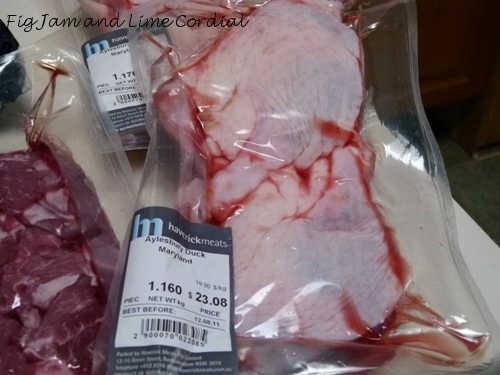
Instead of buying a whole duck these days, I purchase free range Thirlmere duck marylands (thigh and drumstick portion) from Haverick Meats

Each packet contains four or five pieces. I rub these with a little salt and pepper, then place them in our Emile Henry brasier and roast them for about an hour and a half, until the skin is crispy, the meat is cooked, and the fat has rendered off.

The fat and meat stock are poured into a bowl, allowed to set in the fridge, and then stashed in the freezer for later use. I strip all the meat from the bones and use it in a ragu or curry – the duck is so rich that there is always ample for at least a couple of dinners.

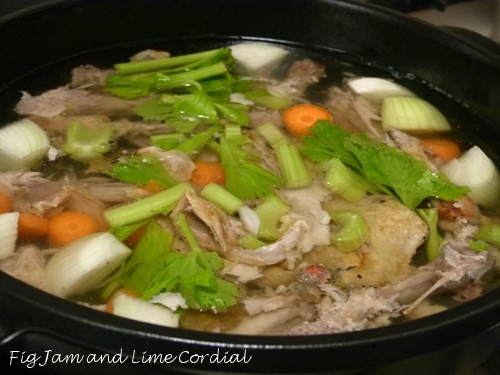
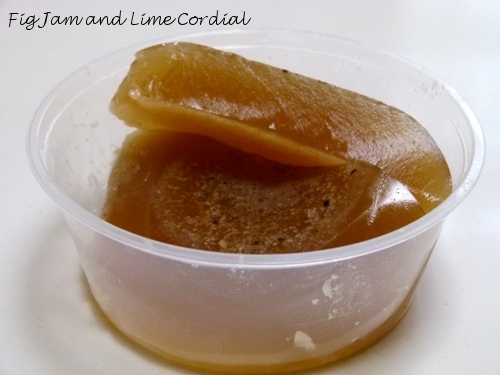
Last week, instead of discarding the skin and bones as I normally would, I decided to boil them up for stock. I didn’t actually think I’d get a lot more out of them, but I figured it was worth a try. I added a litre of water to the brasier, along with half a carrot, some celery, an onion and a couple of bay leaves. The pot was left simmering on the stove for a couple of hours, until it had reduced down to about a cup and a half of liquid…

After resting in the fridge overnight, the liquid set to a solid, incredibly flavoursome, gelatinous stock.  I de-fatted it, then popped it into a container in the freezer.  It will make a wonderful addition to a paella or pasta sauce.  Pete suggested we could cut it into little cubes and make fancy canapés…

I’m really happy with this – the jellied stock is so rich that just a little bit will make a difference to future dishes. It’s astonishing how much flavour was left in bones and skin that would normally have been discarded!

Lesson learnt – always look twice at something before throwing it away!

Read Full Post »

Grab a cup of tea and pull up a chair – this is a loooong post!

I’ve discovered a cake baking secret (thanks Gill!).

It’s not really a secret at all, but it’s new to me, and understanding it has provided me with the necessary formula to create a wide range of exciting cake recipes.

Invented in Britain in the 1700s, pound cakes were based on a gloriously symmetrical recipe:

  • a pound of butter
  • a pound of sugar
  • a pound of self-raising flour
  • a pound of eggs

Converting this to manageable proportions (in this case, halving the quantities) gives us:

  • 8oz (250g) butter
  • 8oz (250g) sugar
  • 8oz (250g) SR flour
  • 4 large (59g) eggs

These cakes seem to mix up particularly well in the food processor.

If you don’t have self-raising flour, substitute 250g (8oz) plain (AP) flour whisked with three (3) teaspoons of baking powder.

Basic instructions :

1. Have all the ingredients at room temperature before starting.  Preheat the oven to 160C (320F) with fan. Grease and line a 20cm (8″) round springform tin.

2. In the large bowl of the food processor, pulse together the butter and sugar until well combined and light in colour.  Scrape down the bowl.

3. Add the eggs one at a time and continue pulsing to combine. Add a spoonful of the flour each time (if required) to stop the batter from curdling.  Then add the remaining flour, pulsing until just combined (do not overmix).

4. Scrape the batter into the lined tin and bake for about an hour (start checking at the 50 minute mark), until a cake tester inserted into the thickest part of the cake comes out cleanly. Baking time will vary if a different shaped tin is used. Allow to rest in the tin for 10 minutes before releasing the springform and transferring to a wire rack to cool completely.

♥ ♥ ♥ ♥ ♥

Now this is where it gets fun!

Providing the proportions are kept roughly the same, the ingredients can be varied.  It’s a little bit like cake baking by numbers! Some of the successful substitutions I’ve tried so far are as follows…

  • Butter: the white chocolate cake I made below used 185g (6oz) unsalted butter and 65g (2oz) melted white chocolate in place of the 250g (8oz) butter.  I’ve also tried substituting half the butter with a neutral vegetable oil, and it worked acceptably well.
  • Sugar: I’ve made a chocolate pound cake with a mix of white and brown sugar.  I’ve also used castor (superfine) sugar in several of the cakes below.
  • SR flour: In the chocolate and hazelnut cake, I substituted Dutch-process cocoa powder and hazelnut (or almond) meal for half of the total flour weight.
  • Additional flavourings: I almost always add a little homemade vanilla extract, and I’ve added citrus rind to the lime and almond cake below.
  • Baking tins: I’ve baked these cakes in a 20cm (8″) round springform tin, a cast aluminium bundt pan and 22cm (8½”) loaf tin.  The round and bundt pans worked well in all instances. The loaf tin was fine for our chocolate and hazelnut cake, but I had less success with the lime and almond cake in it – the centre of the cake collapsed as it baked.
  • Scaling: I haven’t tried making a smaller cake yet, but I’ve read that the recipe can be easily scaled, providing we keep to the ratio of one large egg to 2oz (roughly 60g) of each of the other ingredients.

These changes will naturally alter the flavour and texture of the finished cake, which means every new combination will result in a unique creation.

♥ ♥ ♥ ♥ ♥

Here are a few of my recent attempts…

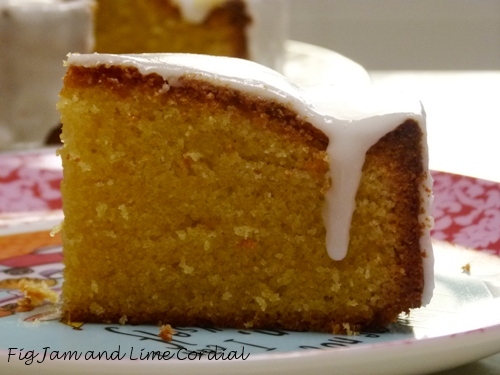
Lime and Almond Cake

  • 250g (8oz) unsalted butter
  • 250g (8oz) castor (superfine) sugar
  • 175g (5½ oz)  self-raising flour
  • 75 (2½ oz) blanched almond meal
  • 1 teaspoon homemade vanilla extract
  • 4 large (59g) free range eggs
  • 2 teaspoons grated lime rind
  • lime icing (made from icing sugar mixture and lime juice)

This one is Pete’s favourite!  The almond meal gives the finished cake a moist texture which contrasts well with the sharp, acidic icing.
♥ ♥ ♥ ♥ ♥

White Chocolate Pound Cake I

  • 185g (6oz) unsalted butter
  • 65g (2oz) white chocolate, melted
  • 250g (8oz) white sugar
  • 250g (8oz) self-raising flour
  • 1 teaspoon homemade vanilla extract
  • 4 large (59g) free range eggs
  • extra white chocolate chips
  • tempered white and milk chocolate, for decorating

I ladled half the batter into the lined 20cm (8″) springform tin, scattered over the extra white choc chips, then poured over the remaining batter.  The finished cake had a slightly airier crumb than the lime cake, with a pronounced white chocolate flavour. Melted milk and white chocolate was drizzled over the top in a criss-cross pattern.

♥ ♥ ♥ ♥ ♥
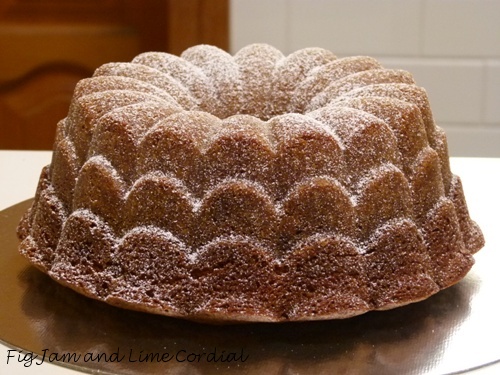
White Chocolate Pound Cake II

This version was made to use up the leftover chocolate from our Easter tempering

  • 185g (6oz) unsalted butter
  • 65g (2oz) white chocolate, melted
  • 175g (5½ oz) castor sugar
  • 75g (2½ oz) light Muscovado sugar
  • 250g (8oz) self-raising flour
  • 1 teaspoon homemade vanilla extract
  • 4 large (59g) free range eggs
  • 125g (4oz) assorted chocolate bits

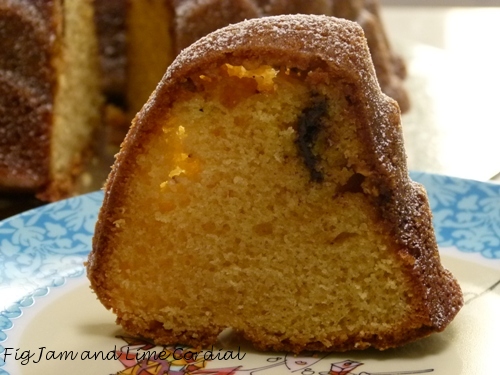
The batter was ladled into a greased bundt tin in three layers, with a scattering of chocolate bits between each layer.  It took just 45 minutes in a 160C (320F) fan-forced oven – the shorter baking time was probably due to the dark coating and central tube of the cast aluminium bundt tin. The gaps in the crumb are where the white chocolate bits have melted into the cake…
♥ ♥ ♥ ♥ ♥
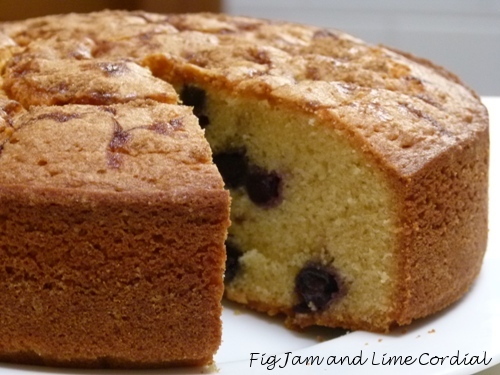
Blueberry Pound Cake

  • 125g (4oz) unsalted butter
  • 125g (4oz) vegetable oil
  • 250g (8oz) castor (superfine) sugar
  • 250g (8oz) plain (AP) flour
  • 3 teaspoons baking powder
  • 1 teaspoon homemade vanilla extract
  • 4 large (59g) free range eggs
  • 125g (4oz) fresh or defrosted frozen blueberries
  • Light Muscovado sugar, for scattering on top before baking

This cake was purely experimental – I wanted to see if I could replace part of the butter with oil, and also to see if plain flour plus a raising agent was a suitable alternative for the SR flour.

Both substitutions worked well, although the batter was far wetter than usual (due to the oil) and the blueberries (which were scattered on top prior to baking) sank as the cake rose.  Having said that, I’m quite happy that they didn’t all sink to the bottom.

I think I prefer these cakes made with butter, as the flavour of the oil came across a bit too strongly in this one. However, the fact that it worked so well with all the substitutions attests to the versatility of the recipe!

♥ ♥ ♥ ♥ ♥

Now, please don’t write and tell me that my metric to imperial conversions are out – I’m aware of that, but the proportions are the same in each case, and it’s much easier to work in round numbers.

There are oodles of possible variations on this basic cake recipe!  Fresh or dried fruit could be added, flavourings might include coffee, liqueurs or spices, or the basic cake could be split in half and sandwiched with cream and jam.

Play around with a combination of flavours that you like, and you’ll end up with a cake recipe that is uniquely yours.  And if you do, please share – we’d love to see what you come up with!

♥ ♥ ♥ ♥ ♥

Related Post: Food Processor Chocolate and Hazelnut Cake

Read Full Post »
« Newer Posts - Older Posts »