Feeds:
Posts
Comments

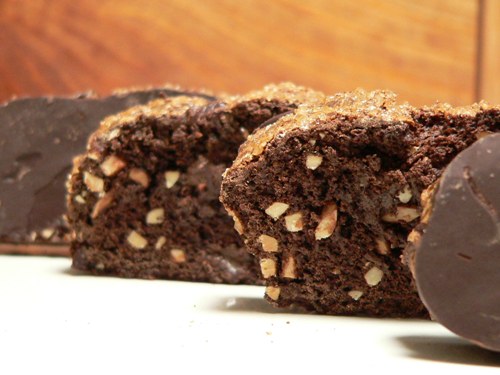
Last weekend, I baked a batch of David Lebovitz’ chocolate biscotti.  Actually, I attempted two batches, but owing to a bad case of brain fog, I omitted the sugar the first time and then burnt the almonds.  Attempt #2 was more successful. As these are one of my favourite cookies, it was well worth the effort!

. . . . .
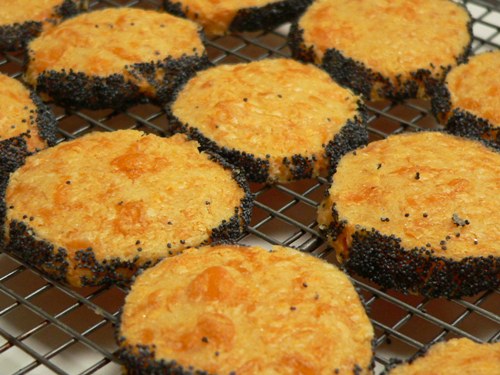
I also tried this new recipe by Dan Lepard for red Leicester cheese biscuits (cookies).  They were very easy to make and as my boys aren’t fans of caraway, I rolled them in poppy seeds. The entire batch was eaten that evening!

. . . . .
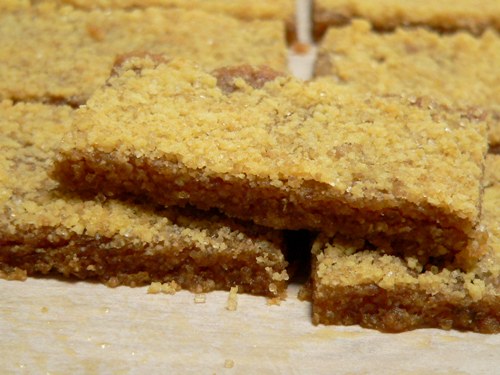
Finally, I made Jamie Oliver’s Ultimate Gingerbread – appealing because I was making shortbread cookies as a gift, and had a half batch of dough leftover.  The recipe appears in his book Cook with Jamie, and suggests using either homemade or shopbought shortbread as a starting point.  Here’s my take on the recipe…

  • 400g shortbread (I used cookies made with our shortbread freezer dough)
  • 170g raw or demerara sugar
  • 3 teaspoons ground ginger
  • 40g mixed peel (I used some Italian cedro)
  • 40g crystallised ginger
  • 70g plain (AP)  flour
  • pinch of baking powder
  • 40g treacle
  • 40g date molasses (original recipe specified golden syrup)
  • 70g unsalted butter

1. I began by baking a batch of unsugared shortbead cookies, although shop bought or other homemade shortbread should also work fine in this recipe.  Preheat the oven to 170C (340F) or 160C (320F) with fan.  Line a tray with parchment paper – I used my 23cm x 33cm (9″ x 13″) baking pan.
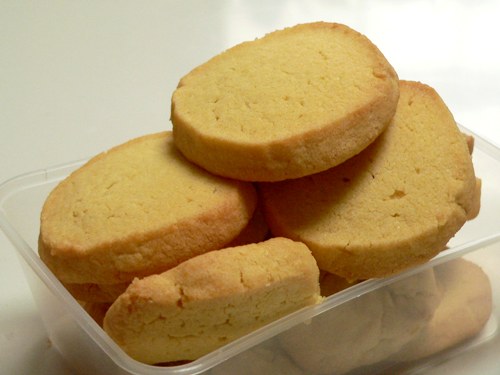
2. Blitz the cookies in a food processor with the sugar and two teaspoons of the ground ginger to form crumbs.  Remove 100g of the crumbs for later use.
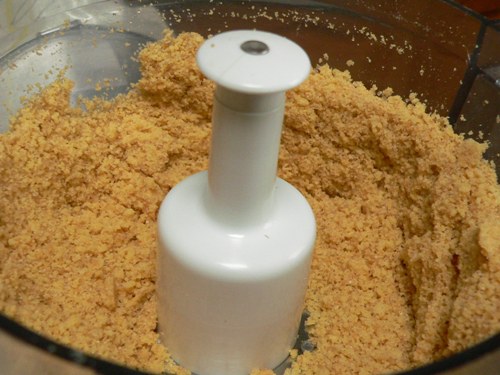
3. Chop the peel and crystallised ginger, then add them to the food processor with the flour, baking powder and the remaining teaspoon of ground ginger.  Pulse the mixture until well combined.
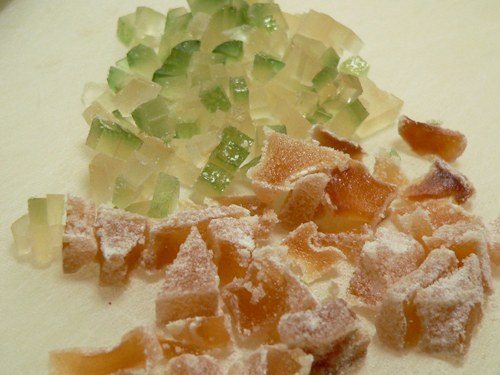
4.  In a big stock pot (it needs to be large enough to hold all the mixture), melt together the butter, treacle and date molasses (or golden syrup) and then add all the ingredients from the food processor (excluding the reserved crumbs) and stir really well to combine.

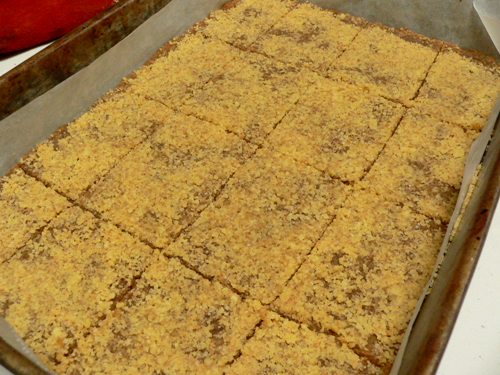
5. Scrape the gingerbread mixture into the lined baking pan and spread it out  evenly with a spatula or clean hands. It will be very flat and dense.  Bake in the preheated oven for 10 minutes.

6. Remove the pan from the oven and sprinkle the reserved crumbs evenly over the top.  Press down firmly on the crumbs with a spatula to stick them to the hot gingerbread.  Cut the gingerbread into serving size slices, then leave to cool completely in the pan before serving.

This recipe isn’t for everyone, but for true ginger aficionados, it’s a great treat with a cup of hot tea or coffee!

Click here for a printable version of this recipe


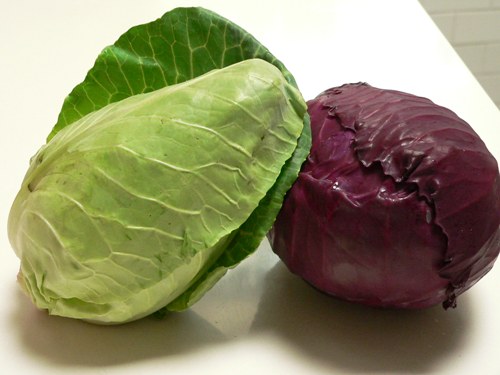
We harvested two baby cabbages from the backyard…

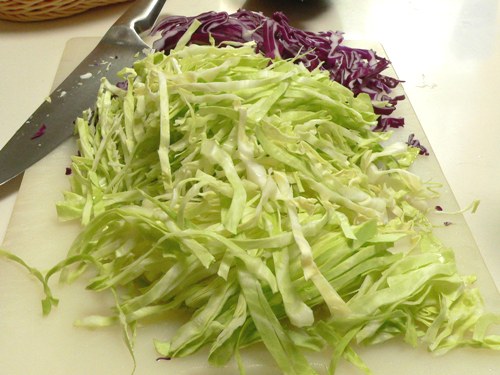
Finely sliced them…

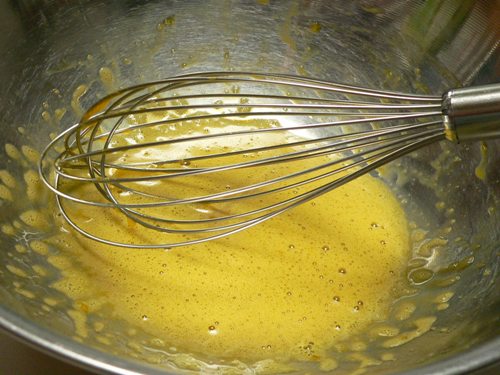
Whisked a freshly laid egg yolk with a tablespoon of white wine vinegar and a pinch of salt…

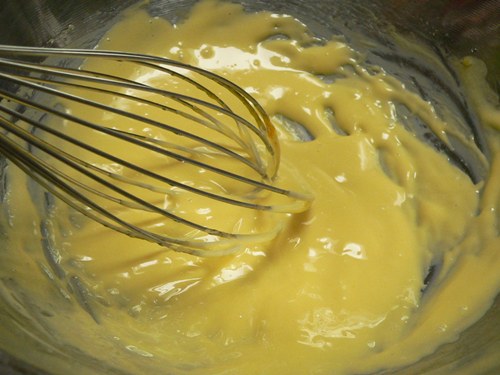
…before gradually adding grapeseed oil, a few drops at a time to begin with, and in slurps as the mixture thickened into a lush mayonnaise…

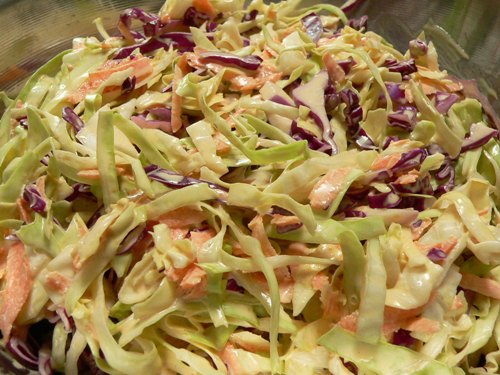
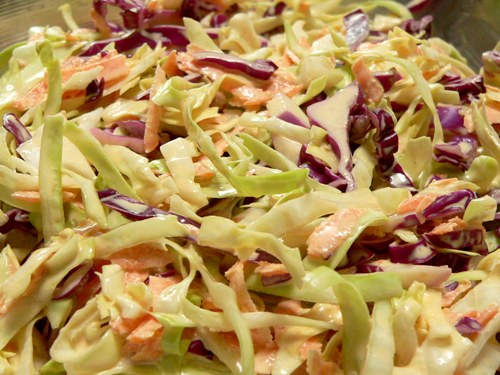
Then combined the cabbage, mayonnaise, a grated carrot and white balsamic vinegar together and seasoned with salt and pepper.  It was the lightest, freshest coleslaw we’d ever tasted!  Bliss!

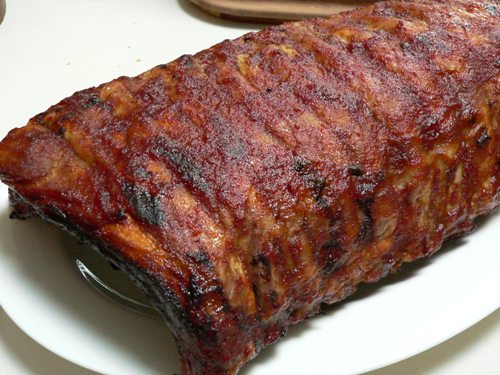
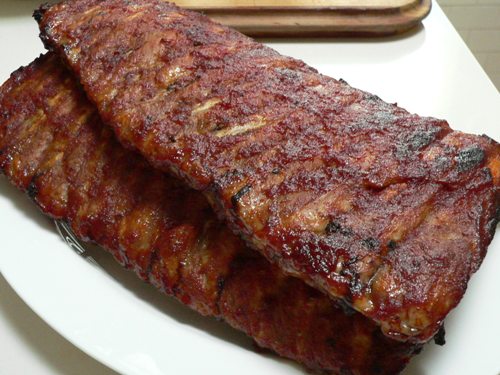
I’ve never roasted ribs in the oven before, but inspired by our recent meal at La Casa, I wanted to give it a go.

It’s usually hard to buy a full rack of American ribs (as they’re known here – I believe in the US they’re called “baby back ribs”).  They’re normally sold cut in half, but this time the gorgeous Mateja at Gojak Butchers in Haberfield had two large pieces in the coolroom.  I wanted a sweet, sticky sauce to cook these in and ended up concocting my own marinade:

  • ½ cup tomato ketchup (we used our homemade roasted version)
  • ¼ cup runny honey
  • 1 tablespoon (4 teaspoons) light soy
  • 1 tablespoon (4 teaspoons) Worcestershire sauce
  • 1 tablespoon (4 teaspoons) white wine vinegar

Quantities above are for a kilogram of ribs – I had two kilos, so I doubled the amounts above.

Generous spoonfuls of the marinade were rubbed over the pork an hour or so before baking, and the remainder was used to baste the meat as it roasted. We served them with potato wedges baked in duck fat.

Ribs and chips – Pete described the meal as homemade fast food!

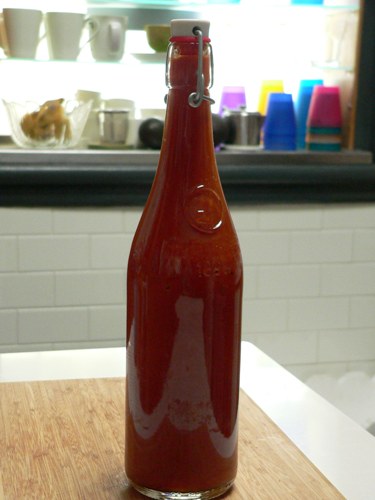
Have I convinced you to buy Pam Corbin’s Preserves book yet?  It’s a constant source of inspiration in our house, most recently for this fantastic roasted tomato ketchup.

The recipe is a little fiddly, but well worth the effort – we used up our first bottle so quickly that these photos were taken of our second batch!

Here is our version – modified from the original to suit the ingredients we had on hand and using our preferred method for roasting the tomatoes. There are two stages involved – the tomatoes are roasted and sieved to create a passata, which is then incorporated with other ingredients to form the ketchup.

We’ve also made a version of this using bottled passata rather than homemade, which makes the process very simple indeed.  It was different, but delicious nonetheless.

Passata

  • 2 – 3kg ripe Roma tomatoes, cut in half
  • 1 large onion, chopped
  • 2 cloves garlic, sliced
  • scattering of salt
  • olive oil

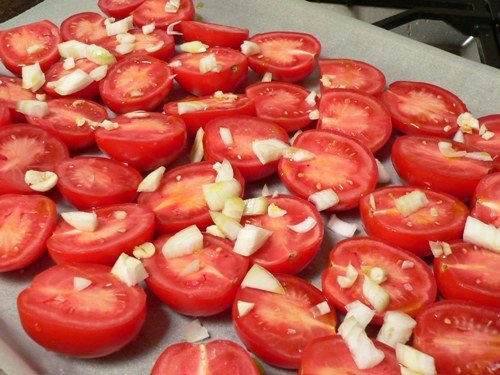
Preheat oven to 200C (400F) with fan. Lay the tomatoes on a parchment lined tray, and scatter over the chopped onion, garlic and salt.  Drizzle with olive oil and bake for 30 minutes, or until the tomatoes are well softened and just starting to blacken around the edges.

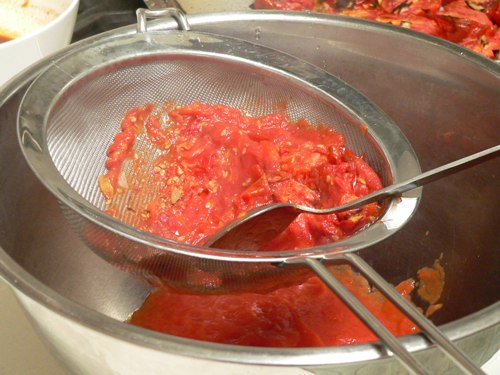
Now, either process the tomatoes through a food mill or tomato juicer, or push them through a sieve as I did.  Using a food mill will result in more juice, but I was too lazy to wash it up!

Roasted Tomato Ketchup

  • 1 litre roasted tomato passata (or you could use bottled passata)
  • 100ml white wine vinegar
  • 50ml lemon juice
  • ½ teaspoon fine sea salt
  • 1 heaped teaspoon dijon mustard
  • 1 teaspoon ground ginger
  • a few grinds of black pepper
  • ¼ teaspoon ground cloves
  • 100g brown sugar

1. In a heavy based pot, combine all the ingredients except the sugar and bring to a gentle simmer.  Then add the brown sugar and stir to dissolve, and continue to simmer gently for 20 – 30 minutes until the sauce reduces to a thick ketchup consistency (it will thicken a bit further as it cools). Taste for seasoning and adjust if necessary.

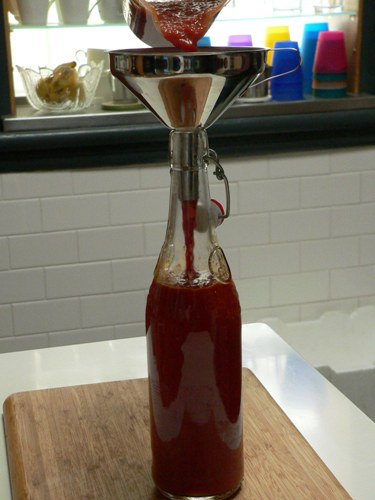
2. Pour into warm sterilised bottles, seal and store in the fridge.  Pam Corbin’s original recipe states that this will keep for up to four months.

This sauce is a surprisingly versatile ingredient to have in the fridge. It’s delicious on sausages and hamburgers, makes a great addition to curries, and we’ve also been using it in a roasted rib marinade (recipe to follow).  Best of all, it’s the perfect accompaniment to a bacon and egg sandwich!

Click here for a printable version of this recipe
Bobby the Builder and Uncle Steve (Pete’s brother) have been doing some maintenance work for us.  Hammering and sawing can be very tiring, and I wanted to bake them something nice for lunch.

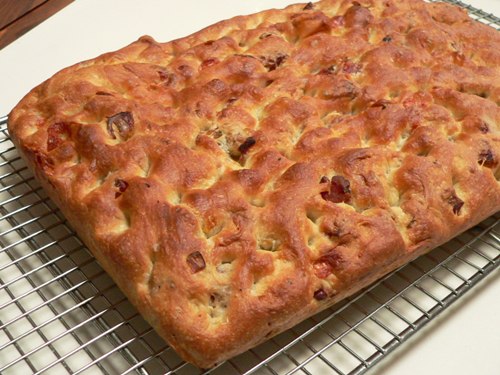
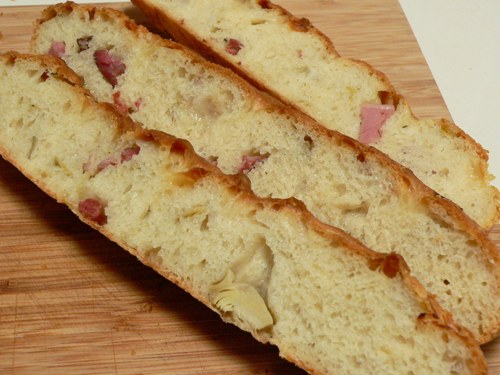
This flat loaf was dead easy to make, and I filled it with chunks of deli meats (I bought a bag of offcuts from Paesanella for $3), a little sheeps’ cheese and some marinated artichokes.  In the past I’ve also made this with olives and semi-dried tomatoes – anything that might sit comfortably on an antipasto platter would probably work well here.

  • 500g (31/3 cups) bakers flour
  • 10g (or 1 sachet) dried yeast
  • 7g (1 teaspoon) fine sea salt
  • 320g (11/3 cups) water
  • 50ml (10 teaspoons) extra virgin olive oil
  • assorted fillings, such as deli meats, pitted olives, semi-dried tomatoes, marinated artichokes and hard cheeses

1. In a large mixing bowl, whisk together the flour, salt and yeast.  Add the water and oil, then add the filling, cut up into pieces.  With a clean hand, squelch everything together to form a sticky dough.  Scrape off your hand, and cover the bowl with clingfilm.  Allow to rest for about half an hour.

2. Leaving the dough in the bowl, give it a brief knead (doing this in the bowl saves on cleaning up the bench later, and also contains all the inclusions, which tend to fly around otherwise when kneaded).  It should only take about 30 seconds for the dough to turn quite smooth.  Cover again and leave to rise until doubled – about an hour.

3. Line a roasting pan with parchment paper and scrape the risen dough into it.  Gently pat the dough out to fit evenly into the pan.  Cover and let it rest until it puffs up a little – about 20 minutes.  Preheat the oven to maximum.

4. Uncover the dough and drizzle with oil, then scatter a little salt over the top (not too much, as the fillings are already quite salty).  Push clean fingers through to the bottom of the dough – there are more detailed photos and a video of the process here.

5. Put the pan into the hot oven, lowering the temperature to 220C (430F) with fan and bake for 20 minutes, rotating the bread once during the baking time.

Easy!  Don’t get too caught up on the kneading – since the focaccia is a flatbread, it doesn’t really need to rise in the same way as a formed loaf might.  In this case, as with pizza, it doesn’t really matter if you don’t knead the dough much at all!