Feeds:
Posts
Comments

We’re frantically busy at the moment.

My mother has a lovely Hokkien expression for times like this –  pee kung bor hong – which literally translated means, “nose has no air”.  Or in other words, “too busy to breathe”.

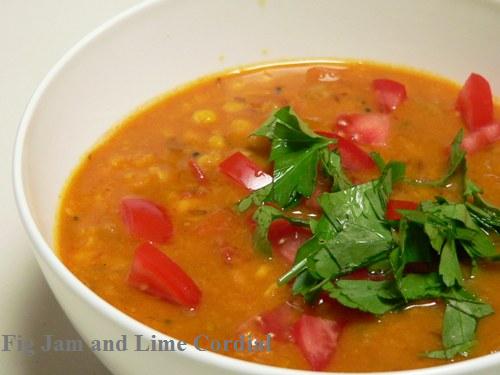
When things get hectic, I like to eat dhal, specifically chana dhal.  Not only do I adore the taste of it, but it has an amazingly low GI – between 5 and 11 – and I find it comforting and levelling during busy times.  I first read about it years ago on this website, and have been a big fan of the pulse ever since.

Today, I used it to cook up a large batch of Simon Bryant’s dhal soup recipe, which can be found here.  I’ll now stash the pot in the fridge, and dip into it for lunches over the next few days.  That’s one thing sorted, and I’m feeling better already!

A note to my friend Lisa who checks my blog every morning at 5.30am.
Li, you don’t want to read this post.  Trust me.
Dan, that goes for you too.
. . . . .

I’ve been on a quest!

It all started when Maude’s oldest daughter made kim chee, a traditional Korean cabbage pickle, and brought me some to taste (photo above).  This in turn led to a discussion about Korean pickles in general, and I thought it might be fun to explore the different varieties on offer.

So off I went, with my family chanting “Ni! Ni! Ni!” in the background (obscure Monty Python reference there), to the nearby suburb of Strathfield, enclave of Korean stores and food supplies.

Inside Strathfield Mall, I found a fascinating store, simply named Food World, selling all sorts of wonderful and bizarre pickled offerings…
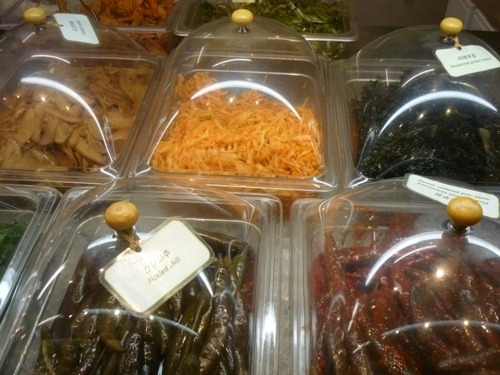
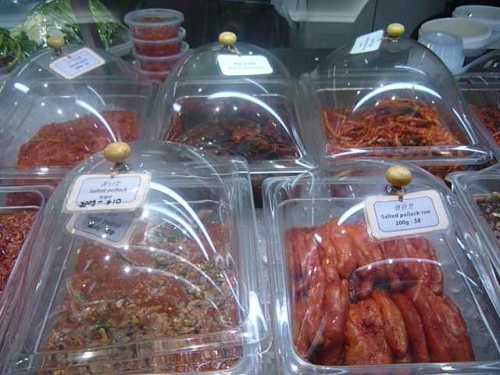
It was like uncovering treasure!  I bought a few samples to try, then went back and bought a few more.  These aren’t “pickles” as most of us know them – they’re unusual and spicy and, to me, very delicious.  Pete won’t go near them with a barge pole.

It’s difficult to discern from the photo above, but the offerings ranged from the more mundane seaweed pickles to pickled pollack tripe (raw fish stomach) and salted pollack roe (raw fish eggs).  I must admit the tripe wasn’t to my liking, but the others have been tasty and sooo interesting!

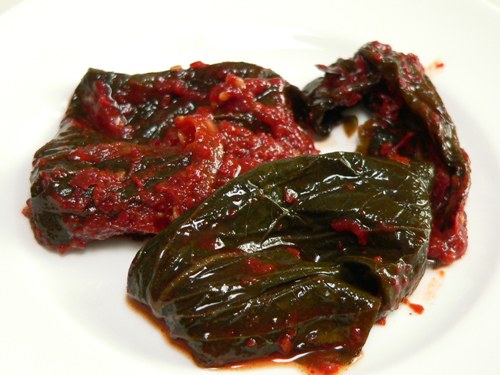
These sesame leaf pickles are in a hot red pepper sauce – each one unfolds like a large vine leaf.  Maude and I both found them a little salty…
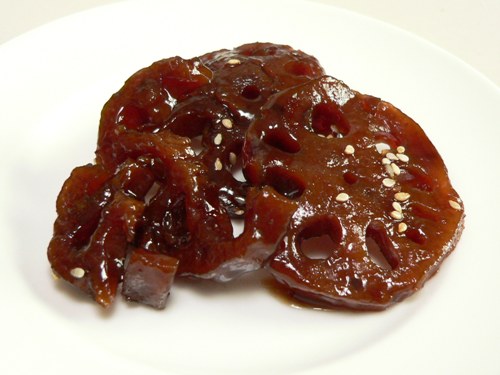
All the pickles seemed to be either hot and spicy, or sweet – these lotus root pickles, dusted in sesame seed, were the latter…
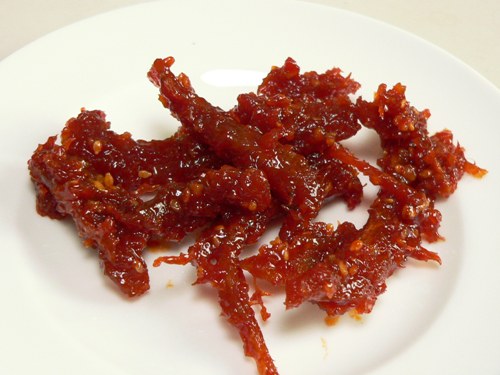
Spicy dried pollack in red pepper paste and sesame was chewy in a beef jerky kind of way…
An interesting duo here – both were hot and crunchy! On the left is bamboo flower root, and on the right is radish pickle..

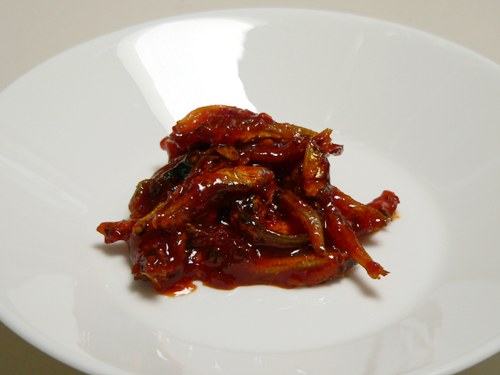
My very favourite of them all – a hot and spicy dried anchovy pickle in red pepper sauce – just the best thing on a bowl of steamed rice!
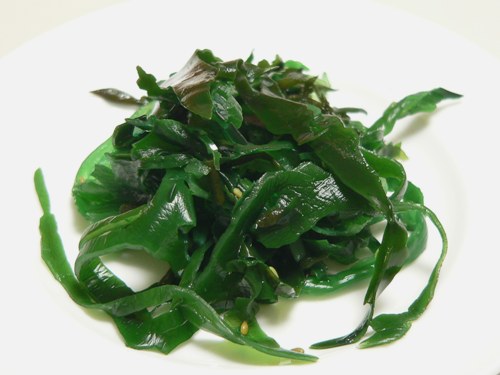
The almost fluorescent green of this seaweed pickle made me wonder if it had been artificially coloured…
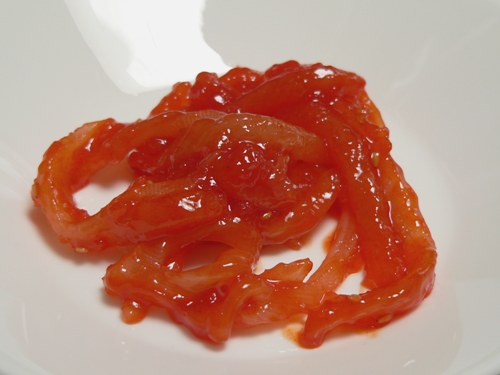
Finally, another one of my favourites, raw squid pickle.  It’s chewy (in an edible rubber band kind of way), hot and very moreish.  Pete, however, refused to be in the same room when I was eating this…
I love trying new flavours, and these were certainly different from anything I’d tasted before, although I do apologise if I’ve grossed anyone out too much. For what it’s worth, Pete’s on your side.

Pete: “I’m not giving you a kiss unless you’ve drunk a bottle of mouthwash”

Me: “You can’t say that, you took a vow to smooch me!”

Pete: “I didn’t take a vow to kiss a squid-mouth!”

Sigh…at least Maude was willing to taste these with me!
UK baker Dan Lepard maintains that when yeast, flour and water are combined, the resultant dough will rise, regardless of whether it’s kneaded or not.  This process is known as autolysing.

I decided to test this theory out on a batch of pizza dough we made yesterday.

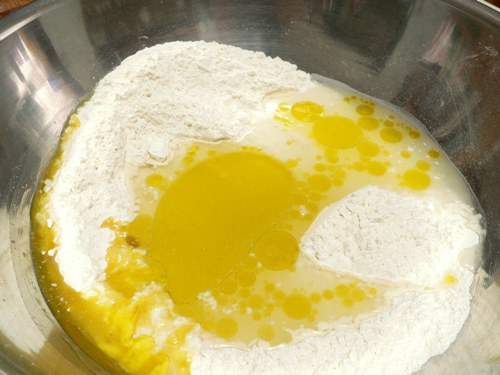
Into a large mixing bowl went my usual ingredients:

  • 500g bakers flour
  • 10g dried yeast
  • 7g fine sea salt
  • 320g water
  • 50g extra virgin olive oil

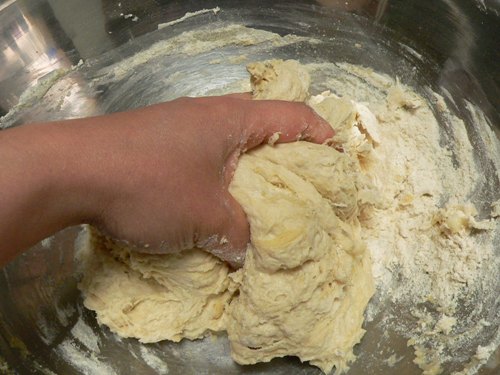
I squelched these together until all the dry ingredients were moistened…

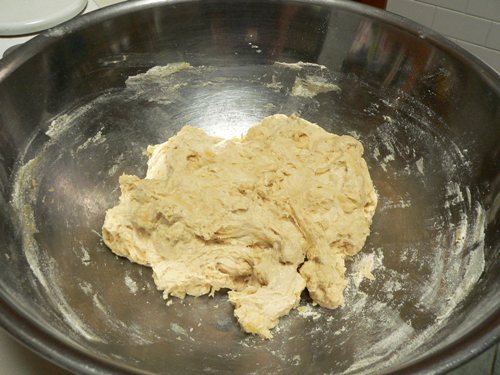
The mixed but unkneaded dough was left in the mixing bowl, covered with cling film…

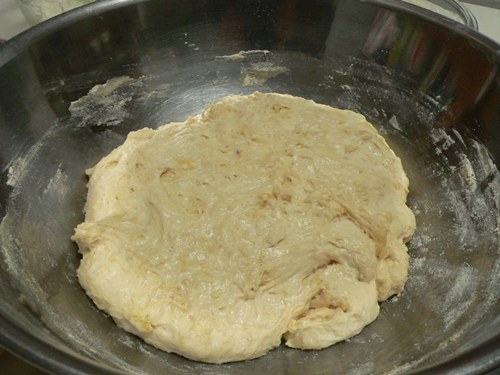
Here it is after an hour…

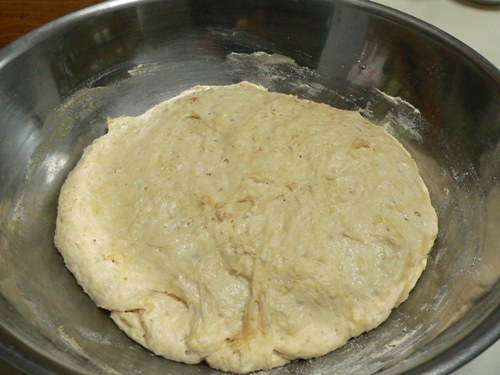
…and at the two hour mark…

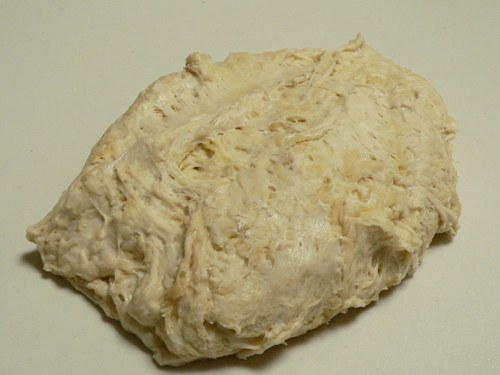
I scraped the risen dough onto the bench…

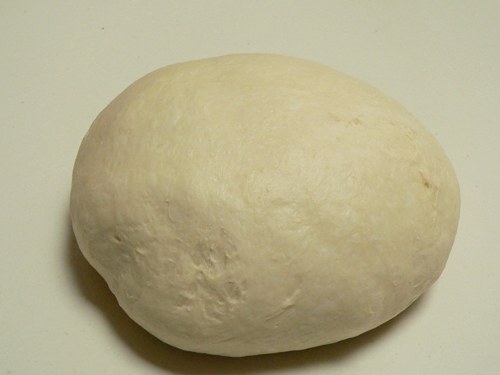
…and gave it ten folds, no more, which was enough to turn it into this…

The dough was divided into four, shaped into balls and rested for a further half hour before shaping and baking.

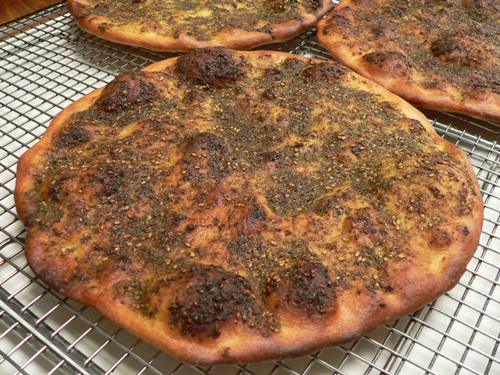
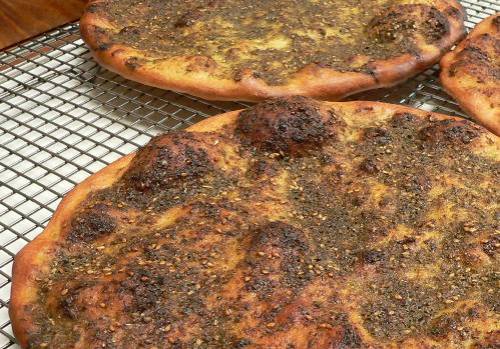
We made four man’oushe – Small Man’s favourite – and the delicious pizzas came out of the oven with large air pockets, a sign that the yeast was active and doing its job.

The whole process took longer than usual (I allowed the dough to bulk prove for two hours, whereas I would normally leave it for less than one), but the end results were no different to our regular pizzas.

Is it necessary to knead dough?  In this case, it would appear not!

Hope you’re all having a wonderful weekend!

In my kitchen…

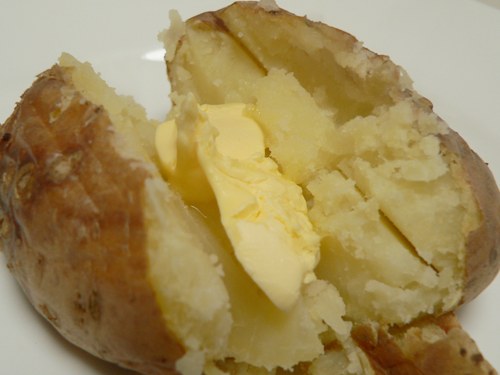
…are a kilo of spunta potatoes.  We’re planning to grow this variety, so we bought a kilo at the markets to try them.

The spuntas are white skinned with yellow, floury flesh.  To ensure a fair taste test, I pricked the skins and dry-roasted them in a hot oven.  They were absolutely delicious with a little butter and salt…

In my kitchen…

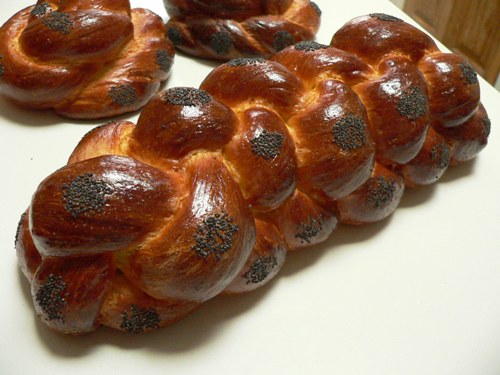
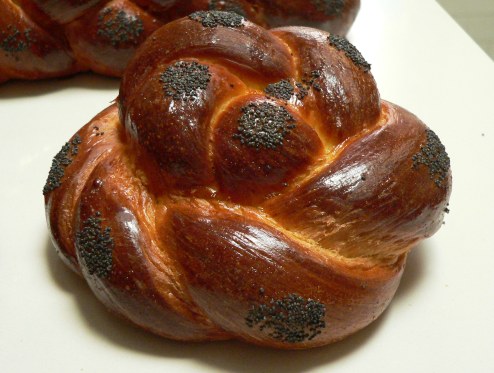
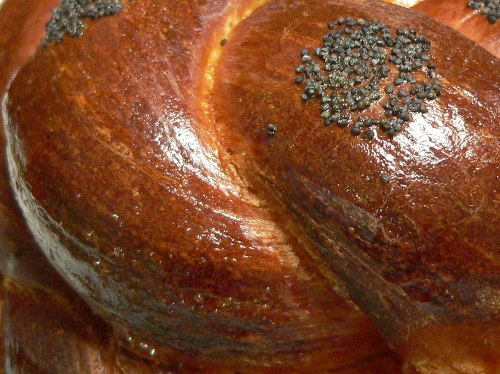
…are challah loaves, my contribution to the Mellow Bakers’ October bake-off.  This Jeffrey Hamelman recipe uses two whole eggs and four egg yolks, resulting in a golden crumb.  In addition, eggwashing the crust gave it an amazing glow – as Joanna pointed out, it’s a little reminiscent of polished antique wood!

In my kitchen…

…are two bone china mugs from the new Maxwell & Williams Kimono range, bought for my mother’s birthday.  Bone china used to be prohibitively expensive, but in recent years the price has dropped dramatically, and these gorgeous, dishwasher-safe mugs were just a tiny $10 each…

In my kitchen…

…are thick steaks being salted, according to a method taught on the Steamy Kitchen blog.  Don’t worry – the salt doesn’t stay on the steaks; it’s there to draw liquid out of the meat to ensure a tender finished dish.  It works well too, although it’s important to ensure the salt doesn’t stay on too long, or the meat becomes quite salty (even though it’s washed off after an hour)…

In my kitchen…

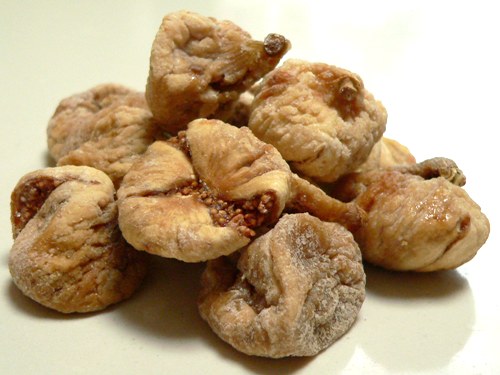
…are Syrian figs – a new discovery for us.  We love figs, but we’ve mainly used Turkish or Persian (the little wild ones) until now.  These Syrian figs are sun-dried, smaller than their Turkish counterparts, and very sweet.  Perfect for eating straight!

In my kitchen…

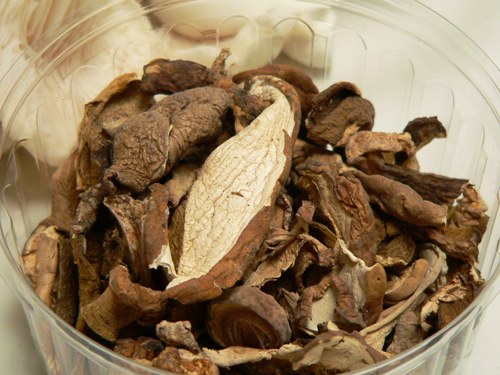
…are treasures from Roula and Mary’s stall at Flemington Markets.  Below are baby king browns, oyster mushrooms, and fresh shitake from Korea.  Roula also gave me a container of magnificent dried porcini – when I lifted the lid to take a photo, the aroma filled the whole kitchen!

Tell me, what’s happening in your kitchen this month?