Feeds:
Posts
Comments

I made these delicious cardamom and cinnamon owl rolls from a recipe on Joanna’s blog.

They’re light, briochey and very cute.  The original post is here, and I promised Jo that I’d put some photos up to try and explain the unusual shaping instructions.

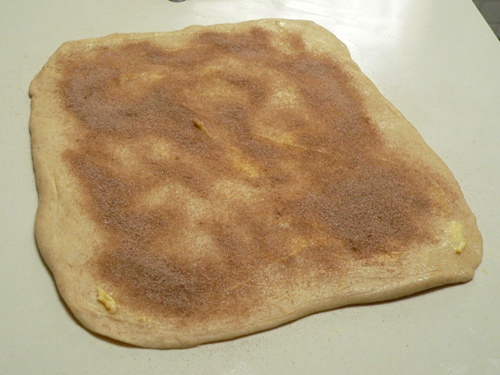
Work each piece of dough into a rectangle, then smear it with butter and sprinkle over the combined cinnamon and sugar (the cardamom is mixed into the dough itself).  Roll it up tightly longways, so that you get a long thin roll, rather than a short, fat one.
Cut each log into triangles as shown…
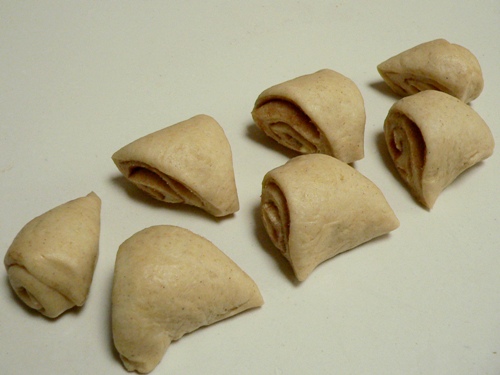
Stand each little pyramid on its base…
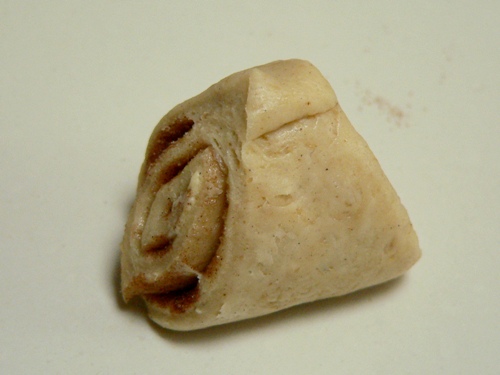
…and give it a good squish to flatten it out…

Most of the rolls ended up looking like cute little owls’  heads…

…but this one reminded me of a curled up echidna!

The combination of spices gives the rolls a subtle, exotic flavour and the use of plain flour results in a soft, almost delicate crumb.  Pete and Big Boy loved these!

Edit: for those unfamiliar with the echidna, it’s an unusual Australian native, one of only two monotremes (mammals that lay eggs rather than birthing live young, the other being the platypus).  It’s an Aussie icon, and its image graces our 5c coin.  Do take a look at the Wikipedia article – the echidna has some interesting physical characteristics (not the least of which is a four-headed reproductive organ!).

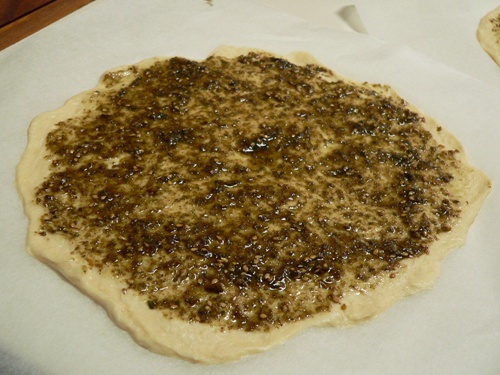
Easy and very delicious, man’oushe is a traditional Lebanese breakfast of flatbread topped with za’atar (thyme, sumac, salt and sesame seeds).  It’s often served folded into three and filled with chopped tomato, onion and olives.

I made these from a half batch of our pizza base recipe, rolling the dough into four thin small circles, and topping them with a mixture of olive oil and za’atar (which I purchased at the markets from the spice stall).  They were then baked in a hot oven to golden brown.

Small Man ate three of these in one sitting, so it’s definitely something we’ll make again!

Edit: a recipe for za’atar for those who can’t buy it premixed.  This comes from Spice Notes by Ian Hemphill, owner of Herbie’s Spices:

  • 3 tsp dried thyme leaves, crushed but not powdered in a pestle and mortar
  • 1 tsp sumac
  • ½ tsp toasted sesame seeds
  • ¼ tsp salt

Blend all the above together and mix with olive oil before spreading.

Who would have thought that rotting fruit could make such a beautiful jelly?

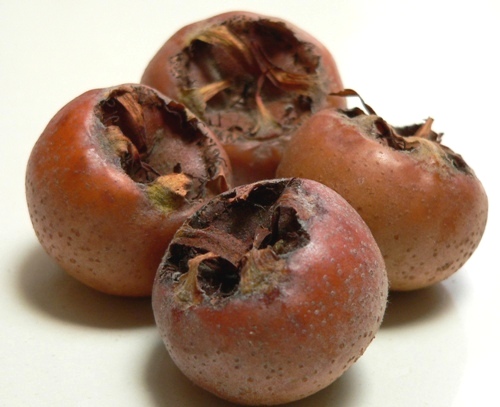
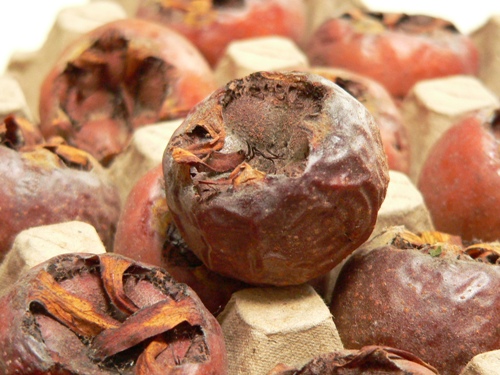
Pete made four jars from the medlars Diana bought us recently.  We let them blet for a couple of weeks, during which time they went from this…

to this…

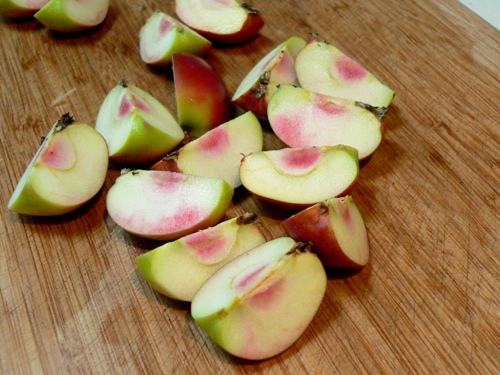
We followed this recipe of Hugh Fearnley Whittingstall’s, but also added a jar of homemade pectin, as the jelly was struggling to set up.  It was the perfect opportunity to use our baby crabapples, although we only had four, so we added some Pink Lady apples as well.  The crabapples had the most gorgeous rosy centres…

The jelly is a deep orangey-red, crystal clear and well set. We’re looking forward to trying it with roast lamb!

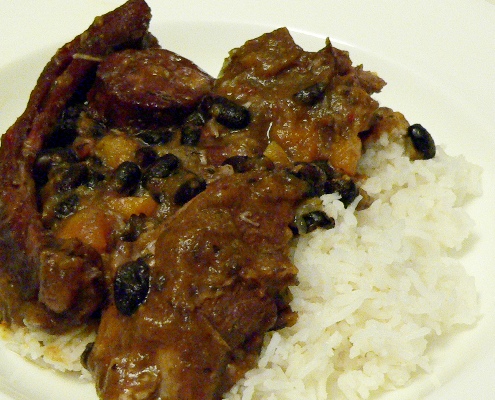
While dining at Gloria’s Portuguese restaurant recently, Pete and I tried a wonderful traditional dish known as feijoada.  It was a rich smoky combination of fresh and salted meats, slow-cooked with beans.

I was keen to try making it at home, but most of the recipes I found online were for Brazilian feijoada, which is apparently quite different to the Portuguese version.  In the end I settled on this recipe and adapted it to the ingredients I could find locally.  It was a roaring success, with the boys asking me to make it again as they were eating it!

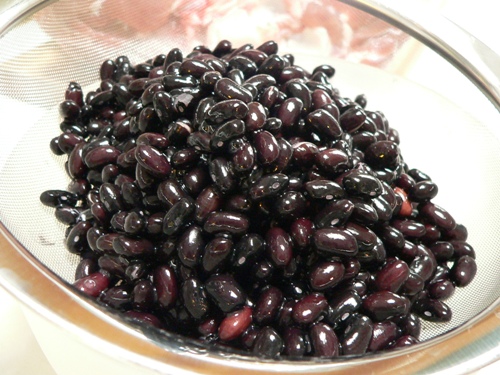
  • 1 cup black beans, soaked overnight
  • 1 can beans, drained and rinsed (kidney beans would be good, I used butter beans)
  • 2 bay leaves
  • 2 crushed cloves garlic
  • 1 tomato, chopped
  • 3 onions, finely chopped
  • handful fresh parsley, chopped
  • 3 carrots, peeled and finely chopped
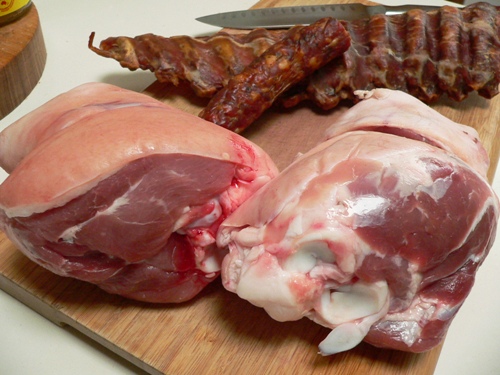
  • 1 chorizo, sliced
  • 1 rack smoked ribs, cut into riblets
  • 2 pork hocks, rind removed
  • vegetable oil
  • 1 cup tomato passata
  • salt and pepper (optional)

Note: the original recipe quite charmingly advises to use “Assorted meat of personal choice (universally it is pork knee, pork sausage and salted dry beef)” . I think some smoked or cured meat is required to give the dish its unique flavour.

Also, I only added canned beans because I felt halfway through that the dish needed more beans.  When I make this again, I’ll double the quantity of dried black beans and omit the tinned.

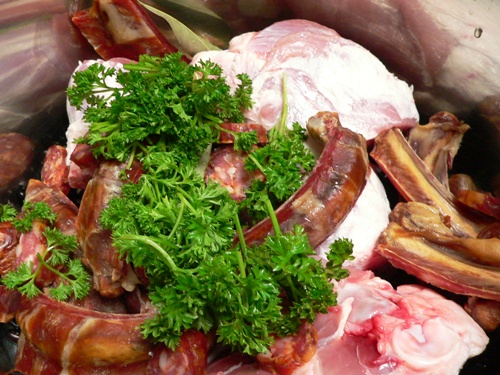
1. Drain the black beans and put them into a large stock pot.  Add the meat, bay leaves and parsley.  Add enough water to generously cover the meat, then put the lid on and bring the pot to a boil.  Reduce the heat and simmer very gently for a couple of hours.

2. In a separate pan, heat the oil and fry the onion, garlic, carrots and fresh tomato until soft.   Ladle some liquid and softened black beans from the stockpot  into the fry pan and mash the vegetables and beans together. Pour this all back into the stock pot, along with the drained canned beans (optional) and tomato passata.  Continue cooking for at least an hour longer, or until the pork is tender and falling off the bone.  Taste and adjust for seasoning (I didn’t have to add anything).

3.  Accompany this with steamed rice, napping the meat with extra sauce before serving.

This is the first time I’ve tried to make feijoada, and I’m certainly not holding this recipe up as authoritative.  It’s really more a record of our attempt. If you have any tips on how we can improve our version or make it more authentic, please let me know!

I’d like to make a case for owning a dedicated freezer.  Somewhat outrageously, we have two, but that’s only because Pete keeps refusing to build me a coolroom.

Yes, it does cost us extra electricity to run the freezers, but they save us a fortune.  Plus we switched over to 100% green energy a couple of years ago, so I’m feeling a little less angst-ridden about our consumption now.

What the freezer does is this: it enables us to process more of our food at home.  So in mid-winter, we can have home-frozen plums to use in a dessert, rather than having to purchase tinned ones.   And when roma tomatoes are out of season, we’ll still be eating homemade passata, made when they were just $1/kilo.

We store all our bread and flour in the second freezer, and because we’re able to do that, we haven’t had to buy a loaf for over three years.  I once calculated that we save about $40 a week on sourdough by baking our own.  Over 156 weeks, that comes to $6,240!  Even if we were only buying supermarket bread, we would still have saved nearly $4,000.  And that’s just the saving on bread alone!

Here are some of the other things we freeze:

  • we buy fresh garlic in bulk from Diana and Ian, and freeze it broken into unpeeled cloves.  It lasts well in the fridge for ages.
  • when stone fruit are in season,  we buy it in boxes.  We eat some, jam some and freeze the rest, cut in half and stoned, vacuum sealed.  Then in the depths of winter, we can make an apricot slice, or another batch of plum jam.
  • baked goods always freeze well, and at any given time, our freezer is packed with cookies, meringues, leftover cakes (for trifle) and various other sweet treats.  We also keep rolls of cookie dough, ready to bake for an instant dessert as needed.
  • frozen berries – we keep raspberries, boysenberries, strawberries, blueberries and cherries in the freezer.  Most of these we buy frozen in bulk, but the strawberries and cherries are purchased from the markets when they’re in season and washed and frozen.  This is where the freezer really comes into its own – being able to store and extend the life of seasonal produce.
  • we keep an entire freezer drawer full of tomato passata.  Pete will now only make it when roma tomatoes are in season, and we freeze it in small takeaway containers.  As we eat a lot of Italian food, we’ll go through several tubs every week.
  • precooked meals and sauces – when we have time, we’ll make a double batch of bolognese sauce, or chicken curry.  There’s also a healthy supply of pesto, frozen in little ziplock bags. Having these tucked away in the freezer means we’re less likely to order takeaway when we’re tired and exhausted.
  • juice and rind -we buy a box each of lemons and limes once a year, squeeze them all and grate the rind, then freeze the lot.  The juice is stored in ice-cube bags (trays would work as well) and the frozen rind keeps brilliantly in a small tub, from which it can be scooped out as needed for cakes and desserts.

If you have any suggestions for things I can add to this list, please let me know.  There’s always room to squeeze a little more into the freezer…

Click here for more Frugal Living posts