Feeds:
Posts
Comments

You know what?  I’d never stuffed a chicken before.

As I’ve mentioned previously, my Chinese mother used her oven for storing plates, so we never had roasts or homemade cakes.  That certainly isn’t a complaint, as mum more than made up for it with the most amazing meals.  But a roast chicken, well, it just wasn’t culturally congruous.

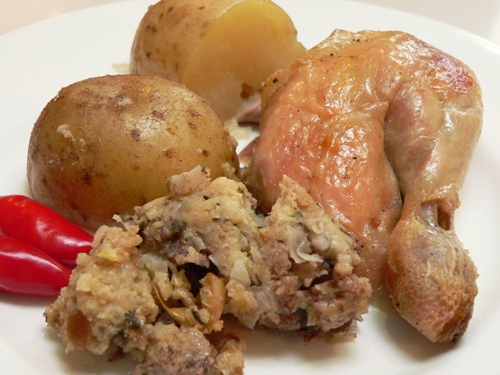
So despite my friend Ellen’s misgivings (“you can’t blog about stuffing a chook!”), here is my first attempt. We roasted the chicken in our Römertopf baker and, as always, were completely delighted with the results.

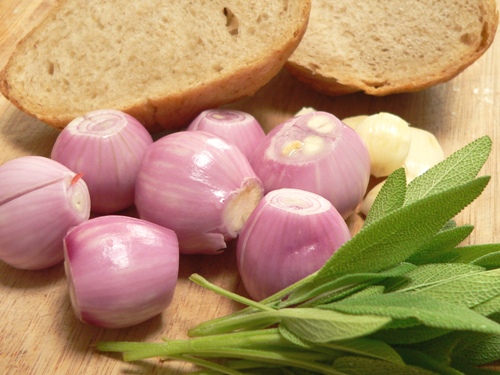
Ingredients: shallots (you could use onions, I just had these on hand), organic garlic, fresh sage leaves from the garden and leftover sourdough bread…and an egg.
1. Soak the clay pot in a sink full of cold water for at least 15 minutes. Tear the bread into large pieces and food process into large crumbs.

2. Chop the shallots and garlic, then fry them briefly in a little oil to soften.  Add them to the breadcrumbs, finely chopped sage and egg, and mix the stuffing together to form a moist paste.  Season with a little salt and pepper. You might need to squelch it together with a clean hand.
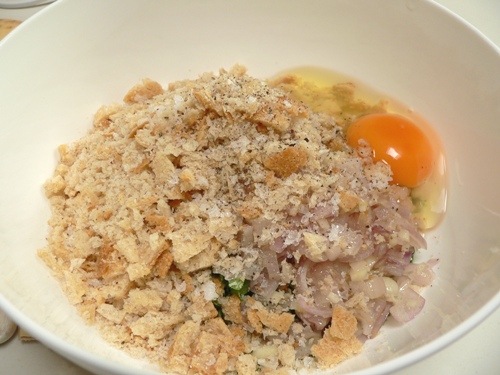
3. Loosely stuff the cavity of a prepared chicken – ours was a large free-range bird, weighing in at about 1.6kg.

4.  Lay scrubbed and halved potatoes over the base of the presoaked baker. Scatter over some extra garlic cloves and any leftover stuffing.

5. Remove any excess fat, then rub the chicken all over with a little olive oil,  a little caramelised balsamic vinegar (optional), salt and freshly ground black pepper. Sit it breast side down on top of the potatoes.  You might need to adjust the spuds a bit, depending on the size of your bird.  The nice thing about the clay baker is that you really only need to add the tiniest bit of oil – the chicken will mostly baste in its own juices, flavouring the other ingredients as it does so.

Note that the potatoes will boil and bake in the rendered fat and juices, so don’t be surprised if there’s a lot of liquid at the base after the chicken is cooked.  And don’t panic, it’s not all fat, most of it is chicken stock which hasn’t evaporated because the pot is sealed.  Just lift the cooked potatoes out with a slotted spoon at the end.
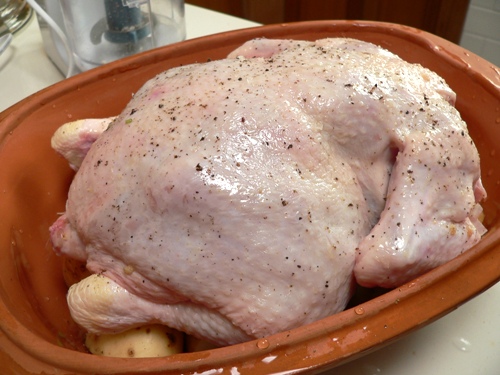
6. Put the lid on the clay baker, and place it into a cold oven.  Turn the temperature to 200C with fan and allow the pot to bake for one and a half hours.  Remove the lid and allow it to roast for another half an hour or until golden brown and cooked through.
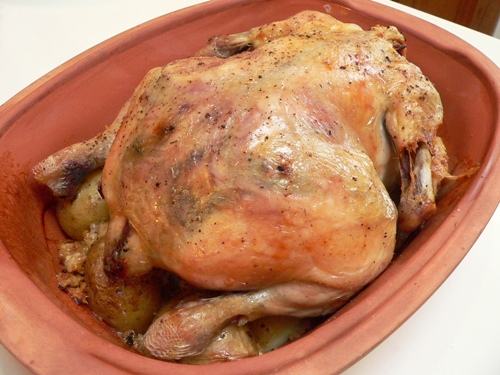
One roast chicken comfortably feeds all four of us, with nothing left over. Small Man eats the drumsticks and wings, Big Boy eats the thighs and a little of the breast meat, Pete eats the rest of the breast and I get the wonderfully bony backbone with all the bits of offal stuck to it!

During a recent freezer cleanout, I uncovered two packets of frozen giant marshmallows.

I turned one packet into marshmallow cookies – a favourite of Big Boy and his friends, although this time they were reasonably sized rather than ludicrous, as I had the foresight to cut the white pillows in half before encasing them in chocolate cookie dough.

Feeling lazy, I decided to try and make a slab with the remaining packet (wrapping dough around 25 marshmallow pieces had taken a looong time).

I made the same dough again, albeit with fewer added choc chips, and worked a thin layer over the bottom of a lined tray.  I topped this with whole marshmallows, and then tried to mould the remaining batter over the top.

The dough was very stiff, and in the end, it was just as fiddly as making the cookies (sigh) but the  result was this slightly mad bumpy terrain of marshmallow filled hills.  I had to stop Pete, who thought he could break them apart “like scones”.  (Edit: I think I’ll rename this dish Sheep in a Blanket.)

My mother always told me not to play with my food, but I don’t think she ever realised how much fun it could be!

In my kitchen…

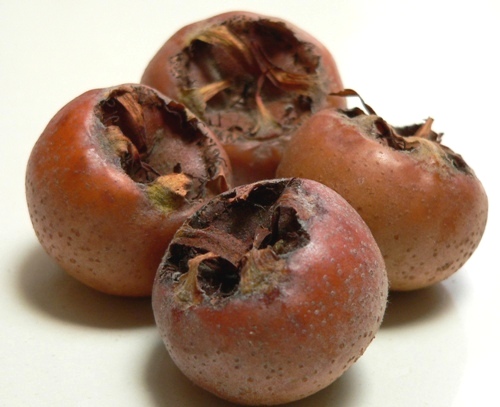
…are these medlars – an unusual fruit which Diana bought me from the Oberon markets. Known unflatteringly as “monkey’s bums”, these need to be bletted – allowed to rot – before eating.  During that time the inside of the fruit turns mushy and sweet, a bit like a cooked quince.  Or at least that’s what Pete tells me, because I can’t bring myself to taste rotting fruit.  But we will be turning it into medlar jelly, which I’m told is most fine…

In my kitchen…

…is this beautiful bone china mug, a gift from our friends Chris and Andrea.  It was impossible to capture how gorgeous this really is – the blue has a metallic sheen to it that’s lost in the photo.  It’s part of the Maxwell & Williams Pink Ribbon range…

In my kitchen…

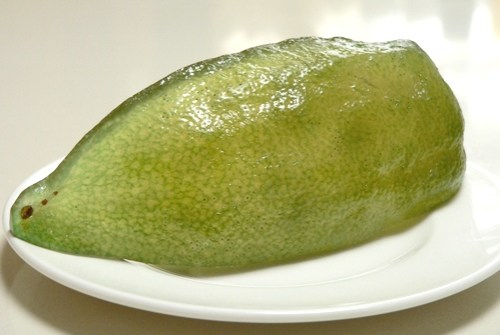
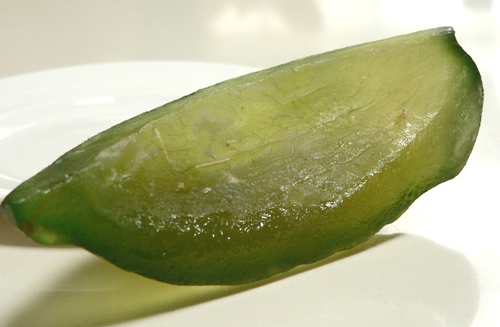
…I have a wedge of cedro, candied peel from Italy.  I’d never seen anything like it, so I couldn’t resist picking up a slice when I was in the cheese shop last weekend.  A cedro is a large citrus fruit, similar to a giant lemon, with a very thick pith.  The candied version is quite sweet, and commonly used in panettone and Italian desserts.

In my kitchen…

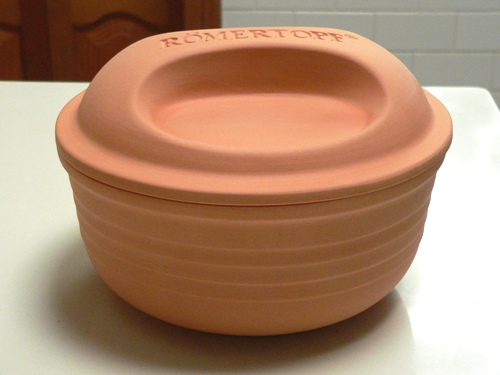
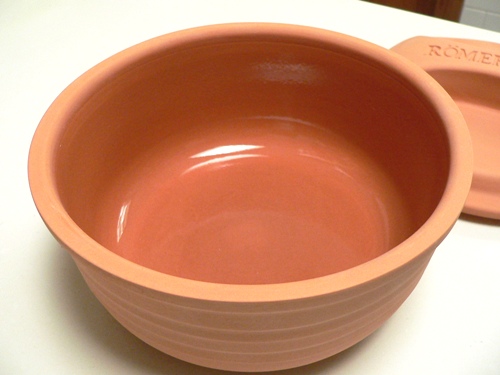
…is this new baby Römertopf!  I was so excited to see this come up for sale at Peters of Kensington recently.  It’s 23cm in diameter, and has the same glazed interior as its larger sibling, making it perfect for smaller meals or vegetables.  Given that we use our large clay baker at least once a week, the $22 spent on this smaller version is sure to be a good investment…

In my kitchen…

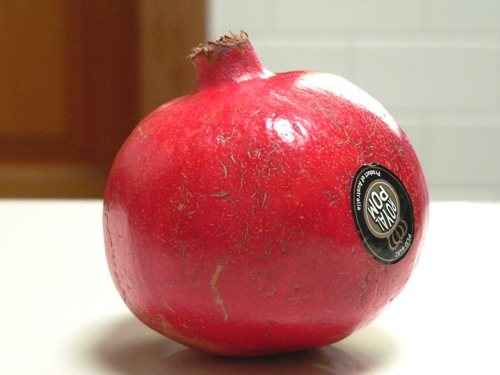
…is this ruby red pomegranate.  When I mentioned to the Spice Girl that I’d entered a contest on Lorraine’s blog to win some of these, she arrived at my door with a glossy red globe in hand (I’ve actually won the giveaway too, thanks NQN!).  I realise that I’m probably the last person in Australia to try a pomegranate. The little seeds resemble glowing red corn kernels, each bursting with sweet juice.

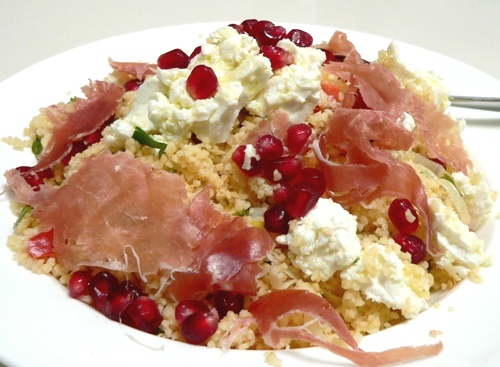
I managed to snap a photo of Big Boy’s lunch before he wolfed it – tabbouleh salad, topped with marinated feta, San Daniele prosciutto and pomegranate seeds…

In my kitchen…

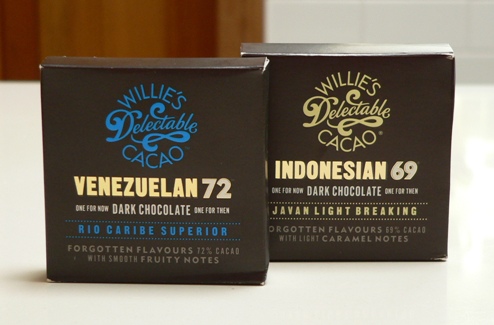
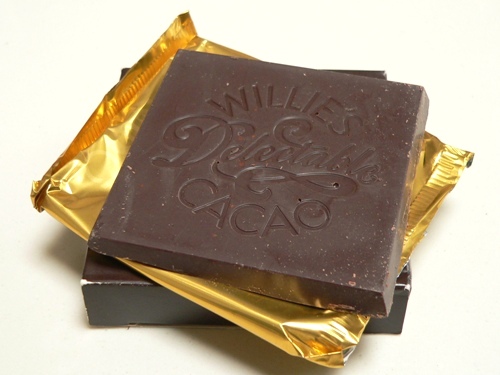
…are these blocks of Willie’s Cacao chocolate, a gift from Gillian at Some Say Cacao.  The chocolate is delicious and very distinctive, with a raw, earthy tone quite different from the brands we’re used to.  We’ve been savouring it in small pieces!

So tell me, what’s happening in your kitchen this month?

Oh, these are so delicious.

Loathe to waste the six egg yolks leftover from our Mother’s Day pavlova, I used them to make two batches of our shortbread freezer cookie dough. I froze seven of the eight logs, but left one in the fridge to experiment with.

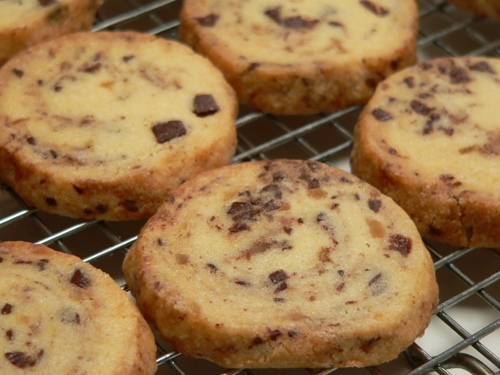
The following morning, I let the roll come to room temperature, then kneaded some very finely chopped crystallised ginger and bake-stable chocolate pieces into the dough.  I tried to make the inclusions as small as possible, to allow for a cleanly sliced cookie.  The dough was then reshaped into a log and popped back into the fridge to firm up, before slicing and baking in a 160C (fan) oven for 18 minutes.

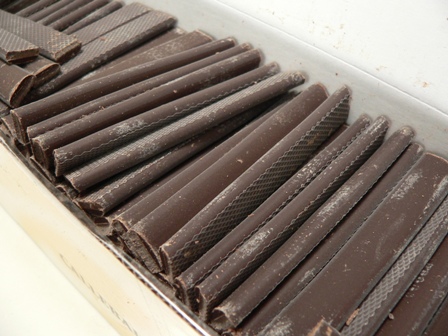
The end result is a moreishly crisp shortbread, with distinguishable bursts of flavour.  The bake-stable chocolate – the Callebaut baking sticks shown below – hold their shape in the oven, and as a result the cookies kept their variegated appearance, rather than being dotted with oozing melted chocolate chunks (which is usually a good thing, but not what I wanted in this case).

If you haven’t tried the shortbread cookie dough, I hope you’ll give it a go.  The original post  is here, and I’ve updated it to include cup measures and a printable version.

The shortbread is quite easy to make, providing you have a large mixer, and the frozen logs are a useful standby to keep in the freezer.  The dough is endlessly adaptable and makes a fantastic emergency gift or treat – you can have freshly baked cookies on the table within half an hour!

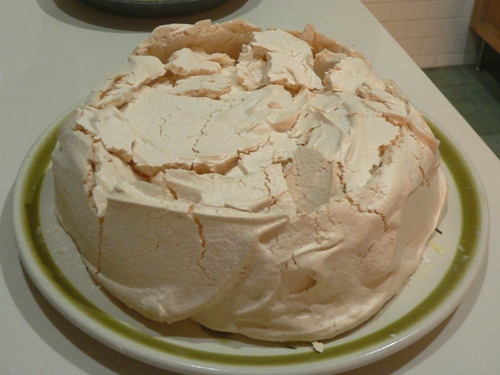
Pavlova is my mum’s all-time favourite dessert, so I made her this one for Mother’s Day.

The recipe comes from Maureen Simpson’s Australian Cuisine and it has never let me down. The book offers three variations – this one is baked on a plate, eliminating the need to flip the finished pavlova over, although why anyone would want to do that is beyond me. It produces a lovely crisp exterior with a thick marshmallow centre – just the way my mum likes it!

  • 6 egg whites (as fresh as possible)
  • good pinch of salt
  • 1½ cups (330g) castor (superfine) sugar
  • 1½ teaspoons white vinegar
  • 1½ level tablespoons (6 teaspoons/20g) cornflour (cornstarch), plus extra for dusting the plate
  • 1 teaspoon vanilla extract (I used homemade)
  • lightly sweetened whipped cream for topping
  • fruit – we used kiwi fruit, passionfruit and frozen berries

1. Preheat the oven to 200C (400F) with fan.  Grease a large baking plate with butter, dust with cornflour and tap away the excess.  You could also bake this on a tray, lined with greased and floured parchment paper, providing you’re happy to serve it with the paper intact.

2. Beat the egg whites and salt until stiff, then add the sugar one large spoonful at a time until fully incorporated.  The meringue should be thick and shiny.  Gently stir in the vinegar, sifted cornflour and vanilla.

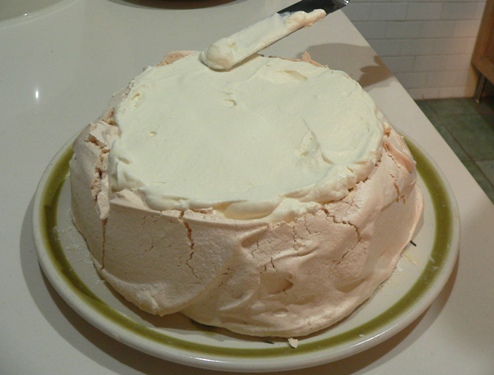
3. Pile the meringue onto the prepared plate, ensuring that it is at least 6cm (2½”) high (this will ensure a good marshmallow core).  With a spatula, try to slope the sides inwards towards the centre.  Make sure you leave room for the pavlova to expand as it bakes.

4. Drop the oven temperature to 110C (230F) with fan before placing the pavlova in the oven.  Bake for 1½ – 1¾ hours.   Allow the pavlova to cool in the oven, with the door slightly ajar.

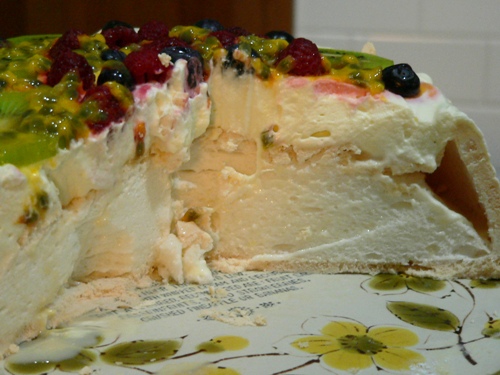
5. The pavlova will probably crack on top as it cools, revealing a thick marshmallow centre.  Don’t fret about it being broken, it will all be covered with cream anyway!

6. Top the pavlova less than an hour before serving. With a sharp knife, cut  carefully around the top of the pavlova to allow the broken bits to drop down onto the marshmallow centre.  Try and keep the sides intact.  I know it looks like a disaster at this point, but truly, it’s fine!

7. Cover up the top with whipped cream and artistically positioned fruit.  The Aussie tradition is to use strawberries, bananas and passionfruit, but we’ve gone for kiwi fruit and mixed frozen berries instead.

The end result is a thick, marshmallowy pavlova that isn’t overly sweet.  I managed to sneak this photo in before mum took the leftovers home!

Click here for a printable version of this recipe

. . . . .

Addendum: as Maureen Simpson’s wonderful book is now sadly out of print, I thought for completeness I’d also give you the quantities for the other two pavlova recipes in Australian Cuisine.

The methodology is basically the same as above. I’ve made the four egg version several times, but have never attempted the pavlova for a crowd.

. . . . .

Basic Marshmallow Pavlova

  • 4 egg whites (as fresh as possible)
  • good pinch salt
  • 1 heaped cup (220g) castor sugar
  • 1 teaspoon white vinegar
  • 1 level tablespoon (4 teaspoons) cornflour (cornstarch)
  • ½ teaspoon vanilla extract
  • whipped cream and fruit

Spread the meringue mix into a roughly 18cm (7″) diameter circle, ensuring that it’s at least 6cm (2½”) high.  Bake for  1¼ hours.

. . . . .

Pavlova for a Crowd

  • 9 egg whites (as fresh as possible)
  • good pinch of salt
  • 500g (1lb) castor sugar
  • 2 teaspoons white vinegar
  • 1 teaspoon vanilla extract
  • 2 level tablespoons (8 teaspoons) cornflour
  • whipped cream and fruit

Shape the meringue into an oval, about 18cm (7″) by 23cm (9″) and 6cm (2½”) high.  Ms Simpson says this usually fits diagonally across a normal sized baking tray.  Bake for 2 hours.