Feeds:
Posts
Comments

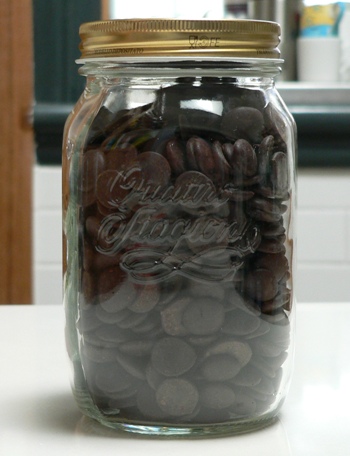
Remember how excited I was a few months ago when Joanna sent me some Willie’s Cacao?  The 180g blocks were enormous fun to play with, but at £6 each, plus £4 freight (A$16.50 in total), they really were too expensive for day to day use.

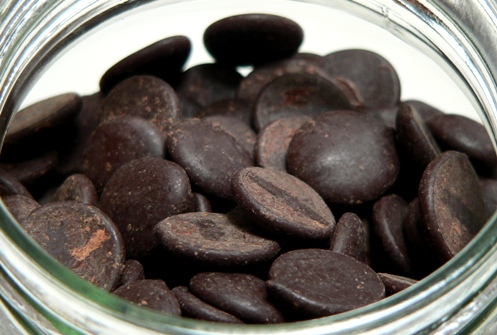
I was pretty chuffed when my foodie friend Sharyn (known affectionately at Chefs’ Warehouse as “Shazza”) put me on to the Callebaut equivalent.  This pure, unsweetened 100% cacao from Belgium costs $22/kg, comes in versatile callets, and provides a far more affordable option for experimenting with!

Apart from all the US recipes that call for “unsweetened chocolate”, there’s also an emerging food trend to add cacao to savoury dishes.  Last weekend, I tried it in a mushroom risotto with surprisingly delicious results – watch out for more posts on this in the future.

Fellow Sydneysiders, Chef’s Warehouse can order this product in for you on request – it’s known as Callebaut Cocoa Mass, and is available in 2.5kg bags.

. . . . .

If you knew what I know about the power of giving, you would not let a single meal pass without sharing it in some way.

Buddha

. . . . .

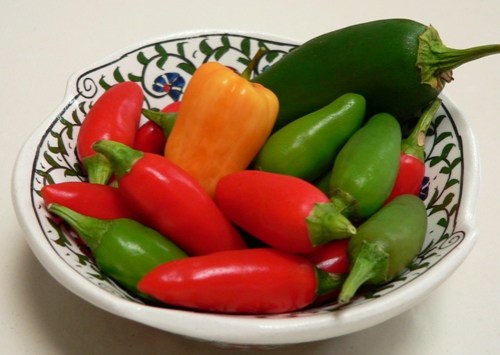
This is a bowl of chillies from our garden.

All of them are hot, the yellow habañero ridiculously so, and the red birdseyes not far behind.  The green birdseyes are from a branch that we accidentally pruned off, and the large green one is from a shrub that I bought on spec from the markets.

Apart from herbs, these chillies are the only real produce coming from our newly established garden, and I’m inordinately proud of them. There’s at least another twenty red chillies ripening on the birdseye bush, and more habañero on the way.

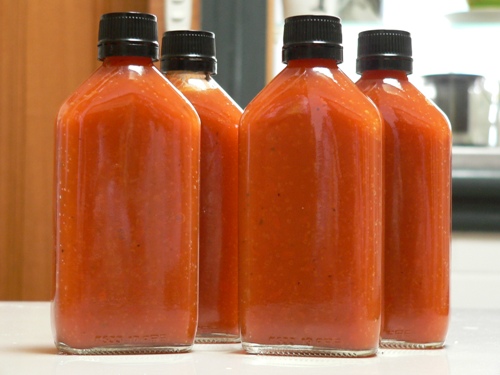
I turned this crop into a wickedly good chilli sauce using a recipe from Choclette, tweaking the ingredients slightly to suit what we had in the pantry.  As we had far fewer chillies than specified, our sauce is quite mild, and perfect for everyday use. It’s a very flexible recipe, which I’m sure could be worked to suit whatever chillies your garden provides you with.  Here’s our version – the original is on Choclette’s blog…

  • hot chillies – I used the ones in the photo above
  • 2 red capsicums (bell peppers)
  • 250g Spanish or brown onions, peeled and chopped
  • 8 large cloves of garlic, peeled and chopped
  • 2 large apples – I used Pink Ladies – peeled, cored and chopped
  • 3 bay leaves
  • several sprigs of fresh thyme, leaves picked
  • 300ml white wine vinegar
  • 2 teaspoons fine sea salt

1.  Grill the capsicums over a flame or in the oven until blackened and blistered.  Place these into a large bowl and cover the top of the bowl with clingfilm or foil. Allow the capsicums to rest until softened, then rub off the blackened skin.  Deseed, then cut into chunks.

2. Halve and deseed the chillies (I wear gloves).  If you’d like to reduce their heat further, rinse the deseeded halves under cold running water.

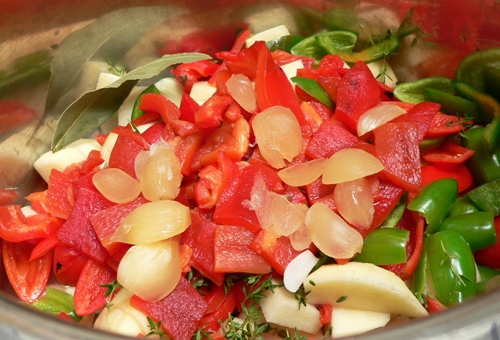
3. Place the chillies, capsicums, onions, garlic, apple and herbs into a large stock pot with 500ml water.  Bring the pot to the boil, then reduce the heat and simmer for half an hour, adding more water if required.

4. Add the vinegar and sea salt, and simmer for an additional half an hour or more, until the ingredients are soft and pulpy and well combined.

5. Ladle the sauce into a blender and puree until smooth.  Return to the stock pot and taste for flavour, adding extra salt or vinegar if required.

6. Pour the sauce into sterilised bottles and process in a hot water bath for 20 minutes.  We stood our bottles in a tall pasta pot, and filled it with boiling water up to the base of the bottle lids.

This was so delicious that I had it on pizza tonight, before the bottles had even cooled.  It’s quite reminiscent of Mexican style sauces, with a clean, pure taste that allows the chilli flavour to shine through.   As soon as the next crop of chillies are ripe, I’ll be making this again.  Thanks, Choclette!

Click here for a printable version of this recipe

Big Boy, our resident wordsmith, will occasionally stop me mid-sentence with, “No, that didn’t happen, you figmented it”.

It’s a clever, if (currently) incorrect use of the noun, but it’s actually very appropriate when applied to these brownies. They were indeed a figment of my imagination, or more precisely, my dreams – I woke one morning thinking about figs, rum and dark, dark chocolate.   This is what I ended up with…

Fig, Rum and Cacao Nib Brownies
(adapted from a recipe in David Lebovitz’ Ready for Dessert)

  • 90g unsalted butter
  • 225g dark chocolate, chopped or in callets
  • 150g white sugar
  • 1 teaspoon vanilla extract (I used homemade)
  • 2 large (59g) eggs, at room temperature
  • 40g plain (AP) flour
  • 150g Turkish figs, soaked in rum (see below)
  • 40g cacao nibs

Note: I made these with 70% cacao bittersweet chocolate, but the basic brownie recipe works best with semisweet (I normally use Callebaut 811 with 54% cacao).  With the higher cocoa fat content, the batter has a tendency to split, resulting in a pool of oil on the top of the finished brownies.  70%  seems to hold together – just – but when I tried using a 75%, the mix split completely and had to be thrown away. Having said that, in this instance I really wanted a bittersweet chocolate to offset the figs…

1. The night before, place some Turkish figs in a clean jar, and top it up with rum.   You’ll need seven or eight well-intoxicated figs, although I try and keep a jar full at all times (for emergencies, you understand).

2. Preheat the oven to 160C with fan.  Line a 20cm square pan with parchment paper.  Chop the figs up, discarding the stems.

3. In a medium saucepan, soften the butter, then add the chocolate and stir over low heat until combined and smooth.   Remove the pan from the heat and, using a silicon spatula or wooden spoon, stir in the sugar and vanilla.

4. Beat in the eggs one at a time, working quickly so that you don’t end up with scrambled eggs.  Add the flour, and stir vigorously for one minute (this bit is important) – the mixture will change from grainy to smooth and glossy in that time.

5. Add in the chopped figs and cacao nibs, stirring well.  Scrape the batter into the prepared pan and bake until just set – about 25 minutes.  Do not overbake.

6.  Cool in the pan, before removing the brownies and cutting into squares for serving.

Click here for a printable version of this recipe

. . . . .

This recipe is adapted from Robert’s Absolute Best Brownies in David Lebovitz’ new Ready for Dessert.  Like all of his books, this one is a cracker – full of anecdotes and delicious recipes. I’m keen to try the chocolate cake recipe that he copied off the wall of a restaurant toilet…

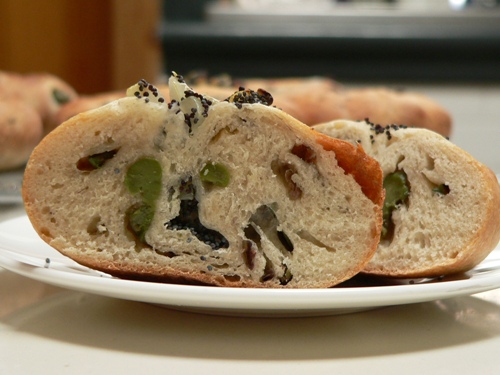
I was inspired to try Dan Lepard’s black olive bialy recipe by the gorgeous Sally at Bewitching Kitchen.

Mine turned out a little chubby, but so delicious.  A cousin of the bagel, but much easier to make, the bialies were chewy and flavoursome, and attained a surprising amount of rise from just half a teaspoon of dried yeast and minimal kneading.

Dan’s recipe specifies Kalamata olives – make sure you use the full amount of pitted olives in oil, as they contribute to the liquid content of the dough.  I had Sicilian green olives as well, so I used a mix of both.  It’s a very easy recipe, and a  great combination of flavours, with the olives and dough well matched to the onion and poppy seed topping.

The instructions are here, and I hope you enjoy making these as much as I did.  It’s always a good day when you can take a batch of bread out of the oven before 8am!