Feeds:
Posts
Comments

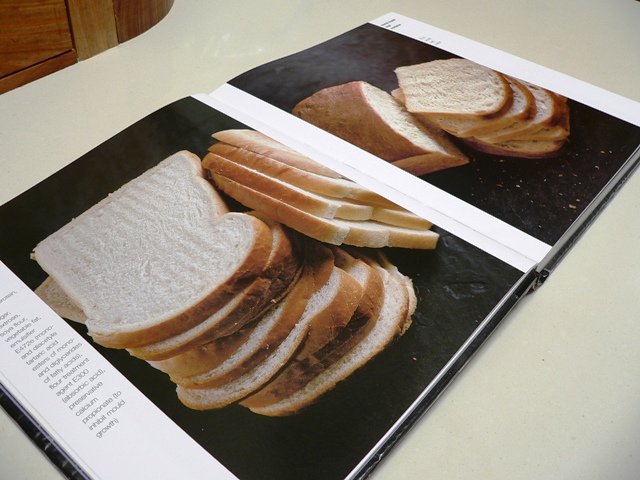
Richard Bertinet’s Dough presents a very persuasive argument for baking bread at home.  Over a two-page spread, it describes the difference between a typical shop-bought loaf and one made at home.  Here’s what it says:

Shop-bought loaf typically contains:

  • wheatflour
  • water
  • yeast
  • wheat protein
  • salt
  • vinegar
  • dextrose
  • soya flour
  • vegetable fat
  • emulsifier E472e (mono- and diacetyle tartaric acid esters of mono- and diglycerides of fatty acids)
  • flour treatment agent E300 (ascorbic acid)
  • preservative calcium propionate (to inhibit mould growth).

Home-made loaf contains:

  • flour
  • yeast
  • salt
  • water

That was enough to convince us to start baking our own bread in 2006.

Now, three years on, we know where every ingredient in our bread comes from – our flour is Australian grown and processed in Kevin Sherrie’s state of the art mill; our oil is extra virgin cold-pressed from cousin Andrew’s olives.  We buy Australian sea salt and control the exact amount we use, making our homemade bread about 30% less salty than supermarket loaves.  Our sourdough leaven is constantly being renewed, providing us with crusty, low GI loaves two to three times a week.  Additionally, baking bread satisfies my creative urges, and instills a rhythm and cadence in our lives that I find particularly comforting.

All this for a total outlay of 65c per loaf, about $4.50 a week.  Can you see why we just can’t bring ourselves to buy commercial bread anymore?

If you’d like try baking your own bread at home, you might find our Bread #101 Tutorial useful.  There are also lots of recipes on our Bread page. Have fun!

When I posted recently about making dulce de leche from condensed milk, Adriana and Rebecca were kind enough to give me recipes for cooking it from first principles using full cream milk and sugar.  How could I resist?

It’s a long process, but an easy one, particularly if you have to be in the kitchen for a few hours anyway, as I did last night.  And the end result is very different to the microwave version – it’s soft, silky and deep caramel brown – the long cooking time imbues it with a richness in colour and flavour that can’t be achieved by the quicker process.  Both have their place, but oh my, this slow cooked milk jam was really something else…

  • 4 litres full cream milk (I used UHT)
  • 1 kilogram white sugar
  • 1 teaspoon bicarbonate of soda (baking soda), sifted
  • 2 teaspoons vanilla extract (we used homemade)

1. In a very large stock pot, pour all the ingredients and bring to boil over a high heat.  Make sure it’s a big pot, as four litres of milk rising up in a rolling boil can be quite intimidating otherwise! Don’t go anywhere, you’ll need to make sure it doesn’t boil over.  At the beginning you’ll need to stand there and adjust the heat up and down as required, while you stir, to ensure the pot doesn’t overflow, but after a while the milk will settle into a regular boil.

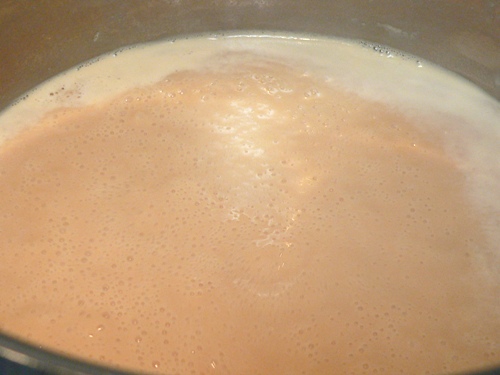
2. Boil until the milk changes colour and reduces in volume.  The instructions here were a little vague, but we basically boiled the pot over a high heat until it had reduced by half, which took about an hour.  Over that time, the colour gradually darkened to a light milk coffee shade.

3. Turn the heat down and cook the milk over medium to medium-low until it darkens even further and thickens, watching it carefully and stirring often to ensure it doesn’t catch on the bottom.  If you’re not able to be diligent, it’s probably best to turn the heat down to  very low at this point, making sure you come back to stir it regularly.  This stage took another ¾ hour.

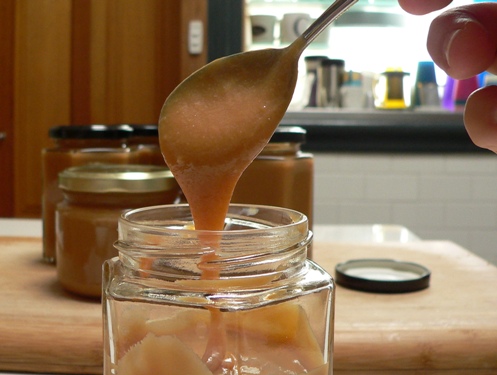
4. Once it starts to thicken, turn the heat down to very low, stirring frequently, until the dulce de leche turns a medium to dark caramel brown.  It needs to be fussed over at this point, to ensure it doesn’t scorch and burn.  The finished product is very hot (don’t ask me how I know) and has a thick pouring consistency.  It will set up further as it cools.  Total cooking time was about 2½ hours.  Rebecca suggests that you stir in a few tablespoons of honey at this point, but Pete’s not a particular fan, so we left it out.

5. Finally, fill the sink with a few inches of cold water, and sit the pot into it, being careful not to splash water into the caramel.  Stir the mixture for a few minutes – Adriana’s recipe says that this thickens the mixture, but I suspect the main aim is to stop it from cooking further and burning (as I said, at this stage, it’s very hot!).

Our four litres of milk produced five and a half jars of wickedly good dulce de leche .  One jar has gone to Maude, another to Patrick, and the remainder are tucked away safely in the fridge.  Now the fun starts – planning what to do with it!

Today is the first anniversary of Fig Jam and Lime Cordial.

Twelve months ago I started this blog with the single aim of focusing my eyes on all the positive things in my life. I wanted something to shake me out of my funk; to constantly remind me of how wonderful and blessed my existence really is.

I didn’t begin this blog with a view to finding a career in food or as a way to generate income. In fact, I’ve resisted the occasional opportunity that’s presented itself, for fear that changing my motivation might change the way I write.  I don’t want to write to a targeted audience – I write for myself first and foremost, and am always so encouraged (and a little surprised) when others are kind enough to listen to what I have to say.

Over the past twelve months, this blog has given me a unique opportunity to view the world with fresh eyes, to be present, to live consciously and with an awareness of what’s going on around me at all times.  It’s nudged me to constantly try new things, and then record them, so that I can look back and review my year in the knowledge that my time has been spent pleasurably and productively.  It’s enriched my life – by helping me to appreciate the minutiae, the day to day things that I might otherwise have taken for granted. And in the process, I’ve learnt important life lessons about gratitude, humility, and how much my God truly loves me.

I’d like to thank you all for your willingness to join me on this journey.  It has been a blessed, joyous year and I’ve had enormous fun sharing the food, the laughter and the love with all of you.

I can’t wait to see what the next twelve months will bring!

Dulce de leche, which means milk jam in Spanish, is a sweet, caramelly concoction made from boiling and concentrating condensed milk.  Nothing is added to the milk, but the cooking process imbues it with a rich sweetness well suited to cakes and confectionary.

My first attempt at this recipe was a complete disaster, and I’d been a little gunshy ever since.  Then my friend Ozoz, the Kitchen Butterfly, posted her recipe for making dulce de leche in the microwave.  Since I had three cans of condensed milk in the pantry, I thought it was worth a second attempt.

I emptied two cans of condensed milk (one skim, one full fat) into a large pyrex bowl.

This went into my 1100 watt microwave for :

  • 6 minutes at 50% power, whisking every two minutes, then
  • 14 minutes at 30% power, whisking every one to two minutes, or whenever the milk threatened to boil over.

Be prepared to stand by the microwave and watch this – it’s not a set and leave dish, as it can boil over in a heartbeat!

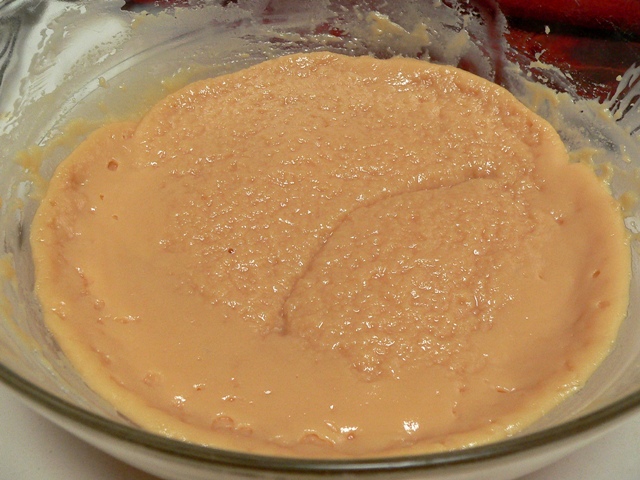
The finished dulce de leche came out of the microwave lumpy, but whisked into a smooth and silky caramel, which we spooned into sterilised glass jars and stored in the fridge.

. . . . .

The following day, I made dulce de leche truffles, dropping spoonfuls of the cold caramel into tempered chocolate.  These were pleasant, but the balance of flavours wasn’t quite right.

. . . . .

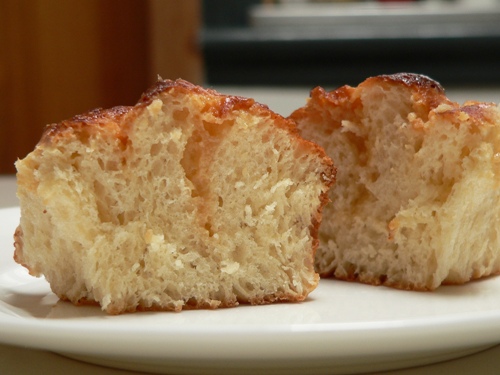
I also made dulce de leche scrolls, which were absolutely delicious – Big Boy loved these! I followed the methodology for nutella scrolls, using the sweet dough from the Pain Viennois recipe.  The dulce de leche worked particularly well with the sweet milk dough.  Prior to baking, I brushed the tops of the risen buns with eggwash and scattered over a little demerara sugar for added crunch.

. . . . .

Since the oven was on all morning, I decided to try David Lebovitz’ recipe for dulce de leche with  my last remaining tin of condensed milk.  This entailed pouring the milk into an ovenproof dish and covering it with foil, then baking it in a water bath for an hour or so at 220C.  The milk set in the oven like a soft baked custard, but was easily transformed into creamy dulce de leche with a little whisking.

What a fantastic ingredient! Maybe I need to try a Chilean Torta De Hojas next…

Edit 26/2: I was inspired by the comments below to try making dulce de leche from scratch.  Have a look here – seriously chuffed with the results!

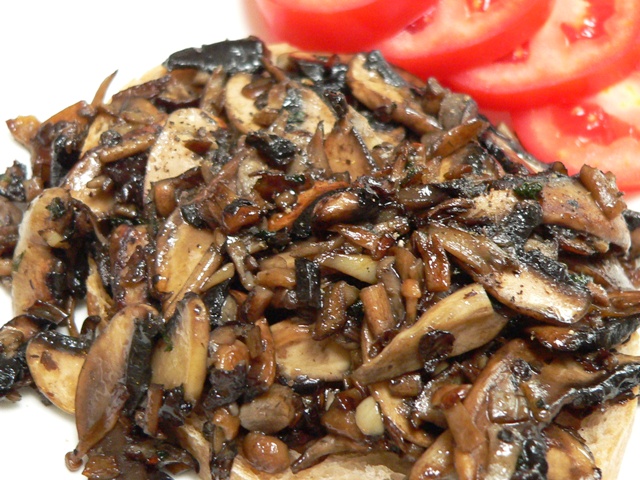
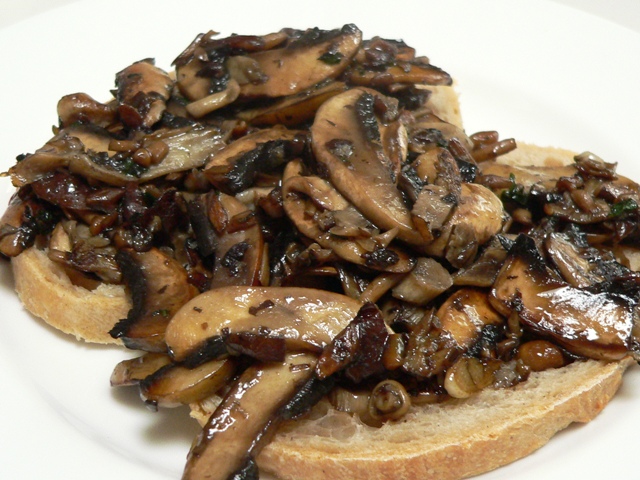
Over the last few weeks, mushrooms on toast has become the standard Saturday lunch for Big Boy and I.  It’s an indulgent treat, because mushrooms are so expensive here – locally grown gourmet varieties retail at the Orange Grove markets for $50/kg.  They’re grown in a disused railway tunnel in Mittagong – how cool is that?

Fortunately, there are cheaper varieties available at Flemington Markets,  and I’ll usually buy Swiss Brown or large white Button mushrooms to pad out the more expensive exotics.   Last week the Swiss Browns were only $5/kg, making them very affordable indeed!  If dollars are a consideration, this recipe will work just as well with regular mushrooms – the fancier ones just add extra zing.

Here is Pete’s own recipe for truly fantabulous mushrooms on toast:

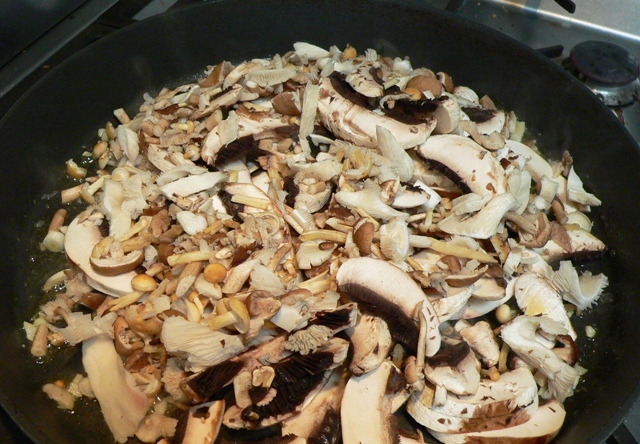
1. Start by heating up a generous knob of  unsalted butter and a little extra virgin olive oil in a heavy based frying pan.  We use our large non-stick Woll pan, which can take a high heat.

2. Once the butter is melted, add a couple of cloves of chopped garlic and stir briefly.  Don’t brown the garlic at this stage, or it will burn by the time the mushrooms are cooked.

3. Add the cleaned and chopped mushrooms.  In this batch, we used Swiss Browns, Chestnuts, Oyster and Golden Enoki mushrooms.  I didn’t weigh them, but I’d guess there were about 200g of Swiss Browns, and 200g of the the other varieties combined.

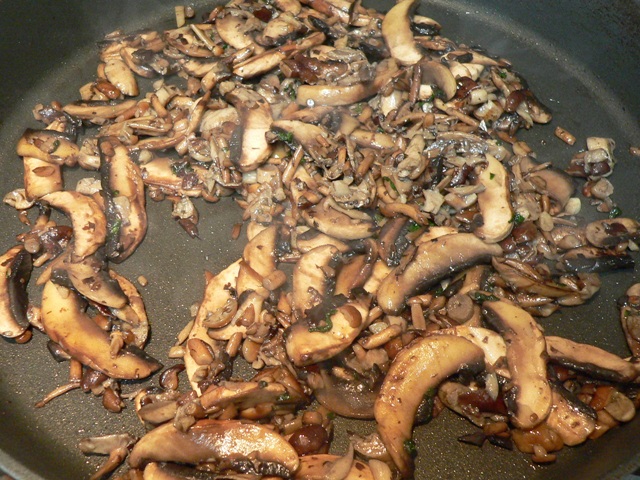
3. Fry the mushrooms over a medium high heat.  They will give out a little liquid to start with, and then appear to re-absorb it back in.  Cook the mushrooms until they start to brown and caramelise.  Season generously with salt and pepper.  We also added a little oregano, which was growing in our garden.

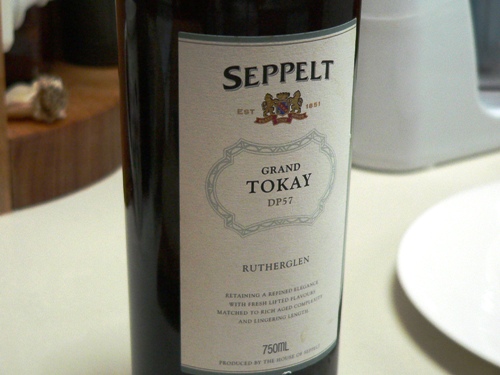
4. Here’s the secret.  Once the mushrooms are well-browned and greatly reduced – you’ll be astonished how little you end up with – turn the heat down and pour in a splash of sweet fortified wine.  Pete discovered this by chance the last time we had a bottle of port open, and since then we’ve been using this delicious bottle of Seppelt’s Tokay that I found under the house.

5. Continue to fry the mushrooms for a few minutes more, until they’re rich and glazed from the wine.  Check for seasoning.  Serve over slices of toasted sourdough bread for the perfect Saturday lunch!