Feeds:
Posts
Comments

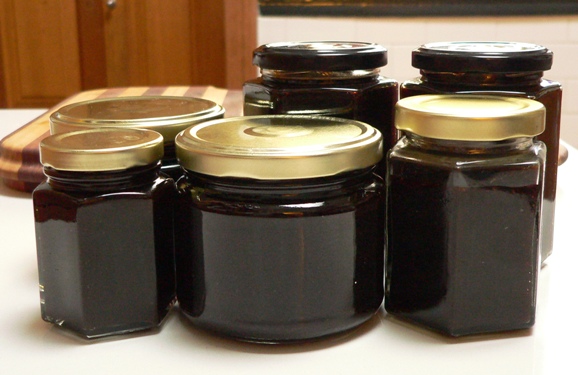
Pete’s Plum Sauce
(adapted from a recipe in Jams and Preserves, published by Murdoch Press)

  • 1.5kg sour plums, stoned and halved (we used the President plums that we bought last week)
  • 500g brown sugar
  • 375ml white wine vinegar
  • 2 cloves garlic, chopped
  • 1 onion, peeled and grated
  • 2 small red chillis, seeded and chopped
  • 1 large apple or two small ones, peeled, cored and chopped
  • 60ml dark soy sauce
  • 2 tablespoons of homemade ginger jam (original recipe used 2 tablespoons peeled and chopped fresh ginger)
  • 125ml water

1. Put the chopped, peeled apple into a large stock pot and cover with 125ml water.  Cover and simmer for about 10 minutes, or until the apple is soft.

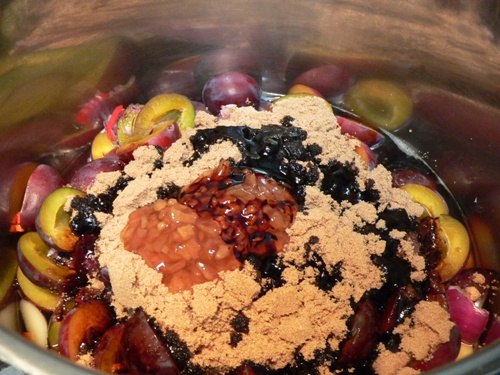
2. Add all the remaining ingredients and bring the mixture to a boil.   Simmer for about 45 minutes over a low to medium heat until the sauce is thick and pulpy, stirring frequently.
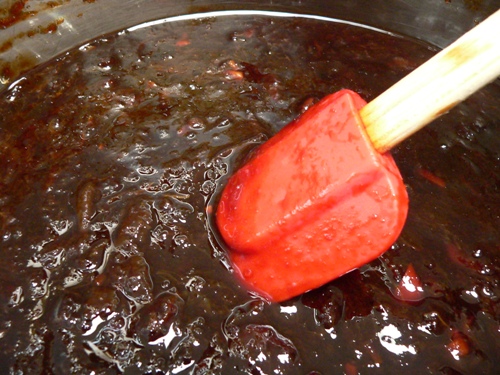
3. Pass the mixture through a food mill or press it through a coarse sieve.  If you’re using a tomato juicer as we did, allow the mix to cool a little prior to processing.
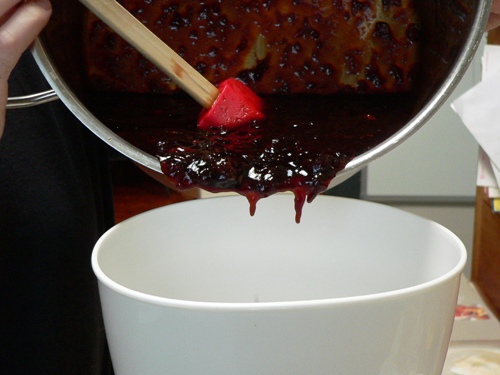
4.  Wash the cooking pot, and put the strained sauce back into it.   Taste the sauce to see if you’d like it sweeter or more acidic, and adjust accordingly. Simmer over a medium heat, stirring constantly, until the sauce thickens to your liking.

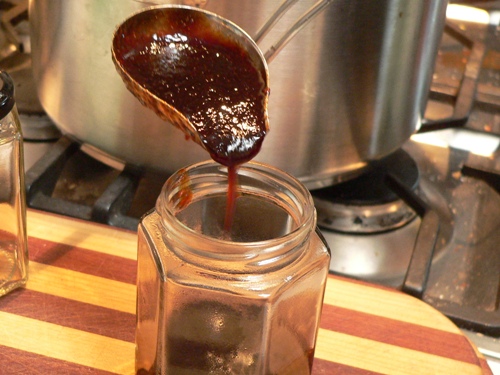
5.  Ladle the sauce into sterilised jars, seal well and process in a hot water bath for 10 minutes.  Please see our Jam Making Primer for more information.  The original instructions suggest that you let the sauce mature for a month before eating, to allow all the flavours to meld.

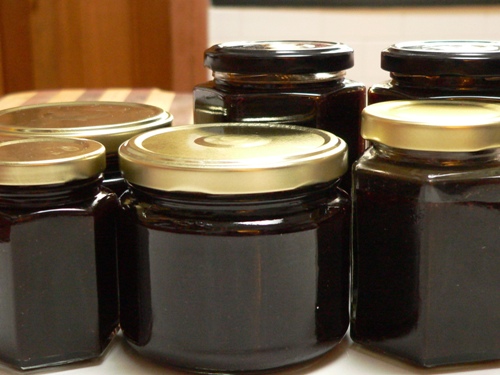
These quantities make enough plum sauce to fill five to six 300ml jars.
Over the past few months, Pete and I have turned in excess of 100kg of roma tomatoes into homemade passata. It hasn’t been a difficult task, but putting the roasted toms through the food mill was always a little laborious.

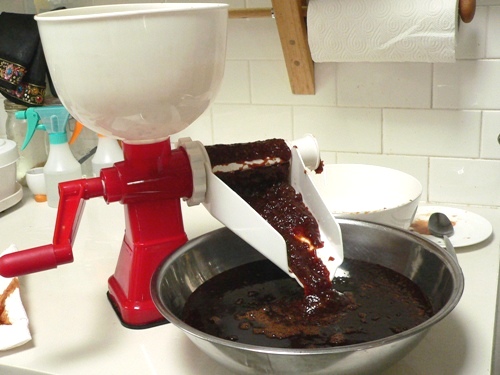
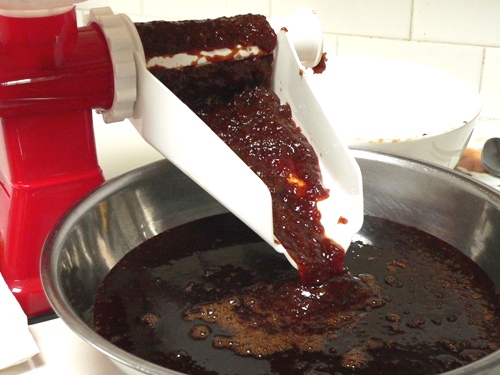
A few weeks ago, Pete made the management decision to buy a new tomato juicer.  It cost $49 and is mostly made from plastic (apart from the sieve), which means that we have to let the sauce cool before processing.  Notwithstanding the fact that it leaks a little from the handle, it works brilliantly.  There is a clever corkscrew spiral in the middle, which forces the  mix through a sieve, producing sauce down the chute and pulp out the end.

The handle is almost effortless to turn, and it’s much faster than the old food mill.  We’ve recently been using it to make Chinese plum sauce from our President plums, which is what you can see in the photos.  We put the extruded pulp through a couple of times, to extract the last bit of goodness from it.

. . . . .

My friend Ozoz, the Kitchen Butterfly, surprised me yesterday with a package in the mail, all the way from the Netherlands!

One of the many items she sent included this poffertjes pan, for making traditional Dutch pancakes.  We had to try it out straight away – the pan turned out perfectly round mini pancakes. Oz even sent me the little wooden fork needed to flip them over…

Poffertjes are traditionally served with icing sugar and butter.  Big Boy had a huge plateful for dessert, drizzled with maple syrup.  He’d been studying for an exam, so was extremely grateful for the carb hit.  Thank you, Ozoz!

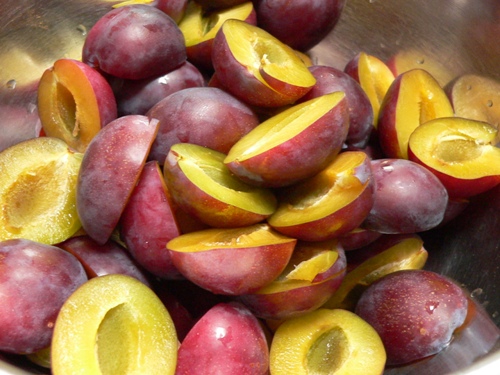
We picked up a box of magnificent President plums at the markets last week.  They’re very tart and firm, which makes them perfect for cooking.

After freezing twenty-four plums (stoned and halved, vacuum-sealed), Pete had enough left over for a couple of batches of jam.  His first was a delicious plum and pluot blend, but this second one is even better – sweet, but tart, with a wonderfully complex flavour.  It will make a great staple in our larder for the year to come.

1. Put the quartered plums in a large wide stock pot.  Ensure the pot is big enough to allow the jam to rise up as it boils.  Add the lemon juice and pectin, cover and bring to a boil.  Don’t add the sugar yet.

2. Stew gently until the plums are softened, about 15 – 20 minutes.  Note that the plum skins won’t soften any further once the sugar is added.

3. Add all the sugar and vanilla extract and bring the mixture to a gentle boil.  As the sugar dissolves, foam will appear on the surface of the jam – skim this off carefully.  Put a small saucer in the freezer so you can test the jam for set.

4. Once the jam is clarified, raise the temperature and bring the pot to a rolling boil.  Cook until the jam has thickened, then place a spoonful on the cold saucer and allow it to cool.  If it has set properly, it will wrinkle when pushed.

Plums, if they’re not too ripe, have a high natural pectin content, so they usually set very well.  Here is a photo of the pot once it had cooled slightly.

5. Ladle the jam into sterilised jars, seal tightly and process in a boiling water bath for 10 minutes.  For more instructions, please refer to our Jam Making Primer.

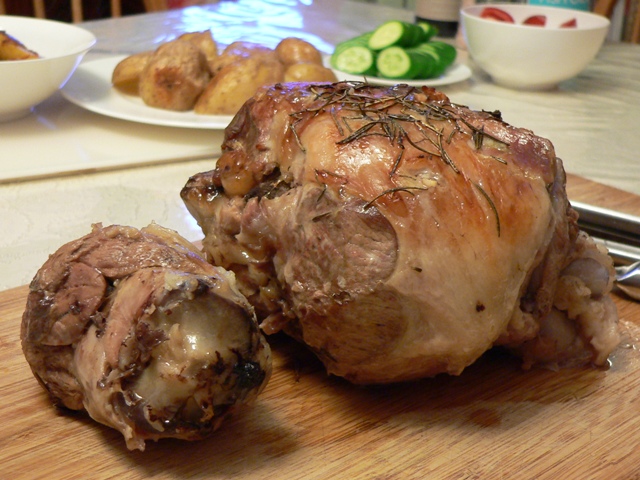
Following on from yesterday’s post – here’s our first attempt at roast lamb in the Römertopf clay baker!

We rubbed our two and a half kilo leg of lamb with a little extra virgin olive oil, fresh rosemary and salt, then studded it with small pieces of garlic.  In order to fit it into the presoaked clay pot, we had to cut the leg into two pieces (there is a convenient joint where the shank connects to the upper part of the leg).  Once divided, the lamb fit neatly into the Römertopf over a bed of potatoes.

The covered baker went into a cold oven, which was then set at 200C with fan.  It was baked for two hours with the lid on, and then uncovered for a further half an hour to allow the meat to brown.  As the pot is presoaked  prior to use, the lamb is both steamed and roasted as it bakes.  The pot allows a little flexibility with cooking times and, as an added bonus, the oven stays nice and clean.

The end result was a tender, moist, well done leg of lamb (Pete’s too old school for pink lamb) which provided both dinner that night, and shepherd’s pie the following day!

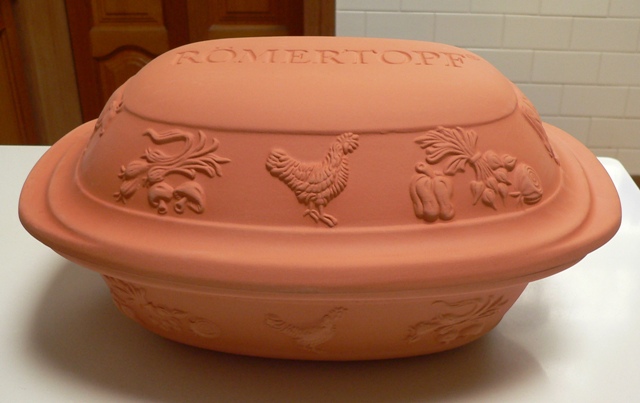
We’ve now had our Römertopf baker for over six months.

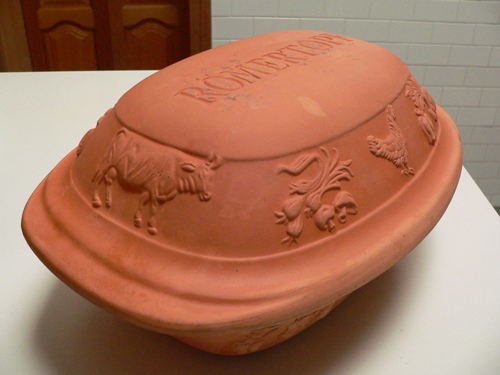
Compared to the photo above, taken when it was new, it’s now a little battle-worn…

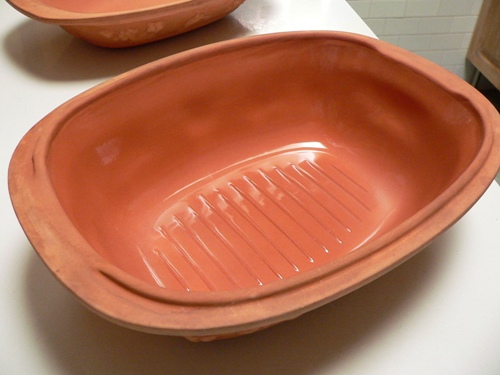
…but the glaze on the inside remains perfect.  We take care not to scratch it with metal implements, and it rewards us by cleaning up a treat in the dishwasher.  The pots we get in Australia come directly from Germany, whereas the ones available in the US are made in Mexico and I don’t believe they have the interior glazing. Edit 2014: they’re now selling the glazed German made models in the US: http://romertopfusa.com/

We use our Römertopf at least once a fortnight and we’re astounded every time by how simple the process is.  There aren’t lots of pots and pans to wash up, and it’s an easy way to make use of whatever ingredients we have on hand.

In a nutshell, the procedure for our all-in-one rice and meat dinner is:

1. Soak the baker in cold water in the sink for at least 15 minutes.  We put it in before we start prepping ingredients.

2. Rinse one cup of Basmati rice and soak it in water.

3. Chop vegetables, prepare any meat.  No pre-browning or frying required.

4. Put the drained rice and vegetables in the bottom of the wet Römertopf, add two cups of stock, then lay the meat over the top.  Or, mix the whole lot together and put it in the baker, then cover with liquid, ensuring all the rice grains are submerged.  Often, instead of stock, we’ll use water, salt and seasonings.

5. Put the lid on and place the baker into a cold oven.  Turn the temperature up to 200C with fan, and bake for about an hour and a half.

Recently, I laid lamb shanks, seasoned with a little salt and pepper, over the top of the rice and vegetables and they cooked to sticky perfection.  The boys ate it so fast that I didn’t get a chance to take a photo.

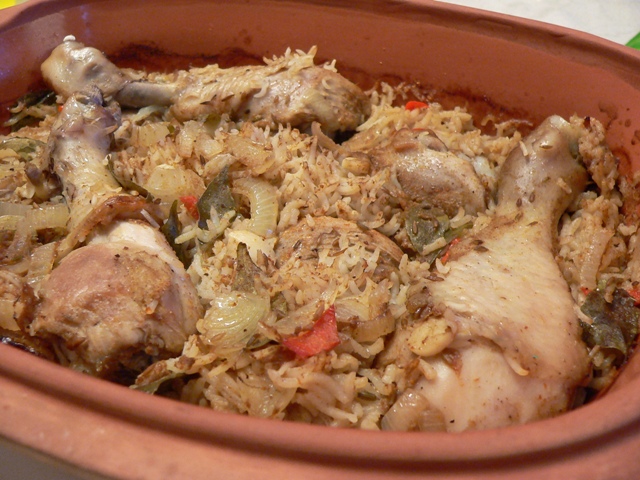
Last week we made a chicken biryani in the Römertopf, adding half a packet of purchased seasoning mix, some onion, garlic, tamarind and curry leaves.  It was spicy, delicious, and just so easy.

The Römertopf Rustico baker is still only $39 at Peters of Kensington, which I think makes it the bargain of the year. It has certainly simplified our mid-week dinners.  The lack of added oil in the cooking process means that we’re eating better as well!