Feeds:
Posts
Comments

I saw this technique on Wild Gourmets in Spain, a cooking show currently screening on our local SBS television station.

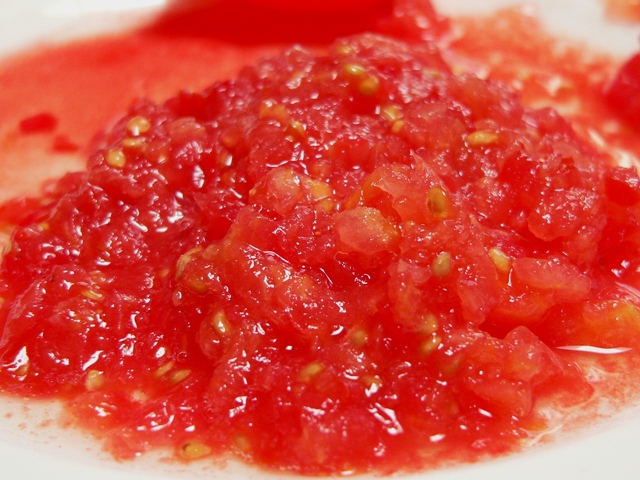
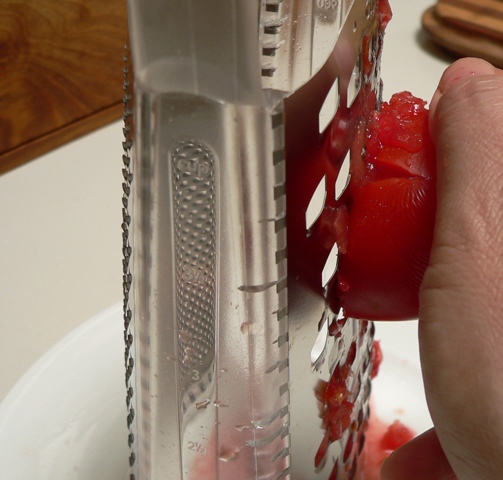
It’s a brilliant idea, and such an easy one – when you need tomato pulp in a hurry, and you can’t be bothered to blanch and then peel them, just shred the tomatoes through a large holed grater.

What you see above is the product of two fairly firm Roma tomatoes and literally just a minute’s work.

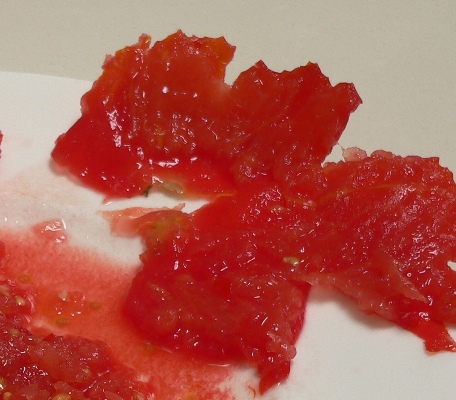
And here’s the leftover skin…

It’s wonderful how a simple technique like this can open up a whole world of recipes and ideas.  Next step, a Berber tagine omelette!

On a whim, I picked up a discounted tray of lamb offcuts at the Italian butchers this morning.  At $1.41, they looked like nothing more than fat, bone and gristle, but there was a thin promise of pink meat in the middle of each piece.  I suspect they were lamb breast offcuts, but the labelling was fairly nondescript.

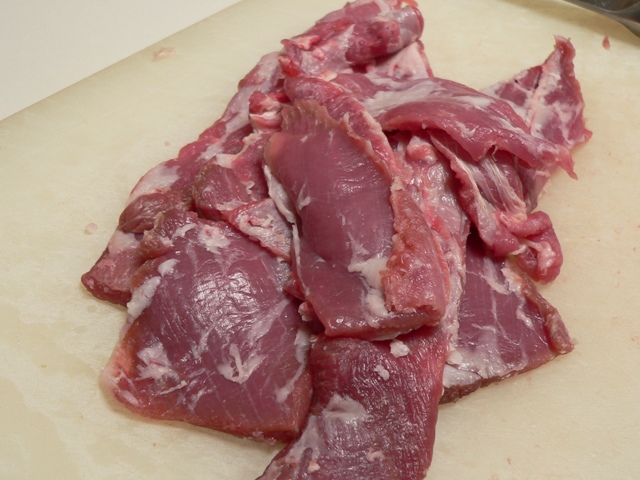
I trimmed the meat out of the fat and sinew, and ended up with 275g of usable lamb…

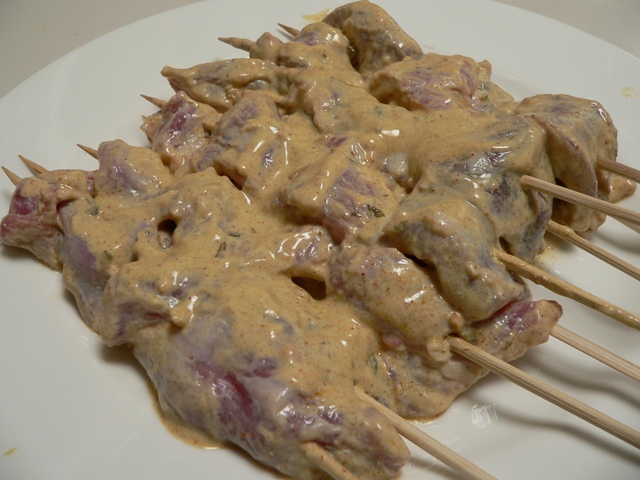
….which was marinated in a mix of homemade yoghurt, olive oil, salt and some Chermoula spice mix, and threaded onto skewers…

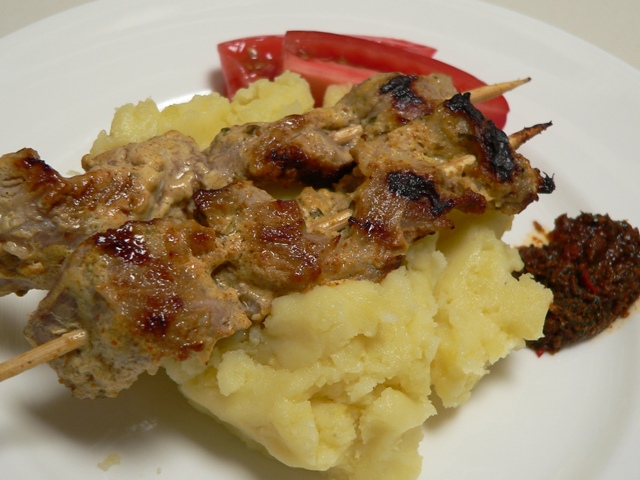
…then cooked on a hot griddle pan and served with creamy mash potatoes, Roma tomatoes and homemade harissa.  We ended up with nine sticks – enough to feed all four of us for lunch!

This was quite time consuming, and I probably wouldn’t do it again, but it’s nice to know that it’s possible to turn $1.41 worth of meat into a decent feed!

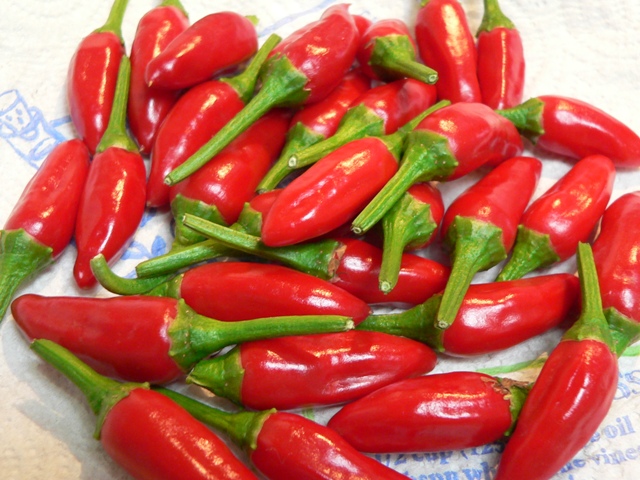
One of Pete’s plans for 2010 is to establish a permaculture garden in our small suburban backyard.  My mum donated one of her chilli plants to start us off  and, even though it’s still in a pot, this small shrub has fruited abundantly – here’s just a small portion of our harvest!

I turned the chillies into harissa sauce, using a recipe I put together years ago. It’s adapted from a recipe in Dave Dewitt’s A World of Curries, and is very simple to make, providing you have a food processor (I use a mini one). The quantities are pretty loose – use whatever you have on hand in amounts that suit your personal preferences.

  • 7 large red chillies, medium heat
  • 4 red bullet chillies, hot
  • 2 teaspoons caraway seed
  • 2 teaspoons ground cumin
  • 2 teaspoons ground coriander
  • 2 teaspoons ground paprika (I sometimes use smoked paprika)
  • ½ teaspoon Malden salt flakes
  • 30 or more fresh mint leaves
  • 4 tablespoons extra virgin olive oil
  • 10 cloves of peeled garlic
  • water

1. Wash and deseed the chillies.  I usually wear gloves to do this, because I’m a wuss. For this batch, I used a dozen of our red chillies, as I didn’t have any long red ones.

2. Place the chillies, garlic and all the spices in the bowl of a small food processor or blender.  Add the mint leaves and pulse to combine, then add the olive oil and enough water to create a thick sauce.

3.  Scrape the harissa into a clean sterilised jar and cover it with a thin film of olive oil.  Best to use the sauce within a couple of weeks, as it doesn’t have any vinegar or lots of salt to preserve it.

As I mentioned before, this is a very adaptable recipe, and I tend to use whatever chillies I have on hand, and then pack the little food processor with as many mint leaves as I can jam in.  I also prefer to use spearmint rather than peppermint, if given a choice.   Allow a couple of days for the flavours to meld together, then serve on everything from carrot sticks to roast chicken!

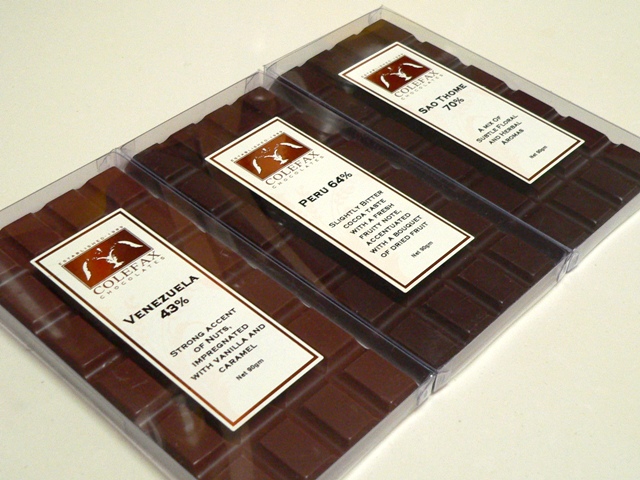
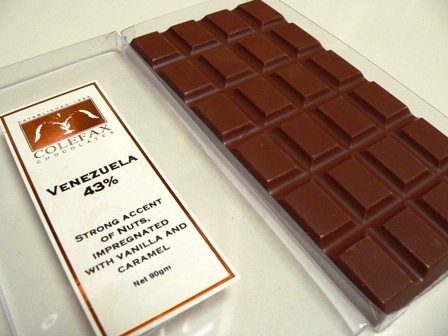
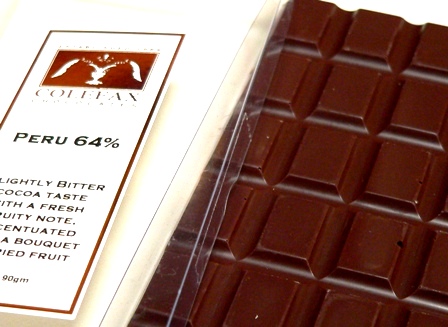
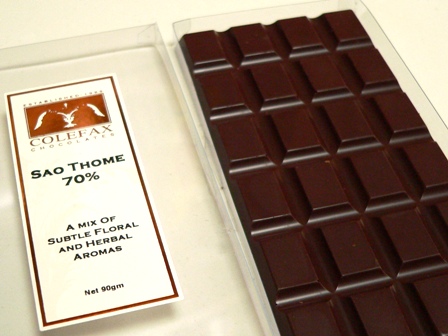
Inspired by a recent series of posts at Some Say Cacao, I thought it might be fun to have a chocolate tasting.  And as I can only buy my chocolate from our friends Peter and Lisa Lee at Colefax Chocolates (loyalty must always override curiosity), it’s fortunate that they produce such an interesting range of origin chocolate bars.  I bought just three on this occasion, but they have over a dozen on offer, including certified organic and fairtrade varieties.

Even though I’m very much a dark chocolate fan, I was completely smitten with this milk block from Venezuela. At 43% cacao, it’s the darkest I’ve ever tried, and very moreish as a consequence.  It’s not overly sweet, with delicious caramel overtones and a wonderfully rich mouthfeel.  It was gone by the end of the evening…

The 64% cacao dark chocolate from Peru was also delicious, dark and slightly bitter, but with quite a sweet finish. It had a slight woodiness which I found particularly appealing, reminiscent of the cigar box/cedar aromas often found in red wines.

Naturally, we couldn’t try all these interesting chocolates without inviting the neighbours around, and the result was a most enjoyable afternoon of friends wandering over for a bit of chocolate and a cup of tea. Most of them really liked this 70% block from Sao Thome – a deliciously mellow dark bar of  subtle flavours and sweetness, without being overly bitter.

Chocolate tasting on a lazy Saturday afternoon – how sweet life can be sometimes!

Time = Money

If there is one thing that has helped us to live more frugally – in a happy, contented, non-miserly way – it was getting our heads around the fact that time is money, particularly where food is concerned.

It’s pretty simple maths:

Least Time Spent →  Most Time Spent

Eating Out →  Cooking Prepared Meals →  Making From Scratch

Most Expensive →  Least Expensive

We’ve found that the more time we can put into preparing our food, the more we can afford to spend on really great ingredients, while still saving quite a bit of money (understand, of course, that we’re not buying truffles or organic lamb backstrap on a regular basis).

Here’s a personal example:

We used to (and still occasionally do) buy takeaway pizzas.  They were (and still are) very good, but expensive.

Five years ago, we started making our own at home, using supermarket ingredients: McCain’s frozen pizza bases, Leggo’s pizza sauce, shredded cheese out of a bag, pitted Spanish olives from a jar and ham in little packets from the cold section.

Now we make our own pizza bases from flour, yeast and extra virgin olive oil, and top them with homemade roasted tomato passata, marinated Kalamata olives, hand sliced fresh mozzarella, dry cured pancetta and Italian anchovy fillets.

The more time we’ve spent on the pizza we’ve eaten, the less money it’s cost, even with the substantial increase in quality of the raw materials.  That makes sense, because when we have a takeaway pizza, we’re paying for someone to process our food for us, which saves us time.   Even our first attempts at homemade pizza cost us more than our pizzas do now, because there was still an element of processing – someone else made the bases, grated the cheese and prepared the sauce.

Now, were we to have the time to plant, harvest and mill our own flour, grow our own tomatoes and raise our own meat, we could probably reduce the cost of our food even further. But that’s not an option currently available to us, nor one we would necessarily like to take up!

This post isn’t intended to make you feel guilty about how much food prep you do or don’t do.  We’re blessed to have the time and inclination to try and make things from scratch, but someone who works 60 hours a week is unlikely to have the  energy to turn a box of tomatoes into sauce. Every family needs to find the time-money balance that suits their lifestyle.

But the knowledge that what you’re paying for in food is often time, rather than ingredients, might help you to make more informed decisions about where your food dollars are spent. And maybe you’ll be able to find painless ways to save money, by doing small things which don’t feel like a chore. It might not be much, but every little bit makes a difference!

. . . . .

Click here for more Frugal Living posts