Feeds:
Posts
Comments

laphet 003

Pete and I had lunch today in a cheap and cheerful Burmese restaurant in the Sydney suburb of Strathfield.

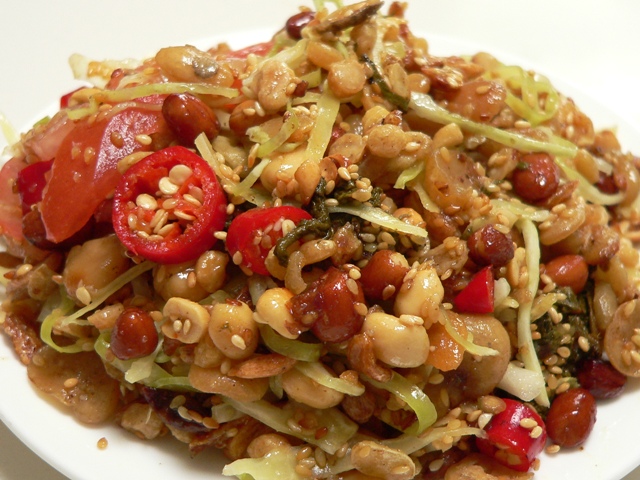
We’ve eaten there before, and whilst it’s not Pete’s favourite, I love the completely different flavours we get to try whenever we go.  Today we had the Laphet Thote (Pickled Tea Leaf and Fried Bean Salad).  There weren’t many tea leaves in the mix, but then again, the whole plate you see above cost a tiny $5.50.  I liked it so much that I brought a serve home for dinner.

The salad had a fantastic texture, with rich, slightly smokey flavours from the fried garlic, peanuts, crunchy legumes and roasted sesame seeds.  The tea leaves were slightly bitter (which put Pete off), but the addition of sliced cabbage, chillis  and tomatoes kept the salad balanced.

We also had a Chin Paung (Sour Leaf Salad) and a Beef Curry, accompanied by two large plates of rice.   The curry was unremarkable, but the salad was deliciously different.  Lunch cost $22 for both of us – a tiny price to pay for what felt like an afternoon sojourn to Myanmar.

Bagan Burmese Restaurant
Shop 4/41 The Boulevarde
Strathfield   NSW  2135
Tel : 02 8746 0666

Pete chastised me for feeding some of this cake to Ellen tonight.  As we’re making these for Christmas, he told me I was “telegraphing my punches”.  I suspect he’s forgotten that I was planning to post the recipe here.  Do me a favour – if you get one of these from us this Christmas, act surprised – it will keep my husband happy.

These gorgeous, delicious mini fruit and nut cakes are based on an old Women’s Weekly recipe.  They’re gluten and lactose free, low in added sugar and keep well for up to three months in the fridge.  The original recipe was sized to make two  bar cakes, but the same amount will also make four or five mini loaf tin sized cakes.  We did both, so the photos you’re seeing are of a double batch.

This cake was a regular part of our Christmas baking for years, until the cost of the ingredients became  prohibitive.  Now, with access to very reasonably priced supplies at Harkola, it’s back on the list for Christmas 2009.  If you’re planning to make these en masse as we do, try to source bulk suppliers of fruits and nuts.  The brazil nuts and  glacé fruits can get quite expensive, so it’s definitely worth a trip to your local food wholesaler to stock up on supplies.  And who knows what else you might find there?

Assembling the ingredients and lining the cake tins are the hardest parts of this recipe – the actual cooking process is very simple.  Although finding a spot in the fridge to store 30 odd cakes can be a bit challenging…

Ground Almond Fruit Cake
(recipe adapted from the Australian Women’s Weekly Celebration Cookbook)

  • 250g seedless dates
  • 100g mixed peel*
  • 50g glacé apricots, cut into pieces*
  • 90g red glacé cherries*
  • 90g green glacé cherries*
  • 80g raisins
  • 250g brazil nuts
  • 185g walnuts
  • 100g ground almonds
  • ½ teaspoon baking powder
  • 3 large (59g) eggs
  • 2 tablespoons (40ml) honey
  • 1 teaspoon homemade vanilla extract
  • 2 tablespoons rum

*Note: you could really use any mix of glacé fruits you choose.  If you decide not to use the apricots, increase the mixed peel to 150g (which is how the recipe was originally written).

1. Put the dates in a large mixing bowl, checking carefully for pips as you go (as dates are mechanically harvested and processed, some seeds are occasionally missed).  Give the dates a quick rinse (they can sometimes be a bit dusty).

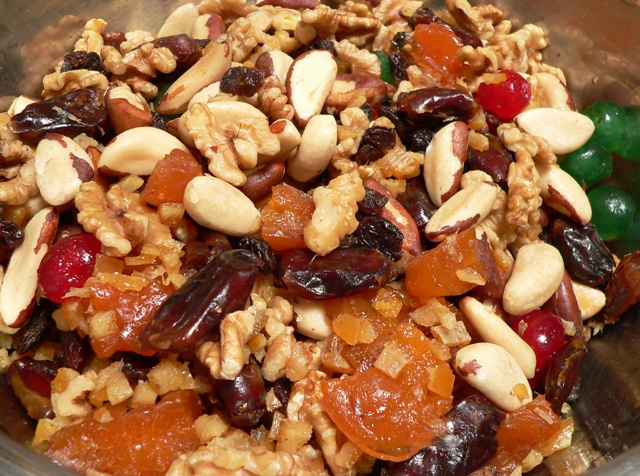
2. Add all the remaining fruits, brazil nuts and walnuts and stir well.  Add the ground almonds and baking powder and stir to combine.

cc 001

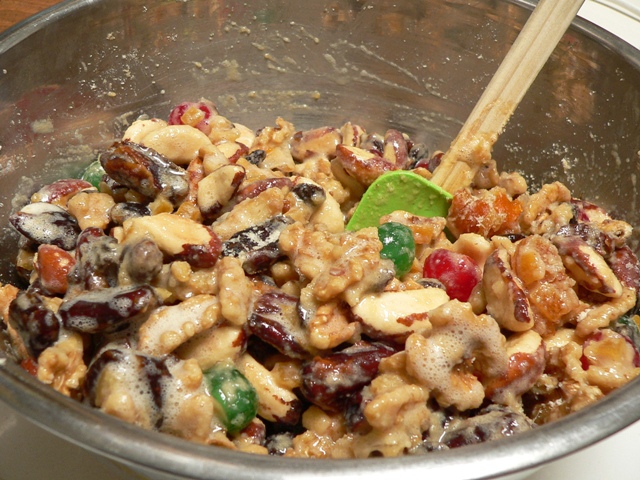
3. In a small bowl, beat the eggs until thick and creamy, then beat in the honey and vanilla extract.  Pour the eggs into the fruit mix and stir well to combine (remember these photos are of a double batch).  Make sure that every piece of fruit and nut is well coated with the batter.

cc 003

4. Preheat the oven to 150C with fan.  Line two bar pans (8cm x 26cm) or five small loaf pans (8cm x 15cm) with parchment paper. Divide the mixture evenly between the pans, making sure to work it well into the corners.

cc 004

5.  Bake for about an hour (start checking after 50 minutes), or until the cakes are firm and dark brown.  The original recipe specified 1½ to 2 hours, but we’ve never needed that long in our fan forced oven (although it does run hot).  Brush the rum over the hot cakes, then wrap  tightly in foil and allow them to cool in their pans overnight.

When completely cool, wrap the cakes tightly in foil and store in the fridge until required.   The cakes cut well when cold; allow slices to return to room temperature before serving.

cc 010

PS. Please have a look at our new Christmas page for more gift ideas!

fet 010

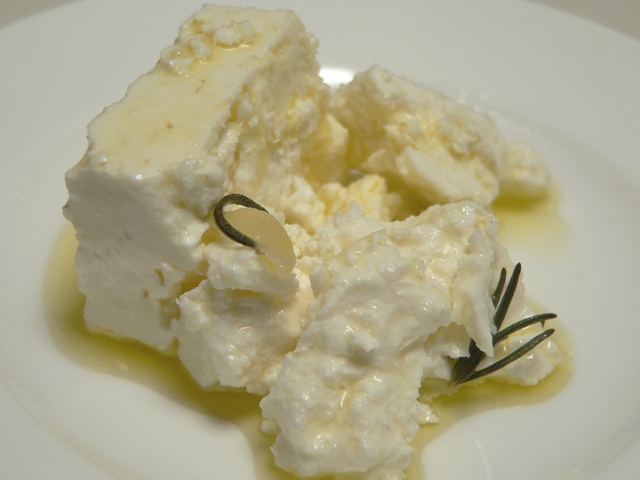
We used to pay a lot of money for marinated feta.  On our quest to source the delicious, creamy version used by our local Greek taverna, we tried just about every type available at the deli counter, including Persian, Greek and Australian.  None were quite what we were after.

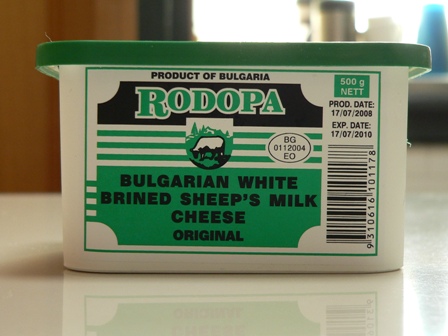
Then one day, in desperation, I asked the taciturn Greek owner which feta he was using.  He grunted, “Bulgarian”.  It had never occurred to us to try the inexpensive brined cheeses available at the supermarket, but they turned out to be exactly what we were looking for.

These cheeses often don’t even have “feta” on the packaging.  They’re very cheap – we pay about $8 for 500g (a little over 1lb) – and they come with a long expiry date.  That’s because the cheese has been brined (soaked in salty liquid) to preserve it.  The secret to enjoying it is to rinse and soak it first – it’s way too salty to eat without processing.

Here is the brand we now buy:

fet 001

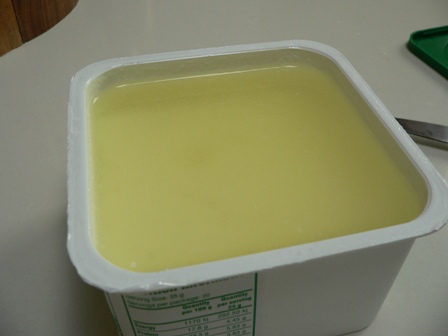
This is what it looks like when you first open the container – soaking in a salty brine.  Carefully tip the liquid out of the container, then cut the solid block into large chunks.  Be gentle, as the cheese can be quite crumbly.

fet 003

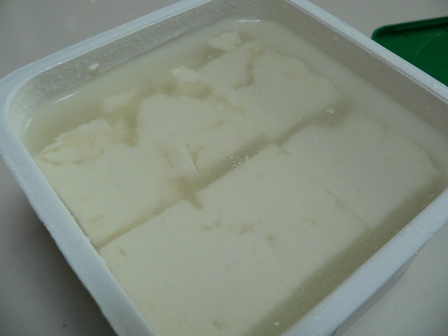
Fill the container with cool filtered water, cover and allow it to sit in the fridge for a few hours or overnight.

fet 004

The next day, drain the water off.  If you can, arrange the blocks so that they fit tightly into the bottom of the container – this will minimise the amount of oil you need to add.  Pete will often tip them over, so that they’re packed closely together, but I tend to break them up when I do that, so I don’t bother.  The oil isn’t wasted anyway – we’ll use it on our pizzas and focaccias.

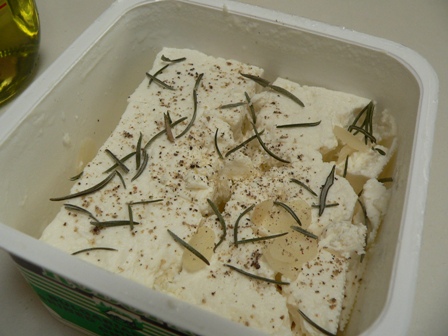
Sprinkle over some dried rosemary and a little ground pepper. I slice a couple of cloves of garlic, fry them in a little oil, then add them in as well. Of course, you could add whatever you want here – whole peppercorns and spices might be nice.

fet 006

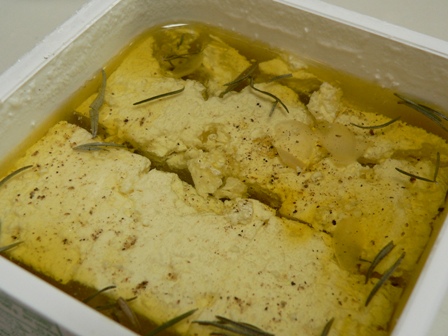
Cover the feta with a mixture of extra virgin olive oil and grapeseed oil.   The flavour is wonderful, but if you use straight olive oil, it will coagulate in the fridge.  We find grapeseed oil works well, but use other vegetable oils if you prefer.  Just make sure the olive oil is 50% or less of the total oil added.

Store the marinated feta in the fridge, where it will keep for several weeks.  Make sure to keep the container tightly sealed and the blocks covered in oil.

fet 007

gift 005

For the last eighteen years, Pete and I have made most of our Christmas gifts.  It’s something that we love to do, not just because it feels like we’re keeping the spirit of the season, but also because it allows us to let loose our creativity.  It never really feels like Christmas until we start the annual cooking and crafting ritual.  Over the coming weeks, I’ll be blogging about the things we’re making for Christmas.  Hopefully you’ll find something that inspires you to create your own handmade gifts this year!

Why should you even bother making presents when they’re so easy to buy?  Here are some of the reasons we do it :

1. As I mentioned above, we really enjoy the process.  We love the feeling that we’re giving of ourselves – homemade gifts are far more personal, and our friends seem to appreciate the time and effort we put into them.  The proviso here is that they can’t be crap – don’t give people things made from toilet paper rolls, unless the rolls are filled with growing heirloom seedlings and your friends are avid gardeners.

2. It saves us a fortune.  $20 won’t buy a decent present, but it’s enough to create several homemade gifts.  Because of that, it allows us to give freely, without the miserly Scroogeness that a tight budget imposes on Christmas spending.

3. It allows us to give small gifts without obligating the recipient to respond.  I love that we can take a plate of cookies to the neighbours and no-one feels the need to reciprocate.  I don’t ever want our gift giving to impose a sense of obligation.  It’s much easier to achieve that with homemade presents, particularly baked goods, than it is with purchased items.

4. Wherever possible, we try and give consumables at Christmas.  Our houses are all so full of clutter – it’s much nicer to give something that isn’t going to compound that issue.  Most of the gifts come from our kitchen, although we’ll occasionally include small homemade items, like Christmas decorations, beeswax candles or crystal bookmarks.

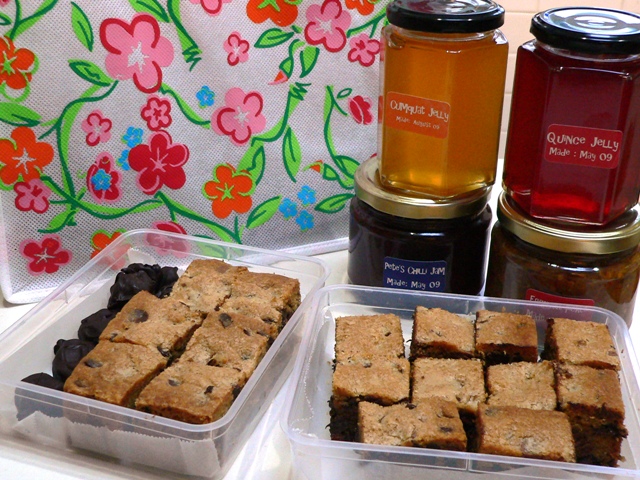
Over the past couple of years, we’ve been packing mini hampers for Christmas.  We purchase small paper bags with drawstring handles, and fill them with goodies – last year, each bag had a couple of jars of jam, some homemade vanilla syrup and a small bag of chocolate truffles. We also gave small bags of hot chocolate mix, plates of almond bread and little boxes of chocolate chip cookies.  Items like the hot chocolate, jams and vanilla syrup can be made well in advance, leaving just the baked goods to be made in the week before Christmas.

Watch this space – there’s lots more to come!

PS. Please have a look at our new Christmas page for more gift ideas!

misc 005

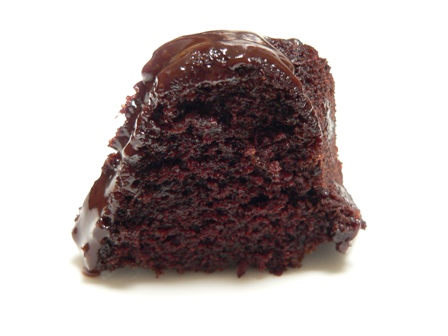
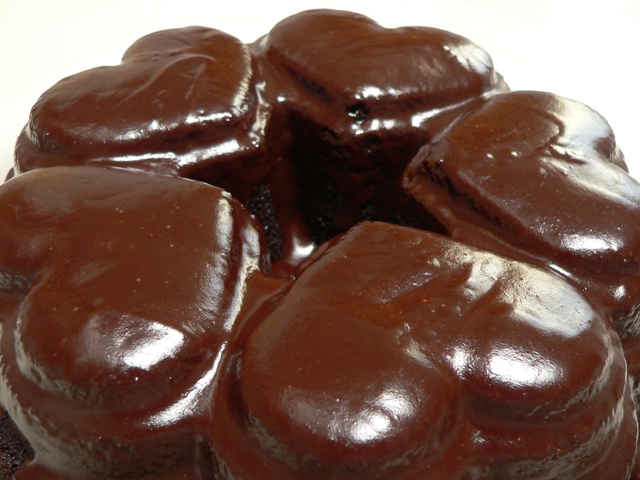
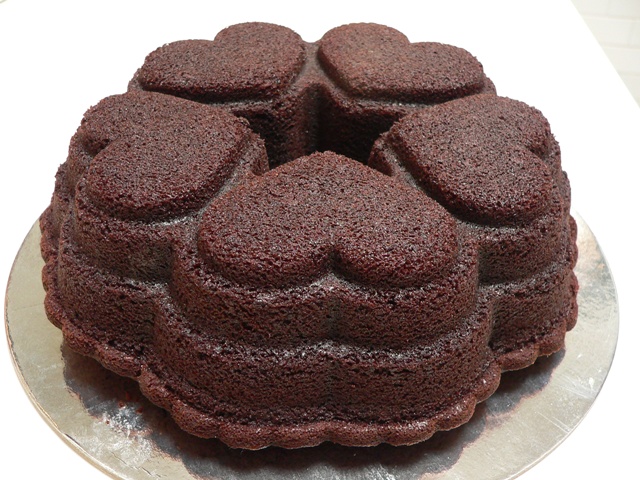
A birthday cake for Marty, who loves dark chocolate and Guinness!

Click here for a printable version of this recipe

Guinness Chocolate Cake
(adapted from the Rich Stout Cake recipe in the Green & Black’s cookbook)

  • 250g unsalted butter
  • 1¾ cups (375g) soft dark brown sugar
  • 4 large (59g) eggs
  • 12/3 (250g) cups plain flour
  • ½ teaspoon baking powder
  • 2 teaspoons bicarbonate of soda (baking soda), sifted
  • 440ml can of Guinness, at room temperature
  • 1 cup (110g) cocoa powder, sifted
  • 150g dark chocolate, finely ground or grated (I used Callebaut 54% callets)

1.  Preheat oven to 160C (325F) with fan.

2. Spray a 10-cup bundt pan with canola oil spray (or other vegetable oil, just not olive or rice bran oil).  Also spray a couple of extra small tins – muffin or mini-loaf tins, as there will be excess batter after the bundt pan is filled.

Alternatively, you could grease and line a 23cm/9″ springform cake tin with parchment paper. The amount of batter also bakes perfectly in a large 12-cup bundt pan.

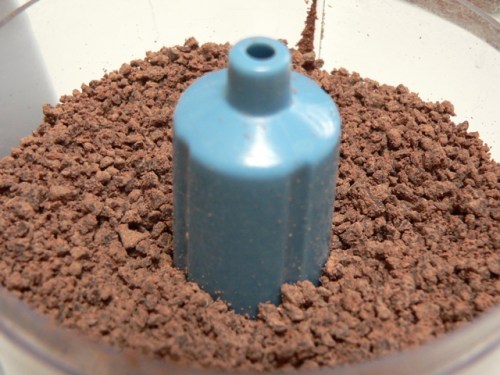
3. Grind the chocolate up – either using a grater or a mini food processor (which is what I did). If you’re using the latter, pulse the chocolate until finely crumbled, but be careful not to heat it up too much, or it will melt.
misc 012

4. In medium sized bowl, stir together the  flour, baking powder, sifted bicarb soda and sifted cocoa. Note that you really do need to sift the bicarb and cocoa, or you’ll end up with bitter lumps in your finished cake. Stir in grated chocolate.

misc 014

5. In a large mixing bowl with an electric mixer, cream together the butter and sugar, then add the eggs one at a time, mixing well after each addition.

6. Add some of the flour mixture to the batter and mix well.  Then add in some Guinness and mix again to combine.  Continue in this fashion, alternating flour and stout, making sure you finish with a reasonable amount of flour at the end.  The mix may appear to curdle, but the final addition of flour will smooth it out again.  Beat until the batter is thoroughly mixed – it will be quite soft.

misc 017

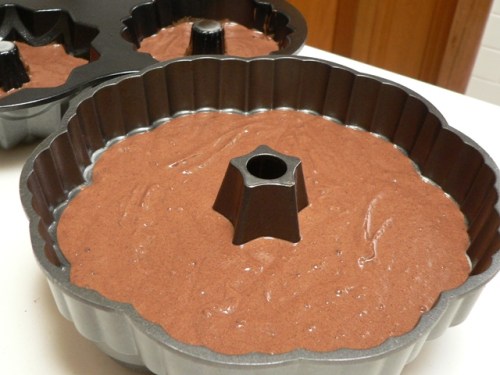
7. Pour the batter into the prepared pan, filling the bundt pan to about two-thirds full.  Pour the remaining batter into the smaller tins.
misc 019

8. Bake the larger cake for about one hour, or until a skewer inserted into the centre of the cake comes out cleanly.  The smaller cakes will cook much faster – start checking muffin sized cakes after about 20 minutes.  If you bake the cake in a 9″ springform, you might need a longer cooking time – if it begins to brown too much, cover the top with foil after the first hour.

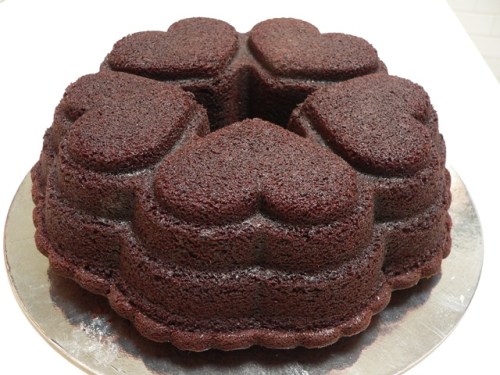
9. Remove from oven and let the cake rest for 10 minutes before turning out onto a wire rack to cool.
misc 023

Chocolate Topping
(from Jamie Oliver’s Return of the Naked Chef)

  • 100g/3 ¾ oz butter
  • 100g/3 ¾ oz best cooking chocolate
  • 100g /3 ¾ oz icing sugar (sifted)
  • 3 tablespoons (60ml) milk

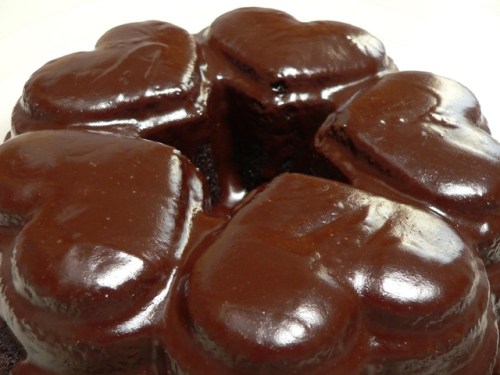
Melt the chocolate topping ingredients in a bowl over some lightly simmering water. Stir until blended well and allow to cool slightly. Pour over cake and allow to set.

misc 029

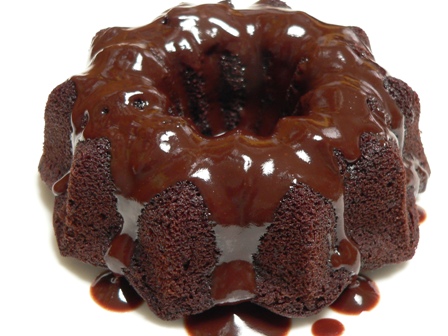
We gave the large cake to Marty for his birthday, and kept our two mini cakes as tasting samples. This moreish, moist recipe is very dark and grown up – perfect for those who don’t like their chocolate cake overly sweet.

Gillian at Some Say Cocoa made this cake recently as well – check our her version here.

misc 031

misc 032