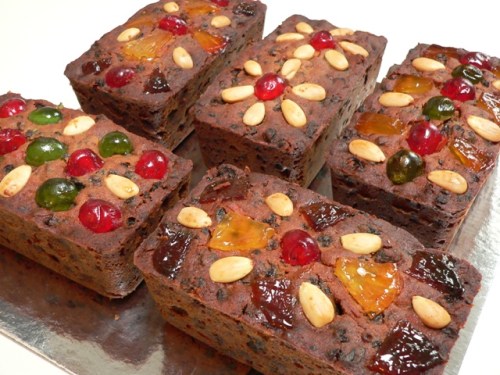
I apologise for putting two similar recipes up in quick succession, but if you’re going to make these, then you’ll need to do it soon, or they won’t have time to mature and develop before Christmas.
I normally bake a large 25cm/10″ square fruitcake every Christmas. It has a lovely, rich flavour and keeps brilliantly for months – we’ve just finished eating one that I made in March. We always store our fruitcakes in the fridge, as we find they keep and cut better cold, although it’s best to let the slices return to room temperature before serving.
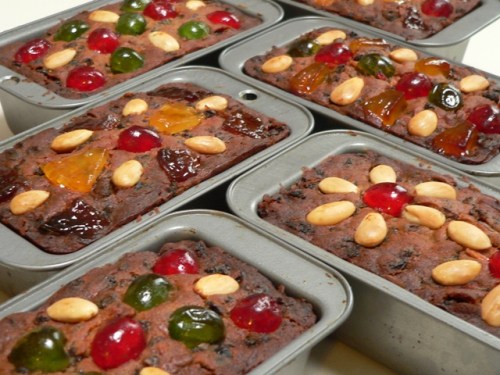
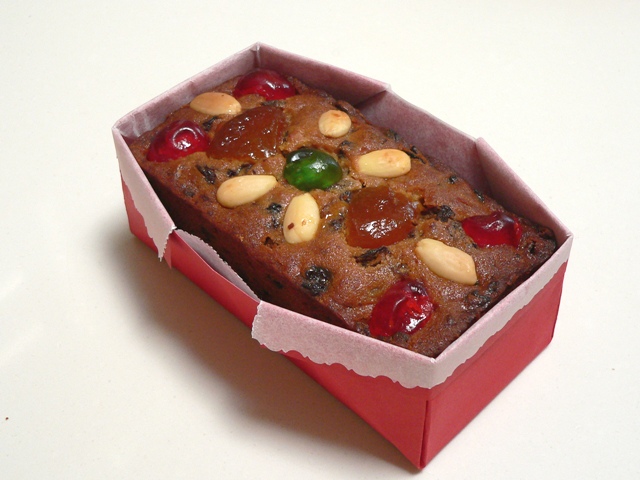
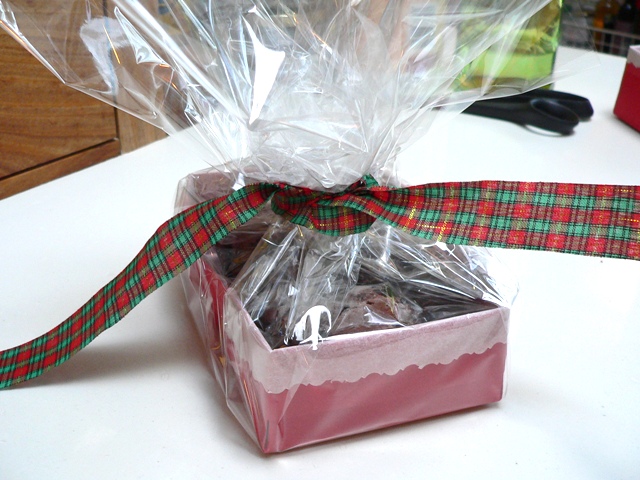
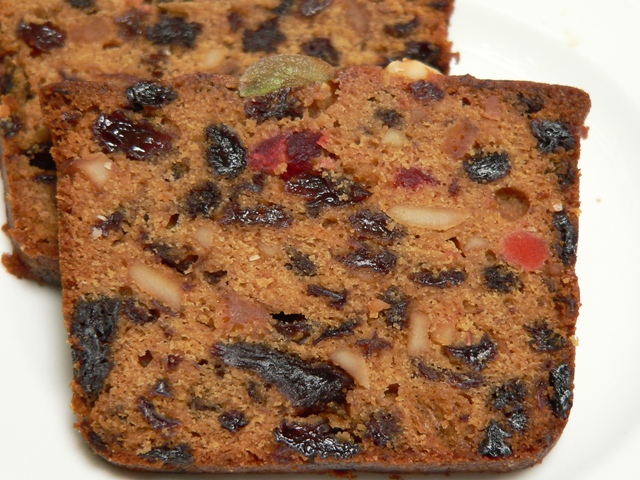
This year, as I had the mini loaf tins out for the Fruit and Nut Cakes, I decided to use those instead. These small, richly flavoured fruitcakes (yes, we’ve eaten one already) are a perfect size for gift giving.

Our cakes are based on an old recipe from the Australian Women’s Weekly, which has been used extensively by home bakers since 1937. It’s fabulously reliable, and we’ve had consistent results with it for nearly twenty years (and baked several hundred cakes in the process, I might add). It will make one deep 25cm square cake, or one deep 28cm round cake, or two deep 20cm square cakes, or eight to nine 15 x 8cm mini cakes. I’m sure you could bake it in other tins as well – just be aware that your baking times will vary depending on the size of your cakes, so make sure you don’t overcook them.
Some notes on ingredients:
1. We vary the fruit mix from time to time, depending on what we have on hand. The recipe is quite flexible, and there’s no problem with substituting extra dried fruit in place of the glacé cherries and mixed peel if desired. However, if you substitute fruit for the almonds, you’ll end up with a cake which is a little too sweet (at least for our tastes).
2. I’ve used cumquat jelly when we’ve run out of marmalade, but don’t be tempted to substitute a sweet jam instead. You need the slight hint of bitterness to balance out the cake. The original recipe specifies 1 Tbsp of grated orange rind, but I’ve never included that.

Women’s Weekly Prize Winning Fruit Cake
(the original recipe is here)
- 500g (3 & 1/4 cups) sultanas
- 500g (3 & 1/4 cups) currants
- 250g (1 & 1/2 cups) chopped raisins
- 125g (2/3 up) glacé cherries, halved
- 60g (1/3 cup) mixed peel
- 185g (1 & 1/2 cups) slivered almonds
- 1/3 cup Seville orange marmalade or cumquat jelly
- 2 teaspoons grated lemon rind
- 1/4 cup lemon juice
- 2/3 cup brandy
- 500g (2 cups) unsalted butter, softened
- 420g (2 cups) brown sugar, firmly packed
- 8 large (59g) chicken eggs, or 6 large duck eggs
- 450g (3 cups) plain flour
- 150g (1 cup) self-raising flour
- glacé fruit and blanched almonds for decoration
- extra brandy for finishing
1. In a very large bowl (I use a big Corningware casserole with lid), place the dried fruits, cherries, peel and almonds. Add the lemon juice, brandy, lemon rind and marmalade, and give the mixture a good stir. Cover and leave overnight or for up to one week.
2. The following day, in another large bowl and using an electric mixer, cream the softened butter and sugar until just combined. Add the eggs one at a time and beat after each addition, again until just combined. The mixture may curdle slightly (I’ve found it’s less likely to do so with duck eggs than regular eggs), but fear not, as it will smooth out once the flour is added.
3. In a separate bowl, measure out the plain and self-raising flour now, as your hands are about to get very dirty. Preheat the oven to 150C (with fan). Spray nine non-stick mini loaf tins (15 x 8cm) with oil, and line their bases with parchment paper.
4. Tip the butter and egg mix into the fruit mix, or vice versa, depending on which bowl is bigger. Now, with really clean hands, squish the batter and fruit together until well combined. You could probably do this with a wooden spoon, but it’s such a large mixture that hands are just easier.
5. Add half the flour (two cups worth) and work it through with your hands, then add the remaining two cups of flour. Mix really well and make sure there are no large clumps of flour or fruit. Scrape off your hands and wash them for the next step – now wasn’t that fun? I think this is my all time favourite part of Christmas cooking.
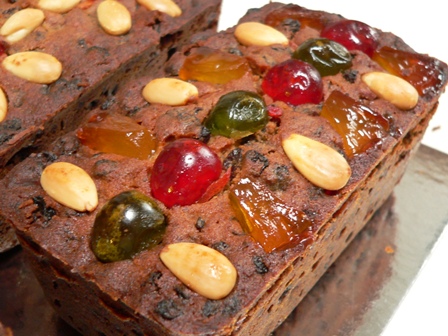
6. Spoon the mixture evenly into the tins, filling them to ¾ full. Smooth out the tops. Decorate the cakes with glacé fruits and blanched almonds.
7. Bake the cakes in the preheated oven for 1 – 1¼ hours. The cakes are cooked when a thin bladed knife inserted into the middle comes out clean.
8. Remove the cakes from the oven and, while they’re still hot, brush over liberally with brandy. Cover the tops of each cake with foil, stand them side by side, then wrap a tea towel around them and allow to cool completely overnight. The aim is to cool them as slowly as possible, to give the brandy a chance to soak in.
The following day, carefully loosen around the edges with a butter knife and turn out the cakes. Wrap them in two layers of foil, and store in the fridge until needed. Try to resist eating them straight away! I failed, but the advantage of eight mini cakes is that you still have seven left…
Note: You could, of course, bake this recipe as a large square or round cake. If you’re going to do that, make sure you grease and line your tin carefully, bringing up the paper at least 5cm above the top of the pan, to protect the cake during the cooking process. And despite what the original recipe says, I’ve never needed five hours to cook this cake in a fan forced oven – from memory, it’s usually about 2½ – 3 hours (I think the fan dries the cake out more quickly).
. . . . .
Please see our Christmas page for more gift ideas!