Feeds:
Posts
Comments

013

Our life is frittered away by detail… Simplify, simplify, simplify! … Simplicity of life and elevation of purpose.
Henry David Thoreau

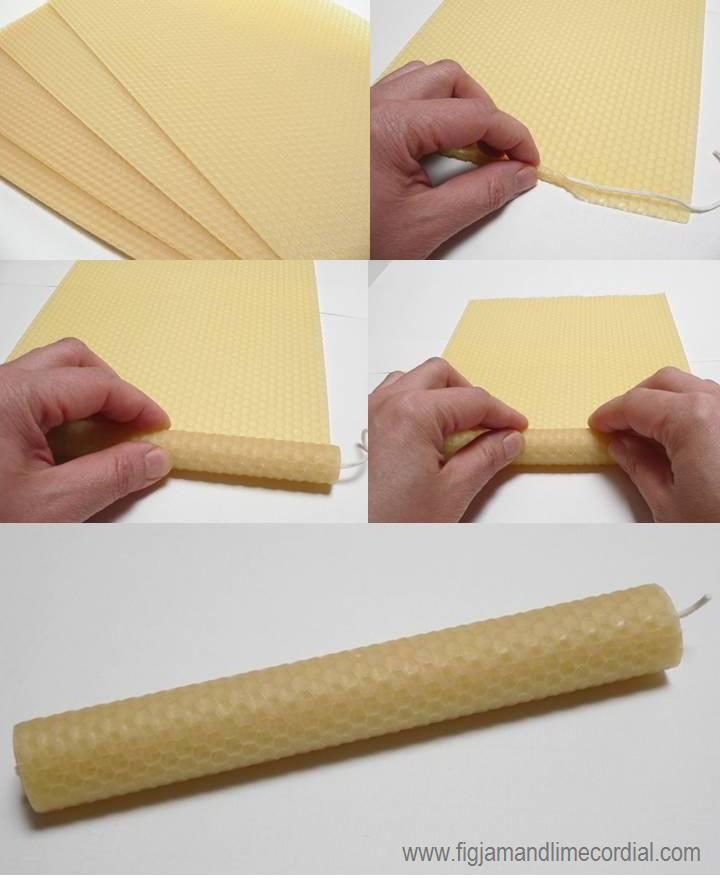
Back when Small Man was a Very Small Man, he and I made beeswax candles  for his preschool teachers.  They were almost no effort at all, but they were the product of precious little hands, and therefore dearly cherished by the recipients.

Beeswax is such a lovely material to work with – the sheets are easy to use, the wax moisturizers your hands as you roll, and the finished candle burns very cleanly.  Wrapped in cellophane and tied with a tartan ribbon, it’s the perfect gift for someone special.

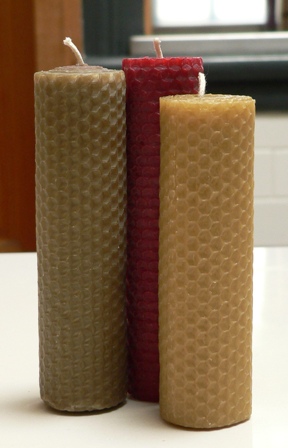
It’s been years since we last made candles, and I haven’t given them much thought over that time.  Then I met beekeeper Richard at Flemington Markets, who sold me these gorgeous golden sheets of beeswax.  Today, with the house quiet and the wind chimes tinkling in the background, I spent a peaceful, contemplative half hour rolling candles.  It was very therapeutic!
c41

Tip: roll tightly and freeze the finished candle before lighting –  doing both will extend the burning time of the wax.

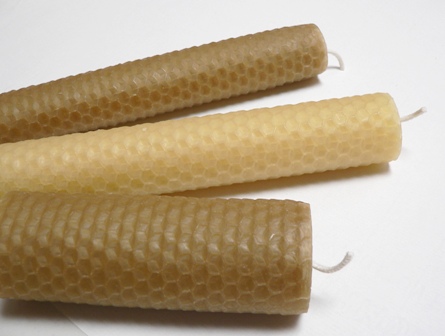
If you can’t get to the markets, beeswax sheets are widely available via mail order.  They’re very reasonably priced – my sheets were just $1.10 each.  The sheets are placed in hives for the bees to lay their honey on, so if you can’t get them from a candlemaking supplier, try your local beekeepers.
can 012

Edit: If you’re planning to pick these up from Richard at Flemington Markets, do make sure you email him first at  admin@thebeewhisperer.tv and ask him to bring sheets and wick for you – he doesn’t usually have the stock on hand. You might also want to double-check what days he’s at the markets before you go!
apc 001

Small Man has some severe nut allergies, so whenever he goes on school camp, we’re required to send all his food.  It can be tricky coming up with a menu that will last well over a week, but we just about have it down pat now. I thought I’d write about it in case it’s useful to other parents in a similar situation.

Some suggestions:

1. Buy a big esky (cooler, ice box) with wheels.  There’s quite a lot of food to pack for a teenager and if you have an incredibly heavy esky that needs to be carried, you’ll either piss the camp staff off straight away, or give your kid a hernia.  Neither of those outcomes is ideal.

2. Don’t kill yourself trying to make balanced meals.  Remember that anything you send is probably going to be better than camp food anyway, so don’t get too distressed about the fact he won’t be eating fresh vegetables by day five.

3.  Involve your child in the meal planning process.  And the week before, do a test run to make sure he’ll eat the meals you send.  Most camps will provide a fridge and freezer to store the food in, and a microwave to reheat, but they won’t actually cook anything for you, so you’ll need to have everything precooked and frozen.

4. Write a daily menu, so the teacher in charge doesn’t have to decide what food to serve.  Print out or write a label for each meal and stick it onto a brown paper bag, then put all the food for that meal in the bag.  Remember that the less work the staff have to do, the more time they’ll have to focus on your child.

5. If the allergies allow it, go heavy on the breads and baked goods.  Not only are they easier to eat, they’re less likely to go off if they’re accidentally left unrefrigerated.

6. Over-cater slightly and send more food than your son or daughter actually needs.  It’s better to waste a little than have a hungry bear on camp.

Here is a list of the food we sent, in case it provides some ideas.  Most of it was homemade, but we bought some packaged bits and pieces to pad out the menu:

  • Olive and cheese sourdough rolls, frozen
  • Spelt sourdough rolls, buttered and vegemited, frozen
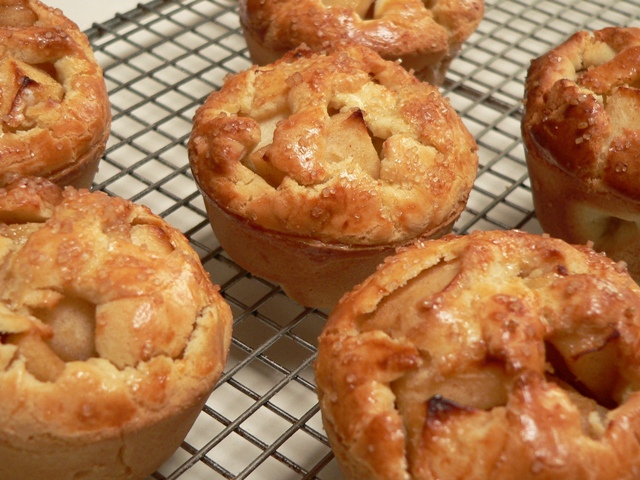
  • Mini apple pies, baked in muffin tins, refrigerated, first two days only
  • Homemade thick crust pizza, refrigerated, dinner first night
  • Penne bolognaise, frozen, dinners for remaining three nights
  • Tinned baked beans and sliced bread for toasting, for breakfasts
  • Apples for morning and afternoon tea
  • Chocolate chip cookies, for the cabin
  • Tetrapak juice, single serves
  • Tetrapak chocolate milk, single serves
  • Cherry tomatoes and cucumbers
  • Packaged crackers and cheese dip, for supper and snacks

I realise it’s not a huge variety of food, and in Small Man’s case, it will mean eating pretty much the same food each day (though not at every meal).  But they’re all things he loves, so he’s more than happy to do that.  More importantly, we’re confident that the food will keep well for five days, which is always the biggest challenge in this kind of exercise.  This is definitely not the time to be sending sushi or lightly cooked chicken dishes!

It’s a lot of effort, but definitely worth it.  Small Man set off with a big grin on his face, happy to have familiar food for the next five days!

024

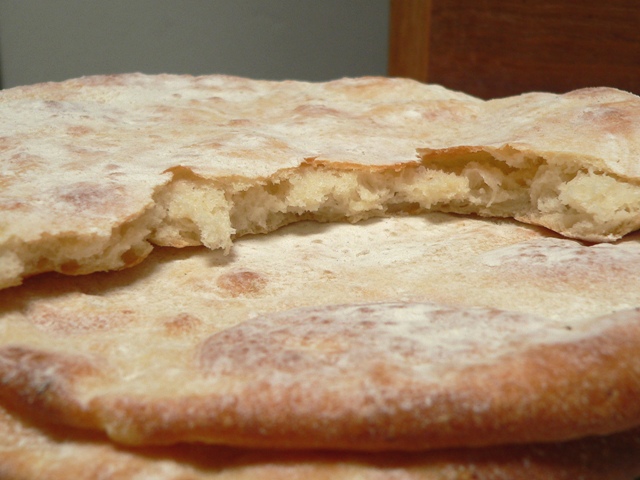
Fellow bread baker Joanna put me onto Dan Lepard’s potato stottie cakes. The recipe is from his wonderful book, The Handmade Loaf – which I waxed lyrical about it here.

Jo mentioned that when she’d made this traditional flatbread  from Newcastle upon Tyne, the bread had risen quite a lot, rather than staying flat.  I took a variation of Dan’s recipe and applied my own flatbread methodology, which I’ve used with both yeasted breads and sourdoughs in the past. The end result is always very moreish and, as an added bonus, you can eat the bread hot out of the oven, which makes it a great standby when you’re in a hurry.

Flatbread makes a great accompaniment to Indian and Middle Eastern dishes, though my boys were happy to scoff these smothered in homemade butter.  As I’ve never been to Newcastle upon Tyne, I can’t vouch for the authenticity of the finished product, but they were absolutely delicious!

Here’s how I shaped the stottie cakes…

Turn the risen dough onto an oiled bench and give it a few folds.  Divide the dough into four equal pieces and shape each piece into a tight ball.  Place each ball on a square sheet of parchment paper.  Spray a sheet of clingfilm with a generous coating of oil, then wrap it closely around the dough ball.  Allow the dough to prove for a further 15 – 30 minutes.  Preheat pizza stones in the oven to 250C (with fan).

008

Just before you’re ready to bake, gently flatten out  the dough into a thin pizza-like disc on the sheet of parchment paper, pushing through the clingfilm with your fingers.

010

Carefully remove the clingfilm (if you’ve greased it well, it should come off easily).  Dust the top of the dough with a little flour.

011

Slide the flattened dough, still on its sheet of parchment, onto a pizza stone.  Reduce the heat to 220C with fan. Allow the flatbread to heat up for a few minutes, until the dough starts to rise a little.  Once the dough has started to firm up, carefully remove the sheet of paper and discard.   After a few more minutes, open the oven, pull the rack out carefully, and flip the bread over.  Either use an egg slide, or the “perfect for every occasion when I might give myself a second degree burn” welding gloves.  The gloves really are great for this – I just picked up the flatbread and turned it over!  After a few more minutes, flip the dough over again and bake until the top is brown and the bread is cooked through.

These didn’t take long to cook because they’re so thin – ours were in the oven for about 10 minutes in total.  They were eaten before they had a chance to cool!

012

pete's cookie 011

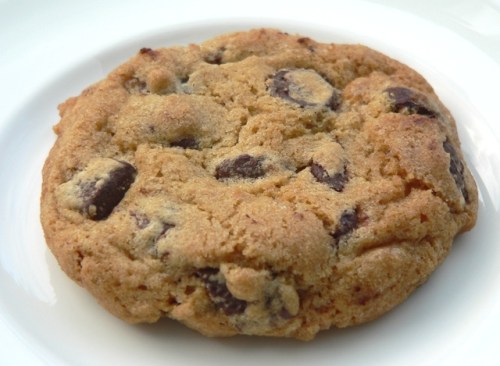
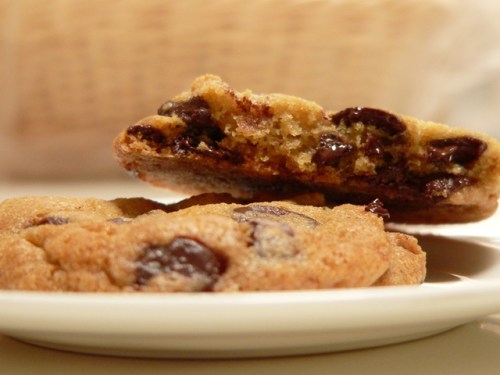
Remember I said we had two chocolate chip cookie recipes that we bake regularly? This one is Pete’s favourite.  It’s basically dark Belgian chocolate held together with a bit of cookie dough.  The boys prefer their cookies with more dough and less chocolate, but Pete really likes the crisp, almost wafer-like crumb and gooey richness of this version.  As this is the grown-ups’ cookie, I’ve included a little 70% dark chocolate in the mix to balance out the sweetness. It’s interesting to note that there’s almost twice as much chocolate to other ingredients in this recipe as there is in the other one.

  • 165g plain flour
  • 35g bread or bakers flour
  • ¼ tsp fine sea salt
  • 120g white sugar
  • 100g brown sugar
  • 125g unsalted butter, cold, cut into small pieces
  • 1 large (59g) egg
  • 1 tsp vanilla extract
  • ½ tsp bicarbonate of soda (baking soda)
  • 150g dark choc chips (Callebaut 54% cocoa callets)
  • 50g very dark choc chips (Callebaut 70% cocoa callets)
  • 100g bake stable dark choc chips (Callebaut 44% cocoa baking sticks, broken into small pieces)

Note : You could use 300g of any dark chocolate – in chip form or broken into chunks.  Just make sure it’s the best you can afford.  The above is what we use in Pete’s cookies.

1. In a large mixing bowl, beat the cold butter and sugars together, until they form a grainy paste.  Beat in the egg and vanilla until just combined (no streaks of butter left).  Do not overmix.

2. In a separate bowl, whisk together the flour, salt and sifted bicarbonate of soda (it’s important to sift the bicarb, or you’ll get bitter lumps in the finished cookie). Add the chocolate to the flour.  Now, tip the whole lot into the batter and mix until just incorporated (no bits of flour left). Do not overmix!

3.  Cover the bowl and pop the cookie dough into the fridge for at least an hour to chill.  These cookies are notorious spreaders, and chilling them helps to minimise this.

4. Preheat oven to 150C (with fan). Line two baking sheets with parchment paper.

5. Scoop balls of dough (I use a small 5cm icecream scoop) and place them on the lined trays, about 10cm apart.

6. Bake for 16-18 minutes until golden brown, rotating the trays once during the baking time.  Remove the trays from the oven, allow the cookies to sit for a few seconds, then transfer them onto a wire rack to cool. Handle with care, as the cookies will be fragile when hot. These will keep well for a few days, stored in an airtight container. If you live alone, freeze some, or you’ll be the size of a bus.

Makes 16 – 20 large cookies.

pete's cookie 003

021

Plastic water bottles are supposed to be bad for us, particularly if we’re perpetually refilling them.  Until now, the only alternative I’d found were aluminium bottles with a plastic lining, which didn’t seem much of a solution.

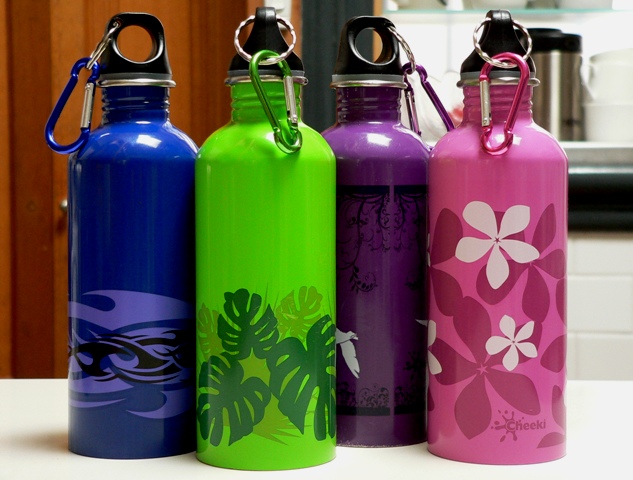
Then Santos Trading, a truly fabulous organic foods store in Byron Bay, brought in  these Cheeki water bottles.  Made by an Australian company, they come in a variety of sizes, from small ones for the littlies, to a one litre version, perfect for camping or travelling.  I bought four of the 500ml  bottles, in  different colours, so that every member of the family could have their own (mine is pink, in case you’re wondering).

These bottles are great; the water doesn’t taste of plastic, they’re sturdy enough to survive school bags and they fit perfectly in the cupholders of the car.  My only gripe is that the coloured lacquer tends to scratch off a bit, but that’s not a huge problem unless you’re rolling  it on the asphalt of the school playground.  My pink one, for instance, is still in pristine condition after several weeks of continuous use.  But if you’re buying for small people, you might want to consider the plain stainless steel version.

They’re not cheap – the 500ml bottles are $16.95 each, excluding shipping – but they are economical, in theory.  I say “in theory” because obviously they can be refilled an endless number of times, which makes them a much cheaper option that bottled water.  In practice, of course, that’s rarely the case.  Small Man had his green bottle for less than a fortnight before he left it on the cricket pitch during sport.  At $16.95, Pete had to drive back and scour the park until he found it!

PS. If you’re in Sydney, you’ll also find these at Dr Earth in Newtown, Blooms Pharmacy in Leichhardt Market Town or Mr Vitamins in Chatswood.  I’m pretty sure there are lots of other stockists as well.