Feeds:
Posts
Comments

cl

Here’s some wonderful trivia from UK based Peter May on why cottage loaves came about:

The reason for the top (the same reason as for the ‘bakers dozen’ , which means 13) was the extremely severe penalties suffered by bakers who gave short measure.  Loaves had to be sold by standard weight, thus to ensure the baker didn’t sell underweight he’d add a small dough ball on top.

Incidentally the bread laws which date from 1266 have been law right up to this year when the EU overruled them in the name of so called competition. Loaves had to be a full 800g (2lb) or half 400g (1lb)sizes.

I think it’s time for a cottage loaf revival!

Incidentally, Peter thought the top ball on my loaves should be smaller, which makes sense when you understand why it was added in the first place.

II 011

I love messing with recipes.

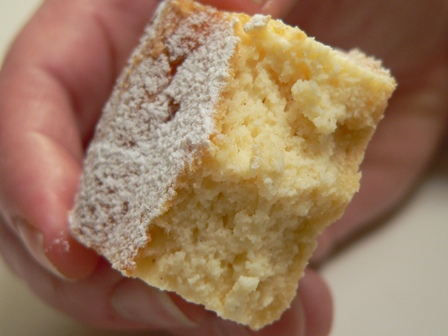
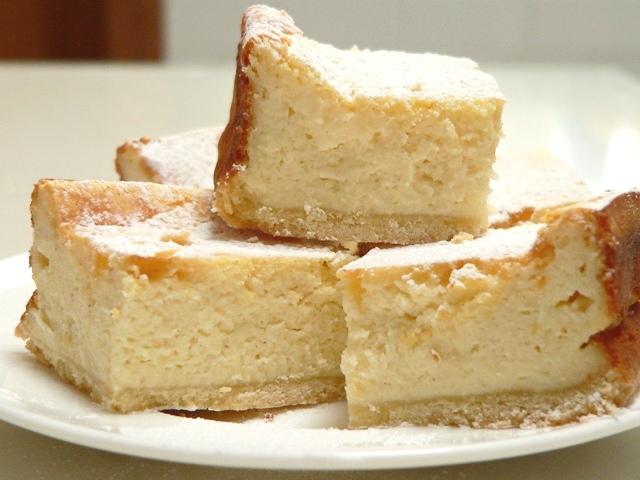
Today I took my ricotta cake recipe and turned it into a slice.  It was the simplest of things to do.  What I’ve discovered is this – the texture of the filling is dependent on how you treat the egg whites.  If you don’t beat the egg whites at all, and simply stir the whole eggs into the mix, your filling will be smooth and cheesecake-like.  In this case, I’ve done both – I’ve mixed one whole egg into the mixture with two yolks, then whipped the remaining two whites up and folded them into the batter.

  • 750g fresh ricotta, drained weight (allow to drain in sieve for an hour before measuring)
  • 375g thick sour cream
  • 3 eggs
  • 225g icing sugar mixture (not pure icing sugar)
  • 45g cornflour
  • 1 teaspoon vanilla extract
  • pinch of cinnamon
  • half a batch of June’s pastry

1. Grease a 27.5 x 23 x 5.5 cm pan with oil spray, then line the base with parchment paper.  I used this pan. Preheat the oven to 150C with fan.

2.  Roll out a rectangle of pastry and line the base of the pan.

3. In a large mixing bowl and with a large fork, mix together the ricotta, sour cream, icing sugar mixture, cornflour, cinnamon and vanilla.  Add one whole egg and two egg yolks, reserving the two remaining egg whites in another bowl.

4. Beat the remaining egg whites until stiff, then carefully fold them into the batter.  Pour the batter into the prepared tin with the pastry base, then bake in the oven for 40 minutes.  The filling will set, and the slice will brown slightly on top.  Turn off the oven and allow the pan to cool, with the door ajar, for at least an hour.

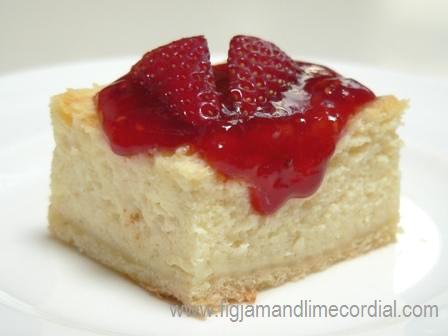
5. Remove the pan and refrigerate until cold, preferably overnight.  Cut into squares, dust with icing sugar and serve. Pete thought it needed dressing up, so we added a little berry coulis and some fresh strawberry!

018a

II 006

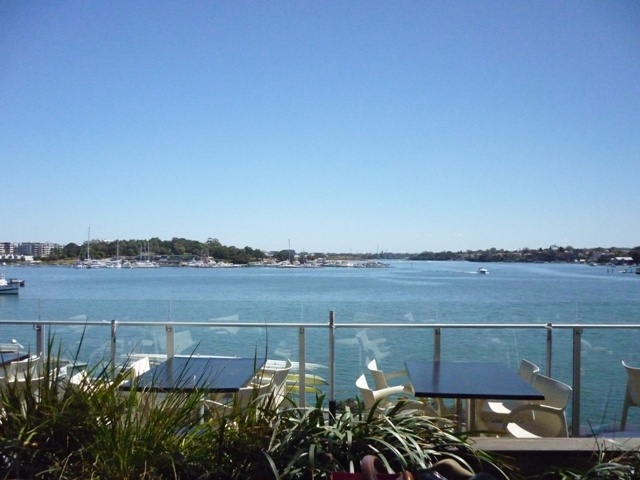
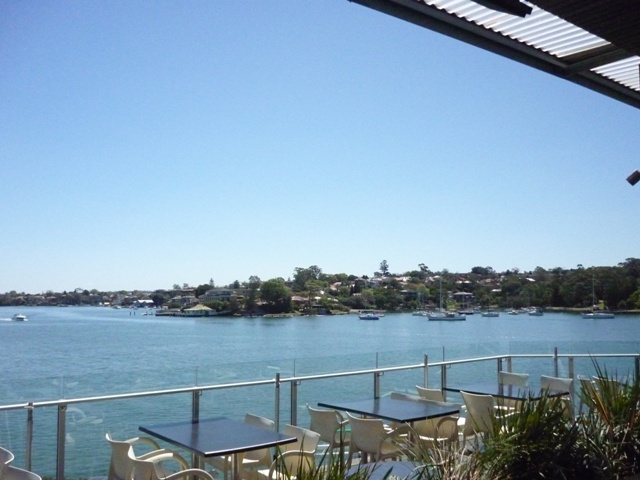
I had lunch yesterday with the Yummy Mummies at the Sydney Rowing Club in Abbotsford, overlooking the Parramatta River.

The water views were spectacular…

src 001

…no matter which way you looked…

src 002

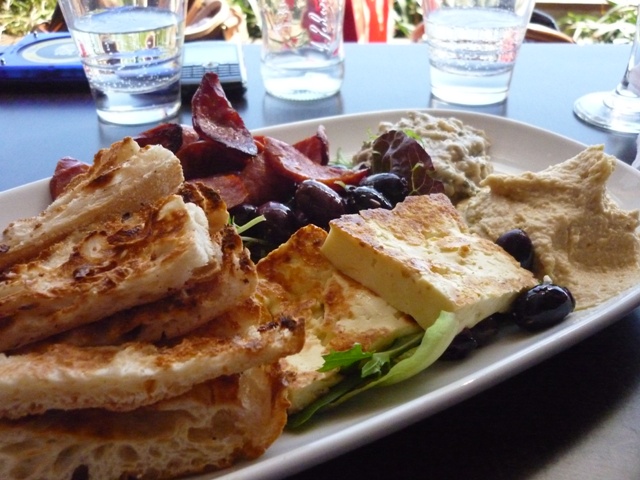
…and the food was pretty good too.  The dishes cost slightly more than you might expect to pay in a cafe, but the view more than justified the small premium.  It was a lovely way to end the working week!

src 006

Photo from Wallace & Gromit – The Official Site

Ahh…Bristol.  Home port to Treasure Island’s Hispaniola, the starting line for numerous Top Gear challenges and of course, the birthplace of Wallace and Gromit.

Joanna, who also hails from Bristol, recently sent me a photo of a  British cottage loaf, an unusually shaped bread made by stacking a small ball of dough on top of a larger one.  As these featured so prominently in the most recent W&G film, I thought it might be fun to try and make some loaves.

Here’s how Jo described them to me:

This is a very old traditional English  bread shape – all bakeries made these when I was a kid. They don’t any more. I think the idea was that you ate the top one first and then the bottom one, so that it would keep fresher through the week.  I don’t know if they were called cottage loaves because they look like a cottage with a roof on, or because they were made at home.  I associate them with thatched cottages and so forth.

I wish one of those old English bakers could come and give me some tips, because these proved (no pun intended) to be quite fiddly!  I couldn’t use my regular bread recipe, as the high hydration made manipulating the dough very difficult.

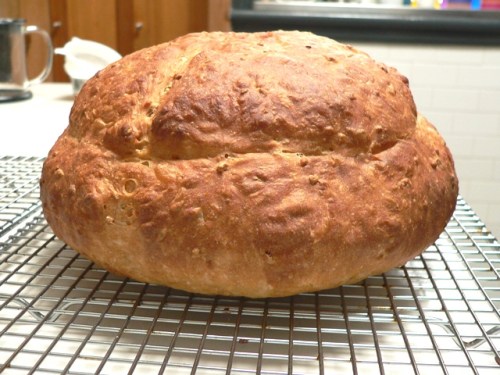
My first attempt ended up as a spaceship, with the two storeys proving into each other.
016

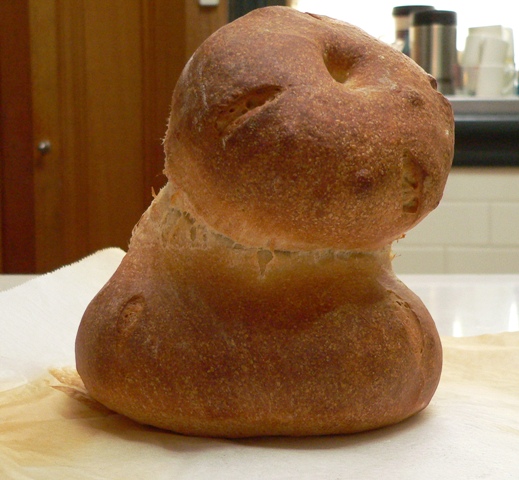
My second attempt mushroomed and Big Boy made rude comments about it.  I made him take it to school for lunch.
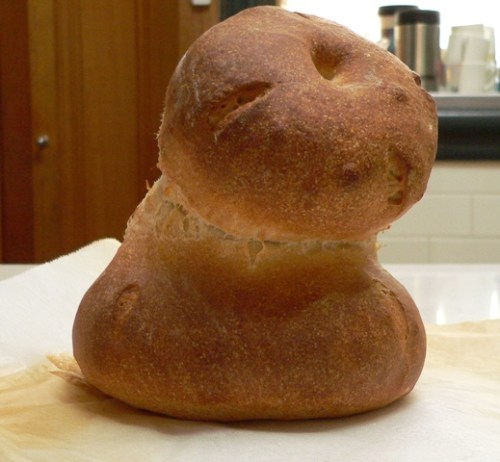
CL 021

I tried a third time with a reduced hydration sourdough (60% for anyone interested in the technical details) and a smaller loaf size (600g instead of 900g). I allowed the separate storeys to rest on the bench for 20 minutes, before stacking them and giving them an additional 10 minutes proving time.

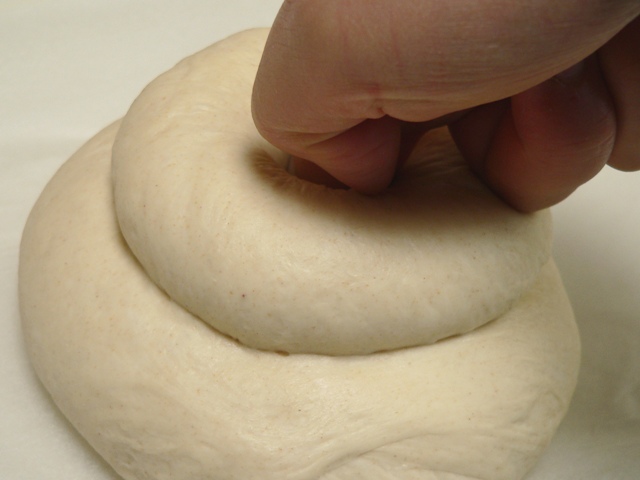
After I’d assembled the cottage, but before the final prove, I stuck my fingers into the middle of the loaf, right down to the bottom, to “weld” the two layers  of dough together.
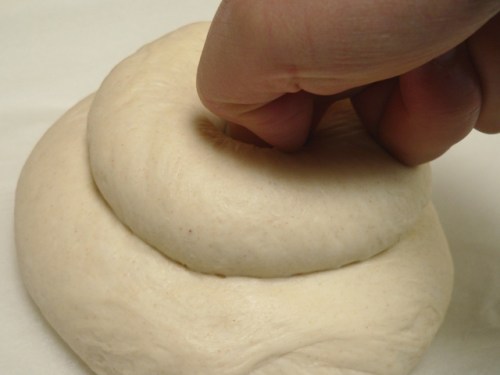
005

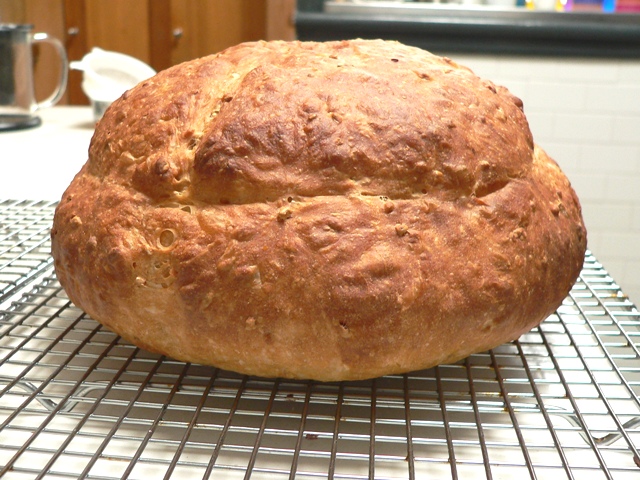
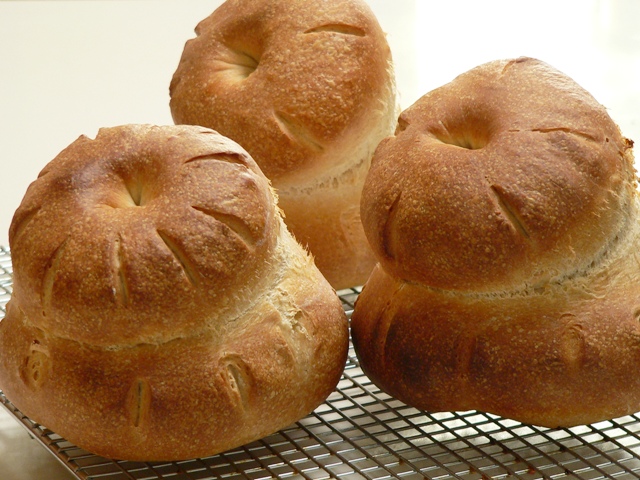
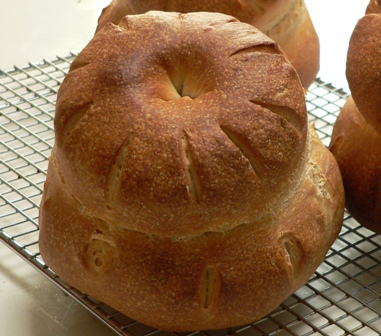
Immediately before baking, I slashed the loaves several times, to  try and control the expansion and reduce the mushrooming effect.  It was moderately successful and I finally ended up with three cottage loaves that I’m pretty happy with.  Meet Larry, Curly and Moe…
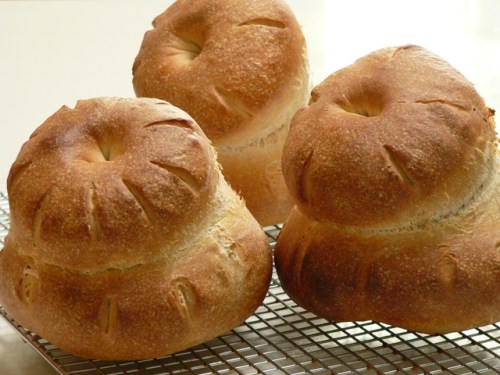
023

These loaves have a different texture to the ones I normally bake, with a slightly denser, but at the same time, softer crumb.  The boys are enjoying the change.  Many thanks, Joanna!

. . . . .

Edit: For anyone else who wants to give this a go, here are the quantities I used for the 60% dough:

  • 300g sourdough starter (at 166% hydration, ie. fed on one cup water to one cup flour)
  • 1kg bakers flour
  • 430g water
  • 50g oil
  • 16g fine sea salt

I bulk proved for four hours, then shaped and proved as above.  Each loaf used 600g of dough – 400g for the “bottom floor” and 200g for the “top storey”.
CL 052

We discovered Harkola Foods a couple of years ago, when we first started buying flour in bulk, and have been regular customers ever since.  This wonderful food wholesaler is based in the western Sydney suburb of Auburn and we’ll visit several times a year to stock up on supplies.

They offer an enormous range of nuts, flours, dried fruits, spices and Middle Eastern specialities.  You can also buy packaging materials, baking supplies, rice and oils there, all at amazing prices.

To give you an idea of their range, here are some of our purchases from today:

  • Parchment paper – as the standard width is too narrow for our 90cm oven,  we purchased a 120m roll of 40cm wide paper for $30.  The narrower size is also available, as are foil and clingfilm in huge rolls.
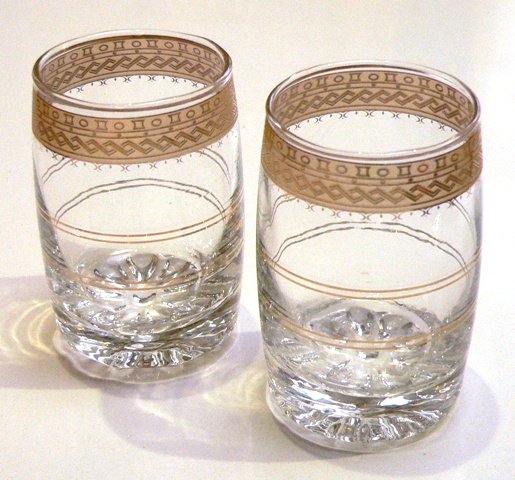
  • The gorgeous mint tea glasses above were a tiny 82c each!
  • We picked up two bags of Manildra bakers flour for friends.  These were $11.50 per 12kg sack and, because Harkola sell a  pallet load of this flour every week, the stock is always fresh.
  • Dried yeast, which I stock up on about once a year, is available vacuumed packed at $3.50 per 500g.
  • They have a huge range of nuts available – we bought almond meal at $12/kg and whole roasted macadamias for $20/kg.  There was also a wide variety of dried and glace fruits on display.
  • Legumes galore – red lentils and white beans were $2.80/kg and popcorn was just $1.80/kg.
  • Spices are plentiful, and I bought some ground cumin ($10.25/kg) and ground coriander ($7/kg).  Again, the rapid turnover of these  items ensures their freshness.

In addition to the staples, we picked up some more unusual food items.

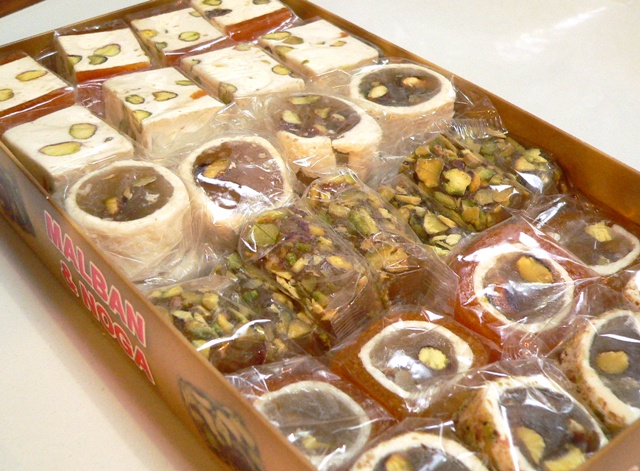
These Lebanese sweets are made from pistaccio nuts, apricot paste, nougat and date paste.  This entire box of individually wrapped treats was on sale at $6.50.

CL 027

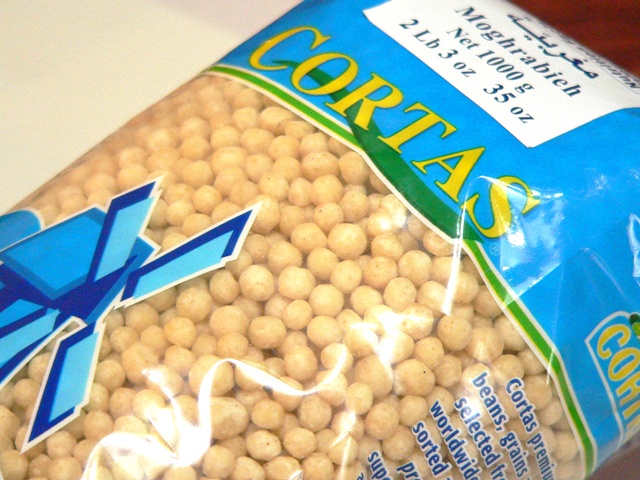
There is, of course, lots of couscous on offer, including the medium sized Israeli couscous as well as this larger variety from Lebanon, known as Moghrabieh.  These small balls of semolina swell up to the size of miniature peas when cooked!

CL 031

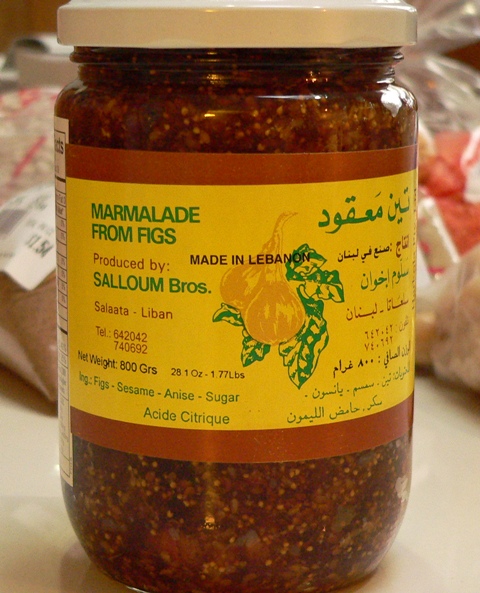
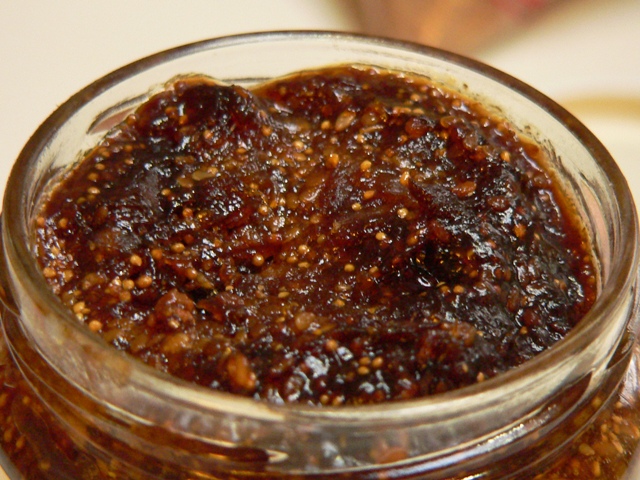
A new find for me – fig marmalade from Lebanon.  This has a deliciously interesting flavour, as the jam includes both sesame and anise, as well as the usual sugar and acid.  Imagine sweet figs with a hint of tahini.  I suspect this was the secret ingredient in an Egyptian chicken and harissa dish we tried recently.

CL 037

Given how expensive fresh figs are here, it’s hard to believe this 800g jar stuffed with delicious fig paste was just $4.99!

CL 047

. . . . .

Harkola Food Worldwide
3 – 7 Highgate Street
Auburn   NSW  2144
02 9737 5888

http://www.harkola.com