Feeds:
Posts
Comments

We’ve just had a long weekend here in Sydney, and I spent most of it in the kitchen!  Great fun – although I’ve made a serious dent in the flour supplies..

. . . . .

Over the past few weeks, I’ve been trying to improve my bread slashing skills, albeit with limited success.

Joanna, bless her, is doing her best to coach me via email and, whilst I’m making some progress, I’m still a long way from getting it right.  Luckily all the rejects are edible, so nothing is going to waste.

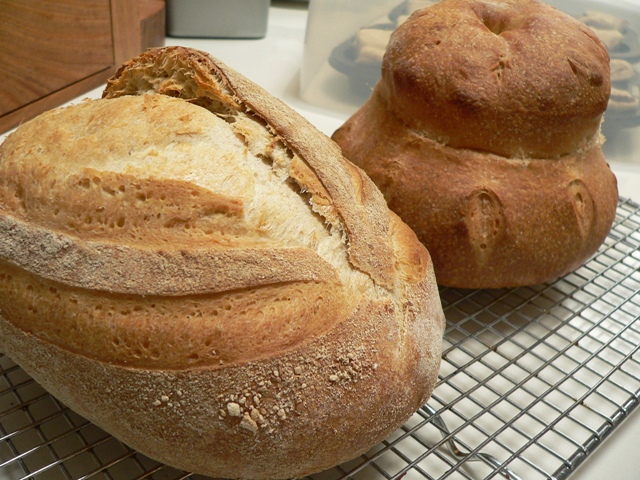
I tried again on the weekend.  The first loaf burst open – not unattractively, mind you, but not correctly.  The little cottage loaf, which I’m now pretty happy with, was just sitting there, minding her own business…
018

The second loaf was more successful.  I tried all of Jo’s tips – final prove in the fridge, didn’t oil my hands, didn’t spray water on the dough and put the cold loaves straight in the oven.  I also added an extra slash, as the dough seemed to need more room to expand.  I’m much happier with this one, although the loaf does remind me of a watermelon.

025

026

. . . . .

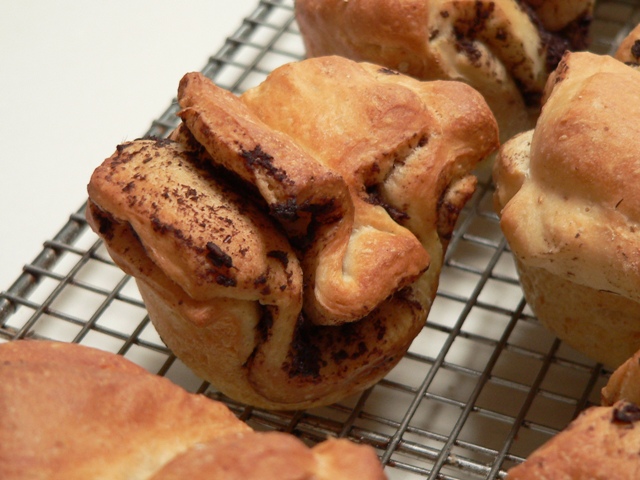
Since the oven was on, I thought I’d try Dan Lepard’s latest Guardian recipe for tapenade rolls.  My version had less added salt (8g to the 500g flour), jarred olive tapenade and, because I can’t do maths on a Sunday morning, I made twelve rolls instead of the specified ten.  They were delicious, though…

033

…and so full of personality!  For some reason, the little one below reminded me of Groucho Marx.  I think it was the eyebrows.  They were perfect with soup for lunch.
031

. . . . .

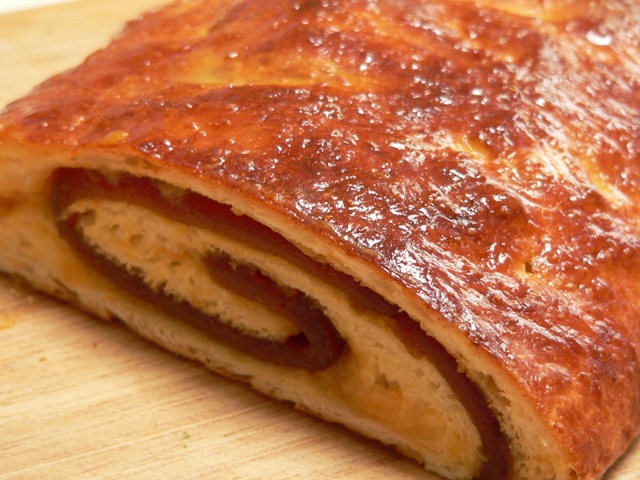
We’d picked up a sheet of ameerdine (apricot paste) during our trip to Harkola and I was struggling to think of a way to use it.  In the end, I made a large apricot danish, using Richard Bertinet’s sweet dough recipe and layering it with Pete’s apricot jam, some pastry cream and the ameerdine, before rolling the whole thing up and baking it in the oven.  It was a messy process – the apricot paste was quite stiff, and the pastry cream oozed out during the rolling process.  But the end result was a big hit with Pete and the neighbours!
006

042

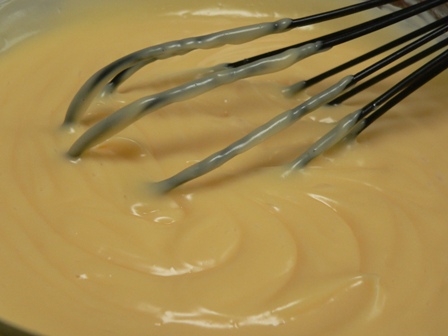
It occurred to me that if you can make lemon curd and custard in the microwave, then you could probably make crème pâtissière in a similar way.  Here’s my microwave adaption of Dorie Greenspan’s pastry cream recipe.

  • 2 cups (500ml) full cream milk (I used UHT)
  • 6 large egg yolks (use the whites for meringues)
  • ½ cup (110g) sugar
  • 1/3 cup (45g) cornflour (cornstarch), sifted
  • 1½ teaspoons (8ml) vanilla extract
  • 3½ tablespoons (50g) unsalted butter, at room temperature, cut into small pieces

Step 1: In a large pyrex bowl, mix together the milk, sugar, cornflour and vanilla extract. Whisk well to combine, then microwave on high until hot but not boiling (in my 1100 watt micro, this took two minutes).  Remove from the microwave, whisk well to smooth out any lumps.

Step 2: In a separate bowl, whisk egg yolks together until smooth.

Step 3: Continually whisking, pour the egg yolks into the milk, mixing until smooth.  Microwave on high for one minute, then in 30 second increments, whisking after each burst, until the pastry cream is thick.  In my microwave, this took 2½ minutes.

Step 4:  Whisk well, then add the butter pieces and whisk them into the pastry cream until smooth.  Press a sheet of cling film to the surface of the cream to stop it forming a skin and store in the fridge until cool.

Spoon this pastry cream into a prebaked tart shell and top with fresh berries for an elegant fruit tart. I’ve also made chocolate pastry cream by adding sifted cocoa to the milk before heating.  I’m trying not to think about all the possibilities – profiteroles, danishes….hmmm….

. . . . .

Edit: I’ve just made a half batch of this recipe and it worked very well.

  • 1 cup (250ml) milk
  • 3 egg yolks
  • ¼ cup sugar
  • 1/6 cup cornflour
  • 1 teaspoons vanilla extract
  • 25g  unsalted butter

Reduce the microwave times accordingly – in my micro, Step 1 took 1 minute, and Step 3 took 1½ minutes on high in 30 second bursts.

004

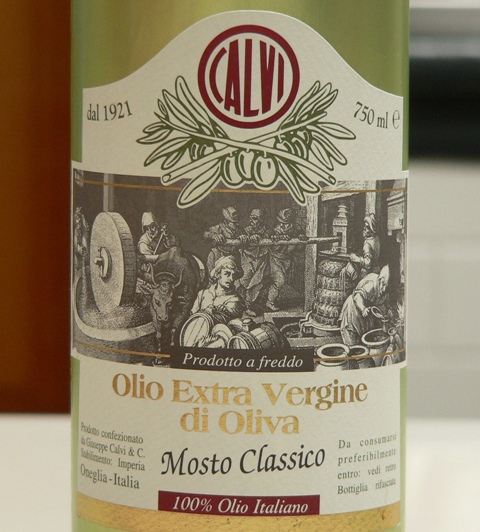
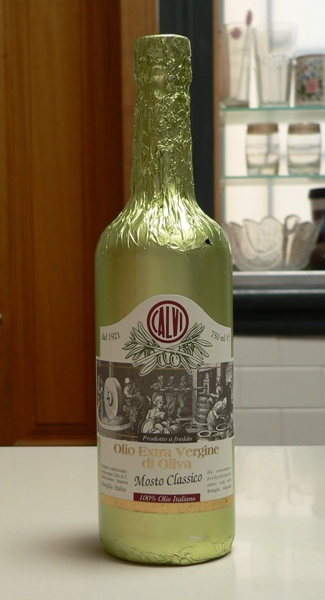
Our sweet friend Moo sent us yet another surprise package in the mail – a bottle of Calvi Olio Extra Vergine di Oliva.  Cold pressed and unfiltered, this Italian extra virgin olive oil arrived wrapped in green foil to protect it from the light.  It has a well-rounded, fruity flavour with an appealing, slightly bitter note to it (which I think comes from the olive pips).

Since it arrived yesterday, we’ve used it in every meal except breakfast – as a bread dipper, to dress up a green salad, and as a gourmet addition to Friday night splats.

It seems to be the perfect match for our homemade dukkah, and combined with vintage balsamic vinegar (also a gift from Moo), it makes a wonderful accompaniment to our sourdough bread.

Thanks again, Moo, you really are too kind!

002

duk 005

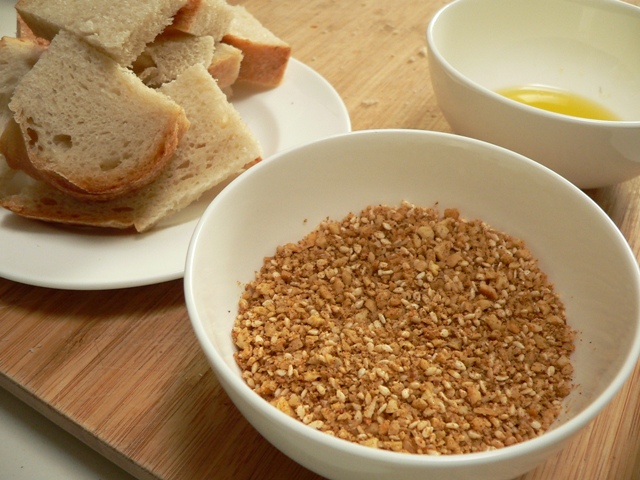
Our last visit to Harkola produced all the ingredients needed to make our own dukkah.  It’s a ridiculously easy recipe, and the advantage of making your own is that you get to eat it warm, freshly roasted and ground.  It’s also massively cheaper than the little tubs they sell for $10 at the markets!

  • 1½ cups mixed nuts – I used pine nuts, slivered almonds and walnuts, about ½ cup of each
  • ¾ cup sesame seeds
  • 1 tsp fine sea salt
  • 1 tsp ground cumin
  • 2 tsp ground coriander
  • 1 tsp chilli powder – I used Kashmiri
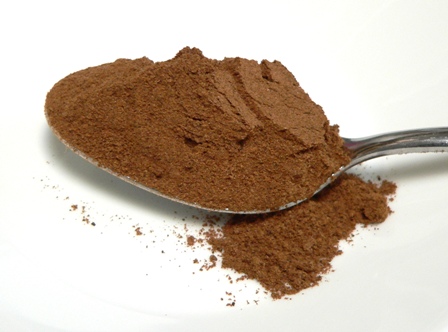
  • 1 tsp baharat spice mix

Baharat is an Arabic spice mix, commonly used in Egyptian and Moroccan cooking. It has a sweet smoky flavour, and usually includes spices such as pepper, cinnamon, nutmeg, cloves, cumin, coriander and paprika.  If you’re buying it at Harkola, you should know that they refer to it simply as “mixed spice”.  I made a right dork of myself one day, boldly asking for baharat, only to have the nice lady behind the counter reply, “Sorry? Oh, you mean mixed spice, darling…”

011

1. Fry the nuts in a heavy-based dry pan until they begin to colour, then add the sesame seeds and cook until just starting to turn golden.

2. Add the remaining ingredients to the pan and stir briefly over heat – maybe only 20 seconds or so – just to warm through.  Be careful not to let them burn.

3. Tip the mix into the bowl of a food processor and blitz to the texture of coarse breadcrumbs.  The sesame seeds will mostly stay whole and the nuts will crumble up.

4. Serve, preferably warm, with good sourdough bread and extra virgin olive oil.  Dunk the bread in the olive oil, then dip it into the dukkah.  Enjoy!

ar8

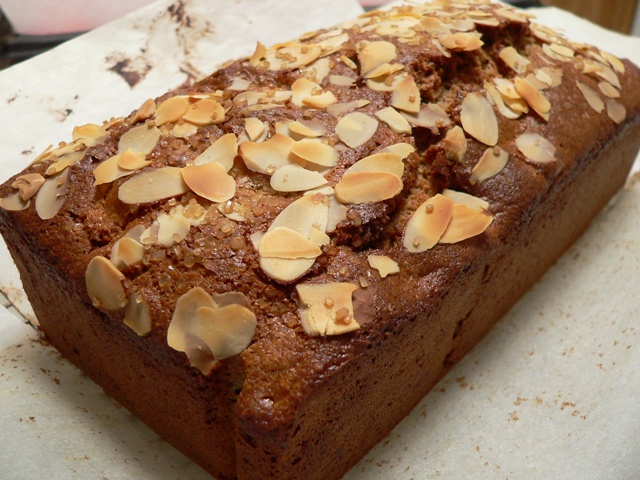
One of the nice thing about Dan Lepard’s recipes is that they’re often so quintessentially British, despite the fact that he started life as a Melbourne boy.  This delicious rye apple cake recipe is a good example – with the addition of golden syrup, apple, rye flour and almonds, the end result is a cross between a tea cake and a muffin, albeit with better keeping properties than either.

I had everything on hand – Kevin Sherrie’s organic rye flour, unblanched almond meal from Santos Trading (a rare and exciting discovery) and crisp, new season pink lady apples.

The recipe is here, and I followed the methodology exactly, with a couple of substitutions.  Instead of muscovado sugar, I used soft brown sugar, and I replaced 50g of the flaked almonds with 50g of unblanched almond meal.  I baked the cake in my trusty Chicago Metallics cake tin and it took 45 minutes to cook to perfection in my 175C fan assisted oven. Note that some bakers on Dan’s forum needed to extend the baking time for this recipe.

We had this for dessert last night, but it was even better this morning with a hot cup of tea!

arc1aarc2a