Feeds:
Posts
Comments

180509 028

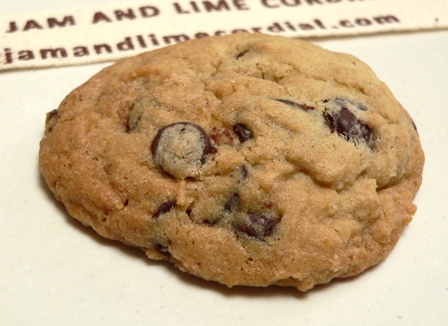
Every household has a  favourite chocolate chip cookie recipe – ours has two.  Here is the one the kids love (Pete prefers his with more chocolate – recipe to follow).  This is based on the Blue Ribbon Chocolate Chip Cookie recipe by Mrs Fields, although I’ve modified it to include a short rest in the fridge.  I’ve found that chilling the dough slightly creates a cookie that is less likely to spread when it’s baked.

Click here for a printable version of this recipe

  • 400g plain (all-purpose) flour
  • ½ tsp bicarbonate of soda (baking soda)
  • ¼ tsp fine sea salt
  • 1 cup (215g) brown sugar, firmly packed
  • ½ cup (110g) white sugar
  • 250g unsalted butter, at room temperature, but not too soft or melted
  • 2 large (59g) eggs
  • 2 teaspoons vanilla extract
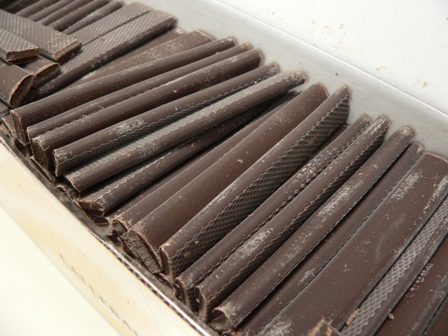
  • 240g Callebaut  811 Callets (54% dark)
  • 120g Callebaut Baking Sticks (44% dark), broken into small pieces

Note: You could substitute 360g chocolate chips for the Callebaut chocolate, but use the very best you can find – the quality of the finished cookie is dependent upon it.  We use the combination of callets (easy melting) and baking sticks (bake stable) to create a cookie which has both firm chocolate chunks and oozing meltiness.
180509 049

1. In a medium mixing bowl, whisk the flour, sifted bicarbonate of soda and salt together, then stir in the chocolate callets and pieces.

2. In a large mixing bowl, mix the two sugars together, then add the butter and mix to form a grainy paste.  Add the eggs and vanilla and mix at medium speed until combined.

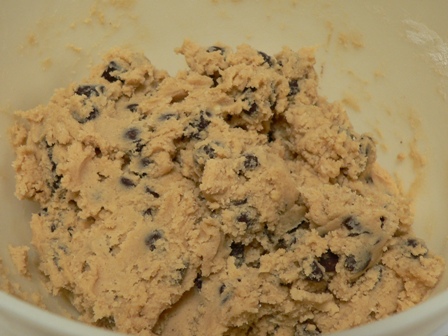
3. Add the flour and chocolate and blend at low speed until just combined.  Do  not overmix.  Cover the mixing bowl with clingfilm, then put it into the fridge for 30 – 45 minutes to chill.  The dough should be firm to touch before you shape and bake it.  Preheat the oven to 150C (300F) with fan.
180509 014

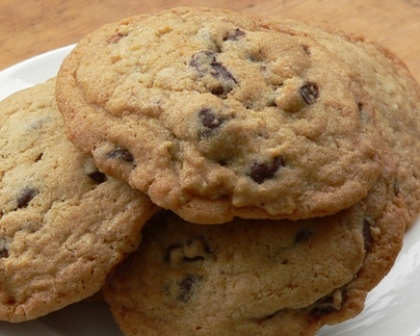
4. Remove from the fridge and drop rounded tablespoons (I use a small icecream scoop) onto a baking tray lined with parchment paper, allowing room to spread.  Bake for 22 minutes (+/- 2 minutes), rotating the trays once during the baking time.  The cookies are done when they’re golden brown and a slight push causes them to move on the tray.  Transfer to a wire rack to cool.
cookie final

basket crackers

When I was growing up, these crispy crackers were called “lavosh” and featured in the bread baskets of fine dining restaurants throughout Sydney.  They’ve now been replaced with sourdough bread, but I think it’s time we  had a revival.  If crunch really does whet your appetite (as suggested on MasterChef last week), then crackers could well boost restaurant takings during these tough economic times.

I don’t think these are true lavosh, as the recipe has yeast in it (lavosh is traditionally unleavened), but they certainly remind me of good times in the 80s!

Crunchy Crackers

Adapted from Blue Ginger Cracker Dough by Ming Tsai

  • 3 teaspoons ground cumin
  • 3 teaspoons ground coriander
  • 3 teaspoons ground fennel
  • 20g fine sea salt
  • 15g dried yeast (or 2 sachets)
  • 1kg bread flour or pizza flour
  • 220g (1 cup) extra-virgin olive oil
  • 625g (2½ cups) water
  • sesame seeds
  • 1 egg white

1. In a very large mixing bowl, whisk together the flour and yeast.  Then whisk in the ground spices and salt.

2. Add the water and olive oil and mix with a spatula to create a wet sticky dough.  If necessary, use a clean hand to squelch everything together and make sure there are no dry bits remaining. Alternatively, you could try and make the whole thing in a mixer, which is what Ming Tsai does (my mixer couldn’t manage the six cups of flour).  Scrape your hand or spatula clean, and cover the dough with a tea towel and rest for 15 minutes.

3. Turn the dough onto an oiled bench and knead briefly until smooth.  It should work easily, as the large amount of oil makes this a very silky dough.  Try kneading with the slap and fold method rather than pummelling with the heel of your palm (which doesn’t work well with a wet dough).  Spray your scraped-out mixing bowl with oil, then turn the dough into it and cover with oiled clingfilm.  Allow to rest for an hour in a warm place, or until doubled in size.

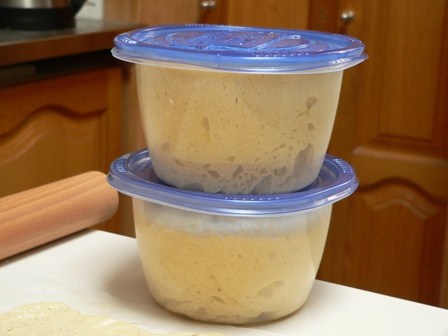
4. Preheat oven to 175C (350F). Turn the risen dough onto an oiled bench and fold several times to knock the air out.  Divide the dough into four even portions and shape each one into a ball.    Pop each ball into an oiled container and cover, then allow to rest for a further hour (this further resting time enables you to stretch the dough very thinly later).  You could also just put each ball onto a large sheet of parchment paper, and cover with oiled clingfilm.  Make sure they’re not too close together, or they’ll prove into each other.  Preheat oven to 175C (350F).

150509 003

5. Tear off a sheet of parchment paper the size of your baking tray.  Turn a ball of dough onto your paper and gently ease it out.  Your aim is to get the dough as thin as possible.  Start by lifting and stretching the dough with your fingers, then roll it out even more thinly with a rolling pin.  When you think you’ve rolled it as thinly as you can, roll it a bit more.  Dust with a little flour if necessary, but don’t use more than you need, or the dough will stiffen up and lose its elasticity.  Note: I have very large baking trays (90cm) – if your trays are smaller, you might want to start with just half a ball of dough.  This recipe really does go a long way!

5. Brush the top of the flattened dough with beaten egg white, then sprinkle generously with sesame seeds and (optional) salt.  Cut the dough into large pieces.  I use a pizza cutter, but I have a granite bench – make sure you use something that isn’t going to destroy your work surface.

150509 001

6. Slide the dough and parchment onto a baking tray and bake in the preheated oven for 20 minutes, rotating the trays halfway through the cooking time.  Allow to cool on a wire rack, and EAT!

150509 006

apple pie 002

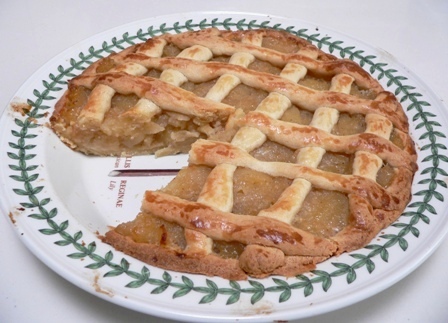
Since we’ve started making apple pie in this way, Small Man has requested it for dessert every single night.  He absolutely loves it, so we’ll keep making it once a week or so, while the apples are new season, crisp and a little tart.  It’s a great make-ahead dessert, because you can freeze both the dough and the pie filling, and assemble them prior to baking.  The shortcrust pastry has just the right amount of sweetness to complement the slightly tart apples.  This recipe makes enough pastry for two sweet pies – I usually make one and freeze the rest of the dough for next time.  You can easily halve the pastry ingredients if you’d rather not have the excess.

Filling

  • 4 – 5 large new season apples (we used Fujis, but Pink Ladies are our preferred cooking apple. Grannies are obviously brilliant as well).
  • Sugar to taste
  • Juice of one lemon (or to taste)
  • ½ tsp ground cinnamon

1. Peel and core the apples, then cut them into bite-sized chunks (save the peels and cores in the freezer for apple jelly or pectin).

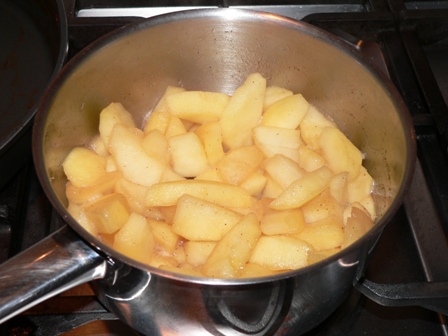
2. Put the cut apple flesh into a medium sized saucepan with a dash of water, lemon juice, cinnamon and sugar,  and cook gently, covered at first, then with the lid off, until the apples are tender but still holding their shape (you don’t want applesauce). The apples need to cook until they’re quite dry, so don’t add too much water at the beginning – just a tiny bit to stop the apples from scorching.  Pour the cooked apple mixture out onto a large flat plate to cool.

pizza-and-apple-pie-011

June’s Pastry

  • 250g unsalted butter, chopped
  • 200g bread flour
  • 200g plain flour
  • 150g icing sugar mixture (not pure icing sugar)
  • 2 whole eggs OR 1 whole egg + 2 egg yolks

1. In a large mixing bowl, combine the flours and icing sugar mixture.  Rub in the butter.  Add the eggs and mix well, using a stirring action first, and then squelching the pastry with your fingers to combine.  It can be quite sticky sometimes, depending on the weather – add a little more flour if you need to (but try not to add too much).  Knead the pastry briefly but gently, until well combined.

2. Divide into two portions – freeze one wrapped tightly, first in clingfilm and then in foil, and wrap the other half in clingfilm and store it in the fridge to rest for about half an hour.

Assembling

1. Preheat the oven to 200C/400F.

2. Remove the dough from the fridge and roll two-thirds of it out on a large sheet of parchment paper, until it forms a circle slightly larger than your pie dish. Make sure you dust your rolling pin with flour to stop it sticking.

3. Invert the pastry into your pie plate, easing it gently into the sides.  Gently, gently remove the parchment paper.  Ease and work the pastry into the plate with your fingers.  Trim any excess so that it just overhangs the outside of the plate – you’ll turn the edge in after the filling has gone in.  Make sure there aren’t any air bubbles in the base – pop them with a fork if you need to.

4. Pour in the cooled filling into the pie shell.  Fold the pastry in over the filling, forming a little rolled edge (I’ve found that doing this means you avoid a burnt rim!).  Roll the remaining dough into long skinny logs and lay them over the filling in a lattice formation.

5. Brush the pastry top with either a little milk or a beaten egg (egg is better, but I’m usually loathe to waste an entire egg on this) and bake for 20 – 30 minutes, or until golden brown.

Read about our manic pie making weekend!

ricotta bread finished

 There are four names regularly mentioned with great affection in our house whenever the topic of breadmaking arises – Kevin Sherrie and Johnny B (the millers), Richard Bertinet (aka “The Frenchman”) and Dan the Man.

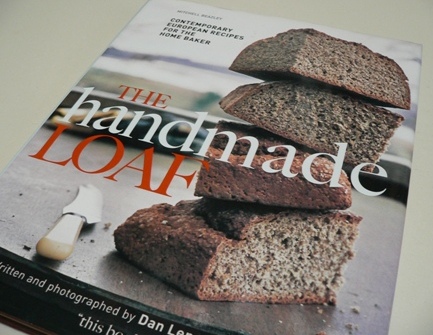
Dan Lepard, a former Melbournian and all round good guy, has gone on to become one of the most respected bakers in the UK.  The Handmade Loaf is as comprehensive and enjoyable a read as you’re ever likely to find in a bread book.  A few of his recipes have become our household staples, particularly his sourdough focaccia, which was the basis of all school lunches for nearly two years.

This book provides a wealth of ideas and techniques, interwoven with photos and stories of old and new world bakers from all over Europe. Whereas most bread texts deal with manipulating a given dough in a multitude of ways, Dan’s book is full of innovative recipes and suggestions, such as this one for including leftover ricotta in your loaf.

dan lepard

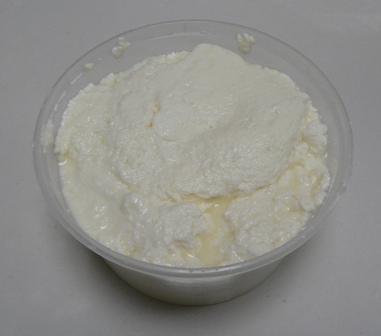
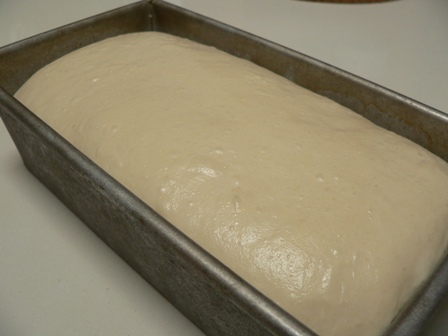
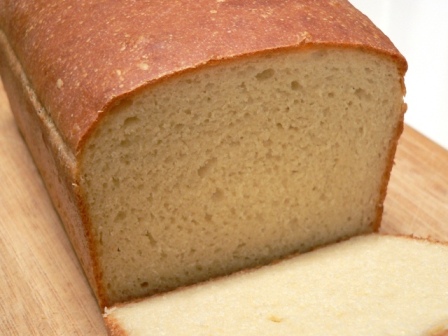
If you live where I do, you’ll often end up with half a tub of ricotta in the fridge.  That’s because the lure of warm, fresh ricotta for  the price of a gold coin tempts you daily, often before you’ve finished the perfectly fine batch you bought a few days ago.  Loathe to throw out Friday’s purchase, I tried this recipe yesterday.  Pete was very happy with the results, which went particularly well with his homemade pluot jam.  This is a moist, fine-grained loaf with the distinct flavour of ricotta and just a little added richness from the curds.  Here are a few photos of the process…

ricotta-0021

120509 041

120509 047

ricotta bread 012

. . . . .

The best thing to do with leftover ricotta loaf is…bread and butter pudding!

balsamic 006

The ever cheerful Han the Delivery Man brought me a parcel today.  We had a funny moment – the package was addressed to “Celia and her band of Merry Men” – and Han wanted to know all about my musical group and where we performed.   He was almost disappointed to find out that it was just Moo’s quirky sense of humour.

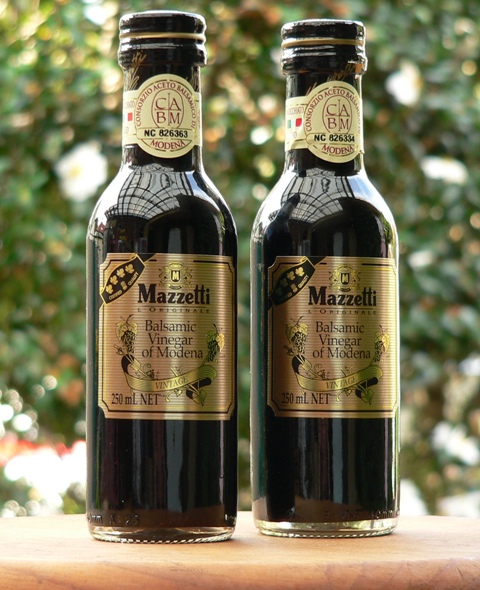
Our generous friend had sent us a couple of bottles of vintage Mazzetti Balsamic vinegar – the top shelf “Four Leaves” stuff, as opposed to the “One Leaf” bottle we use for day to day cooking. This rich, syrupy Balsamic  came with a recipe for oven-roasted tomatoes with sage, but I can also see us eating a lot of aged Italian cheese with it.  It will have its inaugural tasting with a loaf of sourdough epi, some good extra virgin olive oil and a slab of Parmesan.  Many thanks, Moo!

120509 044