Feeds:
Posts
Comments

Last night, our friends Kevin, Carol and their Astonishingly Nice Juniors came over for dinner. It was Kev’s birthday, and we were making pizzas to celebrate. The four of us go back a long way – over 25 years in fact. The wonderful thing is, we’ve been close for all those years – this hasn’t been a friendship that has waxed and waned – we’ve seen them regularly over the entire time we’ve known them, and being with them is like being with family. I can say what I think, feel what I feel, all without fear of judgment. We certainly don’t live out of each other’s pockets, but when we haven’t caught up for a couple of months, I find myself missing them. So last night was easy, relaxed and reaffirming – a perfect Saturday night.

As Carol was bringing fruit, I didn’t make a cake for dessert, and opted instead for a batch of Divine Dorie’s World Peace Cookies.

world-peace-cookies-2

Pete thinks they would be more aptly named “World Conflict Cookies”, because either everyone fights over them OR you have an internal struggle not to eat five at one sitting. The recipe is from a great cookbook called Baking from My Home to Yoursand was recently discussed on Dorie Greenspan’s blog (there’s a recipe link here). For our batch, I used homemade butter, homemade vanilla extract and Belgian chocolate. As this recipe is quite simple, it really showcases the ingredients, so it pays to use the best you can find.

Homemade butter

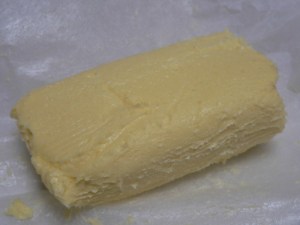
This is one of the maddest, most empowering things you can do in the kitchen. Making your own butter is so easy, and yet it always makes me feel like Ma Ingalls from Little House on the Prairie. We never planned to make butter – it’s really just a byproduct of our desire not to waste anything.

Instead of throwing away cream that’s near its expiry date, we now beat it, with just the tiniest bit of salt, in the stand mixer until it splits into butter and whey (start with the whisk and move to the paddle attachment if it gets too thick). Rinse the butter in cold water, then it needs to be beaten to get all the residual liquid out of it. We do this by placing a wooden chopping board over the sink at a slight incline (to allow the liquid to drain off) and smacking the butter on it with wooden gnocchi paddles (one will work, but two is much easier). Surprisingly, the ridged paddles don’t stick to the butter, and the whole process is really quite quick, although it can leave your kitchen an oily, cream-speckled mess.

It really is delicious and worth trying – after all, how often do you get to taste butter which is just minutes old?  But being able to use our own butter in cakes and cookies – that makes me blissfully happy.
butter-001

. . . . .

More here : Butter Making #2
and here : Step by Step Butter Making Photos

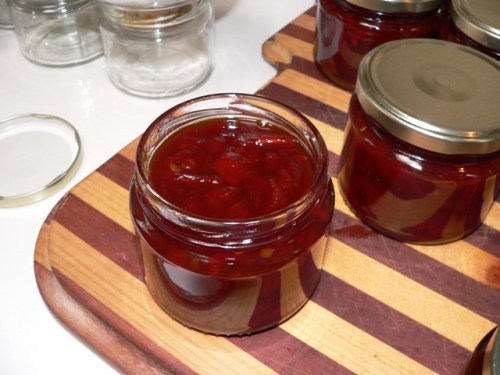
For all our friends who love Pete’s chilli jam – here is the recipe. This was our very first attempt at preserving – years before the recent jam making mania. It’s really a spicy capsicum relish and when you make it on a large scale, it’s an all day affair. We started this morning at 8am and we’ve just pulled the last jars out of the hot water bath now, at 5pm. But it’s worth it! Over the past week, we’ve had three friends request a jar, as they’ve used up their allocated supply. It’s always very flattering to be asked, so yesterday at the markets we picked up a 10kg box of capsicums, some bagged apples, two sorts of chillies and some Australian garlic (which is only available for a few months each year). The capsicums were $14 (and we didn’t use all of them), the apples and chillies $4 each, and there was about $1 worth of garlic in the mix. Add to this the juice, sugar and vinegar, and our total outlay today (excluding electricity and the cost of the jars) was about $35, which is pretty good given that we’ve made 19 jars of chilli jam!

Pete’s Chilli Jam

Approximate quantities per jar :

  • 1 red capsicum, quartered, seeds and white membrane removed, then sliced into pieces (these are known as bell peppers in the US)
  • 1 apple, peeled, cored and sliced
  • 1 large red chilli, deseeded and chopped (also known as chili peppers)
  • 1 small red chilli, deseeded and chopped
  • 1 large clove of garlic, finely chopped
  • 125g white sugar
  • ½ cup vinegar
  • ½ cup apple juice

Today we used :

  • 24 red capsicums
  • 24 small apples (12 Royal Galas and 12 Granny Smiths)
  • 24 long red chillies
  • 24 small Diablo chillies
  • 24 cloves garlic
  • 3kg sugar
  • 3L vinegar (today we used a mix of cider vinegar and white vinegar)
  • 3L apple juice

Put all the prepared ingredients into a large stock pot (or in our case, two), and bring to a boil.

280209-005

Once the mixture has reduced slightly and you can fit the sugar in, add the sugar. Then it’s just a case of boiling the jam, stirring regularly, until it thickens – it will reduce by at least half by the time it’s done, and will gurgle like molten lava. Be sure to stir constantly once it reaches this stage, as it’s liable to catch and burn very easily. Our batch today took a good six hours of boiling to reduce down, with an hour of non-stop stirring at the end (while wearing welders’ gloves and protective clothing). We bottled them in slightly larger jars this time, but the per jar quantity given above is about right for a 200 – 250ml jar (depending, of course, on the size of the capsicums and apples). The jam doesn’t need to be made in such large quantities, and we’ll often make a smaller batch, sized accordingly to the amount of fruit we have on hand.

280209-007

Once the jam is ready (determining this point takes a great deal of discussion, but Pete always has the final say), we pour it into sterilised jars, and then put the sealed jars into a large pot of boiling water and boil them up for 10 minutes.

280209-008

Small Man is learning to knit.  His first attempt started with 20 stitches, and by row 7, he had 24 stitches, despite having dropped three along the way (no idea how he managed that).  Anyway, I suggested we cast that piece off and start again, and rather than throw it away, I sewed the small knitted rectangle into an egg cosy for him.  It sits on his boiled egg every morning at breakfast and he’s a very happy little Vegemite.

egg-cosy-001

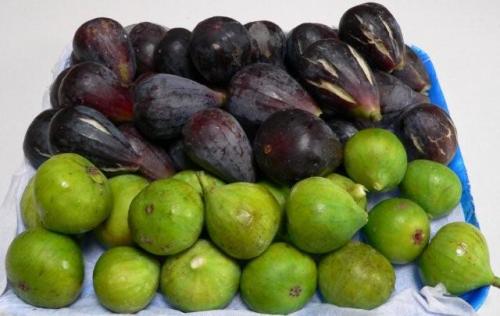
Last night, Pete made Fig and Rhubarb Jam from Mrs M’s figs. He used all the tarter green figs and about half the black figs (the riper ones), and combined that with a kilo of rhubarb we had in the freezer.

fig-and-rhubarb-002

It’s a nice feeling to reap the rewards of proactive shopping. About six months ago, we bought a box of rhubarb offcuts at the markets – rhubarb retails for $3.99/bunch most of the year, so when we spotted a box with the equivalent of about 40 bunches for $12, it was an easy decision to make. We actually bought two boxes (as you do) and gave one to a neighbour. Unlike him, we washed and chopped up the rhubarb, and stashed most of it in the freezer in half kilo bags. Our neighbour was heading away for a week with friends, so he took his box with him and cooked it up for breakfasts and desserts during the holiday. Needless to say, he hasn’t been that keen on rhubarb ever since.

Most of the fig jam recipes online use dried figs, which isn’t surprising given how expensive fresh figs are. But if you’re fortunate enough to have access to an abundance of them, then this fresh fig jam really is superb.

Pete’s Fig and Rhubarb Jam

  • 1kg fresh ripe figs (green or black) washed, topped and chopped into pieces
  • 1kg washed, chopped rhubarb (make sure you discard the leaves, or they’ll make you sick)
  • 300ml homemade pectin stock (instructions for this are here)
  • 1.2kg sugar
  • juice of 2 lemons
  • juice of 2 limes

Boil up everything except the sugar in a large pot until well cooked. It’s important to make sure all the skins are completely softened before adding the sugar. Add the sugar, and cook at a rolling boil until the jam sets and wrinkles on a cold plate. Spoon the hot jam into sterilised jars, seal tightly, then boil the jars for 10 minutes in a hot water bath. Label and store and eat.

. . . . .

See our Jam Making Primer for more tips on making jam.

Every day, something happens to remind me of how blessed my life is. Today it was having coffee with two of my favourite people in the whole world, in my favourite coffee haunt in the whole world. This was followed by a visit to Paesanella, the best cheese shop ever, to stock up on weekly supplies of fresh ricotta, mozzarella and olives. Johnny and Rita are always so kind, and they regularly pass me bits and pieces to cook with. Today, Rita gave me a big bag of ham bones (which she does often, bless her), and I’m going to make pasta soup.

Many years ago, as newlyweds, we saved every cent we had, borrowed money from everyone we knew and mortgaged ourselves to the hilt to buy our old house. It was a deceased estate and by the time we found it, it had been on the market for nearly two years. There was a reason for that, too – it had a tiny kitchen, lots of boxy little bedrooms, no living room, no indoor toilet and no shower. The carpets were rotting away, the side fence had been eaten by a jungle of ivy and the electrical wiring was a fire hazard. We loved it to death and still do, but renovating on a non-existent budget is the folly of the young. At 23 and 24, we happily banged away at the walls and lived cheerfully with hot and cold running cockroaches. But it was pretty tight going money-wise.

It was at this time that we met the wonderful Mrs M. Wonderful doesn’t actually begin to describe her, she was (and still is) an absolute star. She was already in her 70s when we moved in next door and she immediately took us under her wing. One of the things she taught us was how to live on a shoestring and to this day, we still make a variation of her pasta soup nearly every week. Now in her 90s, she is as kind and generous as ever, so I wasn’t surprised (but ever so grateful) to come home today and find a tray of figs from her trees, waiting at the back door. Tonight we’ll have figs and San Daniele prosciutto for entrée, and pasta soup for dinner. And give heartfelt thanks to God for letting us live such a blessed life.

figs-and-ham-001

Ham, Lentil and Pasta Soup

This is less of a recipe and more of a story. Start with bones of some sort – beg or buy some ham or bacon bones from the deli or butcher, and cross your fingers that they’ll have some meat left on them. If not, you might want to pick up some ham to boost the protein content of your soup. Put all the bones into a big pot and give them a quick rinse, then fill the pot with enough water to comfortably cover the bones. Bring it all to boil and let it simmer for about an hour, so that the bones can really impart their flavour. Skim off any scum or fat that floats on the surface.

Once you’ve skimmed the stock, add some rinsed lentils (I used blue lentils – similar to Puy lentils – as they don’t boil down to a complete mush in the pot), prepared chopped vegetables and some spice mix if you’d like. We use a Chermoula spice mix from Herbies, but I guess you could really use anything, or leave it out altogether. The choice of vegetables will depend on what is in the fridge, but will always include onions, tomatoes, potatoes, carrots and celery. At various times, we’ve also added corn kernels, frozen peas, baby spinach leaves, chopped beans, chick peas, rinsed baked beans and zucchini (although not all at the one time!). The vegetables get to cook in the pot for a good half an hour to an hour longer, until the lentils are well done, and the soup is a wholesome brown colour.

At this point, remove the ham bones and strip anything edible off them, and add the meat back into the pot. If there wasn’t much on them to start with, you might want to add the extra ham. Bring the whole pot to a boil, then add half a packet of soup pasta (sometimes we use baby macaroni, other times we’ll use what looks like broken angelhair pasta). I know it doesn’t sound like much, but with all the other ingredients in the soup, that half a packet of pasta makes enough to feed six comfortably (and that’s with Small Man currently eating five bowls at a sitting).

I don’t usually need to add any more seasoning to this, but it’s always good to taste the soup and see if there is enough salt in it. We serve it with a sprinkle of grated Parmesan cheese and a slice of homemade sourdough bread, although lately I’ve taken to stirring in a spoonful of chilli sauce as well. Astonishingly, no-one ever seems to get sick of this soup. We honestly do make it about once a week, and often Small Man will ask the following day if we have any leftovers in the fridge.