Feeds:
Posts
Comments

vivida

Let there be light!

Vivid Sydney 2016 is a glorious explosion of light and colour across our city. We’ve deliberately avoided the high traffic areas of Circular Quay and the Royal Botanic Garden this year (so far), but there is still a great deal to explore in the other precincts.

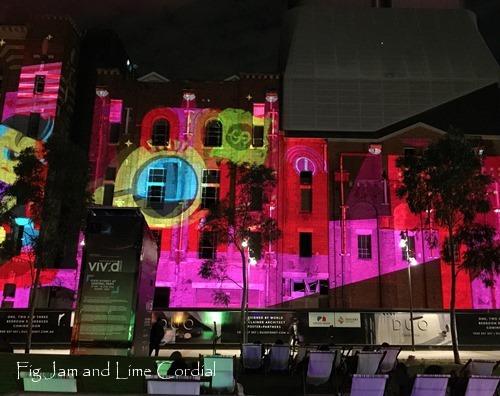
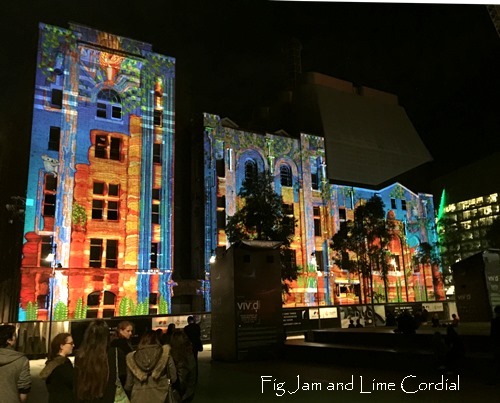
On Wednesday night, I dragged the boys out to Central Park on Broadway to see X Factory – a light show projected onto the facade of the old brewery building. It was a lovely mild night and Central Park is full of great eateries – we had a fabulous meal at Ribs and Burgers.
vividb

A brief snippet of the animated projection…

. . . . .

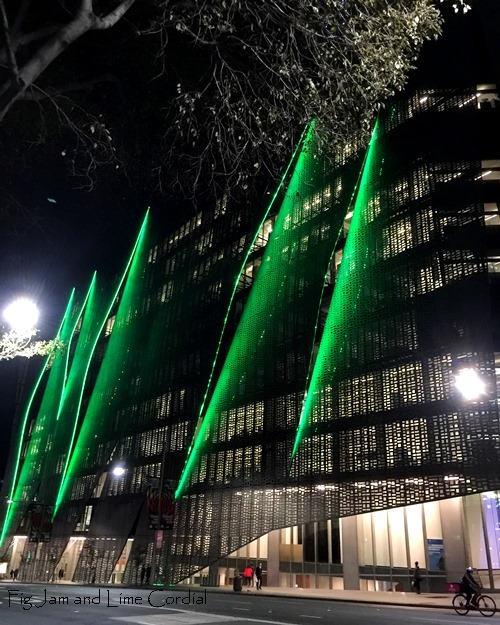
If you’re planning to visit, it’s easiest to park at the Broadway Sydney shopping centre. You’ll get two hours free parking, and it’s just a short walk from there to Central Park. Best of all, you’ll walk right past the magnificent UTS building, with its permanent funky lighting…
vividc

. . . . .

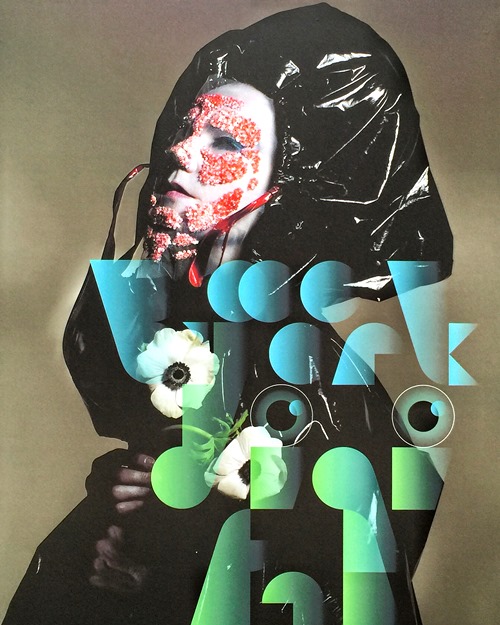
For something completely different, book a free ticket to the Björk virtual reality show currently screening at Carriageworks. I haven’t loved VR in the past (being very short-sighted makes the headsets a bit tricky to use), but this one was amazing and incredibly immersive. For any fellow Trekkies out there, it’s how I imagined a holodeck experience to be. The show is in five parts, and you need to allow about an hour in total…
vividd

. . . . .

Finally, if you’re only going to one Vivid event this year, I’d highly recommend Taronga Zoo. It’s spectacular. Taronga is celebrating its centenary this year, and this is the first time it’s been part of Vivid Sydney.

Bookings are needed and entry is limited to 5,000 people per night. Tickets are $18 each, but I think they’re worth every cent. If you’re booking online, try to get the ANZ Blue Pass tickets (they cost the same price as regular entry), as these will give you free access to the Sky Safari cable car as well. The ten minute round trip offers magnificent views of the city and the Harbour Bridge.

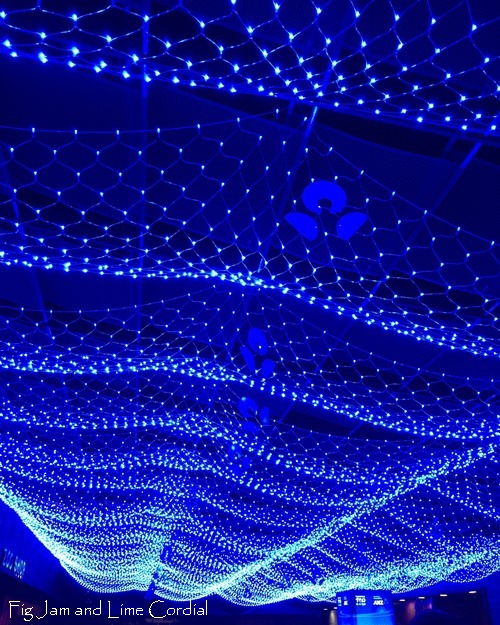
A web of fairy lights hung overhead as we queued for our ride…
vivide

The Zoo entrance is a perfect canvas for this colourful bespoke projection…

. . . . .

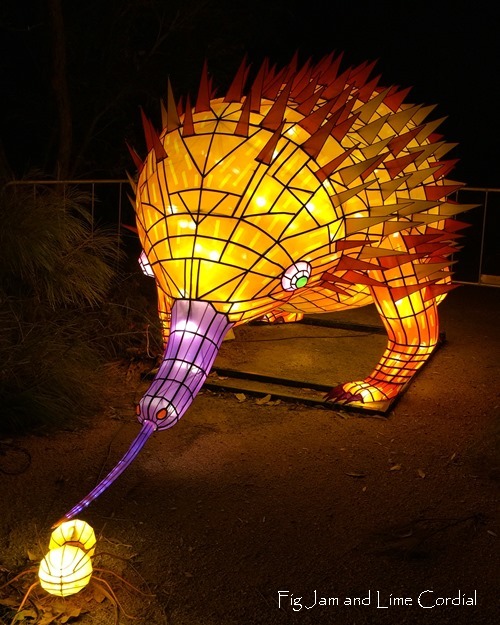
The money raised from Vivid ticket sales will go towards the Zoo’s conservation projects. In keeping with that, there are ten large light sculptures of endangered animals, as well as other smaller ones. This echidna isn’t endangered, but it is quintessentially Australian…
vividf

Most of the sculptures having moving parts – the echidna’s tongue flicks in and out towards the ant, and these large marine turtles wave their flippers as if they’re swimming through the darkness…
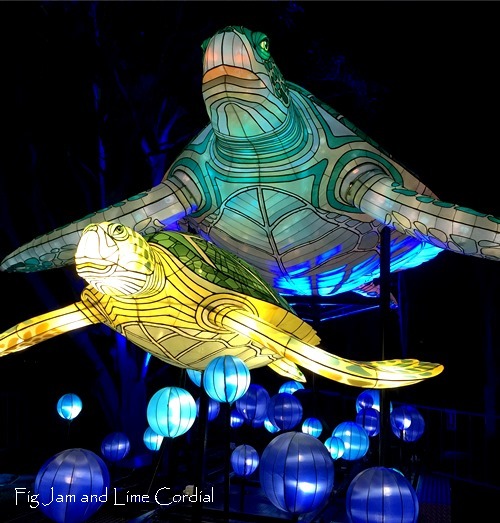
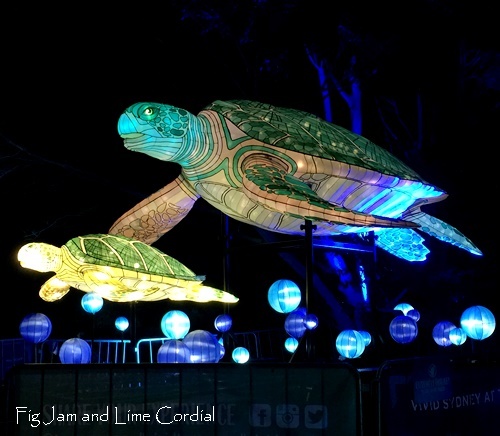
vividg

vividn

As you start down the trail, green lights pulse, turning the surrounding foliage into an explosion of light and movement. It’s as if the greenery is filled with a million fireflies. I was completely entranced by this tree…Pete and Small Man both had an Avatar moment, agreeing that this is what the Pandora Forest at night might have looked like…

vividh

Here’s a short video of the firefly effect…

. . . . .

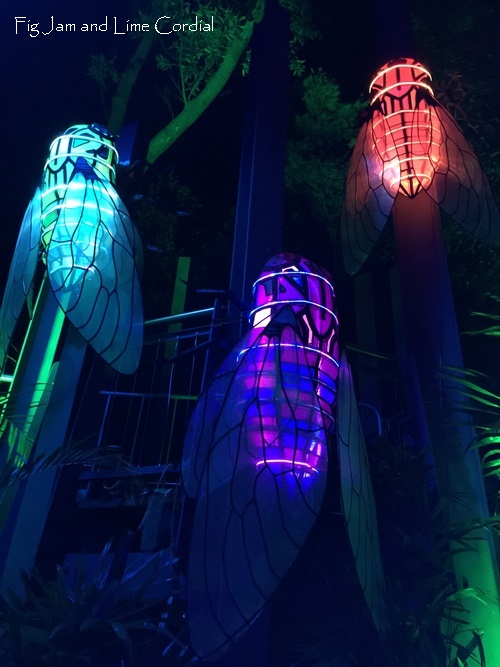
Clusters of cicadas were positioned on trees adjacent to the path…
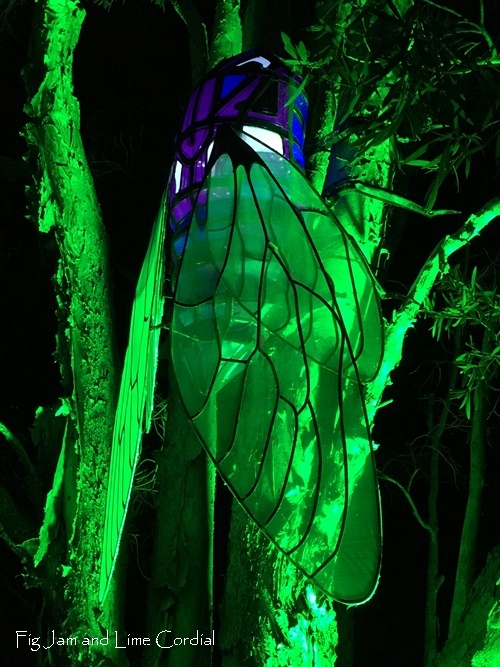
vividk

vividl

This colour change chameleon was interactive and drew a crowd of excited children…
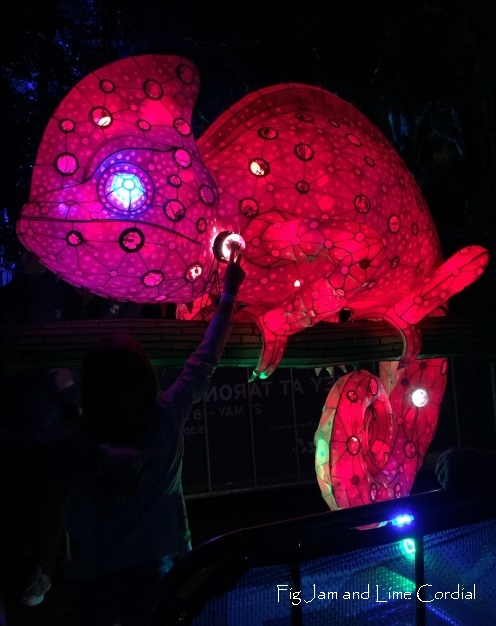
vividm

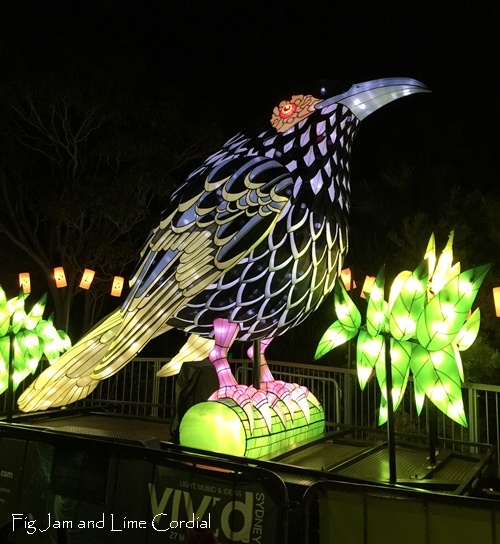
The Regent Honeyeater is native to South East Australia and critically endangered…
vivido

If you’re arachnaphobic, you might want to skip the glow in the dark tarantula…

vividp

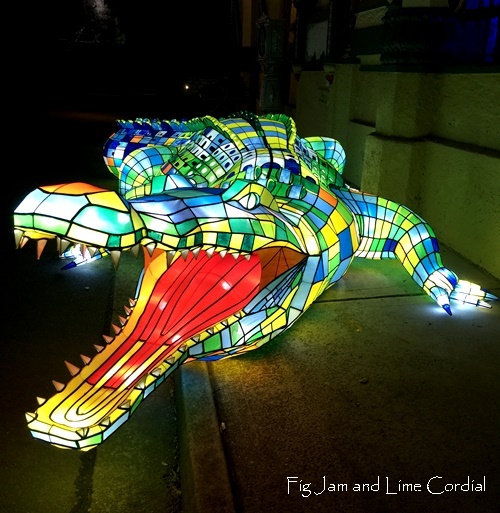
One of the more intricate sculptures, this giant saltwater crocodile opens and closes his large mouth…
vividq

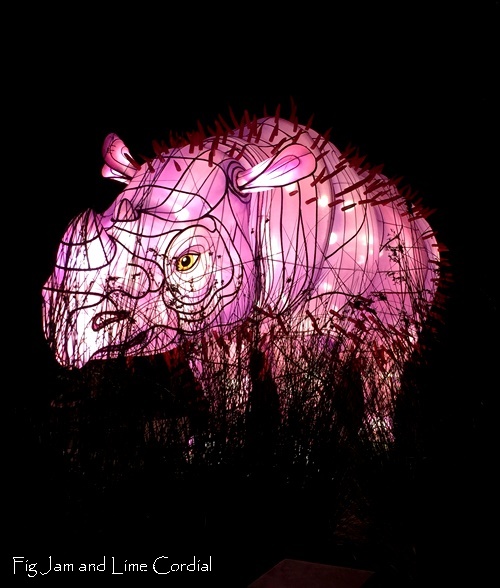
The Sumatran Rhino is hairy, two-horned, and now desperately rare in the wild…
vividr

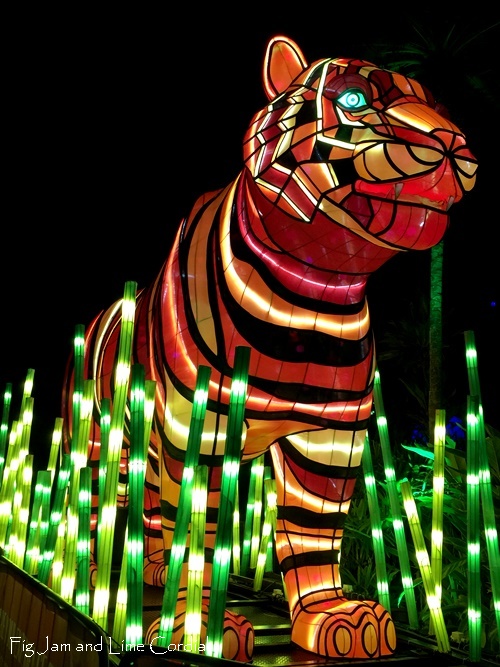
Another critically endangered species, the magnificent Sumatran Tiger, represented in light…
vivids

At various points along the walk, these little Pygmy Tarsiers perch on overhanging branches. We thought they were lemurs at first…

vividu

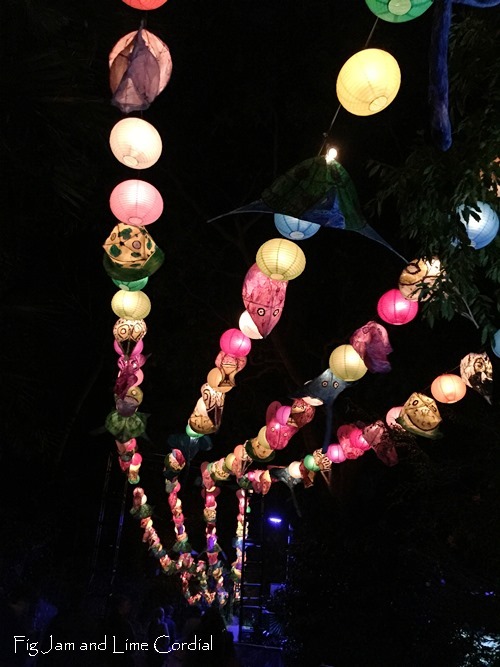
The trail is decorated with thousands of lanterns, made by school children as part of the Zoo’s Centenary Program…
vividv

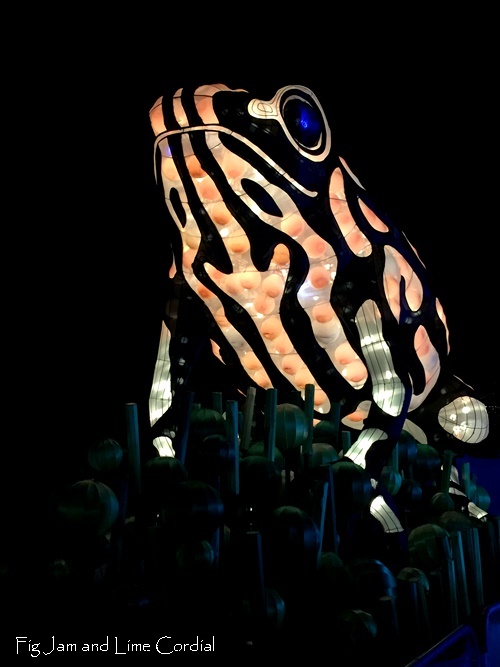
A Corroboree Frog – poisonous, indigenous to Australia, and endangered…
vividt

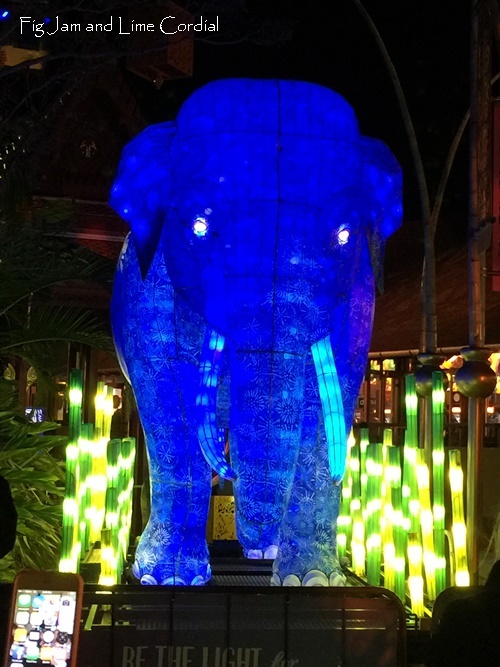
It was all incredibly spectacular, but I’ve saved the  best for last. This stunning blue masterpiece – an Asian Elephant – moves his head gently from side to side…
vividi

. . . . .

. . . . .

If you’re in Sydney and haven’t yet caught a Vivid display, there’s still time! The festival runs until the 18th June 2016, and there’s a list of all the different precincts and installations at the Vivid Sydney website. And if you’re not in Sydney, I hope you enjoy these photos – it’s a great pleasure to be able to share a little bit of our wonderful city with you!
Last Friday night, Pete and I caught the light rail in to Darling Harbour to visit Vivid Sydney. Our city’s annual light show has encountered some pretty wild weather this year and some displays have been damaged by strong winds. Thankfully, last Friday was merely drizzly, as opposed to the massive storms we had over the weekend.

Pete and I grabbed a table on the boardwalk, ordered a simple dinner, and settled in to watch the show. The Laser-Dragon Water-Theatre was glorious – video projected water screens, 20 metre high fountains, flame jets and powerful lasers – all combined to create a stunning light show in the middle of the bay. It was amazing to watch the image dissolve into water droplets at the end…

. . . . .

. . . . .

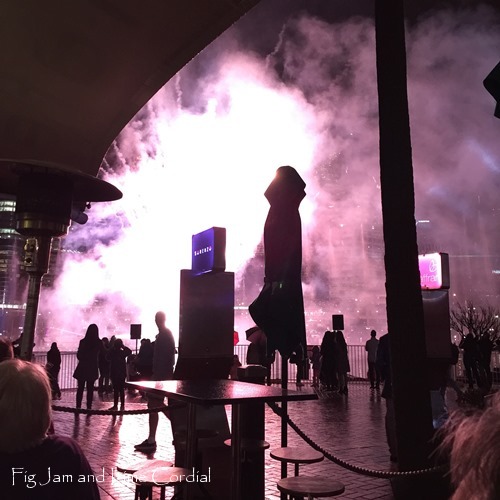
I have an appalling weakness for fireworks. I know they’re environmentally terrible and a huge waste of money, but I adore them. And I like being right under them, where the explosions are loud enough to reverberate in  my chest…

. . . . .

Darling Harbour has fireworks most Saturday nights during the year, and several times a week during Vivid Sydney (their website has more information).

dh1

. . . . .

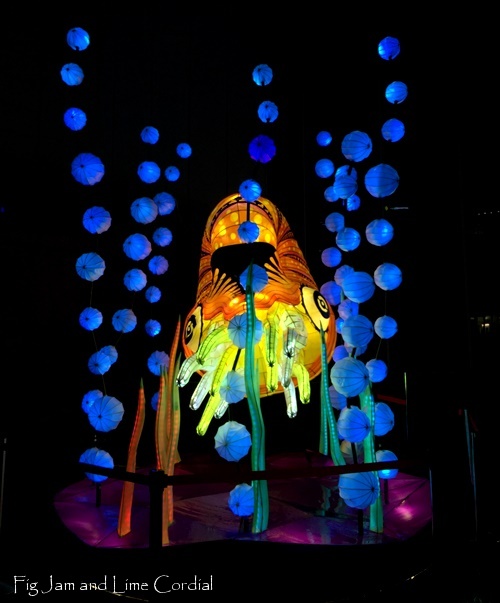
There are just a few light sculptures at Darling Harbour – not nearly as many as there are at Circular Quay, but we were more than happy to avoid the big crowds. This angler fish was a cheery sight…

dh2

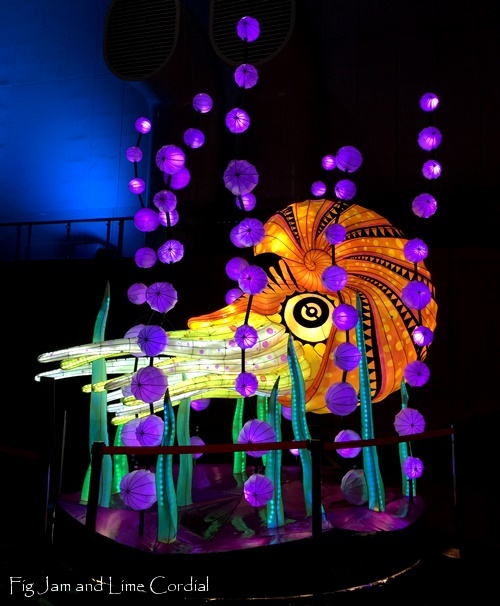
…as was this colour-changing nautilus…

dh4

dh3

dh5

. . . . .

We’re hoping to catch a few of the Vivid Sydney displays – they’re quite widespread this year. I’ll post more photos if we do!

ostn9s

Our Overnight Sourdough Tutorial, which I wrote in 2014, has become one of the most popular posts on our blog.

It was designed to be a simple, basic formula which would work well with our Priscilla sourdough starter. Being a lower hydration dough, it was easy for even absolute beginners to produce a good everyday loaf on their first attempts.

If you’ve mastered the basic overnight sourdough and would like to try something a bit more challenging, then this tutorial is for you. This higher hydration dough results in a chewy, open crumb with great flavour and an artisan, burnished crust. It takes a bit of skill to handle the wet dough, but it’s not very difficult – we’ve taken as many photos and videos as we could to make it as easy as possible for you.

I’ll assume that if you’re going to attempt this, then you’ve already read our first tutorial and are comfortable with the feeding and care of your starter. This recipe uses a much smaller proportion of active starter, fed at a ratio of one part water to one part bakers flour by volume (166% hydration).

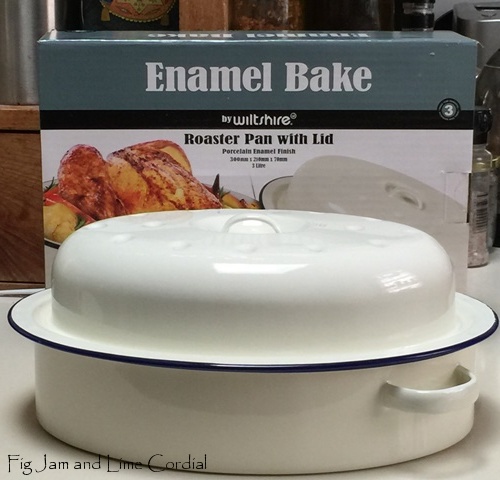
An integral part of the process is the baking of the dough in an enamel roaster. This makes a world of difference to the finished loaf. If you haven’t already invested in one, they’re very affordable, especially compared to enameled cast iron…

. . . . .

Ok…ready to go? Let’s get started.

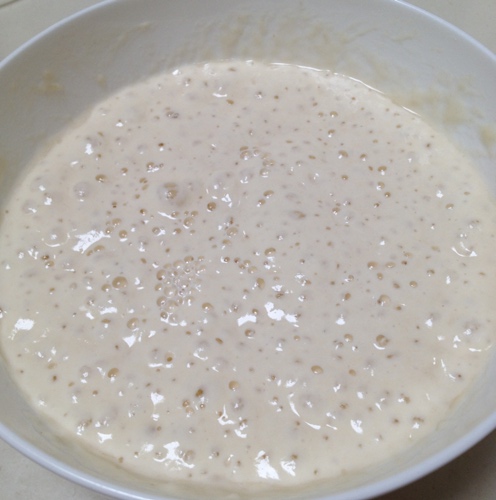
Begin with your starter bubbly and active…

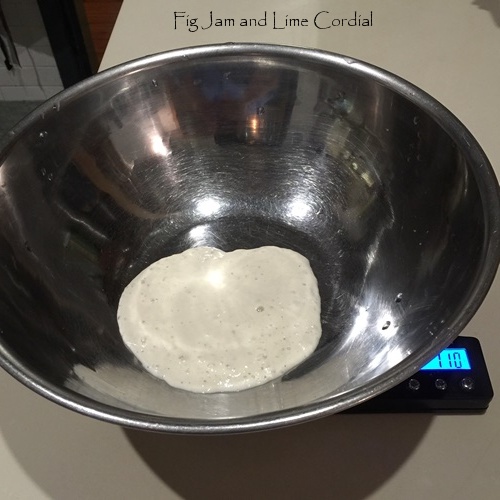
Start at least an hour before you’re ready to go to bed (I started at 7pm), and measure out 110g of active starter into a large mixing bowl…

Edit 18Nov2017: since reading Emilie’s book, I now use an even 100g of starter and the bread works out perfectly. Round numbers are nice!

ostn1

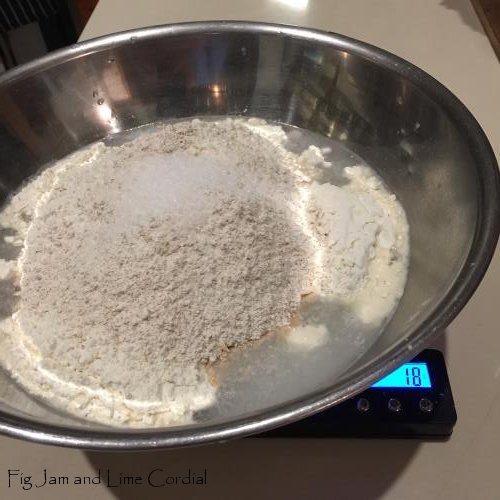
Add 750g of cool or room temperature water…

ostn2

Add 900g bakers flour…

ostn3

…followed by 100g wholemeal spelt flour. If you can’t get spelt, use regular wholemeal (or wholewheat) flour. The recipe will also work with all bakers flour, but it might be a bit stickier to handle. Reduce the water to 700g if necessary…

ostn4

Add 18g fine sea salt…

ostn5

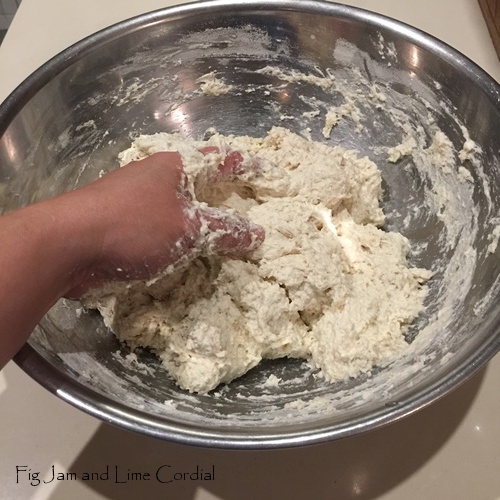
With a clean hand, squelch everything together, then scrape off your hand and cover the dough with a shower cap or cling film. Let it sit on the bench for an hour or so…

ostn6

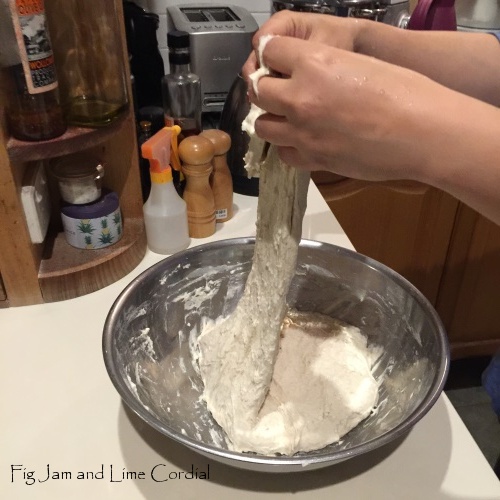
After the dough has rested, uncover it and give it a few stretchy folds. Using wet hands, grab one side of the dough and pull it up, then fold it over the top. Repeat this three more times, giving the bowl a quarter turn each time. Edit: I like to do this twice, making two complete rounds (ie. eight stretches and folds). The dough should start to tighten up by the end of the second round…

ostn8

Here’s a video of the process…

. . . . .


. . . . .

Cover the dough with the shower cap again and leave it on the bench overnight. If you have time before going to bed, you can fold the dough again.

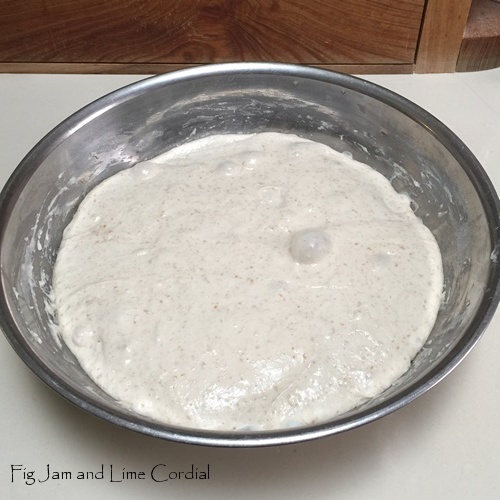
The following morning, it will look like this…

ostn9

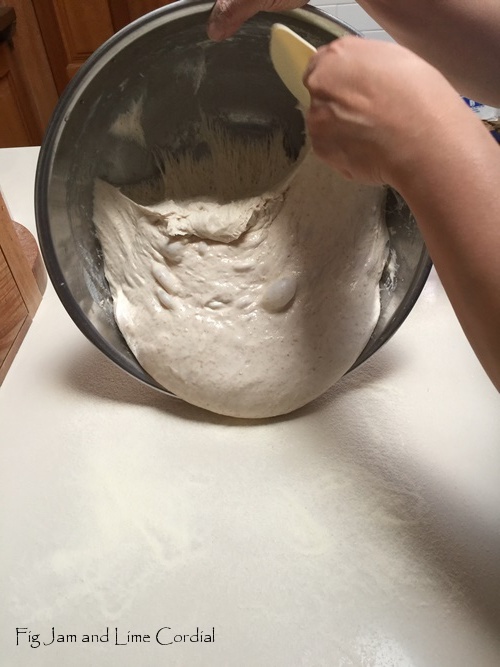
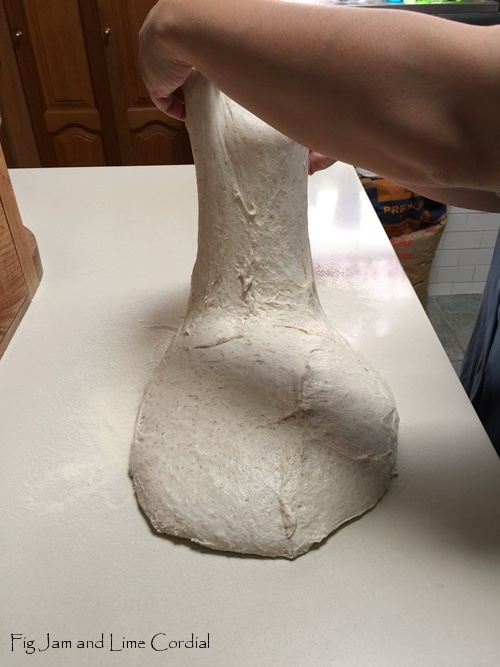
Preheat the oven to maximum. Dust the bench really well with fine semolina (rye flour, rice flour or just bakers flour will also work). Scrape out the dough…

ostn9a

It will be quite soft and sticky…

ostn9b

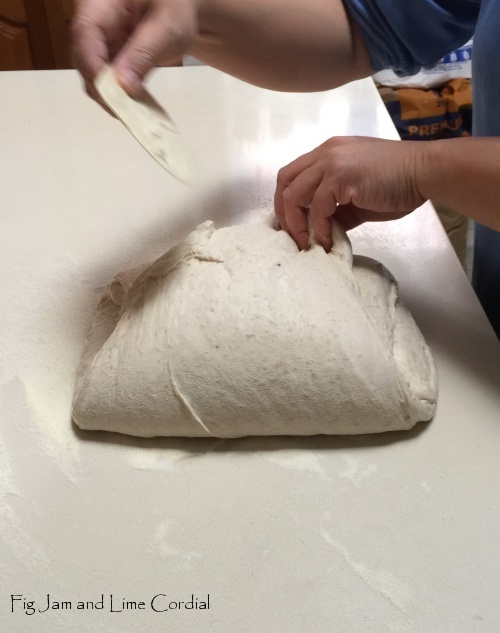
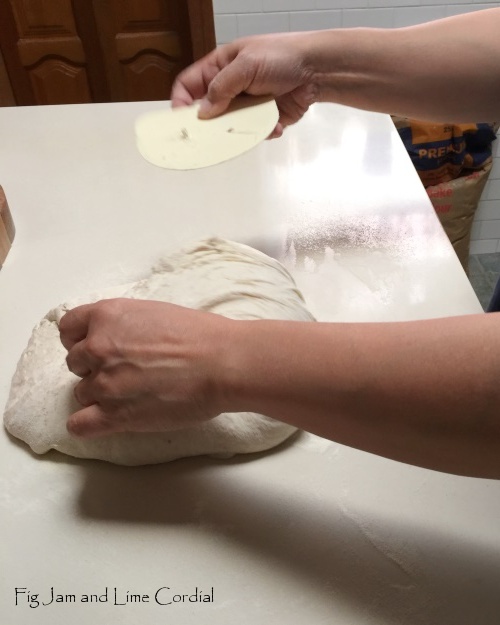
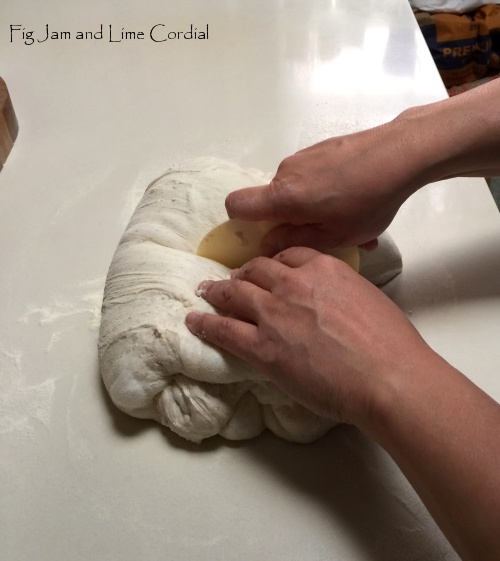
Now here’s the trick…using your spatula, scrape under the dough on one side and stretch it up…

ostn9c

Fold it over the top of the dough…

ostn9d

Repeat with the other side…

ostn9e

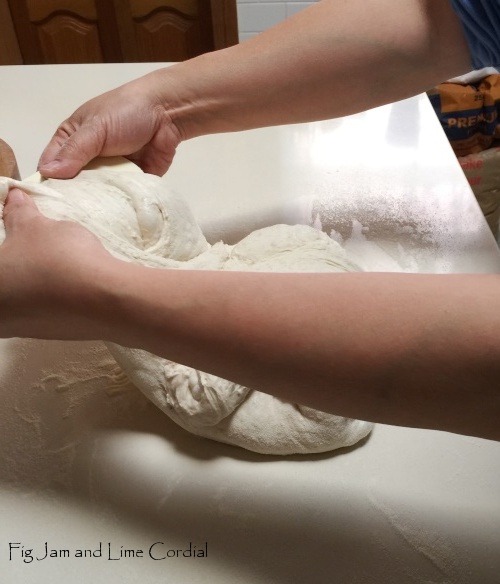
Do the same thing with the bottom part of the dough…

ostn9f

And again with the top section…

ostn9g

These four folds enclose all the sticky bits of the dough inside, leaving a completely semolina dusted (and therefore much easier) exterior to work with…

ostn9h

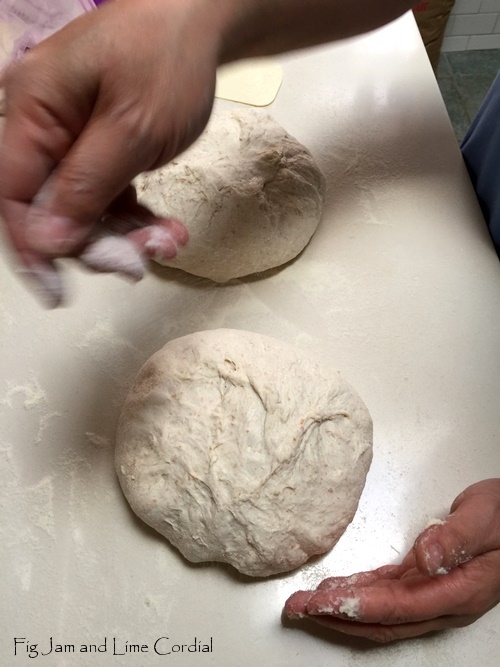
Using your spatula, divide the dough in half.

A note at this point: I have a large oven and two enamel roasters, so I always bake two loaves at the one time. If your oven can only fit one loaf at a time, divide the dough in two, then return one half to the covered mixing bowl. Begin preshaping the second loaf when you place the first loaf into the oven…

ostn9i

Shape each half into a rough ball by folding the edges into the middle (there’s a video of how to do this here)…

ostn9j

Leaving the dough balls seam side up, dust the tops with semolina…

ostn9k

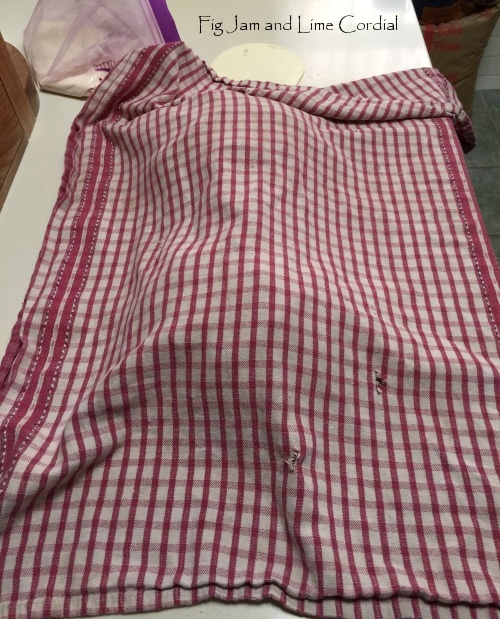
Cover with a clean tea towel and allow the dough to rest for about 20 minutes. This preshaping process makes the high hydration dough much easier to handle…

ostn9l

Uncover the dough and flatten each ball, then shape them into oval loaves. I do this by folding the edges in at the top and bottom, then folding the dough in half – it’s much easier to show you than explain, so we’ve taken a video (there are also some photos here). Use a gentle touch…

. . . . .


. . . . .

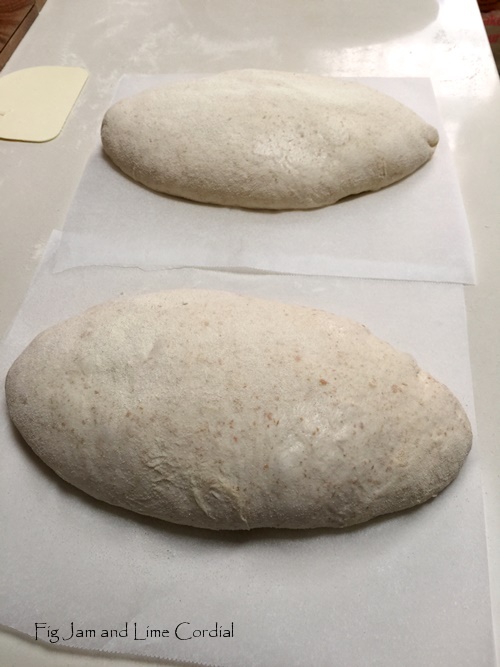
Place each shaped loaf onto a sheet of parchment paper, seam side down, then cover them with the tea towel again and allow them to prove for a further half an hour or so. You could put them into bannetons, but I find the higher hydration doughs tend to stick to the cane…

ostn9m

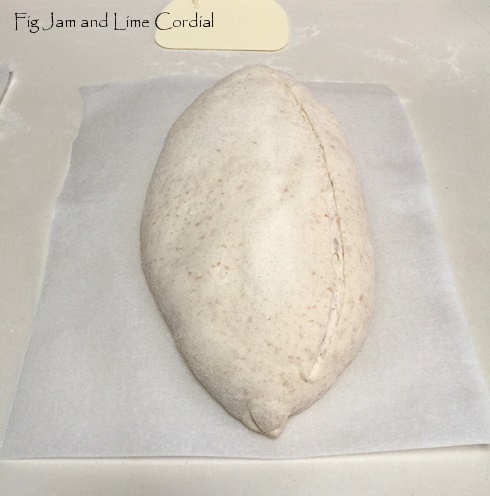
Once the loaves have puffed up a bit, it’s time to slash. I used to make just one long slash down the side, and it’s a technique that works well…

ostn9n

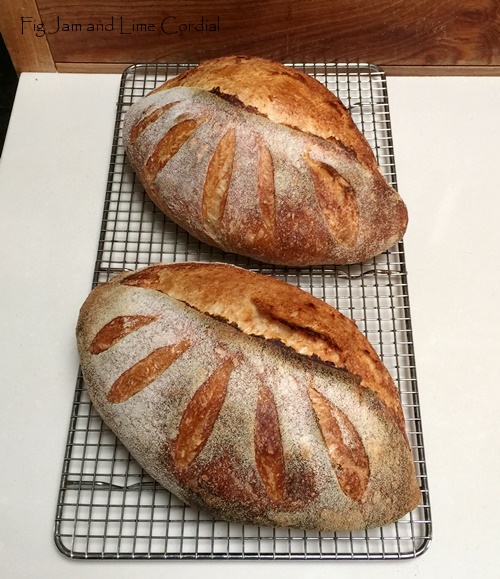
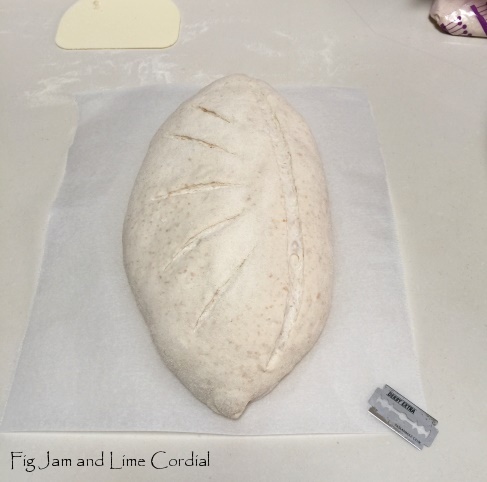
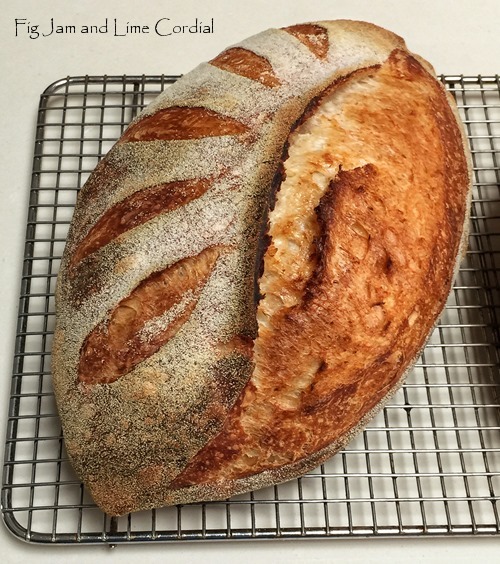
…but if you’d like to try something fancier, you might like our “half starburst” slash. Use a sharp razor if you’re going to attempt it – the single slash will be fine if made with a serrated knife, but the fancier patterns need a thinner blade. Remember to slash with panache!

ostn9o

Lifting by the sides of the parchment paper, lower each loaf into an enamel roaster. Cover with the lids, then put them into the oven, reducing the heat to 220C with fan. Note that the pots are cold – I don’t think it’s necessary to preheat them.

Set the timer for 20 minutes…

ostn9p

At the 20 minute mark, uncover the pots to release any remaining steam – the loaves should be well risen but pale. Close the oven and set the timer for a further 20 minutes…

ostn9q

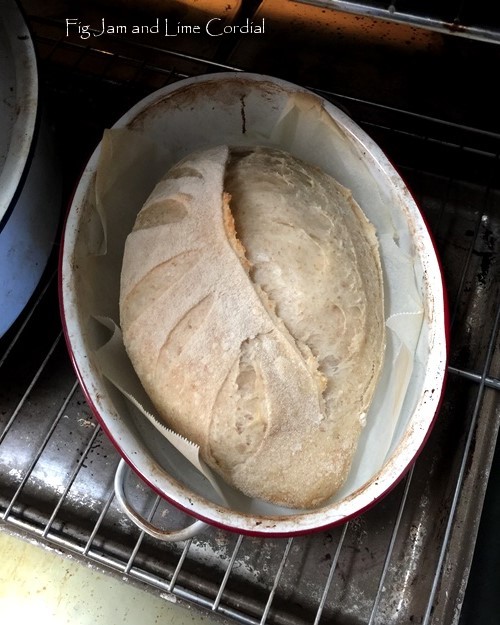
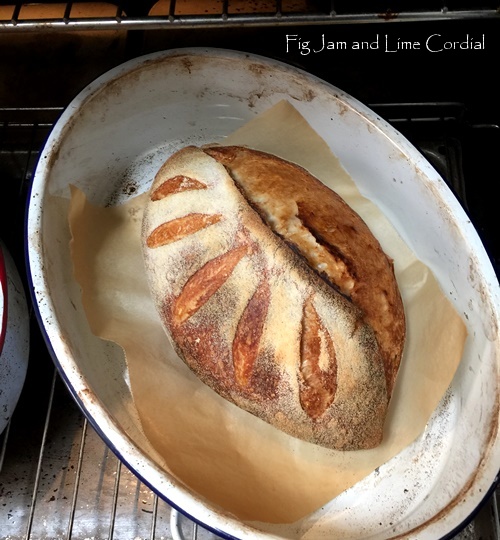
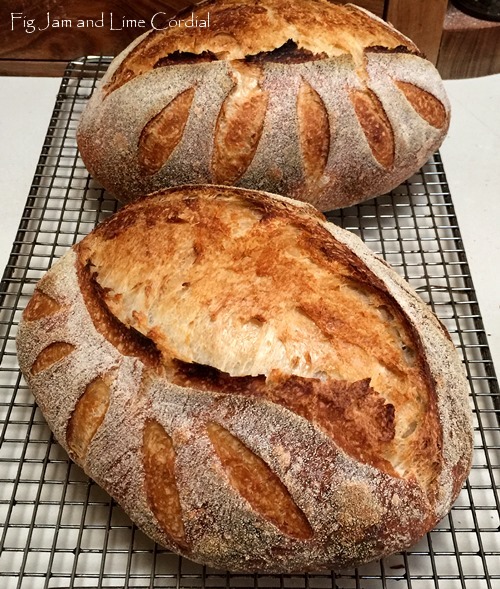
After the second 20 minutes, the crust will be dark brown and burnished. I like to take the loaves out of the pots, place them on the oven racks, and bake them for a further 5 – 10 minutes at 175C with fan.

By the way, the loaves will shrink back a bit after baking with the lid off, but not nearly as much as the photo below implies – I took the photo above of our small roaster and the one below of our big one.

ostn9r

The finished loaf should feel light and crusty. It will sound like a hollow drum when tapped on the bottom. Allow to cool completely on a wire rack before slicing…

ostn9t

The crumb is gloriously holey and chewy. A little trivia for you – my friend Joe told me that his Italian baker father refers to the holes as “naski”. Naska, according to Joe, is the word for nasal passage, so if the bread has naski, it can breathe…

ostn9u

A note on timing – I usually make this dough at about 9pm and then shape it when I get up in the morning (usually about 6am).

For this tutorial, I made the dough at 7pm (to ensure there was enough light for the photos) and didn’t get to shape it until 9am the following morning (when Pete was around to help me take the videos). Because Priscilla is so resilient, she didn’t seem to mind the longer proving time!

I hope you’ll give this a go – it takes a little bit of practice, but once you’ve got the knack of it, you’ll find the stretchy dough great fun to work with! ♥

. . . . .

Original Overnight Sourdough Tutorial

Priscilla Sourdough Starter – Tips and Suggestions

In my kitchen…

…are the shells from the greenlip abalones I bought last month. Aren’t they beautiful!

imk0616a

. . . . .

In my kitchen…

…is super fresh Korean chilli powder, a gift from our friend Jay. His father grew and dried the chillis himself…

imk0616b

. . . . .

In my kitchen…

…there is always sourdough. Lately I’ve been slashing my loaves using this new pattern I came up with. My friend Moo calls it the starburst slash. It works well for loaves baked in an enclosed pot…

imk0616d

imk0616e

. . . . .

In my kitchen…

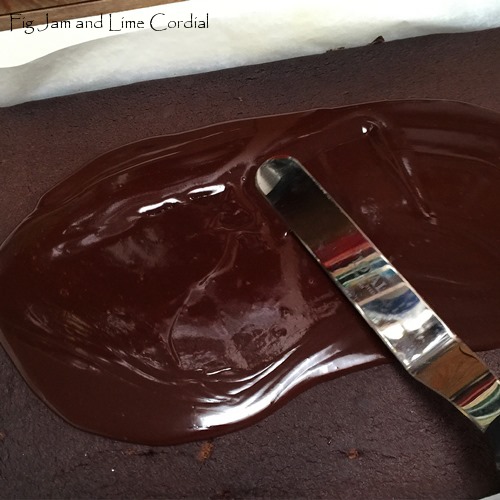
…there was chocolate slab cake. I’m always so happy to have two offset spatulas whenever I make this – one to spread the batter, one to spread the icing. Yes, yes, I know I could just use one and wash it in between…

imk0616f

. . . . .

In my kitchen…

…is Pete’s homemade quince jelly and some clarified jamon butter. Mum’s very kind friend Russell dropped off half a dozen quinces for us from his farm.

Here’s a late night photo of our messy kitchen as everything was being made and cooled…

imk0616g

And here’s a photo of the quince jelly the following day. The jars were glowing like jewels – Pete has a deft touch with jellies, and they’re always crystal clear…

imk0616i

. . . . .

In my kitchen…

…is freshly harvested ginger, a wonderful gift from Monkey Girl’s clever mum. The aroma of fresh ginger is astonishing!

imk0616c

. . . . .

In my kitchen…

…is the resurgence of an old mania. I used to cross stitch when I was at uni and last week I came across a box of old patterns. It’s amazing how our tastes evolve – very few of the designs still appeal some thirty years later (really? I liked calico cats and Holly Hobby at 19?).  Anyway, I thought I’d have another go…

imk0616h

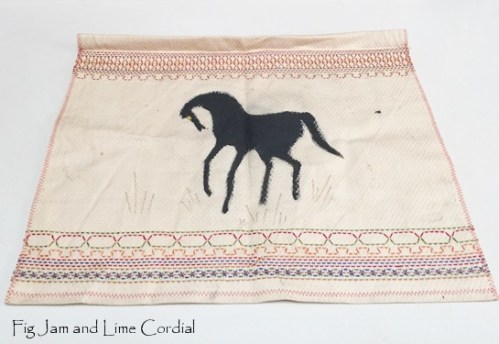
In the process of looking for embroidery cotton, I came across this very old school project of Pete’s, made some 45 years ago. I wonder why we don’t teach boys to embroider any more?

imk0616k

. . . . .

Tell me, what’s happening in your kitchen?

If you’d like to write an In My Kitchen post, please do so by the 10th June and send your link to Maureen at The Orgasmic Chef. Thanks for hosting Maureen! x

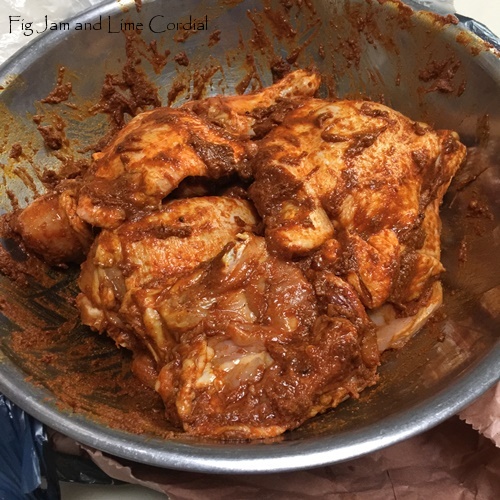
At 2pm yesterday, I coated half a dozen free range chicken marylands (thigh + drumstick portions) in a packaged curry paste…

curry1

This is our current favourite brand, as recommended by my cousins in Malaysia. You could certainly grind all the spices from scratch, but we had a free afternoon and were keen to get out of the house…

curry4

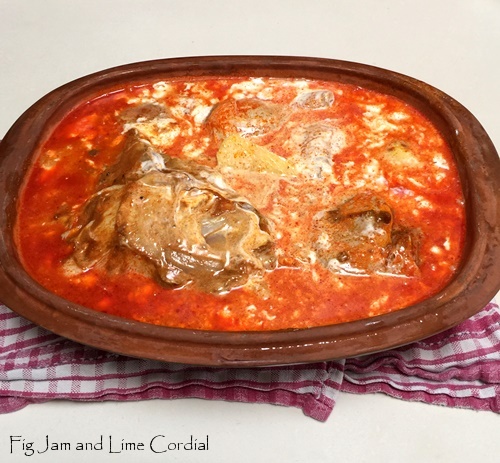
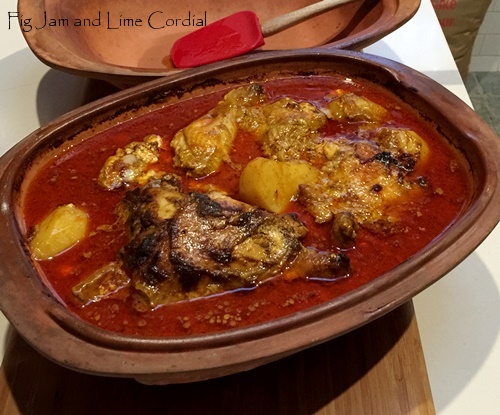
I put all the chicken, a few peeled and chopped potatoes, half a litre of water and a carton of coconut cream into my presoaked Römertopf pot and covered it with the lid. The pot went into a cold oven and the heat was turned up to 200C with fan. I set the timer and asked Big Boy to turn the oven down to 150C with fan after the first hour…

curry2

Then Pete and I hopped on a train to Central Station. The weather was sunny but cool, a perfect autumnal day to be outside. From Central, we took an easy walk to the Mortuary Station to visit the Biennale of Sydney’s Embassy of Transition.

The Mortuary Station is an elegant and intriguing part of Sydney history. It was originally built as part of the train line connecting Rookwood, Woronora and Sandgate Cemeteries. The line is no longer in use, but the station continues to be maintained by Sydney Trains and is open to the public for special events. Apart from the artworks, it was a treat in itself to be able to visit this historic building!

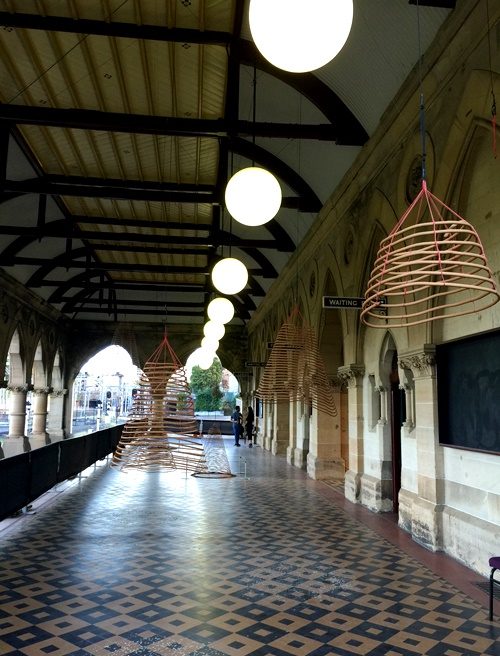
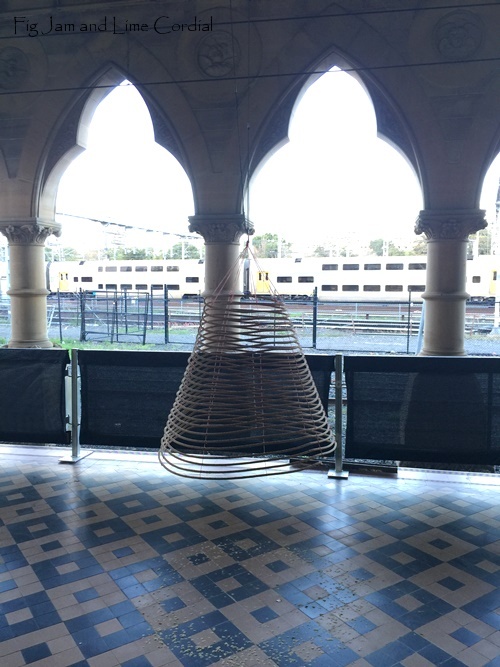
The platform of the station is the ideal backdrop for Spiral Incense Mantra (2014) by Taiwanese artist Charwei Tsai. Encompassing three separate elements, this beautiful installation invites contemplation of life, death and dying.

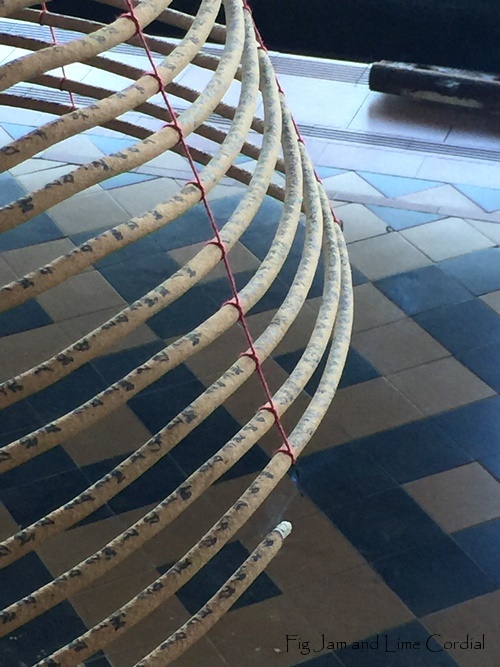
The artwork comprises a series of hanging incense bells which are randomly lit. The bells have been inscribed with sacred Buddhist texts by the artist and the monks who collaborated with her. Originally all the same size, over the course of the Biennale, each has burned down at a different rate, influenced by location, wind, and frequency of lighting.

It’s unsubtle but powerful imagery, which combines with the architecture and history of the building, the stillness of the location, and the gentle wafting aroma of the incense, to create a very moving experience…

ct2

ct3

Each piece was created in a flat form, then hung by the artist…

ct5

As the bell burns away, it leaves behind small piles of ash…

ct1

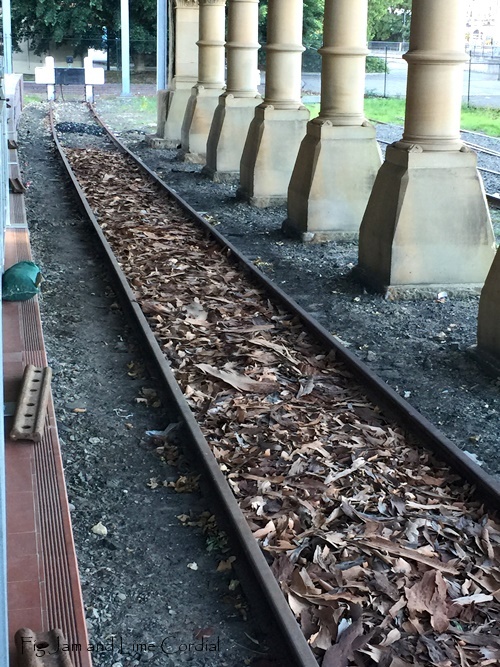
Two videos accompany the incense mantras, screened on the floors of the station’s waiting rooms. The third element incorporates a section of track adjacent to the platform, which the artist has filled with pieces of bark inscribed with messages…

ct6

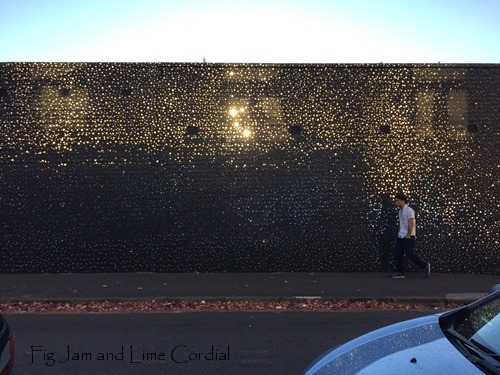
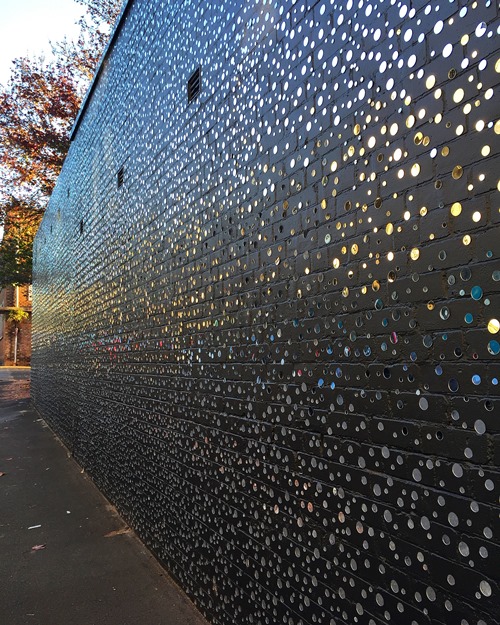
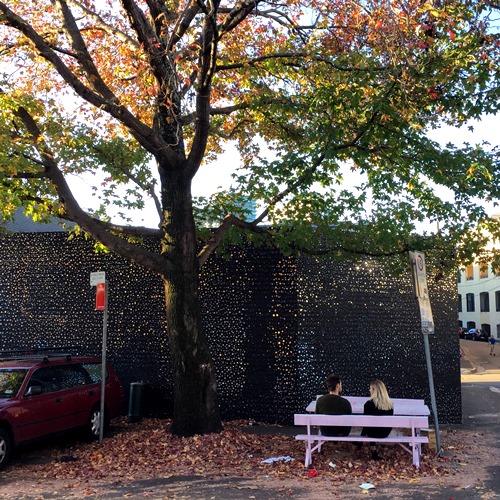
From the Mortuary, we walked to the Redfern Wall, where What Remains (2016), a site specific installation by indigenous Australian artist Daniel Boyd, glistened in the late afternoon sun. I’d loved this in its previous incarnation at the MCA, but it’s truly spectacular here, where it can catch and reflect the outdoor light. I feel blessed to have had a second chance to see it…

db1

db2

The piece wraps all the way around the corner…

db6

Pete liked the way the mirrored disks caught the silhouette of the large maple tree…

db3

After lingering for a while to watch the light moving over the shiny dots, we wandered up to Redfern Station and caught the express train home. And when we arrived, it was just about time to pull the curry out of the oven…

curry3

It was a glorious way to spend an afternoon in Sydney!