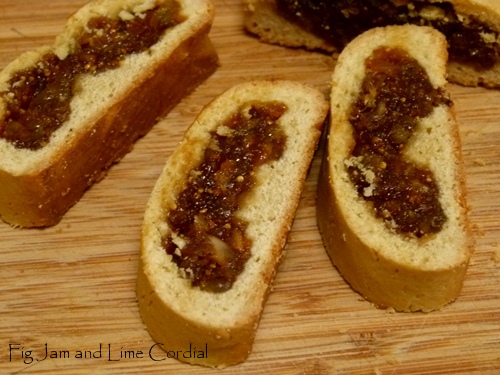
My cousin Lynette loves dried figs.
She’s visiting from Malaysia at the moment, so I bought a bag each of Turkish and Greek figs for her on our last visit to Harkola. She chose the Turkish ones (she doesn’t have enough baggage allowance to take both home), which left me with a kilo of these gorgeous sweet morsels to play with…

I added a few to an olive and anchovy tapenade…
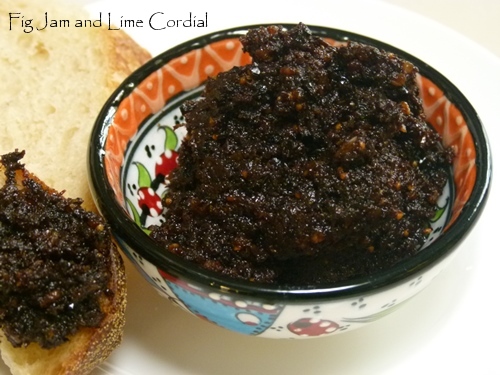
…made a fig, walnut and macadamia bar (this time I toasted the nuts lightly in a dry pan before adding them in)…

…then I blitzed the rest…
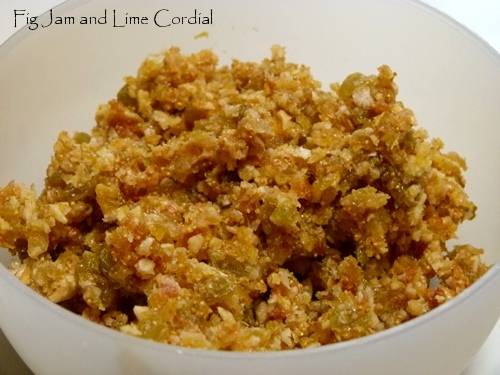
…and made these figgy rolls…
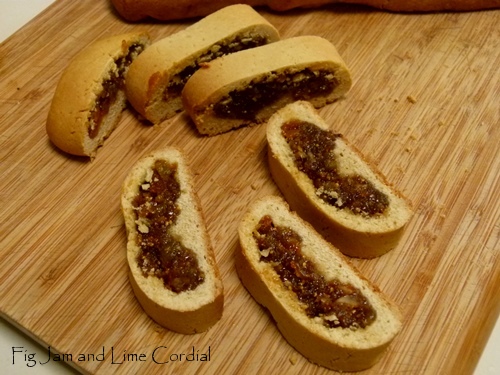
I first posted this recipe in 2010 and I don’t think I’ve made them since. I’d forgotten how delicious they were! Here’s the recipe for this year’s batch, with reworked instructions for making the dough in the food processor.
Filling (make this the day before):
- 450g dried Greek figs
- 225g raisins
- 165g light brown sugar
- 85ml lemon or lime juice (this time I used lime)
- 85ml water
- 45ml brandy
- ½ teaspoon ground cinnamon
1. Pulse all the dried fruit together in a large food processor until the mixture gathers together and forms a ball of fruit mince.
2. Turn this into a heavy based pan and add the remaining ingredients. Stir constantly over a medium heat until the mixture bubbles, the liquid evaporates and the filling cooks down to a paste-like consistency. Scrape the filling into a bowl and allow to cool, then cover with cling film and chill in the fridge overnight.
Dough:
- 225g plain flour
- 225g bread or bakers flour
- ½ teaspoon baking powder, sifted
- ½ teaspoon fine sea salt
- 125g unsalted butter, at room temperature
- 55g light brown sugar
- 150g white sugar
- 3 large (59g) eggs, at room temperature
1. Take the eggs out of the fridge and leave them on the bench before you start. Also take the filling out of the fridge as well. Preheat the oven to 190C with fan and line a couple of baking sheets with parchment.
2. In a large bowl, whisk together the flours, baking powder and salt.
3. In the large bowl of a food processor, pulse together the butter and sugars until soft and combined. Add the eggs one at a time and pulse until smooth.
4. Add all the flour mix and pulse until just combined – do not overwork of the dough will toughen up. Scrape out onto a lightly floured bench.
Assembly:
1. Gather the dough into a ball and divide it into three parts. Between two sheets of parchment, roll out a third of the dough into a rectangle approximately 30cm x 13cm. Carefully lift off the top sheet of parchment.
2. The aim is to form a filled tube, so spread a third of the filling over the centre of the dough, spreading it out carefully to within 2cm of the edge. Don’t push down too hard, or you’ll force the filling through the soft dough (I used my hands).
Using the parchment paper, fold the top of the dough over the filling, then fold the bottom over to seal the dough into a long tube. Seal the ends of the tube and carefully turn the log onto the lined tray, seam side down. Repeat with the remaining dough and filling. Make sure you leave some room between the logs, as they’ll expand a bit during baking.
3. Bake until light golden brown – approximately 15 – 20 mins, depending on your oven. Allow the rolls to cool on the tray for 15 minutes, then on a wire rack for a further couple of hours . Once the rolls are completely cold, they’re much easier to slice without cracking.
4. Using a long, thin knife, slice the cooled rolls into 2cm pieces.
. . . . .
We delivered a batch of these to Pete’s baby cousin Jono – he ate them with yoghurt for dessert. I’ve been dunking mine in hot tea!













 Fig Jam and Lime Cordial