Feeds:
Posts
Comments

This is the kind of post that I’m always hesitant to write, because without fail, it’s going to make someone feel bad. So please let me preface my words by saying this – I’m simply sharing our views, I’m not trying to cause guilt, nor am I judging anyone. Everyone’s situation is different and we all make the decisions which best suit our lives and our families.

. . . . .

So…what happens when the dishwasher breaks?

At what point does it become “uneconomic” to fix it?

Our machines work hard for us – the Smeg oven has had almost commercial usage for the past eleven years, and the Miele dishwasher runs daily, and up to three or four times a day on weekends. And in that time, they’ve both performed brilliantly, but both are now getting older and starting to fail.

If this had happened a decade ago, we’d have replaced them by now. But over that time, our thinking has changed, and we’ve become acutely aware of the true cost of purchasing a new appliance. It’s no longer just an issue of dollars, but also the environmental cost involved – what happens to the old dishwasher? Is it simply dumped? Stripped for parts? What does it cost in terms of energy and raw materials to make a new dishwasher?

It’s a very hard thing to do, but so far we’ve put our money where our mouths are. The dishwasher has had its second major repair in three months (I won’t tell you the total cost or you’ll faint, but it’s about 60% of a new machine). The lovely technician who came out last week has replaced all the worn bits he could find, which will hopefully ensure trouble-free running for the next couple of years. It’s an expensive exercise, and we will eventually have to buy a new machine, but we’re determined to delay that process as long as we can.

Our oven has had the fan elements replaced three times (like light bulbs, they wear out with extended use) and the fan motor twice. Last year we also had to replace the door seal.

We treat our cars in the same way – our last car was eleven years old and had smoke coming out of the steering wheel before we finally traded it in. The toaster was used until it became a safety hazard, and the food processor was gerry-rigged to operate with a chopstick for an extra three years before the motor finally packed it in.

Apart from cars, most machinery these days seems to be designed to be disposable. For example, our microwave has a broken light which can’t be fixed – the bulb appears to be hardwired into the device. And certainly the cost of a service call actively encourages folks to discard and buy new rather than repair.

Energy and water efficiency are considerations – newer appliances are always better than older ones – but we’ve yet to be convinced that that justifies the environmental cost of building a new machine.

Having said all of this, it’s a hard line to toe. I’m an extrovert, I like new things. I desperately want a replacement vacuum sealer, but the $60 one I bought five years ago refuses to break, and I refuse to buy a new one until it does. It no longer automatically seals, but that’s not a good enough reason to replace it while it’s still working.

Going back to the large appliances – we’ll continue to buy the very best quality we can afford, and then try to use them for as long as we can. Wish us luck!
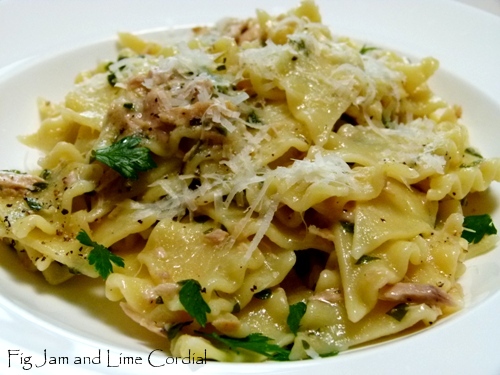
Our Big Boy can turn out a good dinner – if he has access to mince.

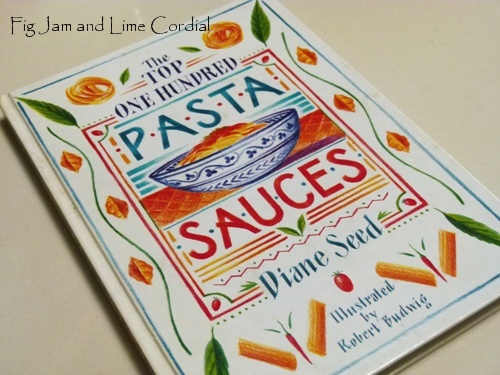
We thought this easy dish, which we used to make regularly in the late eighties, might be a nice alternative for him. It comes from one of our oldest cookbooks, which is now available on Kindle, and the sauce can be prepared in the time it takes the pasta to boil…

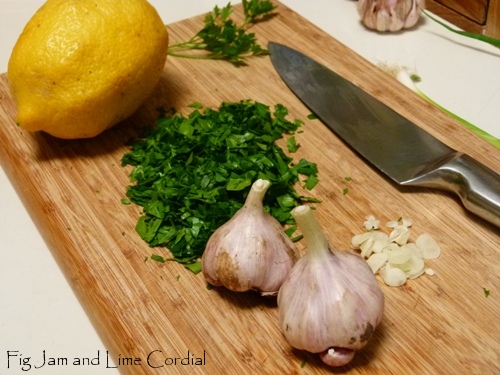
We always have the ingredients on hand – a tin of tuna in oil, fresh garlic, grated Parmesan cheese, and lemon and parsley from the garden…

  • 500g dried pasta
  • 1 – 2 cloves garlic, finely sliced
  • handful chopped parsley (we use continental parsley from the garden)
  • 200g tin of tuna in olive oil
  • extra olive oil if needed
  • juice of 1 lemon
  • ½ cup (approximately) of grated Parmesan cheese
  • 30g (a large knob) butter, cut into pieces
  • salt and black pepper

1. Put the pasta on to cook to al dente in a large pot of salted boiling water.

2. Drain the oil from the tuna and add it to a large frying pan. Add a little more olive oil if needed. Heat gently, then add the garlic and most of the parsley, reserving just a little to garnish. Stirring constantly over a low heat, add the drained and flaked tuna, and cook gently to ensure that none of the ingredients change colour.

3. Once the pasta is ready, drain it well, reserving a little of the cooking liquid. Add the pasta to the sauce, stirring well to combine. Add the lemon juice and a little of the cooking liquid if necessary, then the cheese, and finally stir through the butter. Season with salt and pepper to taste. Garnish with the extra chopped parsley and serve immediately.

As so often happens in the blogosphere, my friend Francesca serendipitously posted a similar recipe at Almost Italian a couple of days ago. I’ll be sure to point that one out to Big Boy as well!

As I’ve mentioned before, I adore trivia.

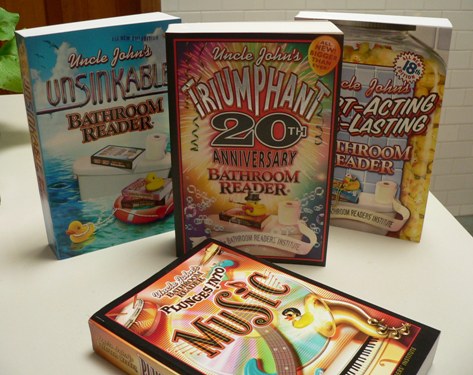
To that effect, I have a large collection of the Uncle John Bathroom Readers, supplying me with well-written, well-researched snippets that often turn into dinner table conversations…

I know it’s a little risque, but this one made me laugh out loud, so I thought I’d share…

You know the expression, “get the monkey off your back?”

In our house, that’s now been replaced with, “shake the cat off your scrote” (Big Boy’s suggestion, credit where it’s due).

Happy Friday, folks! :)

Australian mussels are delicious, sustainable and very reasonably priced.

In fact, the reasonably priced bit can be an issue – I buy mine from Costco, where they come in a 2kg bag for just $9.99. The problem is, much as the boys and I love them (Pete’s not a fan), we just can’t get through that many mussels in one sitting.

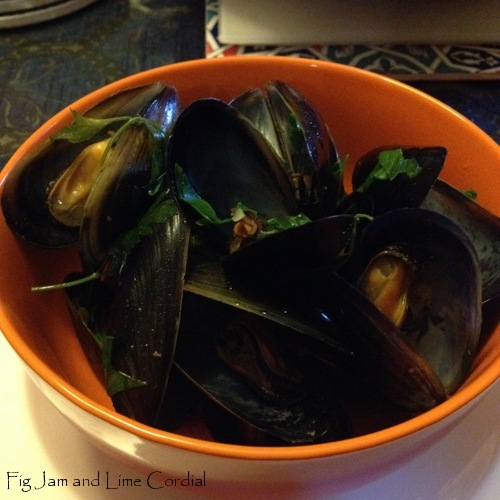
With my last batch, I added a handful to a seafood curry, then cooked the rest as Moules Marinière. The latter is a very simple recipe, as the charming French Guy on Jamie Oliver’s YouTube explains here…

. . . . .

. . . . .

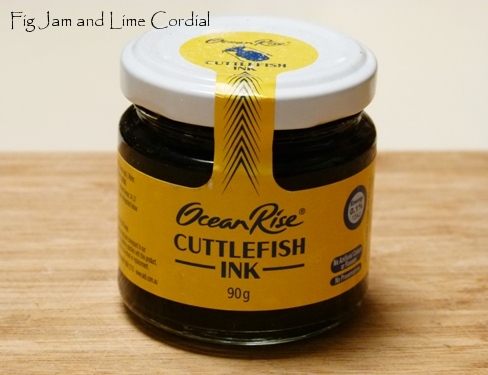
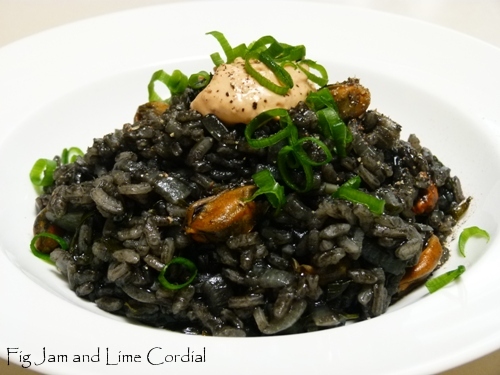
After dinner, I deshelled all the leftover mussels and stashed them, with their residual cooking liquor, in the fridge. I thought they might be a good match with the cuttlefish ink that lovely Becca sent me a couple of weeks ago…

The risotto was made with Carnoroli rice, using the leftover Moules Marinière liquid as stock. A teaspoonful of the ink was sufficient to colour the grains a deep black, and the shelled mussels were added at the very end and simply warmed through gently. A squeeze of lemon, a scattering of spring onions, and a dollop of our chipotle mayonnaise finished the dish off…

Thanks for the fun gift, Becca!  Tell me, do you like mussels? And if so, how do you prepare them?

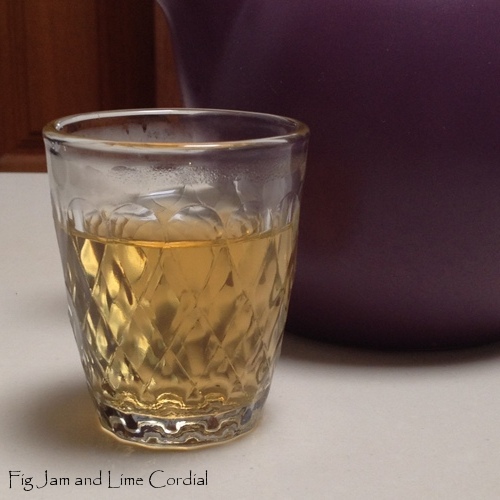
Last weekend, I resolved to do nothing more than sit at the dining room table and sip Moroccan mint tea from my gorgeous little Russian glasses (they’re just 100ml each). The dishwasher is broken (again), one of the fan elements on the oven has blown (again), and I was determined not to make any plans that involved messing up the kitchen…

. . . . .

Sigh. Turns out I’m quite rubbish at those sorts of resolutions – I get bored too easily. So I marinated some Bulgarian fetta (our recipe is here)…

. . . . .

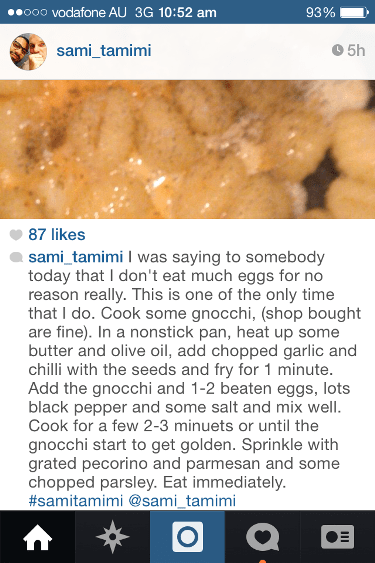
I checked out Sami Tamimi’s Instagram feed and found this recipe irresistible…

. . . . .

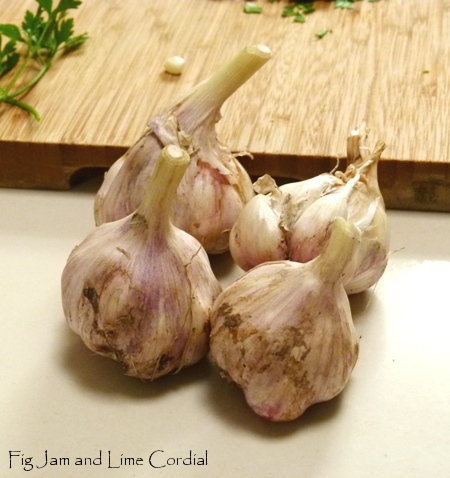
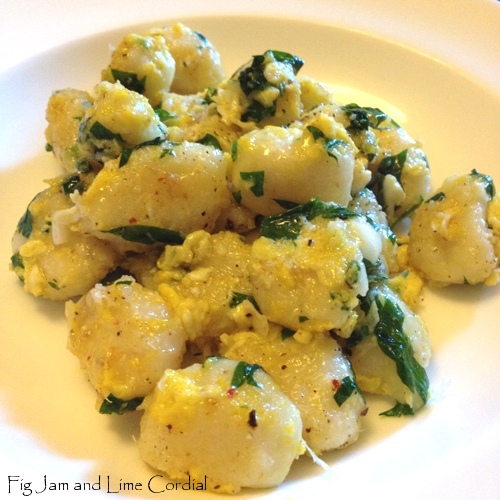
I picked up some new season Australian garlic and a packet of Joe’s fabulous handmade gnocchi

…and created this very simple Sami-inspired dinner, combining the gnocchi and garlic with our homegrown parsley, chilli and eggs. It was finished off with freshly grated black pepper and Parmesan cheese. Dead easy and very scrumptious…

. . . . .

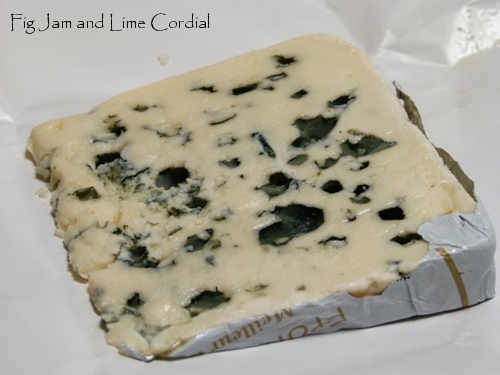
I traipsed over to The Larder in Dulwich Hill in the hopes of finding some Bruny Island raw milk cheese. Sadly, they no longer stock it, but I picked up a small piece of raw ewe’s milk Roquefort instead…

. . . . .

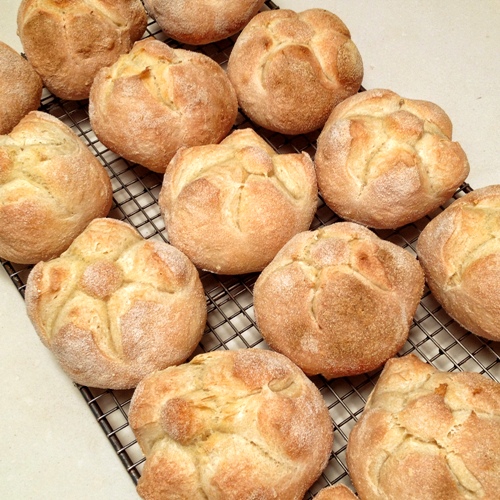
Even without a fully functioning oven, the urge to bake is sometimes too strong to resist, so I made a batch of overnight no-knead rosette rolls, sourdough of course…

. . . . .

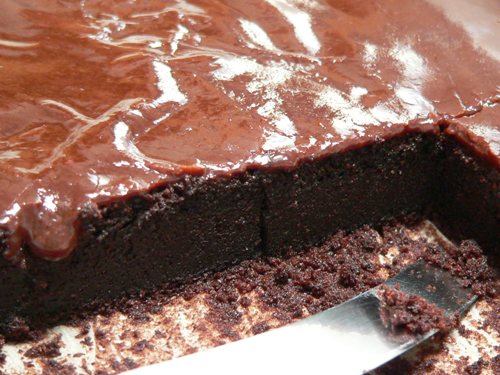
Finally, as it was Nick’s birthday, I baked him a chocolate slab cake. It was a big hit!

. . . . .

How was your weekend?