Feeds:
Posts
Comments

Archive for the ‘Recipes’ Category

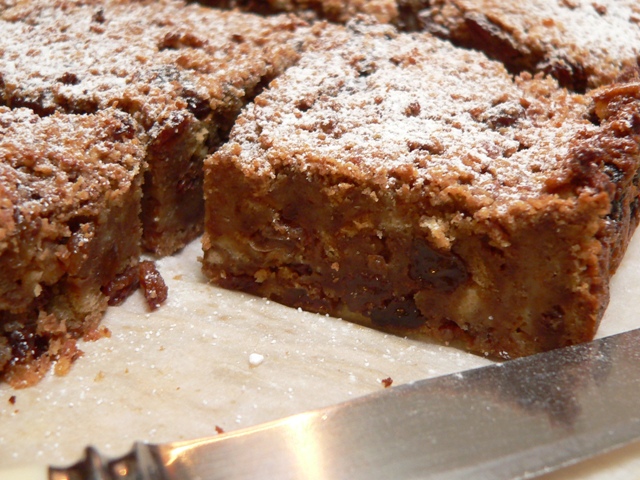
013a

I hate wasting food (as I’m sure you know by now), so I was very chuffed with this recipe from Richard Bertinet’s latest book Crust.  He mentioned it in his first book, Dough:

“I love bread and butter pudding – such an English thing! However we do something similar in France, which we used to do in the bakery to use up all the leftovers at the end of the day: croissants, pain au chocolat, you name it, everything would go into a big mixer with sultanas, creme anglaise and some alcohol, until it became a thick paste, which we would bake for about 2 hours, cut up into portions and then dust with sugar.  It tasted fantastic.”

When the recipe appeared in his second book, how could I resist trying it?

Actually, it’s more a process than a recipe.

Firstly, gather together all the bits of bread, cake and pastry floating around your kitchen.  I had chocolate sweet dough rolls, some pain viennois, a few slices of sourdough bread and a sliver of yoghurt cake.  Bertinet says that you need a good mix of pastry and bread to make this work well.  All up you should have about 500g of baked leftovers.  Break all of these up and put them into a large food processor, then blitz them until they’re broken up and grainy.

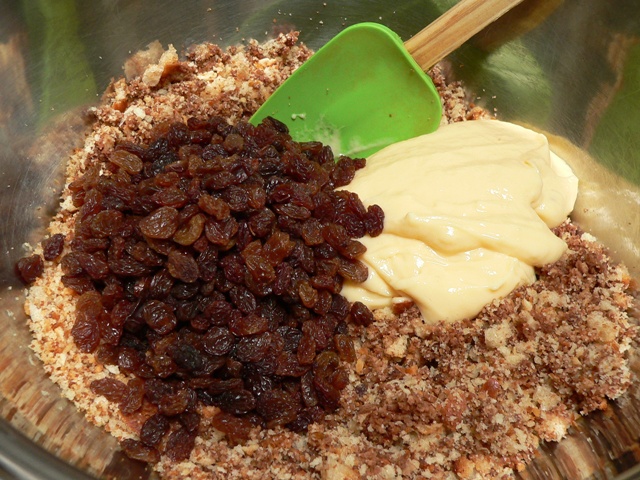
Tip the crumbled mix into a large bowl with 200g sultanas (I suspect any dried fruit would work), 5 tablespoons of rum and 300g pastry cream (if you’re making the pastry cream from scratch, make a half batch).  Stir well to combine.  Mine looked a little dry (I was a tad short on the pastry cream), so I added a splash of pouring cream as well.
003a

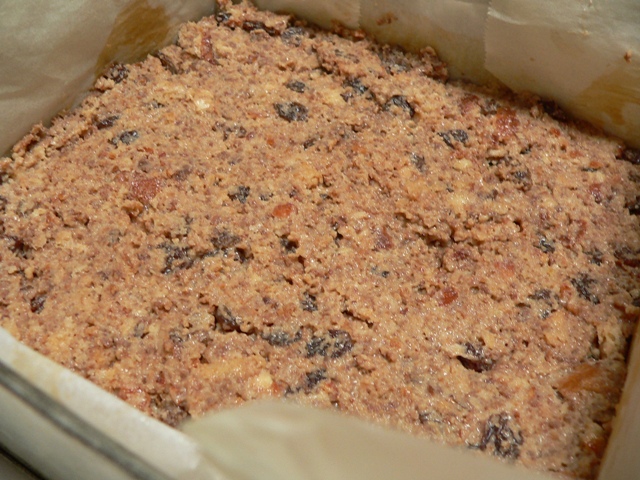
Turn the mixture into a lined baking tin – I used an 8″/20cm square  that was probably a bit too large.  A smaller pan will give you a thicker pudding consistent with the photo in Bertinet’s book.
004a

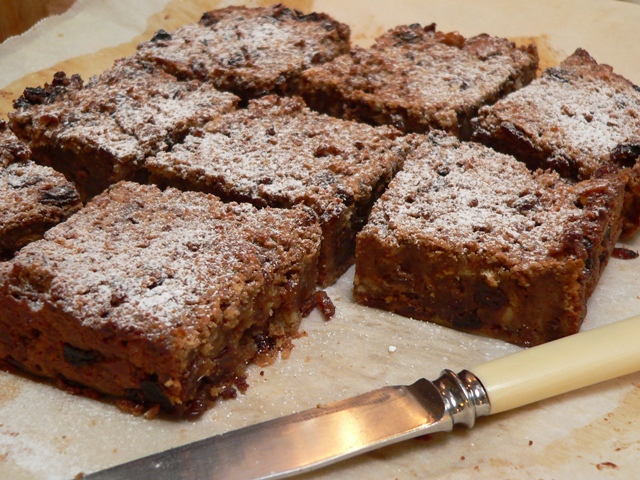
Bake in a preheated 175C fan assisted oven for 35 – 45 minutes, until the top is crisp and well browned.  Allow to cool, then dredge with icing sugar before serving.

Note: given that the original description mentioned “creme anglaise”, you might be able to substitute microwave custard for the pastry cream.
010a

I absolutely adore the French mentality of never wasting anything!  Pete loved Le Pudding and I’m completely charmed by the idea that it will change every single time I make it, depending on the baked flotsam of the day.  This particular incarnation tasted like a cross between boiled fruit cake and bread and butter pudding!

Sigh. I think we might have a crush on the Frenchman. Even Pete commented, as he picked up his third piece of Le Pudding, “Richard has never let us down, has he?”

. . . . .

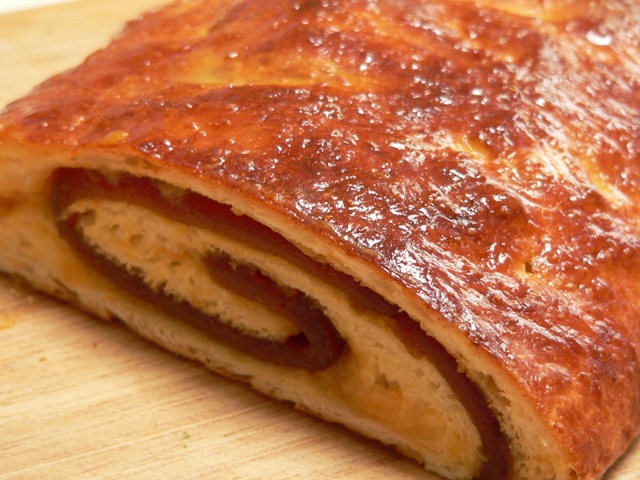
Since my first draft of this post, I’ve made this recipe again, this time in a 7″ square pan.  It was completely different (but equally as delicious), because my leftovers this time included the apricot danish I’d made on the weekend, some leftover pound cake and a rye sourdough loaf.  I love how flexible this recipe is!  I made a half batch of pastry cream as I didn’t have any on hand – but it took only a few minutes in the microwave.

pud 007

Read Full Post »

P1050519

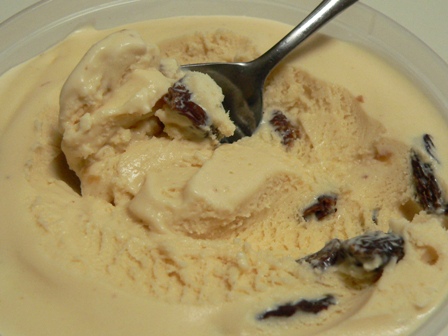
I’ve been experimenting with adding different flavours to our basic ice cream recipe.  My current favourite is a very alcoholic rum and raisin, the perfect ice cream to share with neighbours because  they can walk home. I’m not exaggerating, one batch I made had half a standard drink in every serve!

I bought some wonderful black rum at Chef’s Warehouse in Surry Hills – it’s 54% alcohol by volume, which I think makes it 110 proof. It worked very well with the Australian black raisins I found at the markets a few weeks ago.

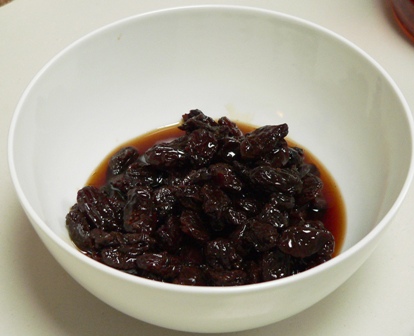
Soak (marinate? macerate?) the raisins in the rum overnight (or longer) until they’re plump and swollen.  I usually fill a small jar with raisins and rum and leave them on the shelf until I need them for a recipe.  Or sometimes I just eat them neat – which is not a good idea too early in the day, as it impacts on my productivity.

icec 028

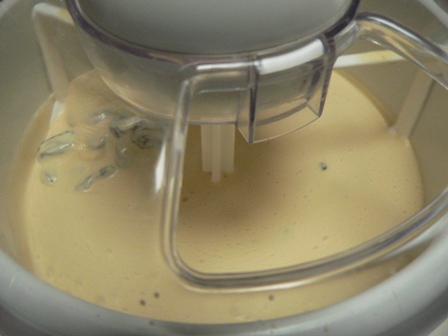
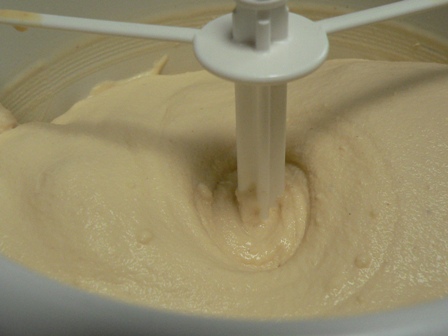
Next, make some microwave custard. Allow this to cool in the fridge. Once cold, whisk in half a cup of cream (see vanilla ice cream recipe here), then add the raisins and their soaking liquid, and pour into the ice cream maker to freeze.

icec 033

icec 038

Scoop the softly set ice cream into plastic containers, label with an appropriate warning, then freeze until firm.  Because of the alcohol, this mixture never freezes rock hard, making it just a little too easy to eat straight from the freezer!

Read Full Post »

042

It occurred to me that if you can make lemon curd and custard in the microwave, then you could probably make crème pâtissière in a similar way.  Here’s my microwave adaption of Dorie Greenspan’s pastry cream recipe.

  • 2 cups (500ml) full cream milk (I used UHT)
  • 6 large egg yolks (use the whites for meringues)
  • ½ cup (110g) sugar
  • 1/3 cup (45g) cornflour (cornstarch), sifted
  • 1½ teaspoons (8ml) vanilla extract
  • 3½ tablespoons (50g) unsalted butter, at room temperature, cut into small pieces

Step 1: In a large pyrex bowl, mix together the milk, sugar, cornflour and vanilla extract. Whisk well to combine, then microwave on high until hot but not boiling (in my 1100 watt micro, this took two minutes).  Remove from the microwave, whisk well to smooth out any lumps.

Step 2: In a separate bowl, whisk egg yolks together until smooth.

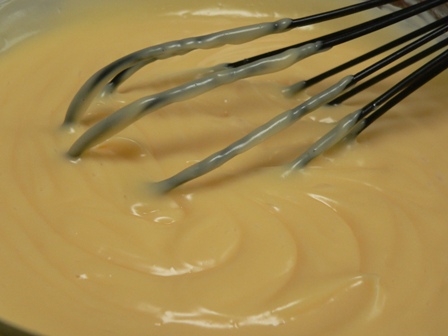
Step 3: Continually whisking, pour the egg yolks into the milk, mixing until smooth.  Microwave on high for one minute, then in 30 second increments, whisking after each burst, until the pastry cream is thick.  In my microwave, this took 2½ minutes.

Step 4:  Whisk well, then add the butter pieces and whisk them into the pastry cream until smooth.  Press a sheet of cling film to the surface of the cream to stop it forming a skin and store in the fridge until cool.

Spoon this pastry cream into a prebaked tart shell and top with fresh berries for an elegant fruit tart. I’ve also made chocolate pastry cream by adding sifted cocoa to the milk before heating.  I’m trying not to think about all the possibilities – profiteroles, danishes….hmmm….

. . . . .

Edit: I’ve just made a half batch of this recipe and it worked very well.

  • 1 cup (250ml) milk
  • 3 egg yolks
  • ¼ cup sugar
  • 1/6 cup cornflour
  • 1 teaspoons vanilla extract
  • 25g  unsalted butter

Reduce the microwave times accordingly – in my micro, Step 1 took 1 minute, and Step 3 took 1½ minutes on high in 30 second bursts.

Read Full Post »

Dukkah

duk 005

Our last visit to Harkola produced all the ingredients needed to make our own dukkah.  It’s a ridiculously easy recipe, and the advantage of making your own is that you get to eat it warm, freshly roasted and ground.  It’s also massively cheaper than the little tubs they sell for $10 at the markets!

  • 1½ cups mixed nuts – I used pine nuts, slivered almonds and walnuts, about ½ cup of each
  • ¾ cup sesame seeds
  • 1 tsp fine sea salt
  • 1 tsp ground cumin
  • 2 tsp ground coriander
  • 1 tsp chilli powder – I used Kashmiri
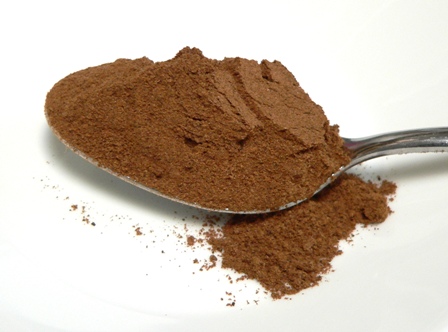
  • 1 tsp baharat spice mix

Baharat is an Arabic spice mix, commonly used in Egyptian and Moroccan cooking. It has a sweet smoky flavour, and usually includes spices such as pepper, cinnamon, nutmeg, cloves, cumin, coriander and paprika.  If you’re buying it at Harkola, you should know that they refer to it simply as “mixed spice”.  I made a right dork of myself one day, boldly asking for baharat, only to have the nice lady behind the counter reply, “Sorry? Oh, you mean mixed spice, darling…”

011

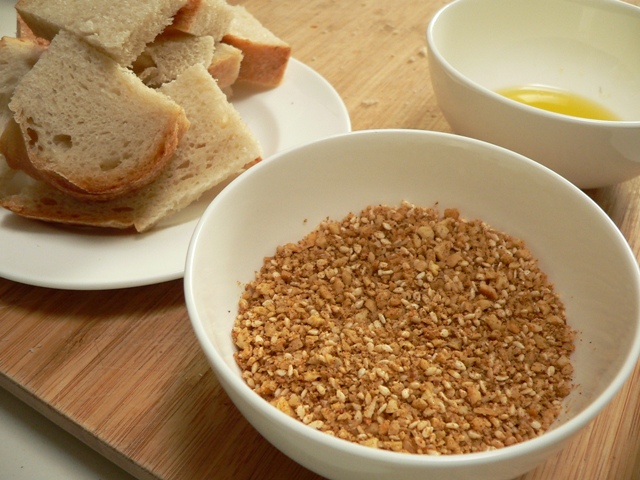
1. Fry the nuts in a heavy-based dry pan until they begin to colour, then add the sesame seeds and cook until just starting to turn golden.

2. Add the remaining ingredients to the pan and stir briefly over heat – maybe only 20 seconds or so – just to warm through.  Be careful not to let them burn.

3. Tip the mix into the bowl of a food processor and blitz to the texture of coarse breadcrumbs.  The sesame seeds will mostly stay whole and the nuts will crumble up.

4. Serve, preferably warm, with good sourdough bread and extra virgin olive oil.  Dunk the bread in the olive oil, then dip it into the dukkah.  Enjoy!

Read Full Post »

ar8

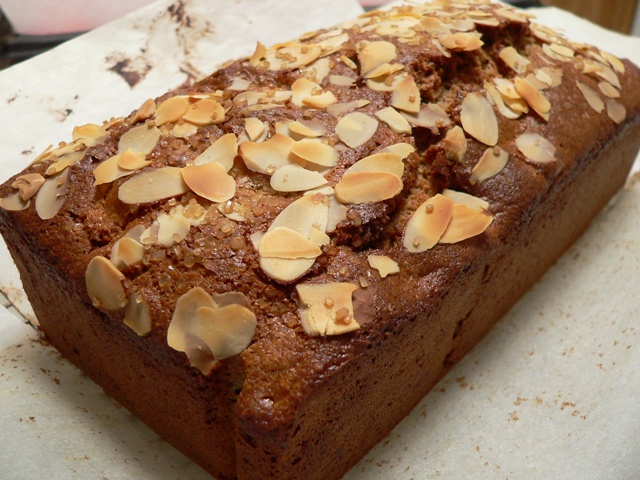
One of the nice thing about Dan Lepard’s recipes is that they’re often so quintessentially British, despite the fact that he started life as a Melbourne boy.  This delicious rye apple cake recipe is a good example – with the addition of golden syrup, apple, rye flour and almonds, the end result is a cross between a tea cake and a muffin, albeit with better keeping properties than either.

I had everything on hand – Kevin Sherrie’s organic rye flour, unblanched almond meal from Santos Trading (a rare and exciting discovery) and crisp, new season pink lady apples.

The recipe is here, and I followed the methodology exactly, with a couple of substitutions.  Instead of muscovado sugar, I used soft brown sugar, and I replaced 50g of the flaked almonds with 50g of unblanched almond meal.  I baked the cake in my trusty Chicago Metallics cake tin and it took 45 minutes to cook to perfection in my 175C fan assisted oven. Note that some bakers on Dan’s forum needed to extend the baking time for this recipe.

We had this for dessert last night, but it was even better this morning with a hot cup of tea!

arc1aarc2a

Read Full Post »

« Newer Posts - Older Posts »