Feeds:
Posts
Comments

Archive for the ‘Recipes’ Category

A couple of years ago, I spent a manic fortnight trying to perfect a recipe for Italian ricotta cake.

It was great fun, although the neighbours were well and truly over eating my rejects by the time I finished.  I ended up with recipes for three variations:

Today I added another one, made totally from leftovers I had in the fridge.

I had a small tub of ricotta that was approaching expiry, a tiny bit of excess sour cream from June’s Hungarian Cottage Cheese Cake, and a small scrap of sweet pastry dough.

I rolled the dough out and lined the base of a 20cm/8″springform pan, bringing it up the sides just a little to cover the join at the base to prevent leaking.  It would probably have worked just as well in a small pie dish.

Filling:

  • 320g fresh ricotta, very well drained
  • 100g icing sugar mixture (confectioner’s sugar)
  • 50g thick sour cream
  • 1 egg, separated
  • pinch of cinnamon

1. Preheat oven to 150C with fan.

2. In a large bowl and using a fork, stir together the ricotta, icing sugar mixture, sour cream and egg yolk.  The mix will be a little lumpy.

3. In a separate bowl, whisk the egg white until stiff, then gently fold it into the ricotta mixture.  Pour this over the pastry lined base, and sprinkle the top with a little cinnamon.

4. Bake for 40 – 50 minutes until firm, and then switch the oven off and leave the tart to cool with the door ajar, for about an hour.

This was simple to make and easy to eat!

I’m assuming it’s quite a forgiving recipe (since I made up quantities based on what was in the fridge), and it could possibly be made without the sour cream if necessary.

I usually turn my leftover ricotta into a savoury baked cheese, but this is a simple alternative that will make a nice dessert for a casual meal with friends!


Read Full Post »

At the beginning of the year, we harvested these gorgeous red lilly pillies from our backyard tree.

All up we collected about five kilos of fruit, harvesting only what we could safely reach with a low ladder, and leaving the higher branches to the Australian Koels and Red Wattlebirds.

We turned some of the berries into lilly pilly jelly…

Last weekend, we dug the remaining one and a half kilos of fruit out of the deep freeze, and Pete made lilly pilly cordial.

He boiled up the berries in a large pot of water with a small handful of raspberries and boysenberries, added for colour.  Once the fruit had cooked down to a pulp, the liquid was poured through a cloth-lined colander.

The strained liquid was returned to the pot with about a kilo of sugar, and heated gently until the sugar dissolved.   This is a tricky process – if the temperature gets too high, the juice could set into jelly rather than cordial.  Water can be added if needed to ensure the liquid doesn’t set.  We ended up with just under two litres of cordial.

The lilly pilly cordial is sweet and reminiscent of both ginger beer and creaming soda.  The berries have a mild clove and spice flavour, and the high pectin content creates a foaming head when mixed with soda water!

Read Full Post »

Several times a week, Small Girl comes to visit.

She’s not yet three, and only speaks Japanese, apart from words like Aunty Celia and choc-lat and thank you.

Every couple of days, she will trudge up the driveway in her bright pink gumboots, feed weeds to the chooks (having chickens in suburbia is tantamount to running a neighbourhood petting zoo), before coming inside in search of a treat.

Recently, I discovered that if I put chocolate on a stick, there’s less chance of finding small brown handprints on the furniture.  Inspired by the market creations of my friend Gillian, I ordered some moulds from Candyland Crafts and made up a batch of darkened milk chocolate lollipops.

These trains look familiar enough to pass muster, although they have enough chocolate in them to derail a little person’s system…

These cute teddies are a good size and shape for small hands and mouths…

..and flowers are always popular!

Small Girl’s Mummy, if you’re reading this, please come for a visit soon!

Read Full Post »

Ever since my beloved neighbour June taught me to make her pastry a couple of years ago, I’ve used it exclusively for all of my sweet pies and desserts.

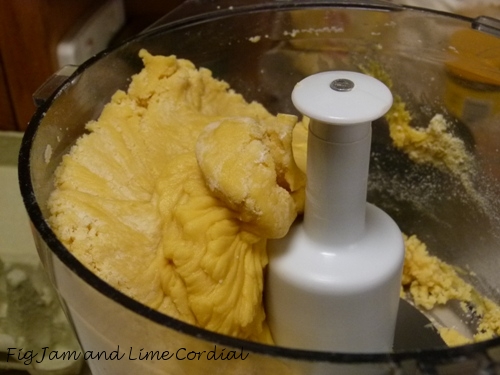
I used to make it by hand, rubbing in the butter and mixing in the eggs, until I discovered how much easier it is to use the food processor.  I get a much more consistent result as well, possibly a product of not overworking the dough.

Our food processor doesn’t live on the bench, so whenever I drag it out, I try to make a couple of batches of pastry dough.  It freezes very well, and can easily be defrosted in time to make apple pie for dinner!

The secret to June’s pastry is the icing sugar mixture she uses (not pure icing sugar).  I believe it’s also known as confectioner’s sugar or powdered sugar in the US. I find using scales to weigh out my quantities always gives me the best result, but I’ve included approximate cup measures  in the recipe as well.

One thing – this can be quite a sticky dough, depending on the weather, the size of your eggs, and the amount of liquid your flour will absorb.  Please have some flour on standby in case you need to add a little – but try not to add too much or overwork the dough, or it will toughen up.

June’s Pastry

  • 225g (1½ cups) plain (AP) flour
  • 225g (1½ cups) bakers/flour or continental flour (June uses the latter)
  • 150g (1¼ cups) icing sugar mixture (confectioner’s sugar)
  • 250g (1 cup) unsalted butter, cold and cut into pieces
  • 2 eggs or 1 egg plus 2 egg yolks

Note: for instructions on how to make this pastry by hand, please see this earlier post.

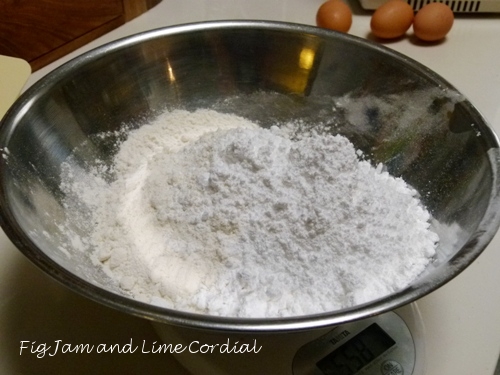
1. Measure the flour and icing sugar, and then tip both into the bowl of a large food processor.

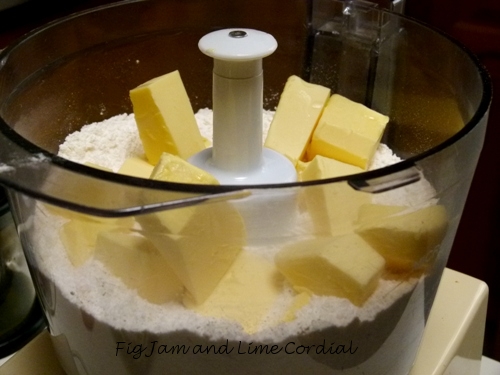
2. Add the cold butter, cut into chunks.

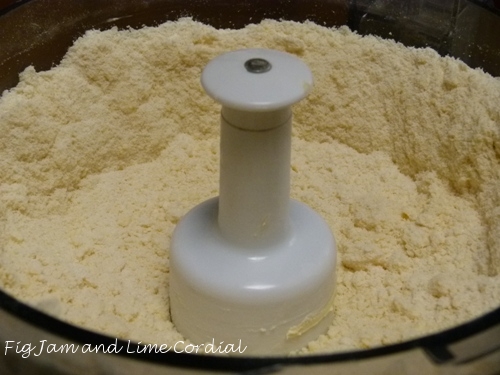
3. Pulse the food processor until the butter is evenly incorporated and the mixture looks like coarse semolina.  This will only take a few short pulses.

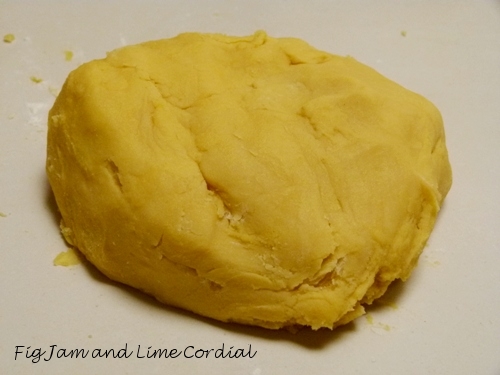
4. In a separate bowl, beat the 2 eggs (or 1 egg plus two egg yolks) briefly with a fork.  With the food processor running, pour the egg through the chute of the food processor.  The mixture will quickly combine into a ball of dough – stop as soon as this happens, and turn the dough out onto a lightly floured bench.

5. Gently work the dough together, adding a little flour if necessary, but handle it as little as possible to prevent it toughening up.  The pastry is now finished, and needs just a short chilling time in the fridge before rolling out.

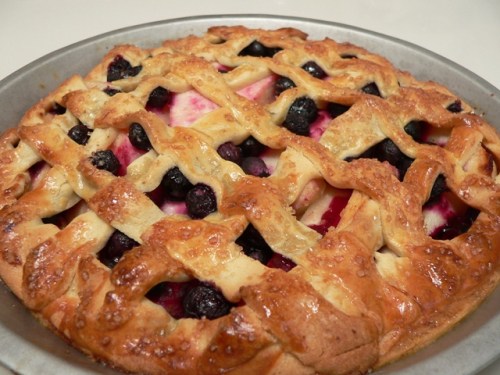
As this can be quite a sticky dough, I usually roll it out between two sheets of parchment paper.  It’s the perfect foil for almost every sweet pastry dessert – I’ve used it for pies, galettes, slices and tarts.

Here it is in Dan Lepard’s Bay Custard Tart recipe

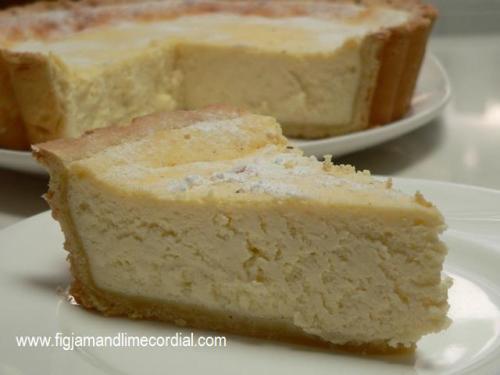
…and it forms the base of our ricotta cake recipe

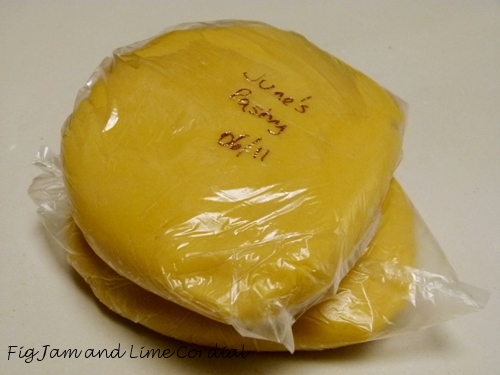
The recipe makes approximately 900g of dough, which is enough for two apple pies.  I usually divide the finished dough in half and freeze it in plastic bags, in readiness for the next time Small Man has a hard day at school!

Read Full Post »

After making the hazelnut and grain loaves recently, I was left with a large quantity of cooked grains in the fridge…

I was loathe to waste these, so I made up two more recipes from Dan Lepard’s The Handmade Loaf.

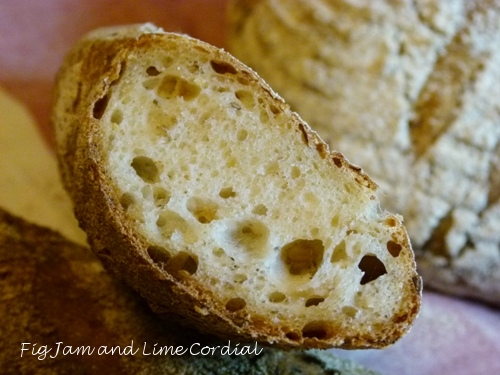
The first was a variation of his Ale Bread with Wheat Grains – an attractive loaf, although the soaked grains in both cases made the dough very wet. I was concerned it would stick like glue to the banneton, hence the crazy amount of rye flour on the loaf above.

The finished loaf had a soft crumb and pleasant taste, although I think my decision to replace the ale in the recipe with apple cider might have been a bit rash…

. . . . .

The second recipe was an adaptation of Dan’s Alsace Loaf with Rye.

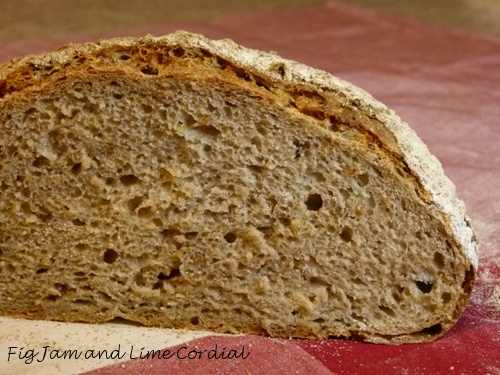
Despite the finished loaves looking like kindling (according to Pete), the bread had a deliciously sweet  flavour, a tender but elastic crumb, and a lovely crunchy crust. It was so good in fact that we struggled to put anything on it – and settled for simply eating it plain.

Here’s my take on Dan’s recipe:

  • 300g soaked mixed grains, well drained (see instructions here)
  • 550g bakers/bread flour
  • 320g water
  • ¾ teaspoon dried yeast
  • 25g honey
  • 150g sourdough starter at 80% hydration (ie. fed at a ratio of 100g flour to 80g water)
  • 1¼ teaspoons fine sea salt
  • 25g grapeseed oil

Cooking and soaking grains before adding them to a dough is an old-fashioned breadbaking technique, and one that’s rarely employed by modern day bakeries.

If you’re baking at home though, do give this a go – the grains soften up, and the resultant loaves are delicious, keep well, and don’t destroy your fillings when you bite into them!

Read Full Post »

« Newer Posts - Older Posts »