Feeds:
Posts
Comments

Archive for the ‘Recipes’ Category

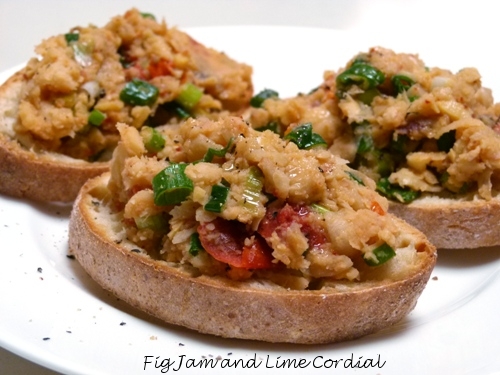
Lunch today came about by accident.

I was cooking chickpeas, and totally forgot about them, until they’d boiled dry – thankfully Pete rescued them before they burnt.  As a result, I was left with soft chickpea pulp, completely unsuitable for the moghrabieh I’d been planning to make.

A quick search on Google turned up an interesting recipe at Smitten Kitchen for smashed chickpeas. I was inspired by the idea, but used completely different flavourings (basically whatever I could find in the fridge and pantry).

The original recipe used tinned chickpeas, but my overcooked ones were already soft, making it easy to mix in the additions.  I added:

  • spring onions, sliced
  • sundried tomatoes, chopped
  • a couple of anchovy fillets, finely chopped
  • freshly ground black pepper
  • preserved lime rind, chopped, and..

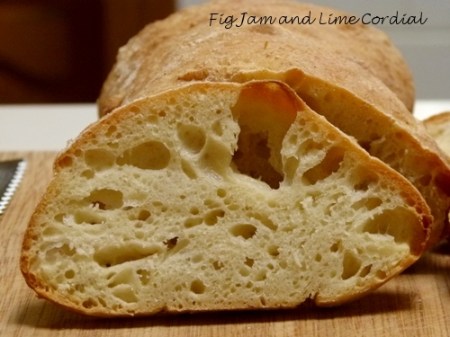
Very tasty piled high on toasted slices of homemade ciabatta, and finished with a drizzle of lemon-infused olive oil!

PS. Spice Girl, you really should have come for lunch.

Read Full Post »

Since we’re on a bit of a chocolate quest at the moment, we thought we’d try making our own Easter eggs this year.

They were a great success, and we finally figured out a way to make them hollow without having to heat and join two halves together.

Our dark eggs and chickens (of course) are made with a slightly darker mix (74%) of our new house blend.  We made the modification on Christina’s suggestion, and it’s proven universally popular:

  • 200g Callebaut 811 (54%)
  • 200g Cacao Barry Tanzanie (75%)
  • 150g Callebaut Cocoa Mass (100%)

The tempered chocolate was poured into one half of the egg moulds, which were then clipped together and carefully rotated as the chocolate set.

Our milk eggs are made of a blend of Callebaut 823 (33.6%) and Cocoa Mass (100%) resulting in a very grown up milk chocolate of approximately 47% cacao.  Here’s the formula:

  • 400g Callebaut 823 milk chocolate (33.6%)
  • 100g Callebaut Cocoa Mass (100%)

It was a perfect way to spend a rainy Saturday before Easter!

You might enjoy this Jacques Torres clip on tempering chocolate – unfortunately I couldn’t embed it here, so you’ll need to click through and watch it on YouTube…

. . . . .

Edit: I’d like to encourage any of you who are interested to give tempering a whirl.  I wrote up the method I use here, but it’s quite fiddly, and if you google tempering, there are easier methods – usually involving melting 2/3 of your chocolate and then stirring in the remainder until the liquid chocolate reaches the right temperature.  I personally don’t find the other methods as consistent, so I stick to what works for me.

David Lebovitz wrote a great post on tempering chocolate here.

One tip: getting chocolate to temper is quite easy, but keeping it there is tricky.  The chocolate needs to go into the mould when it’s between 88 – 90F, but if it cools below that, it can drop out of temper, so the real secret to home tempering is to find a way to keep the chocolate at the ideal temperature while you work it.

Read Full Post »

As you know, I do love a culinary challenge!

This one came about when I discovered that my friends at Paesanella are now stocking Amedei chocolate.  Ever since I read Mort Rosenblum’s Chocolate, I’ve been keen to try this brand.

Amedei came about after brother and sister Alessio and Cecilia Tessieri, Italian sellers of baking ingredients, approached Valrhona seeking to distribute their products.   Story has it that Valrhona rejected their request, telling them that Italy wasn’t “capable of appreciating fine French chocolate”.

Furiously insulted, the Tessieris formed Amedei, which almost immediately started producing amazing chocolate.  Their true moment of triumph though, came when Alessio managed to secure exclusive access to the renowned Chuao cacao plantations, locking Valrhona out of their premium source of beans.  It’s a fabulous story – you can read more about it here and here.

Amedei are acknowledged as one of the leading chocolate houses in the world, as well as possibly the most expensive.  At $10 per 50g ($200/kg), it’s definitely a rare indulgence.  But after such a wonderful tale of passion and sustained Italian rage, how could I resist bringing home a couple of blocks to try?
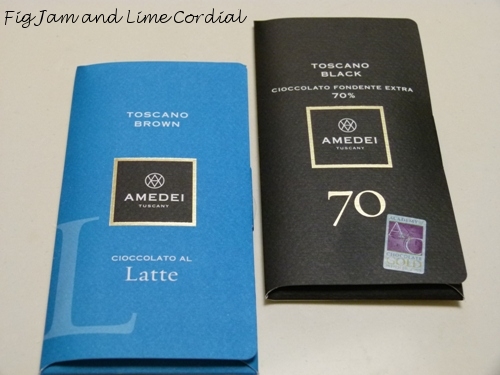
The Toscano Brown, Amedei’s milk chocolate blend, was very nice.

The Toscano Black was sublime.  Big Boy and I particularly enjoyed it, but Pete said, “you know, this reminds me a little of the chocolate you make”.

The gauntlet had been thrown down.

Could I make a chocolate bar which we enjoyed as much as the Toscano Black?  The Amedei bar was a blend, so I thought it might be fun to play around and see what we could come up with.

After a few experiments, I finally arrived at something that we’re all happy with.  Pete and I personally prefer it to the Toscano Black, although Big Boy still prefers the Amedei, as does Dredgey (neighbours who pop in usually get roped into tastings).

The Toscano Black is a serious, sophisticated dark chocolate. In wine terms, it reminds me of old Bordeauxs with their distinctive cigar box and tobacco notes.  It has sweet fruit tones and just enough acidity to add complexity and depth.  It also has an amazing finish – this is a chocolate to be savoured in small pieces, with a taste that lingers in the mouth for many minutes afterwards.

Our home blend has a creamy mouthfeel, good balancing acid, and a strong cocoa flavour with hints of raisin and citrus.  The Tanzanie component contributes robust, slightly woody notes. To me, the blend lacks some of the complexity of the Toscano Black, but I enjoy the flavour profile a little more.  Like the Amedei, it also has a very long finish.

For my friend Gillian (who also reviewed the Toscano Black here) and others who are playing around with chocolate making, our final mix was:

  • 40% Callebaut 811 (54% cacao)
  • 40% Cacao Barry Tanzanie origin chocolate (75% cacao)
  • 20% Callebaut Cocoa Mass (100% cacao)

If my math is correct,  the resultant blend is a dark 72% cacao. Our bars (photo below) work out at $20/kg – definitely more affordable for every day consumption!
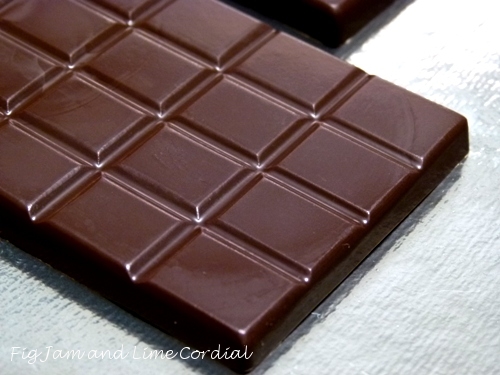
If you get a chance to try Amedei chocolate, I’d really recommend you do so.  Too expensive to eat on a regular basis, but perfect as a special occasion treat and conversation starter!

Read Full Post »
It’s the first anniversary of Zeb Bakes, one of my favourite blogs written by one of my favourite people.

To celebrate Joanna’s auspicious occasion, I baked a loaf of her white toast bread yesterday.  I’d been given a sample of Ben Furney Mills’ premium bakers flour, and this seemed like a good opportunity to test it out.

The flour was a pleasure to work with, and the finished loaf sliced very well.  It was delicious toasted for breakfast this morning.

Pete’s sister Penny and I made another loaf of this bread today.  Pen thought it might be a perfect every day loaf for her family, so I promised to post up the recipe for her.

Please also have a look at Joanna’s original post, as well as the fabulous loaves made by her clever husband Brian!

  • 765g bakers/bread flour
  • 500g water
  • 15g unsalted butter
  • 13g fine sea salt
  • 10g sugar
  • 6g (1½ teaspoons) dried yeast

1. In a large mixing bowl, mix together the flour, salt, sugar and dried yeast.  Cut the butter into pieces and rub it into the flour mixture.  Add the water, and mix to form a shaggy dough.  Cover the bowl and allow it to rest for about half an hour.

2. Give the dough a quick knead in the mixing bowl until smooth, then cover again and allow to prove until doubled in size.

3. Turn the risen dough onto a lightly oiled bench and shape  it into a log.  I find it easiest to first form the dough into a ball, and then to flatten it out into a circle.  Starting at one edge, roll the dough up tightly to form a long fat sausage.

4. Place the shaped dough into a lightly oiled 28cm/11″ loaf tin, seam-side down.  Cover the tin and allow to rise until doubled in size.  Preheat the oven to 210C with fan.

5. Slash the top of the loaf, spritz with a little water and dust with rye flour.  Bake the loaf for about 40 minutes, rotating halfway through the baking time.  Remove from the tin and allow to cool on a wire rack.

Happy Blogaversary, Joanna and Brian, a toast to you both!

Read Full Post »

During a recent freezer defrost, we uncovered a bag of frozen blueberries that needed to be used up in a hurry.

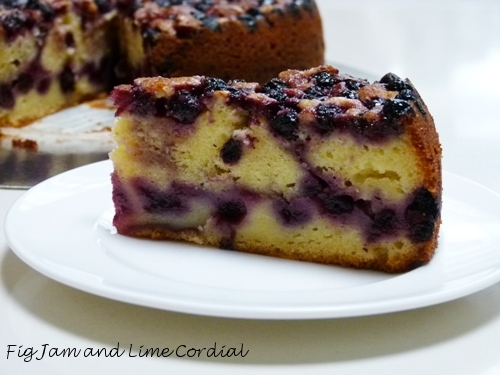
I turned them into Chocolate and Zucchini’s Blueberry Coffee Cake.  I’ve been making this reliable recipe for years – and today I rather extravagantly included 500g of defrosted blueberries.

The recipe is here, and I made it exactly as written, although I used an  8″/20cm springform pan rather than the larger one specified, and therefore the cake needed a slightly longer cooking time.  Happily, I was able to use Pete’s Greek yoghurt, eggs from our chooks, and our homemade vanilla extract!

The end result was a moist, comforting cake which will keep well for several days.  I find it appealingly homely – I had a slice for afternoon tea, as I tried to fill in more of the Sunday crossword!

Read Full Post »

« Newer Posts - Older Posts »