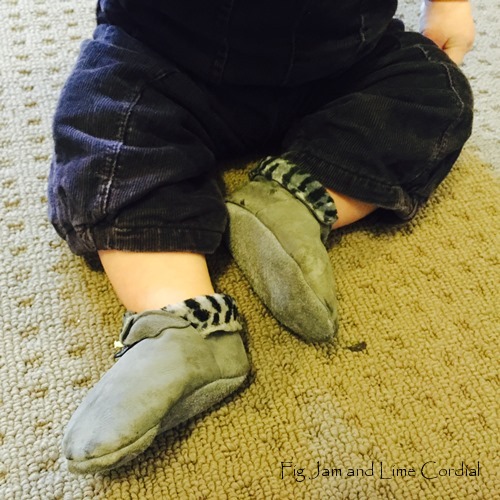
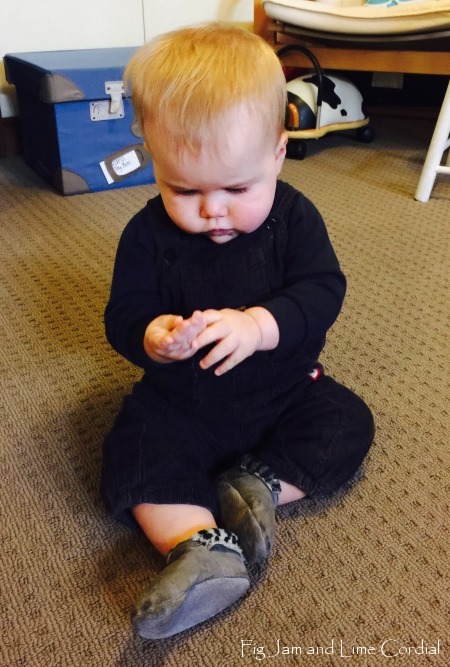
These little leather shoes are handmade by Lorri from Shu Shu.
I walked past her stall at Paddington Markets a couple of weeks ago and felt an almost irresistible urge to rub the soles of her small creations on my cheeks. And that’s because I’d bought almost exactly the same shoes from her in 1993 for Big Boy when he was learning to walk. The memories were so powerful that I found myself standing at her stall for ages, just holding the shoes in my hands.
I bought a pair for young Evan. They’re the only thing he keeps on now…
Lorri has a workshop in Summer Hill and we both drink at Marty’s bar. How cool is that?
. . . . .
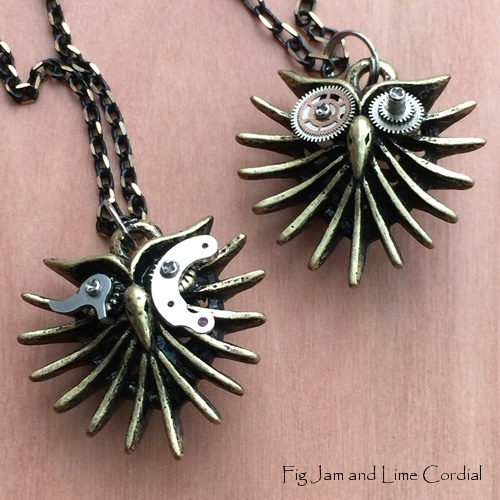
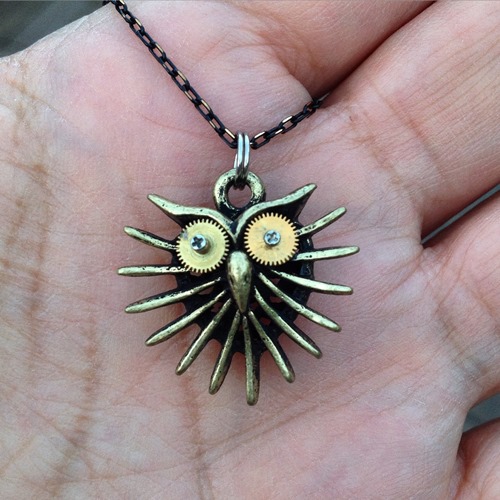
Also at the markets were these gorgeous steampunk owls created by Juan and Olivia of Time Flies Designs. You might remember that I bought Pete’s birthday present from them a few weeks ago (photo below from their website)…
I’m really happy to support such a nice young couple, so I bought two of their owls ($30 each) for upcoming birthday gifts. Each one has a pewter body and slightly different eyes made from antique watch parts. I think their goal of upcycling beautiful but broken old things into beautiful new things is worth supporting, and I love their aesthetic.
There are a couple of owls for sale on their website, but if you’re interested, give Juan a call as he has many more designs available and can probably send you photos of them…
. . . . .
It’s a busy time of year here, and the weather is cold and miserable. Still, I’m meeting up with friends tomorrow, which will be huge fun! What do you have planned for the weekend?
I’m almost always up early (thank you, perimenopausal hormones). Yesterday I unstacked the dishwasher, scrubbed the cooktop, baked lunch rolls, made a second batch of dough, hemmed pants, repaired the dirty laundry bag, washed two loads of clothes, and swept the floor. I’m often at my most productive before 9am, and at that time of the morning, domestic busyness never feels like a chore.
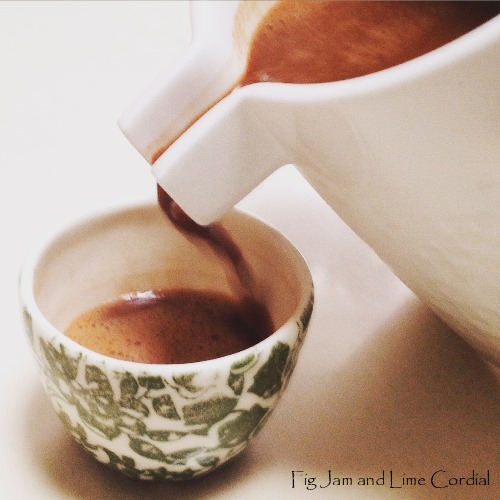
Once the kitchen was tidy and the rolls were in the oven, I made myself a small pot of hot chocolate and sat down to sip it out of a tiny sake cup. The drink was made by blitzing 30g of Amedei chocolate in boiling water in the funky little jug that Kavey sent me from London. The cup is a Paddington Markets find – it was made by artist Samantha Robinson in nearby Alexandria. It’s only big enough for a few sips, but the ritual of pouring, sipping, and pouring again was comforting and meditative…
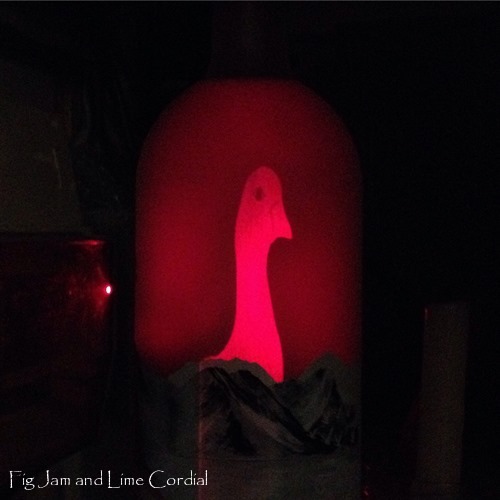
As I opened the linen closet to put folded towels away, I noticed that the red glow from an electrical panel was illuminating the one litre bottle of Grey Goose vodka I’d bought from Costco. In the 6am darkness of the hallway, it was quite ethereal…
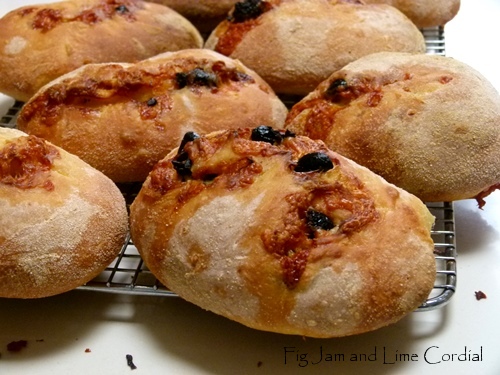
The lunch rolls were Small Man’s favourite – sourdough stuffed with Italian olives and Margaret River cheddar. They turned out well…
. . . . .
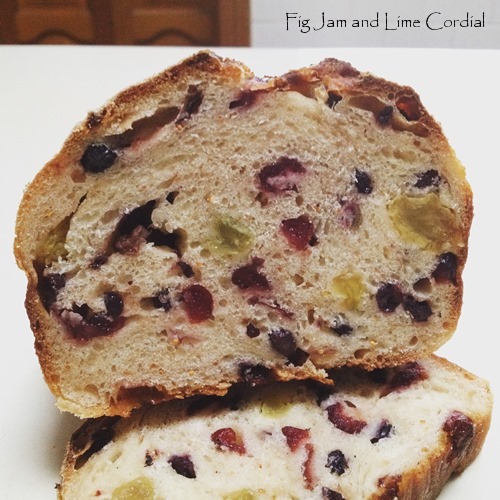
On Friday, my lovely neighbour Michelle rang to let me know that baby Evan (11 months old) had been unwell, and that the only thing he would eat was Auntie Celia’s sourdough fruit loaf. No pressure at all, of course, but she also wanted to mention that she was down to her last slice, and there was just the slightest chance that he might starve if I didn’t bake some more.
Ok, she didn’t exactly say that, but I made a loaf for him anyway on Saturday. I’m a sucker for flattery from babies…
. . . . .
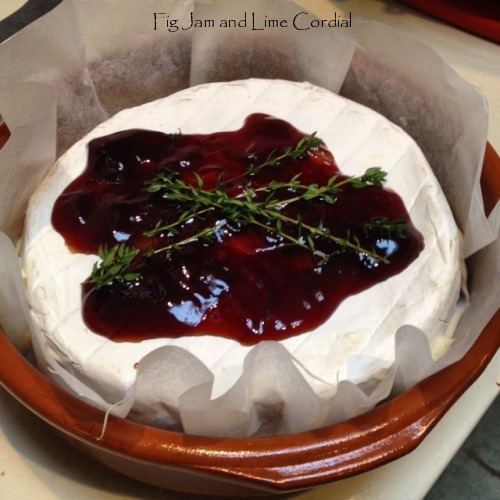
On Friday night, we had our winter dinner with old friends Kevin, Carol, Gill and Therese. We get together four times a year, at the beginning of each season. I made lovely Lorraine’s ever reliable brie dip (photo below is prior to baking), substituting Pete’s quince jelly for apricot jam…
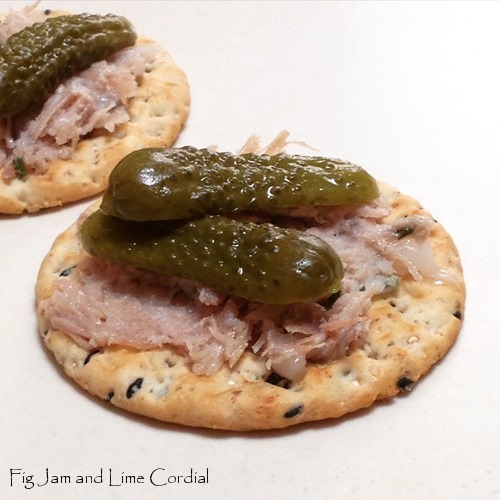
We served up our recently made confit duck rillette on grain crackers, topped with cornichons…
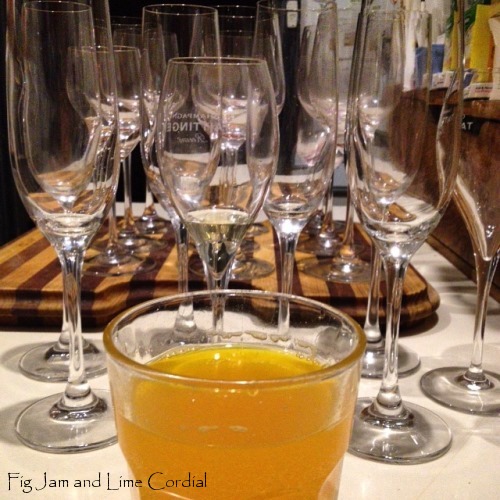
The next time I remembered to take a photo was at midnight after everyone left! The glasses went into the dishwasher the following morning (I’ve broken too much stemware to attempt cleaning them at the end of a big night).
Having a Berocca before bed is my personal hangover prevention technique. I truly believes it works, although I was a tad dusty the following morning…
. . . . .
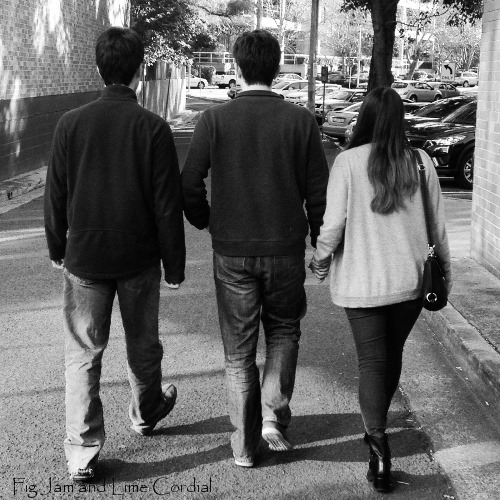
On Sunday, the sun came out to brighten a calm, glorious winter’s day. We went to lunch with my folks, and I took this photo of the kids as we were walking back to the car. My trailing behind photos have always been of our two (the previous ones are here and here), but now there are three. The adorable Monkey Girl joined us for lunch – we love her to bits…
. . . . .
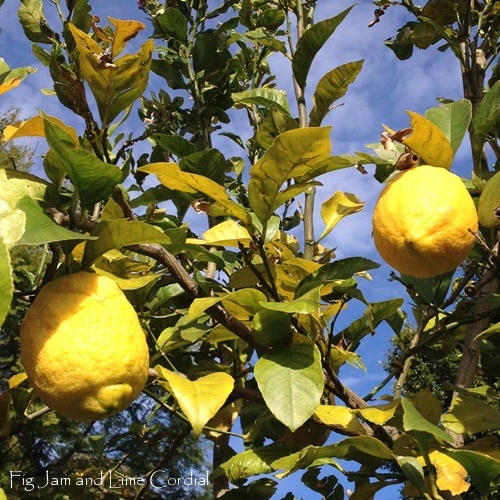
After the big hailstorm, our garden is starting to grow back. The lemon tree is doing brilliantly at the moment…
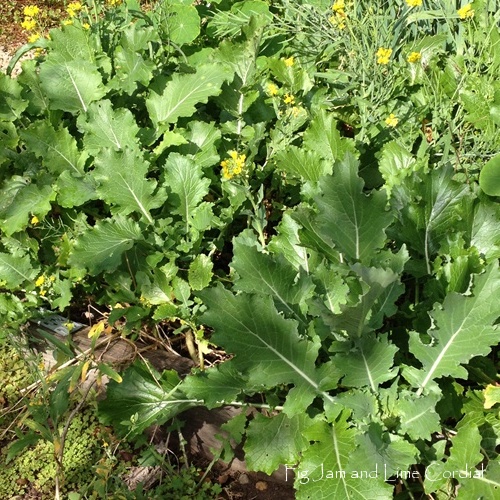
…and we were able to harvest enough newly grown broccoli raab to make dinner last night…
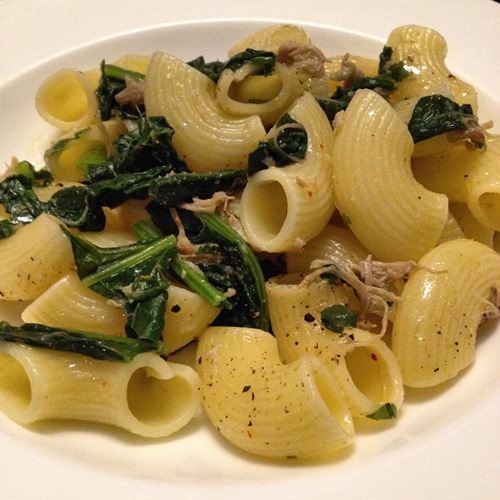
My clever Pete has a deft touch with this style of pasta.
To a large pot of well salted boiling water, we added the roughly chopped raab and the sliced green portion of a small perennial leek. The water was then brought back to the boil and the dried pasta added. As it cooked, we fried up the leftover confit duck rillette (including all the fat) in a little butter with sliced garlic, chilli flakes and the chopped white portion of the leek. These were cooked gently (so that the garlic didn’t brown), and then the drained pasta and greens were added to the pot. Finally, a little of the boiling water was added and the dish was seasoned to taste.
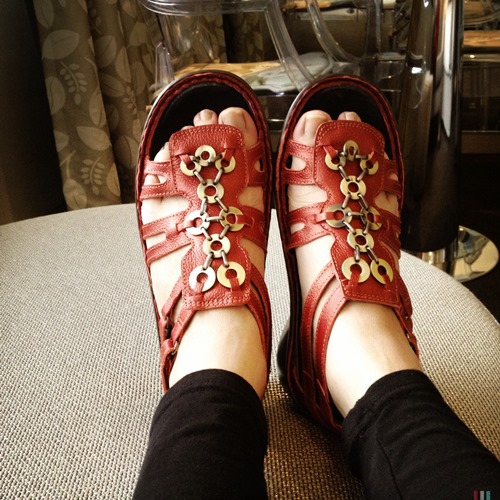
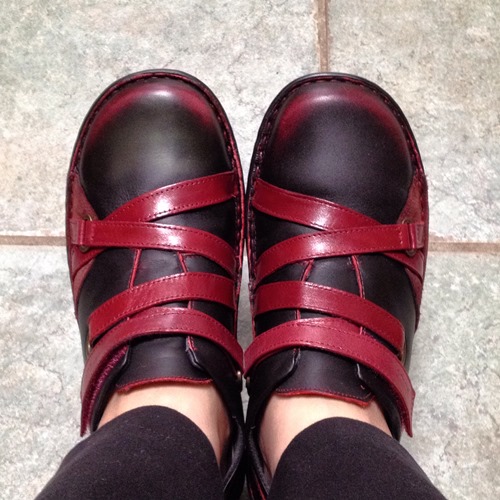
The most attractive photo ever taken of my feet. Seriously.
I don’t have great feet.
Hmmm…let me go back a step.
I don’t have any fashion sense. My lack of it has been known to make my poor mother weep. My sister Cynthia, on the other hand, is stylish enough to grace the cover of magazines. And as anyone who has a sister knows, they’re incredibly loving (if we’re lucky) and usually brutally honest. When she was fifteen (I was eighteen), my darling sister looked at my feet and exclaimed…”Gross! You have hobbit feet!” Tragically, she was right. They’re wide, flat and fat. I spent years squishing them into shoes that didn’t fit.
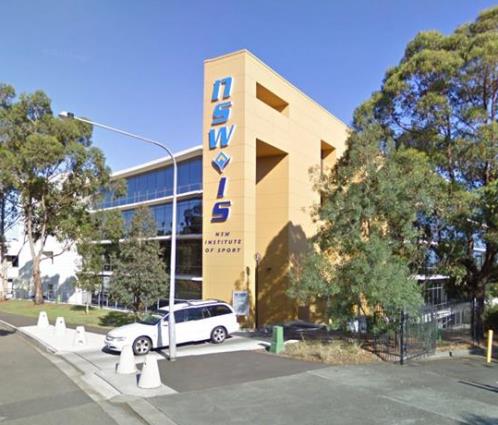
Fast forward to my forties, and I found myself with foot and knee problems. After a stern warning from my friend Lisa (“Celia, you don’t want to be having ankle surgery at seventy!”), I trotted off to see a podiatrist. And so it was that I found myself sitting in the waiting room at the Institute of Sport in Homebush…
It was an hilarious experience.
I was in the waiting room, sitting between an Olympic hurdler and Australian football legend Willie Mason, feeling just a teensy bit out of place. It was worth it though, because we now have the best podiatrist in the world. If you’re in Sydney and you need to see one, we can’t recommend Richard Windybank highly enough. He’s one of the nicest people ever. More to the point, he’s extremely good at his job, and he won’t rip you off. The orthotic supports he made for Small Man and me weren’t cheap, but they’ve lasted for years and years (thankfully Small Man’s feet stopped growing when he was fourteen).
. . . . .
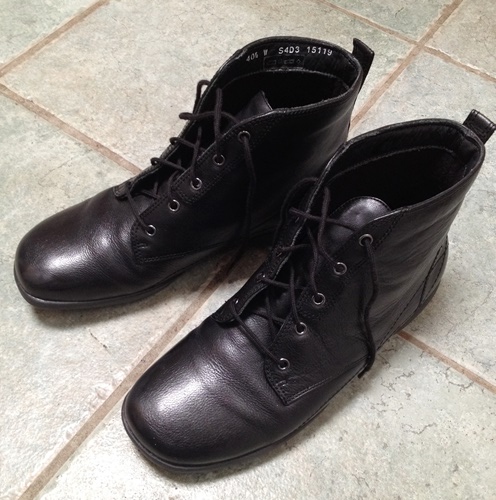
So…now I’m fifty. And I’ve been back to see Richard, because I’ve buggered my right foot. As you might recall, I’ve spent a lot of time walking around Sydney in the past month. It was late autumn and quite cold, so I pulled out my winter boots, only to find that the soles had worn through completely. So I dug up an old pair of boots, squished my orthotics into those, then squished my feet in. And walked, and walked, and walked.
Now I have bursitis in my foot, plus a possible (but very unlikely) stress fracture. It’s ok really, it will heal, and I’m not in much pain. Given that I was a doofus, I think I actually got off lightly. And it’s probably a good thing, because it’s refocused my attention again on the importance of decent footwear.
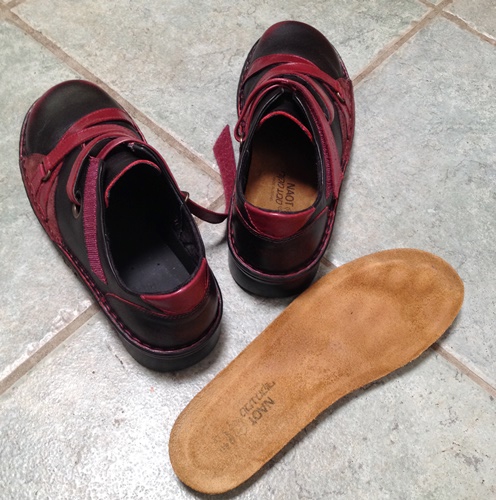
If you have hobbit feet, even though my beloved cackling sister insists that hobbits don’t wear shoes, you might find the Naot and Ziera brands comfortable. The Naot Allegro range has a really wide footbed, with a removable cork innersole that leaves a deep enough depression to fit my orthotic insert into…
I buy my shoes online from the lovely folks at Naot of Kew in Melbourne. The sizing is blessedly consistent, which means I can order the same size and know that they will fit me every time. They’re not the prettiest footwear, but as I said, I really don’t have enough fashion sense to be troubled by it…
My latest discovery, on the advice of a podiatrist friend over drinks in Marty’s bar, is the Ziera brand. Formerly Kumfs, this NZ company changed its dowdy name but kept its comfortable shoe range. They have an amazing returns policy – if the shoes aren’t comfortable, you have 30 days to return them for an exchange or refund, even if they’ve been worn. These boots (Savvy) look a bit like school shoes, but they’re incredibly soft, fit my orthotics and don’t cause me pain…
So that’s where I’m at. Richard is making me new orthotics, I’m icing my foot (with ice, not icing sugar), and washing down Voltaren with sidecar cocktails (which I believe is contraindicated). But I now have proper hobbit shoes, so I’m completely happy.
If you have any hobbit footwear advice, I’d be most grateful for it! Thanks! ♥
PS. No affiliation whatsoever with the Sydney Sports Medicine Centre, Naot, Ziera, or Tolkein.
I often think that if times got really hard, we could survive on bones.
Last weekend, I made a lot of stock. Monday was a public holiday, so I had a bit of extra time to potter around in the kitchen. And I’m completely addicted to making stock. There’s something incredibly rewarding about eking out every last bit of goodness from bones which most people would throw away.
chicken carcases or pork bones or beef soup bones (brisket) or just about any other boney bits
cold water to cover the bones by an inch (2cm) or so – usually 3 – 4 litres
salt, to taste
2 onions, peeled and coarsely chopped
2 carrots, peeled and coarsely chopped
2 bay leaves
black pepper corns, to taste
peeled thumb of ginger, sliced (optional – I usually only add this to chicken stock)
Note: please follow the instructions for your pressure cooker – most specify not to fill more than 2/3 full.
1. Rinse the bones to remove any small splintery bits, then place them inside the base of a large pressure cooker (mine has an 8 litre capacity). Add all the other ingredients. Lock on the lid and place over a large burner on high.
2. Bring the pot to full pressure (this can take a while), then reduce the heat to low (but keep the pressure up) and cook for 20-30 minutes. (20 minutes for poultry, 30 minutes for pork and beef.)
3. Turn the heat off and allow the pot to cool naturally for at least two hours. During this time, the pressure will gradually release by itself.
4. Open the lid and strain the stock, through muslin if necessary. Carefully remove the bones and pull off any meat with your hands. Allow the stock to rest in the fridge until it separates, then remove the fat (stash it in a small jar in the fridge for cooking) and pour the liquid into containers for freezing.
This technique produces a fabulous base broth – the perfect foundation for soups, rice dishes, pastas, stews and more. I will occasionally make it without any added salt, just to increase versatility. Using the pressure cooker minimises evaporation, resulting in the maximum quantity of finished stock.
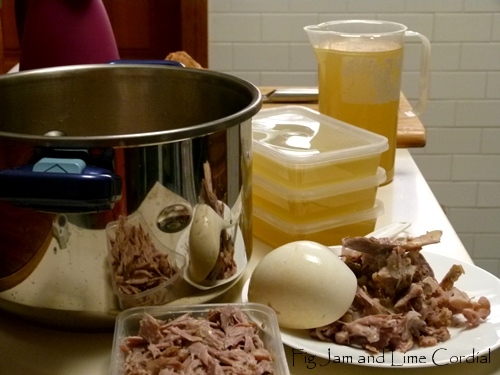
The remnants of our turkey and chicken wing stock
. . . . .
Here’s the original YouTube video that I learnt this technique from…
. . . . .
Over the weekend, I turned a bag of chicken carcasses from Havericks (five pieces at $1/kg, total cost $1.45) into three and a half litres of delicious clear broth and three small containers of meat. The stock will go into a multitude of dishes, and the meat into savoury rice congee and noodle soups.
The second batch used pork tail bones – my mother wanted just the tips of the tails, so she gave me the “butt” pieces (the whole tails were $3.50/kg). These were cooked at pressure for 30 minutes, then left to cool in the pot. The meat was incredibly tender and plentiful – enough to fill two rectangular takeaway containers. It will form the basis of future pasta ragus, taco fillings and lasagnes. The pot also produced three litres of tasty pork broth.
My third batch used two turkey necks and a handful of chicken wing tips that I unearthed from the freezer. These were cooked for just 20 minutes at full pressure, then left for three hours while I ran around and did other things. The two and a half litres of stock produced were aromatic and sweet…
There wasn’t much meat on the wings, but a huge amount on the two turkey necks. It was beautifully tender, and I’ve tucked it away in the freezer to make Tanya’s arroz caldoso…
Finally, I confitted three duck breast/wing portions overnight for 10 hours at 90C (recipe is here) and shredded the meat for duck rillettes. I then scraped the skin, bones and all the surplus bits into the pressure cooker with two litres of water, a chopped onion and carrot, and a bay leaf (no salt, as the confit had already been well seasoned). The end result was five cartons of incredibly delicious “free” stock…
. . . . .
It’s amazing how economical this process can be – the bones cost just a few dollars per kilo (or nothing at all, in the case of the duck), the pressure cooker is quick and energy efficient, and the output is enormous. The four batches I made over the weekend produced enough meat for five to six family dinners, and flavoursome base stocks for many more. As I said, if times ever got really tough, we could survive on bones.
Here’s a photo of my well stocked freezer (ugh…awful pun, sorry!)…
Do you own a pressure cooker? I’d love to know what you make in yours!
The word frugality is usually defined in monetary terms. When people talk about frugal living, they’re generally referring to a lifestyle which is thrifty, economical and prudent.
For us, it’s a great deal more than that. It’s about recognising how incredibly precious and limited our resources are, and trying to find ways to minimise our use of them. It’s about thinking beyond our immediate family needs and considering how our actions impact on others and the environment. Saving money along the way is an added bonus, but it was never the primary motivation.
Rose left a comment on the last post asking for a breakdown of our bread costs. Here are some rough estimates. Our large 90cm Smeg oven costs about $1 an hour to run (according to Pete the electrical engineer). A great deal of the energy used goes into actually heating the oven up, so while it’s on, I try to maximise its output by baking as large a quantity as possible. My four and a half kilo batch of sourdough cost $4 in raw materials ($1 bakers flour, $2.80 remilled semolina, salt, water) plus $1 in electricity, and produced two large loaves ($1.25 each) and three small ones (83c each).
In dollar terms, whilst that was economical, it certainly wasn’t the cheapest option available – we could have picked up supermarket bread for $1 a loaf. But I considered it to be extremely frugal – the bread crackers I made (add another $1 in oven costs) provided Small Man with a week’s worth of afternoon snacks; the loaf I gave to June meant she didn’t have to walk down the road to buy one (remember, she’s 86 years old); the loaf I handed over the fence to Mark was eaten for dinner that evening.
Sharing in this way is communally frugal – it saves everyone time, money and effort for almost no extra work or cost on my part. It’s also environmentally frugal – Mark didn’t have to start his car to drive to the shops, June didn’t have to heat up her oven. It reduces the eco-footprint of our community as a whole.
Let me give a few more examples.
Frugality, as we define it, is buying higher welfare meat, which hopefully affords the animal a happier existence and the farmer a sustainable lifestyle, and then finding ways to stretch it out over several dinners. Last year I wrote about how we do this with free range pork hocks.
Frugality is paying a small premium for biodegradable coffee pods, because they provide a saving, not to us, but to the environment.
Frugality is sending out dried sourdough starters to friends all over the globe, so that they too can fill their ovens and nourish their families and neighbours. These small sachets have enabled a worldwide group of bakers to live more frugally.
Frugality is buying an insulated flask so that we only have to boil the kettle twice a day instead of eight times. It’s setting the gas heater on economy and wearing more clothes inside the house. It’s pottering in the kitchen on Saturdays baking lunches for school, tempering expensive chocolate for birthday gifts (rather than buying something far more costly and less appreciated), and pressure cooking saved bones from the freezer into stock.
Frugality is spending far more money than is “reasonable” to repair an old dishwasher, because the manufacture of every new appliance is incredibly expensive in terms of both natural resources and landfill. It’s maintaining a car diligently and then driving it for as many years as possible, until smoke comes out of the steering wheel (eleven years, in our case).
Frugality is paying for insulation, even though the cost will take years to recover, because that enables us to use less energy. It’s adding rainwater tanks to the garden, to save precious water that would otherwise run off into the drains. All these actions involve an initial financial outlay, but are extremely frugal in earth terms. And they save us money in the long run.
When we widen our definition of frugality beyond dollars, it becomes apparent that many things which appear economical actually come with a high price tag. Factory farmed meat can be extremely cheap, but expensive in environmental, animal welfare and (possibly) personal health terms. Mass produced sandwich bread might only be $1 a loaf, but it can be filled with chemicals designed to keep it soft for days. Fast food is bargain priced, but often fat and salt laden. As my father always says, “all that glistens isn’t gold”.
I believe frugal living should take into account more than just our budgets and cashflows. We also need to consider how the choices we make impact on our health, our families, our communities and the planet. Information is the key – we need to research, ask questions, and seek out knowledge which will enable us to make informed decisions. Without a doubt, it’s a lifestyle approach that will save us money. But far more importantly, it’s a healthy, sustainable, earth friendly way to live. ♥

 I often think that if times got really hard, we could survive on bones.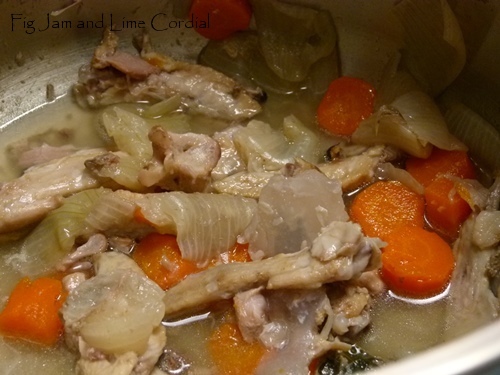
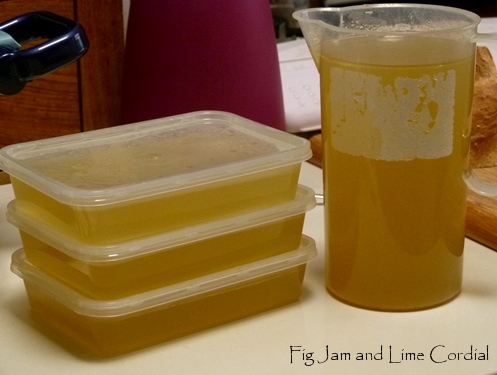
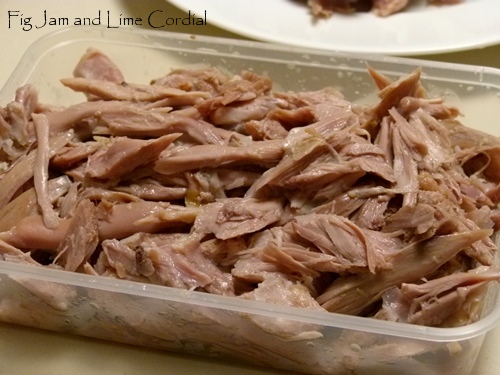
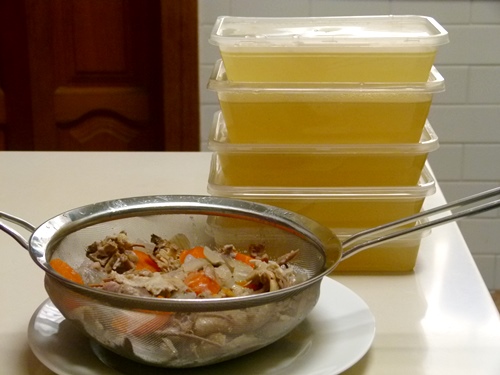
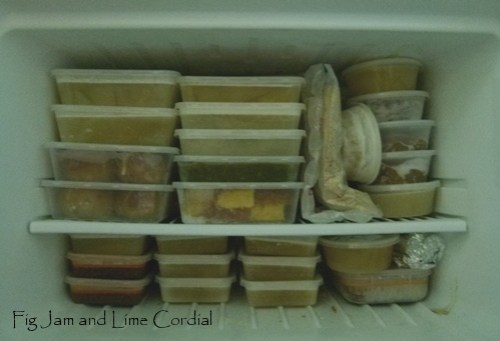
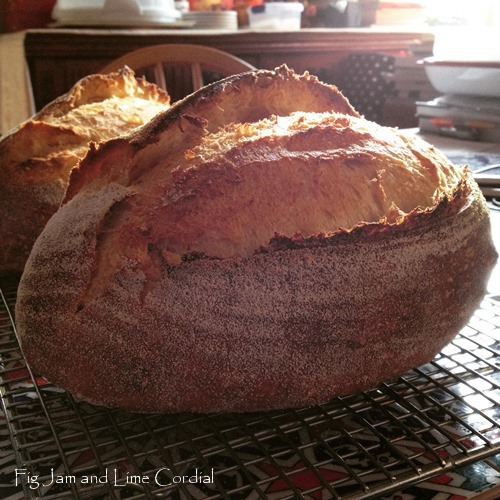
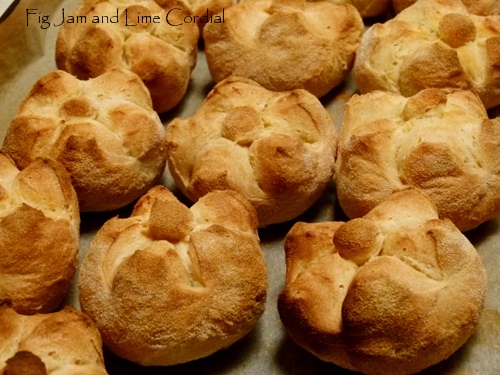
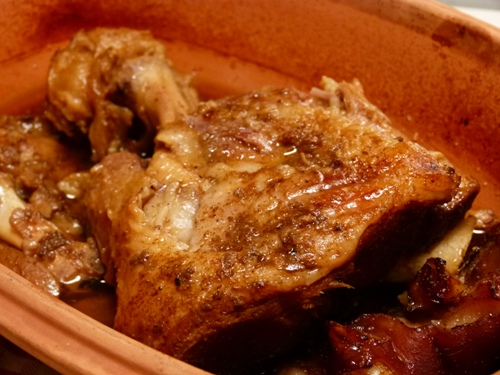
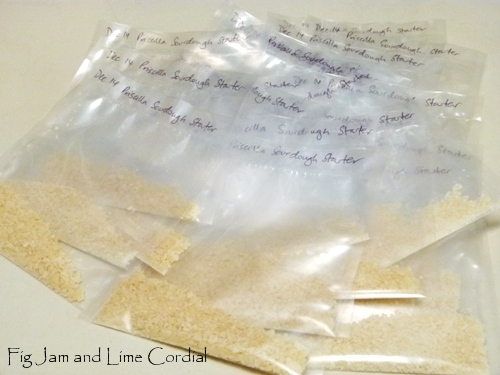
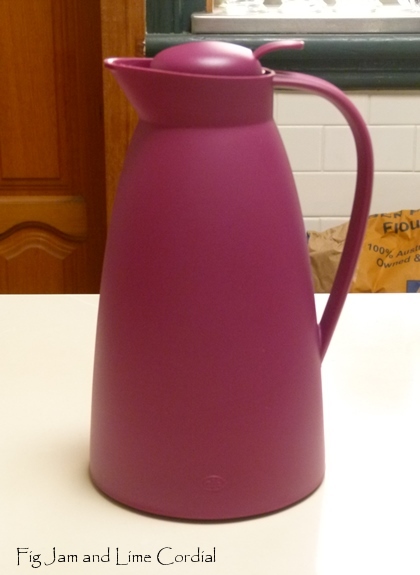


 Fig Jam and Lime Cordial