Feeds:
Posts
Comments

Archive for July, 2009

090709 008a

David Lebovitz has done for chocolate what Bruce Lee did for kung fu  – he has demystified a formerly secretive art and made it accessible to the general public.  Ok, so I never managed to learn kung fu (take that sad image out of your minds right now), but I have learnt to do clever things with chocolate. And like the Dragon, in Lebovitz’ case, it’s all about technique.  His recipes aren’t overly complicated, but their success or failure depends entirely on execution.

A wonderful case in point is the recipe for hot chocolate in his new book The Sweet Life in Paris (which is a great read, despite its mildly-annoying-but-very-French deckle cut finish).  It’s a simple recipe; just milk, chocolate and a pinch of salt.  However, made correctly, it is creamy, smooth and delicious – we’ve grown quite addicted to it as a restorative tonic and now keep a small bottle in the fridge at all times for emergencies.

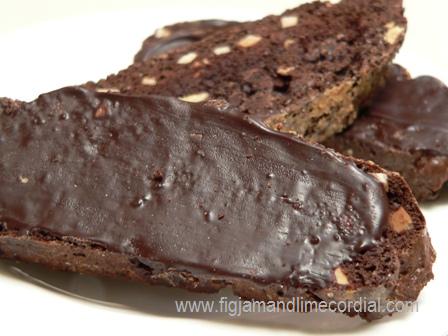
Last night, I whipped up a batch of Lebovitz’ dark chocolate biscotti. The original recipe is on his blog and I was planning to reproduce it here, until  I realised that I really couldn’t explain the methodology any better than he has.  For what it’s worth, I used Callebaut dutch cocoa in mine, which resulted in an extra dark cookie.   They’re very grown up, yet oddly reminiscent of the politically incorrect Golliwog biscuits of my childhood – while completely different in shape and form, the flavour jogs something in the recesses of my brain (I think it’s the crispness combined with the cocoa).  Some of the biscotti were treated to a coating of tempered chocolate, which made them ridiculously moreish, particularly with a hot cup of tea.
200709 002a

I now own two of Lebovitz’ books  – The Sweet Life in Paris and The Great Book of Chocolate.  They’re informative, entertaining and occasionally hysterically funny.  He also writes a great blog, where it’s easy to while away a couple of hours, particularly if you’re a seasoned virtual traveller like moi.  Just be careful, though, or you’ll end up with an expensive chocolate addiction like the rest of us…
Read Full Post »

260709 022

It’s cold in Sydney at the moment.  Not cold enough to grow raspberries, but chilly nonetheless.  Cold enough to be flu season and sure enough, I have  the flu.  I’ve decided the cure is:

  1. Flu meds + rest
  2. David Attenborough dvds
  3. A polarfleece sack

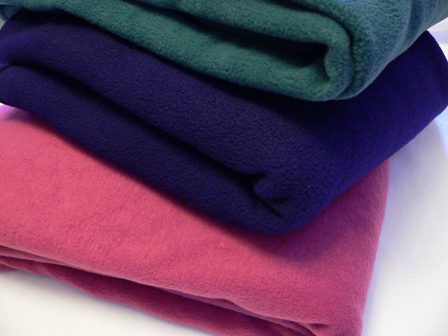
Polarfleece is an amazing fabric.  Even if you can’t sew a stitch, you can make yourself a blanket, since this material doesn’t need any finishing.   You can just go to Spotlight, buy two metres of fleece, and voila, there’s your blanket. If you wanted to be neat, you could cut the selvages off,  hem or even fringe the edges, but none of these things are necessary, as the fleece won’t fray.  The fabric is super warm, cuddly, and dead easy to machine wash and dry.

If you can sew, you might want to go just that little bit further and make some polarfleece sacks, which is what I’ve been doing.  These have a simple boxed pocket at the end, so you can tuck your feet in when you’re watching tv or sitting at the computer. The pocket seems to amp the warmth up several notches and the cocoon factor makes this an ideal gift for couch potato teenagers.  I’m not brilliant at writing sewing instructions, and my grasp on Microsoft Paint is tenuous at the best of times, so please excuse the dodgy illustrations.  Having said that, these sacks are pretty easy – you only need to be able to sew a straight seam!

The instructions are here : Sewing a Polarfleece Sack…

Read Full Post »

250709 014a

The enticing photos at Becca’s blog inspired us to visit Eveleigh Markets – a new Saturday morning produce market set up in the old railyards in Darlington. Familiar stomping grounds indeed for Pete and I, who met at Sydney University nearly thirty years ago.

These markets – which opened at the end of February 09 – were exactly what you’d expect from the hip, inner-city venue.  We encountered parents with a child named “Zsa Zsa”, overheard a passerby discussing her recent sojourn in an ashram, and zigzagged our way around scores of dogs on leads.   Everyone had their own brightly coloured nanna trolley, which made my sage green one look a little anaemic by comparison.   All the sales were cash only, and you needed lots of it, because everything was expensive and there wasn’t an ATM for miles.  Most of the produce was interesting, high quality and organic, and priced accordingly.

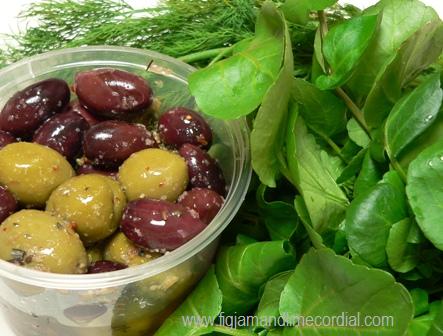
The highlight of the day was running into Sara Adey, former owner of Darling Mills Restaurant in Glebe.  Sadly, our favourite restaurant of all time closed over a decade ago, and we’ve mourned its loss ever since.  Sara is now working with  her family on the Darling Mills Farm in Berrilee, and we couldn’t resist buying their mixed olives (which were always served on arrival at the restaurant), a bunch of dill, and some gorgeous watercress (photo above).  Most of the cress was eaten rabbit-style over the course of the afternoon, with the remainder tossed over a hot pizza that night for dinner.

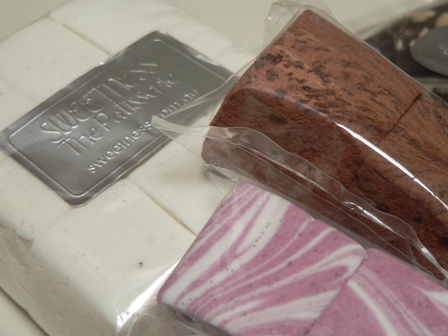
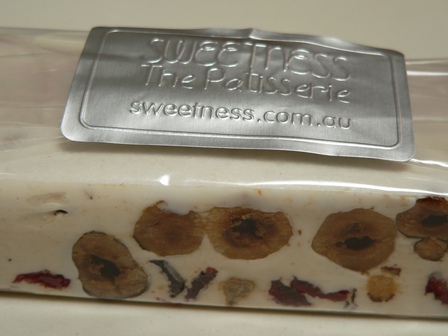
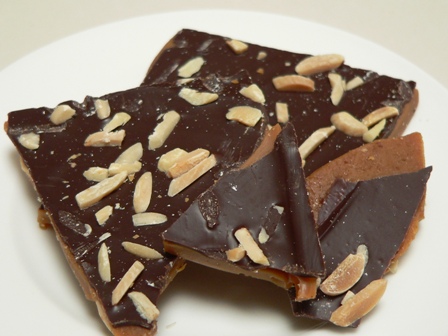
Another great find was the Sweetness stand. Oh my.  This stall was so visually appealing – and the products were so carefully crafted and presented – that I couldn’t resist spending money.  Thankfully, everything tasted  wonderful, which was just as well because my inability to choose led to a “buy them all” moment.

There were handmade marshmallows to die for…

250709 019

…hazelnut and cranberry nougat…

250709 022

and some wickedly delicious English toffee – buttery, crisp and just the tiniest bit salty.

250709 020

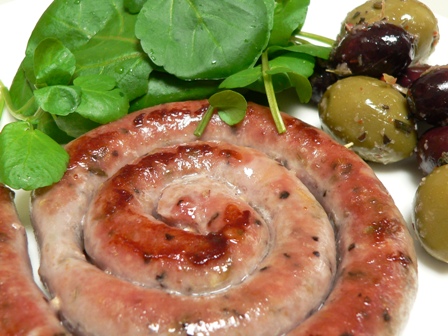
Our final purchase of the day was some cumberland sausage from the Tallabung Pork stand.  Made from the meat of black Berkshire pigs ( highly prized, particularly in Asian countries), these were tasty and rich, if somewhat oily.  All up, it made for an interesting Saturday lunch!

250709 023

Read Full Post »

030709 037

Oh, how I wish we could grow raspberries in Sydney!  Our temperate clime precludes this, and as a result, a punnet of  fresh raspberries (150g) usually costs $9 or more.  Thankfully, frozen raspberries are widely available, and at $11 a kilo, they’re a reasonably economical option.

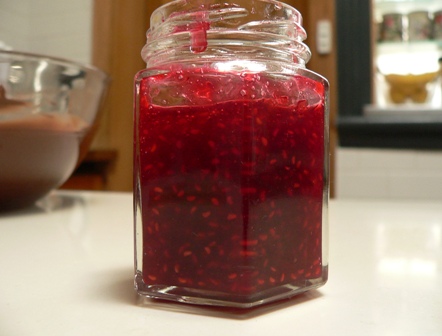
We’ve never made a straight raspberry jam before, but inspired by a jar of homemade Tasmanian jam that we were given recently, we bought two boxes of frozen raspberries to give this a go.  Pete loves raspberries, and wanted to make a jam which would set with less sugar, so as to not mask the tartness of the berries.  To achieve that, he used three jars of our homemade pectin, which led to a firm but not rocky hard set (even after a night in the fridge) – feel free to use less if you’re happy with a softer jam.  Berries are low in pectin, so they normally require quite a bit of pectin and sugar to set.

Pete’s Raspberry Jam

  • 1.4kg frozen (or fresh) raspberries
  • 1kg white sugar
  • 3 x 300ml jars of homemade pectin (use less if you want a softer set)
  • Juice of 1 large lemon
  • 2 teaspoons vanilla syrup

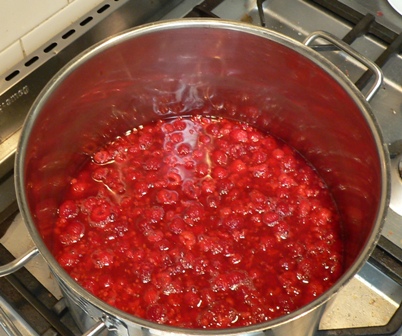
1. In a large stock pot, combine the raspberries, pectin and lemon juice.  Warm until the raspberries are defrosted, but don’t bring to a boil.

030709 029

2.  Add the sugar, vanilla syrup and bring the pot to a gentle boil.  Skim the pot of any scum or foam that rises to the surface. Once you’ve cleaned up the surface, turn the heat up and bring the pot to a rolling boil.

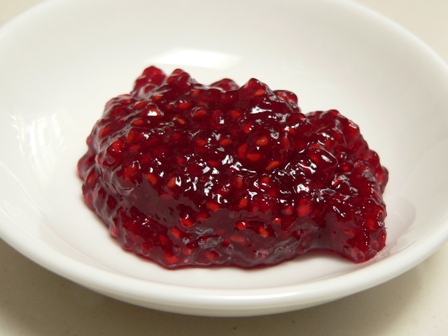
3.  Boil until the jam sets.  Test by putting a small blob on a cold plate – if the jam is set, it will wrinkle when given a small poke with your finger.

4.  Ladle the jam into sterile jars and seal tightly, then process the jars in a boiling water bath for 10 minutes, ensuring that the water covers the lids by at least 2.5cm.  Note: make sure you put the hot jars into hot water – if you use cold water, the glass jars may crack.  This batch filled 6 x 300ml jars, with a little bit left over for tasting!

030709 043

. . . . .

See our Jam Making Primer for more tips on making jam.

Read Full Post »

030709 045

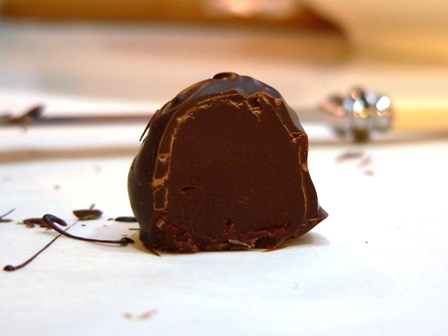
We had two functions last weekend, so I made a big batch of chocolate truffles.  These are wickedly good, and easy to make once you’ve nailed the art of tempering chocolate.  They only have two ingredients in them – cream and chocolate – so use the very best you can of both.

This recipe uses lots of chocolate, but there was enough leftover tempered chocolate for a batch of almond rochers as well (recipe to follow).  I made 64 truffles in total – 12 for each function, and 40 for me. (Ok, that’s an exaggeration, I had to share with the boys.)

Step 1 : Truffle Centres

  • 19 oz (540g) Callebaut 811 (54%) dark chocolate callets
  • 1½ cups fresh cream (heavy whipping cream – min. fat 35%)

The night before you need to make truffles, make the ganache for the centres by heating the cream in a small saucepan until boiling.  Put the chocolate into a large mixing bowl, and gently pour over the hot cream.  Using a whisk, stir very slowly until the chocolate is completely melted and the mix is smooth.   Try not to beat any air bubbles into the chocolate. Press a piece of clingfilm over the top of the ganache to stop it forming a skin, and allow to rest on the kitchen bench overnight.

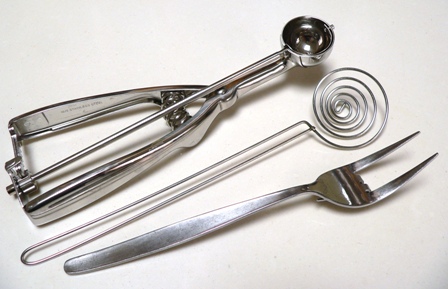
The following day, or when the ganache has set quite firm, scoop small balls of ganache onto a tray lined with parchment paper and allow the centres to firm up in the fridge.   I used to use two teaspoons to do this, but have recently bought a nifty baby icecream scoop, which does a brilliant job of making round centres.  Store these in the fridge, covered, until you need them.

030709 032

Step 2 : Dipping the Truffles

When you’re ready to finish the truffles, take the centres out of the fridge and allow them to rest on the bench while you temper the chocolate.  If you dip really cold centres, the finished truffles will crack.

Temper a large bowl of chocolate as per the instructions here. I used about 500g of chocolate for this batch.  Place the bowl of tempered chocolate over a heat mat covered with a folded tea towel.

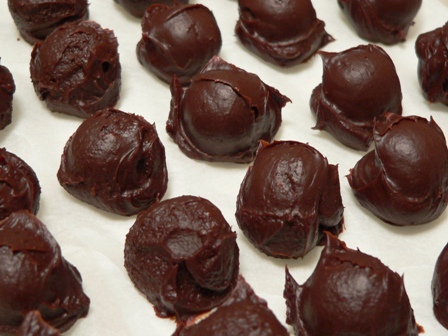
One by one, using a small chocolate dipper or mangled fork (see photo above), dip the truffles into the chocolate, then allow them to drain briefly, before turning them onto a sheet of parchment paper.  I usually set the truffles briefly in the fridge, then store them in an airtight container on the bench (as Pete objects to fridge cold truffles!).

030709 055

Read Full Post »

Older Posts »