Feeds:
Posts
Comments

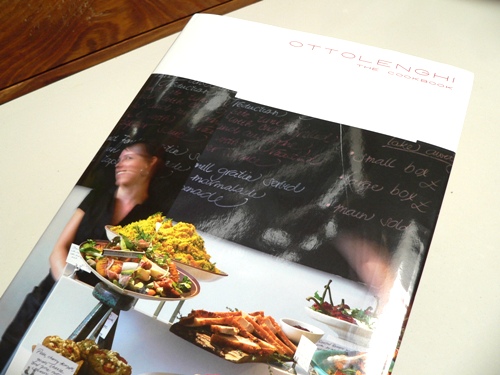
Auntie Lisa, as my boys know her, bought me the Ottolenghi cookbook for my birthday.  Based on the food served at the iconic London restaurant, it has a wide selection of recipes, with some particularly appealing vegetarian offerings.

Yotam Ottolenghi writes a column for the Guardian newspaper, focusing specifically on vegetarian cuisine, with interesting, different recipes – a nice change for folks who are so often relegated to eating side dishes.
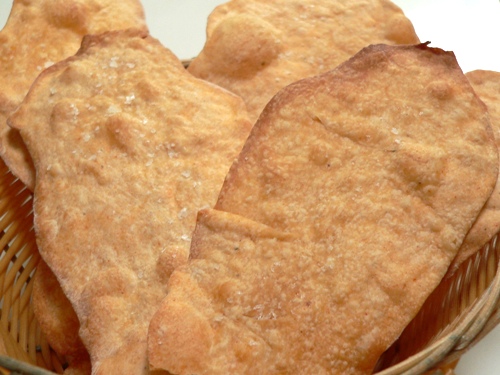
As Small Boy is still sick, I made these olive oil crackers, in the hope that the salt and crunch might rejuvenate his appetite.  Very easy, and very delicious and he did eat several of them quite happily (thank you, Auntie Lisa!).

  • 250g plain (all purpose) flour, plus extra for dusting
  • 1 tsp baking powder
  • 115ml water
  • 25ml extra virgin olive oil, plus extra for brushing
  • ½ teaspoon fine sea salt
  • 1 teaspoon paprika (I used smoked)
  • ¼ teaspoon black pepper
  • Maldon flaky salt for sprinkling

Note: the original recipe had ¼ teaspoon of cayenne pepper as well, but I left that out as I needed this batch to be child-friendly.

1. In a large bowl, mix together all the ingredients except the Maldon salt.  Squelch the mix between your fingers to get it all combined.  Then turn the dough out onto a clean workbench and knead it briefly until smooth.  Wrap in cling film and leave it to rest for an hour in the fridge.
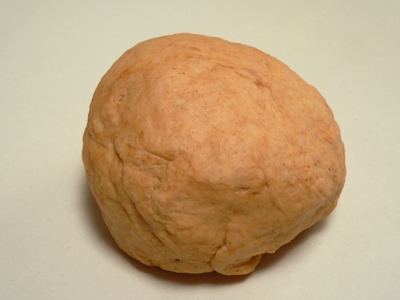
2. Preheat the oven to 220°C (or 210°C with fan).  On a well floured surface, use a rolling pin to roll walnut-sized pieces of dough into what the book describes as “long, oval tongues, almost paper thin”.  It’s a very appropriate description!  Use lots of flour to ensure the dough doesn’t stick to the bench.

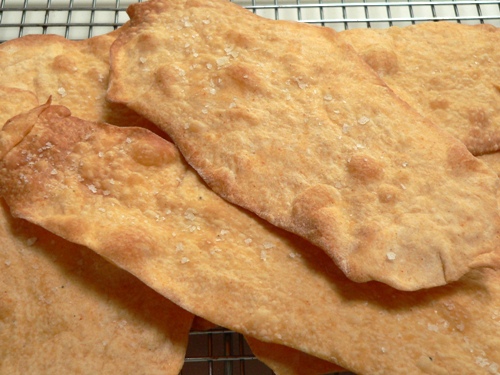
3. Place the crackers on a tray lined with parchment, brush the tops generously with olive oil, then sprinkle on the Maldon salt flakes.  Bake for 6 – 7 minutes, until crisp and golden brown.  Store in an airtight container.

Click here for a printable version of this recipe
© BryPix.com

It’s been one of those weeks.

Small Man has a bad bout of the flu, I’m teetering on the edge of getting it and I’m exhausted from getting up at night and fretting over him.

It’s at times like these that I need to take stock and remember how blessed my life really is.  So as an exercise, I tried to find five things – mundane, ordinary everyday things – to give thanks for.  Here’s what I came up with…

1. I’m giving thanks for hot water. And water pressure, so I can have a hot shower.  I have a brother-in-law who had never had a hot shower before moving to Australia and he used to lived in a place where it snowed.  In a world where so many people struggle to have water to drink, how blessed are we to have enough water to indulge in a ten minute hot shower?

2. I’m giving thanks for being able to drink milk. I’m Asian, so who knows how long it will be before I’m lactose-intolerant, but for now, dairy is freely available to me and I’m incredibly grateful for that.

3. I’m giving thanks for living in the 21st century. I constantly feel like I’m in the world of the Jetsons, or Star Trek, where doors open by themselves, machines are operated with touchscreens and a robot vacuums my floor.  I have a tiny phone that I carry in my handbag and a camera that’s not much bigger. I once taught my friend Dan to bake bread over skype – for free – watching her knead the dough in her kitchen in California from my living room in Sydney.  The speed at which technology is changing astounds me, and I feel privileged to be living at this time in human history.

4. I’m giving thanks for my herb garden. It’s located just outside my kitchen door, and I go out most evenings to harvest herbs for our evening meal.  The ritual is as comforting as the actual eating.

5. I’m giving thanks for socks. Oh, how I love socks.  I get desperately cold feet. Socks, particularly the ones I make from polarfleece, keep me from going crazy in winter.  It’s not cold yet, but I’m getting my socks ready, in anticipation!

Can you find five things to give thanks for today?  Not the biggies, like health and family, but the little ones you might never have considered before?  If so, I hope you’ll share them with us!

PS. One non-mundane and non-ordinary thing that I’m giving thanks for today is discovering Peter Bryenton’s photo blogs.  His exquisite photo above is just one of many taken with a conventional camera, or more recently with his iPhone. If you’re interested, the best place to start perusing is here.

As promised, a follow-up…

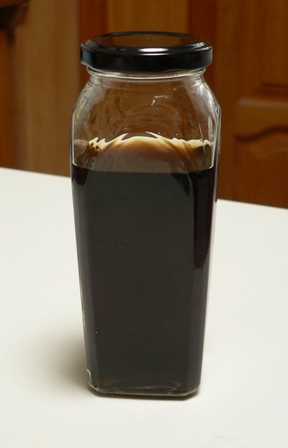
A couple of months ago, I wrote a post on peppermint creams, and at the end of it mentioned that we were attempting to make our own mint extract.  We did this by filling a tall jar with fresh spearmint leaves and topping it up with vodka.

Here’s what the bottle looked like mid-January of this year:

It was left to brew in the pantry, over which time the spearmint leaves aged and darkened. I strained the extract and was quite surprised by the colour – it looks like dark brown, but is actually a very deep shade of olive green…

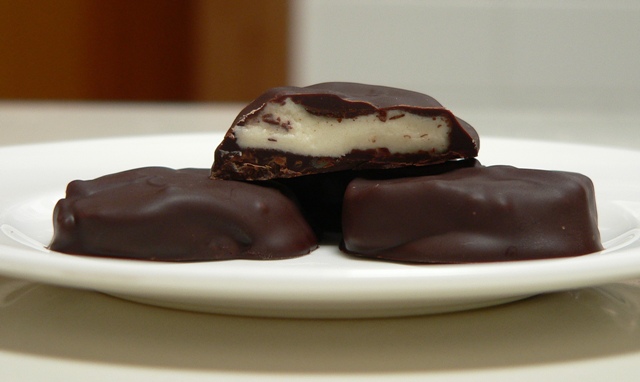
The extract is distinctly spearmint rather than peppermint, and a lot less potent than the commercial versions.  I had to use quite a bit to get the flavour I was after, which resulted in a softer filling that was a little harder to work.  Surprisingly, and happily, the fondant didn’t turn green, and the finished mint creams are delicious!

We regularly make pizza at home, and when we do, our toppings are almost always the same.  After several years of trial and error, we’ve found the combinations that suit the discerning palates of our sons and we rarely waiver from them.  That certainly doesn’t make them boring – quite the contrary – after a long week, it’s often nice to eat something familiar and comforting.

Our basic bread recipe makes enough dough for four large bases. We always start with a potato pizza, followed by a pizza each for the boys, and one for Pete and I.

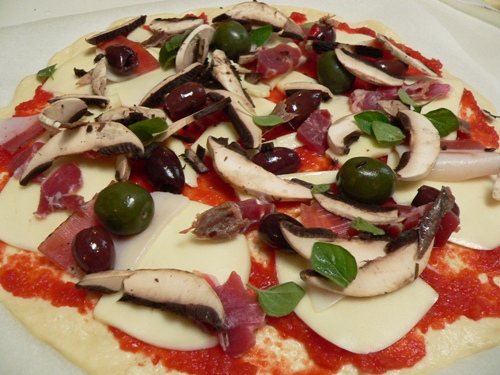
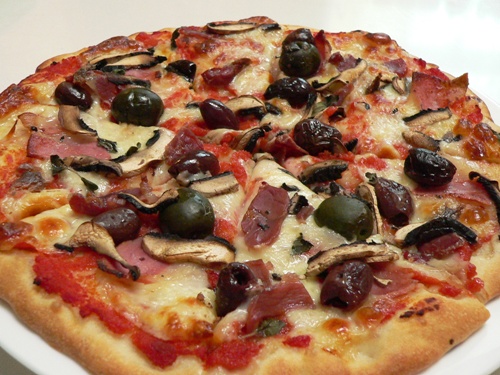
Small Man’s pizza is topped with homemade tomato passata, mozarella cheese, dry cured pancetta, Swiss Brown mushrooms, Sicilian and Kalamata olives, Italian anchovies and fresh oregano.  Last time we also included some San Daniele prosciutto, at the suggestion of my friends at Real Food has Curves.  In pizza terms, we don’t really use a lot of cheese, just a thin layer under the toppings to hold them down.

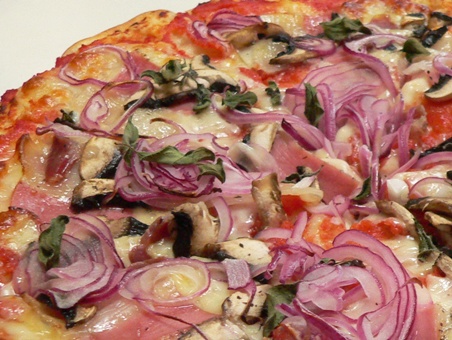
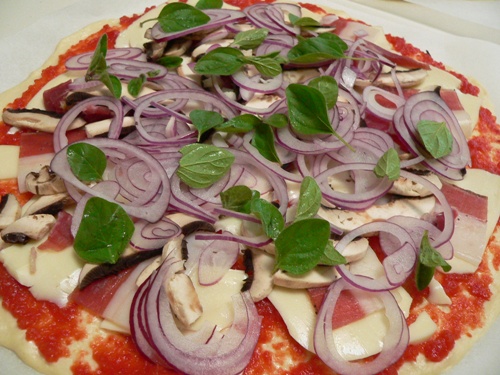
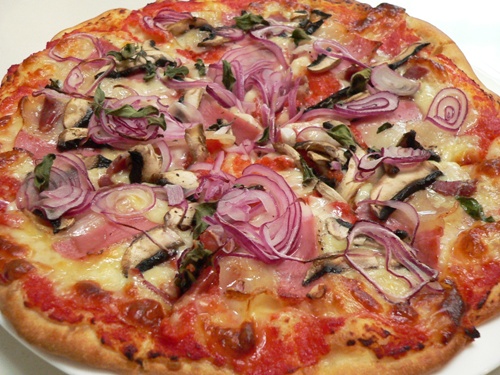
Big Boy’s pizza has the same base ingredients, but is covered with finely sliced Spanish onion in place of the olives and anchovies, neither of which he can stand.  Small Man, on the other hand, can’t abide onions.  It was either make two different pizzas, or feed them both a meat-lover’s special.

Can you suggest any interesting toppings? Pete and I share one  between us, and it would be lovely to have some new ideas for our pizza, even if the boys won’t eat it!

I’ve written about our pasta soup before, but since we eat it at least once a fortnight (and often, once a week), I thought it was worth a revisit.

It really is survival soup, put together from all the bits and pieces left over in the fridge.  We often make it on a Thursday or Friday night, prior to going to the markets, to use up all the odds and ends in the vegetable drawer.  As a result, it varies from week to week, which keeps it interesting.

The soup is constructed from pantry ingredients that we always have on hand.  Here’s a breakdown of what we use:

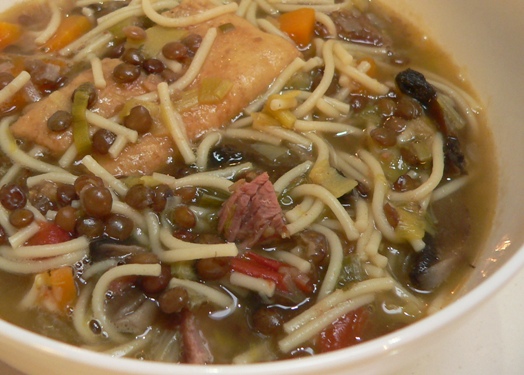
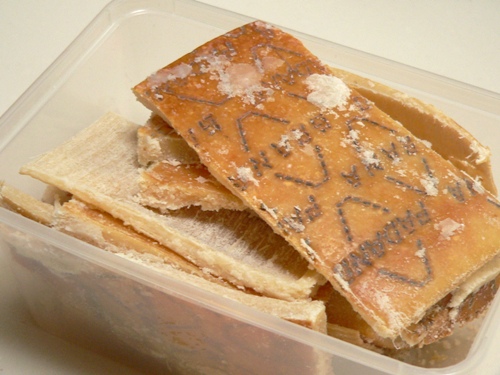
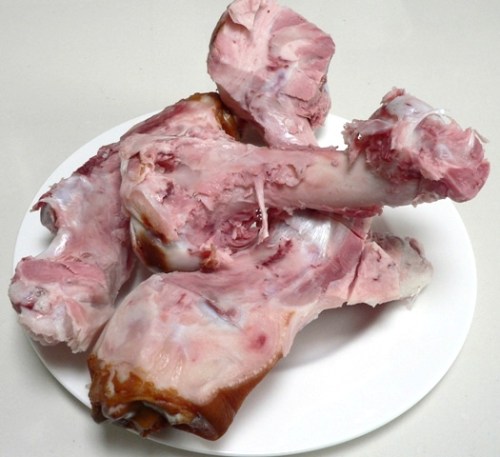
1. Something to flavour the stock. Normally ham bones that our friends at Paesanella save for us, but you could also just use packaged stock, or even, at a pinch, stock powder.  If you’re buying stock, get a one litre carton – don’t buy the salt reduced, as we normally dilute it down by 50% with water anyway.  Lately, I’ve also been adding parmesan rinds to my soups – another gift from Paesanella.  That’s the tripe looking thing in the bowl of soup above, and a couple of pieces can add a surprising amount of flavour to the soup.

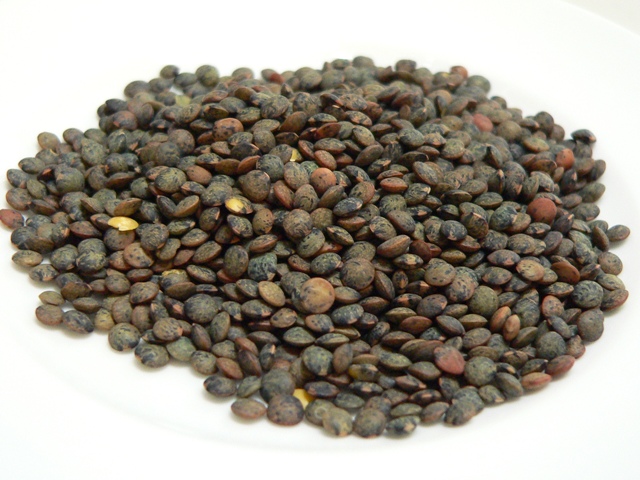
2. Lentils.  I always keep four types of lentils in the fridge, including these Australian blues, which are now readily available.  I try and use a mix of red or green lentils (which melt into the soup) and blue ones (which keep their shape during cooking).  If you can’t get lentils, you can always use tinned beans (well drained), boiled chick peas, or any other sort of legume that takes your fancy.

3. Pasta.  This can be any sort, although we prefer smaller pasta to larger shapes.  Today, we were all out of soup pasta, so I broke up nests of egg noodles which were hiding in the back of the pantry.  You could also break spaghetti into little pieces, or even use filled pasta if you like.  We’ve made this soup with all those options and more.

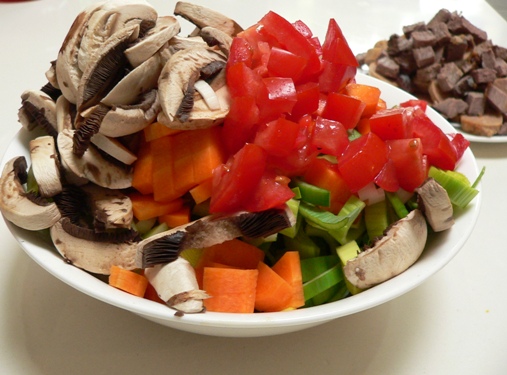
4.  Any vegetables or leftover meats you can find. This is the best bit of the soup – it allows you to clear out the fridge and use up leftovers.  Our dinner tonight had tomatoes, carrots, a leek (including the green bits), and some old Swiss brown mushrooms, as well as two leftover sausages and a couple of slices of last night’s roast beef.  Everything is optional here, so use whatever you have on hand.

The cooking process is simple.

Put the ham bones in a large pot, cover them with water, and bring to a boil.  After half an hour or so, de-fat the hot stock.  If you don’t have ham bones, you can also achieve a delicious flavour with smoked bacon bones (rib bones) or even a bacon hock.  Or just open a one litre carton of stock and pour it into the pot (if you do that, add a litre of water as well).

Next, rinse the lentils and check them for small stones, before adding to the soup with the parmesan rinds and vegetables.  Simmer uncovered,  until the lentils soften.  Add more water if necessary.  Taste the stock to see if it needs any seasoning.   Sometimes we add flavourings at this point – a little Herbie’s Chermoula Spice mix is our usual addition, but you could add any herbs or spices you prefer. Once the soup tastes good and the lentils are cooked, pull out the bones and salvage any edible bits off them and return these to the pan with any other meat you might have (in our case, the sausage and leftover beef).

Bring the whole thing to a boil, then add the pasta, and cook until the noodles expand and soften.  Ladle into bowls and serve with a little grated Parmesan and a grinding of black pepper.

This soup is surprisingly appealing to children, and quite a good way to get lots of vegetables into them.  Small Man’s record is six bowls in one sitting!