Feeds:
Posts
Comments

My friend Ellen has joined a cult.

I tried to tell her that all schools were the same, but receiving four notes about fundraising within the first week of her child starting kindergarten has her completely convinced.  She can see herself standing on street corners next, jingling a collection tin.

One of the missives requires her (it was an imperative, not a request) to produce a baked item for the school’s cake stall.  El felt that her latest attempt – a date loaf which she unfortunately decided to bake in mini-muffin pans, prompting her youngest son to dub them “poo cakes”  – might not be a best seller.  She asked me yesterday for an easy, pretty recipe and I promised her I’d post this one up.

This dead simple recipe comes from an old Women’s Weekly cookbook, and it was almost the first cake I ever learnt to bake.

Why is it so great?  Because it uses very few ingredients, there’s no sifting involved, and the cream cheese produces a fine crumb that is moist and tender every time.  The ingredients are readily available, the batter is made in mere minutes, and the cake  keeps well for several days.

When I’m weary, this is the recipe I turn to.  It’s universally popular, adaptable and bakes consistently well every time.

  • 125g (4.5oz) cream cheese (I used Philadelphia), at room temperature
  • 250g (1 cup) unsalted butter, at room temperature
  • 2 teaspoons grated lemon rind (about the rind of one lemon)
  • 320g (1½ cups) caster (superfine) sugar
  • 3 large (59g) eggs
  • 225g (1½ cups) plain (all purpose) flour
  • icing sugar (for serving)

1. Preheat oven to 175C (350F) with fan.

2. Beat the cream cheese, butter and lemon rind together until smooth, add the sugar and beat until light and fluffy.

2. Beat in the eggs one at a time, then stir in the flour in two batches, stir lightly until smooth.  Spoon into a well greased 20cm (8″) ring tin or baba pan.  Note: I used a Wilton bundt pan, which was a bit too large for this amount of batter.

3. Bake the cake for 30 minutes at 175C (350F) with fan, then reduce the oven temperature to 150C  (300F) with fan and bake for a further 20 – 30 minutes, or until a skewer inserted in the middle of the cake comes out clean.  Cool the cake in its tin for 10 minutes, before turning onto a wire rack to cool completely.  Dust the cake with sifted icing sugar before serving.

PS. A note on cream cheese – I’ve made this with  nearly every permutation of Philly cheese – from the original solid block to the light spreadable.  It’s worked well every time!

In my kitchen…

…we made sourdough pancakes for breakfast.  These were served with the Spice Girl’s homemade bacon (yes, she’s completely bonkers, and I adore her) and topped with a drizzle of organic maple syrup.

In my kitchen…

…sits a box of new season Royal Gala apples.  They’re sweet, crunchy and unblemished.

In my kitchen…

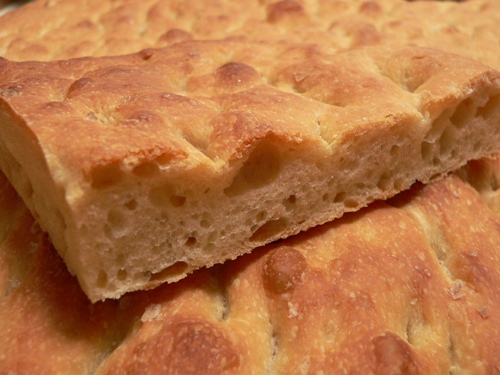
…there is a large slab of sourdough focaccia, baked for next week’s school lunches.  It’s made with cousin Andrew’s olive oil, organic bread flour and Maldon salt.

In my kitchen…

…are these little chocolates, made with tempered Belgian chocolate.

Big Boy plays the french horn, Small Man plays the trumpet.  When I saw this chocolate mould, I couldn’t resist.  And since Big Boy is now playing  first horn in the orchestra, I’m sending in choccies for the whole section.  Small Man ate all the trumpets by himself.

In my kitchen…

…there were 38 brownie cupcakes, topped with Callebaut milk chocolate ganache.  There are now 23.  Each one is bite-sized, so they don’t last very long around here!

Tell me, what are you making in your kitchen this weekend?

Traditionally made with basil, pinenuts, garlic and parmesan,  pesto is now available in a multitude of different flavour combinations.

I’ve tried it with rocket, garlic scapes and sage in place of basil, almonds instead of pinenuts, and pecorino cheese instead of parmesan.  All were delicious in their own unique way.

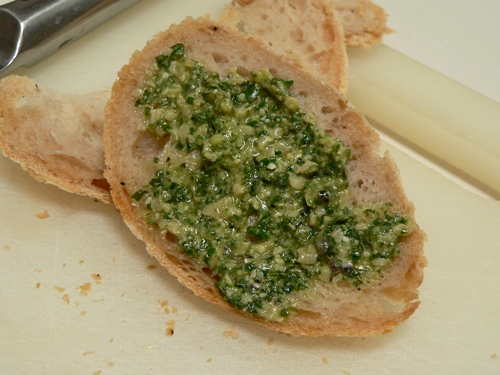
Our recent herb glut left us with an assortment of greens, so we decided to try a mixed herb pesto.  It was a simple process – Pete gave the oregano a haircut, and I pinched off some lemon basil, purple basil and a couple of sage leaves – all of which were de-stemmed and rinsed.

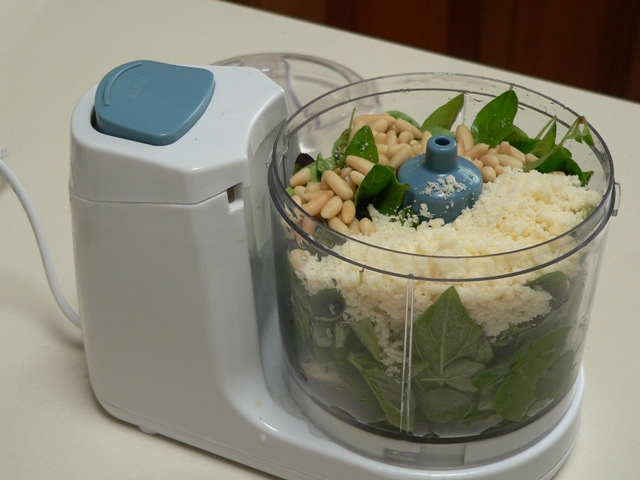
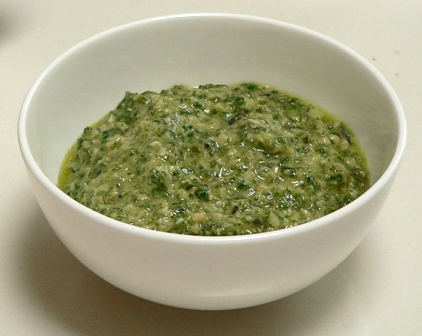
These were then pulsed in the mini food processor with a single clove of garlic, pinenuts, parmesan and a little extra virgin olive oil.    The  mix was mostly oregano, which gave the pesto a very different flavour to the usual basil version.

I’ve stored the pesto in the fridge, covered with a little oil, but you could also freeze it in small ziplock bags (make sure you squeeze out as much air as possible).   A great way to lock up a little bit of the garden for those cold winter months!

I’m feeling a tad guilty.

I was so excited about having a cottage loaf bake-off, that I forgot to mention how tricky the little buggers are to make.  I’ve managed to occasionally produce a passable sourdough loaf, but prior to today, all my attempts with commercial yeast have yielded amorphous blobs.  Like this one..

Since most people don’t use sourdough starters, I’ve been experimenting to find a yeasted version that would work in this unusual shape.

Tah-dah!  This wonderful recipe, from Peter Reinhart’s The Bread Baker’s Apprentice, produces a full-flavoured, well-defined cottage loaf.  It requires some preparation the night before, but this extra step infuses the dough with a delicious complexity lacking in most commercial yeast breads.

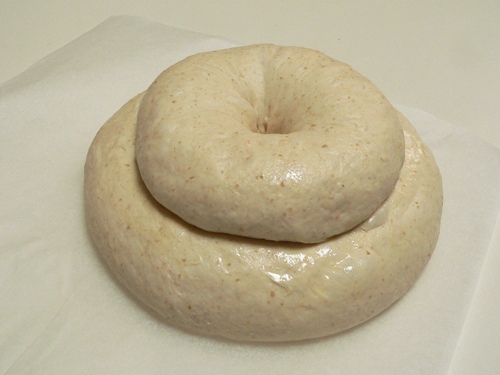
I’ve also picked up a very clever trick from Mr Reinhart.  By brushing the bottom layer with a little oil before joining the top layer on, it’s easier to achieve a clear separation of storeys, rather than the spaceship-shaped lump above.

Without further ado, here is my pain de campagne de cottage loaf

Preferment (made the night before):

  • 140g (5oz)  plain (all purpose) flour
  • 140g (5oz) bread or bakers flour
  • ¾ teaspoon fine sea salt
  • ½ teaspoon instant (dried) yeast
  • 170g (6oz) water, at room temperature

1. In a mixing bowl, stir together the flours, salt and yeast.  Add the water and mix to a sticky dough.   Scrape off your fingers and cover the dough, letting it rest briefly (about 10 minutes).

2.  On a lightly oiled bench, knead the dough briefly.  As the dough is quite sticky, it’s best to use the lift, slap and fold method (see video below) rather than pummeling the dough with the heel of your hand.

3. Transfer the dough to a lightly oiled bowl, cover and let it rest at room temperature for about 1 hour, or until it swells to about 1½ times its original size.

4. Knock the air out of the dough, then place the preferment into an oiled container and cover with cling film (or a lid) and store in the fridge overnight.

Pain de Campagne:

  • All the preferment prepared above
  • 225g (8oz) bread or bakers flour
  • 45g (1.5oz) rye or whole-wheat flour (I used rye)
  • ¾ teaspoon fine sea salt
  • 1 teaspoon instant (dried yeast)
  • 170g (6oz) water, at room temperature

1.  Remove the preferment from the fridge 1 hour before making the dough.  Cut it into pieces with a knife or pastry cutter, and place them in a large mixing bowl.

2. Add the water and yeast, and stir together.  Now add the flours and salt.  Mix together with a spatula initially, then get your hand into the dough and squelch it all together, until well combined.  Scrape off your hands,  cover the dough and let it rest for 10 minutes.

3.  Turn the rested dough onto a lightly oiled bench and knead briefly, until smooth.  It shouldn’t take too long if you’ve let it rest first.  I use the lift and slap French method of kneading, as described in the basic bread tutorial.

4. Oil the scraped out mixing bowl, and return the dough to it.  Cover with cling film and allow the dough to rise for about 1½ hours at room temperature. If it rises too fast, knock the air out of the dough halfway through.  Reinhart’s recipe specifies letting the dough prove for 2 hours, but mine was rising too quickly for that.  Once the final dough is double its original size, it’s good to go.

5.  Preheat the oven to maximum, and place a pizza stone in to heat up, if you’re using one. Turn the dough onto a lightly oiled bench, and divide it into two pieces – one approximately 600g and the other 300g.  Shape both of these into tight balls.

6.  Place each ball on a sheet of parchment paper, cover  loosely (I use a large plastic cake box) and allow to rise for about 15 minutes.  Brush the bottom layer with a little oil, then cut a cross in the top of the dough.  Cut a similar cross on the bottom of the smaller ball, and place it on the top of the larger one.  Now push your index finger or a chopstick into the middle of the loaf, working all the way down to the bottom and pushing outwards to “weld” the two layers together.  Cover again and allow the dough to prove for another 10 minutes or so, or until nearly double in size (be careful not to overprove).
7.  Slash the dough all around, cutting through both levels.  Mist the dough with water, then slide it into the oven (either on a tray, or with a pizza peel).  Turn the oven down to 220C (with fan), and bake for 20 minutes.

8. After the initial baking time, reduce the oven temperature to 175C (with fan). Remove the parchment paper, if possible (it’s not a big deal), rotating the loaf at the same time to allow it to brown evenly. Bake the loaf for a further 10 – 15 minutes, or until it’s baked through and sounds hollow when rapped on the base.  Allow to cool on a wire rack completely before slicing.

Pain de Campagne is a great recipe to have in your repertoire, and a very versatile dough for shaping.  Once you’ve got the recipe down pat, I’m sure you’ll find dozens of other bread shapes to make with it.

Your turn now – bring on the cottage loaves!

Last Friday night, Pete made this delicious leek and ricotta cannelloni, based on a recipe from Rick Stein’s Food Heroes.  It’s a little fiddly, but definitely worth the effort!

Click here for a printable version of this recipe.

  • 50g unsalted butter
  • 1kg leeks, cleaned and thinly sliced
  • 2 cloves garlic, crushed
  • 2 teaspoons fresh thyme leaves
  • 2 tablespoons water
  • 250g fresh ricotta
  • 250g fresh lasagne sheets
  • 750ml homemade or bottled tomato passata
  • salt and pepper to season

Cheese Sauce

  • 1 small onion, peeled and halved
  • 3 cloves
  • 450ml full cream milk
  • 1 bay leaf
  • ½ teaspoon black peppercorns
  • 30g unsalted butter
  • 30g plain flour
  • 2 tablespoons heavy cream
  • 150g provolone piccante, grated
  • 1 egg yolk

1.  For the cheese sauce, stud the onion with the cloves and add to a pan with the milk, bay leaf and peppercorns.  Bring the milk just to a boil and then set it aside for 20 minutes to infuse.

2. For the filling, melt  the butter in a large pan and add the leeks, garlic, thyme and water and cook gently, uncovered, for 15 minutes or until the leeks are tender and the excess liquid has evaporated.  Transfer to a bowl to cool, then beat in the ricotta and season with salt and pepper.

3. Bring a large pot of water to boil and add the sheets of lasagne, one at a time, then take the pan off the heat and allow to soak for 5 minutes.  Drain well and leave to cool.

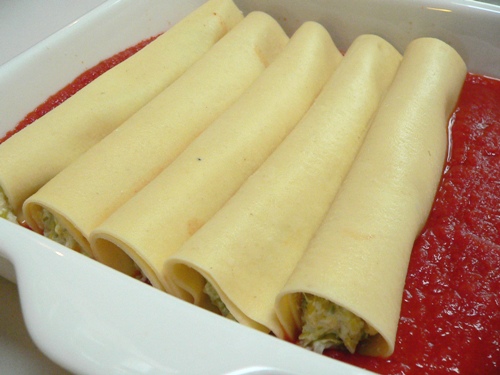
4.  Pour the tomato passata into a large ovenproof dish.  Spoon the filling into the lasagne sheets and roll them up snugly.  Place the rolls seamside down on top of the passata.  Preheat the oven to 200C.

5.  Finish the cheese sauce: strain the milk into a bowl.  Melt the butter in a small saucepan, add the flour and cook over a medium heat for one minute.  Gradually beat in the milk, then bring to a boil, stirring constantly.  Simmer the pan very gently, stirring occasionally, until the sauce is thick (about 10 minutes), then remove from the heat and stir in the cream, 75g grated provolone, the egg yolk and season to taste.

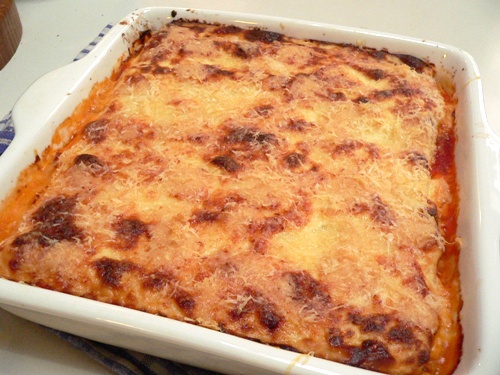
6.  Pour the sauce over the cannelloni, scatter over the remaining cheese, and bake in the oven for 30 minutes or until golden brown.  In the photo below, six of the eight tubes are filled with leek and ricotta, and the remaining two with bolognaise sauce for Small Man.