Legendary tennis great Arthur Ashe famously said…
“Start where you are. Use what you have. Do what you can.”
I first read this quote in Katrina Rodabaugh’s Mending Matters, where she uses it to explain her approach to Slow Fashion.
For me, it’s great advice for all of us trying to live a bit greener.
Don’t be overwhelmed by how huge the environmental issues facing the world are. Don’t think that small changes can’t make a difference. Don’t get angry. Just start.
Start at whatever point your life is at. Use whatever skills and resources you have. Do whatever you can, even if it’s just separating your recycling out more carefully, or turning the printer paper over and using the other side, or setting your washing machine to the economy cycle. From experience, I can tell you that it’s like rolling a pebble down a snow-covered hill – once you see how much difference a small change can make, you’ll find it hard to stop.
. . . . .
As most of you know, we began our waste reduction plan last year. Here’s the end of year review I wrote about our efforts, with links to all the earlier posts if you’d like to catch up on our journey. I’ve also collated them all on one page for easy reference. The most important thing we’ve learnt so far is that while it’s impossible to change everything, it’s easy to change a lot. And every bit helps!
Our waste reduction efforts are an ongoing work in progress, but this year we’ve also turned out attention to reducing what we bring into the house. Coupled with a slow, considered decluttering, it’s starting to make a noticeable difference. Here’s where we’re at, one month into the process.
. . . . .
Tidying Up (Reduce)
It taking a bit of time to figure out how to get the things we no longer want or need out of the house. I don’t want to just dump it on others – all that does is pass my problem on to someone else, and it eventually ends up in landfill anyway – so I’ve been carefully sorting the wheat from the chaff. My old friend Vicki suggested a strategy of getting one thing out of the house each day, and it’s been working well so far.
Here are a few things I’ve learnt this month:
- Tidying just one shelf/drawer/file/space per day is enough for me. By going slowly, things are being dealt with thoughtfully rather than simply thrown into the rubbish bin. Some days only one small thing goes out, but I’m reassured that the balance is improving – more is leaving the house than entering it.
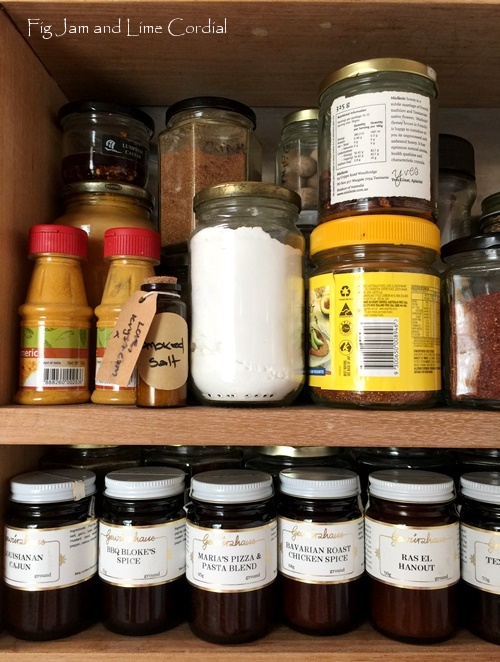
- Officeworks will confidentially shred your unwanted documents for $3 per 500 pages. Don’t worry, they’ll estimate rather than making you count the pages. I’m slowly working up the chi needed to tackle boxes of old statements.
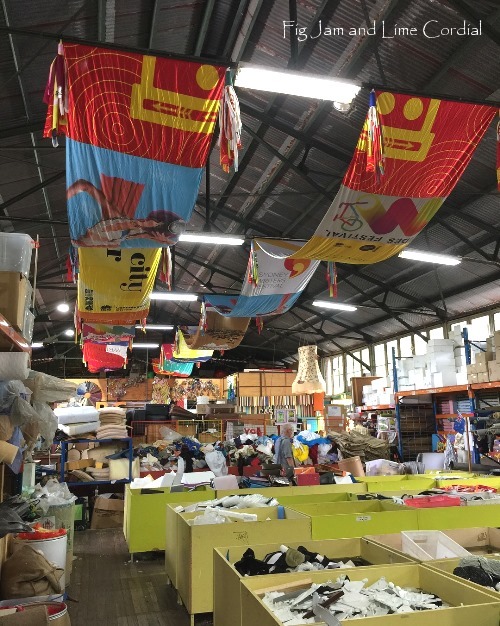
- Reverse Garbage will take your quirky stuff, providing it’s in a good working condition. I was so happy that they took our old gaming unit, complete with games and joysticks – it would have ended up in e-waste otherwise. Make sure you ring and ask first though, as they’ll only take what they can sell.
- Fiona posted this great article a couple of years ago, which includes a link to Support the Girls, a charity which collects bras, toiletries and menstrual products for disadvantaged women.
- Most local councils have e-waste collection on a regular basis, in addition to their other waste collection and recycling options. Our Inner West Council are particularly pro-active, providing detailed information on where our local recycling goes, and an A-Z guide of how to dispose of different (and difficult) items.
- Putting the wrong item into recycling can contaminate the entire batch. REDcycle will take a wide range of soft plastics, including used polyethelene shopping bags (the square green ones from supermarkets), but it’s important to only put the correct items in their bins. Here’s a list of what they will and won’t take.
. . . . .
Use It More Than Once (Reuse)
This is a biggie, I think.
If we reduced the number of single-use items entering and leaving our houses, we’d make a big impact with that one step alone. It takes a bit of thinking ahead to remember to take mesh bags and reusable shopping totes, but it soon becomes a habit. As do KeepCups and refillable water bottles, cloth napkins and metal straws.
Although we bring virtually no plastic shopping bags into the house, it’s been harder to stop other bags coming in. These days, instead of REDcycling the thick plastic bag that the hazelnuts come in, we wash it out and use it to store loaves of sourdough in the freezer instead.
Too often we make the mistake of thinking it’s ok if an item is recyclable or biodegradable, but it’s important to remember that recycling uses a great deal of energy, so reuse is always the preferred option. And just because an item like paper is biodegradable doesn’t take away from the fact that it took energy and resources to make in the first place.
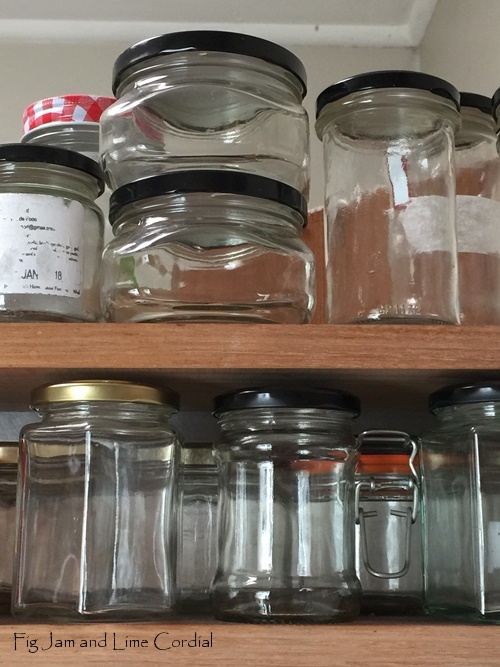
Glass is a confusing one for me. It seems such a high energy product to create and recycle, so we try to reuse it as much as possible. We end up with a squillion washed glass jars on the shelves as a result!
I’d love any suggestions you have for reuse – this is an area that we need to improve on. Thanks!
. . . . .
Mend and Make Do (Repair and Recycle)
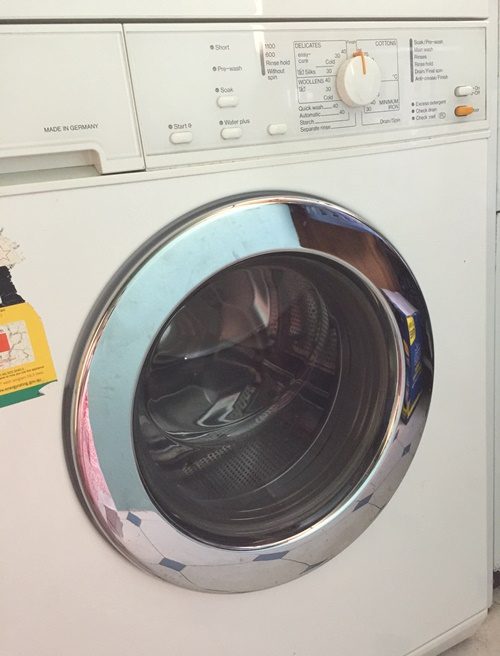
After fourteen years of loyal service, our Miele front loader finally stopped working. It was very expensive to repair it, but even more expensive in earth terms to replace it. So we paid lovely Andy to put it back together again, and now it’s running smoothly, thanks to new shock absorbers and working valves…
The darning continues, and it’s extended beyond clothing.
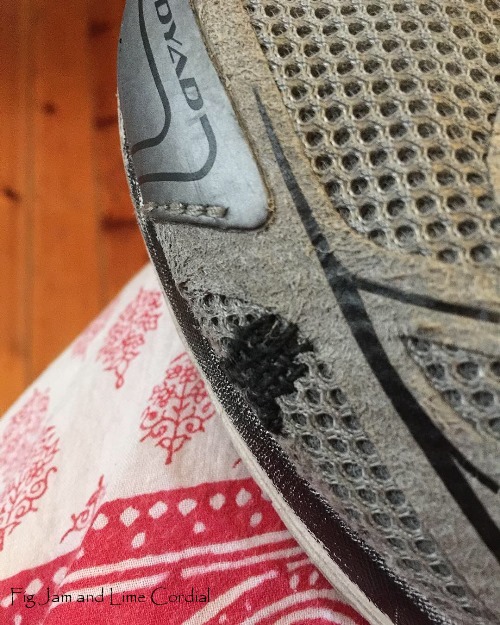
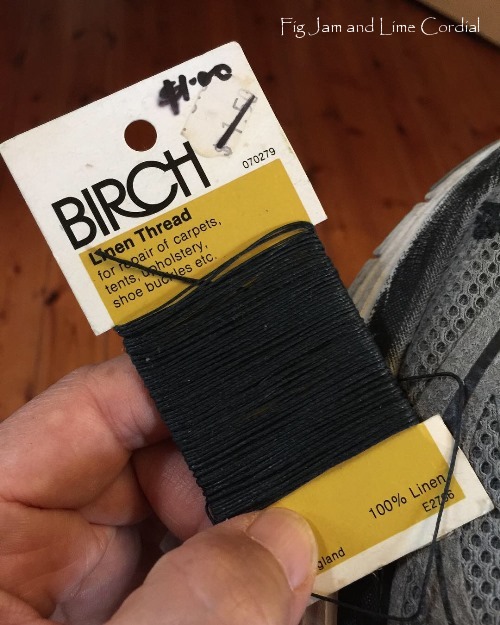
Small Man’s runners were still in good shape after a couple of years of daily use (he’s an elf, remember), but he caught the side of one shoe on a nail recently. It was easy to darn the hole with strong linen upholstery thread that I found while tidying up…
Have you heard of the marvelous folks at Elvis and Kresse? I find them incredibly inspiring – in 2005, they set up a company in the UK to rescue London’s decommissioned firehoses which were destined for landfill. They have since expanded into rescuing leather, including the 120 tonnes of leather offcuts which Burberry will produce over the next five years. They even make their own packaging materials from recycled paper tea sacks.
This is my favourite video from their website…
Segueing to another story…
30 years ago, my dad bought me a green Christian Dior satchel. I used it to death and loved it to bits, so much so that he got cross at how tattered it looked and demanded it back so that he could polish it. I haven’t used it in more than 20 years but I’ve never been able to bring myself to throw it out.
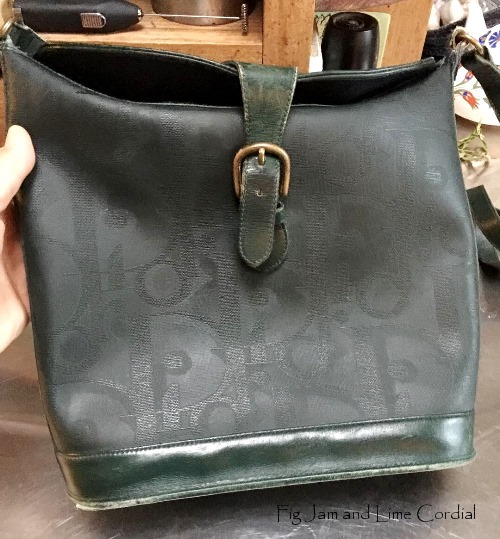
Last week, inspired by all the amazing work Elvis and Kresse do, I cut the bag up and turned part of it into a small zippered pouch. A section from the base became a key fob. It was hard going and I’m incredibly grateful for my industrial sewing machine…
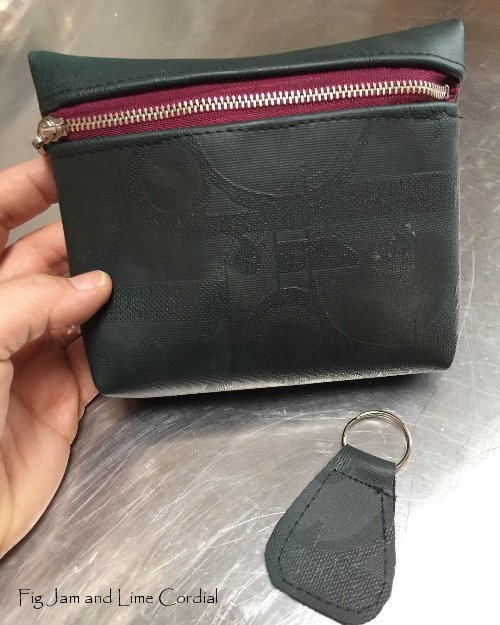
The best bit of this story? As I was making it, smudges of green polish stained my fingers, a reminder of how much Dad loved us, but also of how heavy handed he was with things like that. The pouch is now used to store my bone conduction headphones, which means I use it every day. And think of my dad.
When we mend, reuse, upcycle and repair, we give our material things a second life. We save their old stories and give them an opportunity to create new ones. It can be a wonderful thing. ♥
. . . . .
Reducing The Input (Refuse)
Unsurprisingly, the difficulty we’re having in getting rid of unwanted items is a powerful deterrent to bringing more stuff into the house. Before I buy anything now, I try to ask myself…“does this have an exit plan?” And I remember this lesson from Annie Leonard of The Story of Stuff…
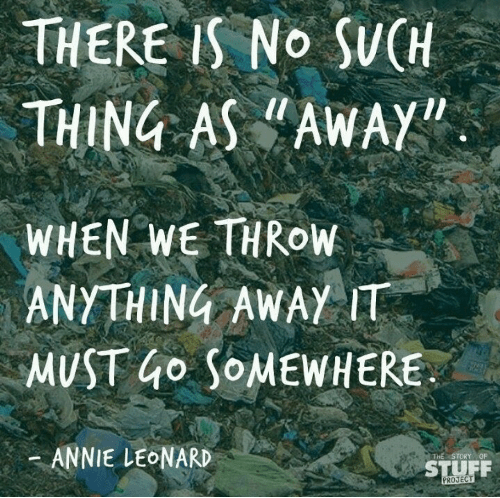
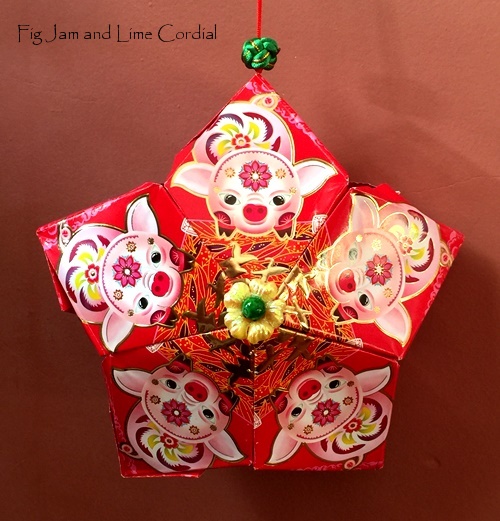
In the last month, the only non-food corporeal items we’ve brought into the house are five pairs of new underwear for Small Man (who was down to less than a week’s worth) and ang pao wrappers for Chinese New Year. That’s it. These items have an exit plan – the underwear will go into the rag collection bin when they’ve done their time, and the wrappers have already been used up to make lanterns for gifts…
There have been several occasions when I’ve been sorely tempted to sneak in an indulgent purchase. The goal isn’t to stop buying things altogether, it’s simply to buy them with consideration and awareness. Do I really need it? Can I use something else instead? How was it made? What happens to it when I’m finished with it? Does it have a story?
I’ve been both surprised and embarrassed by how much “stuff” my decluttering has turned up that I’d forgotten about or misplaced. I haven’t really needed to buy anything new in the last four weeks (apart from the underwear).
I’ll keep you posted on how we go – thank you for being here to keep me on track. I wanted to buy a David Goldblatt catalogue after visiting his exhibition at the MCA (it’s both inspiring and powerful, if you get a chance to see it), but my friend Anne reminded me that I was trying not to buy any new paper books (ebooks and audiobooks are my preferred options). So I sadly (but gratefully) put it back on the shelf.
. . . . .
I hope you’re all having a great weekend! And I would love any feedback or advice you have to share – I’ve learnt so much from all of you on this journey! ♥



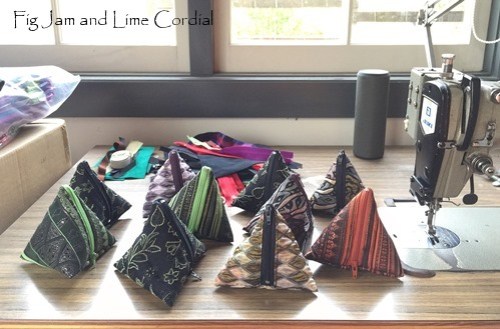
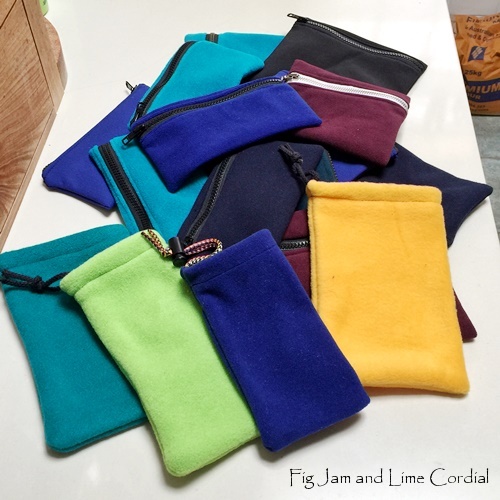


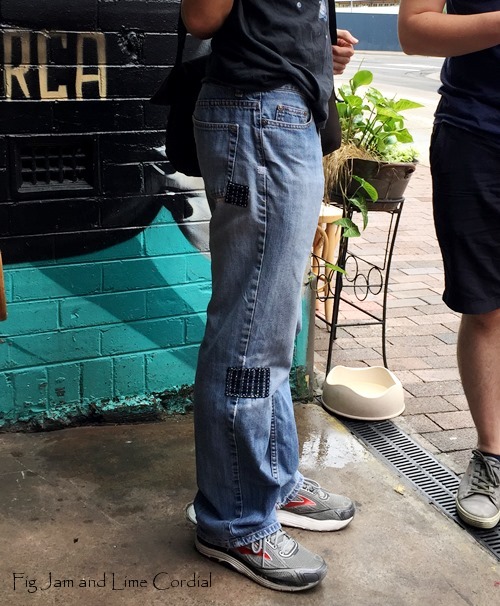



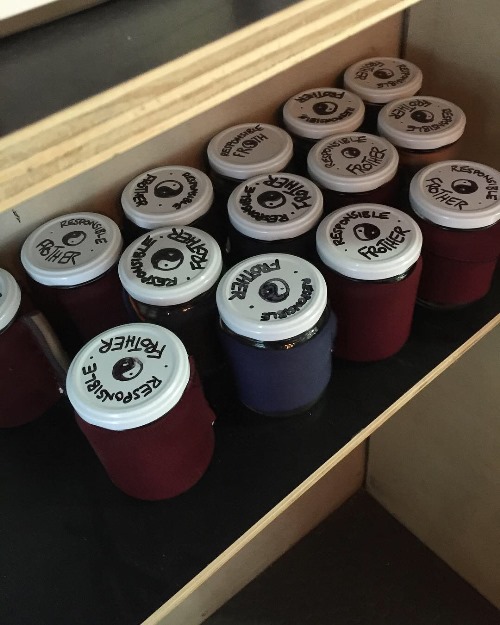
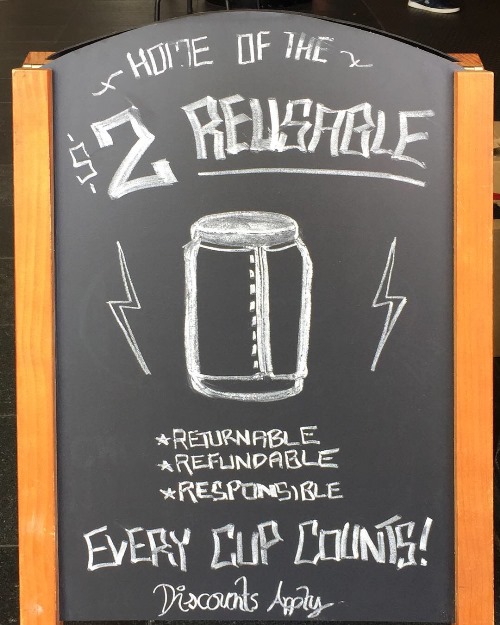




 Fig Jam and Lime Cordial