Feeds:
Posts
Comments

Last weekend, I taught a couple of friends how to bake sourdough from scratch.

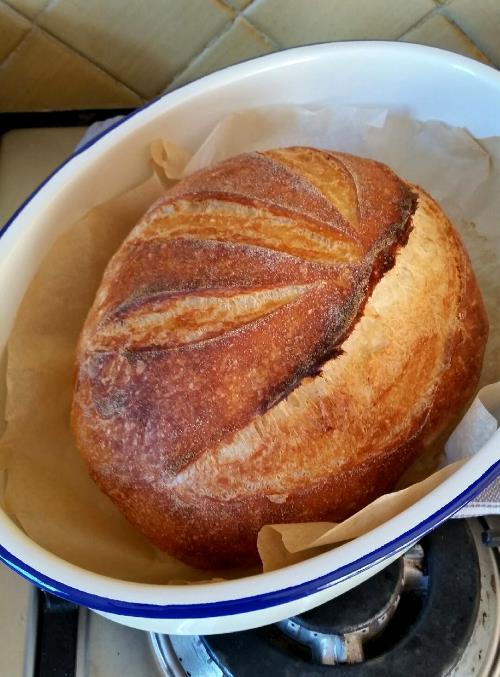
Over the course of the morning, I discovered that as a face to face teacher, I have limitations. I try to provide a lot of information, which can be difficult to take in fully during a few hours on a Saturday morning. Sometimes it works well – Helen sent this photo of her first solo loaf the following day, and it was perfect

A couple of days later, I had a text from my other friend which began with…“Ok, so the Japanese tea towel caught fire..”

Hmm. I thought I’d better write notes.

I’ve written several sourdough tutorials over the years – our original Overnight Sourdough Tutorial, which I wrote in 2014, is still one of the most popular posts on our blog. Following that came our High Hydration Overnight Tutorial in 2016, which was almost as popular. But the way I make my dough is constantly evolving – the High Hydration tutorial adopted the newer trend of using a much smaller proportion of starter to flour, and I’ve reduced it even further after reading Emilie’s excellent book, Artisan Sourdough Made Simple.

So this blog post is a rundown on how I’m teaching my friends to make sourdough in 2018. I’ve cheated a bit and used notes and photos from our previous tutorials – the method has been tweaked, but it’s still basically the same. There are also a couple of new videos showing the current shaping and slashing techniques I’m using.

. . . . .

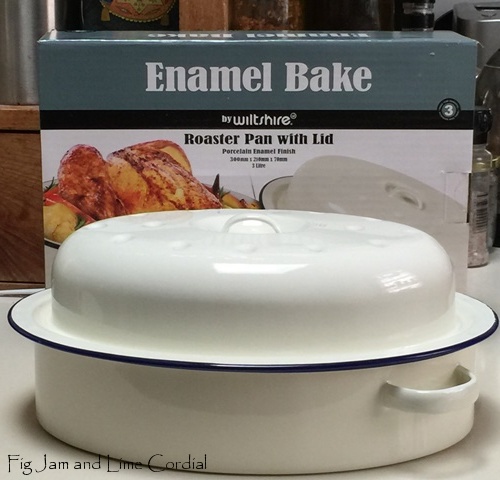
An integral part of the process is the baking of the dough in an enamel roaster. This makes a world of difference to the finished loaf. If you haven’t already invested in one, they’re very affordable, especially compared to enameled cast iron. You can buy the Wiltshire brand at David Jones, or the Falcon brand at Peters of Kensington. If you’re in the US, there are heaps available on Amazon at very reasonable prices…
. . . . .

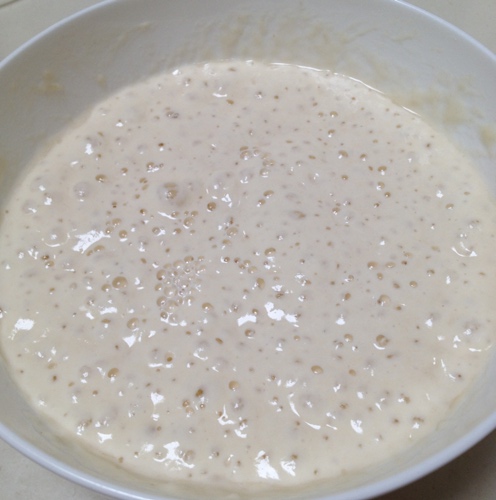
Begin with your starter bubbly and active. Start feeding it up about eight hours before you need it. Don’t even contemplate making dough if it doesn’t look like this. Test it by putting a small spoonful into a glass of water – if it’s ready, it will float.

Please, please, please read this post on how to feed and care for your starter…
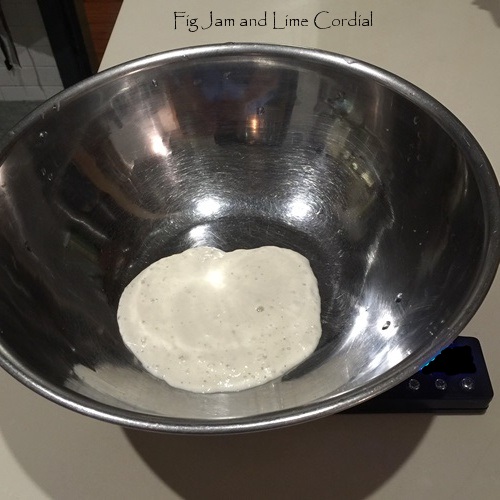
Start at least an hour before you’re ready to go to bed and measure out 100g of bubbly starter into a large mixing bowl…
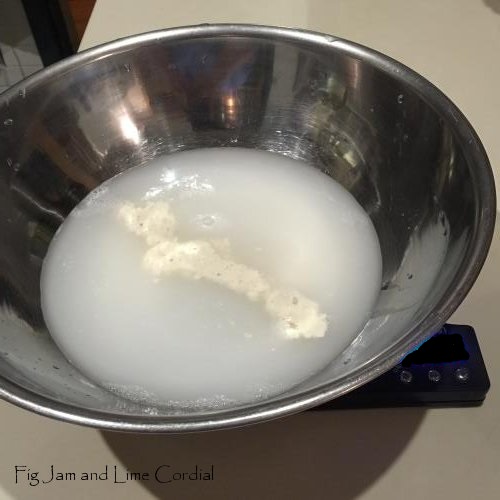
Add 700g of cool or room temperature water…
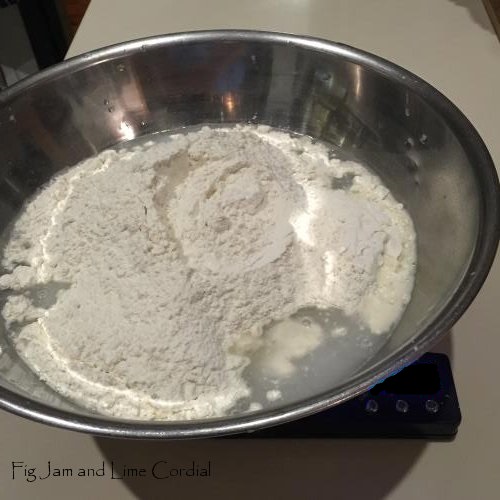
Add 1kg bakers or bread flour…
Add 18g fine sea salt…
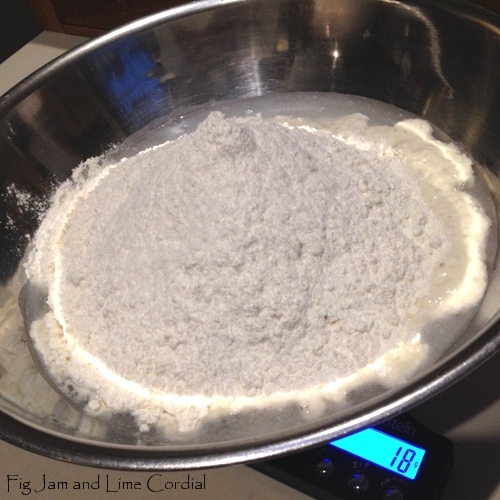
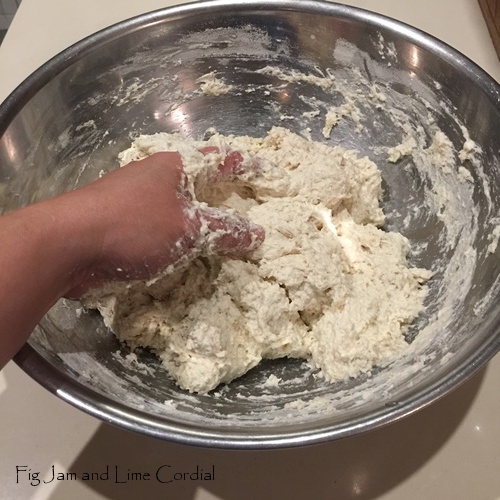
With a clean hand, squelch everything together, then scrape off your hand and cover the dough with a shower cap or tea towel. Let it sit on the bench for half an hour or so…
ostn6

After the dough has rested, uncover it and give it a quick knead (for about a minute or so)…

Cover the dough with a shower cap, beeswax wrap or wok lid and leave it on the bench overnight.

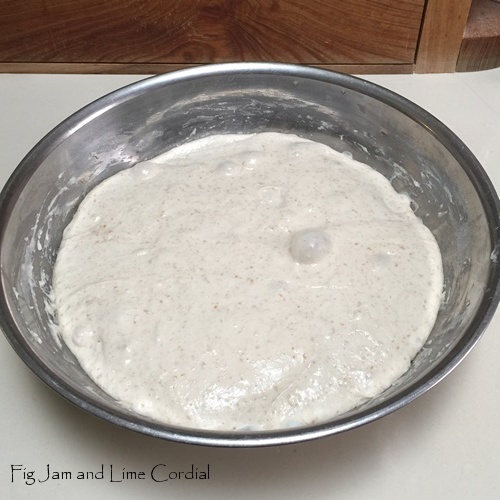
The following morning, it will look like this (but without the speckly bits as I no longer add wholemeal – sorry, it’s a recycled photo)…
ostn9

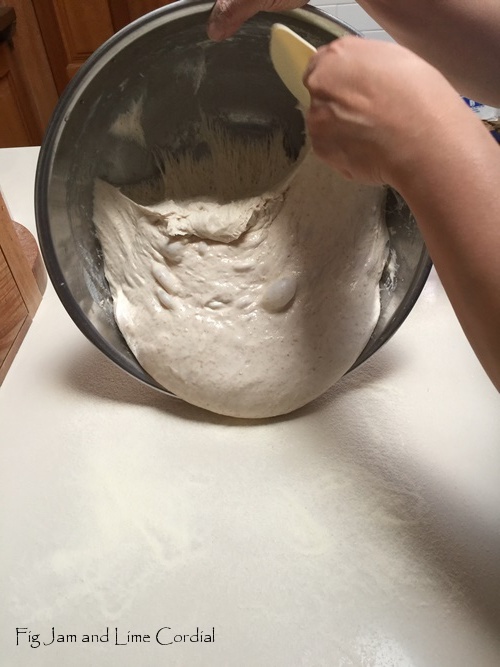
Dust the bench really well with fine semolina (rye flour, rice flour or just bakers flour will also work). Scrape out the dough…
ostn9a

It will be soft and puffy, and a bit sticky…

ostn9b

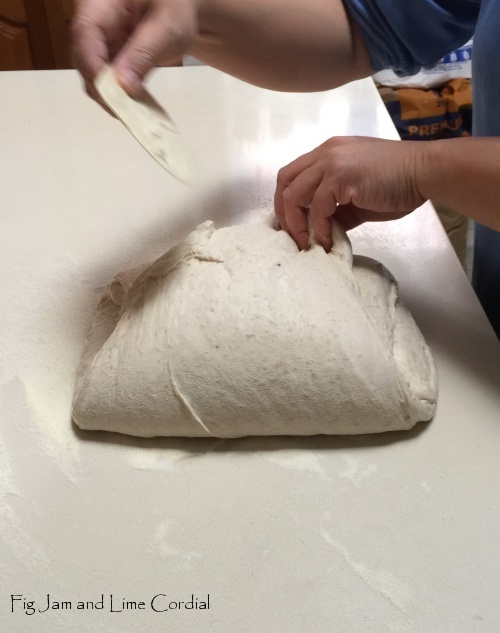
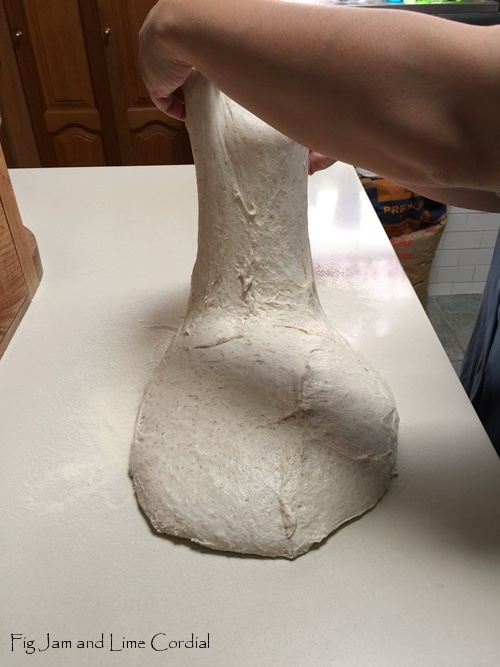
Now here’s the trick…using your spatula, scrape under the dough on one side and stretch it up…
ostn9c

Fold it over the top of the dough…

ostn9d

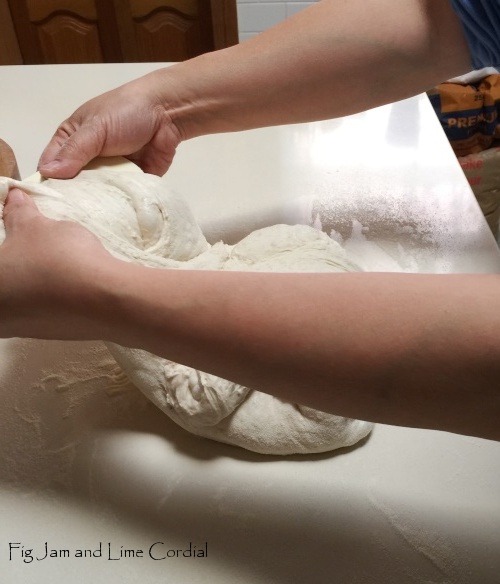
Repeat with the other side…

ostn9e

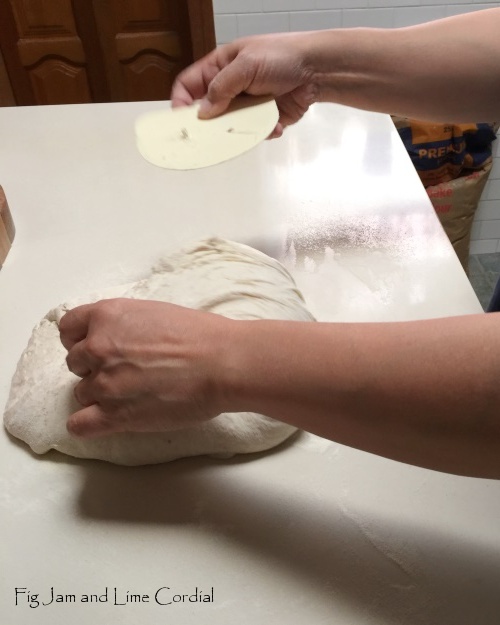
Do the same thing with the bottom part of the dough…
ostn9f

And again with the top section…

ostn9g

These four folds enclose all the sticky bits of the dough inside, leaving a completely semolina dusted (and therefore much easier) exterior to work with…

ostn9h

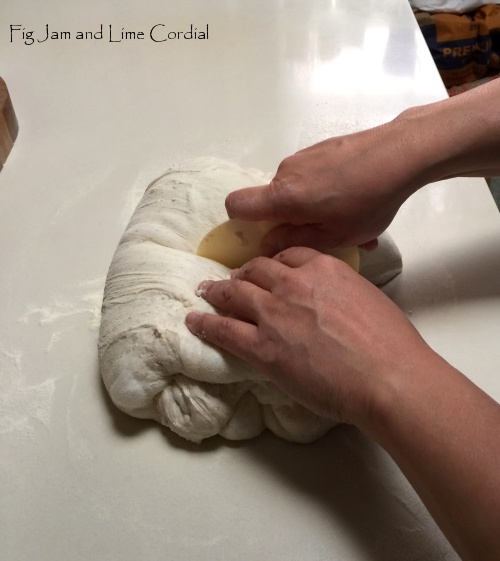
Using your spatula, divide the dough in half.

A note at this point: I have a large oven and several enamel roasters, so I always bake at least two loaves at the same time (usually three). If your oven can only fit one loaf at a time, you can either make a half batch, or divide the dough in two and return one half to the covered mixing bowl. Begin preshaping the second loaf when you place the first loaf into the oven…
ostn9i

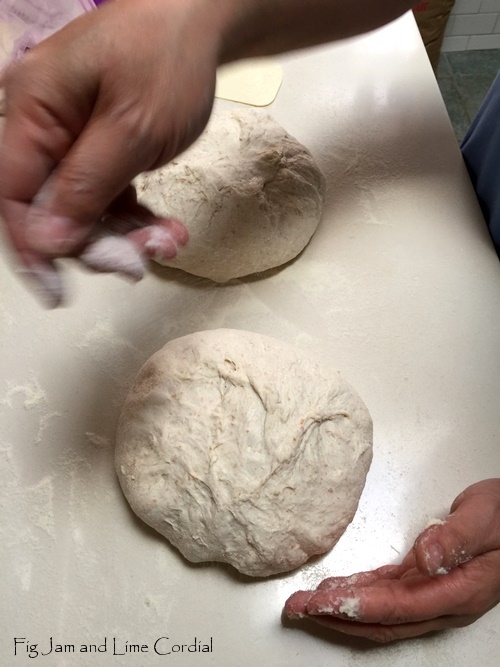
Shape each half into a rough ball by folding the edges into the middle…

. . . . .

. . . . .

Leaving the dough balls seam side up, dust the tops with semolina…
ostn9k

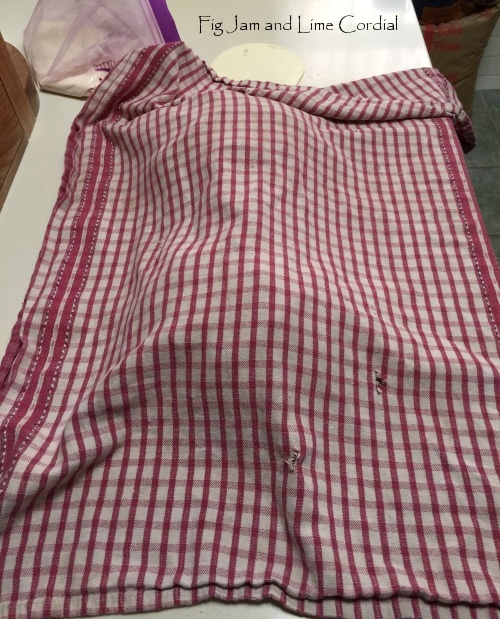
Cover with a clean tea towel and allow the dough to rest for about 15 minutes. This preshaping process makes the dough much easier to handle…
ostn9l

Uncover the dough and flatten each ball, then shape them into oval loaves. I do this by folding the edges in at the top and bottom, then folding the dough in half. Here’s a new video of my current shaping technique…

. . . . .

. . . . .

Place each shaped loaf onto a sheet of parchment paper, seam side down, then cover them with the tea towel again and allow them to prove for a further 30 – 60 minutes…
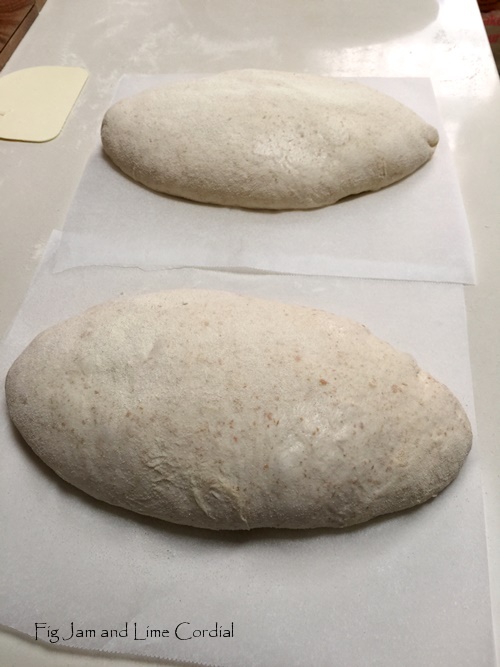
ostn9m

Alternatively, you could put them into tea towel lined bannetons – roll the shaped loaves gently in fine semolina first if you’re planning to do that, and put them gently into the baskets seam-side up (you’ll invert them out onto the parchment paper later).  Let the dough rise for a further 30 – 60 minutes, depending on the ambient temperature in your kitchen.

At this point, turn your oven on and preheat it to 230C with fan.
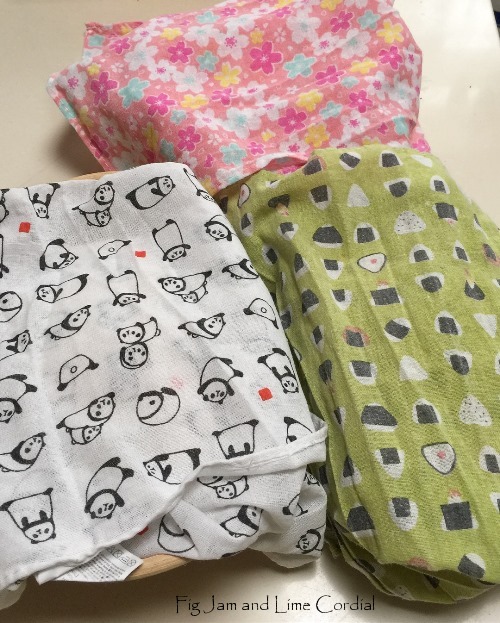
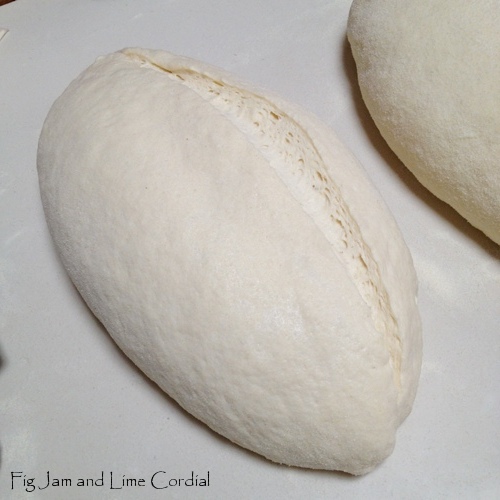
Once the loaves have puffed up a bit, it’s time to slash. If the dough is in bannetons, turn it out carefully onto parchment paper.

The easiest thing to do is to make just one long slash down the side, and it’s a technique that works well. You can use a serrated knife, a lame or a razor blade…
If you’d like to try something fancier, you might like our “half starburst” slash. Use a sharp razor if you’re going to attempt it – the single slash will be fine if made with a serrated knife, but the fancier patterns need a thinner blade. Remember to slash with panache!
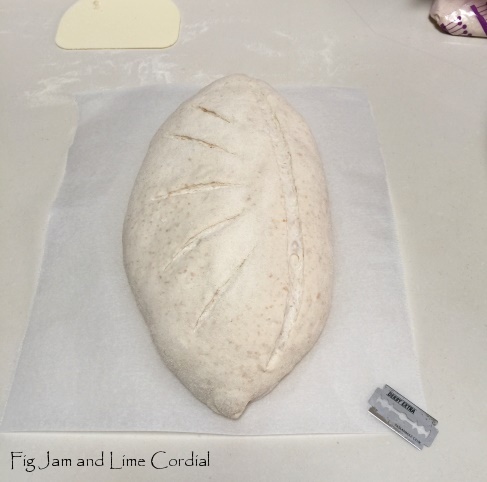
ostn9o

Here’s a new video of my slashing patterns – I gave up on using a lame ages ago and now just wield my razor commando style. I end up with a lot of tiny cuts on my fingers, but I like the control…

. . . . .

. . . . .

Lifting by the sides of the parchment paper, lower each loaf into an enamel roaster. Spritz the top of each loaf with a little water, if you like (it’s not essential). Cover with the lids, then put them into the oven, reducing the heat to 220C with fan. Note that the pots are cold – I don’t think it’s necessary to preheat them.

Set the timer for 20 – 25 minutes (you’ll figure out how your oven bakes after the first couple of tries. I now bake for 23 minutes with the lid on!)…

ostn9p

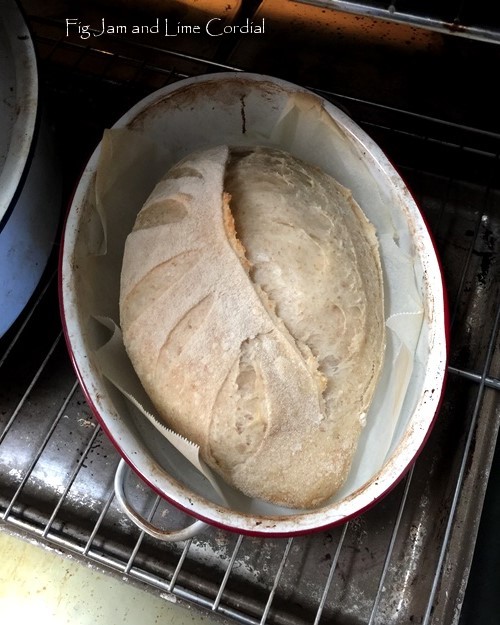
At the 20 (to 25) minute mark, uncover the pots to release any remaining steam – the loaves should be well risen and just starting to brown. Leaving the lids off, rotate the pots, then close the oven again and set the timer for a further 15 -20 minutes (again, you’ll figure it after your first bakes – I now do 15 – 16 minutes lid off, depending on how Bobby is behaving that day).

One other thing to note – I usually bake three loaves at a time, if you’re baking a single, you might need less time. Experiment and find the timing that best suits your oven.
ostn9q

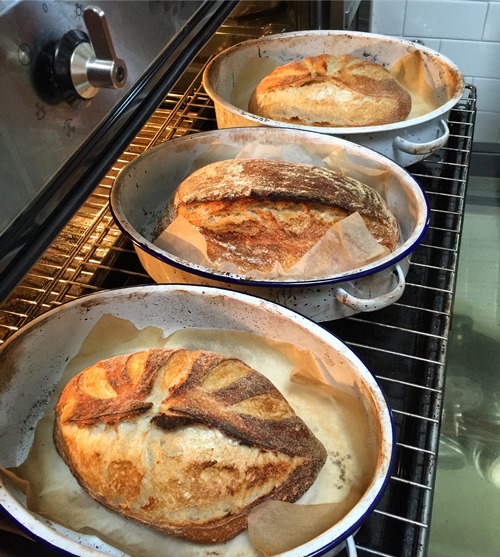
After the second 15 – 20 minutes, the crust will be dark brown and crisp. At this point, I pull the loaves out of the oven and let them cool on a wire rack. If you’d like the loaves darker, take them out of the pot and place them directly on the rack for a further 5 – 10 minutes.

Here’s a photo taken from our cooking class…
The finished loaf should feel light and crusty. It will sound like a hollow drum when tapped on the bottom. Allow to cool completely on a wire rack before slicing…

ostn9t

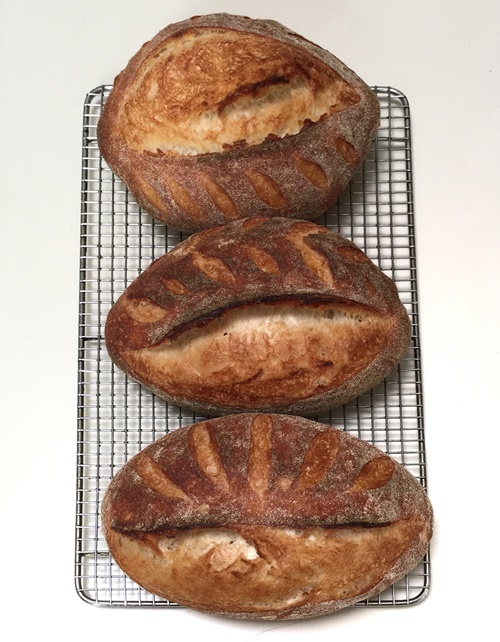
Here are the loaves I slashed in the video above…
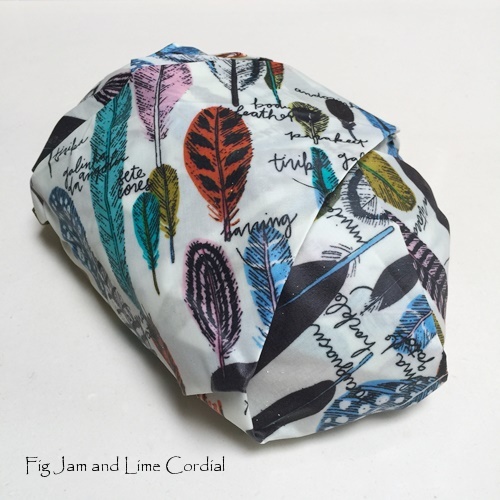
I’ve found that the loaves keep well for a couple of days in a beeswax wrap (make sure they’re cool first)..
If you’re new to sourdough, I hope you’ll give this method a go. I don’t have any starter to share at the moment, but lovely Emilie’s book has clear instructions on how to grow your own, and I believe she’s also selling her starter Dillon via mailorder. Have fun! ♥
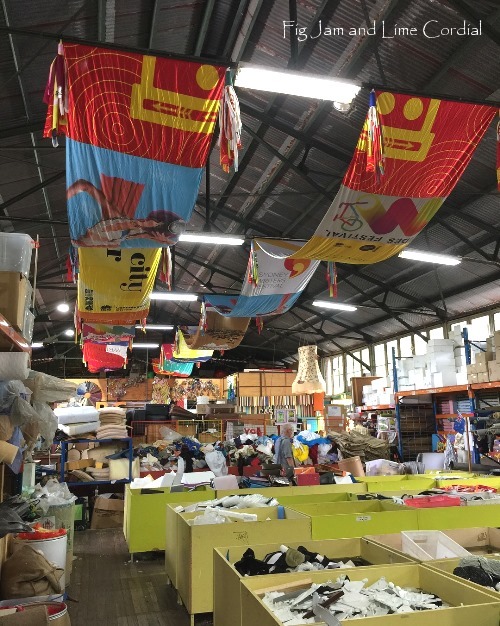
Reverse Garbage is a fabulous industrial reuse centre located within the Addison Road Community Centre in Marrickville. This not-for-profit co-operative was established in 1974 and it’s been a significant part of my life for over twenty years now. Given that I worked there part-time when Small Man was in kindergarten, I’m surprised that I haven’t written a post about them before.

Most of their stock is donated clean industrial surplus that might otherwise have ended up in landfill. It changes constantly – one day you might find a barrel of arms from sunglasses, on another day, a pile of scrap fake fur, and on yet another, a box of moulds for casting silver jewellery. It’s the kind of place that you need to visit with an open mind and few expectations.

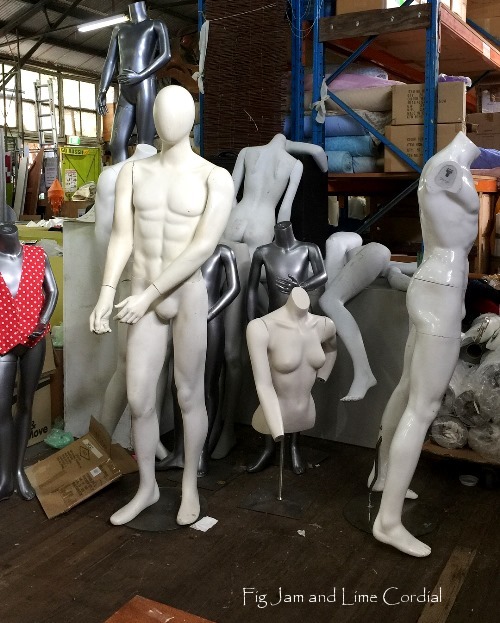
When I popped in earlier this week, there were mannequins galore…

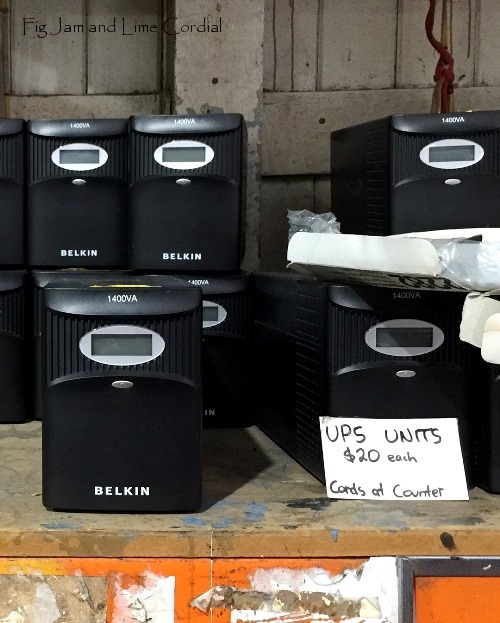
There were also some great treasures to be had, including these UPS (Universal Power Supply) units, a donation from the NSW Police. Pete was quite chuffed when I brought a couple home, as they’re $200 – $300 new. I’m still not sure what they’re used for…

I, on the other hand, was very happy to find these John Olsen limited edition lithograph prints (they even have an embossed seal of authentication) selling for just $2 (yes, two dollars!) each. There are still a few copies left if anyone is interested – the painting is Entrance to the Siren-City of the Rat Race (1963)

We found a cheap poster frame at the Reject Shop (there weren’t any at Reverse Garbage, sadly), and now have new wall art for very little outlay. It’s a depiction, Olsen-style, of Sydney Harbour and the colours match our dining room beautifully…

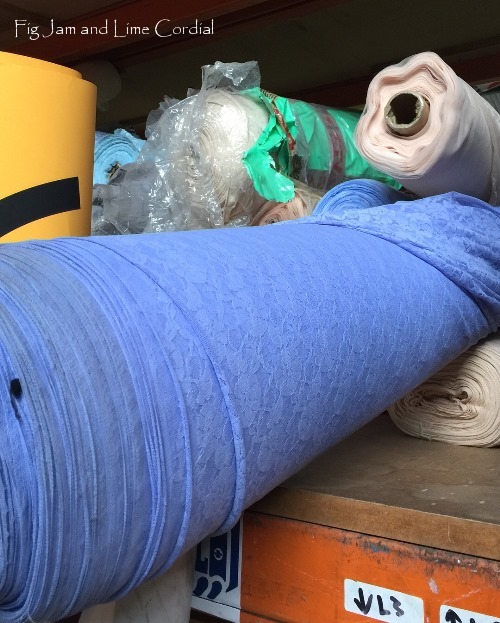
My final purchase of the visit was a cheap roll of curtain lace. There was a lot on offer and you could buy cut yardage for just $2 per metre…

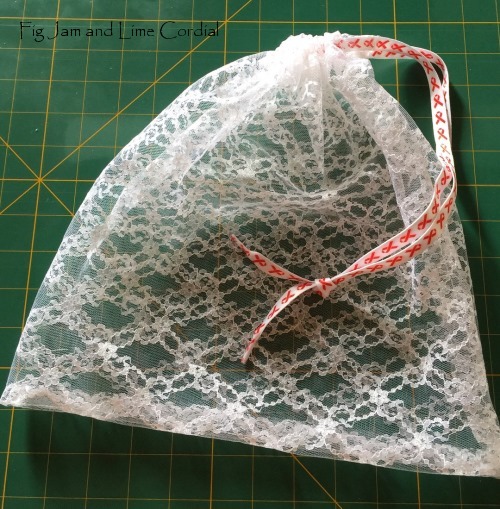
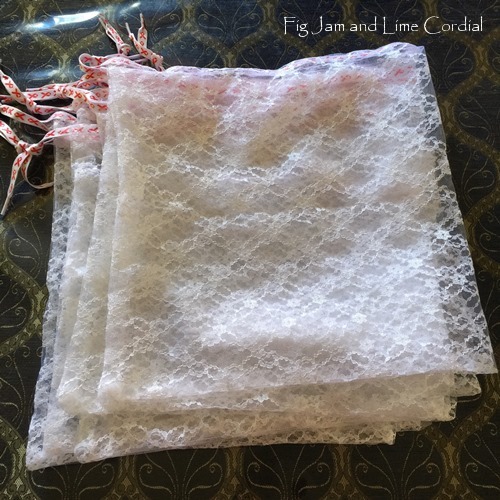
I also found shoelaces in the bag area (where items are priced individually rather than in bulk) which were perfect for drawstrings (they were leftovers from World AIDS Day, hence the red ribbons). These mesh bags for fruit and vegetables were quick and easy to sew and cost me less than 20c each…

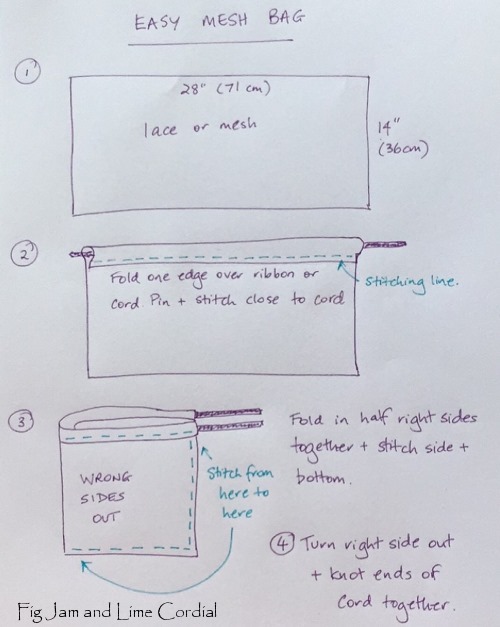
I scribbled out my pattern in case anyone would like to make their own…

It was a doddle to whip up a few extra to share with friends and neighbours…

During my time working at Reverse Garbage, I learnt one important environmental lesson – reuse is always better than recycling. Here’s what the RG website has to say about the matter:

Reuse makes sense as it: prolongs the life of a resource; saves the energy and materials needed to produce brand new materials; prevents otherwise useful resources going to waste/landfill; creates less air and water pollution than if it were recycled; and reduces money spent on new items and costs to dispose.

I think one of the dangers we face when trying to reduce our green footprint is the mistaken assumption that recycling can provide a cure-all for our excess output. Sure, it’s massively better than waste ending up in waterways or landfill, but the processes involved require a great deal of water and energy.

Places like Reverse Garbage attempt to pull clean waste out of the system before the recycling stage, making it available to the public at reasonable prices for creative reuse. It’s definitely an idea worth supporting!

PS. This website has links to reuse centres around the world (thanks Eva!) and here’s a link to Scrapstores in the UK (thanks Kim!).

. . . . .

Reverse Garbage
Addison Road Community Centre
8/142 Addison Road
Marrickville NSW 2204
02 9569 3132

9am to 5pm – Monday to Saturday
9am to 4pm – Sundays
Closed public holidays

After you’ve read this, please have a look at our updated tutorial and tips here! x

. . . . .

Last Christmas, our lovely friend Diana gave us a beeswax wrap to experiment with.

It proved to a handy replacement for plastic bags and cling film, and an ideal way to wrap loaves of sourdough…

As it’s our goal to try and live greener in 2018, and given that commercial beeswax wraps are prohibitively expensive, we thought we’d have a go at making our own (thanks for the suggestion, Margo!). There are oodles of tutorials and methods on the internet, with some more complicated than others.

Pete and I came up with a very simple technique, inspired by this informative video…

. . . . .

. . . . .

And this one from the wonderful 1 Million Women blog...

. . . . .

The only beeswax we had in the house were leftover sheets from candle making nearly a decade ago, but these proved to be perfect for the job. It took a couple of attempts to get them right, but we’re now pretty happy with the result.

Here’s what you’ll need…

  • 1 foundation sheet of natural (uncoloured) beeswax – these are available online on Ebay and Amazon, and from craft, candlemaking and beekeeping supply stores.
  • washed and ironed cotton fabric – not too thick, and make sure it’s colour fast
  • two large sheets of parchment paper
  • old towel
  • iron

1. Fold the towel in half and lay it on an ironing board. Place a large sheet of parchment paper on top.

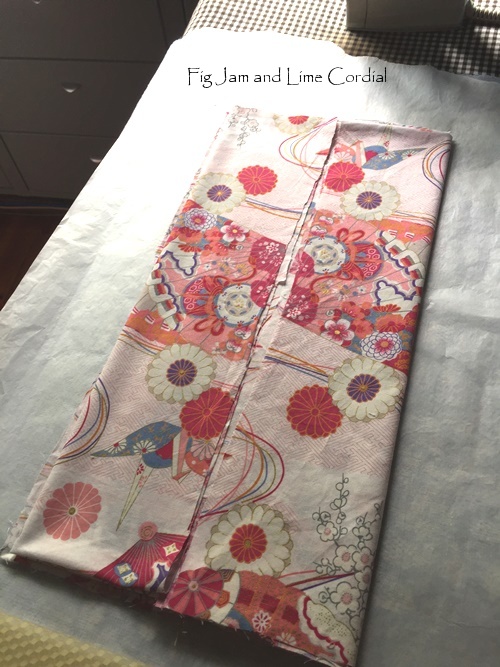
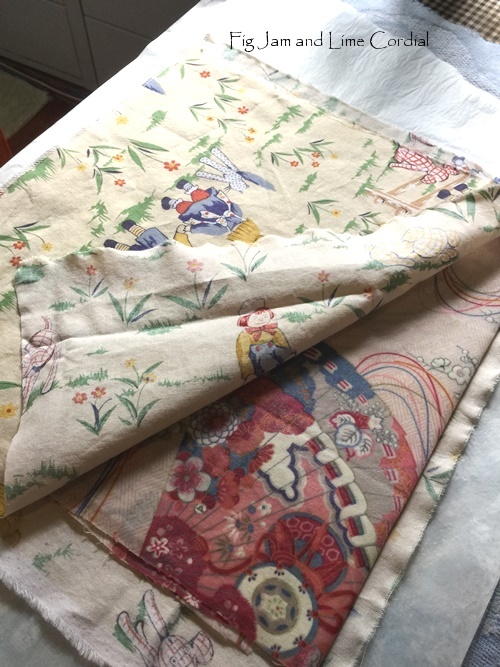
2. Fold the cotton fabric so that it’s the same size as the wax sheet. It can be between six to eight layers deep, depending on the thickness of your fabric. In this example, I’ve used the sleeves from an old Japanese yukata that I’d saved from the 1990s. The fabric is six layers thick in the photo below. Place it on top of the parchment paper…

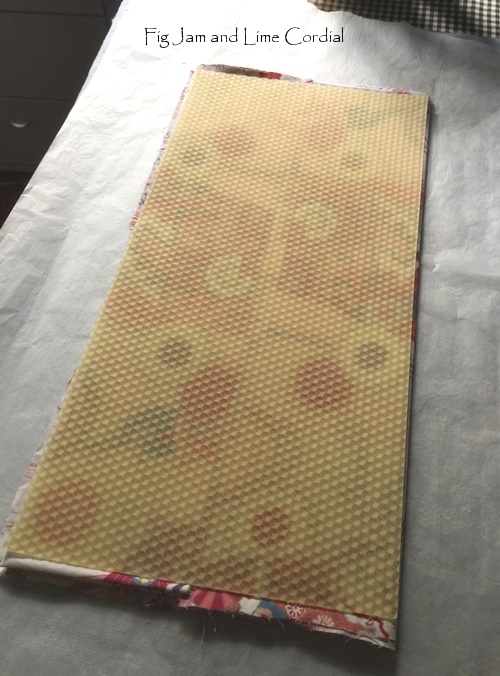
3. Put the wax sheet on top, lining it up as best you can…

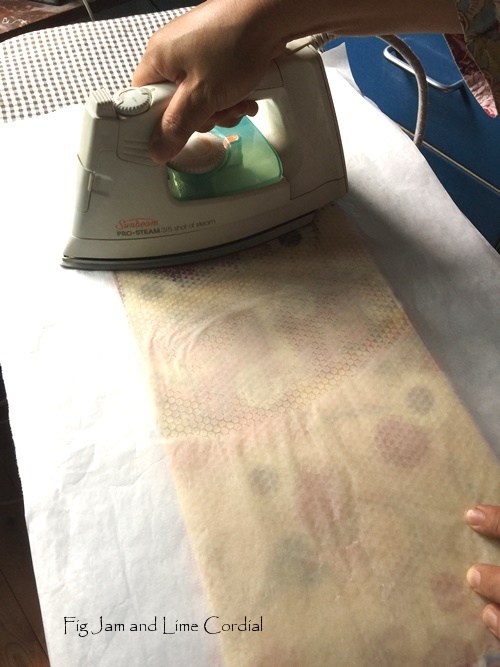
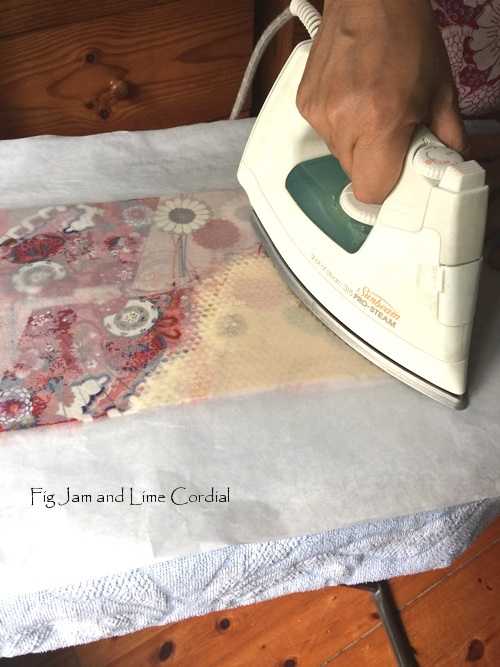
4. Cover with the other sheet of parchment paper, then iron over the top, pressing down and moving slowly over the area until the wax melts. It should seep through all the layers. Some tutorials say to use a warm iron, but I had mine on the cotton setting and it was fine…

5. Holding onto both sheets of parchment, carefully flip the whole thing over and check to see if the wax has penetrated through to the bottom layer. Iron again on the flip side to help even it all out.

6. If you have excess wax (which  might happen if your fabric is quite thin), peel back the paper and place another piece of cloth over the wax-infused fabric. Cover again with the parchment and iron a bit more. There might be enough wax to soak into another cloth, but if not, just keep the partially done one for next time…

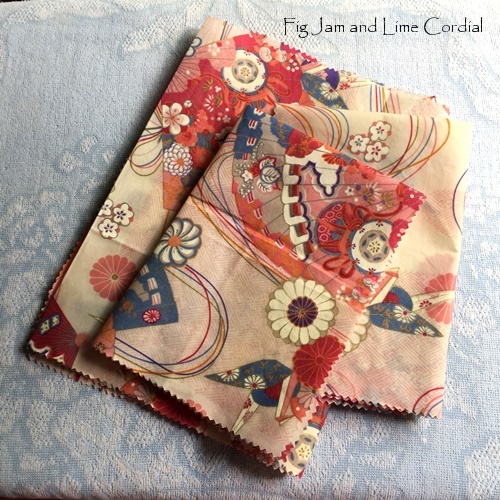
7. When the beeswax is evenly distributed (there shouldn’t be any dry patches in the fabric), remove the top layer of parchment and gently peel apart the layers. Be careful as they might be hot. Wave the finished fabric around a bit, then drape it over a drying rack or the back of a chair to let it cool completely. This won’t take very long at all. The wrap will feel waxy and a bit stiff. If you like, trim the edges with pinking shears, although they shouldn’t fray too badly…

These wraps won’t work quite as well as the commercial ones, as they don’t include pine rosin or jojoba oil, which I’ve read is added to help it “cling”. Edit: This article warning against pine rosin, so we won’t be trying it, but we did try one batch with added jojoba oil and honestly didn’t notice much difference.

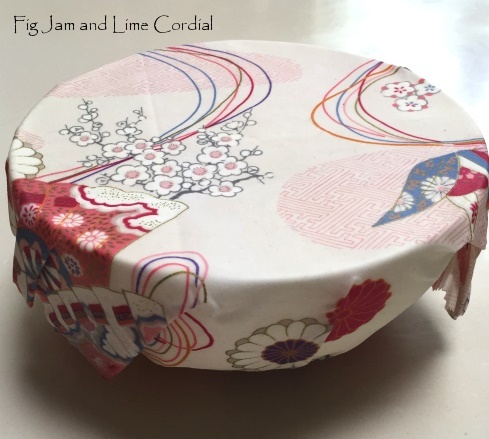
To cover a bowl, you need to hold the wrap in place for a while until the warmth of your hands shapes it a bit.I usually add a rubber or silicon band for added security…

These are really very cheap to make – we had everything we needed at home, but if you had to buy them, the foundation beeswax sheets are now about $3.50 each. I picked up a few more today at Stacks of Wax in Newtown. We’ve found that pure cotton fabrics – patchwork or sheeting weight – work best. You’re looking for a close weave with a bit of weight to it, but not too much – thick, coarse weave tea towels for example, won’t work. Make sure the fabric is colour fast before you start (avoid things like batik prints and indigo dyes) and wash and iron it first.

Edit Jan 2019: after a year of using them, the ones made with sheeting fabric have far outlasted and out-performed the others. These days I make the wraps with Sheridan sheeting offcuts that I bought years ago from Reverse Garbage, as well as retired bedsheets. Make sure you only use pure cotton sheeting.

The internet will tell you that these can be used with almost any food item other than meat. I’ve found it best to wrap anything oily (like focaccia) or sappy (cut pumpkins or sweet potato) in kitchen paper first, and then in the beeswax wrap.

After use, the wraps can be wiped down, rinsed off, or washed in gentle detergent and cool water, then left to dry before reusing. After six to twelve months, they can be re-waxed if needed. We’ve stored ours in a sealed Tupperware container, as apparently the wax can occasionally attract cockroaches.

These will make a great gift for friends, so I’m off to raid my fabric stash for more cotton!

As we stood in the checkout queue at the fruit shop yesterday, I had a happy realisation. Every single person in line had brought their own bags.

Harris Farm Markets stopped supplying plastic shopping bags on 1 January 2018 – they still have small thin ones on offer for individual items, but even those were being used sparingly. The young man in front of us was piling unbagged fruit and veg on to the counter for weighing, and the well-trained cashier was placing them carefully into his backpack after ringing up. As always, it’s a joy to live in Sydney’s Inner West, where the community is happy to embrace initiatives like this without so much as a murmur.

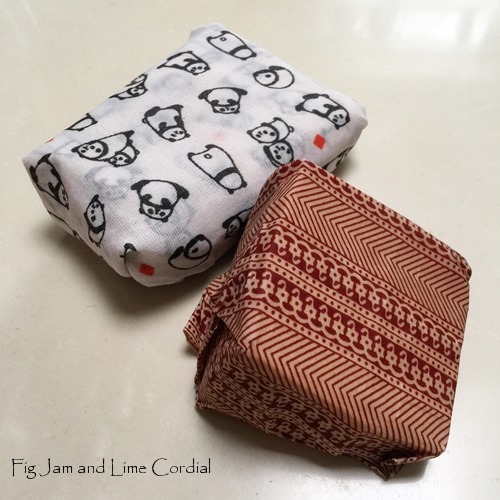
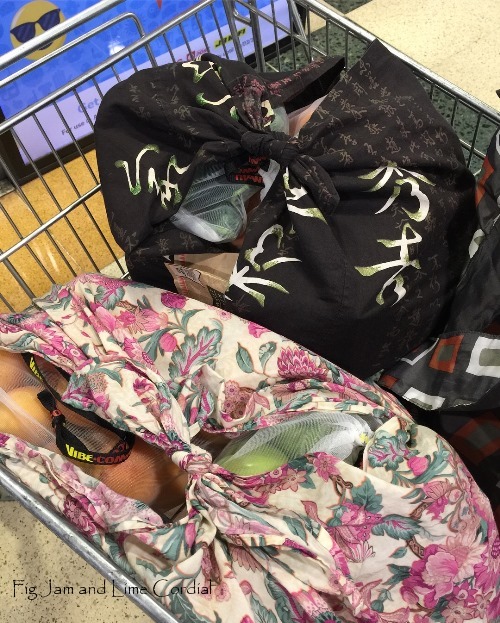
I always travel with a couple of furoshiki in my handbag these days…

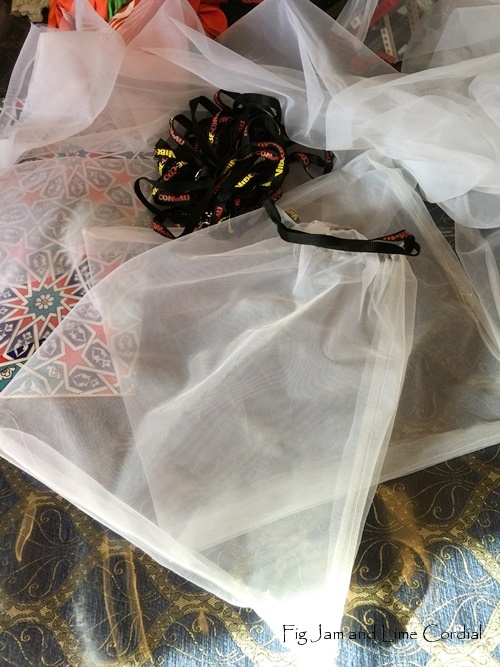
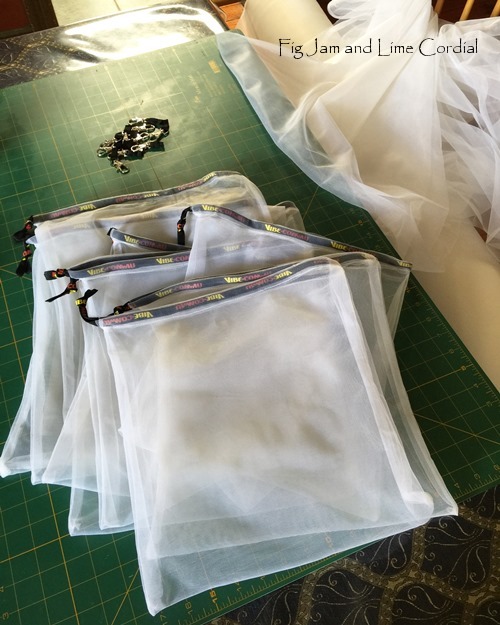
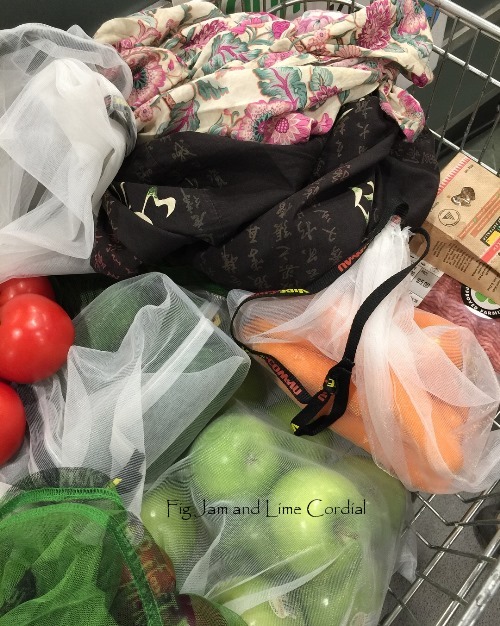
As I’ve mentioned previously, Harris Farm offers a range of imperfect fruit and vegetables – a boon to both the farmer and the purchaser. I was so impressed with the green mesh bags provided for these items that I wanted to make my own. It was a great use for the roll of mosquito netting that has been sitting in my sewing room for twenty years, and the bag of lanyards I picked up at Reverse Garbage six months ago. Not being a minimalist occasionally pays off…

The prototype worked so well that I came home and whipped up a dozen more. The fabric doesn’t fray, so it was a doddle to adapt the glasses case pattern from my Useful Bag post…

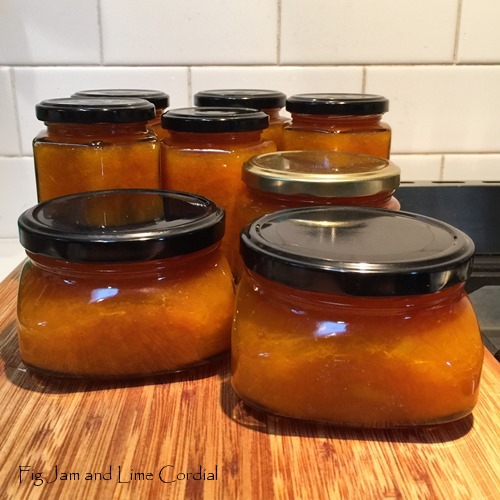
We picked up a mesh bag full of imperfect apricots for $3.99/kg (as opposed to $12.99/kg for the perfect ones) so that Pete could make our favourite jam. Of course, first we had to make pectin from Granny Smith apples (lucky they had seconds of those too). It’s been a very long time since we’ve had any of our own homemade jam, so this was a real treat…

My friends in the UK tell me that shops are now required to charge for plastic bags over there, which has greatly reduced their use. We still use more at home than we’re happy with, although we make a concerted effort to wash and recycle them wherever possible. How are you going with reducing your plastic usage?

In 2018, let’s do MORE.

Let’s laugh and explore and play and eat and drink and create MORE.

Let’s forget about moderation and minimalism, even though they’re in vogue at the moment.

Instead, let’s bake and cook and sew and grow MORE than we need so that we have plenty to SHARE.

Let’s build our communities and break bread together.

And let’s find more TIME, for ourselves and for others. Time to sit and be quiet inside our own heads. Time to marvel at the wondrousness around us. Time to be kind…and time to LOVE each other more.

Happy New Year! ♥