Feeds:
Posts
Comments

Archive for the ‘Recipes’ Category

Leftover Turkey Paella Broth

As many of you already know, I love cooking in clay.

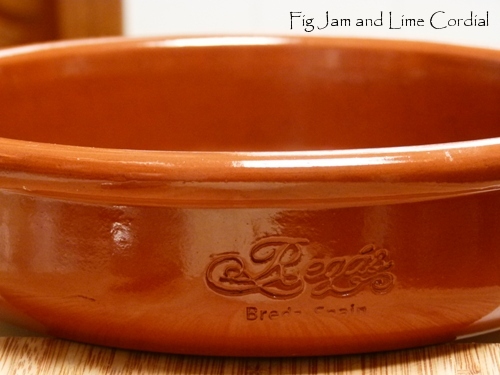
It’s a passion I share with the most gorgeous Tanya who writes Chica Andaluza. She put me on to Spanish cazuelas, a shallow terracotta dish which can safely be used on a gas hob. I bought mine at Chefs’ Warehouse in Surry Hills, where they retail at very reasonable prices. The brand I buy is Cerámicas Regás which are all lead and cadmium free (I emailed to check).

A cazuela is my dream cooking pot – it imparts a subtle ambiance to every recipe, doubles as a stylish serving dish, and goes straight into the dishwasher after the meal is finished. On top of that, it’s beautiful, and my heart sings a little bit every time I have an excuse to use it.

After a particularly long day last week, I sent Tanya this message…

In return, she gave me this recipe.

Oh, she put it on her blog for the world to read, but I know she actually wrote it just for me, because I have a glut of paella rice and a great fondness for soupy rice dishes. Having spent most of my early childhood breakfasting on Chinese porridge (widely known as jook, but in Hokkien, we refer to it as moy), soft rice in a savoury broth is my ultimate comfort food.

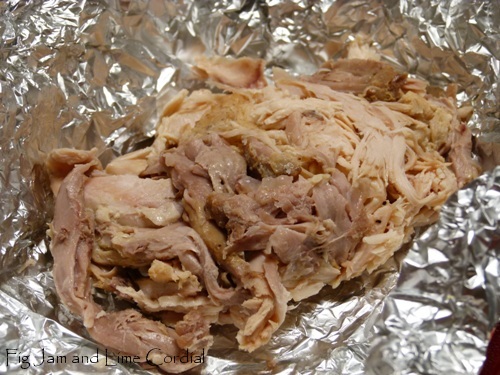
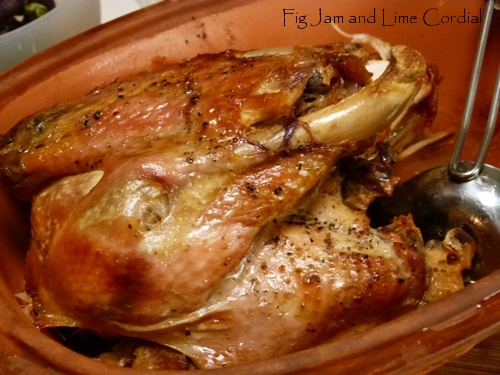
Pete’s not a fan of crustaceans, but Tanya’s recipe is infinitely adaptable, and a great way to use up leftovers. In our case, turkey meat from the previous night’s roast…

As an aside, fresh turkeys are often heavily discounted at Costco immediately after Thanksgiving and Christmas. When our freezer space can manage it, we’ll pick one up ($30 for a 7kg turkey), cut it into quarters, and freeze each section separately for a future meal. We’ve found that a quarter of a turkey ($7.50)  is the perfect size to feed all four of us, with leftovers…

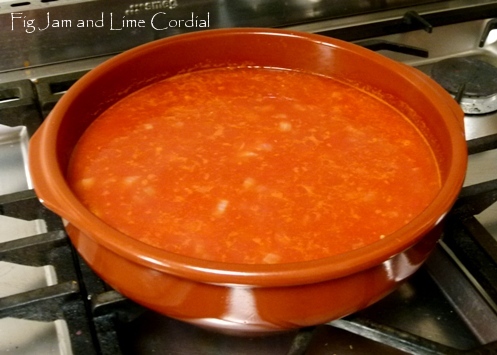
The paella broth (Arroz Caldoso) was easy to make – I fried diced onion and garlic in a little oil in the cazuela, then added a tin of chopped tomatoes and a teaspoon of smoky paprika, followed by the paella rice and a few boxes of defrosted chicken stock…

Once the rice was cooked (I’d stirred frequently and added a little boiling water to keep it loose and liquid), I added the shredded cooked turkey, seasoned carefully, garnished with parsley and lemon wedges, then served…

Our young friend Red Roars had popped in to let us know that he’d been accepted into UTS to study for a Bachelor of Science (yaay!). He, Big Boy and I demolished the entire pot of soupy rice for lunch.

Our leftover turkey paella broth (Arroz Caldoso sound so much more romantic) was silky and easy to eat and delicious and oh-so-comforting. I’ll be adapting this brilliant recipe to use up of all sorts of leftovers in the future. Apart from being simple to make, there was only one pot involved, and it went straight into the dishwasher at the end of the meal. Many thanks lovely Tanya!

PS. Roars brought me a gift from the famous Dylan’s Candy Bar during his recent trip to New York. Should I be worried that this is what the 17 year old chose for me?

Read Full Post »

Cornbread

Pete and I both love cornbread, but we always find recipes for this Amercian classic much too sweet for our tastes.

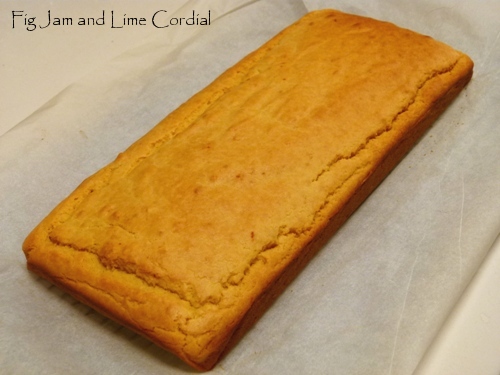
I played around a little with a few recipes and finally came up with this one which the whole family enjoyed. I’ve reduced the sugar down by two-thirds and we still find it quite sweet (but not overbearingly so)…

  • 150g (1 cup) plain flour
  • 150g (1 cup) yellow cornmeal/fine polenta
  • 40g (2 Tbsp) caster sugar (superfine sugar)
  • 8g (2 tsp) baking powder
  • 2g (½ tsp) bicarbonate of soda (baking soda), sifted
  • 4g (½ tsp) fine sea salt
  • 45g (3 Tbsp) unsalted butter, melted and cooled
  • 45g (3 Tbsp) light olive oil
  • 1 large (59g) egg
  • 250ml (1 cup) milk
  • 50g (2 Tbsp) Greek yoghurt (we used homemade)
  • a couple of good pinches of dried chilli flakes (optional)

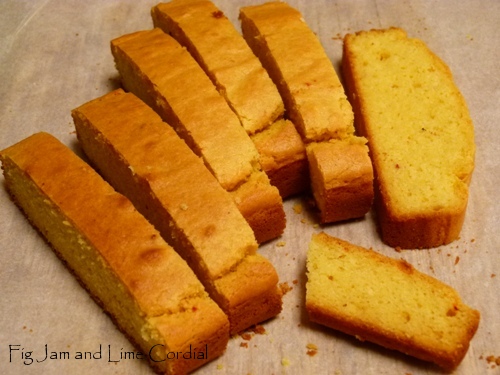
1. Preheat oven to 180C with fan. Line a 20cm/8″ square tin with parchment paper (I used a biscotti tin of comparable volume).

2. Whisk the flour, cornmeal, sugar, baking powder, sifted bicarb, chilli flakes (optional) and salt together. In a pyrex jug, whisk together the butter, milk, oil, egg and yoghurt.

3. Stir the wet ingredients into the dry – mix gently but quickly to combine. The batter will be lumpy.

4. Pour the batter into the prepared pan, then bake for 20 minutes or until golden. Cool in the tray before serving.

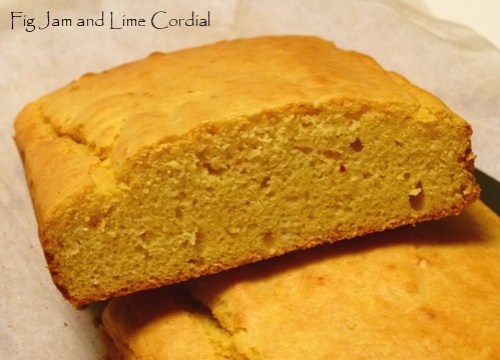
The boys ate cornbread with grilled chicken wings for lunch, and I had mine topped with chipotle salsa and cheese. The texture was crumbly and scone-like, making it just a bit too easy to eat.

I used this formula as the base for my crackling cornbread muffins – there was enough batter for twelve muffins…

This super quick recipe takes just ten minutes to mix and twenty to bake. As well as being delicious, it also makes a fabulous turkey or  chicken stuffing!

Read Full Post »

I’ve been responding to quite a lot of emails from new Priscilla bakers, so I thought I’d write an FAQ post. For more tips on sourdough baking, please check out Emilie’s fabulous primer here.

. . . . .

1. Flour

I always feed Priscilla with bog standard white bread (bakers) flour. It needs to be bread (bakers) flour because the wild yeasts need the higher protein to feed on and that isn’t available in plain (AP) flour. I know many people who successfully feed their starters with rye flour, but I’m not a huge fan of the flavour, so I don’t do that.

I know that ideologically it would be lovely, but I’ve found that stoneground organic flours don’t work. They’re ok for actually making the dough with, particularly if you’re a fan of heavier loaves,  but I’ve never known anyone to successfully activate or keep lively a Priscilla starter with them. That’s because stonegrinding produces a heavy, coarser particle, whereas steel rollermilling (which is how regular white bakers flour is made) results in a much finer, consistent flour.

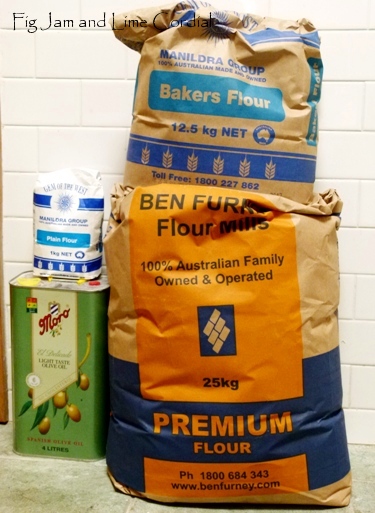
I currently alternate between the Manildra and Ben Furney Flour Mills brands, both of which are excellent. Bakers in Victoria have had great success with the Wallaby brand as well.
. . . . .

2. Water

Water has proven to be a bugbear for a few sourdough bakers. In parts of Australia, our water can be heavily chlorinated which can kill the starter off. I always use filtered water to feed the starter, but I find I can get away with tap water to make the actual dough. If you’re still having trouble and you’re using filtered water, you might want to check that your filter cartridge doesn’t need replacing.

If you don’t have filtered water, both Jason and Maz have had great success with using water that has been boiled first then allowed to cool.

. . . . .

3. Storing the Starter

When I first started baking sourdough, I couldn’t bring myself to throw any excess starter away (I still have trouble with it now). As a result, I ended up with lots of jars of starter in the fridge, busily trying to keep them all alive.

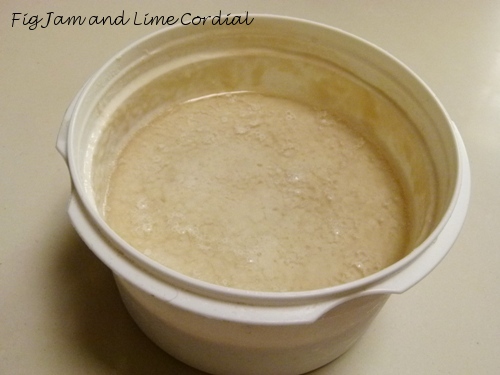
I’ve since learnt that this is false economy. When the amount of starter in the fridge gets too large, the small weekly feeds aren’t enough to keep it going, and the starter can stagnate and start to die off. So these days I keep no more than 1 – 1½ cups of starter in the fridge at any given time. Here is a photo of my fridge starter, just after feeding and before going back into fridge…

My maintenance routine is this: whenever I bake, I take the starter out of the fridge (where it’s stored in a covered container), give it a stir and pour about ¼ – ½ cup into a large bowl.

Into the container, I stir in ¼ cup each of bakers flour and filtered water. It is then covered and immediately returned to the fridge for next time. If you’re not baking regularly, feed the starter like this once a week to keep it healthy. Make sure to discard a little bit each time.

Into the bowl, I stir in ¼ cup each of bakers flour and filtered water. It is then covered with a plastic shower cap and left on the bench. About 4 hours later, I stir in ¼ cup of flour and water. A few hours after that, the starter is usually raring to go (but if it’s not, I’ll feed it again and adjust my baking schedule). The starter should be super bubbly before it’s used to make dough…
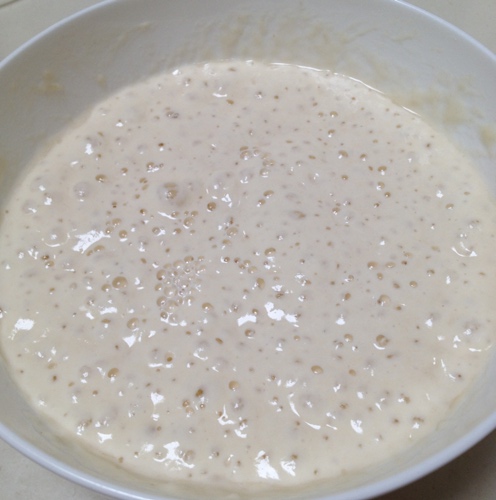
Don’t panic if your starter looks like this when you take it out of the fridge after a week. Depending on the weather and how often it’s been fed, the starter can look pretty sorry at times. Occasionally it can build up liquid on the top known as “hooch”, which I believe is the alcoholic byproduct of fermentation. Just pour this off…
Edit: here’s a great tip from my friend Emilie. To test if your starter is ready for making dough, drop a spoonful into a tall glass of water. If it floats, it’s ready to go!

. . . . .

4. Sharing the Starter

One of the great joys of having a thriving sourdough starter is being able to share it around! If you’re passing it on to a friend in person, just take a bit of the starter, feed it up until it’s bubbling, then pop it into a takeaway container and hand it over.

If you’re planning to mail the starter, it’s best to dry it. Get the starter really bubbly, then spread a bit out thinly onto a silicone mat or plastic plate and leave it in a warm spot to dry for a few days. Once it’s dry, crumble it up (I use a mini food processor), then bag it up (airtight if possible) and store it in the fridge until ready to share. This is also worth doing so that you always have backup in the fridge should anything happen to your main starter. I wrote a bit more about the process here

. . . . .

5. Timing

Every sourdough baker eventually figures out a routine and schedule that suits their lifestyle. It takes a bit of time to work this out – I start feeding a bowl of starter at lunch time, make the dough before bed, and bake the following morning (as per our overnight sourdough tutorial). For folks who work regular hours though, it might be easier to take the starter out when they get home on Friday night, feed it immediately, then give it a really large feed before going to bed, ready to bake the following morning.

The starter works to its own schedule – it can bubble up frantically at 2am in the morning and then be flat and subdued again by 6am. It takes a bit of trial and error to figure out how to get to it when it’s at its peak. If I’m planning to make dough in the morning, I’ll often give my bowl of starter a huge feed before going to bed (sometimes as much as a cup each of flour and water) to make sure it’s got enough food to see it through the night.

Once you’ve made the dough, the time it takes to prove will also vary. On a hot day, it might be ready within four or five hours, but in the middle of winter, it can sometimes take 12 hours to prove. Priscilla always seems to bounce back regardless of how much time she’s had (although I haven’t tested her with a bench prove longer than about 14 hours) – not all starters are as resilient.

. . . . .

6. Dough Hydration

The hydration of the dough refers to the percentage of total liquid to flour.  So if a dough has 750g of liquid (water, oil, milk etc) to 1kg of flour, the hydration of the dough would be 75%.  This is slightly more complicated with sourdough, as the amount of water and flour in the starter needs to be taken into account as well.

The numbers aren’t really a huge deal – here’s what’s important about hydration:

  • a lower hydration (drier) dough will be easier to shape and slash. It will produce a loaf with a tender, more closed crumb and is great for sandwich bread and rolls.
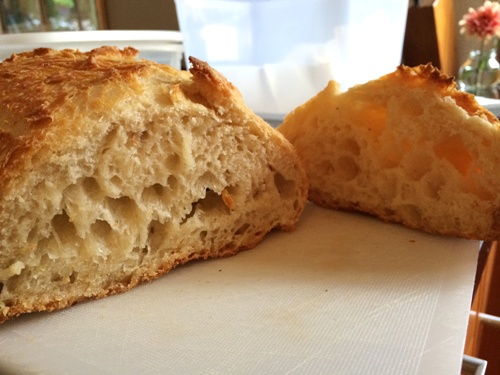
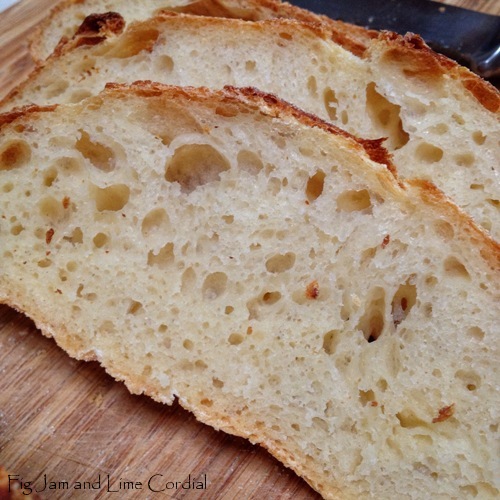
  • a higher hydration (wetter) dough will be soupier and trickier to manipulate, but the pay-off is a more “artisan” loaf, with large holes and a more elastic crumb.

Most bakers will start with a drier dough and work up to a wetter one as their skills improve. Experiment and see how you go! I’ve had great results from baking higher hydration loaves in a closed pot (more here).

. . . . .

7. Mixing it up!

One of the best ways to create interesting loaves is to experiment with different flours. I’ve found the easiest way to do this is to substitute half the bakers flour in a dough with an alternate flour – wholemeal, rye, spelt, kamut, remilled semolina. Some of these have a lower protein content than white bakers flour, so it can be tricky to make 100% loaves with them. Adjust the water accordingly, as some of these flours can be quite thirsty.

Another way to expand your sourdough portfolio is to add inclusions in your dough such as dried fruit or nuts. On our bread page there is a list of Bread #101 Sourdough tutorials with suggestions on how to vary your basic loaf (I’ve listed these at the bottom of this post as well).

. . . . .

8. Basic Shaping

To shape a round loaf, flatten the dough out and fold the outsides into the middle. Then turn the ball of dough over and cuddle it with the palms of your hands to round it up…

To shape an oval loaf, begin with a round loaf. Flip it over and flatten it out, then fold in the top and bottom…
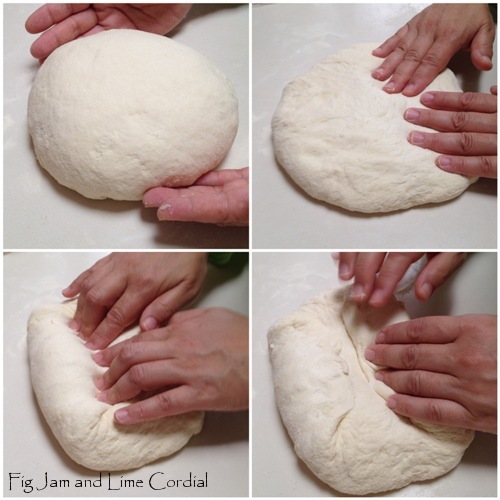
Then fold the dough in half and squish the two sides together (either with your fingers or the heel of your palm)…
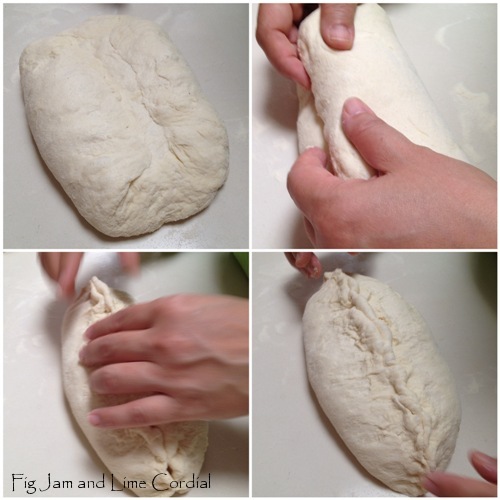
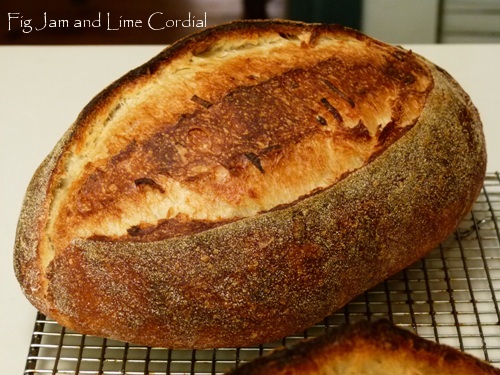
Flip the dough over and allow to prove, then slash. I like to make a single deep cut with a serrated bread knife…
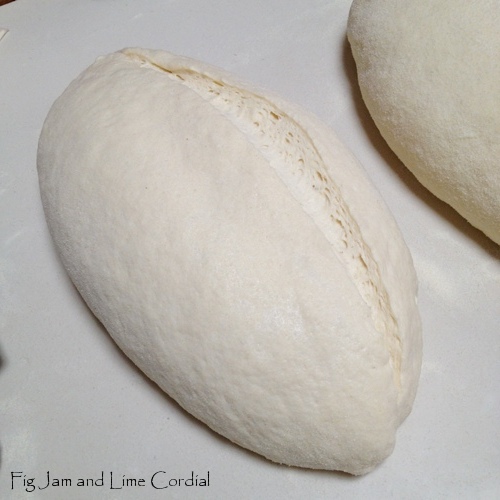
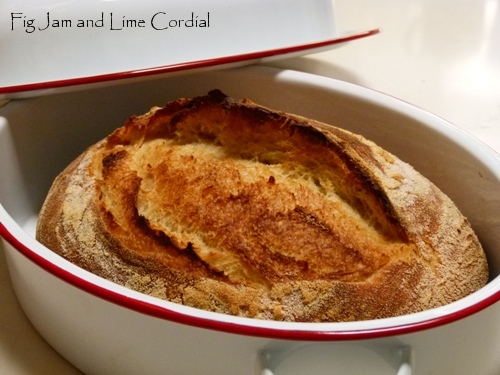
The dough above was baked in a closed enamel roaster

. . . . .

9. Baking the Loaf

Once the dough has had its second rise, there are a multitude of ways to bake it. My preference is to use a preheated oven, but that’s not necessary – a lot of people pop their dough into a cold oven and get fabulous loaves. I prefer the crust and crumb from a loaf baked in a hot oven though, so I always preheat.

A shaped dough can be baked uncovered on a tray or a preheated pizza stone, and for most of my bread baking life, that’s what I’ve done. In the past year though, I’ve learnt to bake in a covered pot (thanks Em!) and my loaves have gone from homemade to artisan in appearance.

Here’s why it works so well – when the dough is placed inside a closed container, the moisture in the dough which is released as it heats up is captured as steam inside the pot. The steam prevents the crust from hardening too quickly, which enables the dough to rise to its maximum capacity. When the lid is removed, the steam is released and the crust gets a chance to brown up and set. Trying to keep the outside of the dough moist and expanding for as long as possible is the reason bakers add ice cubes or mist their oven (they’re trying to create steam).

Most pot bakers use enameled cast iron pots, but I find them too heavy. I now use cheap, lightweight enamel roasters which are heat safe to 270C and work brilliantly. If you do use cast iron, remember to check that your pot can cope with the high temperatures. Some of them have plastic handles which melt at anything over 190C.

Edit 21/10/16: both the Wiltshire and Falcon enamel roasters work well – the one in the photo below is a 30cm Falcon. I’ve bought both brands online – here are the links:
Hot or Cold Pot?

I used to preheat my enamel roasters in the oven, then manoeuvre them out with welding gloves and plonk my shaped dough into the hot pot. I still think that gives me the best results – I like the crispiness of the crust that I get that way. That’s the technique I originally suggested in the Overnight Sourdough Tutorial.

However…these days I’m more likely to put the dough into a cold pot, simply because it’s easier. The results are still excellent, particularly with the enamel roasters which are lightweight and therefore heat up almost instantly in the oven. I line the base of the roaster with a sheet of parchment paper, as I’ve found that putting the dough into a cold pot makes it more likely to stick than when it goes into a hot one. Once the shaped dough is risen, I slash it, place it into the pot, cover it, and put the whole lot into a preheated oven. It works a treat!
. . . . .

10. Storing the Loaf and Using Up Excess Starter

Always allow your loaf to cool to at least lukewarm before slicing it – otherwise the crumb could go gummy. I store my loaves in sturdy plastic bags and we try to eat them over a couple of days. Surplus loaves are frozen or turned into bread rusks – the latter keep well in an airtight container for weeks. Never store bread in the fridge, as it tends to go stale faster that way.

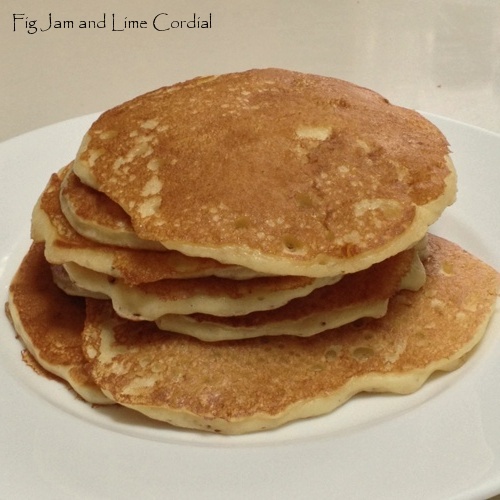
Excess sourdough starter is perfect for pancakes. We make a batch most weekends and my boys absolutely love them. I also use excess starter in Cuban bread (although that just results in more bread in the house)…
. . . . .

11. Artisan Sourdough Made Simple, by Emilie Raffa
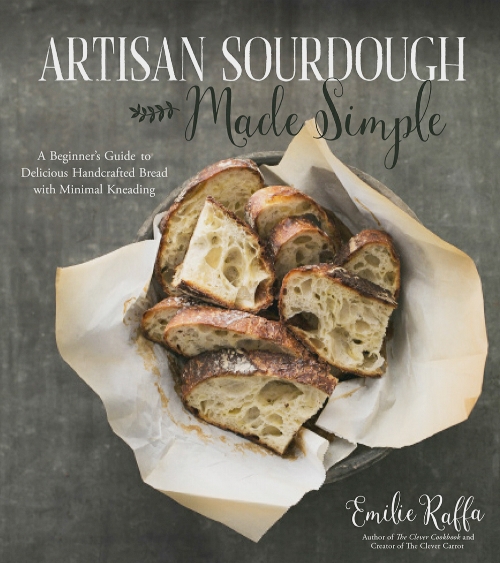
If you haven’t already purchased a copy of my darling friend’s book, then I’d strongly urge you to do so, not just because it’s brilliant, but also because it’s been specifically written for everyone who is baking with a Priscilla starter. I wrote two whole posts about it here and here.

. . . . .

Do you have any questions about your Priscilla sourdough starter that I haven’t answered here? If so, please let me know – I’ll keep adding to this post as I think of more tips to share!

. . . . .

Read Full Post »
Sourdough Power!

Over the past couple of months, I’ve sent out dozens of packets of sourdough starter (the last two I had in the fridge went out today).

Some of the folks who receive them might never get around to using them, others will revive their starter, bake a few loaves, then decide it’s not really for them. And you know what? That’s completely fine. I’m very unprecious about Priscilla – she was sent out as a gift with no strings attached whatsoever.

But for some, the little bag of starter has proven to be a tiny satchel of magic. They begin like everyone else – waking up the wild yeasts, feeding them and watching them bubble, then baking their first loaf. It might not be perfect, but it’s proof of concept, and they’re inspired to try again. Then they’ll bake a second loaf, changing the recipe or methodology just a little bit along the way. By the third loaf, they’re off – they’ve studied books and blogs, experimented with overnight or cold proving, fiddled with hydration levels and bake times, and started adding their starter’s name to birthday cards. They’ve been bitten by the bread equivalent of Peter Parker’s radioactive spider.

With every success or failure, they learn a bit more. Their friends and family get caught up in the excitement, eat far more bread than is recommended by national guidelines, and provide often unsolicited feedback. Slowly, their superpower builds. Almost magically, they can now turn flour and water into food. And they think…just look at what I’ve made! I never thought I could do that. I wonder what else I can do?

A couple of friends have said to me, “you must be so proud of how far Priscilla has spread!” It’s hard to explain, but it’s not really pride that I feel. I know Priscilla is a fabulous starter, and I’m pretty confident most people will be able to make a successful loaf with her, but all I’m doing is sending a few dried flakes and a recipe out in the mail. I’m not making the dough, I’m not even really in the kitchen to talk anyone through the process. So pride is the wrong word.

What I feel is enormous joy at being able to pass on a tiny gift which empowers people. Empowers them to feel good about themselves, knowing they can achieve something they’d previously not thought possible. And along the way, we’re building a worldwide community of excited bakers. It’s been unbelievably satisfying.

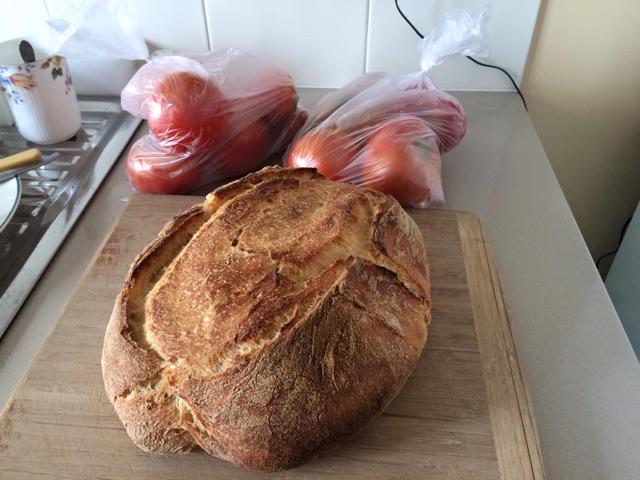
I’ve watched Selma go from a perfect first loaf to sharing her starter Twinkle with half a dozen friends across Europe, who in turn have baked their own perfect loaves.

Selma’s Cinnamon Sourdough Fruit Loaf

Annie’s breadmaking skills have developed so rapidly that not only is she distributing loaves to everyone she knows, she’s now teaching others to bake as well.

Annie’s loaves have very sexy curves!

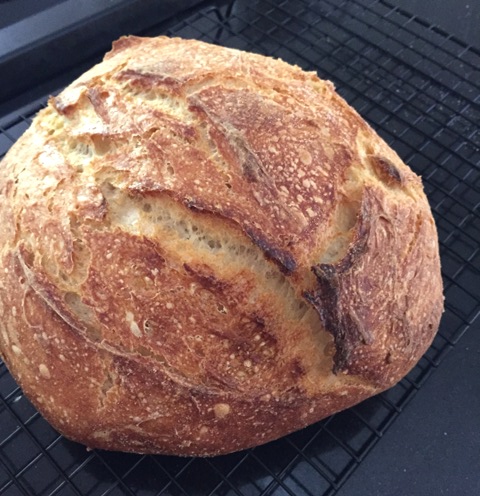
If a text message could squeal with joy, then my old friend Mary’s did at 5am on Saturday morning when she baked her first loaf. Her daughter Polyxeni has become an expert baker overnight, producing loaves that look like they’ve come straight out of an artisan bakery. Things are getting just a little bit competitive in their kitchen…

This was the photo Mary sent me on Saturday morning. I was squealing too!

Polyxeni told me that she is never ever buying bread again…

The stories are too numerous to recount and coming in from all around the globe – Manuela is baking the most amazing bread in a remote part of Canada where bison roam freely. She baked her first loaf one morning, knotted rolls that afternoon, and a second round of loaves in the evening. All on the first day.

Manuela’s wholemeal sourdough loaf has delighted her hubby!

It’s amazing to think we’re baking with related starters all around the world!

Tandy’s starter Cordelia has been living happily in her South African kitchen for a couple of years now, providing enormous satisfaction on a weekly basis…

Tandy’s overnight loaf recipe is on her blog now!

Nancy and Jen in Shanghai are as excited as teenagers over their starters and are now happily sharing them across China. They’ve produced stunning loaves under tricky conditions, wrapping dough in blankets and proving them in bathtubs…

Nancy’s second loaf was even better than her first!

Every loaf of sourdough bread is unique. The discovery of bakers’ yeast in the late 1800s led to large scale bread production because it enabled bakers to replicate results consistently enough to produce commercial quantities. Sourdough is quite the opposite of that – each loaf is slightly different and results can vary on any given day.

More importantly, every baker owns their process. They might start with a given recipe, but by about the third loaf, that’s been tweaked and changed, personalised to the kitchen they’re in and the hands working the dough. I love that. It’s why I ask folks to rename their starter when it arrives – because it’s their starter in their kitchen, and it’s heading off on a brand new sourdough journey.

To everyone out there who has a Priscilla offspring, thank you for sharing your baking adventures with us. It’s been more rewarding that you can possibly imagine!

. . . . .

Empowerment

Actively Seeking Enthusiasms

Sharing the Sourdough Love

Read Full Post »

Tinned Fruit Tea Cake

Sometimes we get a bit snobby about food in tins, but in the case of fruit, we really shouldn’t. Aussie tinned fruit is generally superb – the produce is picked at the peak of its ripeness and canned almost immediately. It doesn’t have the same texture as fresh fruit for eating raw, but it’s perfect for cooking with, and in many cases the quality will be superior to what’s on offer on the shelves of the fruit market.

Better still, the tins last for ages in the pantry and there are always bargains to be had. Like the boxes of SPC peaches I bought at the end of last year – at $10 a dozen, they were an absolute steal compared to the $3.50 each that they sell for at the supermarkets…

And the reason for the discount? The ones I bought don’t have ringpulls on the top like the newer ones do. Otherwise, the tins, and the peaches in them, are in perfect condition. I’d had plans to stock up on a few boxes like a doomsday prepper, but Big Boy has discovered them and is eating a whole tin every three days on his muesli…

At the end of last month, still recovering from the Christmas rush, I thought it might be nice to make a very simple tea cake using the peaches and a little tinned passionfruit…

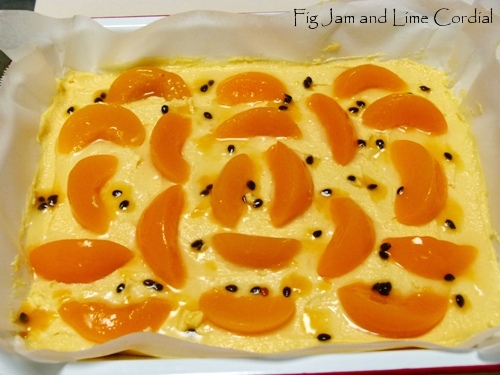
I made up a batch of our very easy tea cake batter and topped it with the fruit. I could have bought fresh peaches, peeled them, sliced them and poached them, but this was much easier…

Here’s the recipe again to save you the trouble of clicking back and forth. I now use a food processor to make this cake, but it works just as well in the mixer (instructions are here):

  • 250g unsalted butter, soft but not melted
  • 200g caster (superfine) sugar
  • 4 large free range eggs
  • 1 teaspoon vanilla extract (I used homemade)
  • 150g self-raising flour
  • 150g almond meal
  • sliced tinned peaches
  • tinned passionfruit pulp

1. Preheat oven to 160C with fan and line a baking tray with parchment paper (I used a rectangular 30cm x 23cm/12″x9″ pan enamel baking pan).

2. In the large bowl of the food processor, blitz together the butter and sugar until light and fluffy. Add the eggs one at a time and pulse until combined, adding in a spoonful of the flour if required to stop the batter from splitting. Scrape down the sides as needed. Add the vanilla and pulse again.

3. Stir or sift the flour and almond meal together, then add to the food processor and pulse until just combined. Scrape the batter into the prepared tray and top with the peaches, artistically arranged. They will sink into the cake as it bakes. Drizzle over the passionfruit pulp.

4. Bake for 35 – 40 minutes, or until a fine skewer inserted comes out clean. Rotate the tray half way through the baking time if needed. Watch carefully to ensure the seeds on top don’t burn. Allow to rest briefly in the pan before lifting out and cooling completely on a wire rack. Dust with icing sugar before serving.

I’m pretty sure this would work with most tinned stone fruit (hmm…maybe not lychees). It’s an easy dessert or afternoon tea to pull together from pantry ingredients!

Read Full Post »
« Newer Posts - Older Posts »